● Nasdaq Mania, Qualcomm Power Shock, Fed’s Rate Gamble
Real Driving Forces Behind the Nasdaq Surge and Next Quarter Investment Checkpoints: Expectations for a US-China Summit, FOMC Interest Rate, Qualcomm AI Semiconductor, KOSPI 4000, Gold Risk Hedge
This article covers the key driving forces that moved the market, the boundary between rumors and reality, FOMC interest rate variables, the significance of Qualcomm’s entry into the data center field, the structural logic behind the KOSPI 4000, and gold hedge strategies.
In particular, it separately explains the essence of the “power/memory bottleneck” and the “performance per watt battle” that other media often overlook.
Grab a news-style summary and practical strategies centered around global economy, inflation, market outlook, interest rates, and AI semiconductors all at once.
Today’s Market News Briefing: Tech Stock-Led Rally, Nasdaq Strength
The Nasdaq rose sharply, led by tech stocks, while the S&P 500 and Dow followed behind.
The surge was led by themes such as AI, expectations for easing US-China relations, and bets on possible interest rate cuts at this week’s FOMC meeting.
During the trading session, the sentiment leaned toward “AI beneficiary stocks + earnings defensive stocks,” and volatility was observed to contract ahead of the event.
Why It Rose 1: The Impact of US-China Summit “Expectations” and Market Interpretation
Talks of a summit between the leaders have surfaced, with various reports including the possibility of hosting it in Korea.
Comments from high-level officials in the United States and China added weight to the idea of “framework progress,” which was preemptively reflected in stock prices amid hopes for a relaxation of trade and technology conflicts.
However, the key point is that this is at the stage of “expectations,” not “confirmation.”
If major issues such as national security and export controls are omitted from the agreement, there could be a wave of disappointment selling.
Why It Rose 2: FOMC, Interest Rates, and Reaffirmation of Inflation
With the FOMC meeting approaching this week, bets on an interest rate cut increased.
The recent signs of easing inflation and the logic of a soft patch in the economy are fueling expectations of a more “easing” signal.
Conversely, if the dot plot or remarks signal “caution,” the risk of a valuation adjustment in growth stocks increases.
Why It Rose 3: Earnings Season as a Defensive Factor
Defensive power has been confirmed as S&P 500 companies’ revenues and earnings have broadly exceeded consensus estimates.
The market has estimated that the ratio of sales surprises is around 70%, which is said to be near the highest levels since the pandemic.
Analysts have widely interpreted that the impact of tariffs and supply chain burdens on earnings was limited in advance of potential shocks.
Key Risk: ‘When Expectations Outpace Prices’
If the summit results in only symbolic agreements, part of the recent rally could be reversed.
Issues related to national security (advanced AI semiconductor exports, hitos, data sovereignty, etc.) will likely have a significant impact.
If the FOMC sets a clear line on the pace of cuts or if signals of reignited inflation emerge, there is a possibility of an adjustment in growth stocks.
Qualcomm Focus: From Smartphones to Data Centers, the ‘Performance per Watt’ Battle
Qualcomm (QCOM) soared by double digits, emerging as the market’s main focus.
This rise was driven by contract news related to AI semiconductor/data center supply reported from Saudi Arabia, and the market interpreted Qualcomm’s change in business positioning positively.
The picture is of Qualcomm expanding its expertise in “low power, high efficiency” honed in smartphones into the increasingly power-constrained data center arena.
Qualcomm’s strategic focus is on “Performance per Watt (Perf/W),” offering higher inference capabilities for the same power.
The competition unfolds among accelerators from NVIDIA and AMD, ARM server ecosystems, and intersections with edge AI.
In this cycle, where power and memory bandwidth are bottlenecks, the key point for re-rating is the optimization capabilities in chip design, packaging, and memory integration.
Korean Market: The Logic Behind the KOSPI 4000 and the Memory Super Cycle
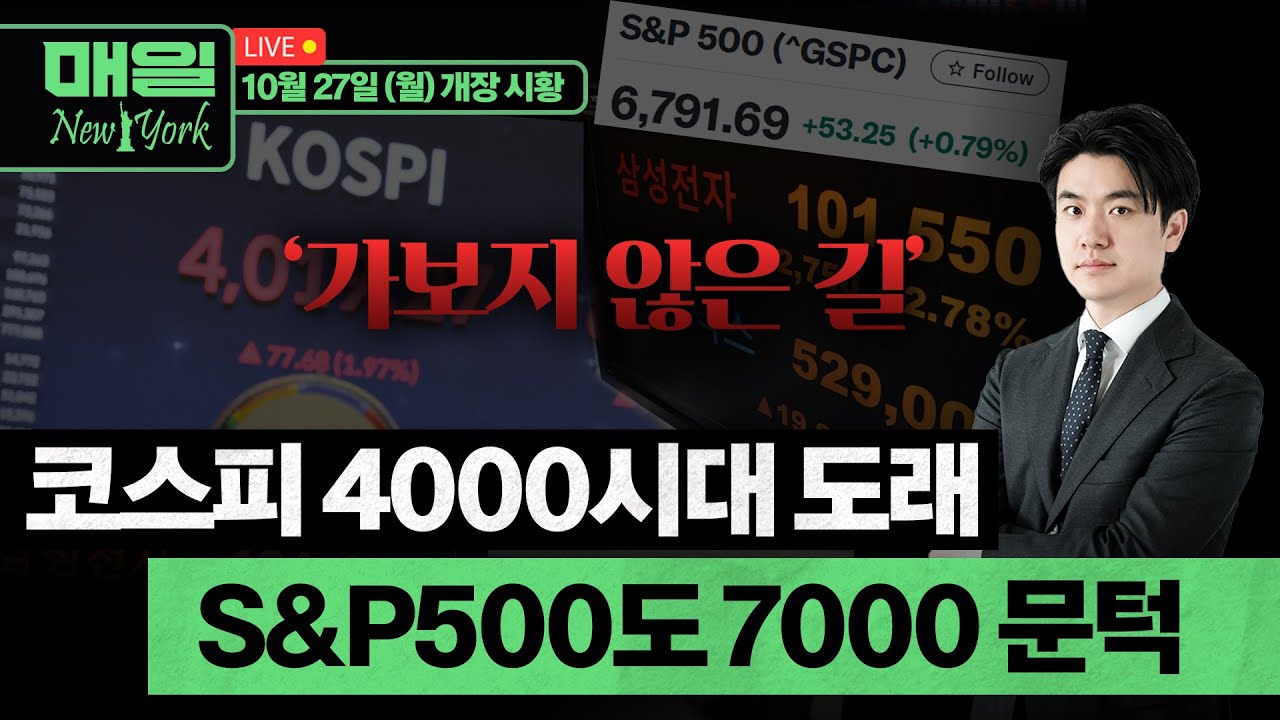
The KOSPI touched or surpassed the 4000 level, changing the psychological benchmark.
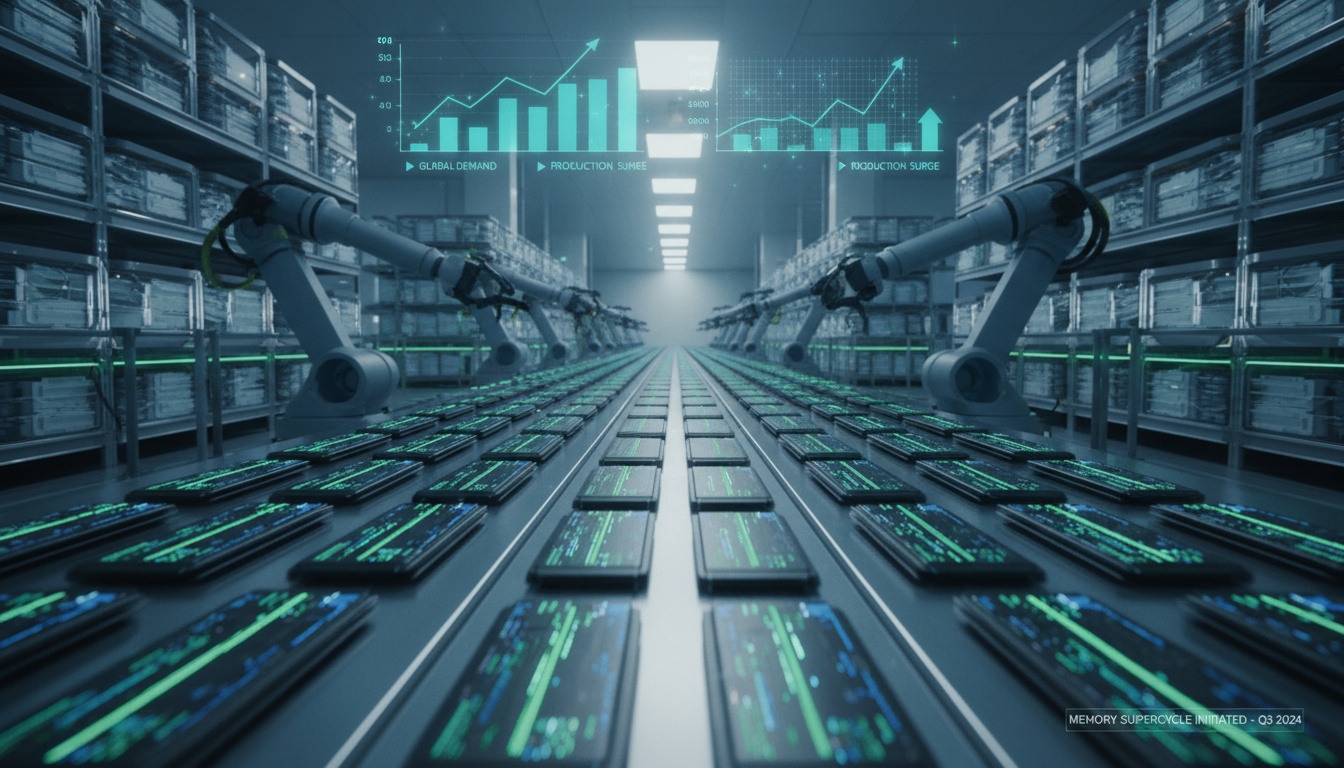
At the core of the rise are the expanding demand for AI semiconductors and the structural demand in memory.
Now, not only computing power but also memory capacity and bandwidth determine AI inference performance.
HBM and traditional DDR are growing together, while complementary moves are seen in packaging (such as CoWoS) and CXL-based memory pooling.
While Samsung Electronics, SK Hynix, and Micron remain cautious in capacity expansion, the demand-driven phase is favorable for ASPs and margins.
Risks include the timing of announcements for large-scale capacity expansions, variables regarding Chinese demand and regulations, and exchange rate fluctuations.
Valuations need to be defended with evidence that “the fundamental improvement in the memory cycle” is sustainable (order backlog, lead times, HBM conversion rate).
Gold: Weaker Demand for Safe Assets vs. Hedging Against Events
Gold prices have seen adjustments as safe asset demand has weakened.
However, as a hedge against event volatility such as the summit and the FOMC meeting, gold remains effective.
A split approach considering the inverse relationship between real interest rates and the dollar index is reasonable.
Investment Strategies by Scenario: Position Management Determines Performance
-
Base Scenario (high probability): Easing FOMC + symbolic agreement at the summit.
-
Strategy: Maintain the proportion of AI semiconductors (memory, packaging, power semiconductors, optical modules) while trimming exposure to cyclical-sensitive stocks.
-
Optimistic Scenario: Some easing signals on technology and trade conflicts + an easing tone from the Fed.
-
Strategy: Expand positions in KOSPI large semiconductor stocks, data center power/cooling solutions, and edge AI hardware.
-
Pessimistic Scenario: Weak agreement + a hawkish tone from the Fed.
-
Strategy: Increase cash proportion after taking profits, defensively move to gold, short-term bonds, and quality defensive stocks, and re-enter gradually if volatility expands.
The “Most Important Information” That Other Media Overlook
First, the real constraint of this AI cycle is “power.”
Data center power limits define capital expenditure investments, and companies that excel in performance per watt capture market share.
Qualcomm’s low-power design, NVIDIA’s architecture optimization, and technologies for suppressing heat in memory and packaging are the essence of valuation premiums.
Second, memory and packaging are the bottlenecks.
While lead times for HBM and CoWoS extend, DDR and CXL serve as substitutes absorbing demand.
On the software side, low precision, sparsity, and KV cache offloading reduce computing costs, but large-scale simultaneous inference drives total memory demand higher.
Ultimately, the “power-memory-packaging” triangle determines the structural benefits of AI semiconductors.
Checklist: Points That Will Determine the ‘Market Outlook’ This Week and Next Quarter
-
FOMC results, dot plot, and the direction of real interest rates.
-
The level of agreement between US and China, and wording on national security and export controls.
-
Updates to S&P 500 guidance and margin comments.
-
DRAM and HBM prices, packaging (such as CoWoS) lead times, and equipment orders.
-
The dollar index, Korean won/dollar exchange rate, and indicators of Korean exports/semiconductor orders.
Practical Tips: Risk Management and Execution
Keep a long-biased portfolio, but preemptively reflect profit-taking and stop-loss rules around events.
Key holdings: AI semiconductor value chain (memory, packaging, power semiconductors, optical modules, data center power infrastructure).
Hedge: Allocate small amounts to gold, short-term bonds, and inverse/put options according to the situation.
Cash proportion: Slightly increase right before the event, and normalize after confirming the outcomes.
One-Line Comment
The current rally is driven by “expectations,” but if you position according to this cycle’s fundamentals of “power, memory, and packaging,” any corrections can become opportunities.
< Summary >
The Nasdaq surge is a joint product of the AI theme, expectations for a US-China summit, the possibility of an interest rate cut at the FOMC, and earnings surprises.
However, if the agreement remains merely symbolic or the Fed adopts a hawkish stance, a reversal is likely.
Qualcomm’s surge is interpreted as a signal of its data center entry centered on “performance per watt.”
The key for the KOSPI 4000 is the structural demand in memory and a cautious capacity expansion strategy.
The real bottlenecks are power, memory, and packaging, and gold remains effective as an event hedge.
[Related Articles…]
Samsung Electronics HBM4 Roadmap Checkpoint
Three Scenarios for the Market Outlook After the FOMC
*Source: [ 내일은 투자왕 – 김단테 ]
– 나스닥 폭등했지만…
● AI Goldrush
Trump-Xi Tariff Deal Nearing Conclusion, FOMC Rate Cut Path, JP Morgan’s Bitcoin Secured Lending, AI Semiconductor Checklist 6
Today’s article contains the detailed agenda that the market will react to first in the event of a US-China tariff deal, as well as the beneficiary sectors.
It outlines the rate cut path before the FOMC meeting and the AI CapEx check points to look for in big tech earnings.
It interprets six leading indicators that are defining the semiconductor supercycle and the meaning of Nvidia’s Blackwell lead times.
It explains the structural changes to the “institutional credit pipeline” driven by JP Morgan’s allowance of Bitcoin and Ethereum secured lending.
It includes the costs and opportunities of the data economy created by a cashless America, along with a practical checklist from the perspective of Korean investors.
Focus on the key words: global economy, rate cuts, artificial intelligence, semiconductors, and Bitcoin for the essentials only.
Today’s Market Summary: Tech Rally Driven by Easing US-China Tensions
The Nasdaq is up +1.42% intraday, the S&P 500 +0.89%, and the Dow +0.56%, clearly led by tech stocks.
Expectations of eased US-China tensions have encouraged a preference for risk assets, coupled with rebound buying from earlier declines, adding momentum.
Nvidia is trading above $190 (+2.11%), Tesla at $444 (+2.43%), and mega-cap as well as AI-related stocks are leading the charge.
Some consumer sector stocks are weak, with Walmart down around 1%, reflecting concerns over a slowdown in consumer strength.
This Week’s Superweek Calendar: FOMC + Big Tech Earnings + PCE Price Index
The main event is the FOMC meeting on October 29 (Wed), and the market is largely pricing in a 25bp rate cut.
On the same day, after the market closes, Microsoft, Alphabet, and Meta will release their earnings, followed by Apple and Illirily the next day.
On October 31, the September PCE price index will be announced, verifying the continuity of easing inflation.
Korean and US Index Check: Expanding Semiconductor Market
The KOSPI stands at 4,042 points, confirming the 4,000 level, and semiconductor stocks are spreading their influence across the index.
The S&P 500 is up around +15% year-to-date, and as it approaches the 6,700-point level, debates about overvaluation and expectations for liquidity coexist.
Ultimately, the current market is defined by semiconductors, and the AI supercycle is prompting a re-evaluation of profit expectations across the value chain.
AI Supercycle: Semiconductor Checklist 6
1) TSMC’s advanced process utilization and sales mix.
The higher the sales proportion and utilization of 3nm and 5nm, the more solid the demand signal for AI logic chips.
2) HBM pricing and market share.
The trend in contract prices for HBM3/3E and HBM4, along with the market shares of SK Hynix and Samsung, will soon direct memory performance.
3) DRAM inventory weeks.
When the industry average is maintained at around 3.3 weeks, supply remains tight, further supporting prices.
4) Hyper-scale AI CapEx guidance.
If quarterly CapEx for Amazon, Microsoft, Google, Meta, and Oracle increases, it opens the upper end, whereas a decrease intensifies the debate about the cycle peak.
5) Nvidia’s quarterly guidance and Blackwell lead time.
When order backlogs and shipping lead times extend, the “fundamental upside” spreads to the secondary and tertiary value chains.
6) Equipment and material leading indicators.
Watch for whether new orders and improvements in supply chain bottlenecks from equipment, IP, and component companies such as ASML, Lam Research, and Broadcom emerge.
AI Bubble vs. Bull Market: Wedbush View and Under-the-Radar
Wedbush suggests core AI infrastructure stocks including Microsoft, Nvidia, TSMC, and Snowflake.
Although these are well-known firms, their earnings and cash flows justify their status as core positions.
Under-the-radar picks include power infrastructure and biotech.
Due to the rapid increase in power consumption at AI data centers, there is a structural boost in demand for power generation, transmission, distribution, and electrification solutions.
Biotech is poised to benefit as M&A themes intensify with blockbuster patents expiring between 2025 and 2030, opening opportunities for companies with specific pipelines.
US-China Summit: Tariffs, TikTok, and Hito-Liu: Key Points to Check Immediately
If an agreement on extending the trade ceasefire and adjusting tariff rates is reached, global trade sentiment could rebound and allow for a value chain re-rating.
If TikTok’s transaction receives final approval, security and cloud partners such as Oracle could directly benefit.
The easing of export controls on Hito-Liu could increase volatility in the materials and fine chemicals sectors, along with alternative materials and recycling.
JP Morgan’s Bitcoin Secured Lending: A Structural Game Changer
JP Morgan will allow institutional Bitcoin and Ethereum secured lending by the end of 2025.
This signifies the full-scale integration of crypto assets as collateral on par with stocks, bonds, and gold, under a regulated credit system.
Using third-party custody (e.g., Coinbase) for collateral management opens up a lending structure with established regulatory and risk management frameworks.
Centralized finance lending balances reached $1.7 billion in Q2 2025, a 147% increase year-over-year, and JP Morgan’s entry could add an additional capacity of $1-2 billion.
Despite former skepticism from Jamie Dimon, the combination of the institutional credit pipeline and crypto assets is the key takeaway.
Prices and the Fed: Updated Rate Cut Path
The September CPI, released earlier, was lower than expected, confirming a disinflationary trend.
Market participants (via FedWatch) are strongly pricing in a 25bp cut in October and an additional 25bp cut in December.
The more definitive the rate cut path, the more favorable it is for AI, semiconductors, and risk assets; however, subtle adjustments in big tech’s AI CapEx could introduce short-term volatility.
A Cashless America: The Pros and Cons of the Data Economy
Even offline in America, “no cash” indications have become common, with payments converging to cards, Apple Pay, and P2P transfers (such as Venmo).
In the absence of cash, payment data accumulates, which card companies, payment networks, and big tech utilize for advertising, loans, and insurance premium calculations.
However, for low-income groups, the elderly, and immigrant communities, cash remains a vital tool, preserving the safety net function of “cash only.”
Practical Investment Checkpoints: What to Watch This Week
1) Changes in the FOMC statement and dot plot.
Check how dovish the growth and inflation wording becomes and look for hints regarding the neutral rate for next year.
2) Big tech earnings’ AI CapEx and server depreciation.
Monitor the impact of rising CapEx and higher depreciation on gross margins.
3) Nvidia’s Blackwell lead time and the HBM expansion guidance from Hynix and Samsung.
Extended lead times and confirmed HBM expansion could trigger an upward adjustment in secondary value chain performance.
4) The keywords in the US-China joint statement.
Prepare for sectors that could immediately react to terms like tariffs, export controls, data, app security, and rare earth elements.
5) JP Morgan’s roadmap for crypto lending products.
The sensitivity of coin volatility and related stocks will depend on how the custody structure, haircut, and margin call conditions are defined.
Key Turning Points Not Covered Elsewhere: Four Real Inflection Points
1) “Diversification of collateral” resets the cost of capital.
If crypto collateral connects with institutional credit, it could simultaneously ease the financial burden of AI infrastructure companies and accelerate growth CapEx.
2) The kW/rack demand from power is the true baseline for stock performance.
If data center plans to increase kW/rack are confirmed, orders for power solutions, cooling, and switchgear companies will rise first, with semiconductor performance following.
3) Nvidia’s lead time in weeks and the monthly contract prices for HBM serve as the tangible gauge amid the “bubble” debate.
If lead times shorten and HBM contract prices remain steady or decline, valuation adjustments could occur rapidly.
4) With a US-China tariff deal, the focus for Korean beneficiaries will be on materials, components, and shipping.
If tariff and customs risks are reduced, ASP spreads could improve, significantly leveraging operating margins.
News Brief at a Glance
The tech-driven rally is underway, fueled by expectations of eased US-China tensions and rate cut bets.
This week’s key events are the FOMC meeting, big tech earnings, and the PCE price index.
The semiconductor cycle is directed by six indicators, including HBM, CapEx, and lead times.
Wedbush views MSFT, NVDA, TSMC, and SNOW as core, while power infrastructure and biotech are seen as under-the-radar picks.
JP Morgan’s allowance of Bitcoin secured lending symbolizes the integration of crypto assets into regulated collateral, enhancing liquidity and capital efficiency.
America’s swift move towards a cashless society is amplifying the value of payment data and reshaping the data economy.
< Summary >
Expectations of a US-China tariff agreement and a confirmed Fed rate cut path have re-ignited the rally in risk assets.
Investors should focus on the FOMC wording, big tech’s AI CapEx, Nvidia’s Blackwell lead time, HBM prices and inventory, and key terms from the US-China joint statement.
JP Morgan’s Bitcoin secured lending is elevating crypto assets to regulated collateral status, enhancing liquidity and capital efficiency.
A cashless America is increasing the value of payment data while leaving policy challenges regarding the protection of vulnerable groups.
[Related Articles…]
Trump-Xi Tariff Deal Impact and Strategy Beyond the KOSPI 4000
JP Morgan’s Bitcoin Secured Lending and Its Link to AI Power Infrastructure
*Source: [ Maeil Business Newspaper ]
– [LIVE] 트럼프-시진핑 관세타결 초읽기ㅣJP모건, 비트코인 대출 담보 허용ㅣ현금이 사라지는 나라 미국ㅣ홍키자의 매일뉴욕ㅣ홍키자의 매일뉴욕