● Nvidia Gold Rush, Korea Gets Rich – Power and Packaging Bottlenecks Threaten Boom
Jensen Huang’s View on “Why Korea is Wealthy”…The True Impact of the Nvidia Investment Frenzy on Korea’s Economic Outlook and 4th Industrial & AI Trends
Today’s article covers ① the interpretation of on-site remarks, ② the asset effects of Korean investors and the chain reaction of exchange rates and interest rates, ③ what Korea stands to gain from the AI data center and semiconductor supply chains, ④ risks and opportunities that other news outlets rarely address, and ⑤ a 90-second action plan.
Let’s extract the core points all at once.
On-Site One-Line News
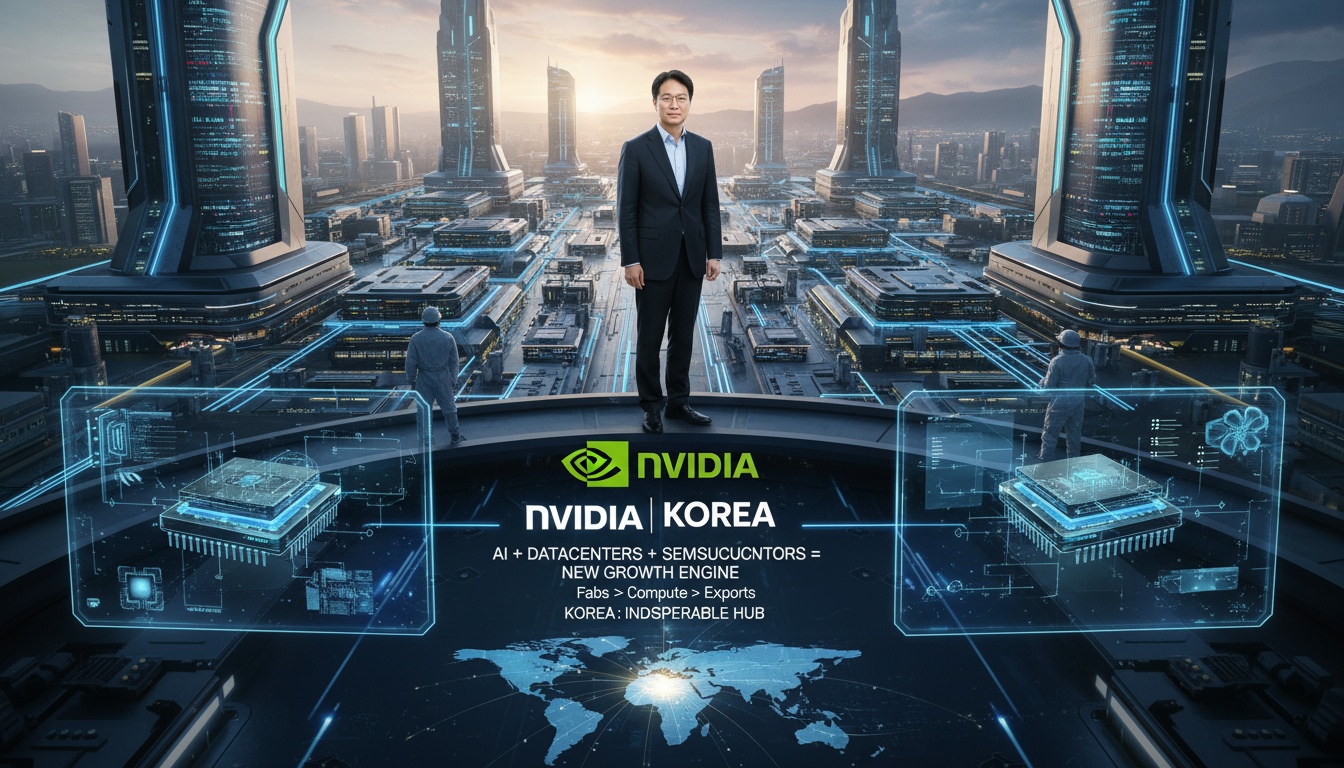
Nvidia CEO Jensen Huang, while in Korea, remarked to individual investors, “There is a reason Korea is wealthy when there are so many Nvidia investors here.”
He joked with a remark stating, “That made you rich,” referring to a story where an investor bought Nvidia at a low price five years ago and made a huge profit, confirming the investment fervor among the audience.
This scene symbolizes that Korean retail investors’ early participation in the US big tech and AI rally was the key driving force behind asset growth.
News Analysis: Why Did Korea Appear “Wealthy”?
First, the global spread of retail investors’ diversified investments played a significant role.
Korean individuals jumped early into the US big tech and AI rally, with many cases surpassing benchmark returns.
Second, during periods of a weak won, holding dollar-denominated assets naturally served as a hedge, and the revaluation of dollar-denominated profits into won produced an upward effect.
Third, the industry structure centered on semiconductors boosted expectations for domestic related stocks, job creation, and facility investments, in tandem with Nvidia’s supercycle.
In conclusion, the asset effect partly stimulated the domestic economy by improving consumer sentiment.
Structural Points Readable Without Data
Let’s look at the structure before the numbers are released.
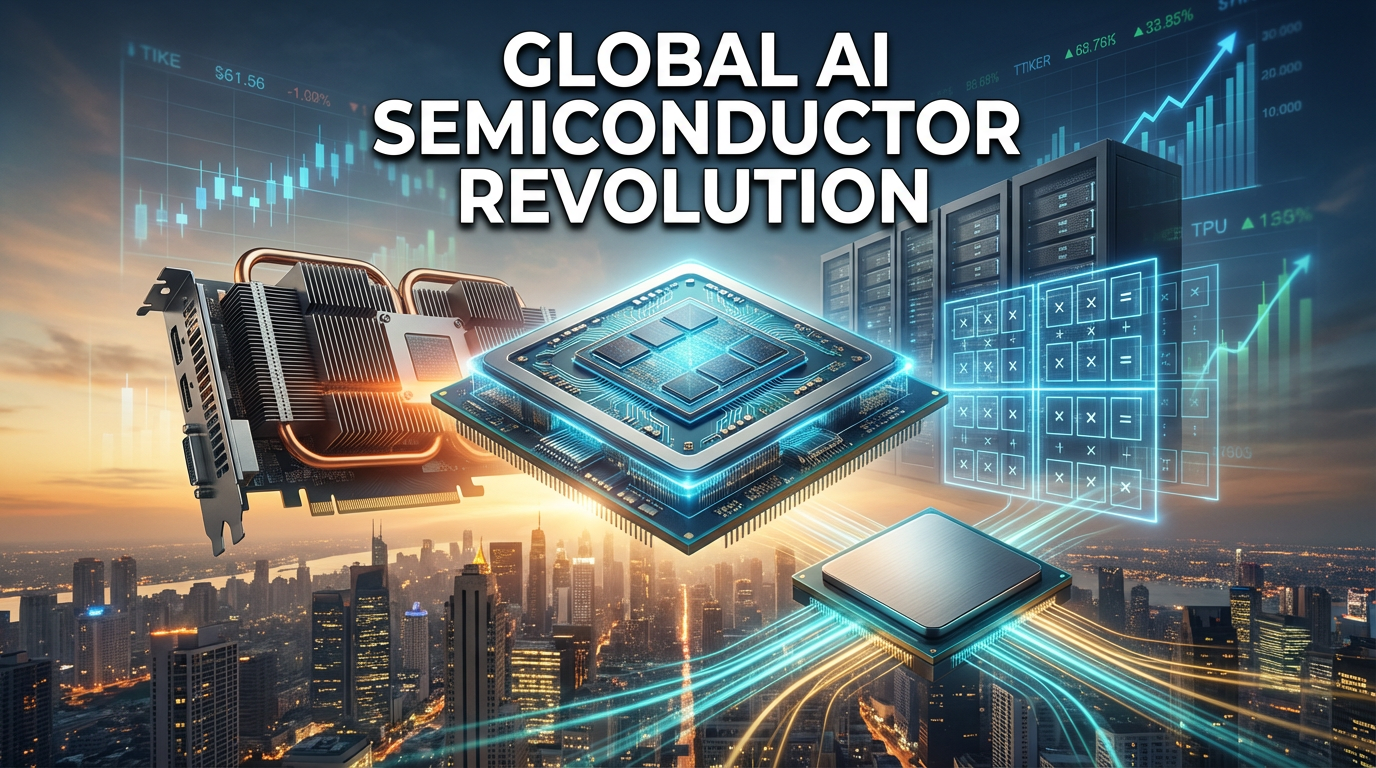
The surge in demand for Nvidia’s AI accelerators extends to memory (HBM), packaging, substrates, and power/cooling.
Korea has strengths in memory, packaging/materials, and certain power/thermal management ecosystems.
The growing trend of direct US stock investments by individual investors and the increased semiconductor weighting by domestic pension funds and institutions are aligned with this trend.
Korean Economic Outlook: Asset Effects vs. Macro Variables
Asset Effect (+): When financial assets grow due to the AI and semiconductor rally, consumer propensity improves.
In particular, the middle class may initially show increased spending on travel, home appliances, and leisure.
Interest Rate Factor (±): While a global interest rate decline supports growth stock valuations, a rebound in rates poses the risk of multiple compression.
Inflation (±): The expansion of AI data centers may pressure costs through higher power and component prices, possibly pushing up prices in certain areas.
Exchange Rate (±): If the won appreciates, the exchange gains on dollar assets may shrink, but reduced import cost burdens could be favorable for the domestic market.
Household Debt (-): Leveraged buying may exacerbate losses during heightened volatility.
The importance of credit and collateral management increases.
Industry Impact: Korea’s Opportunities and Challenges
Memory & HBM: The demand for HBM structurally increases in AI training and inference.
Korean memory giants benefit from increased facility investments and improved ASPs.
Packaging & Substrates: Demand for CoWoS, 2.5D/3D packaging, and high-layer substrate products will expand simultaneously.
Resolving bottlenecks is key to ensuring performance visibility.
Foundry & Design: Increased demand for advanced process yields and chiplet architectures makes the allied structure important.
Power & Cooling Infrastructure: Investment cycles for substations, cables, switchgear, UPS, and air/liquid cooling solutions are arriving.
Communications & Data Centers: The expansion of AI farms will boost demand for optical communications, switching, and core/edge data centers.
ESG & Electricity Pricing: Issues such as electricity pricing systems, renewable energy PPAs, and the nuclear-gas mix become prominent due to large-scale power consumption.
Individual Investor Checklist: Strategies Beyond Nvidia
Diversification and Exposure Management: While concentrating on a single stock can boost returns, it also increases volatility.
Diversify through the AI value chain (semiconductors, power, cooling, optical communications, software).
Dollar Exposure: Consider partial hedging or adjusting the proportion of dollar cash holdings in line with exchange rate cycles.
Cycle Signals: Regularly monitor HBM expansion plans, packaging lead times, AI CapEx guidance, and GPU lead times.
Regulations & Policies: Keep an eye on large platform regulations, US export restrictions, and changes in data center permits and power regulations.
Cash Flow: If non-profitable high-valuation stocks are over-represented, the risk increases with any rebound in interest rates.
The Most Important Content Other YouTube/News Outlets Rarely Cover
Won-Dollar Dual Beta: The profits of Korean investors in Nvidia combine the stock beta with the exchange rate beta.
In a phase of a strengthening won, even with the same stock price, won-converted returns may be dampened.
The power grid constraint determines the pace of AI rather than the GPU itself.
The execution speed of CapEx is determined by transmission/substation capacity, data center locations, and cooling water/thermal management permits.
Long-Term Capacity Contracts in Packaging & Substrates: Beyond short-term market conditions, multi-year agreements with customers are increasing.
This serves as a mechanism to reduce volatility during cycle bottoms.
Tax and Inheritance Risks: Capital gains tax applies to foreign stocks above the basic exemption level, and the framework differs for inheritance and gifts.
The higher the profit, the more important post-investment tax strategies become, rivaling the returns in importance.
The AI boom does not only drive up “components”: invisible parts such as cooling, heat-dissipating materials, high-density power semiconductors (SiC, GaN), and transformer cores become the core of performance leverage.
Korean-Style Data Center REIT Conversion: As repurposing outdated offices into data centers becomes more common, it could serve as an exit for the commercial real estate downturn.
Supply Chain Strategies at the National Level: Based on its strengths in memory and packaging, Korea has significant potential to enhance its negotiation power within the value chain through joint investments and incentive negotiations with allied countries.
Macro Variable Tracker: 5 Key Economic Outlook Elements
Interest Rates: Keep an eye on the neutral interest rate paths and real interest rates of the Fed and ECB.
This is directly related to growth stock multiples.
Inflation: Watch for acceleration in service prices, wage increases, and energy costs that could suppress valuation ceilings.
Exchange Rate: Monitor the dollar index, the interest rate differential between Korea and the US, and the pace of trade balance improvement.
Oil Prices: They directly impact costs for data centers, logistics, and power generation.
Geopolitics: Export restrictions on semiconductor equipment and materials, as well as supply chain risks, create both premiums and discounts.
One-Sentence Summary from the Field
“The reason Korea is wealthy” is not merely luck; it is the result of retail, industry, and policy riding the AI supercycle simultaneously.
The next round lies in investment ideas to resolve bottlenecks such as the power grid and packaging/substrates.
90-Second Action Plan
Portfolio Assessment: Quantify your exposure to Nvidia and big tech, your dollar exposure, and your holdings in the domestic value chain.
Create a Signal Board: Check HBM expansion, packaging lead times, AI CapEx guidance, and orders for power infrastructure on a monthly basis.
Risk Hedging: Consider holding 10–20% in cash, short-term bonds, or low-volatility ETFs to hedge against event-driven volatility.
Domestic Opportunities: Prioritize stocks in semiconductors, power equipment, cooling, and optical communications that show both clear performance visibility and capacity expansion.
Concluding One-Liner
The wealth created by AI spreads more broadly than expected, and the biggest alpha lies in the resolution of bottlenecks.
Let’s not lose sight of these two factors.
< Summary >
Jensen Huang’s “Why Korea is Wealthy” is the result of retail investors riding the AI and semiconductor rally, the effects of dollar-denominated assets, and strong industrial structures.
The key going forward is how interest rates, inflation, and exchange rates, as well as the resolution of bottlenecks in the power grid and packaging, evolve.
An effective investment strategy is to diversify across the value chain, manage dollar exposure, and expand into infrastructure with high performance visibility.
[Related Posts…]
Korean Semiconductor Super Cycle Checklist
AI Data Center Power Crisis Report
*Source: [ 월텍남 – 월스트리트 테크남 ]
– 젠슨 황 “한국이 부자나라인 이유가 있군요”