● Fed cut tease sparks tech frenzy, Nvidia rebukes panic, Google Gemini surge, Broadcom rockets, Burry warns supply glut
Michael Burry’s “Oversupply” Warning and the Real Background Behind Today’s Nasdaq Surge: Federal Reserve Comments, Fact-Checking Nvidia’s Statement, Google & Broadcom Momentum at a Glance
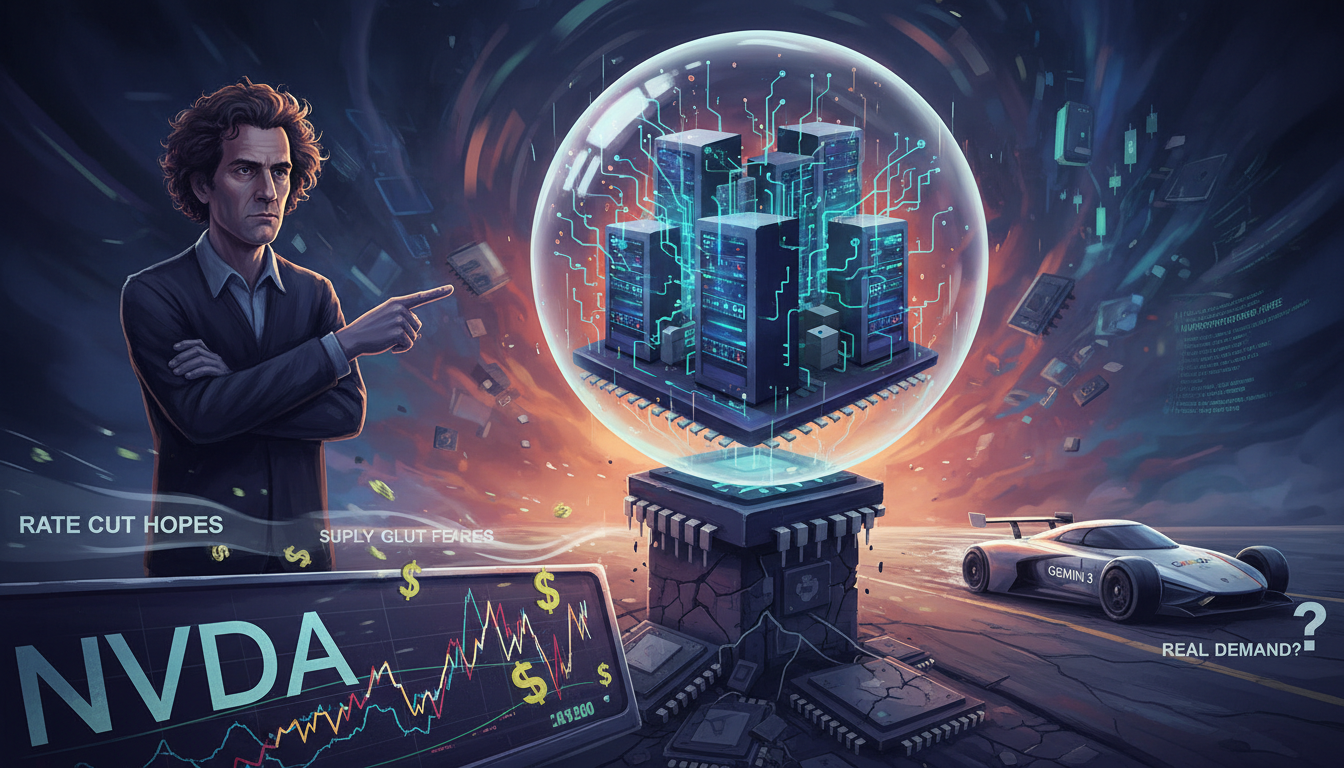
This article covers 1) the background behind the Nasdaq surge triggered by Federal Reserve Governor Waller’s hint at a rate cut, 2) Nvidia’s direct rebuttal to the “noise,” 3) the structural reasons behind the rally in Google’s Gemini 3 and Broadcom, 4) the core thesis of Michael Burry’s paid report and an investment checklist, and 5) signals from accounting and capital investment timing that are rarely discussed on other channels.
If you want to grasp the market outlook at a glance, please check out the news summary below.
Today’s Market Briefing: Nasdaq +2.4%, Fueled by Rate-Cut Expectations
The Nasdaq surged by 2.4%.
The catalyst for the rise was Federal Reserve Governor Christopher Waller’s comment endorsing a “rate cut next month.”
Market participants have priced in about a 77% chance of a rate cut in December, restoring the appetite for risk assets.
Technically, the rebound gained momentum as the S&P 500 bounced off the 10-day moving average in tandem with the positive news.
Expectations of easing inflation and a rate cut worked simultaneously to turn a “nervous → overreactive” pattern into a positive force today.
Nvidia’s Statement Key Points: “Overvaluation of Share Repurchases, Inventory, Receivables, and Cash Flow… It’s a Misunderstanding”
Nvidia’s official comment on the recent noise bolstered investor sentiment.
- Allegations of share repurchase at high prices: They stated that the average repurchase price since 2018 was about $51. Criticisms of “high price repurchases” relative to the current price are exaggerated.
- Inventory increase: It is not due to a slowdown in demand but rather a proactive measure to secure the next-generation AI chip “Blackwell” ahead of its launch.
- Receivables quality: The collection period is 53 days, which is similar to the long-term average (52 days), and the proportion of overdue receivables is negligible.
- Cash flow: They emphasized that the operating cash flow in Q3 remains robust.
- Circulating sales (startup investment to customer conversion) allegations: They delineated that this amounts to only 3–7% of total sales and is insignificant.
- Accounting transparency/external major shareholder sales: They clarified that past accounting issues are unrelated and that sales by specific external investors have no internal connection to the company.
The key point is that they preempted the “demand slowdown” narrative and subdued concerns by substantiating the soundness of their financial and operational metrics with concrete numbers.
The comments, in line with the rate-cut expectations, reinforced confidence in the tech stock rally.
Individual Momentum: Google’s Gemini 3 Frenzy, Broadcom Up 9%
After the unveiling of Gemini 3 by Google, traffic saw a noticeable increase.
According to Similarweb’s estimates, overall traffic for Gemini increased further compared to before the launch, and its traffic share relative to ChatGPT also rose from about 23% to 30%.
Prominent tech figures such as the CEO of Salesforce and others continued to praise it, and the image generation tool “Nanovana Pro” also captured increased attention.
Broadcom, as a Google TPU partner, saw its stock surge by about 9% on expectations of benefiting from this trend.
This is the classic pattern where the initial benefits of cloud and AI investments are concentrated in the semiconductor design and ASIC sectors.
Key Points from Michael Burry’s Paid Report: “The Essence of a Bubble is Not Revenue, but ‘Oversupply’”
Title takeaway: The most critical signal of a bubble is an oversupply on the supply side (the explosion in CAPEX).
Thesis 1 — Correcting Misconceptions About the “Dot-Com Bubble”: The movers and shakers during that period weren’t the loss-making dot-coms but rather large, profitable companies like Microsoft, Intel, Dell, Cisco, Qualcomm, and Oracle.
Thesis 2 — Capital Cycle: When a compelling story emerges, companies aggressively expand their capital investments and infrastructure. Initially, demand, earnings, and stock prices may be strong, but if everyone expands simultaneously, supply outstrips demand, leaving factories and facilities idle. At that point, margin collapse, earnings deterioration, and a stock market crash follow.
Thesis 3 — The Reality of the Early 2000s Bubble: It was not the “dot-coms” but rather a data transmission infrastructure bubble. Telecom companies poured tens to hundreds of millions of dollars into undersea cables, fiber optics, and backbone networks, and by 2002, there were stretches of installed fiber-optic cables with less than 5% utilization. Supply exploded while demand trailed far behind.
Thesis 4 — Timing of Stock Peaks: There is a recurring trend where stock prices peak midway through the cycle of a rising ratio of net capital investment to GDP. Similar patterns have been observed in the IT bubble, the 2008 housing bubble, and the shale cycle.
Thesis 5 — Today’s AI: Now, it isn’t “infinite data transmission” but rather “infinite AI computing” that justifies the spending. Hyperscalers are investing boldly in data centers, GPUs, and power infrastructure, while extending depreciation periods to defer expense recognition, thereby smoothing earnings – a practice reminiscent of the late 1990s.
Conclusion — “Nvidia is the new Cisco.” Companies selling essential infrastructure (shovels and picks) were at the center of the bubble, and when it burst, the downside was significant. Burry suggests that this reasoning is behind his purchase of Nvidia put options.
News Summary Key Points
- Macro: Federal Reserve Governor Waller’s comment supporting a rate cut has spread expectations of a December cut, pushing the Nasdaq up by 2.4%.
- Micro: Nvidia rebutted critiques regarding share repurchases, inventory, receivables, cash flow, and accounting issues with solid numbers, improving sentiment.
- Sectors: Google’s Gemini 3 saw a surge in traffic, while Broadcom climbed by 9% on expectations of benefiting from Google TPU.
- Burry’s Report: The essence of a bubble is not “demand” but “oversupply.” Stock peaks tend to occur midway through the capital cycle.
The Most Important Points Rarely Discussed on Other Channels
- Quantify the mid-cycle signals of the capital cycle: The first two quarters, when the year-over-year growth rate of hyperscalers’ (Alphabet, Microsoft, Amazon) combined CAPEX begins to slow down, serve as a critical boundary. When the momentum of this growth rate wanes, it often coincides with the stock peak.
- Watch for changes in depreciation periods: Frequent extensions of the depreciation periods for data centers, servers, and GPUs may temporarily boost short-term profits, but they defer the recognition of economic depreciation. Be sure to check the accounting policy change notes in 10-K and 10-Q filings.
- The “shadow inventory” created by power and grid bottlenecks: When power PPAs, substation capacity, or grid connection backlogs increase, installed GPUs may not operate at full capacity, widening the gap between “installation = operation.” Look for commentary on actual operating hours (utilization) rather than just GPU installation numbers.
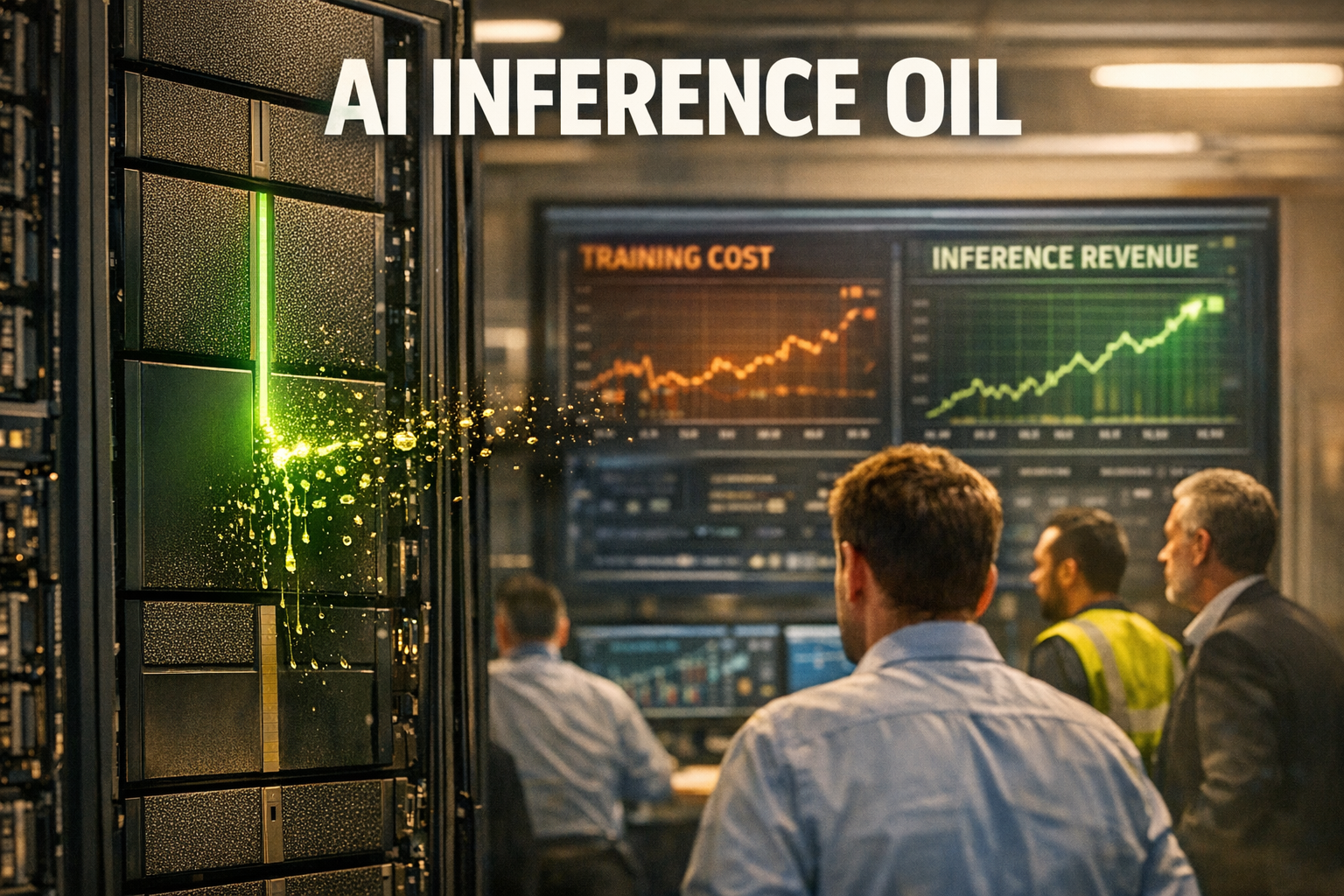
- The key to verifying demand is “the pace of inference price declines”: Training demand is more one-off, whereas inference demand generates recurring revenue. The true durability of demand is determined by whether customers can maintain service prices despite rapid drops in inference prices, and whether margins are preserved in the process.
- A rate cut isn’t always positive: If a rate cut is interpreted as a “lagging indicator of economic slowdown,” it could lead to a reduction in risk assets. Look not only at the policy shift itself but also the combined directions of inflation, GDP, and employment.
Burry’s Checklist for Positioning: What to Review Every Quarter
- Hyperscaler CAPEX: Trends and growth momentum in their combined CAPEX.
- Data Center Power Infrastructure: Look out for PPA signings, substation capacity expansions, and commentary on grid connection backlogs.
- Installed vs. Actual Utilization: GPU installations, cluster utilization, and mentions of “capacity absorption.”
- Inventory, Receivables DSO, and the Direction of Operating/Cash Flow for Nvidia and major partners (like Broadcom).
- Changes in Depreciation Policies: Frequency of extended depreciation periods and shifts in equipment mix (noting increases in the proportion of longer-life assets).
- Unit Prices/Margins: GPU supply prices, AI inference pricing, and commentary on the profitability of cloud AI instances.
Contrary Scenario: Conditions Under Which Burry’s Warning Could Miss
- An explosive expansion of inference demand that keeps utilization rates at high levels relative to installations.
- Improvements in model efficiency (achieving the same performance with less computing) and software monetization driving CAPEX recuperation.
- The spread of on-device AI and edge inference, which could mitigate the risks concentrated in data centers.
- Resolution of power bottlenecks (with the introduction of new generation power or grid input), converting the “shadow inventory” into actual demand.
Positioning Ideas: Practical Responses in Overheated Conditions
- Babel Strategy: Use a combination of AI beneficiary stocks with solid cash flows and defensive/high-dividend stocks to absorb volatility.
- Hedging: Manage risk exposure in high-beta stocks partly through put spreads or protective calls.
- Selective Approach: Diversify with “pick-and-show” stocks in segments like power, cooling, optics, packaging, and ASICs that have long-term contracts and pricing power.
- Key Observation Points: If slowing CAPEX growth, changes in depreciation periods, and shifts in utilization commentary occur simultaneously, consider taking profits or reducing exposure.
Upcoming Events Calendar
- FOMC, PCE Price Index: These will serve as triggers to re-evaluate the rate cut trajectory and inflation expectations.
- Mega-cap Earnings: Pay close attention to CAPEX, AI pricing, and utilization commentary from Nvidia, Broadcom, and Alphabet.
Key Takeaway in a Nutshell
The market is currently being driven by AI investment narratives amid expectations of a rate cut from the Federal Reserve.
However, as Burry cautions, the catalyst for a bubble is not a lack of demand but an oversupply.
It is crucial to monitor simultaneously the slowing momentum of CAPEX, changes in depreciation policies, and the gap between power constraints and actual utilization.
SEO Keyword References
Federal Reserve, rate cut, inflation, Nasdaq, market outlook.
< Summary >
Federal Reserve Governor Waller’s hint at a rate cut pushed the Nasdaq up by 2.4%, while Nvidia refuted controversies over inventory, receivables, and cash flow with solid numbers.
Google’s Gemini 3 saw a surge in traffic, and Broadcom’s stock rallied by 9% on expectations of benefiting from TPU.
Michael Burry defines the essence of a bubble as “oversupply” rather than demand, warning of overheating AI infrastructure with historical patterns of stock peaks occurring midway through the capital cycle.
Investors need a checklist to monitor CAPEX momentum, depreciation policy changes, and the disconnect between power capacity and utilization every quarter.
[Related Articles…]
- Nvidia Blackwell and Data Center Power Bottlenecks: Checking the ‘Oversupply’ Risk
- Interpreting the Federal Reserve’s Rate Cut Signal: Balancing Inflation, Growth, and Market Outlook
*Source: [ 내일은 투자왕 – 김단테 ]
– 증시를 뒤흔든 마이클 버리의 유료 리포트 전격 분석