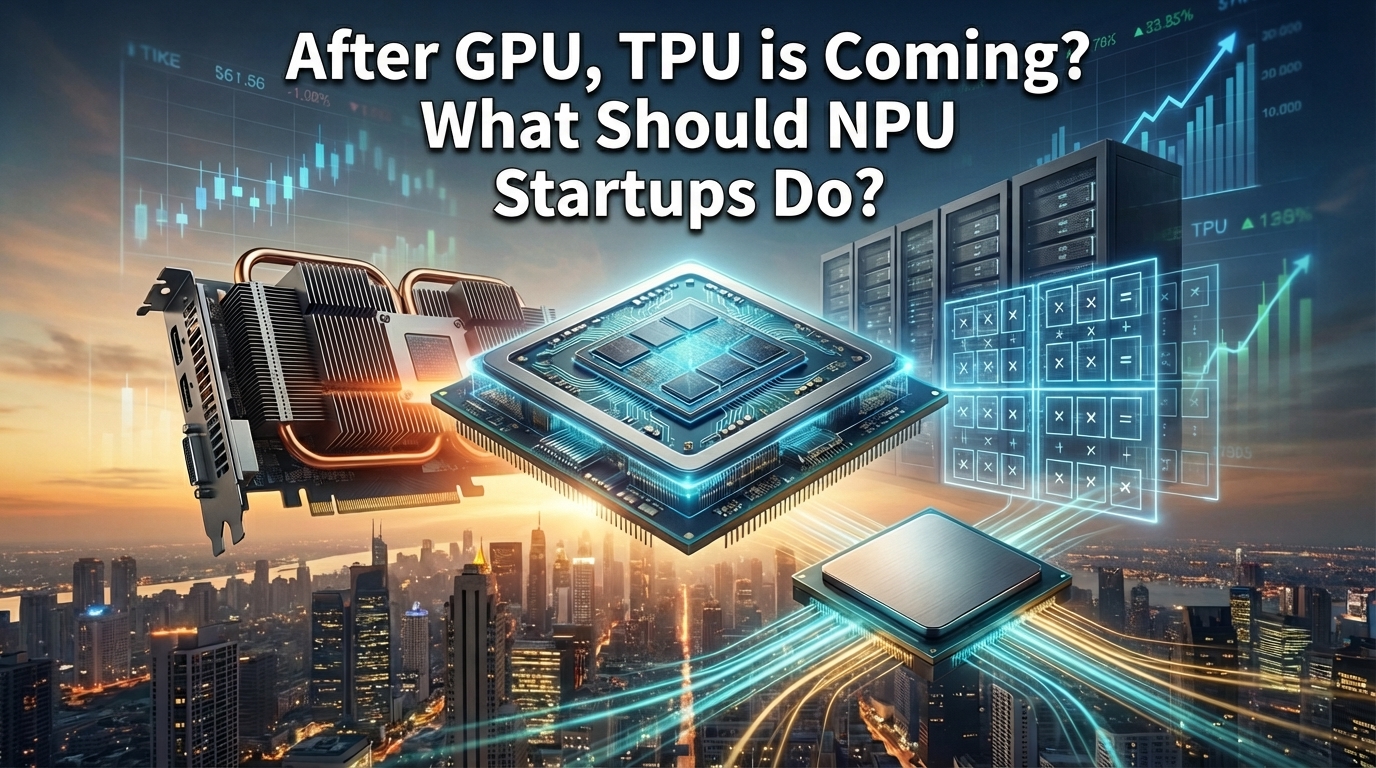
● AI Semiconductor Revolution, Nvidia, Google, Rebellion, Power, Efficiency, Breakthrough
GPU Next TPU? A New Breakthrough in the AI Semiconductor Market and Global Economic Outlook
1. Era of Restructuring the AI Semiconductor Market
Recently, Google’s TPU and the NPU products from the Korean AI startup Rebellion have attracted attention as challengers to NVIDIA’s GPU monopoly.
This article will closely examine the changing competitive landscape of the AI accelerator market and the breakthroughs of each company through top SEO keywords such as AI, artificial intelligence, semiconductors, the fourth industrial revolution, and global economic outlook.
In particular, Rebellion’s strategy of focusing on the inference market, unlike the training market dominated by large Big Tech companies, is a notable point to be discussed.
2. Competitive Edge of GPU, TPU, and NPU
NVIDIA’s GPU is optimized for training and inference in both areas, excelling in complex AI model learning that requires parallel processing of hundreds of units.
Google’s TPU, developed over the past decade as proprietary AI hardware, shows strength in power efficiency and specific task optimization by focusing on matrix multiplication.
Rebellion’s NPU specifically targets AI serving, or inference, aiming to minimize power consumption while achieving rapid token production, making it highly attractive in terms of price competitiveness and energy efficiency.
3. Changes and Future Outlook of the AI Inference Market
The AI inference market does not just compete on hardware performance; the cost per token and power efficiency are key competitive elements.
Rather than data centers, efficient and cost-competitive semiconductor solutions are expected to become mainstream in AI services as “token factories.”
Additionally, the application-specific designs demonstrated by Google TPU and Rebellion NPU will serve as an important turning point in increasing the practical utility of AI across various domains.
4. Global Economic Outlook and Opportunities for Korea in the Fourth Industrial Revolution
The global economy is entering the era of the fourth industrial revolution, accelerating investments and technological development in the fields of artificial intelligence and semiconductors.
Domestic AI startup Rebellion is rapidly growing in the AI semiconductor market with the support of the government, large corporations, and global investors.
Notably, through collaboration with Saudi Arabia and the establishment of a national AI data computing center, Korea is at a critical point where it can secure unique technological capabilities and competitiveness in the global market.
5. Rebellion’s Strategy: Differentiation in the Inference Market
Rebellion aims to secure a competitive edge in the inference market through serving-specific products optimized for certain domains compared to large GPUs.
The products consider both training and inference aspects but possess high competitiveness in power efficiency and cost.
Through this, the goal is to establish itself as a differentiated technology in the global AI semiconductor market, rather than merely a “commodity.”
[Related Articles…]Future of TPU Technology DevelopmentTrends in Innovative Semiconductor Market
*Source: [ 티타임즈TV ]
– GPU 다음 TPU 온다? NPU 스타트업은 어떻게 해야하나 (박성현 리벨리온 대표)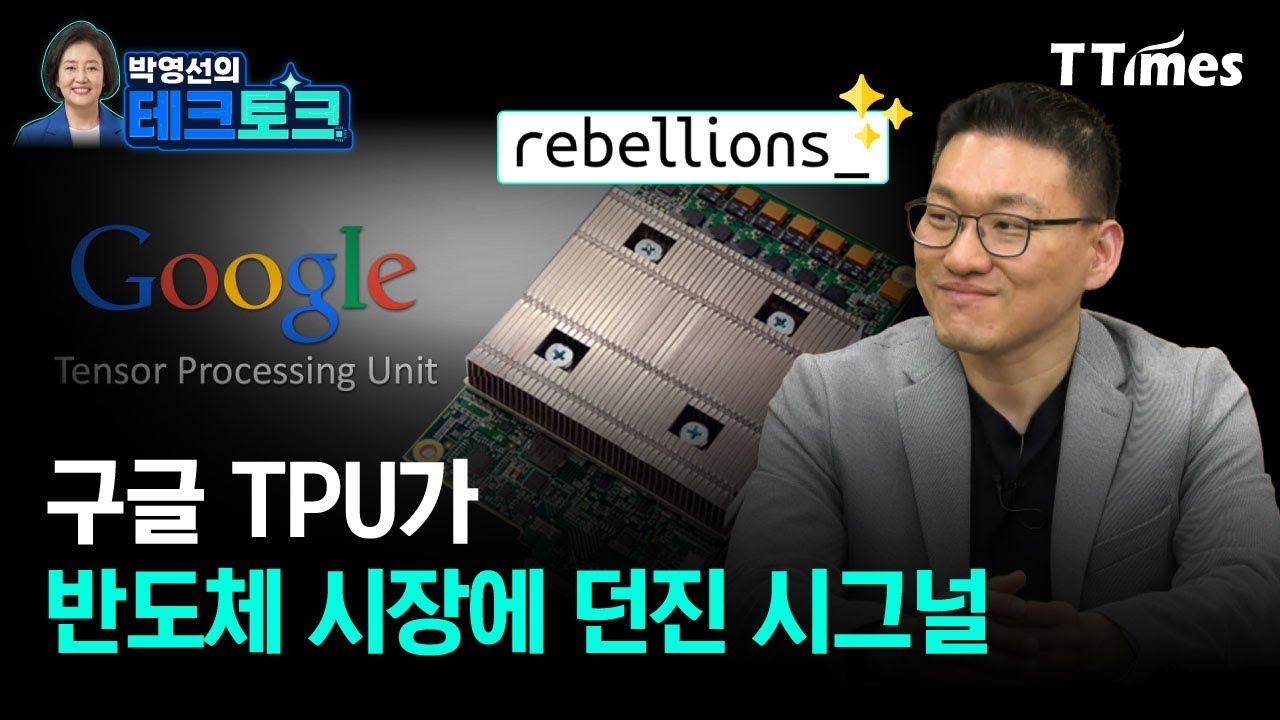
● Economic Turmoil Shakes Markets, Investors Fear Recession
Child Education and Global Leadership: ‘Practical Tips’ in Disciplining Sons and Core Strategies of Modern Education
This article meticulously organizes the core strategies of child education, the unique characteristics of boys, effective discipline methods, and practical tips for building trust between parents and children. It may seem to be entirely different from global economic forecasts or AI trends, but strict principles and systematic approaches contain leadership principles necessary in the changing environment of the Fourth Industrial Revolution. From the perspective of child education, the importance of ‘practical tips’ and ‘sustainable trust building’ resembles strategies for economic success or keeping up with AI trends in modern society. Below are the main points organized by group.
1. Understanding the Unique Characteristics and Behaviors of Boys
Boys often show aggressive play and concentration issues compared to girls. Survey results from teachers at elementary schools indicated that most found it challenging to deal with boys. This should not simply be labeled as ‘lack of awareness,’ but rather understood as a specific way boys interact socially and express energy.
Parents should understand these characteristics and think about ways to positively channel the child’s energy. For instance, activities that involve playing with LEGO, which the child enjoys, can effectively lead to conversations that align with the child’s interests.
2. Effective Discipline and Communication: Clarity and Trust Building
Discipline requires ‘clear instructions’ and ‘consistent rules.’ For example, avoiding spontaneous control by providing clear guidance like, “Minjun, do this,” is essential. This process is similar to systematically managing the uncertainties that come with changes in global economic projections or AI trends.
When facing a child’s rebellion or concentration issues, rather than engaging in emotional conflicts, it is important to begin with the phrase “That’s right” to help the child clearly recognize the consequences of their choices. Furthermore, excessive emotional expressions can negatively impact the child’s self-esteem; hence, it is crucial to balance specific instructions with praise and feedback.
3. Safe Communication and Trust Building Between Parents and Children
The most important aspect of child education is to ensure the child can easily remember and trust the parent’s words. Given that every word and action can significantly impact a child’s life, trust and stability form the foundation of education. Parents must consistently keep their promises to their children and communicate implicit promises (such as always being there and protecting them in any situation).
Building this trust requires consistent and systematic effort, much like planning long-term investments while considering economic forecasts. In other words, parents should demonstrate a long-term perspective, showing growth alongside their child rather than expressing short-term emotions.
4. Designing Experiences to Enhance Self-Efficacy and Self-Esteem
A child’s self-esteem consists of two elements: ‘self-efficacy’ and belonging. Parents should fully recognize the child’s achievements when they succeed in specific actions and use those successes to foster self-esteem. For example, helping the child to successfully manage game time or complete homework reinforces the importance of making decisions.
This process resembles how technology such as AI progresses during the Fourth Industrial Revolution; children need to understand their roles and abilities in changing environments. As positive experiences are repeated, the child develops a belief that “I can do it,” which significantly influences their future learning and overall life.
5. Educational Thinking: A Process of Growth for Parents as Well
Both parents and children learn through experiences. Parents should avoid instilling distrust in their child through a single instance of poor discipline and instead acknowledge their mistakes, repeatedly working to regain trust. The phrase “Mom loves you” should go beyond a mere expression of feelings and translate into actionable support during pivotal moments.
This process is similar to how leaders in the economic sector constantly revise and implement strategies. Therefore, parents must act as partners who grow alongside their children, keeping small promises in every moment to help their children develop the self-efficacy and self-esteem necessary for entering society.
[Related Articles…]
Latest Analysis of Global Economic Forecasts
Future Trends of AI
*Source: [ 지식인사이드 ]
– 자식이 의외로 평생 기억하고 고마워하는 부모의 한 마디ㅣ지식인초대석 (최민준 소장 풀버전)
● AI Revolutionizes Finance, Unleashing Instant Insights
Deep Agent, full-scale transition of financial research… AI directly innovating financial analysis
AI-based Financial Analysis Revolution
Deep Agent has evolved from a supportive role to an autonomous AI tool encompassing the entirety of financial research. This AI integrates and operates seven interconnected workflows, functioning much like a team of professional analysts, including analysis of cryptocurrencies, stocks, options strategies, macroeconomic analysis, and risk management. The ability to generate investment reports by utilizing real-time data verification, multi-step planning, and authoritative information from sources like CNBC and Investing illustrates the current state of the 4th Industrial Revolution, which is sensitive to global economic conditions and forecasts. Such innovations are shifting the landscape of the investment market in accordance with the latest trends in artificial intelligence and economic technology.
Perfectly performing multiple roles with a single AI instead of a team
Deep Agent takes on various roles traditionally performed by financial research teams through a single AI platform. It processes analyses of the cryptocurrency market, stock trading, options trading, and even risk analysis all in one platform while providing transparent reasoning through multi-step logic at each stage. This approach reflects real-time best SEO keywords related to the economy, such as “economic outlook” and “global economy,” enabling individual investors to access deep analytical results comparable to those of professionals.
Detailed area analysis: Cryptocurrency, stocks, options, and portfolio risk management
The first workflow of Deep Agent is cryptocurrency analysis. It precisely analyzes on-chain activities of major cryptocurrencies like Bitcoin, trading trends of large institutions, and periods of heightened volatility to capture optimal investment timing.
Furthermore, the AI utilizes stock screening capabilities, taking into account financial metrics, technical analysis, news flow, and market sentiment simultaneously. This process goes beyond simply listing tickers; it deeply assesses why each company is receiving attention and its intrinsic value.
In the options-related workflow, it identifies the investor’s risk tolerance and preferred strategies to suggest a strategic portfolio composition. Lastly, in portfolio analysis, it comprehensively diagnoses sector exposures, asset distribution, and factor styles to provide advance warnings of potential risk factors.
Transparent analysis and autonomous decision-making systems
Another strength of Deep Agent lies in the transparent generation process of its research reports. The data, criteria, and reasoning used in the analysis are thoroughly detailed, enhancing trustworthiness. Reports are output in HTML format, making internal modifications and redistribution easy, which can be immediately utilized by clients and investment review committees.
As the multi-step team analyses traditionally done by one person become automated through a single AI, the market is expected to rapidly transition towards automated decision-making systems. This change aligns with existing applications of artificial intelligence in the finance industry, similar to the trends already experienced by global financial institutions such as Bloomberg GPT, JP Morgan, and Fidelity.
Industrial implications and future outlook
The financial innovation brought by Deep Agent holds significant meaning, as it allows the autonomous analytical capabilities of AI to provide real-time financial information and analysis results to ordinary investors. This shift is a product of the convergence of the 4th Industrial Revolution and AI trends, marking an important turning point in redefining economic outlooks. In the future investment market, artificial intelligence is expected to completely reshape financial research, with quick decision-making and market adaptability emerging as key competitive advantages.
[Related Articles…]The Meeting of Economic Outlook and Artificial IntelligenceGlobal AI Trends in the 4th Industrial Revolution
*Source: [ AI Revolution ]
– This AI Just Crossed a New Intelligence Line: It Took Over Finance