● China’s AI Talent Boom Genius Programs, Tech Entrepreneurship, Future Economy
The Secret of China’s AI Talent Cultivation: Gifted Classes, Engineering Fever, and Future Economic Outlook
Operational Structure of China’s Gifted Classes and AI Innovation Strategy
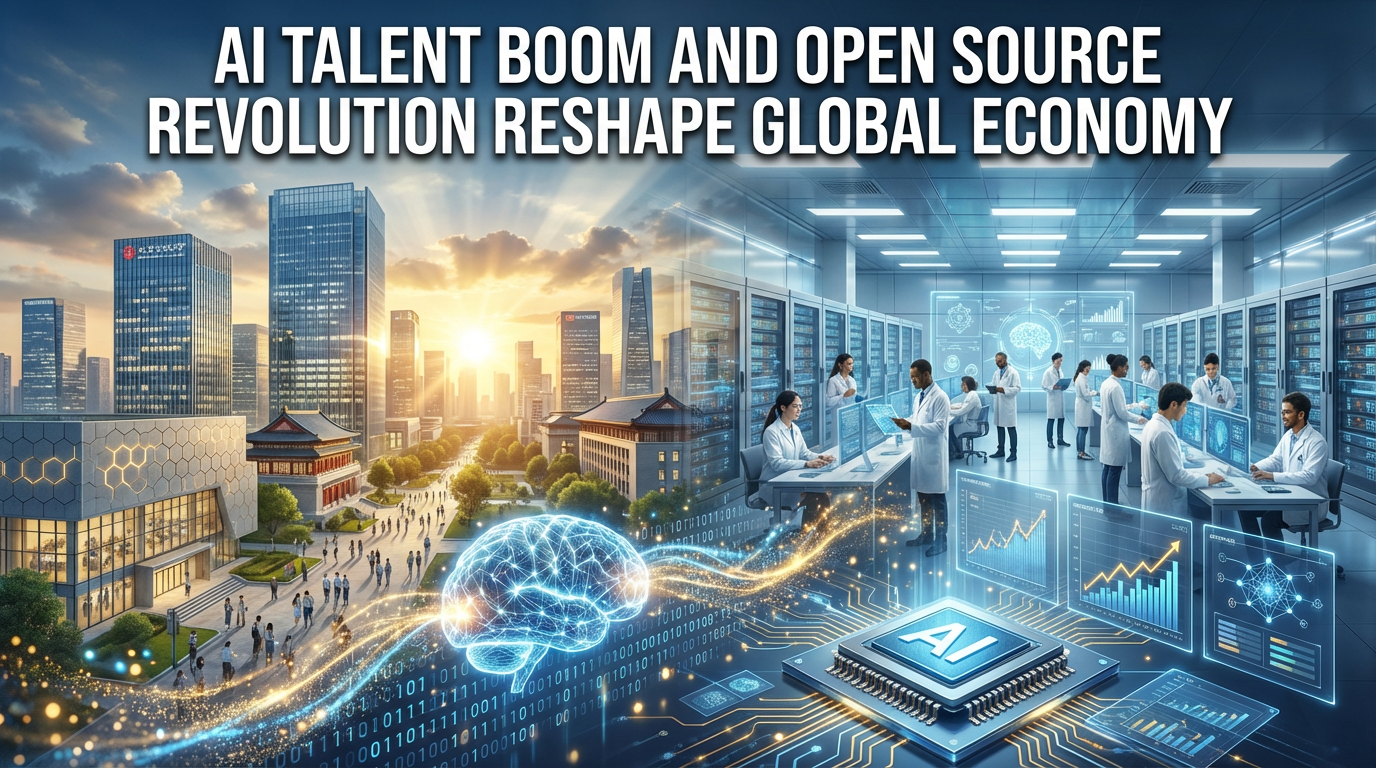
Special gifted classes operated by Chinese universities, such as Peking University’s Turing Class and Tsinghua University’s Yao Class, have established themselves as a cornerstone of AI innovation beyond just selecting outstanding students.
These programs, initiated in 2005 and 2017, have laid the groundwork for the fact that half of the world’s AI researchers are from China.
In particular, the notable recruitment of renowned professors from the United States supports students in gaining practical experience and global competitiveness.
Alongside the Chinese government’s investment and support policies, a virtuous cycle has formed where graduates from these gifted classes lead to technological startups and research development.
Engineering Fever, Startup Success, and Future Growth Prospects
The specific reason why Chinese students prefer engineering over medical school lies in economic rewards and future growth potential.
Thanks to state-led investment policies and active support from venture capital, opportunities for startups exclusive to engineering graduates have become a reality.
In fact, examples like Cambrian Technology, which develops AI chips, and Pony AI, a robotic taxi company, demonstrate the potential for engineering graduates to succeed in the global market.
These entrepreneurial success stories impact future growth and technological investment, influencing the global economy and providing new insights for educational and research investment directions in countries like South Korea.
Technology Investment and Economic Outlook: Changes Brought About by China’s AI Innovation
Since 2018, following the U.S.-China trade war, the Chinese government has launched significant investments in technology independence, particularly in semiconductors and memory sectors, aiming to secure future growth engines beyond mere security concerns.
Policy innovations, such as the launch of the Sci-Tech Innovation Board, are improving the investment environment and further strengthening the startup infrastructure, solidifying China’s position in the global technology investment market.
Moreover, graduates from gifted classes are engaging in various research and startup activities in both the U.S. and China, playing a crucial role in reshaping the global economy.
These changes represent a strong example of how traditional economic outlooks, AI innovation, technology investment, and future growth keywords synergistically interact.
Benchmarking Against South Korea and Future Challenges
China’s gifted classes and engineering fever serve as important cases that prompt other countries, particularly South Korea, to reassess their talent cultivation and technological innovation strategies.
Unlike the existing system that concentrated on the medical field, the success of engineering graduates in entrepreneurship provides significant implications for the South Korean education system.
Additionally, there is a pressing need to reorganize the incentive structures across society to ensure future growth engines are in place.
Experts advise that this innovative talent cultivation model should not be merely imitated but reinterpreted to suit local contexts, enhancing global economic competitiveness.
Special Points for Readers
A crucial aspect not deeply covered by other media is that China’s strategy to promote technology independence alongside gifted classes and the activation of engineering graduates’ startups connects to national future growth engines beyond a mere educational model.
Furthermore, by improving the investment environment, one can experience the impact of AI innovation and technology investment on the global economy, and this change is intricately connected with key SEO keywords such as future economic outlook, global economy, AI innovation, technology investment, and future growth.
[Related Articles…] China’s AI Innovation Cases | Success Stories of Engineering Startups
*Source: [ 티타임즈TV ]
– 공대 천재의 산실, 중국대학 영재반은 어떻게 운영되나? (김재현 머니투데이 중국 전문위원)
● Honey Industry Revolution, AI Boosts Quality and Consumer Trust
The Wind of Innovation Blowing into the Honey Industry in the Era of Global Economy and Artificial Intelligence!
1. The Global Economic Significance and Digital Innovation of the Honey Market
The honey industry is emerging as a pillar of the global economy that encompasses not only the food market but also agriculture, health, and the environment.
The honey grading system implemented by the government contributes to consumer protection while enhancing the competitiveness of producers.
This certification system serves as an example of economic prospects and digital innovation, showing the development direction of the globally recognized honey industry.
Moreover, as artificial intelligence (AI) technology is introduced into agriculture with real-time monitoring and disease prediction systems, it brings new innovations in managing bees and improving honey quality.
2. AI Trends and Smart Beekeeping Systems
With the introduction of AI trends in agriculture, it has become possible to assess bee activity beyond traditional manual diagnostics using camera recognition.
Smart beekeeping systems collect real-time data on the activities of bees and the presence of parasites on the hives, managing quality effectively.
These technological advancements represent a model of digital innovation that enhances productivity and strengthens market competitiveness by utilizing artificial intelligence and big data.
Considering the global economy and AI trends together, the future of the honey industry is being redefined into a new paradigm called “digital beekeeping,” extending beyond just natural materials.
3. Standards of Honey Grading System and Building Consumer Trust
The honey grading system led by the government is divided into three grades (1⁺, 1, 2) and allows consumers to easily verify the freshness, origin, and inspection results of products through QR codes.
Key components such as moisture content, carbon isotope ratio, and HMF (a freshness indicator for honey) are evaluated under strict criteria, thereby enabling consumers to choose reliable natural honey at a fair price.
This certification system empowers consumers with actual choices and helps them clearly differentiate between genuine and counterfeit products, thus ensuring both health and safety.
4. Government-led Certification Systems and International Comparison
Currently, the only honey grading system implemented by the government in the world manages the HMF value standards much more strictly compared to international food standards.
In the international market, many cases depend on private certification, such as manuka honey, but Korea’s system is evaluated as a leading example for increasing consumer trust.
From a global economic perspective, this suggests that Korea’s honey industry has a growing potential to emerge as a competitive high-value-added industry.
5. Health, Environment, Artificial Intelligence, and Future Economic Prospects
Honey is rich in bioactive substances that possess nutritional, anticancer, and immune-boosting effects, going beyond mere sweetness.
Meanwhile, the ecological role of bees significantly contributes to crop pollination and environmental conservation, directly relating to food security for humanity.
To cope with environmental stresses such as pesticide and heavy metal contamination, and climate change, the implementation of AI-based management systems is increasing, involving both the government and private sectors.
Thus, the smart beekeeping systems that combine economic prospects and artificial intelligence technology are expected to have positive ripple effects in various areas such as future economies, environments, and health.
The transformation of the honey industry is expected to receive even more attention in the future as it contributes to consumer protection and productivity enhancement, centered around key concepts like global economy, AI trends, economic prospects, digital innovation, and artificial intelligence.
[Related Articles…]
- Latest Analysis of Honey Grading System
- Trends in Agricultural Innovation Using Artificial Intelligence
*Source: [ 지식인사이드 ]
– 한국인 99%가 모르는 ‘한눈에 천연 벌꿀 고르는 법’ㅣ상국열차 EP.11 (허주행 수의사, 이경실 원장, 임선아 대표)
● Revolutionary Open Source AI Model Disrupts Economy
The Open Source AI Agent Revolution: Economic Outlook and the New Wave of the Fourth Industrial Revolution
1. The Emergence of Innovative Multimodal AI Technology
AI technology has now reached a turning point where it goes beyond simple text processing and naturally recognizes images, videos, and screenshots, leading to tool calls.
The recently open-sourced GLM 4.6V model by Zhipu AI is a prime example.
This model processes complex visual material directly through its native multimodal tool calling function, without the need for a text conversion process.
Its extended context window of 128,000 tokens allows for the analysis of documents equivalent to 150 pages, 200 slides, or a one-hour video all at once.
This signifies the expansion of functionalities that were previously monopolized by OpenAI and Google into the open-source ecosystem, and the provision of a free Flash version has generated significant stir.
2. Economic Outlook and Its Impact on the Global Economy
The emergence of this AI model is regarded as a significant milestone that will have a considerable impact on the global economy beyond mere technological innovation.
In terms of cost competitiveness, GLM 4.6V boasts operating costs that are significantly lower than existing models.
The large model with 106 billion parameters costs between $0.3 to $0.9 per million tokens, showcasing remarkable price competitiveness compared to GPT 5.1, Gemini 3 Pro, and Claude Opus.
Such economic forecasts are expected to alleviate the burden on companies adopting AI, injecting great vitality into the global economy that is pursuing cost efficiency within the flow of the Fourth Industrial Revolution.
3. Practical Implementation of AI Technology and Innovative Features
The innovations demonstrated by GLM 4.6V serve not just as simple analyses but also as practical tools ready for execution.
The model recognizes visual data (screenshots, PDF pages, video frames, etc.) and directly connects to tools to return results.
For example, its frontend UI automation feature shows practical applications by accurately reconstructing HTML, CSS, and JavaScript code from screenshots of apps or websites.
Moreover, the closed-loop verification feature, which conducts real-time self-validation during the tool calling process, is an innovative element rarely found in existing open-source models.
4. Paradigm Shift in Agent Building in the Era of the Fourth Industrial Revolution
While traditional AI platforms typically handled tasks individually, GLM 4.6V processes complex tasks as a continuous chain.
It demonstrates its strengths by executing document analysis, video summarization, and web searching as a single process.
With the internalization of tool usage, the model’s ability to autonomously judge and execute necessary tasks is directly linked to the automation and efficiency enhancements that are most needed in the Fourth Industrial Revolution.
Furthermore, the open-source licensing and provision of a free lightweight version allow developers and companies around the world to utilize it freely, fostering rapid diffusion and innovation within the overall development ecosystem.
5. Key Points Not Covered in Other News and YouTube
Most of the existing news has focused solely on the introduction of features, but this article emphasizes the following important points.
First, the model’s token extensibility and its capacity for processing large documents and videos become critical competitive advantages in maximizing efficiency in actual work.
Second, eliminating unnecessary text conversion steps by using visual data directly during tool calls achieves innovative transitions in speed and accuracy.
Third, frontend automation and self-verification loops enhance developers’ abilities to continuously improve UI and UX in real time.
Lastly, the combination of economic viability and technological innovation presents opportunities to gain a competitive edge in the global economy and the Fourth Industrial Revolution market.
[Related Articles…]
The Revolution of the First Open Source AI Agent
The Impact on the Global Economy and the Fourth Industrial Revolution
*Source: [ AI Revolution ]
– OpenAI and Google Shocked by the First EVER Open Source AI Agent