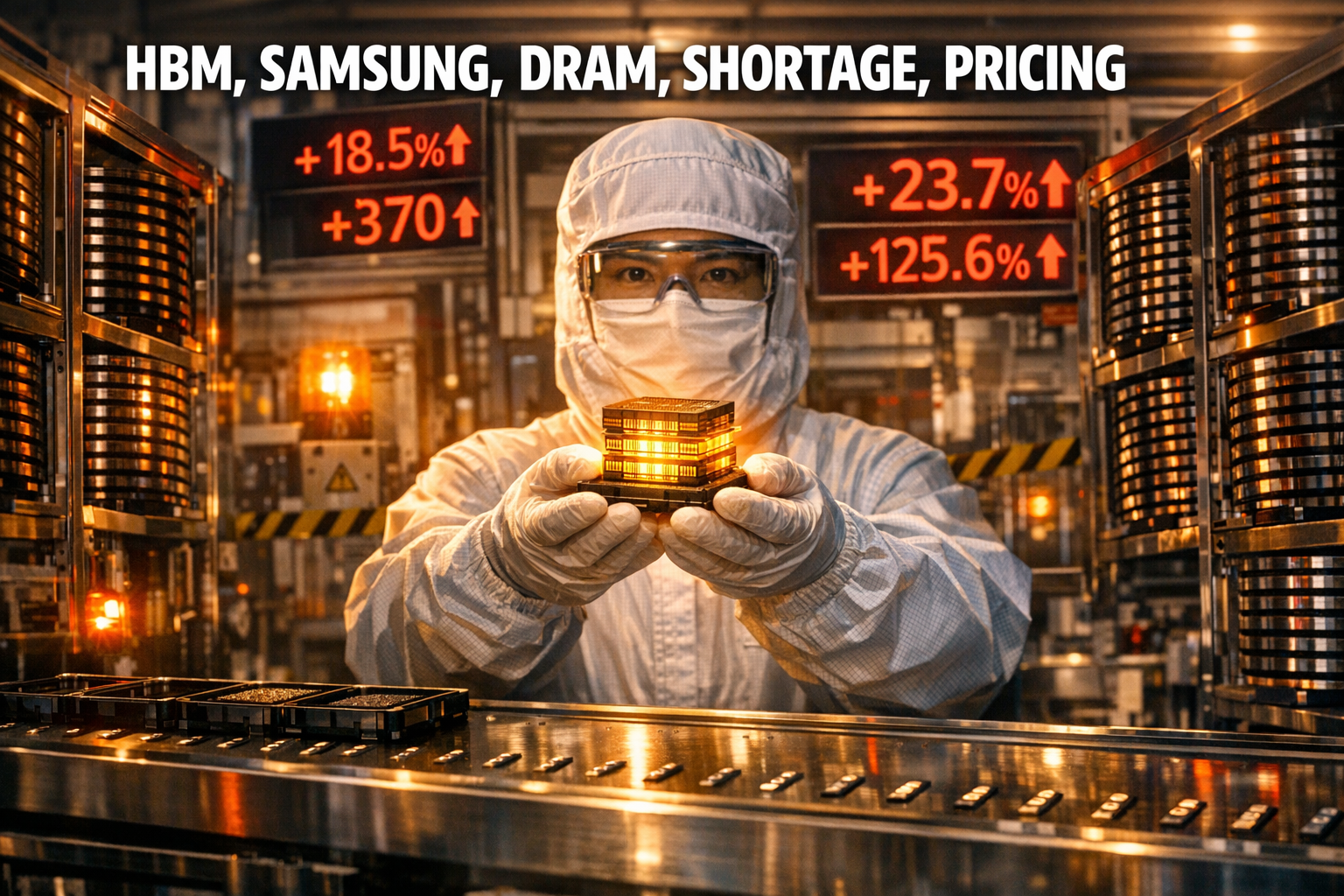

● Samsung Storms Back, Grabs HBM No 2 Spot, DRAM Crunch Ignites Price Surge
So, today’s story is eye-opening news for investors holding Samsung Electronics or waiting for the semiconductor super cycle.
In today’s post, we will dig into the specific numbers on how Samsung Electronics regained 2nd place in the HBM market and how much the gap with the overwhelming No. 1 SK Hynix has narrowed.
Especially, I will point out the core points that others don’t talk about much, regarding how the ‘general-purpose DRAM supply shortage’ phenomenon, which is more important than simple ranking changes, will affect our wallets, so please stay focused until the end.
Samsung Electronics Regains 2nd Place Overtaking Micron in the HBM Battlefield! The Market Landscape is Changing
For Samsung Electronics shareholders who have suffered a lot, data has come out that might bring some relief. The news is that as of the third quarter of 2025, Samsung Electronics has finally regained the second spot in the High Bandwidth Memory (HBM) market, overtaking Micron of the US.
This is important because, during the past 1-2 quarters, Samsung was pushed back by Micron and almost suffered the stigma of being ‘third-rate in the HBM market.’ However, in this third quarter, they fired a definite signal of a rebound.
1. Fact Check: The Truth of Market Share Hidden Behind Numbers
I will summarize the current report card based on the latest data from market researcher Counterpoint Research.
- 1st SK Hynix (57%): Still an overwhelming ruler with over half the share. However, compared to the previous quarter (64%), the market share dropped by 7 percentage points. It means a slight brake has been put on their solo run.
- 2nd Samsung Electronics (22%): Finally recovered to the 20% range and rose to 2nd place. Considering they were struggling in the 13-15% range in the first half, it means they found breathing room as HBM3E (5th generation) supply began in earnest.
- 3rd Micron (21%): Maintained market share, but sat down to 3rd place pushed by the surging Samsung.
What we need to notice here is that the gap between Samsung Electronics and Micron is only 1 percentage point. It is too early to be relieved, but the key takeaway is that the trend has turned to a ‘rebound’.
2. Overall DRAM Market: Entering a ‘Close Battle’ Phase
Looking at the overall DRAM market as well as HBM, a very interesting flow is visible.
- SK Hynix (34%) vs Samsung Electronics (33%)
- The gap between the two companies was quite large in the first quarter, but now it has narrowed to a difference of only 1 percentage point.
- Since the total market size itself grew by 26% compared to the previous quarter thanks to increased shipment volume and price rises, Samsung’s pursuit is quite significant in a situation where the pie itself is growing.
3. [Deep Dive] The Real Core Point News Doesn’t Tell You: ‘The Paradox of Legacy DRAM’
Now, this is the real deal. Most news focuses only on the ranking that “Samsung took 2nd place,” but as investors, we must look at ‘why the total market grew’.
If you look closely at the articles, there is a passage that says “Major suppliers reduced general-purpose DRAM production, leading to a supply shortage phenomenon.” What does this mean?
- Butterfly Effect of HBM All-in Strategy: Samsung, Hynix, and Micron all reduced the production of ‘General-purpose DRAM (Legacy DRAM)’ that goes into general PCs or servers to increase the production lines for profitable AI semiconductor HBM.
- Balloon Effect: As a result, general DRAM started to run short in the market, and due to this, general-purpose DRAM prices are skyrocketing.
- Possibility of Samsung’s Double Benefit: Samsung Electronics is a latecomer in HBM, but traditionally, its production capacity (CAPA) for general-purpose DRAM is world-class. What if HBM yield is stabilized and general-purpose DRAM prices rise at the same time? It can be interpreted as a signal that Samsung Electronics’ performance in the 4th quarter and the 1st quarter of next year could improve much faster than market expectations.
In other words, now beyond the fight of ‘who sells more HBM’, ‘who more efficiently monetizes the shortage of general-purpose chips caused by HBM’ will be an important key determining the direction of the stock price.
4. Bonus Trends You Shouldn’t Miss
Besides this, let me point out just two more interesting points covered in the article.
- Choice of Gen Z: Surprisingly, Chairman Lee Jae-yong was selected as the No. 1 leader of the year chosen by Gen Z. The fact that the image of the brand Samsung and its leadership is quite positive among the younger generation is not a bad signal for long-term B2C strategies.
- Next-generation Brain Revealed: The ‘Exynos 2600′ that will go into the Galaxy S26 has been revealed. Whether competitiveness is recovered in the mobile AP market will also be an important observation point for Samsung Electronics’ mobile business division in the first half of next year.
< Summary >
- Samsung Electronics Retakes 2nd Place: Recorded 22% HBM market share in Q3 2025, returning to 2nd place by overtaking Micron (21%). Improvement in HBM3E performance was effective.
- Check on SK Hynix’s Solo Run: SK Hynix is still 1st with 57%, but the market share dropped by 7%p compared to the previous quarter, and the gap with Samsung is narrowing.
- Key Insight: As the three semiconductor companies concentrate on HBM production, a general-purpose DRAM supply shortage phenomenon has occurred. This leads to DRAM price increases, which can be another opportunity for Samsung Electronics, which has good production capacity.
- Market Outlook: The overall DRAM market grew by 26%, entering a boom period, and the gap in total market share between Samsung and Hynix is a close battle with only 1%p difference.
[Related Posts…]
- Samsung Electronics HBM Share 2nd Place Recapture and Outlook
- Analysis of Semiconductor Super Cycle and DRAM Price Rise
*Source: https://www.hankyung.com/article/2025121945997