● Physical AI hits the real world cash war, agents automate ops, longevity turns homes into health hubs
CES 2026 Tech Trends: Why ‘Physical AI’ is Truly Alarming + Overview of AI Transformation/Longevity/Engineering Tomorrow
The message from the CES organizers (CTA) is simple.
“AI is moving out of the screen and into the ‘real-world industries’ that make money.”
This article includes content such as:
Why Physical AI is the most powerful keyword in 2026 (humanoids, robotic arms, autonomous driving, wearables)
How ‘Intelligence Transformation’ differs from Digital Transformation (data → intelligence → action)
How Agentic AI, Vertical AI, and Industrial AI are reshaping the market
Longevity shifting “healthcare” to “smart home (home health hub)”
How Engineering Tomorrow addresses productivity, energy, food, and workforce shortages
And finally, a special summary of “the most important point” that is often overlooked on YouTube/news.
1) News Briefing: Core Point from CTA on CES 2026 ‘Tech Trends to Watch’
One-line Summary
AI is moving beyond software competition to ‘proof competition’ verified in the physical world (factories, roads, homes).
2) Mega Keyword #1: Intelligence Transformation — The Era of Data Becoming ‘Action’
CTA clearly distinguishes this from “Digital Transformation (DX)”.
While DX was about building data on cloud/security,
AI transformation is about converting data into intelligence and intelligence into ‘action’.
2-1. Why ‘AI Transformation’ is Prominent Now
A mention that 63% of U.S. workers are already using AI in their jobs.
An average of 8 hours a week in time-saving is also discussed.
This point is not just about “productivity”; it means if a company does not adopt AI, it will immediately fall behind in cost structure and workforce management.
2-2. 3 Directions for AI Innovation Proposed by CTA
① Agentic AI
It’s not just about answering prompts; it plans and executes when given a goal.
In the workplace, it transforms from being a “secretary” to a “doer.”
② Vertical AI
Not all-encompassing large models, but smaller specialized models optimized for specific industries/tasks will grow.
For example: Insurance claims, manufacturing quality, logistics dispatch, hospital documentation — things attached to “field tasks.”
③ Industrial AI
Safety/accuracy/downtime costs are key in industrial fields like factories, energy, construction, logistics,
It evolves into a form of AI that is verifiable and controllable.
3) Mega Keyword #2: Physical AI — When AI Gets a ‘Body,’ the Market Changes
CTA pinpointed Physical AI as the most powerful keyword for CES 2026.
The core is simple.
AI inside the monitor → AI that understands the laws of physics and moves in the same space.
3-1. The Three Battlefields Physical AI Will Create
① Factory: The ‘Next Stage’ of Robotic Arms/Automation
Existing automation was “repetitive fixed motion,”
Physical AI shifts to perceiving the environment and altering actions as per situation.
The move is towards “flexible automation” rather than capital investment equating fixed automation.
② Road: Autonomous Vehicles/Logistics Changing Cost Structures
Autonomous driving moves beyond tech demos to a battle of “changing operating costs.”
In logistics/transport, costs like labor/accident risks/operating rates are key, and the impact is huge when autonomy kicks in.
③ Living Room: Home Robots + Wearables Become ‘Life OS’
Home use extends beyond simple cleaning robots,
It likely expands into forms that assist humans indoors (mobility assistance, object transport, simple cooking support).
3-2. The Expansion of Definition by CTA: Wearables/XR as Physical AI
The point here is that CTA does not view Physical AI as merely “robots.”
Wearables like smart glasses, XR headsets combined with AI
It sees augmenting human seeing/hearing/perception abilities as a Physical AI innovation.
This view is important because
The “speed of adopting wearables into everyday life” could be faster than “bringing robots into homes.”
In other words, the popularization of Physical AI might first explode in human ability augmentation via wearables rather than robot sales.
4) Mega Keyword #3: Longevity — Industrialization of ‘Healthy’ Living, not Just ‘Long’
The Longevity CTA speaks of isn’t just about living longer,
It’s focused on “aging more healthily” through technology.
4-1. Redefining the Smart Home: The Home Health Hub
CTA does not see the smart home as merely “convenience/entertainment”,
But as a huge healthcare device analyzing and managing family health.
This trend actually connects to the market like this.
In-home sensors/wearables → data on sleep/activity/falls/breathing, etc. → anomaly detection → linked hospital/insurance/care services
Ultimately, as aging progresses, the home becomes the ‘first medical infrastructure’.
5) Mega Keyword #4: Engineering Tomorrow — Addressing Human Challenges through ‘Productivity’
This keyword seems grandiose but the essence is realistic.
It’s about solving labor shortages, food issues, energy efficiency through AI/robotics/engineering.
5-1. Which Exhibitions/Industries Are Linked?
Autonomous heavy equipment (construction/mining/agriculture)
Energy platforms (efficiency/management/distributed power)
Combination of AI+Robots in industry/agriculture (maximize productivity)
This area is influenced significantly by macro variables like interest rates, supply chains, raw material prices,
Conversely, if productivity innovation sticks, it directly translates to industrial competitiveness that withstands economic fluctuations.
(Here, it’s easy for keywords like global supply chain reorganization, energy transition, semiconductor industry to move together.)
6) (Core Point Summary) “Truly Important Points” Often Not Covered by Other News/YouTube
Point 1: Physical AI is a ‘Change in Verification Method,’ Not a ‘Device Trend’
Now AI competition is not solely about “model performance,”
It’s judged by whether it operates without accidents (safety), doesn’t stop (operational continuity), and makes money (cost-effectiveness).
In other words, 2026 leans more towards being judged by P&L (Profit & Loss) rather than demos.
Point 2: Agentic AI Could Explode in ‘Operational Automation’ Before Enhancing White-collar Productivity
Many contents end with “makes office jobs easier,”
In reality, Agentic AI has a much greater possibility to “redesign the business flow itself” in operational areas with repetitive tasks (procurement, settlement, CS, logistics, quality, facilities management).
Point 3: Wearables are the ‘Popular Route’ for Physical AI
Robotics can have limitations in distribution speed due to cost/safety/space issues.
In contrast, Wearables+AI can spread relatively quickly,
They can first seep into daily life by assisting human judgment/work.
Point 4: Longevity is Not Just a Healthcare Industry Issue
It can grow as “living infrastructure for the aging era” alongside smart homes, insurance, care, and retail.
This is not a short-term fad but is linked to structural demands (population/welfare/medical costs).
7) 2026 Watching Point: How to View CES Trends as ‘Investment/Business’
① View it as Product → Ops, Not Technology → Product
Physical AI is not a hardware-selling game, but a game that includes maintenance/safety/data/operational optimization.
② Speed Varies by Industry
It first moves in places with clear ROI like manufacturing/logistics/construction/energy,
And the consumer market is likely to spread “quietly” centered around wearables/smart homes.
③ The Winner of ‘AI Transformation’ May Be Organizations with ‘Execution Authority’ Over Data
For AI to act, authority/process/control is needed.
That is, the companies that change their organization’s operation system are more likely to go further.
< Summary >
The strongest keyword for CES 2026 is Physical AI, marking the phase where AI combines with robots/autonomous driving/wearables to generate revenue in the physical world.
CTA defines AI transformation (Intelligence Transformation) as a change of “data → intelligence → action,” with Agentic/Vertical/Industrial AI as the core flow.
Longevity involves the technology for healthy aging, while smart homes are redefined as home health hubs.
Engineering Tomorrow addresses productivity challenges such as workforce, food, and energy through AI+robotics+engineering.
The most crucial point is that “AI performance” will not be the sole determinant, but “on-site P&L and operational stability” will be the battle ground.
[Related Articles…]
Key Checkpoints in the Market Transformation by Physical AI
Why Longevity Era is Evolving Smart Homes into Home Health Hubs
*Source: [ 티타임즈TV ]
– CES 주최측이 전망한 26년 테크 트렌드
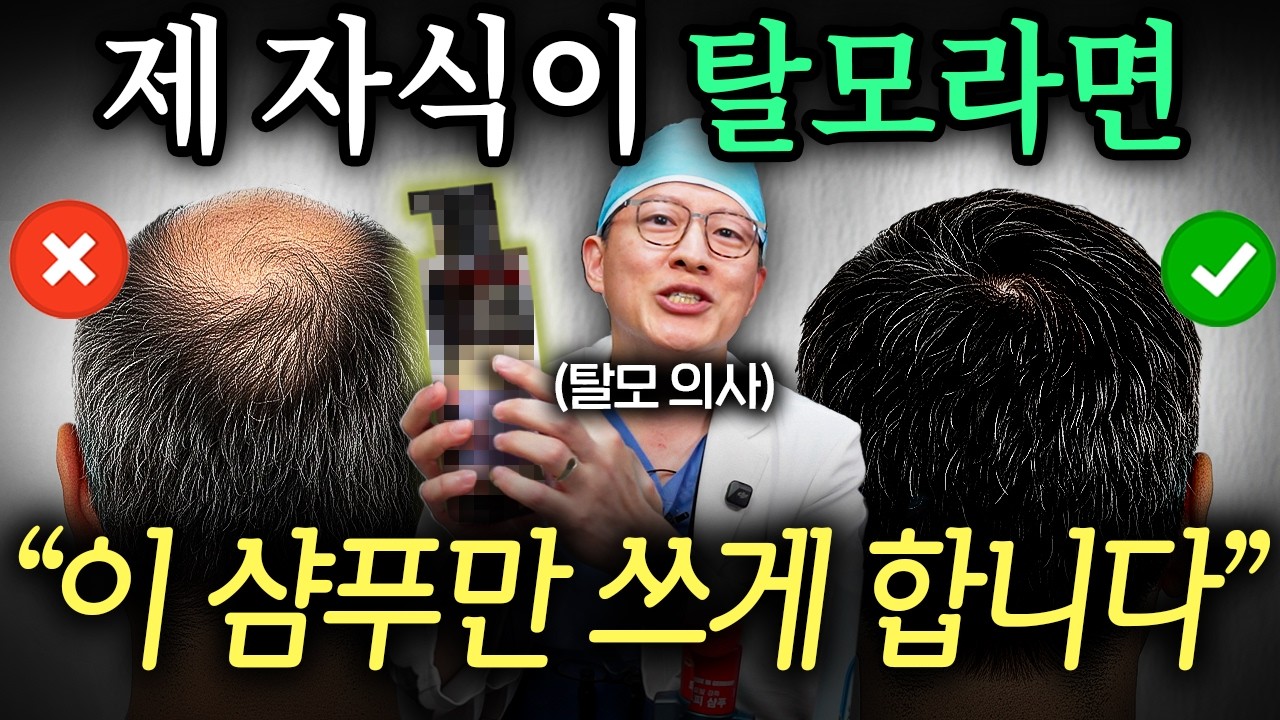
● 11 Year Hair Loss Doc Exposes Shampoo Scam, Scalp Stink Red Flags, DIY Check, Cheap Minoxidil Fix
Insights from an 11-year Hair Loss Specialist: Shampoo, Scalp Odor, Self-Diagnosis, and Minoxidil
Today’s article covers these four topics:
1) The checklist you should consult before ingredients when choosing a shampoo
2) Why it costs you to ignore certain odors from your scalp
3) An objective self-diagnosis routine for hair loss you can try at home for 3 months
4) How to apply a $10 Minoxidil properly on your scalp, not hair, along with shedding management
Lastly, we’ll cover a crucial point that other videos/articles often overlook: the order of spending money.
1) Today’s Headline (Conclusion First)
Hair loss shampoos are not ‘products that prevent hair loss,’ but rather auxiliaries that manage scalp conditions (itchiness, oiliness, inflammation) to reduce environments that exacerbate hair loss.
Choosing a shampoo begins with confirming your scalp type (oily/dry/sensitive).
If your scalp emits a metallic odor with redness and scabs, it harms the follicles more the longer you wait at home, making a hospital visit a priority.
2) Check This First When Choosing Shampoo: Scalp Type Over Ingredients
2-1. Why You Need to First Divide by Three Scalp Types
Shampoos are not universal solutions; depending on scalp condition, they can be beneficial or harmful.
The order doctors emphasize is:
① Oily (seborrheic) / ② Dry / ③ Sensitive – determine your position first before choosing.
2-2. If You Have an Oily Scalp: “Cleansing + Sebum Control” is Key
Excess oil can oxidize, leading to odors (like metallic smells), which can progress to inflammation, blocked pores, follicle shrinkage, and aggravated hair loss.
In this case, look for products targeting oily/scalp cleansing, but avoid overly harsh products that could irritate the scalp.
Mentioned sebum and keratin management ingredients include salicylic acid and zinc pyrithione.
2-3. If You Have a Dry Scalp: Prioritize “Moisturizing and Low-Irritation”
Using strong cleansers on a dry scalp can sensitively damage the scalp barrier, leading to repeated itching and irritation.
Thus, a product targeting moisture is more reasonable for dry scalps.
2-4. If You Have a Sensitive Scalp: Avoid “Irritating Ingredients (Strong Surfactants)”
The leading examples given by the doctor are strong surfactants like SLS and SLES.
While effective at cleaning, they can cause significant scalp irritation and may be burdensome for sensitive scalps.
The recommendation for sensitive scalps was to look for a combination of mild surfactants, slightly acidic, and basic moisturization.
3) Realistic Interpretation of “Hair Loss Shampoos Can’t Prevent Hair Loss”
3-1. The Role of Functional Shampoos: Managing ‘Scalp Symptoms,’ Not Hair
The key takeaway is that the wording typically refers to “alleviating hair loss symptoms” rather than “preventing hair loss.”
These symptoms refer to oiliness, itching, inflammation, and overall scalp condition.
Thus, shampoos should be viewed as condition management tools rather than medications.
3-2. Why Expensive Shampoos Aren’t the Answer (Including Doctor’s Experience)
Even shampoos costing over $100 can’t be used if they don’t suit your scalp type.
The message is that balance and compatibility with your scalp’s irritation, cleansing, and moisturizing needs are more important than price.
Given the current inflationary pressures, this point is especially significant as consumers feel the squeeze on living expenses.
4) If You Smell ‘This Odor’ from Your Scalp, Visit a Doctor
4-1. What the Odor Means: It Could Indicate Oxidized Oil (Sebum) and Inflammation
A condition like seborrheic scalp with excess oil can oxidize and readily lead to odors.
When combined with redness, scabs, or inflammation, the scalp environment worsens, potentially weakening the hair and causing more shedding.
4-2. The Threshold for Home Care vs. Doctor’s Visit
The doctor’s analogy was precise; like acne, “mild stages” may be manageable with home care.
However, if the scalp becomes red, scabby, and shedding increases due to these effects, a doctor’s consultation is advisable.
5) Scalp Care Lifestyle Habits: Three Factors That Can Worsen It
1) Washing with hot water (can exacerbate irritation/dryness)
2) Continuously applying products with excess oils on the scalp
3) Sleeping with wet hair (can worsen scalp environment)
Alternatives are lukewarm water + slightly acidic shampoo + thoroughly drying, this 3-step combo.
6) At-Home Hair Loss Self-Diagnosis: “Rely on Records, Not Feelings”
6-1. Hair Loss Is Best Understood by Comparing ‘Your Past’ to Now
Comparing your current state with others can lead to confusion and increased stress.
The doctor emphasized comparing yourself with your past.
6-2. For Men, Focus on Two Areas: Crown + Forehead
The focus is on comparing the thickness of the crown and occipital hair (back of the head).
If the crown is noticeably thinner than the occipital area, the likelihood of hair loss increases.
For the forehead, some naturally have an “M-shaped” hairline; focus on whether the line has receded further and if the boundary hairs have thinned rather than the shape itself.
6-3. The Most Objective Approach: Photographing Every Three Months
Taking a crown photo with your smartphone every three months (four times a year) can prevent “change desensitization” since the eyes adjust.
6-4. Utility of Pull Test/Balding Count
Noticing if a specific number of hairs shed when pulled,
Checking if daily hair loss is around 70-100 strands, and if it suddenly jumps to 150-200 strands can be indicators.
However, due to stress, condition, and seasonal factors, photo records are a more robust tool.
7) $10 Minoxidil: The ‘Application Method’ that Makes a Difference
7-1. Core Point: It Should Touch the “Scalp, Not Hair”
Spraying it like a mist on hair may reduce absorption efficiency.
Minoxidil functions through absorption via the scalp/pores, so applying it directly to the scalp is essential.
7-2. When to Apply: After Clean Washing and “Fully Drying”
It’s recommended to use it after ensuring the scalp is completely dry, as absorption may be poor when wet.
7-3. After Application: Leave It for at Least 4 Hours
To allow for absorption, avoid washing it off and maintain it for at least around 4 hours.
In practice, incorporating it into your routine just before bed is most convenient.
7-4. Shedding in the Initial Stage: Misconceptions and Facts
During the initial 2 weeks to 2 months, weak hair may temporarily shed, known as shedding.
Mistaking this as “the medication causing more hair loss” and discontinuing it could undermine your management routine.
The doctor described shedding as a ‘restructuring process for healthier hair’ and emphasized the importance of consistent use.
8) Crucial Points Often Overlooked by Other YouTube/News (My Perspective Reinterpreted)
8-1. Changing the Order of Spending Affects the Outcome
Many people follow the pattern of “expensive shampoo → continued scalp deterioration → late doctor visit.”
However, the answer promoted by this content is closer to the opposite.
① Confirm your scalp type (oily/dry/sensitive)
② Establish a cleansing routine that reduces irritation (lukewarm water, slightly acidic, thoroughly dry)
③ If inflammation signals like odor, redness, or scabs are visible, confirm the cause at a clinic
④ If treatment is necessary, consistently pursue “scalp-targeted treatment routines” such as Minoxidil
8-2. More Important than the “Hair Loss Shampoo Ingredients War” is Managing Scalp pH Balance and Inflammation
Memorizing the list of ingredients is mentally exhausting and difficult to sustain in daily life.
Conversely, maintaining a slightly acidic pH balance, minimizing irritation, and seeking early consultation for inflammation signals are highly reproducible (easy for anyone to follow similarly).
This is the ‘long-term sustainable strategy’ in practice.
8-3. If Hair Loss Is Viewed as a “Part of Aging,” Consistency Is the KPI
The key takeaway isn’t a one-time solution, but a maintainable routine.
In environments where spending has become more conservative post-interest rate hikes, having a “consistently affordable cost/time structure” is increasingly crucial for success.
Achieving results comes from maintaining a reasonable routine for a year rather than briefly using expensive products.
9) Practical Checklist (Turning Today’s Article Into Action in 5 Minutes)
1) Determine whether your scalp is oily/dry/sensitive first
2) Set slightly acidic shampoo + lukewarm water + fully drying as your default
3) Prioritize a doctor visit if your scalp has an odor (metallic-like), redness, or scabs
4) Take crown photos every three months from the same angle
5) Apply Minoxidil to the “scalp,” when “dry,” and “keep for 4 hours after applying”
< Summary >
Shampoo doesn’t ‘treat’ hair loss but is an auxiliary means to manage scalp symptoms for reducing deterioration.
When choosing shampoo, confirm your scalp type (oily/dry/sensitive) before looking at ingredients.
Scalp odor + redness + scabs/inflammation are more harmful if ignored, so a doctor’s consultation is beneficial.
Self-diagnosis is most objective with photo records every 3 months rather than comparing with others.
Minoxidil should be applied to the scalp when it is dry and left for 4 hours or more; initial shedding may be temporary, so consistency is key.
[Related Posts…]
- Proper Use of Minoxidil: Shedding, Absorption, Timing Overview
- Seborrheic Scalp Management Routine: A Realistic Guide to Reducing Odors, Dandruff, and Inflammation
*Source: [ 지식인사이드 ]
– 11년차 탈모 의사는 샴푸 고를 때 ‘이것부터’ 확인합니다. (탈모 의사 홍원장 2부)