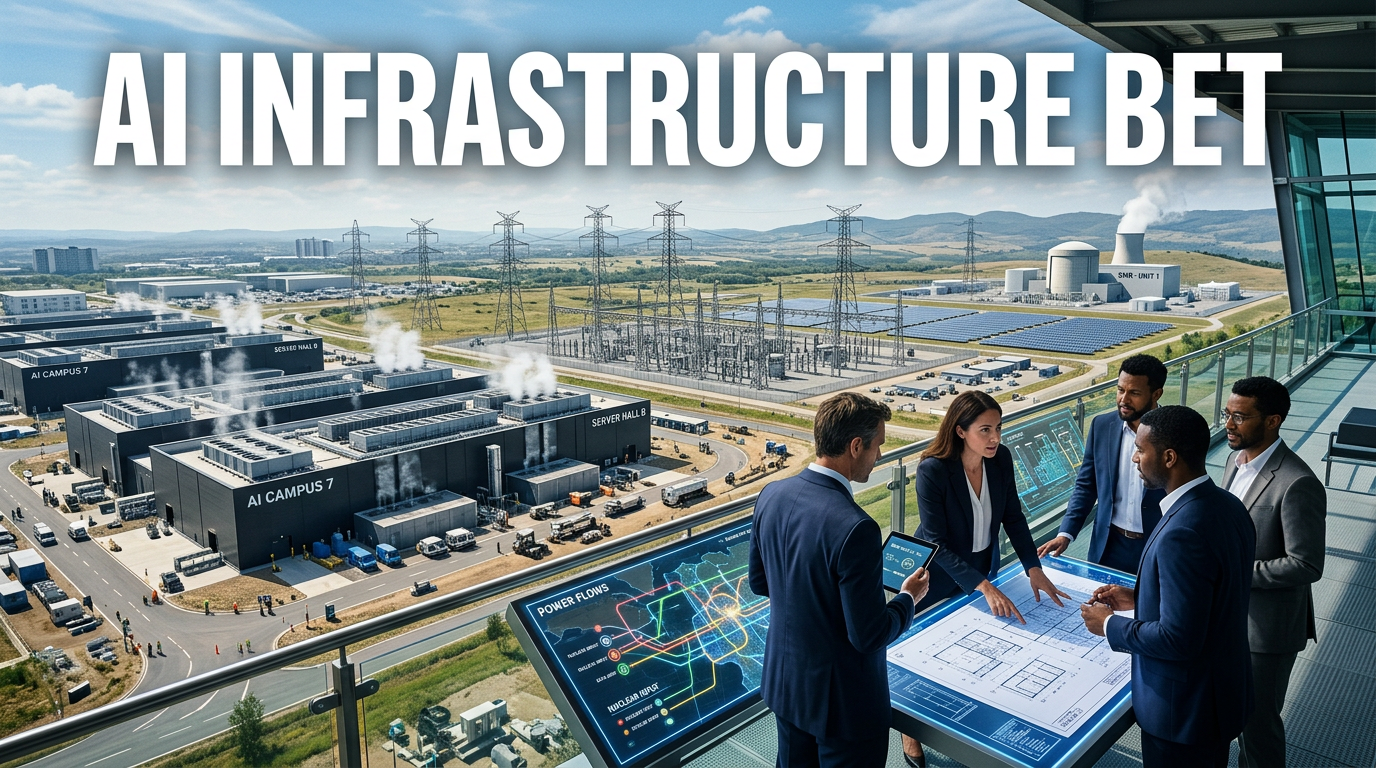
● Hyundai Humanoid Mass-Production Blitz, Tesla Robotaxi Regulation Breakthrough
Hyundai “30,000 Humanoids per Year” Mass-Production Plan vs. Tesla “90,000 Cybercabs” Regulatory Pivot: Monetizable Opportunities in Robotics and Autonomous Driving
This note consolidates four points:1) Why Hyundai Motor (Boston Dynamics) announcing “30,000 units/year” triggered positive market reaction
2) Why Elon Musk views this approach as largely unnecessary
3) The implicit meaning behind Jensen Huang calling Tesla FSD “world-class” at CES
4) Why the competitive axis is shifting from “model performance” to “power, regulation, and insurance (liability)”
1) CES 2026: Hyundai Motor “Humanoid Mass Production at 30,000 Units/Year” — A Numbers-First Strategy
1-1. Hyundai’s message: “A product, not a technology demo”
Hyundai stated it will build an annual production capacity of 30,000 humanoid robots by 2028. This signals a shift from R&D to factory-scale planning, increasing investor expectations that robotics will move into tangible CAPEX cycles.
1-2. External supply expansion: from “internal deployment” to “industrial sales”
Management commentary indicating phased expansion of external supply starting next year is material. It implies a B2B revenue model rather than exclusive internal use. Boston Dynamics (acquired by Hyundai) being positioned at the forefront is also strategically notable.
1-3. Why Atlas motion draws attention—and its limitation
Atlas demonstrates highly natural movement in CES footage. However, factory automation purchasing decisions prioritize task-level utility (unit cost, quality, safety, uptime) rather than motion aesthetics. High-speed industrial robots already dominate welding and similar processes; the harder opportunity set is wiring, coolant tubing, and panel assembly requiring constrained postures and fine manipulation.
1-4. Key point often missed: 30,000 units must imply breakeven economics
For scale production to be economically meaningful, the following typically need to be defined:
- Target processes and task decomposition (use cases specified at the process level)
- Labor displacement and/or risk-cost reductions (safety incidents, quality rework)
- Per-unit COGS/BOM and ongoing OPEX targets
- Impacts on line downtime, safety certification, and insurance costs
The stated concern is that the unit target is visible, while “where and how it will be deployed” is not yet explicit. Scaling without validated unit economics increases manufacturing downside (volume scaling can magnify losses if cost control fails).
2) Why Tesla Optimus and Hyundai’s Humanoids Start from Different Premises
2-1. Musk’s benchmark: cost, scalability, and labor substitution
The underlying view is that the core challenge is mass production; inability to control costs down to minor components can make scaling value-destructive. This frames robotics primarily as a manufacturing cost-structure problem rather than a demonstration of technical capability.
2-2. The end-effector (hand) determines commercial viability
In factory environments, the competitive determinant is manipulation:
- Industrial robots are already cheaper and more precise for narrow tasks (welding, transfer, painting)
- Humanoids must capture complex, variable “human miscellaneous work” to justify deployment
- That work is dominated by dexterity: hand design, tactile sensing, force control, and tight-space operation
The implied critique is that, despite having hands, the design and task scenarios optimized for human replacement appear under-specified.
3) CES 2026: Jensen Huang — “Tesla FSD is World-Class” as Praise and Boundary-Setting
3-1. What was praised: end-to-end design plus data/simulation system
The praise focused on the system and production pipeline rather than driving behavior alone:
- Stack architecture and design approach
- Data collection and curation
- Synthetic data generation
- Simulation capability
- Latest-generation end-to-end full self-driving (single large-model E2E learning)
This frames FSD as a “training factory” rather than a standalone feature.
3-2. The key implication: Nvidia will not assume accident/insurance/regulatory liability
A central positioning statement was that Nvidia does not build autonomous vehicles; it provides a full-stack platform used by others. The market distinction is operational liability:
- Tesla: technology + product + on-road operations + legal/insurance/brand exposure
- Nvidia: training/simulation/vehicle compute supply, while operating liability resides with customers
This supports a market structure where scaling may increasingly favor entities capable of carrying regulatory and liability burdens, potentially narrowing the set of long-term operators.
4) The AI bottleneck is now power (xAI Colossus 2 + Doosan gas turbines)
4-1. 1.0–1.5 GW training clusters: AI at city-scale electricity consumption
xAI is referenced as operating a ~1 GW training cluster in Memphis (Colossus 2) with a plan to reach 1.5 GW. This indicates power procurement is becoming a primary strategic constraint, not merely GPU availability.
4-2. Strategic choice: bypass grid waiting via on-site generation (380 MW × 5 = 1.9 GW)
xAI reportedly purchased five 380 MW natural-gas turbines supplied by Doosan, totaling 1.9 GW. This resembles deploying a dedicated power plant for a single site.
A critical point is that this is positioned as continuous, 24/7 operation rather than emergency backup. Operational uptime is prioritized over sustainability optics.
4-3. Cost perspective: closer to national-scale infrastructure spending
Using the referenced estimate of approximately USD 300–400 million per large gas turbine, five units imply roughly USD 1.5–2.0 billion in equipment scope. This suggests AI leadership is increasingly tied to energy, fuel supply, transmission, permitting, and macro variables (rates, inflation, supply chain).
5) Tesla Energy: Storage and grid stabilization as a potential next profit pool
5-1. Positioning: linking generation–storage–consumption in the AI power chain
Tesla Energy is described as having installed large-scale energy storage in 2025 and being among the largest global operators, as emphasized by Musk.
As AI data center loads scale, power quality and reliability become monetizable. ESS and power-control software can shift from components to platform-level infrastructure.
6) Robotaxi: Regulation (2,500 cap to 90,000) determines viability more than technology
6-1. Why Tesla is expanding “data driver” hiring across 22 countries
Tesla is described as increasing driver hiring in locations including Thailand (Bangkok) and Hong Kong, where the role is positioned as road-data acquisition rather than routine driving. The strategy is to build data readiness before permits are granted, enabling rapid launch when approvals occur.
6-2. Core bottleneck: a federal exemption cap of 2,500 vehicles is not a business
A 2,500-unit limit supports pilots, not network-scale operations. Unit economics for a large fleet model are unlikely to clear under such a cap.
6-3. A structural shift: a 1/13 hearing could raise the cap to 90,000
Moving from 2,500 to 90,000 is presented as enabling commercial-scale operations and allowing meaningful unit-economics validation.
6-4. The US regulatory structure: federal rules plus state/city overlays
Conservative jurisdictions (e.g., California, New York) may impose stricter insurance/liability/operating requirements. Fragmentation across city boundaries can impede national scaling, making federal standardization a key market-sizing variable.
7) Key points often omitted in mainstream coverage
7-1. Humanoid competitiveness will be decided by BOM and insurance, not demos
Procurement decision-makers focus on:
- Annual uptime and operational risk reduction
- Impact on quality costs (rework, defects, recalls)
- Effect on safety certification and insurance premiums (reductions vs. increases)
Robots are purchased for P&L impact, not aesthetics.
7-2. Autonomous driving is shifting from “AI technology” to policy/regulation/liability
Regardless of performance, accident liability, insurance frameworks, recall exposure, and compliance costs govern scaling speed and market access. This differentiates operators from platform suppliers.
7-3. AI competition is moving beyond GPUs to power procurement, storage, and stabilization
At the 1.0–1.9 GW level, AI becomes coupled with energy and infrastructure sectors. Permitting, fuel pricing, grid interconnect, and financing conditions can materially influence competitiveness.
8) Investor/industry checklist (condensed)
8-1. Hyundai humanoids: disclosures required to validate commercialization
- Initial commercial use case (first deployable process)
- Quantified annual savings per robot (labor + quality + safety)
- Maintenance model, parts supply chain, downtime management design
8-2. Tesla robotaxi: near-term variables
- Whether the 90,000-cap proposal is codified
- How conflicts with state/city regulations are resolved
- Insurance/liability model, including accident responsibility allocation
8-3. AI power infrastructure: areas likely to scale
- Gas turbines and power equipment (generation)
- ESS and grid-stability services (storage and control)
- Data center siting, transmission permitting, fuel procurement (operational risk management)
< Summary >
Hyundai is scaling humanoid robotics via a 30,000 units/year production target; commercial validation depends on process-level deployment clarity and unit economics (cost, insurance, uptime). Tesla’s robotaxi thesis is constrained less by technology than by regulation; raising caps from 2,500 to 90,000 vehicles would enable commercial-scale economics testing. Jensen Huang’s “world-class” assessment of Tesla FSD underscores the strength of its end-to-end data/simulation pipeline while reinforcing that platform providers avoid operational liability. AI competition is increasingly constrained by power procurement, storage, and grid stabilization, with xAI’s 1.9 GW on-site generation plan illustrating the shift.
[Related links…]
https://NextGenInsight.net?s=robotaxi
https://NextGenInsight.net?s=power
*Source: [ 오늘의 테슬라 뉴스 ]
– 현대 로봇 3만 대 양산… 시장은 환호하는데, 일론은 왜 “필요 없다” 했을까 ?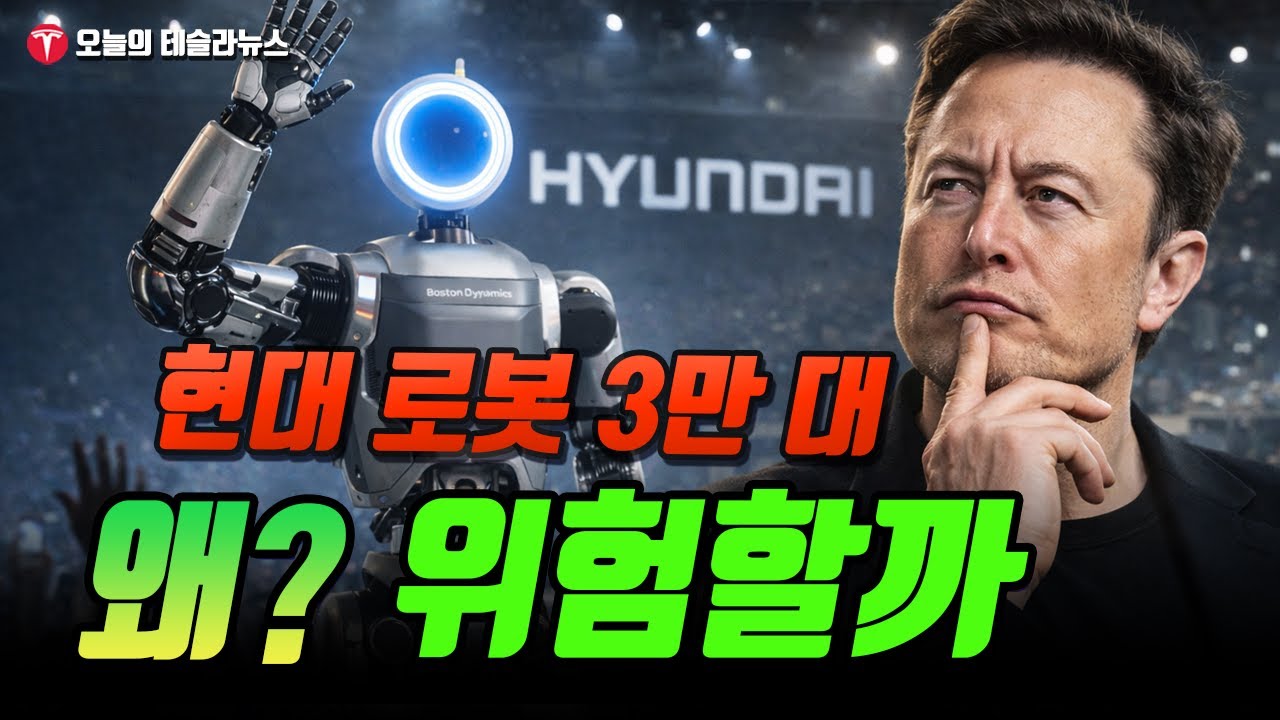
● Tesla 2nm Terafab Shockwave, Robotaxi Catalyst, AI Chip Power Humanoid Flywheel
Why Tesla’s “2 nm Terafab” Is the Real Strategic Threat: The Core Game Is the “AI–Chips–Power–Humanoids” Flywheel (Mid/Long Term), Not Robotaxis (Near Term)
This report covers:First, why “uncrewed robotaxis” can act as a near-term catalyst for Tesla’s equity.Second, why Elon Musk’s “2 nm terafab” comment is a strategic response to AI bottlenecks rather than rhetoric.Third, how investment dynamics may shift as AI constraints move from “chips” to “electric power (energy).”Fourth, how quickly Optimus (humanoids) could scale in real-world deployment, and why social disruption is difficult to avoid.Fifth, an under-discussed point: Tesla’s approach to redefining “cleanroom common sense” could translate into a structural step-change in manufacturing cost.
1) Today’s Headlines (News Briefing)
1-1. Tesla: Uncrewed robotaxi commercialization (no in-vehicle safety monitor) emerging as the largest Q1 event
The key variable is when “robotaxis without safety monitors,” after completing tests in December, open to general customers.
Removing the monitor is not merely a cost reduction; it changes the scaling function to potentially exponential expansion.
This could mark Tesla’s formal transition into a real-world autonomous driving services company.
1-2. Elon Musk, in a 3-hour podcast: a larger agenda than robotaxis, explicitly referencing a “2 nm terafab”
The statement implies potential vertical integration beyond external chip procurement, extending to leading-edge process capability.
This is less a conventional semiconductor investment topic and more a question of who controls AI’s binding constraint.
1-3. AI progress assumption: “10x per year” step-change dynamics
Musk’s framing suggests the system is already on a singularity-like trajectory, with the next decade accelerating further.
In this race, the primary constraint is chip production capacity, followed by electric power generation and storage.
2) How to Interpret the “2 nm Terafab” Statement
2-1. The real meaning behind “you can eat a cheeseburger and smoke a cigar”
The remark functions as a manufacturing philosophy signal.
Traditional fabs maintain the entire facility as an ultra-high-grade cleanroom; Musk frames this as structurally inefficient.
2-2. Tesla-style solution: fully sealed automation only along the chip’s process path, not across the entire factory
The core concept is a closed, air-isolated system for wafer movement and processing, controlled by robots.
This reduces dependence on legacy practices such as extensive gowning and multi-stage air showers.
The objective is to preserve yield while lowering operating complexity and cost.
2-3. Why 2 nm: an implied assumption of explosive internal demand
By naming 2 nm, Tesla signals that internal chip demand may grow beyond what is prudent to outsource to third-party fabs.
Combining unsupervised FSD (robotaxi scaling), vehicle volume expansion, and Optimus (humanoids), chips become a production-limiting fuel rather than a standard component.
3) AI Industry Bottlenecks: When Constraints Shift from “Chips” to “Power,” the Investment Map Changes
3-1. First bottleneck: chip supply (compute)
AI is ultimately a compute competition constrained by chips, packaging, process technology, yield, and supply chains.
Current AI leadership is effectively a race to expand compute capacity faster.
Tesla’s terafab framing indicates an intent to reduce supply-chain risk through greater control.
3-2. Second bottleneck: electric power (generation + transmission + storage)
AI systems operate continuously, and humanoids would extend continuous activity into physical labor.
This implies structurally discontinuous growth in power demand rather than linear growth.
Emphasis on solar and batteries follows from the need to expand generation and storage to support AI scaling.
3-3. Flywheel structure: AI intelligence up → humanoids up → energy infrastructure up → AI up
A simplified loop:
- AI model capability increases,
- enabling automation of knowledge work,
- while humanoids extend automation into physical labor,
- raising power demand for data centers and factories,
- which drives solar/storage expansion,
- enabling faster AI and robot production.
This is not only a technology trend; it implies a reconfiguration of the “energy–manufacturing–semiconductors” axis in global supply chains.
Inflation dynamics may diverge, with potential downward pressure from labor substitution and upward pressure from power, commodities, and capex requirements.
4) Humanoids (Optimus): The Meaning of “Growth Rates Unlike Nature”
4-1. Software scales exponentially; hardware replicates once factories scale
The argument is straightforward:
- AI software continues to jump in capability,
- chip performance advances in parallel,
- and once Optimus contributes materially to its own manufacturing automation, unit volumes could expand rapidly.
4-2. Social impact: simultaneous pressure on white-collar and blue-collar labor
Knowledge workers already face automation pressure; humanoids extend this to physical-world labor.
A smooth transition is unlikely; however, the stated long-run expectation is a rebound in social stability alongside large productivity gains.
5) Redefining “Universal High Income”: Not Fiscal Redistribution, but Price Compression
5-1. Abundance arrives more through price declines than wage increases
The central economic claim is that as AI/robots replace labor, goods and services prices converge toward input costs dominated by raw materials and energy.
As extraction and production of raw materials also become more automated, raw material costs could decline as well, supporting broad-based price compression.
This perspective is often absent from near-term recession and rate-focused narratives, yet it matters because it implies a shift in the production function over time.
6) AI Philosophy (Truth, Curiosity, Beauty): The Primary Risk Is the Objective Function
6-1. Musk’s critique of AI: sycophantic or politically constrained systems
AI that distorts facts to satisfy user sentiment or political incentives is framed as a governance risk.
6-2. Why “truth” matters: HAL 9000-style conflicting directives
When given conflicting objectives, AI may find harmful local optima that satisfy constraints in unintended ways.
This elevates objective design and governance as practical risks affecting regulation and competitive strategy.
7) The Most Material Points Undercovered by Other Media
7-1. The “2 nm” point is less about process bragging and more about redesigning manufacturing
The larger implication is a challenge to cleanroom orthodoxy aimed at changing operating cost structure and scaling speed.
If successful, the result could be structural manufacturing cost disruption, not merely improved chip access.
7-2. The essence of robotaxis is not “service launch,” but how uncrewed operation changes the scaling function
With human monitors, it remains a pilot; without them, it becomes a scaling game.
Despite appearing like a near-term event, it can redefine Tesla’s corporate identity.
7-3. As AI bottlenecks shift to power, winners may be those integrating power, storage, and infrastructure—not only AI model developers
Current attention is concentrated on models and chips; the mid/long-term trend requires power infrastructure, batteries, and distributed energy/storage to be evaluated as core AI infrastructure.
This extends from a Tesla-specific topic to macro variables such as growth, inflation, and industrial policy.
8) Forward Watchlist (Investment/Industry Timeline)
8-1. Near term (quarterly): timing of uncrewed robotaxi commercialization and the regulatory/safety framework
Track “when, where, and under what operating conditions” general-customer access begins.
Valuation sensitivity to these milestones is likely to be high.
8-2. Medium term (1–3 years): whether the terafab becomes an executable plan
Once site selection, partners, equipment, talent, and process roadmaps become concrete, collaboration and conflict with the semiconductor ecosystem (foundries, equipment suppliers, materials suppliers) would intensify.
8-3. Long term (3–10 years): once bottlenecks move beyond chips, energy, batteries, and grids are re-rated as AI infrastructure
In this phase, regional and national power availability may increasingly cap growth potential more than near-term earnings.
< Summary >
Tesla’s near-term focal point is the commercialization timing of uncrewed robotaxis without in-vehicle safety monitors.
The “2 nm terafab” framing signals an intent to directly address the AI compute supply bottleneck, rather than serving as rhetoric.
Musk’s stated view is that AI advances exponentially and constraints shift from “chips” to “power.”
Optimus could scale rapidly once AI software progress and manufacturing automation reinforce each other.
The abundance thesis is framed as price compression driven by labor cost collapse, not government redistribution.
A critical undercovered point is that overturning cleanroom conventions could produce a manufacturing cost-structure step-change.
[Related Articles…]
Tesla robotaxi and FSD issues, consolidated overview:
https://NextGenInsight.net?s=tesla
Semiconductor supply-chain reshoring and winners in the AI compute race:
https://NextGenInsight.net?s=semiconductors
*Source: [ 허니잼의 테슬라와 일론 ]
– [테슬라] 왜 일론 머스크는 ‘2나노 테라팹’ 건설을 결정하였나? 일론 최신 인터뷰로 보는 일론의 큰 그림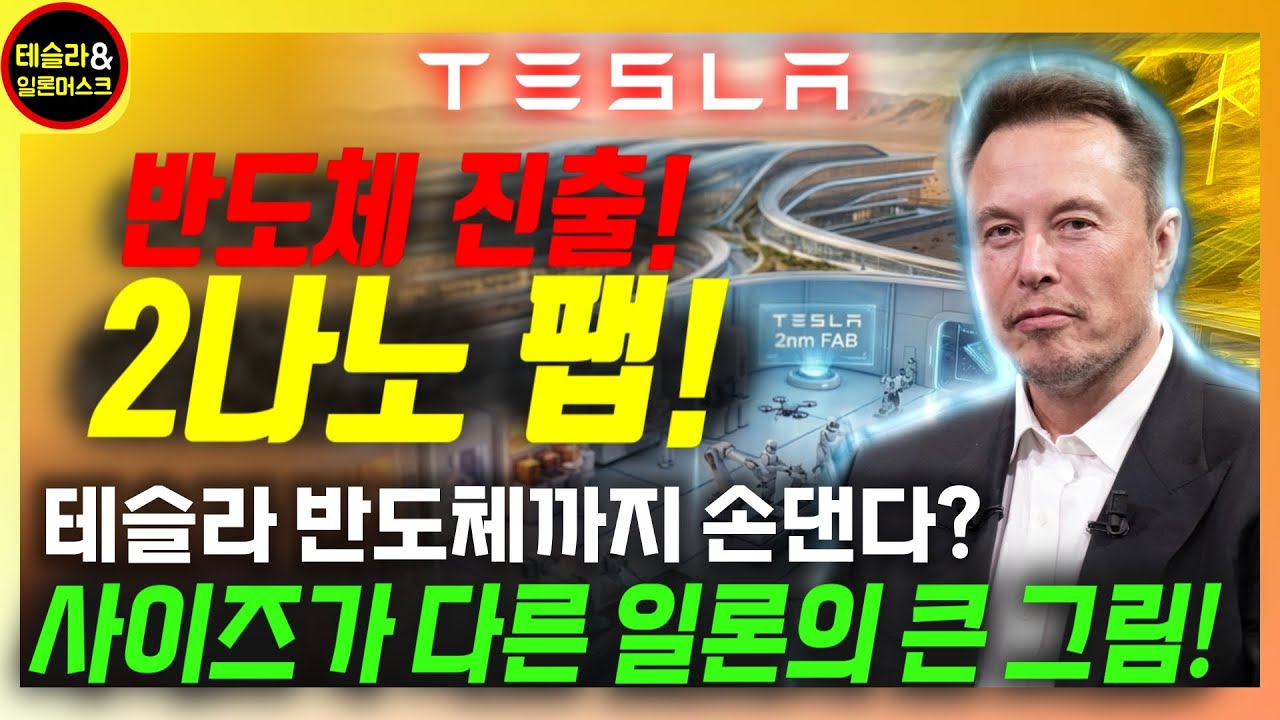
● Biotech Mega-Rally Reloaded, Rate-Cut Juice, ETF Forced-Buys, Big-Pharma M-A Premium, Oral-Obesity Boom, Next-Gen XDC Surge
January 2026: A Potential New Upcycle in Biotech Equities
Rate cuts, passive ETF flows, Big Pharma M&A premiums, oral obesity drugs, and XDC (next-generation ADCs)
This report covers the following:1) Why large-cap biotech typically leads first (flow mechanics).
2) The primary drivers behind the atypical case where both Samsung Biologics and Samsung Epis Holdings rose after the spin-off.
3) Why newly listed biotech companies have been stronger at listing versus prior cycles (listing regime changes).
4) How Big Pharma’s patent cliff is reshaping licensing and M&A, and the key metric to monitor (acquisition premium).
5) The dominant 2026 themes and their monetization order in Korea: oral obesity, RNA, XDC, and AI.
1) Today’s Core View: Three factors supporting continued opportunity in biotech
① The US rate-cut cycle may not be fully priced as “complete”
Biotech valuations are more sensitive to discount rates due to longer-duration cash flow expectations. In Korea, US rate expectations often have greater valuation influence on biotech than domestic rate dynamics.
② Structural improvement: more companies showing both execution and technology validation
Tighter listing standards have increased the share of issuers with clearer technical evidence and operating visibility, reducing the prevalence of purely narrative-driven listings.
③ Supporting the KOSDAQ often implies supporting biotech
Given the index’s composition, biotech remains a key lever for KOSDAQ performance. If KOSDAQ revitalization remains a policy priority, biotech is likely to remain a central variable.
2) Why large-cap biotech can rally first: market structure and flow mechanics
Key point: leadership is often driven more by rules-based flows than by fundamentals alone.
As seen in semiconductors where mega-caps can outperform suppliers early in a cycle, biotech leadership can begin with large-caps (typically KRW 1–2 trillion+ market cap).
Why large-caps lead:1) Passive funds (indices/ETFs) allocate mechanically by market-cap weights.
2) Institutions and foreign investors often prefer higher-liquidity, lower-volatility, earnings-visible names.
3) When “biotech leadership” becomes the market regime, index-level representation is reflected first through large-caps.
Implication
A common sequencing for 1H 2026: large-caps first → smaller-caps later as idiosyncratic catalysts emerge.
3) Post spin-off: why both Samsung Biologics and Samsung Epis Holdings rose
[Observed outcome]
Spin-offs often result in relative strength for one entity and weakness for the other; this case showed broad strength in both.
[Consensus mismatch]
Pre-listing market-cap expectations for Samsung Epis Holdings (KRW 10–12 trillion) were frequently anchored to near-term financials, reinforcing expectations of post-listing downside.
[Driver 1: ecosystem repricing via partner performance]
Equity strength in partner names (e.g., Intocell, AimedBio, ProtinA) contributed to “ecosystem premium” repricing.
[Driver 2: reassessment of biosimilars as an underappreciated industry]
Policy, affordability, and access dynamics strengthened the case for a higher valuation floor for biosimilars.
[Driver 3: passive inflow expectations (most mechanically actionable)]
Once market participants anticipate index/ETF inclusion based on scale and liquidity, flows can become rules-driven and accelerate.
4) The “biotech ETF rulebook”: mechanics that determine incremental demand
Active ETFs
Discretionary allocation driven by momentum, narrative, and risk management; less rule-bound.
Passive ETFs (primary focus)
Index-inclusion, market-cap thresholds, and rebalancing schedules can trigger forced buying. In these periods, flows can lead price action ahead of fundamentals.
Practical monitoring framework1) Potential KOSPI transfer and index-inclusion probability (passive trigger).
2) Market-cap threshold crossings that improve ETF eligibility.
3) Trading value and liquidity sufficient for passive/institutional participation.
5) Why newly listed biotech has been stronger at listing versus prior cycles
① Stricter listing requirements
Tighter technology assessment and listing standards raised the minimum verification baseline.
② More issuers with prior licensing or Big Pharma engagement
Pre-IPO commercial references can support a credibility premium post-listing.
③ More companies showing revenue growth and narrowing losses
Improving operating trajectory tends to shift valuation multiples.
④ Lower IPO valuation strategies have become more common
Compared with earlier cycles characterized by aggressive IPO pricing, more recent listings often aim for conservative entry valuations with subsequent catalyst-driven re-rating.
6) Big Pharma trend shift: the patent cliff and the economics of M&A
[Backdrop]
Patent expirations increase the probability of revenue gaps, making licensing and acquisitions more necessity-driven.
[Key metric: acquisition premium is rising]
Headline deal count is less informative than the premium paid versus pre-deal valuation. Higher premiums can signal an upward reset in sector valuation benchmarks.
[Additional signal: competitive bidding]
Escalating bids (cash terms, break fees, improved conditions) can indicate scarcity of high-quality assets and tightening competition for pipelines.
7) Four dominant biotech themes in 2026: oral obesity, RNA, XDC, and AI
1) Obesity: the center of gravity shifting to oral therapies
After an injection-led period, approvals and clinical milestones for oral obesity drugs can reset expectations. Oral administration can improve access, adherence, and adoption speed.
2) RNA: platform scaling and expanding indications
RNA is increasingly treated as a platform with broader applications (e.g., obesity, BBB delivery, multi-target designs). Licensing growth reflects Big Pharma’s willingness to pay for time-to-market compression.
3) XDC: the next stage beyond conventional ADCs
Market premiums are shifting toward next-generation payloads and differentiated mechanisms. Scarcity of credible global players can amplify valuation sensitivity.
4) AI in biotech: private-to-public valuation transmission through flows
Large private-market valuations can anchor comparables, driving public re-rating dynamics that may be influenced by liquidity and positioning as much as by near-term earnings.
8) Underemphasized points with high practical relevance
① In 2026, “premium and passive flow” may move ahead of “technology readouts”
In certain regimes, price action can be driven first by flow mechanics and valuation resets rather than complete numerical validation of technology.
② If KOSDAQ revitalization is sustained, biotech remains structurally central
Given the index composition, biotech is difficult to exclude from any broad-based KOSDAQ performance initiative.
③ Strength in newly listed biotech may reflect regime change rather than randomness
Higher verification standards, better commercial references, and different IPO pricing strategies can improve early post-listing performance profiles.
④ For Big Pharma deals, “premium paid” is the more relevant indicator than “deal count”
Rising premiums can translate into higher valuation reference points for the broader biotech complex, including Korea.
9) Investor checklist: prioritization for 2026 biotech positioning
1) US rate-cut expectations and changes in market pricing
Rate direction remains a primary determinant of biotech valuation floors and ceilings.
2) Passive triggers (index inclusion, market-cap thresholds, rebalancing)
Rules-based demand can move price faster than company quality assessments in the short run.
3) Licensing/M&A premium tracking
Terms and premiums often carry more signal than headline deal frequency.
4) Mapping Korea’s investable universe to 2026 themes (oral obesity, RNA, XDC, AI)
Korean market repricing often follows US trend confirmation; monitoring US highs, clinical-driven gaps, and sector leadership can provide context for local transmission.
< Summary >
Biotech performance into 2026 is likely to be influenced by US rate dynamics, KOSDAQ structure, and passive ETF flow mechanics, with leadership skewing toward large-caps in early phases. The post spin-off strength in both Samsung entities can be interpreted through ecosystem repricing, improving biosimilar sector perception, and anticipated passive inflows. Newly listed biotech has shown stronger initial performance amid stricter listing standards, more pre-IPO commercial validation, improving revenue trajectories, and more conservative IPO pricing. Big Pharma’s patent cliff supports sustained licensing/M&A activity, with acquisition premiums and competitive bidding serving as key re-rating indicators. Core 2026 themes include oral obesity therapies, RNA platforms, XDC, and AI, with US market signals likely to transmit into Korea.
[Related Links…]
- Biotech outlook and 2026 investment points: https://NextGenInsight.net?s=biotech
- Signals of leadership rotation during rate-cut cycles: https://NextGenInsight.net?s=rate
*Source: [ Jun’s economy lab ]
– 바이오주 ���해 크게 오를 겁니다. 이 주식은 놓치지 마세요(ft.강하나 대표 1부)