● CES 2026 AI Paradigm Shift, Physical AI Agents Robots, Nvidia Dominates AMD Strikes Back, GLP-1 Disrupts Consumption, Industrial AI Goes Real-World
CES 2026 ‘P.A.R.A.D.I.G.M’ summarized at once: The real reasons Physical AI, Agents, Robots, and Industrial AI moved “from digital to reality”
This article contains exactly four clear points.
1) I explain the meaning of the core keyword that ran through CES 2026, ‘P.A.R.A.D.I.G.M’, item by item
2) I summarize why NVIDIA was “effectively the winner” and where AMD is aiming (CUDA vs ecosystem battle)
3) I connect how GLP-1 (Wegovy/Mounjaro), multi-omics, and FDA regulatory easing change industry and consumer markets
4) I extract the “most important points (field deployment bottlenecks, the economics of data·simulation·memory)” that other news/YouTube rarely cover.
1) CES 2026 news briefing: This year’s CES aligned “AI where it makes money”
core point in one line: The race of generative AI demos is over, and now the focus has shifted to field deployment (manufacturing·logistics·data centers).
Attendance rose, but there were comments that the number of exhibiting companies decreased.
The meaning of this combination is simple.
“There are more onlookers, but fewer exhibitors spending big money” could be the signal.
So even more, companies shifted focus from “flashy demos” to areas showing clear ROI (manufacturing·industry·data centers).
2) CES 2026 main keyword: Interpretations of P.A.R.A.D.I.G.M by item
2-1. P = Physical AI: From “AI that’s only smart in the head” to “AI that works with a body”
Definition: AI that perceives, judges, and acts in the physical world.
Three components
1) Perception: reading the environment with sensors/cameras
2) Cognition: interpreting the situation and making plans
3) Action: robots/devices actually move
Why is Physical AI rising now?
Not because the technology alone improved, but because the market and society “need it”.
Structural problems such as labor shortages in manufacturing (for example, U.S. manufacturing labor shortfalls) are becoming large, so automation is shifting from a “choice” to an “unavoidable alternative.”
Key takeaway: Homes are too volatile and risky.
Therefore, Physical AI will spread in the order of industrial (structured environments) → urban/logistics → homes (extreme unstructured).
2-2. A = Agentic AI: ‘Working AI’ that takes responsibility for execution
core point: Now execution matters more than answers.
An agent is not a simple chatbot; it is closer to an operating system that receives goals, breaks tasks down, calls tools, and delivers results.
Difference between Physical AI and agents
Both have perception·cognition·action structures, but
Physical AI is paired with ‘physical action (robots/devices)’, and
agents are paired with ‘digital action (business systems/apps/workflows)’. This makes the distinction easier to understand.
2-3. R = Robot: The era of rule-based robots is over; “situationally responsive” is key
Until now, robots centered on rule-based automation that repeats fixed motions.
But in the field there are too many exceptions and human safety issues are involved, so “responding to situations like a human” is needed.
Realistic diffusion scenario
They will earn reliably in structured environments (factories/logistics),
and then move into unstructured areas.
This is why home robots remain more of a “future concept.”
2-4. A = AI Glass: The new form factor of the agent era (smart glasses/AR glasses)
Why are AI glasses resurging?
For agentic AI to work well, the user should not have to explain context every time.
In other words, you need a device that lets AI “see (camera) + hear (microphone) + continuously understand” the user’s context.
AI glass is a candidate that does this more naturally than a smartphone.
Terminology (field-oriented)
Smart glasses: focused on capturing/video/audio/notifications even without (or with minimal) display
AR glasses: display-centered (information appears in the field of view)
Chinese vendors’ presence
Hardware catches up quickly, but the “integrated ecosystem/experience quality” still shows gaps.
However, these gaps can rapidly shrink at once when software integration happens, which is the risk.
2-5. D = Diet with GLP-1: Weight-loss drugs are changing the consumer market structure
GLP-1 (Wegovy/Mounjaro, etc.) is not just a health issue; it changes consumption patterns.
Observed axes of change
Decreased meal volume (e.g., mentions of around 40%) → reduced consumption of snacks/fast food/high-calorie beverages
Shift from high-quantity to high-quality → “eat less but better”
Food trend changes → expansion of high-protein/high-nutrient-density products
Fashion changes → move from body-shaping garments to athleisure/ styles that reveal body lines
Unexpected point
There is speculation that the number of people exercising may increase, but conversely there is also a view that “gyms may be hit because people lose weight with drugs.”
In short, the health/wellness market may grow, but winners and losers among existing business models (membership-based) could diverge sharply.
2-6. I = Industrial AI: Industry is AI’s ‘first real battlefield’
The big direction at this CES is clear.
Industry comes before consumer.
Reasons
Industrial sites are relatively structured and have clear safety/quality standards, so it’s easy to calculate automation ROI.
Moreover, overlapping factors like manufacturing labor shortages, productivity pressure, and reshoring trends make investment a “must-spend” item.
Digital twin/simulation revival
What used to be called the ‘industrial metaverse’ is now repackaged more practically under the name ‘Industrial AI.’
The core point is ultimately simulation.
2-7. G = Grounded Hybrid Management: An operating system where humans + AI agents work together
Here, hybrid does not mean “cloud + on-device,”
but rather a hybrid of humans + AI agents.
Why it matters
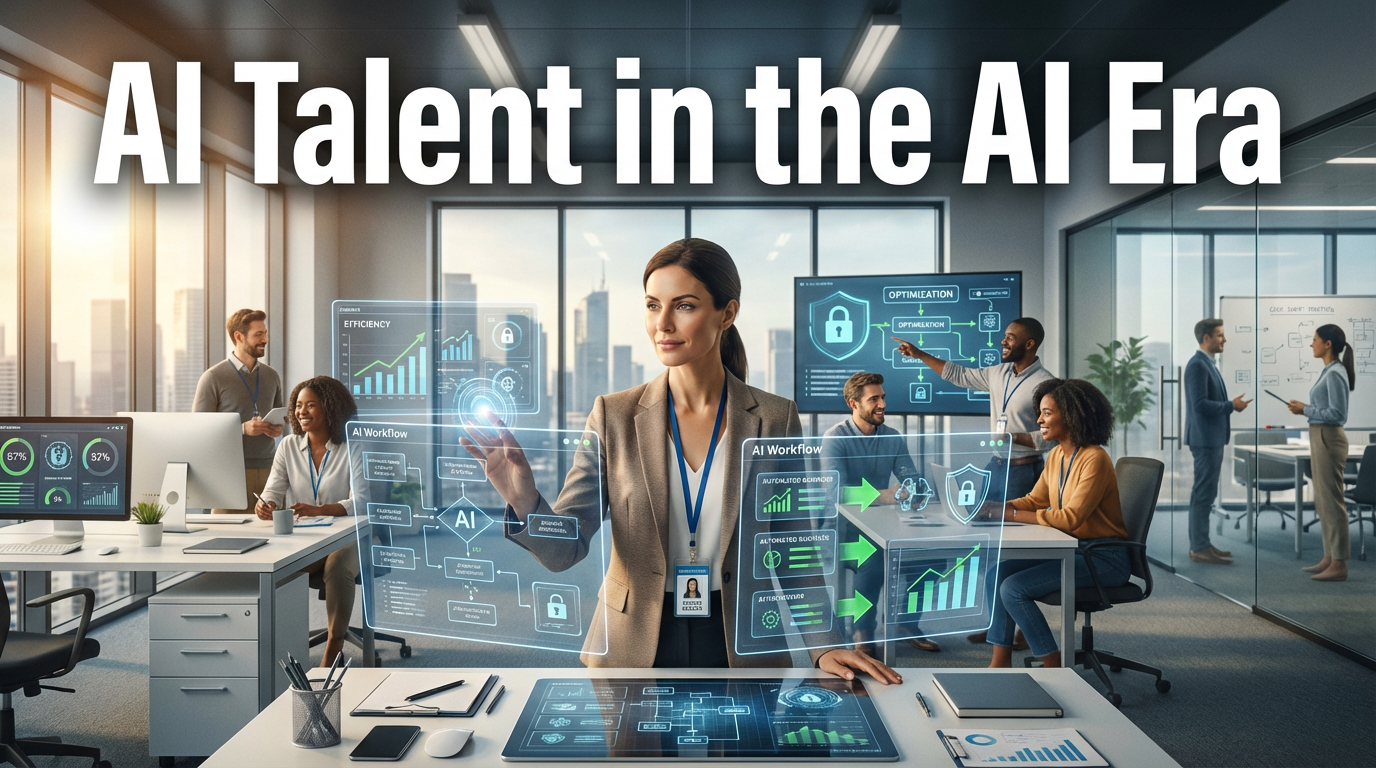
The most common failure in enterprise automation (AX) in 2026 will be “companies bought agents but don’t know how to work with them.”
Without management frameworks for authority, responsibility, approvals, audit logs, and exception handling, automation becomes an incident rather than a benefit.
2-8. M = Multi-omics: When your body data becomes ‘industrial data’
If continuous measurements like blood glucose (CGM) become widespread, people react immediately to what they can see.
Example: if you see a blood sugar spike after eating a doughnut, your behavior changes.
The core point in this trend is regulatory change
The FDA is mentioned as moving toward allowing more consumer wellness versus medical distinctions.
In short, this means “the range of measurable data expands,”
and because multi-omics competition depends on data accumulation, the ripple effects are large.
3) NVIDIA vs AMD: The real battlefield at CES 2026 is not ‘GPUs’ but ‘racks (data center units)’
3-1. Why NVIDIA was effectively the winner
At CES, NVIDIA presented itself not just as a chip vendor but as
dominating the industrial AI stack (simulation/network/security/data center design).
Notably, partners like Siemens build solutions on Omniverse,
and those solutions are in turn used for NVIDIA’s factory/infrastructure builds, creating a strong “mutual lock-in” structure.
This trend will also influence how the 2026 U.S. stock market views the AI infrastructure value chain.
3-2. AMD’s strategy: “If you can’t break through CUDA head-on, go around via standards and networks”
AMD appears to be trying to create cracks on the ecosystem (software) and connectivity (network/interconnect) side.
That is why ROCm strengthening and Ultra Ethernet keywords appear.
But NVIDIA is not standing still.
It is also trying to more strongly control data center networking with NVLink, Spectrum-X, and others.
Conclusion
The competition is moving beyond ‘GPU specs’ to
who can more quickly deliver turnkey solutions at the data center unit level (rack/network/operations).
4) Domestic companies to watch: LG’s ‘CLOi’ and Samsung’s choices
Homes are the ultimate unstructured environment, so home robots are still closer to “the future.”
LG CLOi’s concept (home appliance orchestration) is good, but it may be judged as distant from the “immediate application zone” of current trends.
Conversely, LG is also shifting its weight to B2B (mobility/data center cooling).
This connects to where Korean companies position themselves within the global supply chain.
5) The most important points that other news/YouTube rarely mention, summarized separately
1) The essence of Physical AI is not robots but the ‘simulation economy’
Before field deployment, learning is split between simulation/testing/real environments,
and the real difficulty is the final “real environment 20%.”
Because of accident risk and cost, companies try to minimize real-environment deployment and move toward stronger digital twins/world models.
2) Home robots are not a technology problem but a matter of liability (safety/insurance/regulation/after-sales)
Homes have too many variables, and if an accident occurs, a brand can collapse at once.
That is why manufacturing/logistics go first — it’s due to “risk management costs” more than “technology maturity.”
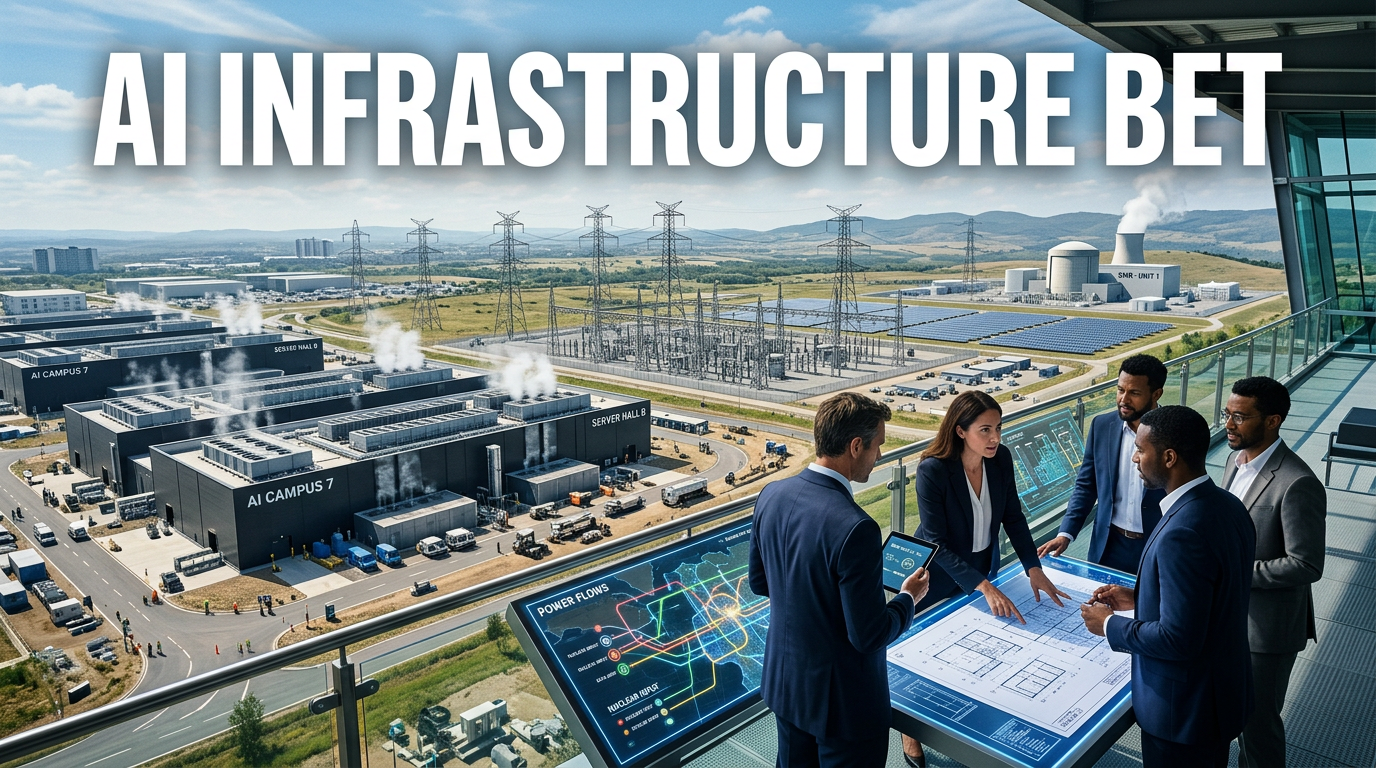
3) The battleground of AI infrastructure is expanding from GPUs to “memory + storage + network”
Messages about storage/memory architecture like NVIDIA’s BlueField-4 suggest
that as AI needs to remember longer and handle more context,
HBM/memory/storage demand could structurally increase.
This is not just a semiconductor cycle story but a change in the “AI operating cost structure.”
4) The core of AX roadmaps is not ‘adoption’ but ‘operation’
2026 is likely not the year of attaching many agents,
but the year of making human-agent collaboration a controllable process.
In other words, success may hinge on operations/risk/internal control design rather than the tech team.
6) Implications from the 2026–2027 global economic outlook (blog reinterpretation)
First, Industrial AI investment may become an “investment that is difficult to postpone” even in a slowing economy.
A production line that cannot run because of a lack of people is a loss, not a cost.
Second, GLP-1 and multi-omics can change the earnings structure of consumer goods companies.
Food/beverage/restaurants/fashion/healthcare could be reorganized together.
Third, AI infrastructure competition is directly linked to data center expansion and therefore strongly connected to inflation variables (power/cooling/facilities).
Ultimately, it will be heavily affected by interest rates and the CAPEX cycle.
For reference, economic SEO keywords naturally woven into the text are also included according to the flow: global supply chain, inflation, interest rates, U.S. stock market, ROI
< Summary >
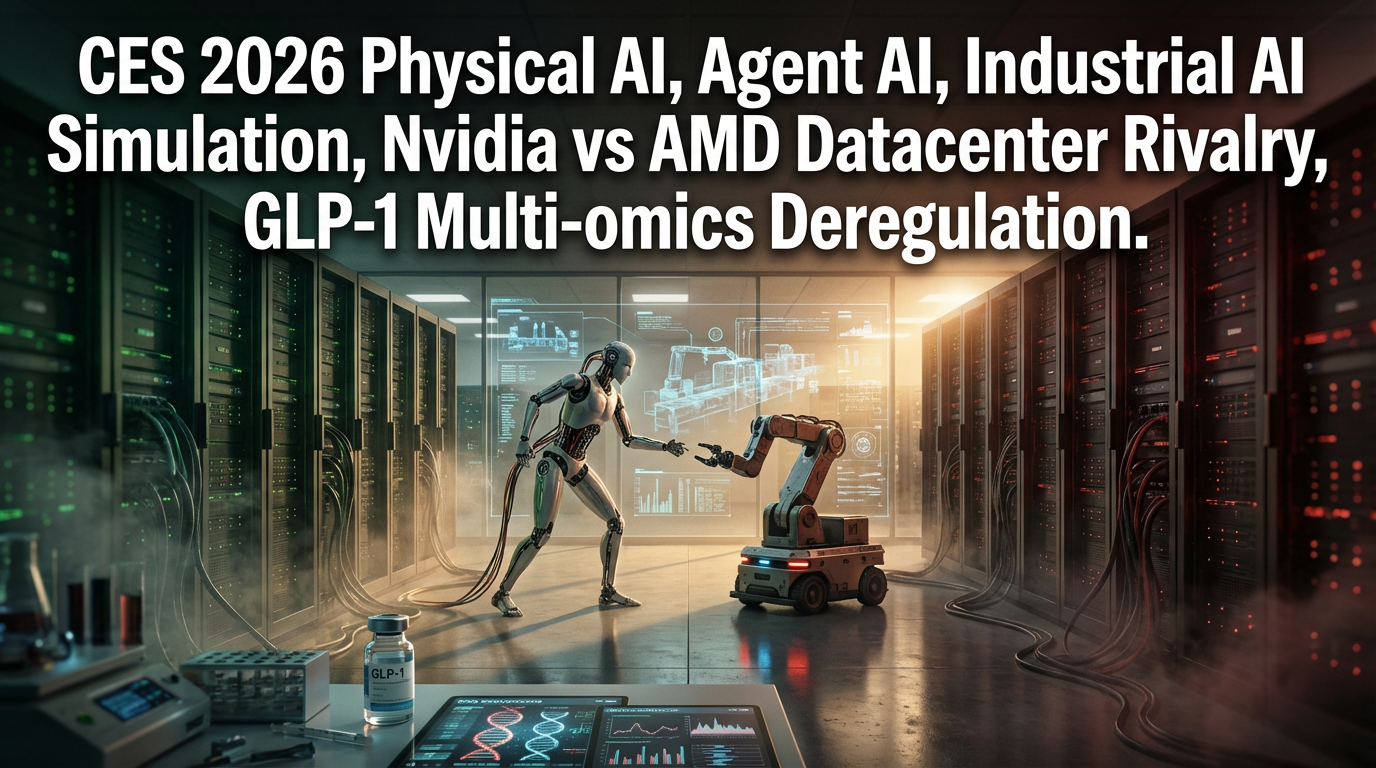
P.A.R.A.D.I.G.M is the CES 2026 core frame that explains the axis of AI’s movement “from digital to reality.”
Physical AI·agents·robots ultimately make money first in Industrial AI, and simulation/digital twin solve the deployment bottleneck.
The NVIDIA vs AMD competition is expanding from GPUs to a turnkey war over racks·networks·data centers.
GLP-1 and multi-omics are variables that can shake up consumption/health/regulation and change the industrial landscape in 2026.
[Related articles…]
Investment points for Physical AI and manufacturing automation roadmaps
NVIDIA data center strategy: why it is expanding into network and memory
*Source: [ 티타임즈TV ]
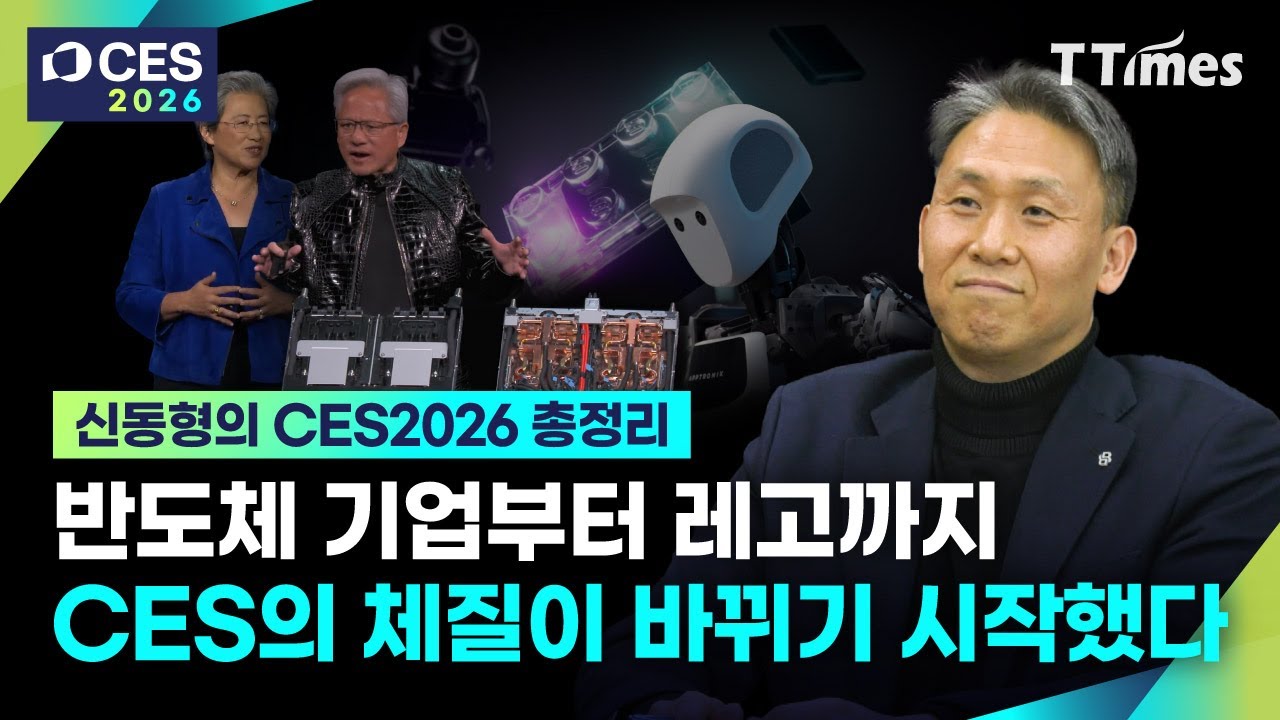
– 피지컬AI, 제조AI, 로봇…현실로 이동한 AI (신동형 알서포트 전략기획팀장)