
● Trump Greenland Deal, SpaceX IPO Rush, OpenAI 50B Cash War
Greenland–Trump Negotiation Framework, SpaceX IPO and Orbital Data Centers, and OpenAI’s $50B Raise: What Markets Are Actually Pricing In
This note consolidates three themes:1) The likely structure of the “Greenland framework” (packaging tariffs, security, and resource rights).
2) Why SpaceX’s IPO timeline may be accelerating (orbital data centers as the next phase of the AI infrastructure buildout).
3) Why OpenAI is seeking an additional $50B and what generative AI traffic-share shifts imply about cash burn and user migration.
1) Global Macro Briefing: Why Risk Assets Rose With Limited Friction
1-1. Equity performance: “reduced tariff risk” as a near-term catalyst
US equities advanced by roughly ~1%.
The prior drawdown was driven by European tariff headlines; a shift in Trump’s tone toward withdrawal/deferral supported risk-on positioning.
This resembles a political-volatility shock followed by a rebound, rather than a sudden deterioration in global growth.
1-2. Why the risk is not resolved: retaliation threats tied to US asset sales
Policy risk remains.
In the context of comments around potential US Treasury sales by Danish pension entities, Trump signaled broad retaliation if Europe disposes of US assets.
While consistent with negotiation leverage, markets may reprice policy-risk premia independently of inflation or rates.
1-3. Data: GDP and labor stable; next key checkpoint is CPI
GDP surprised to the upside and initial jobless claims remained low, indicating resilient labor conditions.
Core spending/inflation-related releases were not disruptive but are lagging indicators and had limited market impact.
The next major test is the January CPI print (mid-month timing), which could shift rate-path expectations and reintroduce volatility in rate-sensitive growth equities.
2) Greenland: What the “Framework” Likely Implies
2-1. Core market question: unilateral claim vs. negotiable deal structure
The key issue is less the headline rhetoric about “owning Greenland” and more the referenced “framework for the future.”
Current market narratives point to a negotiable package deal combining defense, resources, and NATO posture, rather than formal territorial annexation.
2-2. Deal components discussed in market scenarios
While not confirmed, circulated scenarios commonly bundle:
- Missile defense / air-defense deployment: leveraging Greenland’s strategic location for Arctic routes and missile trajectories
- Mining and resource development rights: limiting Chinese access and securing Western supply chains
- Enhanced NATO presence: expanded US facilities and/or a sustained NATO footprint
If structured as a package, European stakeholders may view it as more politically manageable than a territorial transfer, reducing the probability of acute escalation and supporting near-term risk sentiment.
2-3. Investor framing: the primary value is Arctic infrastructure, not only minerals
Media coverage often overweights rare earths and mining. From an investment perspective, the higher-order issue is control over Arctic infrastructure linked to the AI era’s energy, logistics, and security realignment.
Relevant assets include Arctic shipping routes, northern surveillance and communications, radar/satellite ground infrastructure, and subsea cable corridors. Resource rights may be the visible component; durable leverage may come from long-term control and basing rights.
3) Why SpaceX’s IPO May Be Accelerating: Orbital Data Centers as an AI Infrastructure Thesis
3-1. IPO signal: bank selection implies an internal timetable
Reports of SpaceX engaging multiple banks as potential underwriters suggest an actionable IPO roadmap rather than a distant possibility.
Market consensus has centered on 2026, while some commentary references earlier timing (execution remains uncertain).
3-2. Why the stance may be changing
Historically, Musk implied no IPO until materially progressed interplanetary operations. A faster timeline implies a near-term requirement for very large capital, increasingly associated with AI infrastructure expansion.
3-3. Orbital data center logic (as articulated by Musk)
The argument is structured around:
- Improved solar utilization: higher effective solar capture in orbit
- Lower diurnal/seasonal variability: reduced exposure to terrestrial supply fluctuations
- Lower cooling burden: potential to shift cooling constraints via environmental conditions
- Primary constraint: launch cost and ongoing maintenance/failure response
3-4. Key dependency: Starship and full reusability
Economic viability depends on reducing the cost per kilogram to orbit to a level that competes with terrestrial data center build-and-operate economics.
The thesis requires high-confidence full reusability and materially lower marginal launch costs.
3-5. Engineering skepticism vs. the rationale for pursuing it
Skepticism often assumes terrestrial server, power, and cooling architectures transplanted into orbit.
The counter-thesis assumes purpose-built, lightweight, modular hardware optimized for orbital conditions, potentially altering cost structure and maintenance strategy.
3-6. Strategic option value for xAI
A SpaceX IPO could have implications beyond aerospace. If orbital compute capacity becomes feasible and integrated into xAI training and inference, competitive advantage may shift from model quality alone to compute procurement and delivery.
This reframes the competitive arena across AI semiconductors, power, and data center supply chains.
4) OpenAI’s Additional $50B Raise: Drivers and Competitive Context
4-1. Scale indicates “war capital,” not routine operating funding
Reported outreach to Middle East capital and possible participation by large US strategics has been discussed.
Implied valuations in the $750B–$830B range have been cited.
At this scale, the objective is more consistent with financing compute, data, and product expansion under intense competition than with bridging to profitability.
4-2. Structural reason: cash burn is likely to remain elevated
Frontier-model competition implies rising training and serving costs.
Consumer monetization alone can produce volatile unit economics, increasing pressure to expand into enterprise and platform distribution.
This supports continued market focus on further capital market access, including a possible IPO pathway.
4-3. Competitive pressure: consumer share vs. enterprise positioning
In consumer adoption and engagement, Google Gemini has been gaining share in several datasets.
In enterprise workflows, Anthropic Claude is perceived as strengthening.
This creates a two-front competitive dynamic for OpenAI.
4-4. Interpreting traffic-share data (as referenced around 1/16)
Reported traffic share for Gemini has been rising, while ChatGPT has been trending down in the referenced dataset.
Commentary also cited Grok surpassing DeepSeek.
Traffic is a practical indicator of distribution, habit formation, and time spent, and can be more directly connected to monetization than benchmark performance alone.
5) Key Takeaways Often Underweighted in General Coverage
5-1. The Greenland “framework” is about control rights and basing—packaged with supply chain leverage
Public debate may focus on territorial framing. Market-relevant exposure is to long-duration control over Arctic infrastructure and security posture, bundled with resource access and NATO basing arrangements.
If clarified, European tariff headlines may be reframed as bargaining instruments, potentially reducing volatility.
5-2. A SpaceX IPO is less an “aerospace” event than a response to AI power, cooling, and siting constraints
Terrestrial data centers face grid capacity limits, permitting delays, cooling constraints, land scarcity, and local opposition.
The orbital data center concept proposes relocating constraints into a different physical regime; the IPO can be interpreted as a financing mechanism for that experiment.
5-3. OpenAI’s $50B is plausibly defensive as much as it is growth-oriented
Even modest share erosion can be costly under a high fixed/variable compute cost structure.
Fundraising may therefore reflect the cost of sustaining participation in an increasingly capital-intensive market.
Over time, capital access and supply chain control (power, semiconductors, data centers) may become as determinant as model innovation.
6) Investor Checklist: What to Monitor Next
- Greenland: whether negotiations converge on a concrete bundle of enhanced NATO presence, mining/development rights, and defense deployments
- Europe tariffs: escalation risk and European response via US asset sales, regulation, or retaliatory tariffs
- Macro: whether January CPI confirms continued disinflation and shifts the expected rate path
- SpaceX: IPO preparation velocity, Starship reusability credibility, and any contracting/partnership signals around orbital compute infrastructure
- OpenAI: terms of the $50B round (valuation, preferred terms, role of strategic investors) and ongoing product traffic-share trends
< Summary >
Trump’s Greenland “framework” appears more consistent with a negotiable package—NATO basing, missile defense, and resource development rights—than with formal territorial transfer, supporting a near-term reduction in perceived geopolitical tail risk.
A SpaceX IPO may be advancing as a capital-raise pathway for an orbital data center thesis positioned as a solution to AI infrastructure bottlenecks; success could extend strategic leverage to xAI.
OpenAI’s $50B fundraising effort likely reflects structurally high compute-driven cash burn and intensifying competitive pressure; traffic-share trends indicating Gemini gains and ChatGPT declines are material indicators for investors.
[Related Links…]
- https://NextGenInsight.net?s=Greenland
- https://NextGenInsight.net?s=datacenter
*Source: [ 내일은 투자왕 – 김단테 ]
– 그린란드와 스페이스엑스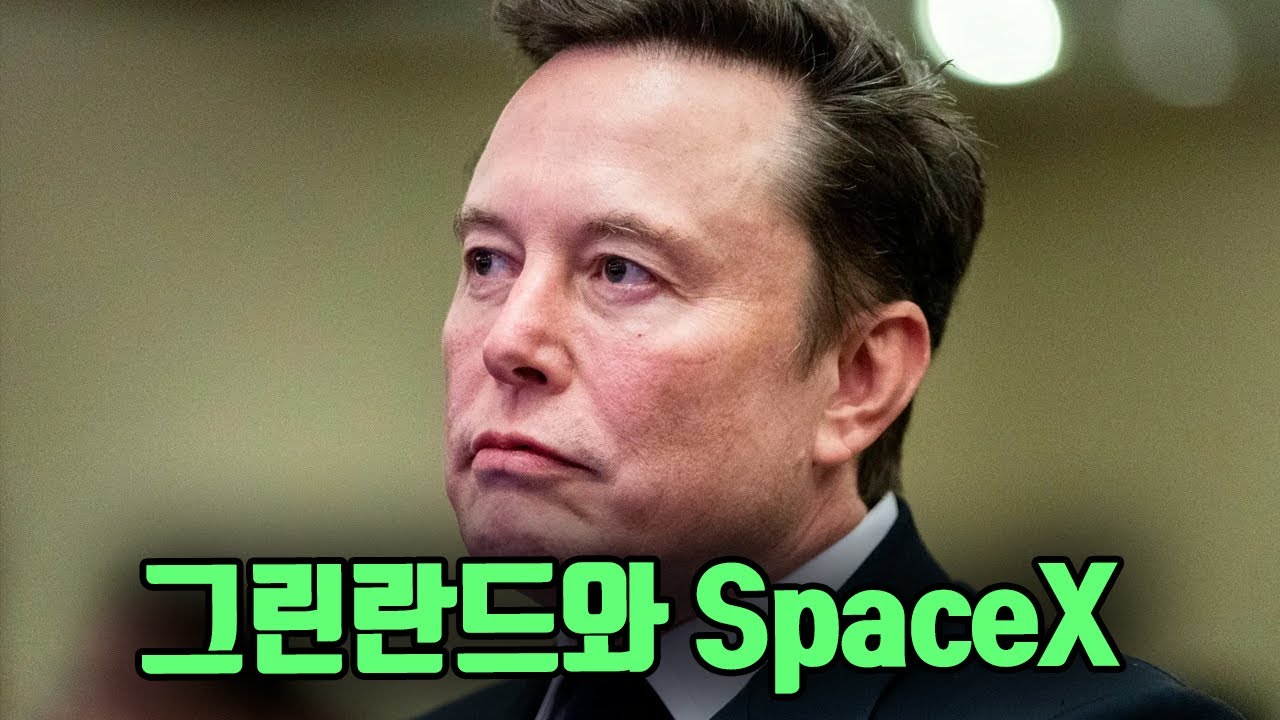
● Sticky Inflation, Surging GDP, Rate-Cut Hype Crushed
US November PCE at 2.8% (In Line) + Q3 GDP Revised Up to 4.4%: The Key Signal Is Not “Cut Timing,” but “More Stringent Conditions for Cuts”
Today’s takeaways can be summarized in four points.
1) PCE at 2.8% was neither clearly positive nor negative; the concern is that progress toward 2% is losing momentum.
2) GDP revised up to 4.4% indicates growth is strong enough that rate cuts are not being forced by a downturn.
3) As a result, market expectations are shifting from “delayed cuts” to a more conditional and selective easing path.
4) A Trump-style push for lower rates (including potential Fed chair positioning) should be viewed less as “faster cuts” and more as an attempt to influence the Fed’s reaction function.
1) Headline: Two US Releases Today; Market Read-Through Is “Less Urgency to Cut”
① November PCE inflation: 2.8% (in line with expectations)
PCE is the Fed’s preferred inflation gauge; the headline conclusion is the absence of a surprise.
However, the result is not sufficient to justify a broad “relief rally.” The data suggest inflation may be settling into a high-2% range rather than converging smoothly to the 2% target.
② Q3 GDP (revised): 4.4% (revised higher)
A stronger growth print implies the Fed has limited need to cut promptly to defend activity.
The combination of high-2% inflation and firm growth is one of the least supportive environments for rapid policy easing.
2) Indicator-Level View: Why PCE at 2.8% Can Be Risky Despite Looking Acceptable
The key issue is not whether inflation has fallen, but whether there is sufficient momentum to reach 2%.
At 2.8%, disinflation is evident relative to the prior high-inflation period. For the Fed to ease more aggressively, it requires higher confidence that inflation is converging to target.
Key monitoring points
- An in-line PCE print supports “wait-and-assess” rather than “clear to cut.”
- Sticky services inflation, wages, and housing (rent) would slow the return to 2%.
- The implication is less “no cuts” and more “limited scope for faster cuts.”
3) What GDP at 4.4% Implies: The “No-Landing” Scenario Remains Plausible
An upward GDP revision suggests demand remains resilient. In this setting, the Fed is likely to weigh the risk that easing too early could re-ignite inflation pressures.
Market implications
- US Treasury yields, particularly at the long end, may remain elevated.
- The US dollar may retain upward pressure.
- For emerging markets and Korea, renewed capital outflow risk and FX volatility may re-emerge as relevant variables.
4) Updating Rate-Cut Expectations: Focus Shifts From “Whether” to “Path” (Pace/Frequency)
Near-term interpretation may tilt toward a hold at the next FOMC meeting. More important is the possibility of a flatter easing path across 2025–2026.
In summary
- Insufficient confidence in continued disinflation toward target
- Growth revised stronger
= The Fed has limited incentive to accelerate easing
5) Why Questions Are Emerging About the Feasibility of a Trump-Led Rate-Cut Agenda
A lower-rate agenda typically assumes: rapid cuts → easier financial conditions → support for asset prices and growth.
With PCE at 2.8% and GDP at 4.4%, the Fed has reduced justification to accommodate that preference immediately.
Two key points
1) The Fed is guided by inflation and labor-market data, not executive preference.
2) Strong growth can make it easier for the Fed to emphasize data dependence amid heightened scrutiny of its independence.
6) Under-Discussed Point: Markets Are Increasingly Sensitive to the Duration of Positive Real Rates
Key point: Market focus is shifting from “rate cuts” to how long real rates remain positive.
Even if nominal rates decline modestly, inflation holding in the high-2% range can keep real rates elevated, limiting the perceived easing in financing conditions for households and corporates.
Why this matters
- Elevated real rates can cap upside for high-valuation segments (e.g., growth/AI) that rely on rapid discount-rate relief.
- Cash-flow-resilient segments (quality, dividends, energy, defensives) may be relatively advantaged.
- Investors may need to prioritize observed easing in financial conditions over headline rate-cut narratives.
7) 2025–2026 Global Macro: Superficial “Goldilocks,” Higher Investment Difficulty
The backdrop can appear Goldilocks-like. However, investment execution may become more challenging if growth remains acceptable while inflation stays ambiguous, delaying meaningful easing.
Common market patterns in this regime
- Strong data can be negative (reduced scope for cuts)
- Weak data can be positive (greater justification for cuts)
- Higher volatility and more frequent sector rotation
8) AI Implications: A Flatter Rate Path Increases the Importance of Earnings Delivery Over Narrative
AI remains a long-duration structural growth theme. If rates do not decline quickly, valuation expansion driven primarily by narrative becomes harder to sustain.
AI investment/industry checklist
- Where capex (GPU, servers, networking, power/grid) is translating into measurable revenue and margins
- Evidence of monetization and paid conversion for AI software/agents
- Whether enterprises demonstrate quantifiable cost savings and margin improvement from AI deployment
In such conditions, market differentiation tends to shift from “bubble vs. no bubble” toward “cash-flow proof.”
9) Actionable Near-Term Checklist: Five Items to Track
1) Whether the next PCE moves into the mid-2% range (reconfirming the path toward 2%)
2) Whether labor-market indicators soften (creating clearer easing justification)
3) Whether long-end yields and the dollar re-strengthen (directly tightening global liquidity)
4) Whether the FOMC dot plot and press-conference tone indicate a slower easing pace
5) Whether Fed appointment/political headlines increase volatility via policy uncertainty premia
[Related]
- https://NextGenInsight.net?s=PCE
- https://NextGenInsight.net?s=FOMC
*Source: [ 경제 읽어주는 남자(김광석TV) ]
– [속보] 미국 11월 PCE 2.8% 기대치 부합, 3분기 GDP 잠정치 4.4%견조 : 트럼프의 금리인하 계획 무산되나? [즉시분석]● Alliance Fracture, Supply Chain Shakeup, AI Chip Stampede
Key Global Economy and AI Trends (Jan 22, 2026): Alliance Friction, Supply-Chain Rewiring, and AI-Chip Capital Concentration Converge
The primary market implication is not that short-term risk has eased due to a temporary US–Europe accommodation (Greenland-related), but that the episode exposed structural erosion in alliance trust. This can simultaneously affect supply chains, semiconductors (particularly AI chips), energy prices, and trade disputes.
Key points:
- Why US–Europe frictions reinforce the signal of an entrenched fragmented world
- Why fragmentation can re-rate “national security” semiconductor assets such as Intel over pure performance leaders
- Why China is advancing Alibaba’s semiconductor unit (T-Head) toward a listing to build an independent AI-chip ecosystem
- Why a natural gas spike is not only a weather headline but a potential trigger for a nuclear power renaissance
- Why issues involving Coupang investors could escalate from a corporate dispute into a US–Korea trade and investment risk
1) Global Equities: Relief Rally on Greenland De-escalation; Core Issue Is Persistent Alliance Fragility
Market reaction (summary)
Nasdaq, S&P 500, Dow, and Russell posted broad gains. The rebound was catalyzed by perceived near-term de-escalation of geopolitical uncertainty tied to Greenland.
Core interpretation
This appears closer to a temporary accommodation than a durable resolution. The fact that the US and Europe approached an extreme negotiating posture and then converged underscores the likelihood of recurring alliance tensions across tariffs, security, and resource access.
Investor framing
The key question is not whether the Greenland issue has ended, but who benefits in a regime where even allied partners are less reliable.
2) The Fragmented World: Alliances Split and Recombine by Industry
Observed shift
- Prior globalization model: production optimized for lowest cost and highest efficiency globally
- Current model: production shifts toward controlled blocs, even at higher cost or lower performance
This reflects a structural change in supply-chain philosophy and appears increasingly durable beyond individual political cycles.
Why it matters
As “security, sovereignty, and controllability” become priced premia, equity leadership can shift from “best technology” to “assets that governments are structurally incentivized to support.”
3) Semiconductors / AI Chips: Why Intel Re-emerges as a Strategic Asset (Sovereignty vs. Performance)
Current market context
Intel has sustained recent gains, with upcoming earnings as a near-term focal point. Tactical profit-taking and results-driven volatility remain possible, but the broader framing is consistent with potential benefit from US industrial policy and protectionism.
Core thesis
Intel should not be assessed solely through historical performance leadership. In a fragmented world, Intel increasingly functions as a proxy for US domestic manufacturing capacity and semiconductor sovereignty.
Re-rating framework:
- Historical: performance / unit economics / competitiveness (relative to Nvidia, TSMC, etc.)
- Current: hard-to-substitute security asset + domestic production footprint + policy-driven support optionality
AI linkage
Even with continued GPU centrality (Nvidia), expanding AI data centers elevate the importance of full-stack infrastructure—power, memory, CPU, and networking—supporting renewed attention to CPU/server ecosystems where Intel’s positioning can be reassessed.
4) China’s Countermove: Alibaba Semiconductor Listing Preparation as an “AI-Chip Independence” Signal
News
Alibaba is preparing a listing for its semiconductor unit. Under US export restrictions limiting access to high-end Nvidia chips, Alibaba’s T-Head chips are increasingly positioned as domestic substitutes.
Why the listing matters
A listing is not only financing; it is an ecosystem commitment. Capital formation can accelerate hiring, execution speed, and roadmap cadence, reinforcing “domestic-first” chip adoption across China’s cloud and AI workloads.
Implication
Capital allocation may increasingly bifurcate: Western markets concentrating in US-aligned AI-chip leaders (e.g., Intel, Nvidia), while non-US capital concentrates in China-aligned AI-chip platforms (e.g., Alibaba). This is fragmentation transmitted into capital markets.
5) US Macro: No PCE Shock; Labor Market Shows Low Layoffs and Low Hiring
Inflation (Nov PCE)
- Headline PCE: 2.8% (modest increase)
- Core PCE: 2.7% (modest deceleration)
This suggests inflation has not fully normalized, but also does not present an immediate shock requiring urgent Fed reaction.
Labor (weekly initial jobless claims)
Claims were below expectations, consistent with surface-level resilience. The mix appears more consistent with limited incremental layoffs rather than strong incremental hiring.
Policy rate implications
With both inflation and labor lacking abrupt change, the setup remains consistent with a hold bias at the FOMC, shifting market focus toward earnings-driven dispersion.
6) Energy Shock: Natural Gas Up 75% in Three Days; A Power-System Issue, Not Only Weather
Drivers
- Arctic cold wave (weakened jet stream) lifted heating demand
- Freeze-offs raised production-disruption risk
- Positioning unwind accelerated the move after “warm winter” consensus
Key conclusion
Repeated climate volatility increases the likelihood that natural gas behaves as a structurally volatile asset, with simultaneous demand and supply instability.
AI linkage (power constraint)
AI data centers impose sustained baseload electricity demand. A gas + renewables mix may struggle to absorb volatility, elevating the strategic role of nuclear power as a reliability solution for large-scale AI infrastructure.
Natural gas volatility is therefore both an “energy price” event and a signal of “power portfolio rebalancing” in the AI infrastructure cycle.
7) Coupang Investor Dispute: Pathway from Corporate Issue to US–Korea Trade/Investment Friction
Facts
Coupang investors (Greenoaks, Altimeter) invoked US–Korea FTA protections, initiating steps consistent with arbitration / requests for investigation, alleging discriminatory treatment by the Korean government.
Why it is sensitive
The dispute can migrate from company–government conflict to a state-to-state trade and investor-protection framework.
Market implication
In a fragmentation regime, “US-linked” corporate classification can translate political and trade risks directly into valuation volatility. Coupang operates in Korea but has a US-centered governance profile, increasing sensitivity to this framing.
8) Additional Watch: Starlink / Satellite Internet and Crypto Convergence — Bundled “Infrastructure + Finance” Competition
Observed linkage
Reports of cooperation between a Trump-family-associated crypto project (stablecoin-like characteristics) and a satellite-internet startup (Spacecoin).
Implications
Satellite internet is not only connectivity; it can enable censorship-resistant and borderless access. If paired with stablecoin payment rails, it may create points of friction with national financial and payments systems.
Given Starlink’s scale advantage, the signal is less about a near-term challenger and more about space infrastructure as a central domain of future strategic competition.
9) One-Line Summary (News-Style)
US–Europe tensions temporarily eased, but alliance trust has weakened structurally; capital is bifurcating toward security-aligned semiconductors (Intel) and domestic AI-chip stacks (Alibaba), while climate-driven natural gas volatility increases the probability that nuclear power gains urgency in AI-era electricity planning.
Most Material Points Commonly Underweighted
1) Intel’s re-rating may reflect a sovereignty premium rather than a pure technology rebound
Performance-only comparisons can miss the premium assigned to controllable domestic capacity as alliances weaken.
2) Alibaba’s semiconductor listing is a financial engine for China’s AI-chip ecosystem
The strategic importance is the ecosystem effect of capital formation, not only product quality.
3) The natural gas spike can shift nuclear expansion from policy preference to market necessity
If climate volatility persists, gas may not provide stable baseload reliability. Rising AI power demand increases the likelihood that nuclear becomes a central reliability solution.
4) The Coupang case’s core risk is escalation into a US–Korea investor–state dispute framework
If reframed at the intergovernmental level, resolution timelines lengthen and sensitivity to political cycles increases.
< Summary >
A relief rally followed Greenland-related de-escalation, but persistent alliance fragility is becoming structural.
Fragmentation is accelerating supply-chain rewiring, increasing the premium for security-aligned semiconductor capacity.
Intel has potential for re-rating primarily as a US manufacturing sovereignty asset rather than a performance leader.
Alibaba’s semiconductor listing preparation signals capital formation for a China-centric AI-chip ecosystem.
The natural gas surge reflects climate volatility, supply risk, and positioning, and supports a stronger nuclear-power role given rising AI electricity demand.
The Coupang investor arbitration track may extend beyond a corporate dispute into broader US–Korea trade and investment risk.
[Related Links…]
- Latest: Semiconductor Supply-Chain Rewiring and AI-Chip Power Competition
- Equity Strategy Under a Policy-Rate Hold Scenario
*Source: [ Maeil Business Newspaper ]
– 中알리바바, 반도체 부문 상장 준비ㅣ천연가스 가격 사흘만에 75% 급등ㅣ쿠팡 투자사 2곳, 美정부에 한국조사 요구ㅣ홍키자의 매일뉴욕