● Tesla Earnings Shock, Less Cars More AI Profit
Tesla earnings: “Why the stock rises even when fewer cars are sold” has now been proven with numbers (Physical AI/Robotaxi/Optimus/AI chip/H5)
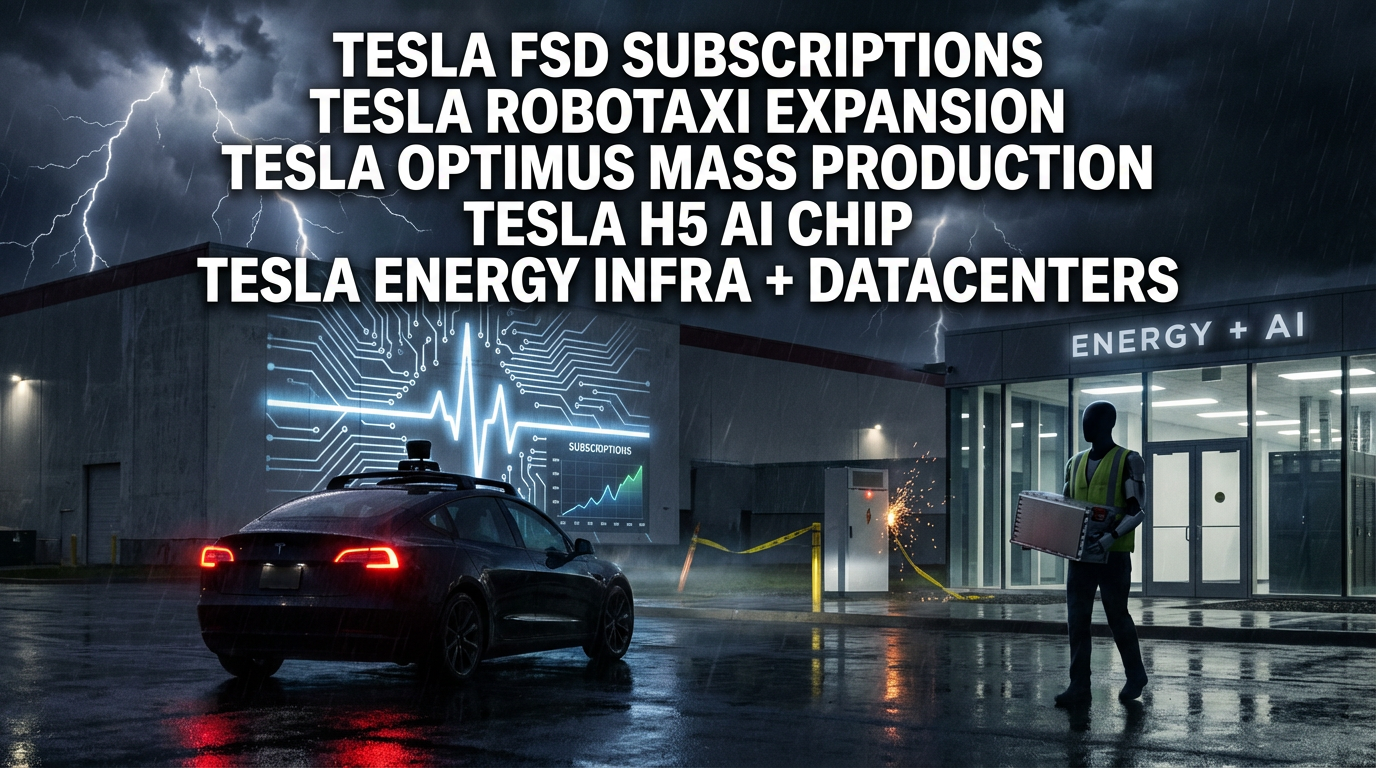
There are five points you must watch in this earnings report.
1) Surge in FSD (autonomous driving) performance and subscribers
2) Robotaxi unveils expansion roadmap as a “real service”
3) Cybercap production line progressing steadily (a dedicated vehicle without a steering wheel)
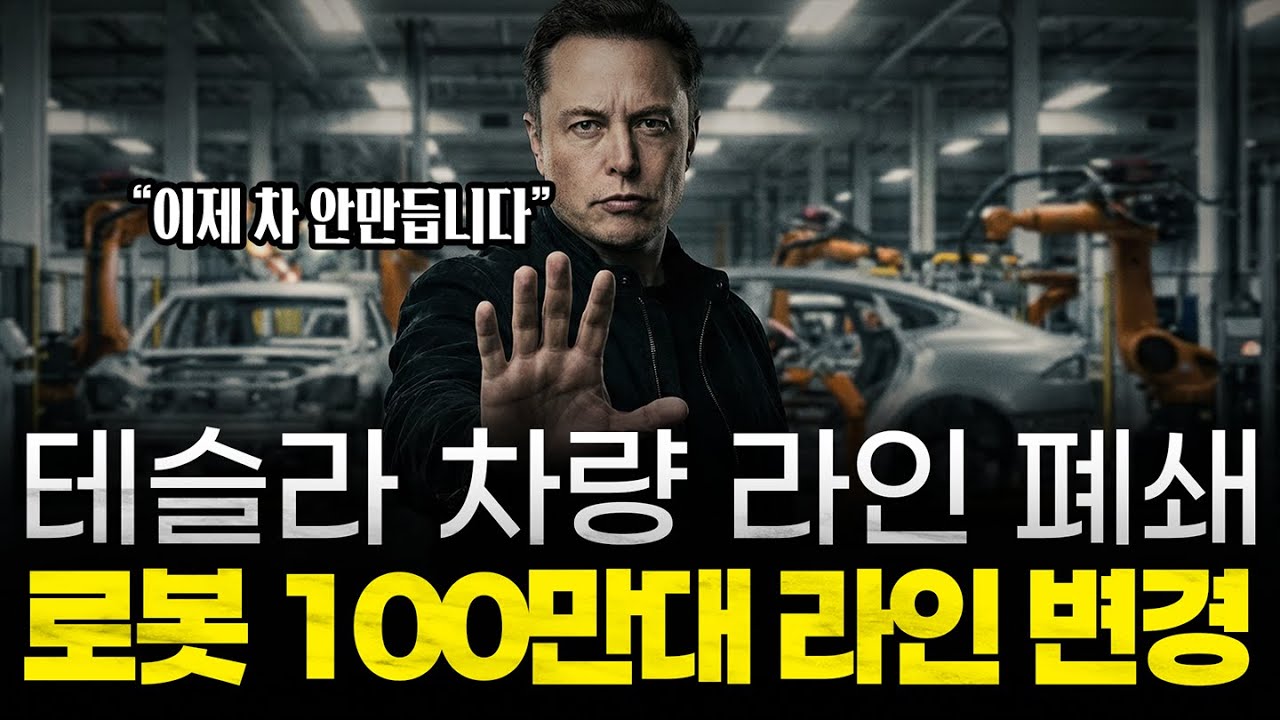
4) Optimus production readiness (even mentioned converting factory lines)
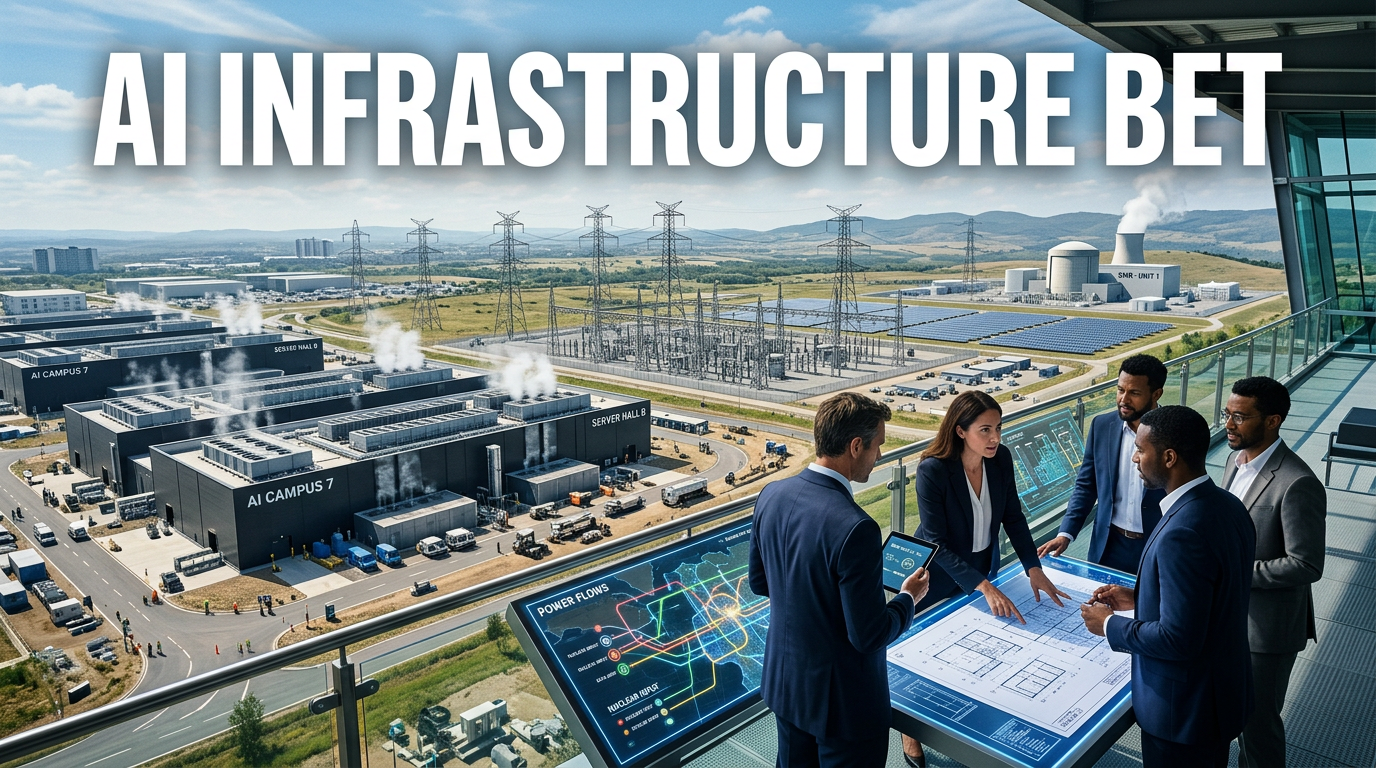
5) AI infrastructure (data centers) doubling + in-house AI chip (H5) strategy
And below I will separately summarize the core point (the truly important things) that other news/YouTube often do not cover.
1) Earnings news summary: the essence of the “earnings surprise” was not the cars
With market expectations having been driven down to the floor, Tesla outperformed consensus for the first time in a while and the stock reacted.
On the surface it looks like EPS and revenue slightly beat expectations.
What the market really read this time was the signal that Tesla’s business mix is clearly shifting toward software/services/AI infrastructure.
2) Look at just one thing in the finance: “sales decline vs margin improvement” happened simultaneously
The point is that vehicle sales/production fell while gross margin improved.
Normally in manufacturing, margins tend to worsen when volumes drop because of fixed cost burdens, so the opposite movement suggests that “the source of profit generation is changing.”
In other words, the traditional electric vehicle competition frame (price cuts/inventory/promotions) alone cannot easily explain these numbers.
3) Vehicle production/deliveries decline: bad news, but in Tesla it could be a strategy
The original text referenced a declining trend in production/deliveries from 2023→2024→2025.
From an old perspective this would be seen as “fundamental damage,” but the tone of this announcement is completely different.
What Tesla emphasizes is not “selling many cars” but “placing cars as a platform (computing/sensors/data collection devices).”
From here Tesla shifts from being a manufacturer to an AI subscription business + service economy valuation frame.
4) FSD subscribers: this is likely still the ‘pre-awareness spread’ phase
There was mention that active subscriber numbers are increasing rapidly, and I expect a steeper rise from 2026 onward.
The core point is that the leverages are not only “technical performance” but also “awareness/regulation/price” simultaneously.
Even survey context in the U.S. that many people don’t even know such a feature exists is actually an opportunity.
Because when the product already exists and user experience accumulates, once awareness catches up the conversion rate can spike.
5) Robotaxi: the 2026 first-half “multi-city expansion plan” meaning
There was a nuance about moving in Austin toward a form without a safety driver and a mention of expanding to nine cities in the first half of 2026.
The important point here is whether this moves beyond a “technology demo” to an “operations scaling” stage.
Robotaxi is not just about technology; it is a service industry that includes regulatory response, insurance, accident handling, vehicle operations, maintenance, and customer service.
If Tesla pushes this, revenue structure can shift from manufacturing-centered to high-margin services, increasing operating profit leverage.
This aligns exactly with the common logic behind ‘AI beneficiary stocks’ in global markets recently (economies of scale + margin expansion).
6) Energy business: quietly solidifying a “power infrastructure company” position
There were mentions of increasing deployments of energy storage systems (Megapack, etc.), Supercharger expansion, and VPP (virtual power plant) growth.
This segment is a market that structurally grows as power grids become less stable (heatwaves/AI data center power demand/renewable variability), regardless of short-term ups and downs in the EV market.
If Tesla captures both mobility and power infrastructure, it becomes difficult to compare it to a simple automaker.
This structure provides defensive characteristics against macro variables like inflation, interest rates, and supply chains.
7) Optimus: the first signal toward “robots making robots” factories
Optimus Gen 3, mass production targets, and a strong drive to actually convert production lines were mentioned.
The important thing here is not “how many robots will be sold” but that Tesla intends to redesign production lines assuming humanoid robots.
If that happens, Tesla’s competitiveness shifts from mere product competition to “productivity (manufacturing cost/speed) competition.”
At that moment the story expands beyond an EV maker to one that shakes up manufacturing automation across industries.
8) H5 AI chip + 2x AI infrastructure expansion: the speed at which Tesla becomes an ‘AI infrastructure company’
H5 was described as a major performance improvement (the original mentioned 50x) and a direction to reduce dependency on external GPUs.
When combined with plans to double data center computing power within months, the message is simple.
“To run autonomous driving/robotaxi/robots you need compute, which is a bottleneck, so build the infrastructure first.”
This strategy mirrors the core of the current AI semiconductor competition (the compute acquisition war), and in the long run Tesla mentioning vertical integration into its own semiconductor fabs can be a card to address supply chain and geopolitical risks.
9) Integration with xAI: the core point is ‘orchestrating the Tesla ecosystem’
The xAI investment/collaboration is less about a simple equity stake and more about tying Tesla’s product suite (vehicles/robots/factories/energy) into a single AI operating system.
The nuance that Grok will be used as the conductor for vehicles/robots/internal operations suggests Tesla is designing to become a “physical AI platform,” not a hardware company.
If such a platform is established, network effects (user/data/service expansion) attach and multiples change.
10) One-line news-style summary of this announcement
Tesla is bluntly laying out a roadmap in its earnings announcement to transform from a business dependent on electric vehicle sales to a “high-margin service/AI platform” through FSD subscriptions, robotaxi, Optimus mass production, energy storage, and AI infrastructure (chips/data centers), even amid EV market slowdown.
11) The core point that other YouTube/news outlets don’t often mention but is the most important this time
The core point is that “Tesla’s next valuation metric has shifted from vehicle sales to the speed of compute (processing) and operations (service) scaling.”
Most discussions stop at “FSD is good/robotaxi is coming/Optimus is being made,” but from an investor perspective the real difference is this.
1) If compute is the bottleneck, growth rates are determined by the speed of GPU/chip/data center expansion, not just technology.
2) For robotaxi, the gate is regulatory/insurance/operations scaling more than technology, and Tesla is shifting the emphasis of its announcements toward that side.
3) For Optimus, the game changes not at product launch but when the factory line redesign begins. (The manufacturing cost curve itself can change)
4) Energy is not a “side business” but becomes a power infrastructure position in a phase of surging power demand in the AI era.
5) Ultimately, when Tesla is categorized not as a car-selling company but as an AI platform + service economy, its comparable universe in global markets changes.
12) Checkpoints (including risks): why being only optimistic is dangerous
2026 could be the starting year, but there is also the possibility of delays to 2027–2028, which the original text mentioned.
This market creates volatility not based on “will it work or not” but on “when will it work.”
Especially for robotaxi, a single regulatory/accident/insurance incident can slow expansion, and Optimus could take longer than expected because of production yields, parts supply, and safety certifications.
However, if the interest rate environment changes (a rate-cut cycle) and growth-stock multiples expand, Tesla could become one of the most sensitive stocks again.
< Summary >
In this earnings report Tesla put its stakes on FSD subscriptions, robotaxi services, Optimus mass production, energy infrastructure, and AI infrastructure (chips/data centers) rather than electric vehicle unit sales.
The margin structure is shifting from manufacturing to service-centered, and the next valuation metric is moving from cars to the speed of compute acquisition and service operations scaling.
[Related articles…]
- Why the robotaxi market will really expand from 2026
- How autonomous driving regulation changes affect global markets
*Source: [ 월텍남 – 월스트리트 테크남 ]
– 테슬라 실적 분석.. “이제 로봇 공장으로 바꿉니다”..피지컬 AI의 최정점 기업 탄생