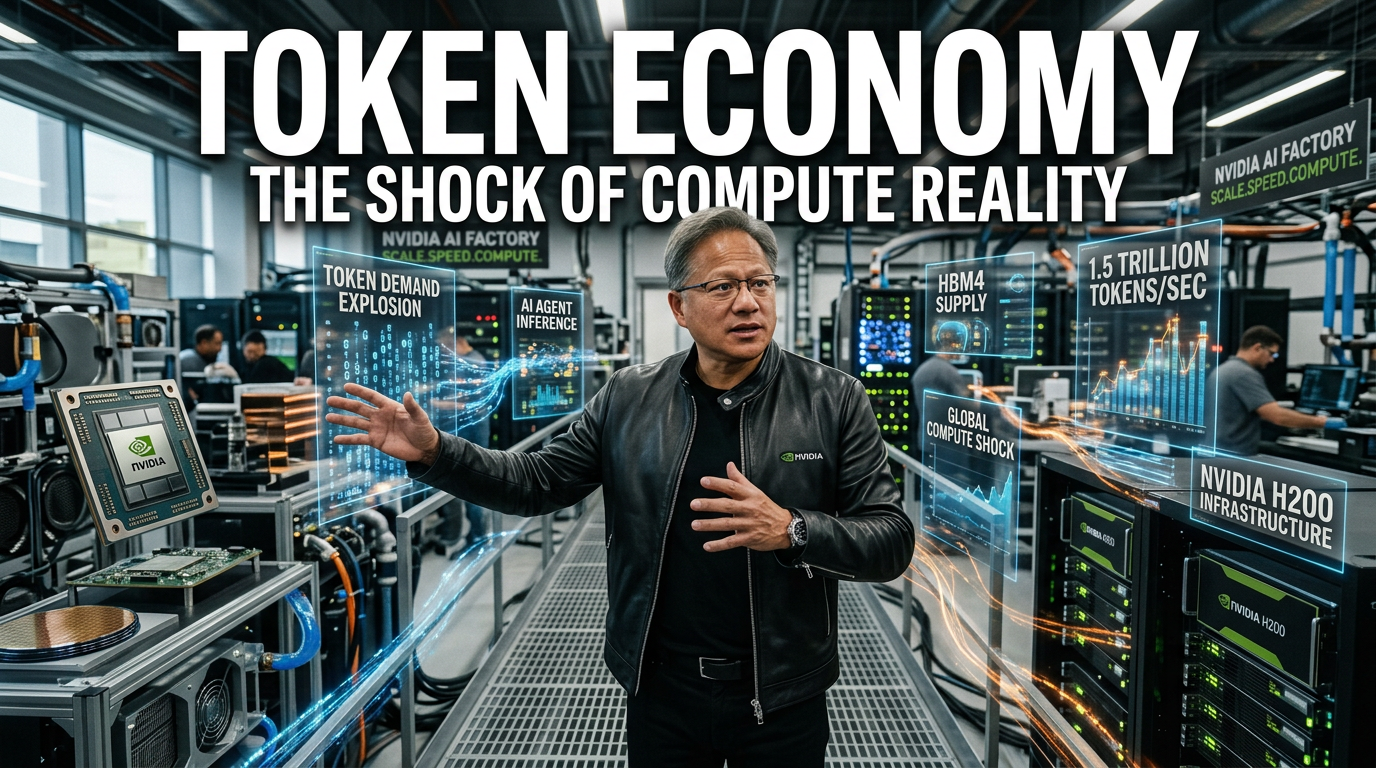
● AI Eats SaaS Panic Sparks Nasdaq Rout
Is This a Signal of a Tech-Bubble Unwind? The Nasdaq Sell-Off Driven by “AI Eats Software” Fears: The Underlying Structure (and 3 Points the Market Is Missing)
This report covers:1) The structure of a sell-off where “tech broke down while the Dow held up”2) Why Anthropic (Claude)-driven “office automation” disrupted SaaS valuations3) Why semiconductors/AI hardware sold off as well (resolving the apparent contradiction)4) Similarities vs. differences versus the dot-com bubble, plus a checklist to assess whether this is a true unwind signal5) Three core points that are underemphasized in mainstream coverage
1) Market summary: “Nasdaq weakened, but the economy did not”
A key feature of this decline is that it was not a broad-based U.S. equity breakdown. Traditional sectors (e.g., the Dow) were comparatively resilient, while the shock was concentrated in tech—particularly software.
This points to a sector-specific narrative shift rather than a macro-driven recession trade. The move resembles a renewed rotation from growth to value.
2) Trigger: The narrative that “AI replaces legacy software” gained sudden credibility
The primary catalyst was the release of an office-automation-style agent by Anthropic (e.g., agents that execute tasks by operating a computer). The market’s interpretation escalated in sequence:
- Step 1: “If this works, do we still need tools for legal/accounting/HR workflows?”
- Step 2: “SaaS revenue could weaken and churn could rise.”
- Step 3: “Software valuations (multiples) should be marked down.”
As a result, software entered a market regime closer to “guilty until proven innocent,” consistent with commentary describing a “pre-judgment” environment.
3) Why semiconductors/AI hardware sold off as well: the contradiction is real
The market has been pricing two difficult-to-reconcile beliefs simultaneously:
- Belief A: “AI spending is too high relative to monetization, so AI capex will roll over.”
- Belief B: “AI is strong enough to disrupt and cannibalize legacy software.”
Only one of these should dominate in a consistent framework. Pricing both tends to amplify volatility.
If Belief B is correct, AI infrastructure demand should, in principle, rise. Office-automation agents are not limited to text inference; they often require repeated loops of screenshot capture, state interpretation, clicking/typing, and re-evaluation—expanding total compute requirements.
Therefore, “greater AI-driven software substitution” is typically associated with higher demand for GPUs, memory, servers, power, and data-center capacity. A concurrent hardware sell-off is more consistent with narrative overshoot and positioning-driven de-risking.
4) Additional downside catalyst: AMD results reinforced “AI hardware anxiety”
Timing compounded the move. AMD results disappointed expectations, supporting a negative interpretation that “hardware is weakening as well,” which helped transmit the software shock into semiconductors.
On such days, flow dynamics can dominate fundamentals: forced selling and risk reduction often spread across the same thematic basket.
5) Macro backdrop: resilient data can accelerate rotation away from high-beta growth
If U.S. data is not materially weak, the market can infer reduced need to hold high-volatility growth exposure. This can accelerate flows into defensives and cyclicals (e.g., consumer staples, energy, healthcare).
Geopolitical risk (e.g., renewed U.S.–Iran tension) can also lift oil prices, providing incremental support to energy. Repeated episodes can widen the growth-versus-value dispersion, echoing dot-com-era sector divergence patterns.
6) Is this the dot-com bubble repeating? Key similarities and decisive differences
Similarities (sentiment/flows):
- A shift in future narratives can trigger rapid multiple de-rating in specific sectors.
- Even if the technology trend is directionally correct, equity pricing can oscillate between overshoot and sharp re-pricing.
Differences (real economy/infrastructure):
- The dot-com era included many companies with unclear demand and monetization; infrastructure constraints were not the central bottleneck.
- Today’s AI constraints are closer to supply bottlenecks (power, data centers, chips, memory) than insufficient demand.
Accordingly, this episode is better framed as a composite of valuation reset, sector rotation, and rapid narrative repricing rather than a definitive “bubble collapse.”
7) Bank of America-style counterview: similar structure to prior “DeepSeek shock”
A recurring argument is: “If AI becomes more efficient and disruptive, capex will decline.” However, competitive dynamics can drive the opposite outcome—more investment in cloud and data-center capacity as vendors race to maintain parity.
Historical precedent cited is that earlier AI efficiency shocks produced elevated fear but were followed by accelerated global cloud capex. If agent competition intensifies, major platforms are likely to ship comparable capabilities; enterprise adoption would tend to increase token usage and inference volumes structurally.
8) Headline–cause–transmission framework
[Headline]
Office-automation AI narrative drove a sharp software sell-off; Nasdaq volatility rose and flows rotated toward value/defensives.
[Immediate causes]
- Anthropic office-automation agent release: expansion of SaaS displacement risk narrative
- AMD results miss: deterioration in AI hardware sentiment
[Transmission mechanism]
- Software multiple de-rating → thematic basket selling (flows) → semiconductors sold off in sympathy
- Resilient macro data → accelerated reallocation toward cycle/defensive beneficiaries
[Key indicators to monitor]
- Evidence of SaaS contract reductions (churn, weaker upsell)
- Signs of slowing AI infrastructure orders, power build-outs, or data-center expansion
9) Three core points underemphasized in broader coverage
1) Responsibility and auditability precede “replacement”
Enterprise software sells accountability, compliance, logging, access control, and incident response alongside functionality. Even if agents perform well, large-scale adoption can be constrained without clear approval trails and execution provenance. Near-term, a “SaaS + agent” integration path is a more plausible base case than broad SaaS displacement.
2) Agents can increase total compute, not reduce it
Automation expands the number of attempts and iterations previously constrained by human time. Even if unit costs fall, aggregate usage can rise, increasing infrastructure demand.
3) This tape is more imagination-driven than empirically validated
Many participants are repricing based on plausible futures rather than measured, tool-level productivity comparisons versus incumbent SaaS. Narrative-led markets typically exhibit higher-than-normal volatility.
10) Conclusion: more consistent with a repricing of how AI reshapes software than a systemic tech unwind
- Software: multiple compression risk is credible, especially for back-office and workflow tools exposed to displacement narratives.
- AI infrastructure (semis/memory/data centers): stronger AI adoption generally implies higher compute and capacity needs; broad, synchronous drawdowns can reflect short-term flow mechanics more than a stable fundamental thesis.
- Near-term pricing can be dominated by positioning and narrative rather than logical consistency.
Key monitoring variables include enterprise capex trends, data-center and power bottlenecks, and whether software results begin to show measurable churn pressure.
[Related links…]
https://NextGenInsight.net?s=nasdaq
https://NextGenInsight.net?s=semiconductor
*Source: [ 내일은 투자왕 – 김단테 ]
– 테크 버블 붕괴 시작?
● AI Shakeout, AMD Bloodbath, Gold Blasts Past 5000, Yen Intervention Risk, Uber Stumbles, White Collar Hiring Freeze
From Texas Instruments “Silicon Labs Acquisition” Speculation to Gold Reclaiming $5,000, Uber Results, and JPY Risk — Today’s True Market Variables
Today’s narrative can be understood through these six variables:
1) Why the Nasdaq is weak: “AI-driven software substitution” is beginning to affect earnings and employment
2) The core of AMD’s sell-off: the “scale gap in revenue” is now explicit in the numbers
3) Why Eli Lilly surged: obesity treatments are shifting from a “pharma” story to a “manufacturing (automation)” game
4) What Uber’s EPS miss really indicates: autonomy is being treated as an input to be “absorbed into the Uber app,” not only a competitor
5) The warning in ADP jobs: freezing in white-collar segments (professional and business services) is the most concerning
6) The JPY 160 scenario: Japan intervention → carry unwinds → potential trigger for global volatility
These dynamics ultimately link back to core macro variables: US rates, inflation, USD strength, recession risk, and the semiconductor cycle.
1) US equity session (intraday): “Dow resilient; Nasdaq unstable”
Nasdaq losses widened and the S&P 500 weakened, while the Dow remained comparatively defensive.
This combination signals a rotation from “growth (especially software and AI expectations)” toward “defensives, cash-flow durability, and traditional sectors.”
Software weakness extended for a second session, indicating increasingly aggressive differentiation within “AI beneficiaries.”
2) AMD -13% to -15%: the “challenger” narrative breaks down under scale
Market reaction centered less on technical competitiveness and more on scale.
Once AI/data center revenue comparisons are interpreted as a structural “weight-class difference,” valuation support becomes difficult.
In addition, AI strength is being offset by deceleration in legacy segments (gaming GPUs, embedded), weakening the linkage between “AI growth” and “company-wide growth.”
In effect, the market is favoring not “AI-themed equities” but companies where AI revenue meaningfully leverages total financials.
3) The underlying driver of software weakness: “integrated AI” absorbing discrete SaaS functions
The sell-off is not limited to valuation pressure.
The market is increasingly pricing the risk that SaaS products (accounting, documentation, analytics, customer support) can be replaced by a single integrated AI agent/tool.
This matters because it can alter corporate cost structures:
- reduced incremental hiring
- reallocation of IT/software budgets
- faster incorporation into earnings guidance
The decline should be interpreted less as a short-term correction and more as evidence of structural change in enterprise spending and labor mix.
4) Eli Lilly (LLY) surge: obesity treatments are becoming a manufacturing execution competition
The quarter reinforced a single point:
Demand is not the constraint; easing supply bottlenecks enables volume-driven revenue acceleration.
Two factors drove the market response:
4-1) Supply normalization enables volume leverage
Obesity treatments have been supply-limited; revenue was capped more by production than demand.
Stronger signals of supply improvement supported outsized revenue and EPS beats.
4-2) Advantageous structure amid pricing pressure
With ongoing policy focus on drug pricing (including Medicare-related dynamics), margin risk has been a key concern.
Lilly’s positioning emphasizes the ability to sustain competitiveness even with some pricing pressure via higher volume and manufacturing efficiency.
Relative framing versus Novo Nordisk has sharpened:
- Novo Nordisk: perceived as slower to expand and more cost-heavy
- Lilly: perceived as faster to scale, with superior manufacturing expandability
The market is increasingly interpreting the obesity category as a contest of unit economics, capacity expansion, and automation rather than branding alone.
5) Uber (UBER): growth confirmed, EPS missed; autonomy strategy is the key focus
Uber reaffirmed platform strength via revenue and gross bookings growth, but EPS fell short, pressuring the stock.
The more relevant takeaway is the company’s strategic direction.
5-1) AV aggregator strategy: bringing autonomy “inside the Uber app”
A key concern has been whether robotaxis ultimately disintermediate Uber. Uber’s approach is to integrate autonomous providers (e.g., Waymo) so rides are requested via Uber.
This positions Uber as the demand gateway and the standard for dispatch, payments, and user experience.
Early market-level indicators suggest autonomy may expand total ride demand rather than only redistribute it, implying a model where AV operators increasingly “list” on Uber’s platform.
6) ADP private payrolls: the sectoral declines matter more than the headline
ADP job growth undershot expectations.
The key detail was a sharp decline in professional and business services, a white-collar-heavy segment.
This is notable because downturns often first appear in white-collar hiring and project-based spend. The pattern is also consistent with AI-driven substitution pressures in knowledge work.
Positioning risk may rise into the official employment report.
7) Consumer signal (Chipotle example): not contraction, but polarization
Negative same-store sales and lower traffic indicate price sensitivity has reached a threshold.
The message is less “US consumption is collapsing” and more that:
- mid-tier discretionary dining is seeing trade-down behavior
- spending is bifurcating toward either lower-cost options or premium experiences
This pattern may recur across retail, dining, and platform earnings.
8) JPY (USDJPY) 156 → 160 watch: intervention as a potential volatility switch
With continued JPY weakness, the market is monitoring the 160 area as a potential intervention threshold.
The primary risk is the chain reaction:
- JPY carry trades (funding in JPY to buy USD assets) could destabilize
- carry unwinds can transmit volatility into US equities
In a tape already pressured in growth segments, FX-driven volatility could amplify drawdowns.
9) Gold reclaiming $5,000: central-bank demand and policy uncertainty hedging
The move appears less like a simple risk-off rally and more like a function of:
- persistent central-bank buying
- monetary/fiscal policy uncertainty
- hedging demand linked to long-run real rates and USD dynamics
Narratives such as major-bank year-end high targets are being reinforced by these drivers.
10) Texas Instruments (TI) and Silicon Labs: focus on cash flow and portfolio reshaping
Speculation around a TI acquisition of Silicon Labs aligns with how markets are currently pricing M&A.
The emphasis has shifted from “story-driven” transactions to tangible financial impact, including:
- stable cash flows from analog/power franchises
- expanded customer reach and supply-chain leverage
- improved portfolio profitability
As AI infrastructure scales, power management and signal-processing exposure remains structurally supported, increasing the likelihood of further portfolio-repositioning headlines.
The most important single line today
The market’s core issue is not an “AI bubble” debate; it is the accelerating separation of winners and losers as AI changes software economics, white-collar employment, and enterprise cost structures in a way that is increasingly visible in earnings.
Accordingly:
- semiconductors/infrastructure: survival is increasingly determined by scale
- software: valuation floors are pressured by functional substitution risk
- platforms (e.g., Uber): the key question is whether they become the gateway that absorbs AI/autonomy
< Summary >
Nasdaq weakness is largely driven by expanding fears of AI-led substitution in software.
AMD’s sell-off reflects confirmation of a “revenue scale gap,” not a purely technical debate.
Eli Lilly strengthened its leadership narrative as the obesity market shifts toward manufacturing and supply scalability.
Uber missed EPS, but its strategy to integrate autonomy into the Uber app remains the principal medium-term lever.
ADP’s headline miss is less important than the contraction in professional and business services.
If USDJPY approaches 160, intervention risk and carry unwinds may become a volatility catalyst.
Gold’s rebound above $5,000 is supported by central-bank demand and hedging against policy uncertainty.
[Related Links…]
How US rate direction transmits into asset markets (key checkpoints)
AI semiconductors after Nvidia: where durable beneficiaries may reside
*Source: [ Maeil Business Newspaper ]
– 텍사스인스트루먼트, 실리콘랩스 인수ㅣ금 반등, 5000달러 재돌파ㅣ우버 고성장 실적, EPS는 미스 ㅣ홍키자의 매일뉴욕