● Tesla 400 Crash Sparks X Ticker Shock, US Self-Driving Law War, Musk Empire Reboot
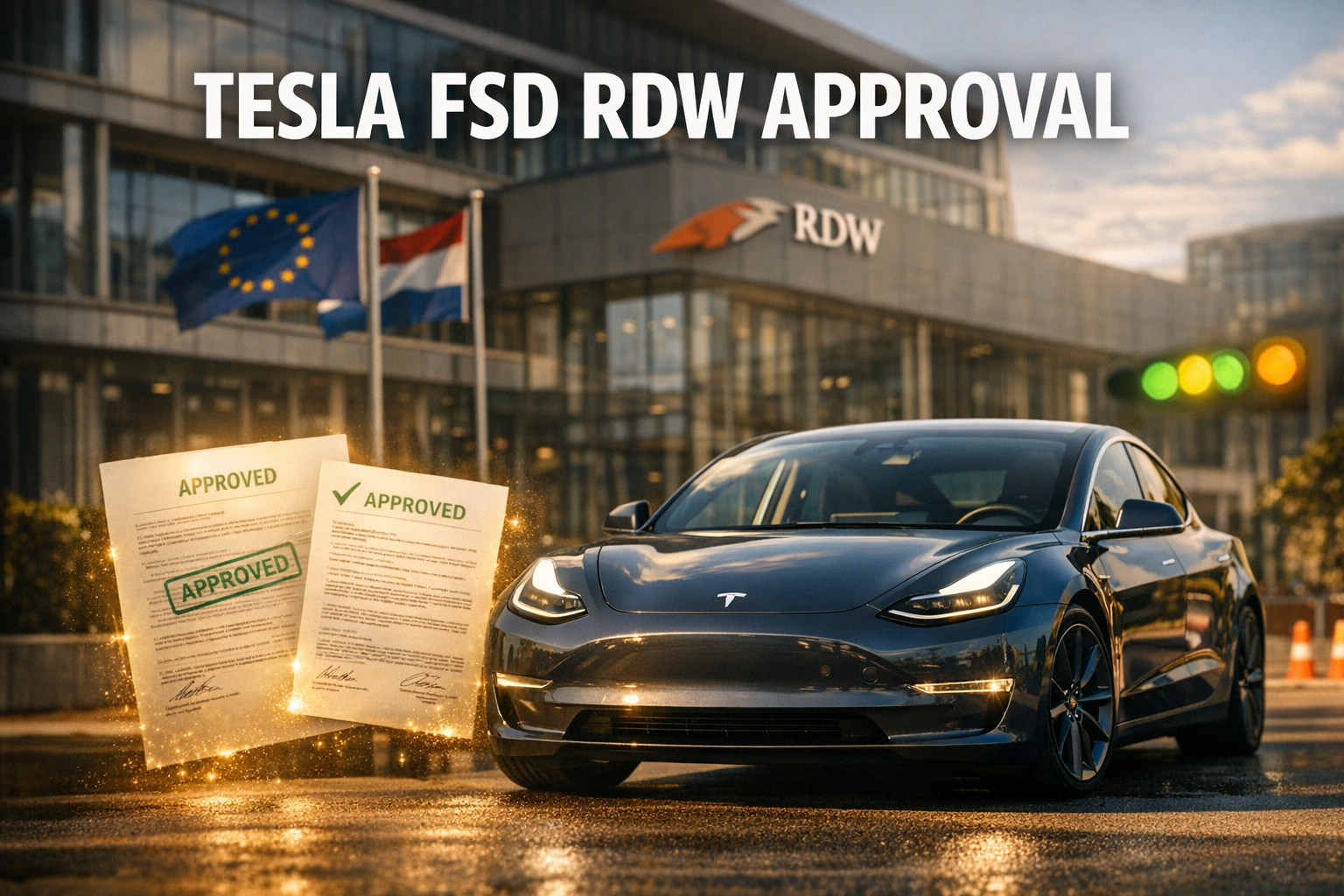
Tesla’s Brief Break Below $400 and the Sudden Appearance of “Ticker X”: Why This May Signal a U.S. Autonomous-Driving Standards Battle and a Potential Reshaping of the Musk Empire
This report consolidates four points:1) The primary drivers behind Tesla’s intraday decline to $399 and data-based counterpoints
2) A fact-check of China demand concerns using CPCA figures
3) Key takeaways from the U.S. Senate hearing in which Tesla and Waymo jointly called for a federal autonomous-vehicle framework, including the April variable (Cybercab)
4) The significance of “Ticker X” entering circulation for the first time in 124 years, and why an “X Holdings” scenario is being discussed again
1) Market summary: “$400 is a psychological level; the narrative shifted in the vacuum”
Tesla traded down to $399 intraday, briefly breaking the $400 psychological threshold, and closed at $406.
This price action is more consistent with broad risk-off behavior in high-valuation growth equities than with a sudden change in intrinsic value.
2) Three pressures that pushed the stock below $400 (news-style)
[1] Nasdaq -1.5% decline: rotation out of mega-cap tech (Magnificent 7)
When growth sentiment weakens, narrative-driven equities with heavier future-expectations components typically exhibit amplified downside volatility. Current conditions reflect renewed inflation concerns, uncertainty around the rate path, and valuation compression risk.
[2] Intensifying AI automation competition → repricing of software/platform valuations
The expansion of automation tools from AI startups has contributed to more selective application of “AI premiums.” Tesla, whose valuation includes autonomy/robotaxi/robotics optionality, is directly exposed to this volatility.
[3] China demand slowdown fears amplified by selective data emphasis
Year-over-year growth was overshadowed by month-over-month decline, contributing to negative sentiment. CPCA figures are summarized below.
3) CPCA fact-check: “Month-over-month -28.9% can be misleading without seasonality”
Key figures referenced:
- Gigafactory Shanghai production/deliveries: 69,129 units
- Year-over-year: +9.3%
- Month-over-month (vs. December): -28.9%
Market focus centered on the month-over-month decline. However, auto demand typically exhibits strong year-end pull-forward effects, followed by a January reset.
A broader market comparison alters the interpretation:
- Against China NEV sales growing at approximately +1% YoY, Tesla reported +9% YoY growth.
- If the overall China market declined around -42% MoM, Tesla’s -28.9% MoM appears comparatively resilient.
With references to BYD declining -30% YoY and roughly -50% MoM, the data more strongly supports the view that January demand weakened broadly in China, while Tesla declined less than key peers.
4) Product strategy debate: Model Y trim expansion and muted market reception
Tesla is expanding the Model Y lineup in the U.S. via tighter trim segmentation and a lower entry point. Market reception has been mixed, reflecting a view that demand may require category expansion rather than incremental trim diversification.
U.S. family demand has been concentrated in full-size SUVs (e.g., Tahoe, Expedition). With renewed discussion of potential Model X de-emphasis, expectations for a larger SUV have increased. Tesla’s focus on Model Y derivatives rather than a new large-vehicle platform has drawn criticism.
The central market question is whether Tesla is accelerating a strategic shift from a unit-sales-driven automaker to a platform model centered on robotaxi (Cybercab) services, with direct implications for margin and growth-rate communication.
5) Risk factor: Fatal-accident litigation and the autonomy safety narrative
In litigation tied to a Massachusetts fatal accident, plaintiffs argue that electronic door handle/locking architecture hindered emergency egress. Allegations include limited external access after power loss and insufficient accessibility of internal manual release mechanisms.
On the same day, Tesla’s VP of Vehicle Engineering (Lars Moravy) emphasized autonomous-driving safety in Senate testimony. The timing increases perceived regulatory and reputational risk.
6) Core development: Senate hearing call for a federal autonomous-driving standard—why now
Tesla and Waymo aligned on a central request:
Unify state-by-state regulatory frameworks into a federal standard.
When permissibility differs across states (e.g., California vs. Texas), autonomy scaling becomes constrained by legal fragmentation rather than technical readiness.
Moravy cited comparative safety statistics:
- Human driving: ~1 crash per 700,000 miles
- Tesla FSD: ~1 crash per 5.1 million miles (as stated)
- Approximately 94% of crashes attributed to human error (as cited)
A key persuasion frame emphasized U.S. technology sovereignty: if China sets global autonomous standards, platform control over 21st-century mobility may shift. Senators reportedly acknowledged the importance of U.S.-led standard-setting amid rising China investment.
A notable detail was the push for specific scale allowances, including increasing exemption caps from 2,500 vehicles to 90,000 vehicles, implying a transition from conceptual debate to commercialization-oriented negotiation.
7) Why April matters: Cybercab (no steering wheel/pedals) and legal basis
The regulatory focus is time-sensitive given April milestones. If a vehicle without a steering wheel or brake pedal lacks clear legal operating standards, production progress may not translate into road deployment.
In this phase, regulation and standards function as binding constraints akin to supply-chain bottlenecks. This can affect how quickly the market assigns a “regulatory clearance premium” when risk appetite returns.
8) The day’s highlight: “Ticker X” re-entering circulation after 124 years—why the market cares
A ticker is a listed equity’s identifier. “X” has been historically associated with U.S. Steel since 1901.
With Nippon Steel’s U.S. Steel acquisition developments, “X” has effectively become available for reassignment, and posts circulated suggesting that a new holder has already secured it.
The timing coincided with Tesla’s break to $399, amplifying market attention.
Given Elon Musk’s long-standing affinity for “X” branding (X.com and the X rebrand), investor communities have periodically discussed a holding-company structure that could connect SpaceX, xAI, X (social), and Tesla.
In this context, “Ticker X” functions less as a code and more as a potential symbol of capital-markets narrative change related to governance and consolidation optionality.
9) Under-discussed high-importance points (analyst view)
Point A: Tesla’s primary bottleneck may be federal standards, not technology
While short-term trading centers on China volumes and trim strategies, the upside case is tightly linked to the speed of robotaxi/autonomy commercialization. That speed is materially influenced by nationwide legal/standards harmonization.
Point B: “China fear” may reflect selective framing
Month-over-month declines appear negative in isolation. Incorporating seasonality, year-over-year growth, and relative performance versus the broader market and peers supports a more balanced assessment. This framing gap can drive volatility around psychological levels such as $400.
Point C: Ticker X is not confirmation of a merger; it is a narrative catalyst
Without disclosure of the holder, definitive conclusions are premature. However, markets often reprice based on probability-weighted scenarios rather than confirmation, especially where AI, autonomy, and robotics narratives intersect.
Point D: The regulatory contest may evolve into a U.S. vs. China standards confrontation
Once standards become explicitly geopolitical, policy response may accelerate through support and standardization, or become more restrictive. Either outcome can widen valuation dispersion and raise volatility.
10) Monitoring checklist (investment notes)
1) Whether federal AV legislation/standards progress from rhetoric to timelines and draft language
2) How regulatory interpretation is clarified around April Cybercab production and/or unveiling milestones
3) China sales: prioritize year-over-year and relative strength versus market averages over month-over-month prints
4) Whether the holder of “Ticker X” is disclosed (non-disclosure can still sustain rumor-driven volatility)
5) Whether safety/litigation issues materially influence regulatory debates and framing
Tesla’s brief break below $400 reflected a combination of Nasdaq weakness and amplified concerns about month-over-month China delivery declines. CPCA data shows year-over-year growth, and broader market seasonality indicates the overall China market declined more sharply.
The core catalyst was the Senate hearing in which Tesla and Waymo called for a federal autonomous-driving standard, with April Cybercab timing increasing the urgency of regulatory clarity.
In parallel, reports of “Ticker X” re-entering circulation after 124 years have revived discussion of a potential holding-company narrative linking Musk-controlled assets, reinforcing scenario-driven volatility.
[Related links…]
- https://NextGenInsight.net?s=autonomous%20driving
- https://NextGenInsight.net?s=Tesla
*Source: [ 오늘의 테슬라 뉴스 ]
– 테슬라 $400 붕괴후 부활? 124년 만에 등장한 ‘티커 X’의 정체는? 머스크의 X 홀딩스 일까 ?
● Chip-Glut, Power-Crash, Space-AI-Stampede, Robotaxi-Countdown
Three simultaneous catalysts across Tesla, SpaceX, and the AI market: (1) Declaration of the end of the chip bottleneck (2) Bottleneck shifts from power to space infrastructure (3) Robotaxi commercialization roadmap (key watchpoints into year-end)
In this briefing, retain three points.
First, the framing that “AI cannot scale due to chip shortages” is weakening, and the next constraint is shifting to power supply, transformers, grid capacity, and data-center permitting.
Second, Elon Musk indicated a 30–36 month window in which “running AI in space becomes cheaper than on Earth,” implying AI infrastructure may not ultimately be anchored to terrestrial data centers.
Third, remarks from Ashok (Tesla) reaffirm that robotaxis are not primarily a sensor (LiDAR) competition, but a competition in AI, training, and operational design.
1) Market context: software was hit first as narratives flipped from “AI bubble risk” to “job displacement risk”
Observed pattern
- Technology equities declined, with a pronounced drawdown in software and productivity-tool names.
- Within 2–3 months, market narratives rotated from “AI underdelivers and is a bubble” to “AI overdelivers and displaces white-collar labor.”
Core interpretation (economic lens)
- The shift appears driven less by a sudden step-change in AI capability and more by the market’s re-pricing of valuation narratives.
- Near-term labor concerns may intensify, while higher productivity can support medium- to long-term US GDP growth and aggregate corporate earnings.
Investor watchpoints
- As AI adoption broadens, “software unit pricing” may compress (agents/automation), while bargaining power may shift toward “physical AI infrastructure” (power, semiconductors, data centers, networks).
- Volatile AI narratives increase the importance of monitoring inflation pathways tied to power and equipment investment and the broader real-economy CAPEX cycle.
2) Key points from Elon Musk: “chips will soon not be the bottleneck; power will be”
Claim
- Musk expects chip output to exceed demand by late this year (or in the near term), arguing that even with available chips, scaling will be constrained by power, grid capacity, transformers, and permitting.
Why it matters
- The AI supply chain has been dominated by GPUs and HBM constraints.
- The next phase may be less about buying more GPUs and more about securing power and accelerating data-center buildouts.
Implication: software scales faster than infrastructure
- Software can be deployed rapidly; grid upgrades, transformers, generation capacity, transmission approvals, land, and cooling require physical lead times.
- This suggests the bottleneck may shift from semiconductors to power infrastructure, with implications for multi-year investment cycles and interest-rate sensitivity.
3) “Space-based AI data centers”: interpret primarily as an energy-cost and constraints problem
Musk’s timeline
- Within 30–36 months, expanding into space becomes important for AI scaling; within ~5 years, space-based compute could surpass Earth-based compute.
Logic chain
1) AI consumes large amounts of electricity
2) Terrestrial scaling faces constraints: grid capacity, regulation, permitting, environmental limits, cooling, and land availability
3) Space can favor solar power and potentially offers a higher ceiling for scale
4) Ultra-low-cost launch (e.g., Starship) could materially change economics
Design hints addressing common objections (cooling and radiation)
- Thermal management: raising operating temperatures can reduce radiator mass requirements.
- Reliability: large-parameter models may be less sensitive to certain bit errors than traditional software code.
Economic framing
- This is fundamentally a competition over compute cost per kWh (token cost).
- If terrestrial power access and permitting bind, power access cost may become more consequential than GPU pricing in valuation and capacity planning.
4) FCC development: acceptance of SpaceX’s million-satellite system application
Reported fact
- The FCC accepted SpaceX’s application for a satellite system on the order of 1,000,000 satellites, implying a pathway with a higher probability of eventual approval.
Why this is material
- At this scale, the system is not merely incremental consumer connectivity; it can be interpreted as an enabling layer for Earth-to-space infrastructure supporting computing, data movement, and service delivery.
Potential sequence
- Starship (lower launch costs) → mass satellite deployment (network/platform) → space power/compute infrastructure (long-dated option) → bypass terrestrial bottlenecks (power/permitting)
5) Tesla robotaxi (Cybercab) update: reaffirmation that autonomy is an AI and operations problem
Ashok (ScaledML conference): key points
- A camera-based approach is the intended path.
- Autonomy is primarily an AI problem rather than a sensor problem.
- Vehicle concept is purpose-built for autonomy (removal of steering wheel/brake controls).
- Target timing referenced as “by year-end.”
Practical interpretation
- “By year-end” should be interpreted as a staged rollout, not immediate nationwide availability; scaling typically follows an S-curve shaped by manufacturing, operational deployment, regulatory approvals, and optimization.
Lars Moravy (VP, Vehicle Engineering) statement at the US Senate Committee on Commerce
- Signals that autonomy is not merely an app-layer service, but a real-world AI system governed by safety, regulation, and liability, with increasing federal-level engagement.
6) One-page flow summary
[Market]
- Fear of AI underperformance (bubble risk) → fear of AI outperformance (job displacement) → increased software equity volatility
[AI bottleneck shift]
- GPU/HBM shortages → (Musk view) chip output exceeds demand → bottleneck moves to power, transformers, grid, permitting
[Space option]
- Tightening terrestrial power constraints → space solar scalability + falling launch costs → intensified debate on economics of space-based compute
[Tesla autonomy]
- Camera + AI approach → robotaxi production/service S-curve → strengthening regulatory and federal-level framing
7) Key points often underemphasized
Point A. If the “chip shortage” framing weakens, the primary advantage may shift from semiconductors to “power access rights”
- The central message is that firms may procure chips but still be unable to run them.
- Competitive differentiation may depend on power contracts, land, cooling, transformer supply, and grid interconnection capability.
Point B. If AI compresses software pricing, valuation frameworks for software companies must adjust
- As agents can generate tools and code on demand, traditional SaaS defensibility shifts from “feature monetization” toward data, workflow integration, and distribution.
Point C. Space data-center debates are ultimately about a regulatory and permitting bypass option
- Terrestrial data centers face local opposition, environmental constraints, transmission limits, cooling-water issues, and tax considerations.
- Even if near-term costs remain unfavorable, the option value of space increases as terrestrial bottlenecks intensify.
Point D. For robotaxis, operational design is a larger barrier than the launch date
- Monetization hinges on operations: utilization, maintenance automation, accident rates, and insurance structure, not only vehicle cost.
8) Next 6–18 months: practical checklist
1) Power infrastructure: whether data-center power contracting and grid interconnection delays become visible in financial results and guidance
- If power constraints move from narrative to reported metrics, market re-rating risk increases.
2) Chip supply: whether a genuine “excess supply” phase emerges
- Excess may appear as “inventory that cannot be deployed due to power limits,” not as demand collapse.
3) Starship/Starlink/FCC: whether space infrastructure progresses through permitting and policy pathways
- Regulatory timelines can lead technical timelines; FCC and policy signals may be leading indicators.
4) Robotaxi: pace of geographic expansion and the evolving regulatory framework
- Monitor how performance in initial cities/states translates into broader federal-level discussions.
- AI market narratives rotated from bubble risk to job displacement risk, with software equities absorbing the initial volatility.
- Musk signaled that chips may cease to be the limiting factor, with constraints shifting to power, transformers, grid capacity, and permitting.
- He positioned space-based AI compute as a long-dated bypass option on a 30–36 month timeline, implying space compute could exceed terrestrial compute within ~5 years.
- The FCC’s acceptance of a million-satellite system application supports the view that space infrastructure is entering a formal policy pathway.
- Tesla continues to pursue a camera-and-AI-led robotaxi strategy; the decisive variables are operations, regulation, and S-curve scaling rather than a single launch date.
[Related links…]
- https://NextGenInsight.net?s=AI
- https://NextGenInsight.net?s=Tesla
*Source: [ 허니잼의 테슬라와 일론 ]
– [테슬라 속보] 일론 머스크 신규 인터뷰, 앞으로 칩은 더 이상 병목이 아니다? FCC, 백만개 인공위성 정말로 현실이 된다! 아쇼크가 밝힌 로보택시 현황
● Wall Street Plunge, AI Bubble Panic, Googles Capex Bombshell, OpenAI SPV Debt Time Bomb
U.S. Equities Sell Off: Is the “AI Peak” Narrative the Real Driver? Five Signals from Alphabet Earnings (and One Underdiscussed Catalyst)
This report covers:
First, a news-style summary of four widely cited drivers behind yesterday’s U.S. equity decline (AI peak narrative, rates commentary, semiconductor supply dynamics, and software-sector repricing).
Second, a quantitative and structural explanation for why Alphabet’s results were “not weak,” yet the stock failed to advance.
Third, how markets often price decelerating growth in advance (equities rolling over before earnings).
Fourth, where capital has been rotating as it exits parts of technology (e.g., biotech and asset-linked segments).
Fifth, why OpenAI’s SPV (special purpose vehicle) debt structure could become a source of future volatility.
1) Yesterday’s U.S. Equity Decline: Four “Official” Explanations Cited in the News
1-1. The AI “Peak” Narrative Resurfaces
AI-linked equities have materially outperformed, with expectations rising to near-flawless levels; in that setup, minor disappointments can trigger outsized repricing.
When “good earnings do not lift the stock,” markets are often beginning to discount the next phase: growth deceleration.
1-2. VIX Signals: Crowding and Spread Warnings
A key pattern highlighted was institutions selling broad indices while concentrating buys into a narrow set of names, widening volatility-related spreads.
Implication:
The market may be shifting from “broad tech rally” to “selective winners with broad laggards.”
This increases security-selection difficulty and drives more discriminating price action.
1-3. Bitcoin’s Sharp Decline: A Liquidity Signal, Not a Crypto-Only Issue
Interpreting bitcoin weakness purely as a crypto-specific problem can be incomplete.
A more consistent framing is tighter liquidity conditions.
If liquidity improves, risk assets (particularly crypto) may regain support.
Key variables extend beyond crypto charts to U.S. liquidity, rates, and the U.S. dollar.
This links directly to FX, the dollar, yields, inflation, and recession risk.
1-4. Semiconductor (Hardware) Risk: Memory Price Surge → Qualcomm Sell-Off (Production Disruption Concerns)
A sharp rise in memory prices typically creates two pressures:
- Higher input costs; margins compress if costs cannot be passed through.
- Tighter supply can constrain output versus plan.
As AI scales, semiconductors, memory, power, and data centers must scale in parallel; a single bottleneck can lead hardware-linked equities to reprice first.
1-5. Anthropic (Claude) as a Trigger for “AI Software Repricing”
The key point: as AI adoption accelerates, existing B2B/B2C software categories may be reorganized as AI automates personalization and workflows, weakening legacy moats.
As smartphones consolidated and displaced multiple standalone devices, AI agents and generative AI can consolidate “features” historically monetized by incumbent software vendors.
Resulting market behavior: rotate away from legacy software and toward AI platforms and perceived winners.
2) Capital Rotation Out of Technology: A Cross-Sector “Migration”
Capital appears to be moving not only within tech into higher-quality names, but also across sectors.
Cited examples include large-cap biotech strength and asset-linked leadership in the Korean market.
This is more consistent with a shift in near-term risk/reward than a definitive end to the AI cycle.
The current regime is driven less by narrative and more by price versus expectations.
3) Interpreting Alphabet Earnings: “Why Didn’t the Stock Move Higher?”
3-1. Key Figures
Revenue: $113.8B (vs. $111.4B consensus)
Search: better than expected
YouTube: modestly below expectations (shortfall versus expectations rather than a structural decline)
Cloud: $17.7B (vs. $16.7B consensus)
Operating income: $35.9B (vs. $36.9B consensus)
Summary: revenue beat with a modest operating income miss, consistent with initial volatility followed by stabilization.
3-2. Core Issue: 2026 CAPEX Raised Materially
The primary incremental event: 2026 CAPEX expectation increased from $120B to $180B (+50%).
Market interpretation bifurcates:
1) Positive framing: accelerated data-center buildout and compute deployment to expand AI capacity.
2) Equity headwind: near-term margin pressure and uncertain payback timing.
With data-center power, operations, and construction costs structurally higher than prior cycles, larger CAPEX can amplify profitability questions.
The central investor question: when does AI investment translate into earnings and cash flow.
3-3. Equity Pricing: The “Slope” of Growth Matters More Than the Level
Equities often respond to the rate of change in growth rather than absolute growth.
When growth begins to decelerate, stocks can decline ahead of peak earnings and before reported fundamentals roll over.
In high-expectation segments such as AI, this mechanism tends to be more punitive.
4) AI Share Data: Why Alphabet Held Up (An “AI Momentum Score”)
A key metric cited was Gemini monthly active users (MAU): +100M over three months (650M to 750M).
U.S. generative AI share was described as:
ChatGPT down to 45%
Gemini in the 20% range
Grok rising to 15%
Interpretation: despite intensifying competition, Alphabet is not losing the share dynamic, supporting relative resilience despite the operating income miss.
5) Why Investor Hurdle Rates Have Risen
Earlier in the cycle, an “AI” label alone was sufficient to attract flows.
The current market requires a more complete set of evidence:
even with rising CAPEX, companies are expected to deliver on share, revenue, margins, and forward guidance.
This suggests a transition from theme-driven to quality-driven performance dispersion.
6) Underdiscussed Variable: OpenAI SPV Debt as a Potential Volatility Catalyst
A notable risk discussed: OpenAI-related projects (e.g., Oracle, Stargate) may involve SPVs that hold debt in a way that reduces visibility on OpenAI’s consolidated leverage.
Core mechanism:
If debt is structurally obscured, the market may underprice leverage and contingent obligations.
During an IPO process or broader external audit and disclosure cycle, the question of ultimate responsibility for the liabilities could become explicit.
If the market reprices this risk, the resulting risk premium expansion could propagate across the AI value chain (cloud, data centers, semiconductors, power infrastructure, and software).
This is not only a single-company issue; it also challenges the broader funding model for AI expansion (who borrows, on what terms, and at what scale).
7) Practical Monitoring Checklist (Investor Focus)
1) Whether AI bellwether earnings show pressure in margins and cash flow (not only revenue growth)
2) The conditions under which markets tolerate margin compression from higher CAPEX (share gains, guidance, cash generation)
3) Whether hardware supply (memory/GPU/server) tightens again
4) Whether a stronger dollar and higher rate levels increase pressure on risk assets (Nasdaq, bitcoin)
5) Whether rotation from tech into biotech and asset-linked segments remains tactical or becomes sustained
< Summary >
The AI peak narrative is better viewed as a catalyst within an overheated expectations backdrop, where liquidity, supply dynamics, margins, and CAPEX concerns converged.
Alphabet beat on revenue and cloud, missed modestly on operating income, and the step-up in 2026 CAPEX amplified profitability and timing questions.
The market is increasingly focused on decelerating growth dynamics and cash flow, not earnings levels alone.
Capital rotation has extended beyond intra-tech selection into cross-sector moves, raising the bar for active positioning.
A key latent variable is OpenAI’s SPV-linked debt structure; a future disclosure-driven repricing could raise volatility across the AI value chain.
[Related]
AI Investing and Earnings Interpretation: The Market’s Current Decision Framework
FX Dynamics and the U.S. Dollar: Asset-Market Scenarios Through 2026
*Source: [ Jun’s economy lab ]
– 미국 AI고점론에 대한 생각과 구글 실적의 의미