● AI Boom, Won Whiplash, Policy Shock, KOSPI Breakout
AI, FX, and Policy Moving in Tandem: Three Checklists That Can Validate a “KOSPI Upside Thesis” (Physical AI, Power Infrastructure, FX Stabilization)
To assess the Korean equity market, three variables should be monitored jointly:
- The pace at which AI shifts from a thematic trade to an industrial adoption cycle
- The KRW/USD exchange rate as the primary toggle for foreign inflows/outflows
- The extent to which policy (tax, commercial law, value-up reforms) can lift valuation multiples
This report covers:
- Why the post–generative AI phase is increasingly framed as “Physical AI” (robots, industrial AI)
- Why AI’s constraint is shifting from model capability to power, energy, and infrastructure
- Why business-model transformation matters more than coding education
- The exchange-rate paradox: a weaker KRW can make KOSPI cheaper in USD terms while simultaneously eroding foreign investor appeal
- A practical checklist to evaluate whether the upside thesis is durable
1) News Brief: Key Takeaways (Natalie Hur, Attorney, Part 3)
[AI] Generative AI is in a validation phase; Physical AI is closer to monetization
The transition from “content-oriented AI” to “action-oriented AI” (robots and AI deployed in industrial and household settings) is accelerating, with CES cited as a key confirmation point.
[Infrastructure] The primary AI bottleneck is power, energy, and infrastructure
Physical AI requires continuous operation rather than occasional demonstrations. Power supply, data centers, and grid capacity increasingly define the effective ceiling for growth.
[Education/Corporates] Coding programs for SME CEOs are directionally insufficient
The core requirement is not turning non-specialists into developers, but enabling each sector (manufacturing, distribution, finance, trade, services) to reduce costs and raise productivity through AI-driven operating-model change. Coding-only initiatives risk remaining superficial.
[FX] Exchange-rate stabilization is central to foreign capital inflows
A high KRW/USD level can improve USD-based valuation optics, supporting entry. However, continued KRW depreciation can erode USD returns and become a catalyst for outflows.
[Policy] Value-up, commercial law reform, and tax policy depend on consistency
For foreign investors, policy consistency often matters more than stated pro-market intent. Policy reversals can weaken the credibility path toward a more mature capital market and redirect allocations to alternatives such as Japan or Taiwan.
2) AI Trend: Why the “Generative AI → Physical AI” Shift Matters for KOSPI
2-1. Generative AI demonstrated feasibility; Physical AI supports industrial adoption
Generative AI largely validated capability. Physical AI is more directly translatable into P&L outcomes via labor cost reduction and productivity gains in factories, logistics, construction, and households, increasing the probability of measurable revenue and earnings impact.
2-2. Through 2025: screen-based AI; from 2026: space-based AI
A practical segmentation:
- Through 2025: consumer-facing AI primarily via PCs and smartphones
- From 2026 onward: broader diffusion into robots, vehicles, appliances, and manufacturing equipment
This timing may support a re-rating of Korea’s relative strengths in manufacturing ecosystems, components, semiconductors, consumer electronics, and robotics.
2-3. The critical shift is from “model competition” to “power and infrastructure constraints”
In the Physical AI phase, power pricing, supply reliability, data center capacity, and grid expansion can dictate adoption speed. This extends into global supply chains including transformers, transmission/distribution, cooling, generation, nuclear, and ESS. The investment cycle broadens from an AI theme to an industrial and infrastructure cycle.
3) FX Framework: Why “High KRW/USD = Opportunity” and “High KRW/USD = Risk” Can Coexist
3-1. High KRW/USD can improve valuation optics (entry incentive)
A weaker KRW can make Korean equities appear cheaper in USD terms. If the exchange rate remains elevated but stable, it can support foreign entry.
3-2. If depreciation becomes a trend, return math changes (performance dilution)
Foreign investors evaluate both equity returns and FX translation. Continued KRW weakness can reduce USD-denominated outcomes even if KOSPI rises, increasing the probability of capital exit.
3-3. Key drivers: U.S. rate cuts and global liquidity conditions
Rate-differential compression (U.S. easing with limited domestic easing) can support exchange-rate stabilization. The critical condition is not a return to prior extremes, but a “post-peak stabilization” regime that can materially shift foreign risk appetite toward Korea.
Common linkage:
- Expanding global liquidity can improve risk-asset preference
- FX stabilization can restore the rationale for foreign inflows
- In a rate-cut cycle, growth-style valuations can be re-rated
4) Policy Variable: “Value-Up” as a Credibility Process
4-1. Policy consistency is more important than policy content
A major deterrent for foreign investors is abrupt rule changes. Recurrent tax-policy uncertainty (e.g., major shareholder capital gains tax) can reinforce perceptions of incomplete market maturation.
4-2. Parallel with Japan: value-up is multi-year, not a single event
Similarities were noted with Japan’s multi-pronged framework (monetary easing, fiscal support, value-up initiatives). The key investor test is whether governance, shareholder returns, and capital efficiency improve in observable corporate behavior.
4-3. Elections and equities: markets price policy durability
If reforms are interpreted as short-term electoral measures, multiple expansion is less likely to persist. Sustained institutional change can reduce the structural valuation discount.
5) KOSPI Upside Thesis: Practical Durability Checklist
Check 1) Is AI translating into the real economy?
If adoption remains concentrated in large caps, gains may narrow while consumer sentiment and activity indicators weaken. Monitor diffusion of sector-specific operating-model change across SMEs and mid-caps.
Check 2) Is power/infrastructure becoming the binding constraint?
Physical AI is power-dependent. Bottlenecks in data center buildout, grid expansion, and the generation mix (nuclear/gas/renewables/ESS) can slow industrialization.
Check 3) Has KRW/USD entered a “post-peak stabilization” regime?
The level matters less than the direction. Stable high levels can facilitate entry; renewed depreciation can function as an immediate exit trigger.
Check 4) Are reforms predictable (commercial law, tax, value-up)?
Consistency can reduce the equity risk premium and support multiple expansion. Mixed messaging raises the probability of allocation shifts to Japan/Taiwan.
Check 5) Is the gap between asset prices and real-economy conditions widening into a risk factor?
If imbalances in inflation, wages, and employment intensify, political pressure can increase policy volatility, a key deterrent for long-horizon capital.
6) Core Statement (Analytical View)
In the AI cycle, the decisive factors may shift from models to electricity pricing, grid capacity, regulation, and field-level implementation.
Market attention has centered on model superiority. In Physical AI, the determinants increasingly become whether systems can operate continuously (power/infrastructure) and whether deployments are economically viable in real workflows (sector-specific business models). Korea’s relative positioning may improve only if semiconductor strength is complemented by: (1) broad industrial adoption including SMEs, (2) sustained power infrastructure investment, and (3) consistent policy execution.
< Summary >
- Physical AI signals a shift toward AI monetization at the industrial level.
- AI constraints are increasingly power, energy, and infrastructure rather than model capability.
- Sector-specific business-model transformation is more critical than coding education.
- KRW/USD stabilization is a key condition for foreign inflows.
- Policy consistency, more than slogans, influences KOSPI valuation multiples.
[Related Articles…]
- https://NextGenInsight.net?s=FX
- https://NextGenInsight.net?s=AI
*Source: [ 경제 읽어주는 남자(김광석TV) ]
– AI·환율·정책이 동시에 움직인다. 혁명의 초입에서 한국은 유리한가? 코스피 상승 논리의 현실 점검 | 경읽남과 토론합시다 | 나틸리 허 변호사 3편
● Wall-Street-Panic Macro-Slump Liquidity-Crunch Bitcoin-40K-Risk
What Wall Street Actually Fears Is Not “Bitcoin’s Price,” but a Scenario Where “Weaker Macro Data + Liquidity Contraction” Arrive Simultaneously
This brief covers:
- The context behind circulating talk of “BTC at $60,000; worst case $40,000.”
- Why macro indicators and the Federal Reserve balance sheet (QT) matter more than personnel headlines.
- Why Bitcoin is often labeled “digital gold,” yet does not trade like gold.
- How institutional and pension flows can enter as retail exits.
- The under-discussed capital pathways created by altcoin ETFs and staking ETFs.
1) News Briefing: The Primary Drivers Behind Current Bitcoin Volatility
Key keywords: macroeconomy, rate cuts, liquidity, safe-haven assets, global financial crisis
1. “A sell-off due to Kevin Warsh?” → Markets focus on the policy mix, not individuals
The key issue is not the candidate himself, but the potential for a combined approach: rate cuts alongside balance-sheet reduction (QT). For risk assets, this mix can create ambiguous net liquidity conditions and elevated volatility.
2. Weak macro data → Negative signals dominate market attention
Even with crypto-specific positives (e.g., ETFs, broader institutional access), risk assets can struggle when recessionary signals intensify. In such regimes, Bitcoin tends to behave as a high-beta asset with equity-like characteristics rather than a defensive asset.
3. “Four-year cycle” framing: a risk-off/weak phase interpretation
A cycle-based view suggests a post-peak drawdown and a period of consolidation. Political and policy event risk (e.g., elections) can influence risk appetite and positioning, often producing regime shifts around key dates.
2) Price Scenarios: $60,000 vs. $40,000 and Why This Is Not Mere Fear-Messaging
1. Research scenario range: $60,000; downside case $40,000
Some research views allow for a move toward $60,000 and, under stress, toward $40,000. A more conservative downside bound cited is approximately $60,000.
2. “Is this a buy-the-dip opportunity?” → Waiting for confirmation remains rational
A long-term approach can prioritize signals over price, including macro stabilization, improved liquidity conditions, and a clearer risk-on transition, before materially increasing exposure.
3. Trading conditions may improve even as directional risk rises
Higher volatility can support range-based trading opportunities. This is not inherently suitable for inexperienced participants; risk controls remain central.
3) Why Institutional Capital Often Enters When Retail Exits
1. Retail de-risks quickly; institutions and pensions allocate slowly
Retail tends to respond rapidly to headlines and drawdowns. Institutional and pension flows are typically slower due to process constraints, with greater emphasis on valuation bands, volatility regimes, and portfolio construction.
2. U.S. government Bitcoin holdings (approx. $15 billion referenced)
Such holdings can be interpreted in two ways:
- Potential supply overhang if liquidation occurs.
- Reinforcement of institutionalization narratives.
Market impact depends on disposition method (OTC, auctions, open-market selling) and timing.
4) Canary Capital’s Positioning: Why Altcoin ETFs Are the Next Funding Channel
1. A platform built to run altcoin ETFs
The key context is productization: the focus is less on price prediction and more on expanding regulated access channels for capital inflows.
2. Prior product experience
Experience includes launching early U.S. Bitcoin futures exposure and crypto-related ETF structures, indicating familiarity with regulatory and distribution constraints.
3. Mentions of XRP/Solana/HBAR/Litecoin ETFs and Solana staking
ETF evolution can bifurcate into:
- Theme-based exposure (payments, infrastructure, tokenization)
- Yield-oriented exposure (staking or yield-like structures)
Staking-enabled ETFs can shift investor behavior by adding an income component, potentially supporting longer holding periods.
5) Interpreting “Bitcoin as Digital Gold” More Precisely
1. Gold: can rise on pre-crisis expectations, then fall during crisis liquidity events
Gold may appreciate ahead of crisis due to fear positioning, yet decline during acute stress as investors sell liquid assets to raise cash.
2. Bitcoin: more reactive than anticipatory; still trades like a risk asset
Bitcoin remains difficult to classify as a consistent safe-haven or inflation hedge. In macro drawdowns, it can behave similarly to high-beta technology exposure.
3. The core “digital gold” argument: portability and censorship resistance
The primary long-term thesis is functional: cross-border mobility and resistance to censorship, rather than crisis-time price stability.
6) Core Takeaways Often Missed in Short-Form Coverage
Key 1) The driver is not a “hawkish appointment,” but the policy mix of rate cuts plus QT
Lower rates do not guarantee easier conditions if balance-sheet contraction continues. This mix can constrain effective liquidity for risk assets.
Key 2) The $60,000/$40,000 range may reflect ETF-era rebalancing levels, not pure panic
ETF and institutional allocations often operate within policy-defined risk budgets and volatility targets. Retail capitulation zones can align with institutional accumulation frameworks.
Key 3) Altcoin ETFs are primarily about expanding the inflow pipeline, not short-term price effects
Packaging risk into ETF form improves access for institutions and pensions. Yield-linked features (e.g., staking) can create a structural rationale to hold.
Key 4) “Digital gold” refers to functional properties, not safe-haven behavior
Confusing the narrative with safe-haven expectations can lead to misinterpretation during macro stress. Function-based value is long-term; near-term pricing is liquidity- and risk-appetite-driven.
7) Conservative Checklist for Individual Investors
1. Questions to prioritize now
- Have macro indicators bottomed, or are they continuing to deteriorate?
- Is systemic liquidity expanding (risk-on) or contracting (risk-off)?
- Are ETF/institutional inflows episodic headlines or durable channels?
2. Suggested approach
- Long-term: maintain cash reserves; scale in after confirmation signals improve
- Short-term: trading is possible, but volatility requires strict stop discipline and leverage control
- Altcoins: focus on areas with expanding real-world utility and potential cash-flow analogs, such as tokenization, stablecoins, and financial infrastructure
3. Risk constraint emphasizedLimit exposure to amounts that can be lost without impairing financial stability.
< Summary >
Bitcoin weakness is driven less by personnel headlines and more by the combination of macro deterioration and liquidity contraction. The $60,000 and downside $40,000 scenarios can be interpreted as potential rebalancing ranges in an ETF-driven market structure. Institutional and pension capital often accumulates as retail exits, with ETFs expanding the access pipeline. Bitcoin continues to trade more like a high-beta risk asset than a safe haven; the “digital gold” thesis is rooted in portability and censorship resistance. Altcoin exposure is best approached selectively, prioritizing tokenization, stablecoins, and financial infrastructure with clearer utility.
[Related Posts…]
- https://NextGenInsight.net?s=Bitcoin
- https://NextGenInsight.net?s=ETF
*Source: [ 달란트투자 ]
– “제가 직접 들었어요” 월가에 떠도는 충격 소문. 비트코인 여기까지 빠진다|문창훈 대표, 스티븐 맥클러그 카나리 캐피탈 CEO 1부● Trump Iran Strike Rumors Explode, Oil Whipsaws, Gold Slams, War Prep Trio Unleashed
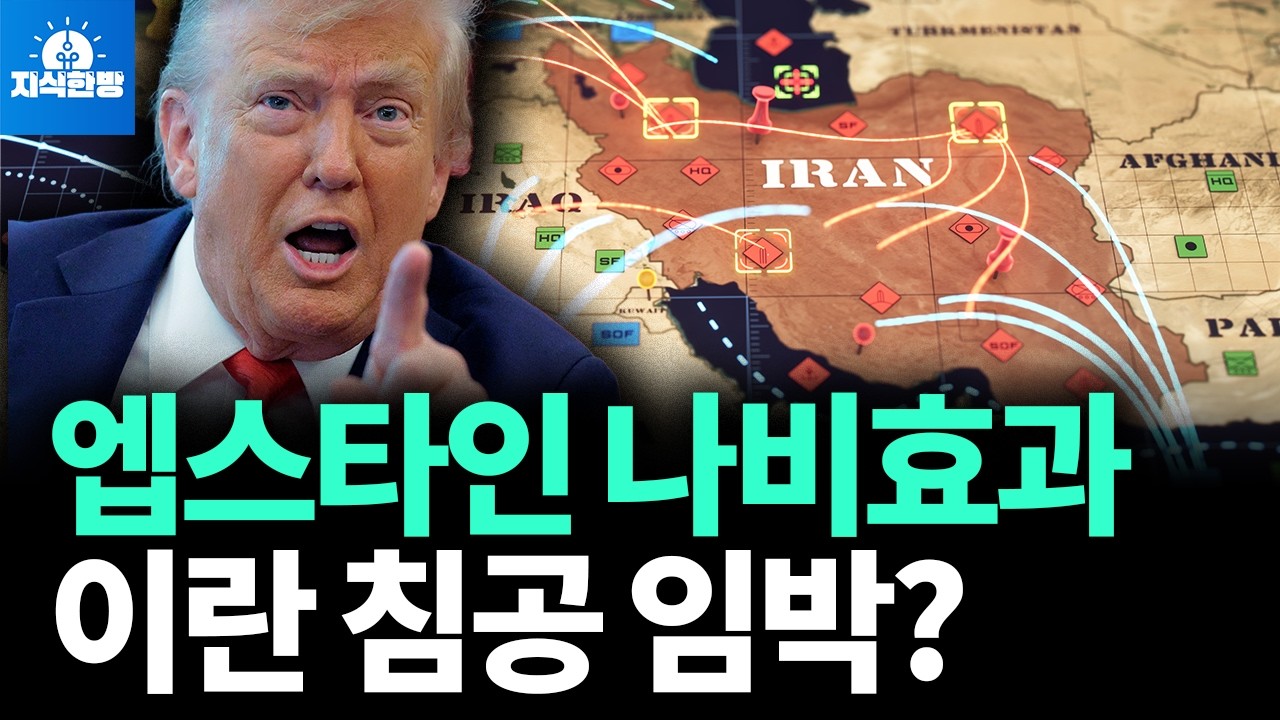
The Real Reason Trump’s “Iran Strike” Narrative Has Resurfaced: Oman Talks, Sharp Moves in Gold and Oil, and the Full “Three-Part War-Readiness Set” in One View
This report covers:
1) Why war risk does not disappear even after talks are announced
2) Why gold and oil spiked and then reversed, and what markets likely missed
3) The structural incentives for Trump to use Iran politically (including diversion from domestic issues)
4) How far military preparations may have advanced (aerial refueling tankers, strategic bombers, carrier deployment)
5) From a global macro perspective, which assets and industries may react first (supply chains, inflation, USD)
1) News Briefing: Timeline Summary (“Escalation -> Talks Announced -> Market Whipsaw”)
– Around 1/30: U.S. political scandal risk increased (interpreted as additional Epstein-related disclosures) alongside unfavorable domestic political signals
– 2/1: Trump referenced reviewing military action against Iran -> focus shifted from domestic scandal to war risk
– 2/2-2/3: Signals of rising military tension (strike narrative, force movements, drone shootdown narratives) -> gold, silver, and oil rallied sharply
– 2/4: Announcement of talks in Oman -> risk-on repricing; gold and oil retraced
– 2/6: Oman talks (differences over nuclear, missiles, and proxy issues) became a renewed inflection point
Key point:
“Talks are scheduled” does not equal “risk is resolved.”
Under a Trump-style approach, the opening of talks can coincide with peak execution risk.
2) Why Iran: A Readily “Justifiable Target” When Political Cover Is Needed
The logic can be summarized as follows: Iran enables a packaged justification set.
– (1) Nuclear-threat framing: high-enriched uranium and inspection constraints can support a “near-term nuclear” narrative
– (2) International-norm framing: reduced IAEA access can be presented as rules-based noncompliance
– (3) Human-rights/civilian-protection framing: domestic crackdowns can provide an additional moral rationale
As domestic political defense costs rise, a “narratively explainable external crisis” becomes more attractive; Iran fits this role.
3) The “Wag the Dog” Framework: When War Risk Serves Leader-Level Incentives
The core claim: even if national net benefits are limited, a war scare can be an efficient tool for leader-level crisis management.
Historical reference points (as framed here):
– Timing controversies around U.S. strikes during the Clinton impeachment period
– The Falklands War as an attempted domestic-pressure release valve for Argentina’s military regime
– The Russo-Japanese War and the “small victorious war” fallacy under internal revolutionary pressure
Implication:
If probability assessments rely only on rational national cost-benefit analysis, policy risk can be systematically underestimated.
4) Why Wall Street Often Prices “Low War Probability” (and Why That Can Be Insufficient)
Three reasons commonly cited for why a U.S. strike may not be advantageous:
1) Backfire risk
A strike could shift internal dissent into anti-U.S. cohesion, potentially stabilizing the Iranian leadership
2) Cost and escalation risk
Initial strikes may be feasible, but retaliation, proxy activity, and prolonged instability could follow
Potential scenarios include Hormuz disruption or energy infrastructure attacks, driving an oil-led inflation shock
3) “Winner’s curse” (post-conflict stabilization burden)
Regime collapse does not reliably translate into stable governance
Security, reconstruction, and order-maintenance costs could revert to U.S. taxpayers
Market vulnerability:
If decision-making shifts from national welfare to political survival, limited strikes can occur despite these risks.
5) Primary Checkpoint: The “Three-Part War-Readiness Set” Already in Place
The emphasis is not intent, but preparedness. Whether used for execution or negotiation leverage, a completed posture raises miscalculation and incident risk.
– (1) The bridge: aerial refueling tanker deployment
Iran’s geography and long-range operational requirements make refueling a practical prerequisite
– (2) The hammer: forward posture of strategic bombers and bunker-buster capability (as interpreted in current narratives)
Once options align with high-symbolism targets such as nuclear facilities, the escalation threshold can shift
– (3) The shield: carrier strike group and air/missile defense assets (including Aegis) deployment
A credible defense against missiles and drones can lower the perceived execution barrier
6) Global Macro Outlook: The Core Risk Is Not “War,” but Inflation and Financial Conditions
Middle East tension often transmits faster through energy, inflation, rates, and the USD than through battlefield outcomes.
– Potential oil price spike -> renewed inflation pressure
– Inflation instability -> reduced rate-cut expectations and higher market volatility
– Concurrent USD strength and risk aversion -> pressure on EM and energy-import-dependent economies
– Supply chains can reprice quickly via maritime risk (insurance premia, freight rates, lead times)
Conclusion:
This is not only a geopolitical headline; it can re-accelerate the macro drivers of inflation and rates.
7) AI Trend Implications: Concurrent Growth in Defense AI, Energy AI, and Risk AI
AI spending often shifts from consumer-oriented applications toward budget-backed resilience domains when risk rises.
– Defense/security AI: drone detection and interception, ISR, automated satellite/imaging analytics
– Energy AI: demand-supply forecasting, hedging optimization, operational optimization across refining and gas value chains
– Financial risk AI: volatility-regime portfolio rebalancing, automated stress testing, news-driven risk scoring
Geopolitical shocks can rotate AI investment cycles toward state, infrastructure, and energy-critical functions.
8) Under-Discussed Core Takeaways (Investor Lens)
Most commentary focuses on “talk success vs. failure.” The key points are the following three:
1) Talks function as a timing mechanism, not a risk-off switch
Negotiations can become a political stage where execution and de-escalation remain simultaneously feasible
2) Market pricing (gold, oil) can reflect positioning more than truth
A pullback in safe havens may indicate a short-term wager on lower strike probability, not risk elimination
3) The binding constraint is domestic political cost, not external justification
Leader-level political survival and scandal momentum can outweigh national cost-benefit considerations
9) Forward Indicators to Monitor (Operational Checklist)
– Post-Oman changes in White House/DoD briefing tone (language such as “not credible” may be more escalatory than “talks failed”)
– Incremental deployments of refueling tankers and strategic bombers (additional buildup can imply a lower execution threshold)
– Early moves in Hormuz-linked shipping insurance and freight rates (often lead oil price reactions)
– Intensity and spread of U.S. domestic political news (greater domestic pressure can increase incentives for external issue substitution)
< Summary >
The Iran strike narrative should not be treated as resolved by the existence of talks; negotiation and military posture can advance in parallel, keeping tail risk elevated.
Iran is an accessible target for combined nuclear, rules-based, and human-rights framing, making it usable for external agenda-setting under domestic political stress.
Wall Street often discounts war probability due to backfire, escalation cost, and post-conflict stabilization risk, but leader-level incentives can still support limited action.
The critical factor is a prepared posture: aerial refueling (bridge), strategic bombers/bunker-buster options (hammer), and carrier/defense coverage (shield).
Macro transmission is primarily through oil -> inflation -> rate expectations -> USD dynamics, with knock-on effects on volatility, supply chains, and financial conditions; AI budget allocation may rotate toward defense, energy, and risk management use cases.
[Related Links…]
- How Middle East Risk Impacts Global Financial Markets: Oil, FX, and Rates in One View
- Checklist for Inflation Re-Acceleration Signals: When Energy Prices Become Unstable Again
*Source: [ jisik-hanbang ]
– 트럼프는 왜 이란을 공격하려 할까? (박종훈의 지식한방)