● Big Tech Price War Ignites, Trump Pumps Dow Double Dream
Big Tech Price War Accelerates; Trump’s “Dow x2” Comment Adds Fuel — A Consolidated 2026 Capital-Flow Lineup
This report outlines (i) why Big Tech has entered a “price cuts + heavier investment” phase, (ii) which players are most likely to capture share (i.e., the key beneficiary sectors/themes), and (iii) how strong equity-growth messaging such as “Dow x2” can influence market expectations for rates, the dollar, and policy. It then maps the most probable early beneficiaries (industrials, financials, infrastructure, AI hardware) into a cohesive framework and highlights under-covered but decision-relevant points for 2026 investment ideation.
1) Key News Briefing (Investor Summary)
1-1. Big Tech Price War: Entering a Phase Defined by “Price Cuts + Expanded Investment”
Big Tech is prioritizing ecosystem and traffic capture over near-term margin preservation.
As AI services, cloud, devices, and advertising battlefields overlap, lowering price while raising performance becomes a mechanism to absorb users and reinforce data advantage.
As this dynamic intensifies, near-term cost pressure rises while the medium-to-long term tends to converge toward winner-take-most outcomes (or a 2–3 player structure).
1-2. Trump’s “Dow x2” Message: Reinforcing “Policy Expectations → Risk-On”
Markets typically interpret such messaging as a signal that could revive expectations for tax cuts, deregulation, and pro-business policy.
With policy visibility often improving post-election, 2026 could see policy-driven momentum extend into real-economy sectors (industrials, financials, energy, infrastructure).
However, rhetoric does not ensure outcomes; the rate path (Federal Reserve), inflation re-acceleration risk, and the dollar’s direction remain key constraints.
2) Reframing the Big Tech Price War Through an Investment Lens (Where Capital May Concentrate)
2-1. Primary Beneficiaries: AI Infrastructure Buildout
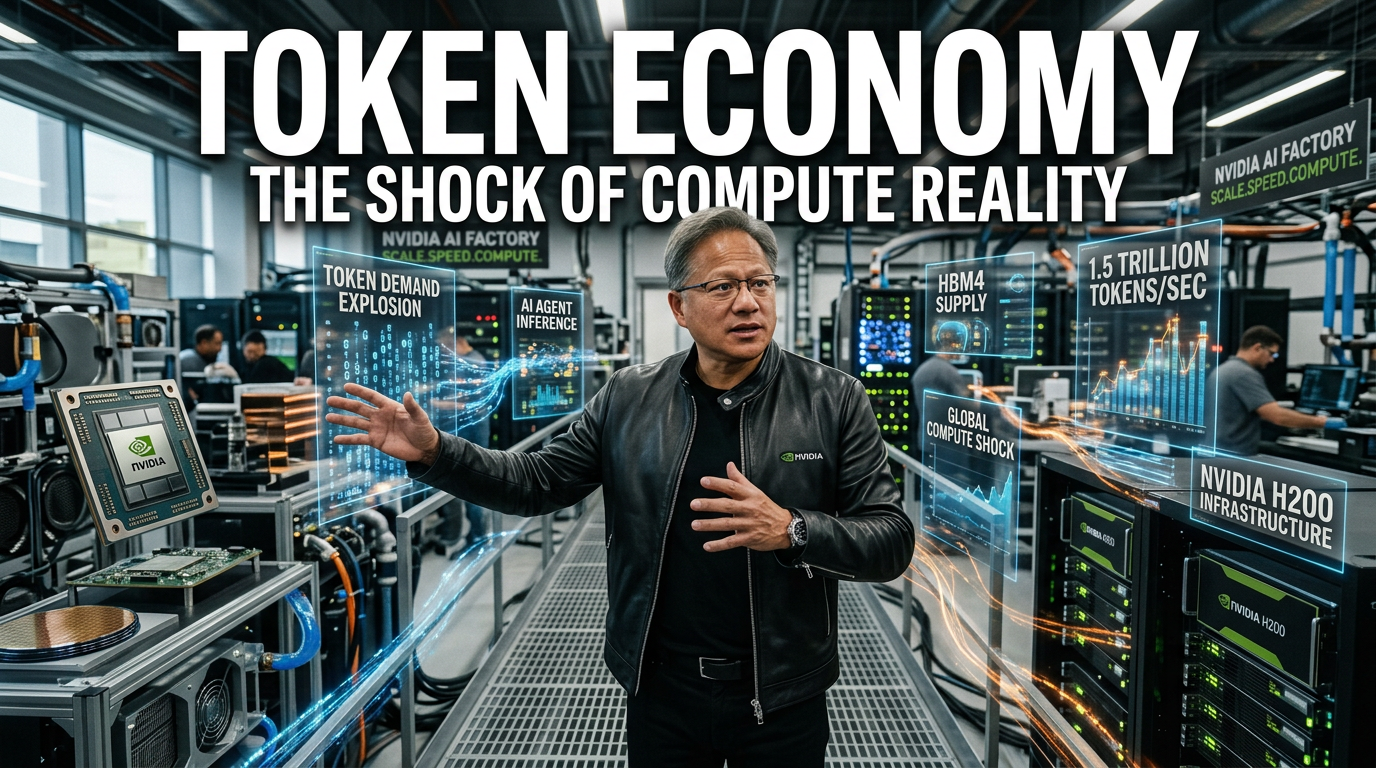
While the price war pressures service pricing, the underlying stack (compute, servers, networking, power, cooling) typically expands.
The surface narrative is “AI is getting cheaper,” while the operational reality is “total AI operating and buildout costs increase.”
Market attention tends to cluster around AI, semiconductors, cloud, potential rate cuts, and macro-cycle risks.
2-2. Secondary Beneficiaries: Cloud as a Lock-In Contest, Not a Price Sheet Contest
Cloud competition is less about headline pricing and more about switching costs created by integrated AI tools, data pipelines, security, and operations automation.
Near-term earnings volatility may rise, but as customer lock-in strengthens, long-duration cash flow durability tends to improve for the winners.
2-3. Tertiary Beneficiaries: Proprietary Data Holders
Model quality alone is insufficient; proprietary datasets (search, commerce, workplace, payments, maps, video, communications) accelerate productization and performance.
As competition intensifies, platforms with direct user touchpoints gain structural advantage, and ecosystem partners often benefit alongside them.
3) Target Areas Organized by Sector (Capital-Flow Framework vs. Ticker Lists)
3-1. AI Hardware/Infrastructure (Most Direct Demand Signal)
Core exposure includes GPUs/accelerators, HBM and advanced memory, advanced packaging, server ODMs, networking equipment, and data-center power/cooling.
As price competition intensifies, high-performance AI infrastructure capex is more likely to expand than contract, making it the most direct beneficiary.
Key checkpoints: whether orders are “one-off” or becoming “platform standards.” Standardization can materially change valuation regimes.
3-2. Cloud/Enterprise Software (Lock-In + Subscription Economics)
Enterprises frequently prioritize security, compliance, and operational reliability over model novelty, favoring proven vendors.
Cloud, security, analytics, and productivity stacks may exhibit relative defensiveness even amid growth scares.
Primary signal: whether AI feature adoption drives ARPU expansion. If upsell offsets pricing pressure, fundamentals remain constructive.
3-3. Advertising/Commerce Platforms (User Access Becomes Data Advantage)
As AI reshapes search, recommendation, and content production, conversion efficiency and time-on-platform become the key battleground.
Platforms that defend or raise ad pricing through measurable performance gains may strengthen.
In commerce, dispersion may widen via personalization and logistics efficiency.
3-4. Power/Utilities/Electrical Equipment (“Picks and Shovels” for the AI Cycle)
A frequently underweighted area is power.
AI data centers require not only servers, but also transformers, distribution, UPS, cooling, and power-efficiency management.
If policy shifts favor industry and infrastructure, this segment can benefit from overlapping “real demand + policy demand.”
4) Interpreting the “Dow x2” Comment: Likely Sector Tailwinds
4-1. Financials (Banks/Insurers): Deregulation Expectations + Growth Expectations
Pro-business and deregulation signaling can drive early sentiment inflows into large financials.
However, rate cuts can compress NIM; when “deregulation expectations” and “rate cuts” coincide, selectivity matters.
4-2. Industrials/Infrastructure: Core Policy-Momentum Beneficiaries
Infrastructure and manufacturing support can translate into tangible orders (construction, equipment, transport, materials).
Compared with AI narratives, earnings realization often follows a clearer order-to-revenue pathway, offering an alternative for investors seeking observable fundamentals.
4-3. Energy: Direction of Supply Policy and Regulation Matters
Energy is highly policy-sensitive.
A pro-fossil-fuel stance can bolster near-term sentiment, while rising data-center power demand can provide longer-duration support.
5) Under-Covered but Decision-Critical Points
5-1. Winners Can Sustain Price Cuts Due to Cost-Structure Control
Victory is not solely a function of cash reserves.
Firms that control unit economics through in-house chips, proprietary data centers, or platform integration can cut prices while remaining resilient, potentially forcing weaker competitors to exit.
Investment focus: whether a company can tolerate margin compression while expanding share.
5-2. AI Competition May Be Decided More by Distribution Than Model Quality
Model capabilities are converging rapidly.
Monetization hinges on speed and breadth of deployment into users and enterprises, locking habits and workflows through switching costs.
Following only model headlines may lag; investor diligence should include customer switching costs and channel control.
5-3. “Dow x2” Raises Expectations, but Rates and Inflation Are the Binding Variables
Equity-supportive messaging can be frequent; the discount rate that drives valuation is primarily governed by the rate path and inflation.
In 2026, any re-acceleration in inflation could undermine policy optimism.
A balanced allocation across growth (AI/Big Tech) and value/cyclicals (financials/industrials/infrastructure) may improve resilience and risk control.
6) Practical Indicators for 2026 Monitoring (Checklist Format)
Track whether data-center capex guidance is revised upward.
Monitor whether lead times tighten again for HBM, advanced packaging, and networking.
Check whether cloud providers increasingly quantify “AI feature revenue contribution.”
Confirm whether U.S. employment and inflation data support a credible rate-cut trajectory.
Assess whether policy themes (tax, regulation, infrastructure) translate into budgets, contracts, and measurable order flow.
< Summary >
The Big Tech price war is likely to manifest as price reductions at the surface and expanded AI-infrastructure investment underneath.
Primary beneficiaries are AI infrastructure enablers: semiconductors, servers, networking, and data-center power/cooling.
Cloud competition is defined by lock-in rather than price; platforms with proprietary data and distribution advantages are structurally positioned to win.
The “Dow x2” message may lift policy expectations, but market direction remains anchored to rates and inflation.
For 2026, a balanced approach spanning growth (AI) and value/cyclicals (financials, industrials, infrastructure) may be appropriate.
[Related Articles…]
Big Tech Competition Intensifies: 2026 Platform Winner Checkpoints
U.S. Equities Through the Lens of Rates: 2026 Scenario Framework
*Source: [ 소수몽키 ]
– 빅테크 치킨게임 시작, 주목할 주식들 / 트럼프 다우 2배 공약, 최대 수혜주들
● KOSPI 10000 Liquidity AI Value-Up Boom or Bust
Why the Real Inflection Point Comes After KOSPI 5,000: A Consolidated Review of the “10,000 Scenario” Through Liquidity, AI, and Value-Up—Conditions and Risks
This report covers:
1) Why global liquidity could rotate toward the KOSPI in 2026 (including MMF and RRP dynamics)
2) Why “Physical AI” after Generative AI may be structurally advantageous for Korean companies (from an industrial adoption perspective)
3) How value-up initiatives can influence foreign flows before measurable results materialize
4) A checklist of required conditions for a KOSPI 10,000 scenario, and key downside triggers
5) Where material risks may emerge: FX, real-economy conditions, and policy consistency
1) News Briefing: Five Core Messages
– KOSPI 5,000 may represent a new baseline rather than a terminal level; a move toward 10,000 is arithmetically feasible under a 3–5 year uptrend.
– 2026 could combine rate cuts and fiscal expansion, sustaining a liquidity-driven market; sidelined cash (MMFs) and RRP trends are cited as supporting indicators.
– Elevated US equity valuations may encourage diversification of incremental liquidity toward relatively undervalued markets.
– AI is framed as early in its industrial monetization cycle; the next phase (“Physical AI” in robotics, manufacturing, and mobility) may create opportunities for Korea.
– Key downside risks include FX instability, loss of policy consistency, and real-economy deceleration that compresses foreign demand and valuation multiples (PER/PBR).
2) Framework for a KOSPI 10,000 Scenario: Three Engines Must Align
The discussion centers on three drivers:
Liquidity (flow of capital) + AI (direction of earnings) + Value-up (direction of valuation).
Index expansion requires: improving earnings (E), multiple expansion (valuation), and incremental buying power (flow).
The central premise is that index performance ultimately reflects capital flows, earnings expectations, and valuation re-rating operating concurrently.
3) Engine #1 — 2026 Liquidity: The Reallocation of Sidelined Cash Matters More Than the Rate Cut Itself
The liquidity view extends beyond policy rates to include:
RRP (reverse repo) and MMF (money market fund) levels as measures of how much capital is parked and seeking risk assets.
Key logic:
– Low RRP alongside high MMF balances can indicate a build-up of deployable cash.
– 2026 may carry incentives for fiscal expansion ahead of US midterm elections, while monetary policy could lean toward easing.
– The key variable is destination: if US mega-cap tech is already fully valued, liquidity may rotate toward cheaper assets and markets.
This supports a pro-risk narrative tied to rate cuts and global liquidity, forming the starting point of the KOSPI upside thesis.
4) Engine #2 — AI: After Generative AI Comes “Physical AI,” Potentially Favorable for Korea
A key point is that AI’s equity and earnings impact is driven by deployment in operating environments rather than consumer-level adoption alone.
A staged progression is described:
– Phase 1: Generative AI (content and workflow assistance; high visibility, limited near-term P/L impact)
– Phase 2: Industrial adoption (embedded into manufacturing, logistics, construction, healthcare, and financial operations)
– Phase 3: Physical AI (robots, mobility, smart factories; AI that executes tasks in the physical world)
Rationale for Korea’s relative positioning:
– Korea has depth in semiconductors, manufacturing, robotics, and mobility—core inputs to Physical AI ecosystems.
– The competitive frontier is shifting from demonstrations to commercialization and supply-chain execution.
– As Physical AI scales, adjacent value chains (power, infrastructure, data centers, and components) tend to co-move.
5) Engine #3 — Value-Up: Foreign Positioning Can Precede Proven Outcomes
Domestic debate often focuses on whether reforms will deliver measurable results; foreign flows may respond earlier to credibility and directionality.
Key view:
– Japan’s multi-year emphasis on shareholder returns and governance became a durable rationale for foreign inflows.
– In Korea, clearer signals on commercial law changes, treasury share retirement, dividends, and related tax frameworks can support expectations of re-rating (PER/PBR) before full implementation effects appear.
– Policy consistency is critical; abrupt tax or regulatory signals can redirect flows to substitutes such as Taiwan or Japan.
6) “Is Korea Already Expensive?”: The Benchmark Set Is Japan and Taiwan, Not the US
The response emphasizes relative valuation rather than absolute index levels:
– Global allocators typically compare Korea with structurally similar export- and manufacturing-driven markets, notably Japan and Taiwan.
– If Korea remains discounted on PBR/PER versus peers, the “relative value” rationale can persist.
– The question is whether re-rating is complete, assessed against peer multiples and forward earnings expectations.
7) Three Primary Risk Factors: Triggers That Can Break the 10,000 Path
Even under constructive premises, downside regimes are defined by identifiable triggers.
Risk A) FX moves from “high but stable” to “accelerating depreciation”
– A weak currency can support foreign entry valuations, but a sharp weakening trend can offset equity returns via FX losses and reduce foreign demand.
– The key variable is directionality: range-bound stability is supportive; a sustained spike is negative.
Risk B) Breakdown in policy consistency (erosion of value-up credibility)
– Markets may position ahead of realized outcomes, but credibility is fragile.
– Policy reversals or signals that impair shareholder value can rapidly unwind re-rating.
Risk C) A widening gap between headline growth and household/business sentiment that becomes a political-social constraint
– If index gains diverge from weak income, inflation, or employment conditions, redistribution and cost-of-living pressure can intensify.
– Elevated domestic sensitivity can complicate policy responses and increase uncertainty premia.
8) Key Points Often Underweighted in Mainstream Coverage
Point 1) Liquidity impact depends more on allocation than on aggregate supply
Additional US liquidity does not mechanically translate into US equity gains if valuations are extended; cross-border reallocation can increase, making Korea a potential beneficiary.
Point 2) The investable AI thesis is industrial P/L, not consumer applications
Generative AI can be highly visible but slower to embed into financial statements. Physical AI can directly affect KPIs such as labor cost, defect rates, lead times, and utilization—channels with clearer earnings leverage.
Point 3) The primary bottleneck is workflow redesign, not coding skills
Enterprise AI gains are constrained by process re-engineering and operating model change. If this transition is slow, economy-wide earnings benefits can lag; the constraint is managerial execution rather than technology alone.
9) Post-5,000 Checklist (Investor Focus)
Monitoring points over the next 6–12 months:
– Whether the US easing path meets market expectations (liquidity durability)
– Whether MMF cash is redeployed into risk assets (verification of flows)
– Whether Physical AI-linked industries (robotics/automation/power/data centers/components) show improving earnings visibility (earnings realization)
– Whether value-up policy remains consistent without reversals (re-rating durability)
– Whether USD/KRW stabilizes at elevated levels or shifts into renewed weakening (final gate for foreign demand)
< Summary >
The 2026 constructive KOSPI case rests on three concurrent drivers: liquidity (deployment of sidelined cash), AI (industrial adoption, particularly Physical AI), and value-up (re-rating expectations).
As US valuation pressure increases, incremental liquidity may diversify into relatively discounted markets; Korea’s relative valuation appeal versus Japan and Taiwan is cited as a potential support.
Primary risks that can compress foreign flows and valuation multiples include renewed FX instability, loss of policy consistency, and deterioration in real-economy and sentiment conditions.
[Related Articles…]
- FX Outlook: The Two-Sided Nature of a Weak Currency and 2026 KRW Variables
- The Physical AI Era: How Robotics, Manufacturing, and Mobility Reshape the Industrial Map
*Source: [ 경제 읽어주는 남자(김광석TV) ]
– [풀버전] 코스피 5천 이후가 진짜다…유동성·AI·밸류업이 만든 “1만 시나리오” | 경읽남과 토론합시다 | 나틸리 허 변호사
● KOSPI 10000, AI Chip Boom, Commodities Surge, Power Shift Beyond America
KOSPI 10,000: Why It Has Shifted Into a “Plausible Scenario” — AI (Semiconductors) → Commodities → Rotation Toward Non-U.S. Leadership
This report focuses on three points:1) Why 2025–2026 could favor Korea/Europe/Asia over the U.S. from a cycle perspective.
2) The core drivers of a KOSPI surge (semiconductor pricing, EPS, valuation) using numeric logic.
3) Why the AI “bubble” debate may be better framed as an “adoption and diffusion phase,” and how the next beneficiaries may extend to commodities such as silver and copper.
1) Key News Briefing (At-a-Glance)
- Korea’s equity market (KOSPI) has ranked among top global performers, with a visible “outperformance vs. the U.S.” trend.
- U.S. equities appear less strong largely because Korea has risen 20%+, creating a relative-performance effect; the U.S. move is closer to average.
- A long-cycle framework (7–15 years) suggests an early-stage transition beginning in 2025 from “U.S.-only leadership” toward “non-U.S. catch-up/leadership.”
- The AI theme is spreading from semiconductors to substrates/materials, equipment, power and data centers, and then to commodities (e.g., silver, copper).
- Despite a steep index trajectory, if 2026 forward P/E is ~10–11x, the move is argued to be difficult to classify as a valuation bubble.
2) Rotation From the U.S. to Non-U.S. Leadership: Why Now?
- 7–15 year “regime switch”
Market leadership (U.S. vs. non-U.S.), growth vs. value, and equities vs. commodities can persist for long periods, then mean-revert as valuation dispersion becomes extreme. - 2025–2026 as “peak U.S. dominance → broadening”
Prolonged U.S. outperformance coincided with relative undervaluation and under-ownership in non-U.S. markets. As AI demand becomes more physical and capital-intensive, earnings sensitivity may broaden to Korea (memory) and to Europe/Asia (industrial/manufacturing exposure).
Implication: the move is framed less as a short-lived theme and more as a potential structural shift in global capital allocation and earnings distribution.
3) Why KOSPI Has Been Unusually Strong: Semiconductors, Policy, Valuation
3-1) Korea Positioned in the “AI Diffusion” Supply Chain
AI deployment requires data centers (servers), power, and semiconductors. Leadership may migrate from GPU/platform beneficiaries toward bottlenecks in memory, power, and materials. Korea’s strengths in memory and the semiconductor value chain align with this transition.
3-2) A “100% Semiconductor Price Increase” as a Market Timing Variable
Historically, sharp semiconductor price up-cycles have often persisted for 6–9 months or 12–15 months. AI-driven demand could extend duration, but outcomes remain probabilistic (e.g., 40%/40%/20% style distribution). The approach emphasizes cycle duration windows rather than directional conviction.
3-3) Why Steep Price Action Is Not Necessarily a Bubble: EPS Can Compress P/E
If 2026 forward P/E is ~10–11x, the index increase may be supported by upward EPS revisions, reducing valuation pressure. The primary test is whether earnings estimates rise in tandem with price.
4) AI “Bubble” Debate: Framing AI as Diffusion Rather Than Peak Mania
A peak bubble phase often coincides with broad dismissal of bubble concerns and social reinforcement of “one-way” narratives. Ongoing, mainstream debate about AI being a bubble is presented as evidence that the market may not be at an unquestioned euphoria extreme.
Additionally, widening performance dispersion among AI models is interpreted as rapid competitive upgrading, consistent with AI becoming productivity infrastructure rather than a transient trend.
5) Under-Discussed Point: The Next AI Beneficiaries May Be Commodities (Silver, Copper)
The thesis extends beyond “AI = semiconductors.” As AI scales, it increases demand for power, connectivity, wiring, and high-conductivity materials, potentially linking to commodity tightness.
- Silver: highest electrical conductivity; rising demand from data centers/semiconductors/solar/EVs
Silver’s conductivity supports high-performance electrical and signal applications. EV-related silver intensity can exceed internal combustion configurations in certain components and systems. - Supply constraints vs. demand growth (mine development lead time 10–15 years)
Supply expansion requires mining investment with long lead times. Underinvestment following the 2010s commodity downturn may constrain supply, with effects extending toward ~2030. - Extreme volatility risk
Silver can experience sharp rallies followed by rapid drawdowns (e.g., historical episodes in 1980, 2011). The framework highlights caution on momentum-driven entry. - Copper: core input for power and wiring in an AI-driven electrification build-out
Data center expansion and grid upgrades structurally increase copper demand. Supply is exposed to geopolitical, security, and infrastructure risks in key producing regions.
6) Samsung Electronics vs. SK Hynix: 2026 EPS Growth Skew
For 2026, Samsung’s EPS growth rate is argued to potentially exceed SK Hynix due to differing degrees of prior market pricing and relative “catch-up” potential. Under a sustained AI/memory cycle assumption, a diversified exposure to both is presented as a pragmatic approach.
7) Decomposing “KOSPI 10,000” Into Quantitative Drivers
The claim is framed as “touching the level at least once,” not necessarily sustained stabilization.
- Index change = (EPS growth) × (valuation multiple expansion)
A doubling could be approximated by EPS +40% and multiple re-rating +40% (illustrative decomposition). - EPS driven by corporates; multiple driven by institutions/policy
Korea’s discount is linked to minority shareholder confidence factors (governance, shareholder returns, inheritance/tax structure). Policy and institutional reform could support re-rating, potentially attracting foreign inflows and lifting the multiple.
Key macro variables affecting both EPS and multiples: rates, FX, inflation, recession risk, global supply chains.
8) 2026 Risk Framing: Fewer “White Swans,” Residual “Black Swans”
Downside scenarios are described as less visible in baseline conditions, supported by:
- Ongoing global liquidity usage across the U.S., China, and Europe.
- China’s potential incentive to stabilize/boost markets and growth ahead of a 2027 political milestone.
- A global macro stance closer to resilient growth than systemic breakdown.
Limitation: black swans are inherently difficult to forecast; “low visible risk” does not equate to safety. Diversification with gold/commodities/cash-like assets is presented as a risk-management complement.
9) Bitcoin: Four-Year Cycle Still “Broadly” Intact; Long-Term Risk From Quantum Computing
The four-year pattern is characterized as historically consistent, including prior post-peak drawdown durations (e.g., 12–14 months).
The principal structural risk highlighted is quantum computing potentially threatening cryptographic security, especially for older wallets and dormant balances. Governance constraints (very high consensus thresholds) could delay protocol-level responses.
10) Key Takeaways Commonly Underemphasized
- The next AI targets may be physical infrastructure: post-GPU leadership can broaden to memory, substrates, power, wiring, and materials, linking to Korea and commodities.
- Whether KOSPI strength is a bubble depends less on index slope and more on whether EPS revisions validate the move; ~10–11x forward P/E suggests earnings-supported upside rather than pure multiple inflation.
- Silver is increasingly positioned as an “AI industrial metal,” not only a defensive asset; concurrent demand from data centers, EVs, and solar may tighten balances.
- Bitcoin’s key advantage (immutability) may become a key vulnerability in a quantum era; dormant coins could become a focal attack surface.
< Summary >
2025–2026 may represent an early phase of leadership broadening from the U.S. toward non-U.S. markets (Korea/Europe/Asia). KOSPI strength is attributed primarily to AI-driven diffusion into memory and the semiconductor value chain, lifting EPS expectations. AI adoption may extend from semiconductors into power, wiring, and materials, potentially benefiting commodities such as silver and copper. Bitcoin may retain cyclical characteristics, but quantum computing is flagged as a long-horizon structural risk.
[Related Articles…]
- KOSPI Outlook: Key Inflection Points and Core Investment Strategy for 2026
https://NextGenInsight.net?s=KOSPI - Semiconductor Cycle Checklist: Linking Memory Prices, EPS, and Valuation
https://NextGenInsight.net?s=Semiconductors
*Source: [ Jun’s economy lab ]
– 할 수 있다! 코스피 1만 (ft. 강환국 작가)