● Bold Boundaries, Health Reset, Risk-Cut Discipline
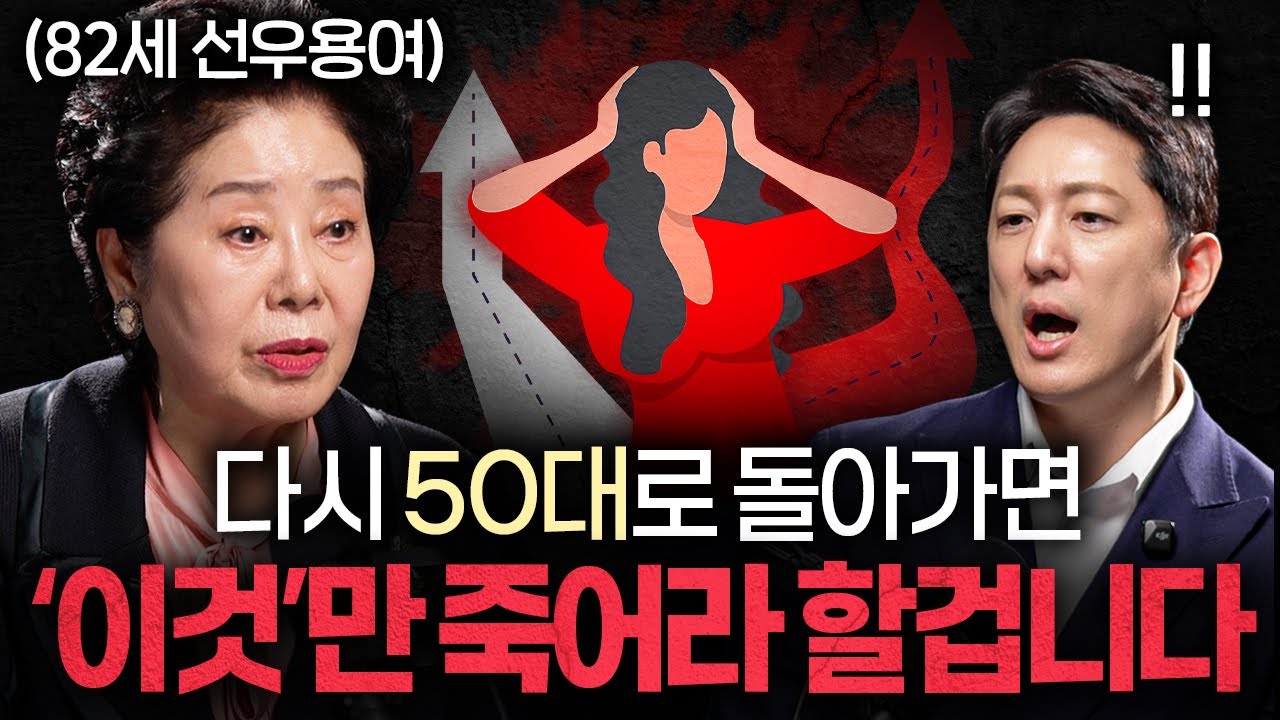
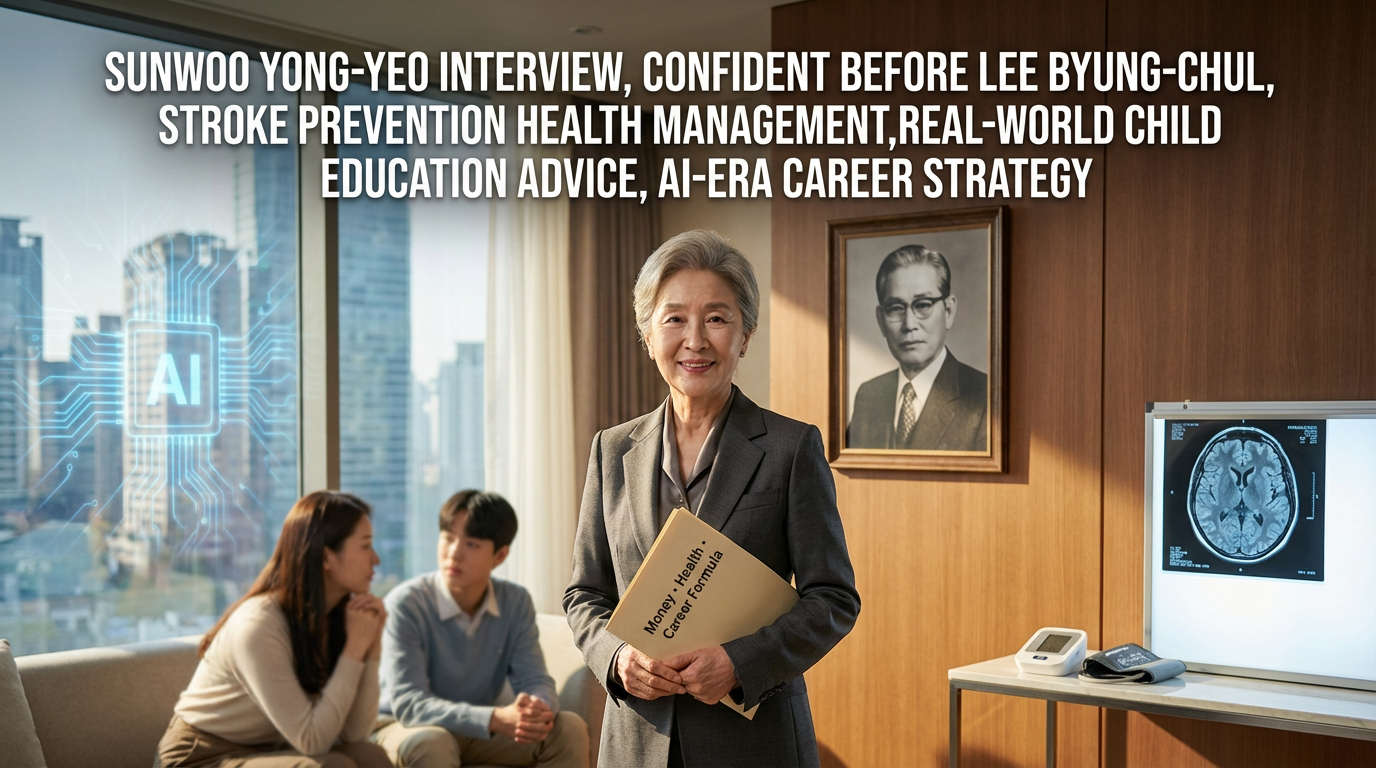
Sunwoo Yongyeo: The Real Reason She Stayed Confident Even in Front of Lee Byung-chul — A One-Line Formula for ‘Career, Money, Health, and Child Education’ Drawn from 80 Years of Life
Today’s post includes the following.
① Why “I don’t know, I don’t know” was not just a catchphrase, but the starting point of negotiation power and self-respect
② The key point of why a cerebral infarction at 69 was not merely “health management,” but an event that changed her life operating system (OS)
③ Why the advice “Don’t look at money in your 20s and 30s” is actually even more realistic in today’s labor market and AI era
④ Why the child-education method of not nagging was not “neglect,” but a high-level strategy
⑤ (Important) The core point that other interviews/news rarely highlight: what Sunwoo Yongyeo calls “knowing your place (your capacity)” is essentially personal risk management and a philosophy of long-term portfolio design
1) Today’s Core Point News Briefing (A ‘News-Style’ Summary of the Video Content)
1-1. Culture/Career: “I don’t know, I don’t know” was not in the script, but a ‘Declaration of Rights’ born from real life
The legendary catchphrase “I don’t know, I don’t know” from Soonpoong Obstetrics and Gynecology was originally an improvised line that wasn’t in the script.
In daily life, her husband would come home at 4 a.m. and naturally demand, “Serve the food,” and around menopause her emotions finally exploded and those words came out.
That single act of “drawing a boundary” became a turning point that later allowed her to express herself more freely in acting as well.
The key takeaway here is not “she fought with her husband,” but that she cut off a long-accumulated imbalance with a “short and clear sentence.”
Translated into modern workplace terms, it’s closer to a communication method for setting a standard line in unreasonable tasks or relationships.
1-2. Health: The realization from a cerebral infarction at 69 was “Love your body”
During filming, her speech slurred and her left hand would not lift, so she was rushed to the hospital.
She talks about receiving thrombolytic treatment and experiencing paralysis symptoms in her left hand and foot.
At the hospital, seeing sick patients made her realize, “I pushed my body too hard,”
and after that she changed her life’s fundamentals to “eat good things, manage yourself, and take care of your body.”
This part is not simple wellness, but closer to productivity and a survival strategy.
In an environment like today where high interest rates and recession fears repeat, if an individual’s stamina or mental health breaks, their career immediately shakes.
In the end, it connects to the idea that health is “the most powerful personal asset.”
1-3. Child Education: The meaning of “I didn’t nag” is ‘building self-determination’
In the process where her daughter became a singer, joined a cheerleading squad, and eventually became a Korean medicine doctor in the U.S.,
she says she almost never pushed with “Do it/Don’t do it.”
Instead, the emphasis is on “Check for yourself by directly bumping into it to see if it fits your aptitude.”
What’s especially impressive is that the method of exploring careers is very realistic.
Example: If you want to be a lawyer, she advises you to “go to a law office and even clean, just to see the field.”
In today’s terms, it means “validate the job through internships, on-site observation, or project participation.”
1-4. Advice for Your 20s and 30s: “Don’t look at money; instead, try everything”
She says that if you prioritize money too much in your 20s, things may actually not work out.
Instead, until your 30s, it’s important to try various things and find “what you like and what you’re good at.”
She also adds a diagnosis that the atmosphere of fearing failure is “an influence of parents raising kids too softly.”
This message directly connects with today’s AI trends as well.
Because of AI, job boundaries keep changing, and a single choice does not guarantee a lifetime.
So people who bear the cost of exploration and accept small failures early are safer in the long run.
1-5. Life Philosophy: “Fate/Capacity/Knowing your place” is not settling down, but ‘blocking the risk of excessive greed’
Sunwoo Yongyeo repeatedly says, “Everyone has their own capacity,” and “If your greed is excessive, even your blessings will fly away.”
If you interpret this in today’s perspective,
it’s closer to “risk management” that reduces excessive leverage (debt), overwork, and over-investment, and increases the probability of long-term survival.
1-6. Final Wish: “Throw a party at my funeral”
She says that rather than crying, she wants people to play music she likes, have a glass of champagne, and send her off saying, “Goodbye.”
It’s an attitude of wanting to choose even death as a way of “organizing life.”
Ultimately, the key takeaway returns again to “Love yourself.”
2) Reinterpreting This Content Through an ‘Economy/AI Trend’ Lens (Blog Perspective Core Points)
2-1. “Don’t look at money until your 30s” = A ‘human capital investment’ strategy for an era of uncertainty
Many people hear this as “romanticism,” but it’s actually more economical now.
As the labor market is reorganized by AI, the lifespan of specific job roles is getting shorter.
A job you enter by looking only at salary may lose value 3–5 years later.
So in your 20s and 30s, while “cash flow” is important,
there are many cases where building your skills, experience, and portfolio yields a higher return in the long run.
This ultimately is also an inflation response at the individual level.
2-2. “Go and even clean at the site” = The strongest learning method in the AI era (touch the data yourself)
Information overflows these days, but the real work is on the ground.
The same is true for AI: it doesn’t end with being good at “prompts,”
you need to know the flow of real-world data (customer complaints, payments, contracts, risk points) for productivity to explode.
In other words, if you translate Sunwoo Yongyeo’s advice into AI-era language, it’s this.
“Don’t choose a job based on imagination; throw yourself where the data flows.”
2-3. “Love yourself” = Changing the KPI of a long-term career from only ‘performance’ to ‘sustainability’
If you run only around performance, at some point your health (body and mind) breaks and you collapse all at once.
In a high-interest-rate environment, for both companies and individuals, “the stamina to endure” is competitiveness.
What Sunwoo Yongyeo realized after her cerebral infarction is precisely the value of this “sustainability.”
3) The “Most Important Content” That Other YouTube/News Often Miss (The Core Point of This Post)
3-1. The essence of why she stayed confident even in front of Chairman Lee Byung-chul: not “amazing guts,” but a “habit of speaking as it is”
In the video, Sunwoo Yongyeo repeatedly shows scenes where she speaks the facts plainly without dressing them up.
She says exactly, “A professor told me I could become a talent even if I went as a dancer,”
and she doesn’t hide that she doesn’t know camera terms (bust/waist).
Why this matters is that
people who are confident in front of authority are usually not those who “hold out with bravado,”
but those who “say they don’t know what they don’t know, and say they know what they know.”
In today’s corporate and investment environments, this attitude reduces risk.
3-2. “Capacity/Knowing your place” is not self-deprecation, but a ‘safety device that prevents leverage overload’
When Sunwoo Yongyeo says, “If your greed is excessive, even your blessings will fly away,”
translated into today’s language it is this.
“Cut off debt you can’t handle, schedules you can’t handle, and relationships you can’t handle.”
This applies directly to personal finance as well.
In a phase of high interest rates and high volatility, excessive leverage can create irrecoverable losses.
In the end, this message shines even more as “macroeconomics” gets shaky.
3-3. The “funeral party” is not a death story, but a tool for aligning priorities in your current life
If you imagine how you want your ending to be held,
the priorities of relationships, money, work, and health become clear.
This is philosophy, but surprisingly it is also a practical time-management and career strategy.
4) Practical Application Checklist (For People in Their 20s and 30s/Office Workers)
1) Intentionally create some projects to “fail small” until your 30s
2) If you have a job role you want, start with “on-site contact” (internships, short-term projects, practitioner interviews)
3) Treat your body as an asset and turn it into a routine (fix sleep/meals/exercise like a schedule)
4) Even in family/relationships, define your boundary line in a short sentence (the line I can handle)
5) Check your “capacity”: review quarterly whether your leverage (debt/schedule/stress) is excessive
< Summary >
Sunwoo Yongyeo’s message can be summarized as “Love yourself,” but in reality it is a survival strategy that penetrates career, health, money, and education all at once.
“I don’t know, I don’t know” is boundary-setting communication, and the cerebral infarction experience changed her top KPI to sustainability.
In your 20s and 30s, exploring aptitude and gaining on-site experience creates a higher return in the long run than focusing on money.
“Capacity/Knowing your place” is risk management that prevents excessive greed, and confidence in front of authority comes from the “habit of speaking as it is.”
[Related Posts…]
- AI Era Career Strategy: Latest Trend Summary
- Core Points of Personal Asset Management in a High-Interest-Rate Environment
*Source: [ 지식인사이드 ]
– 선우용여가 이병철 회장 앞에서도 당당했던 이유ㅣ지식인초대석 EP.99 (선우용여 2부)