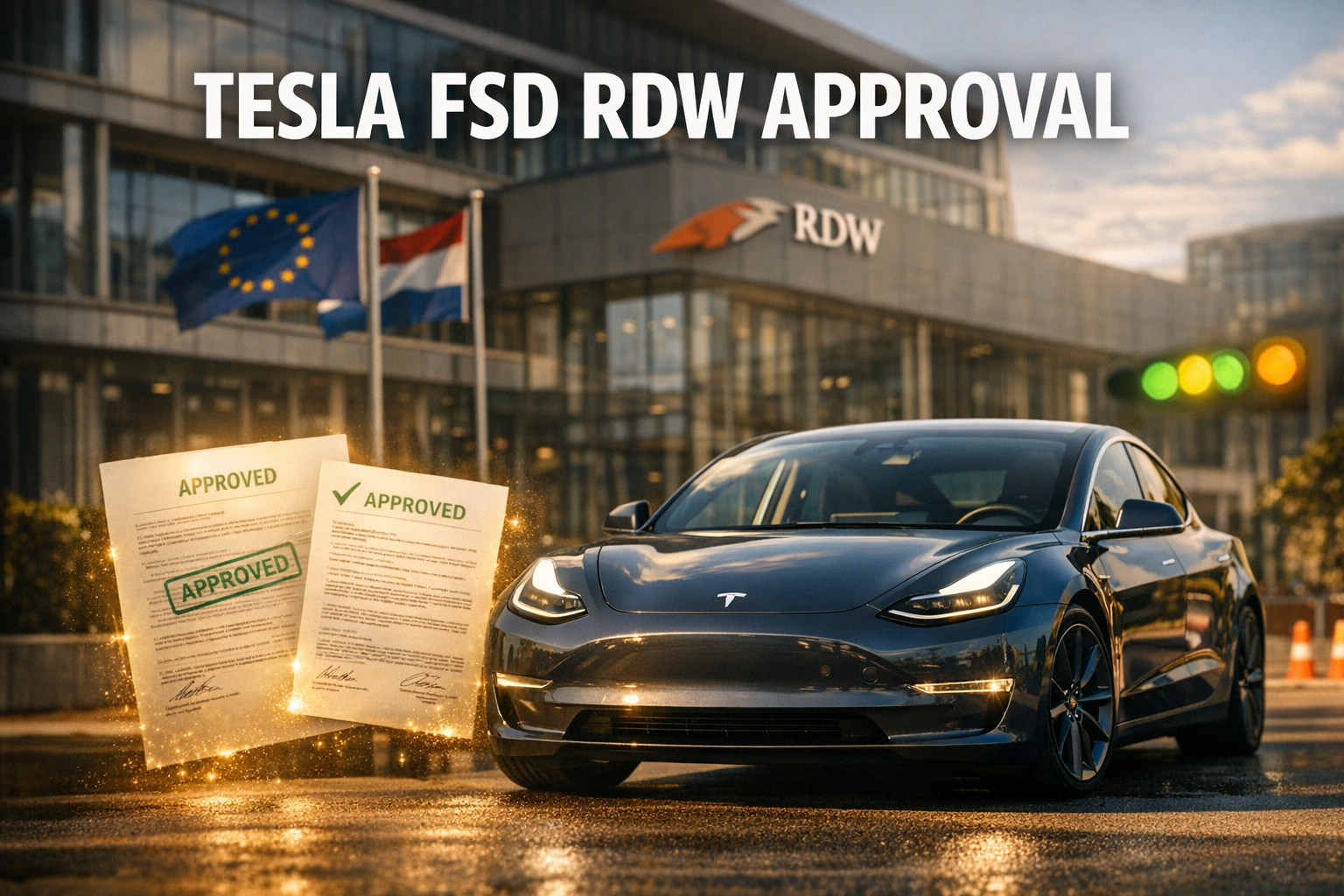
● Tesla Cybercab April 2026 Shockwave, Texas Loophole, Uber-Benz Disruption
Why the “April 2026 Production” Timeline for Cybercab Is Material: Autonomous-Driving Legislative Frictions, a Texas Jurisdiction Strategy, and a Service-Led Disruption of Uber and Premium OEMs
This report covers three points:1) How “legislation takes 1–3 years” can still align with “April production” (Texas-first strategy)
2) How Cybercab can undermine Uber from the cost base (impact of a $0.20/mile operating-cost assumption)
3) Why incumbent automakers—particularly premium brands—face margin compression as Tesla shifts toward a platform model (declining value of ownership)
1) Key News Briefing (Structured Summary)
1-1. “Cybercab April 2026 production” may reflect jurisdiction selection, not regulatory non-compliance
Market concerns are rational:
- Federal autonomous-driving standards in the US typically require multi-step approval (Senate process, hearings, presidential signature), often extending timelines.
- As a result, even after committee passage, implementation is commonly expected to lag into late 2026–2027.
However, the April 2026 production timeline can be consistent with a scenario that does not depend on completion of federal legislation. The key variable is state-level authorization.
1-2. Texas pathway: SB2205 (2017) as an enabling framework
Texas previously enacted autonomous-vehicle legislation (SB2205, 2017). Core features:
- Public-road operation is permitted for vehicles equipped with autonomous-driving systems, whether or not a human driver is present.
- Liability is structured toward the system owner/operator (i.e., the operating entity).
Implication:
- Even before federal standards finalize, limited-area commercial operation (robotaxi-like service) appears more feasible within Texas.
- “April production” is therefore more plausibly interpreted as “initial deployment in Texas,” not a nationwide launch.
1-3. FSD v14.2.2 (2.5): competition shifting from safety to ride quality
The update is viewed as focused on vision-encoder optimization and neural-network tuning rather than UI changes. Frequently cited user observations:
- Fewer “double stops” at unprotected left turns and unsignaled intersections
- Reduced hesitation; improved decision-making when entering traffic
- More natural lane positioning when passing stopped vehicles, maintaining safety margins
- Smoother acceleration/deceleration, improving passenger comfort
Relevance:
- Competitive differentiation is moving from “avoids accidents” toward “drives naturally,” which is critical for robotaxi adoption where passenger experience (comfort, motion sickness, perceived safety) is a key determinant of repeat usage.
1-4. FSD shift toward subscriptions: “vehicle as product” to “vehicle as SaaS”
Community demand increasingly resembles standard subscription-service design:
- Tiered pricing for supervised vs. unsupervised capability
- Daily/weekly/annual options to match seasonal usage
- Feature-based bundles (e.g., parking, summon)
For Tesla, higher subscription mix can improve revenue stability and support valuation frameworks closer to software/platform multiples than manufacturing. Sensitivity to macro conditions (rates, liquidity, growth-multiple compression) remains a relevant risk factor.
2) Core of the “Cybercab vs. Uber” Thesis: a cost-structure contest, not a fare contest
2-1. Uber’s unit economics are labor-heavy
Simplified assumptions referenced:
- Average Uber rider price: ~ $2.5 per mile (highly variable by region)
- A substantial share of cost is driver labor, plus platform fees, insurance, maintenance, and fuel
As long as a human driver is required, the effective cost floor is difficult to reduce materially. This contributes to surge pricing and peak-time fare volatility driven by driver availability.
2-2. Cybercab target operating cost: $0.20 per mile (assumption) and its implications
If operating cost approaches $0.20 per mile, economics shift:
- Labor removal compresses variable cost
- Cost structure concentrates in electricity, maintenance, insurance, and depreciation
This enables three outcomes simultaneously:
- Lower breakeven pricing and stronger pricing power
- Reduced peak-time price volatility via fleet optimization and supply scaling
- Service-area expansion into routes previously uneconomic at higher cost bases
The competitive focus shifts from the EV market to mobility-platform economics, positioning a direct threat to both ride-hailing platforms and incumbent automakers.
2-3. Monetization focus: network revenue vs. one-time vehicle gross margin
With Cybercab deployment, Tesla can pursue recurring monetization tied to utilization:
- Per-ride fees, insurance monetization, subscriptions, and data-driven optimization
This is structurally closer to a platform model than a traditional OEM model and may pressure adjacent sectors (parts, maintenance networks, insurance) through ecosystem reconfiguration.
3) Manufacturing Considerations: can “unboxed” processes support the timeline?
3-1. Base-case production pattern: slow start, acceleration in 2H
Early production is typically constrained by process bottlenecks and quality stabilization. If modular “unboxed” manufacturing scales as intended, the ramp curve could be steeper than conventional body-line approaches:
- April 2026: initial low-volume start
- 2H 2026: potential acceleration
3-2. Aligning legislative and manufacturing timelines
A coordinated strategy is plausible:
- If federal standards are delayed: use Texas operations to build real-world safety data, insurance pricing benchmarks, and customer-experience playbooks
- When federal standards open nationwide expansion: synchronize higher-volume production with geographic scaling
This approach prioritizes operational learning before broad regulatory clearance, potentially widening the competitive gap versus peers that wait for federal standardization.
4) Why incumbents (especially premium OEMs) are exposed: not EVs, but the erosion of ownership value
4-1. Margin pressure signals structural change
Public margin warnings and restructuring signals among premium OEMs are better interpreted as early indicators of industry-wide model transition rather than company-specific volatility.
4-2. Demand shift: experience, technology, and total cost vs. brand premium
Younger cohorts increasingly prioritize access and convenience over ownership. With autonomous capability, robotaxi services can replicate portions of premium value propositions (comfort, refinement) while improving total cost of mobility by reducing:
- Maintenance burden, insurance complexity, and parking friction (TCO-driven substitution)
4-3. Cybercab as demand-absorbing infrastructure
The key risk is not a single vehicle’s sales performance but the potential for robotaxi fleets to become urban mobility infrastructure. If adoption scales, second-order impacts may extend to:
- Consumption patterns (purchase to subscription)
- Labor markets (driving jobs)
- Insurance and maintenance ecosystems
- Urban real estate dynamics linked to parking demand
5) Under-discussed but decision-relevant points
5-1. Focus on operable jurisdictions and liability/insurance mechanics, not only federal passage
The primary near-term variable is where commercial operations can legally run and how liability is assigned and insured. A Texas-first deployment converts legislative delay into an operational learning window.
5-2. Robotaxi success metrics: technology plus operations
Beyond model performance deltas, the business is driven by operational KPIs:
- Average wait time, claims handling, accident-rate-driven insurance costs, fleet utilization
These determine whether Tesla is classified by markets as an automaker or a mobility platform.
5-3. “Unboxed” manufacturing as a supply-chain and labor-market lever
If manufacturing architecture changes materially, it can alter sourcing, assembly location choices, and labor intensity. This intersects with reshoring and may affect cost structures and margin profiles across the supply chain.
6) Forward Monitoring Checklist (Actionable Items)
- Regulatory pathway for commercial operation in Austin, Texas: permits, constraints, and enforcement approach
- Real-world liability and insurance workflows under unsupervised operation
- Whether improved “ride quality” translates into rider satisfaction and retention
- Subscription pricing architecture: supervised vs. unsupervised tiers; short-term passes; feature bundles
- Feasibility of incumbent margin defense: pricing actions vs. production cuts vs. service-model pivots
< Summary >
- “April 2026 production” can be consistent with a state-first operational strategy (e.g., Texas) rather than dependence on finalized federal standards.
- Competition with Uber is primarily a cost-structure contest; removal of driver labor is the central lever, and success would support Tesla’s re-rating toward a mobility platform model.
- The principal threat to premium OEMs is not EV penetration but robotaxi-driven substitution that reduces the value proposition of vehicle ownership, with broader implications for consumer behavior and industry structure.
[Related Posts…]
- https://NextGenInsight.net?s=autonomous-driving
- https://NextGenInsight.net?s=robotaxi
*Source: [ 오늘의 테슬라 뉴스 ]
– 사이버캡 4월 생산 확정! 법안 전쟁 뚫고 4월 생산? 일론 머스크의 ‘텍사스’ 전략은 ?
● Secondhand Luxury Boom, The RealReal Sparks Asset-Flip Revolution
Why Secondhand Luxury Shifted from “Questionable” to “Asset Turnover”: 7 Consumer and Investment Signals for 2026 from The RealReal
Luxury store lines have visibly shortened. Secondhand luxury is moving from a secondary option to a standardized distribution channel. The RealReal has systematized authenticity and buyer protection, reshaping consumer behavior (turnover consumption), corporate value (revenue model and cost control), and U.S. equity-market valuation frameworks.
1) One-line news: Luxury consumption is being redefined from “ownership” to “turnover”
Luxury purchases are shifting from “buy and keep” to “buy-use-sell-replace.” Ongoing price increases, shorter trend cycles, and rising consumer fatigue have widened the opening for resale platforms. Secondhand is increasingly positioned as the most efficient way to access luxury experiences.
2) Consumer shift: Millennials and Gen Z optimize for “experience efficiency,” not “newness”
Purchase decisions are increasingly driven by how many experiences can be obtained within a fixed budget, rather than whether the item is new or pre-owned. Buyers incorporate resale value and value retention into the initial purchase decision, indicating a structural shift in how luxury is evaluated.
3) The RealReal’s model: Trust is built through company-liable distribution, not peer-to-peer listing
The RealReal was founded in 2011 to address two constraints: luxury is expensive, and secondhand luxury is difficult to trust.
3-1) Core structure (3 competitive elements)
- 1) Company-led acquisition: The platform takes physical control of items rather than facilitating direct peer-to-peer trades.
- 2) Professional authentication: Reduces counterfeit risk through specialist capabilities and process design.
- 3) Platform accountability through sale and after-sale: Clarifies responsibility and remedies from the buyer’s perspective.
The RealReal functions less as a marketplace and more as infrastructure that standardizes secondhand luxury distribution.
3-2) Impact of offline stores: Repositioning secondhand as a “luxury edit” retail experience
Physical stores are designed to avoid “used goods” signaling. High-condition inventory and discontinued/limited items increase selection value and improve conversion while supporting brand perception.
4) Revenue model: Growth is driven by transaction velocity, not accumulated ownership
The RealReal earns a commission on each sale. The primary growth lever is customer turnover frequency (buy-sell-rebuy), rather than maximizing single-ticket sales.
4-1) Key customer utility: Confidence in resale lowers purchase friction
Common behavior pattern: purchase premium item → use for a period → resell via The RealReal → redeploy proceeds into a different style. Luxury spending shifts from terminal consumption to a recurring cycle.
5) Investment lens (U.S. equities): Wall Street focus has shifted to three updated checkpoints
The RealReal is a Nasdaq-listed company with revenue approaching approximately $1B. However, authentication labor, logistics, and operating fixed costs remain material, and profitability is not yet fully established.
5-1) Current strategy: Demonstrating cost-control through focus
- Rationalization of underperforming stores
- Logistics and authentication process efficiency
- Concentration on higher-margin categories such as handbags and jewelry
Investor attention is moving from “category growth” to “who can control unit economics and sustain operations through the cycle.”
5-2) Stock narrative (as cited): Reframed from “growth” to “survival to turnaround”
- Price around $14.7 as of Feb 2
- Up ~140–160% versus ~$5 six months prior
- Since the Jul–Aug 2025 trough ($4–5 range), the market response has aligned with evidence of cost improvements and narrowing losses.
6) Risk factors: Macro slowdown, intensifying competition, and profitability remain open variables
Key risks to isolate in investment decisions:
- Luxury demand sensitivity in downturns: Category-level contraction risk
- Competitive pressure in resale platforms: Potential commission compression and higher marketing costs
- Delayed profitability: Structural cost burden from authentication and logistics
7) Under-discussed core point: The RealReal’s product is “trust + price reference,” not luxury goods
Many discussions stop at “resale market growth.” A more material point for industry and valuation is the platform’s role in liquidity and price discovery.
7-1) What is being sold is luxury liquidity
When luxury is perceived as an asset with credible cash-out optionality, turnover accelerates. The key enabling layer is authentication and an actionable resale price reference.
7-2) Primary-market price increases can be a tailwind for resale
Higher new-item prices increase substitution appeal in secondary markets. A perceived resale “floor” can also reduce psychological friction for new purchases, positioning resale as a stabilizing mechanism for broader luxury demand rather than a purely adversarial channel.
7-3) AI implication: The next battleground is authentication efficiency and probabilistic counterfeit risk management
AI is positioned to influence authentication workflows, pricing, demand forecasting, and inventory turnover optimization. Long-term viability depends on maintaining accuracy while reducing per-unit authentication and operating costs.
SEO-aligned keyword themes (to embed naturally)
This topic links to consumer reallocation under global growth deceleration and to the conditions under which growth equities are re-rated amid easing-rate expectations. It also aligns with U.S. earnings-season market behavior that rewards margin improvement more than top-line growth. Investors may also evaluate exposure via ETFs across consumer, retail, and platform ecosystems.
< Summary >
Luxury consumption is rapidly shifting from ownership to turnover (buy-use-sell-rebuy). The RealReal systematized trust through company-led intake, authentication, sale execution, and after-sale responsibility, supporting resale as a standardized distribution channel. From an investment perspective, valuation is increasingly driven by cost control and turnaround credibility rather than category TAM alone; key risks remain macro sensitivity, competitive intensity, and delayed profitability. The platform’s core output is liquidity and price reference built on trust, with long-term differentiation tied to AI-enabled efficiency across authentication, pricing, and logistics.
[Related articles…]
- https://NextGenInsight.net?s=resale
- https://NextGenInsight.net?s=luxury
*Source: [ Maeil Business Newspaper ]
– [설특집] 중고 명품은 꺼림칙하다? 리얼리얼의 역발상 비즈니스 | 어바웃뉴욕 | 길금희 특파원
● Russias Wartime-Bubble Bursts, Growth Crash, Fiscal Stress, Rate Shock, Labor Squeeze
Russia’s “Wartime-Economy Bubble” Is Deflating: Confirming Signals From Slowing Growth to Fiscal, Rate, and Labor-Market Fractures
Russia’s current challenge extends beyond a prolonged war. The constraints of wartime-economy growth are increasingly visible in macroeconomic data.
1) The structure of “bubble-like growth” that appeared as 3–4% expansion through 2024
2) The mechanism driving deceleration to ~1% in 2025 and potentially below 1% in 2026
3) What occurs when fiscal deficits, inflation, high interest rates, and labor shortages intensify simultaneously
4) The long-run economic costs of a proxy-war dynamic involving Europe and the U.S.-led West
5) Underreported key issue: GDP optics under wartime mobilization and productivity erosion
1) News Briefing: Core Claims (War and Economic Framework)
War characterization: Although the conflict is Russia–Ukraine militarily, it is also framed as a broader contest between the U.S.-led West and Russia, with a proxy-war interpretation that imposes sustained long-term costs on Russia.
Growth trajectory (key points):
- Growth of approximately 3%–4% through 2024 reflects a “bubble economy” sustained for roughly three years
- In 2025, the bubble reaches its limit and slows to around 1%
- In 2026, growth could be 0.9% or below 1%
In summary, wartime-demand and fiscal outlays have reached constraints imposed by supply capacity, labor availability, interest rates, and sanctions.
2) Why 3–4% Growth Was Not “Underlying Strength”: The Wartime-Bubble Structure
Russia’s wartime-economy growth mechanism can be summarized as follows:
(1) Surge in government spending → short-term GDP support
Defense production, military pay, compensation payments, and higher utilization in related industries lift GDP via fiscal outlays. This is a demand-led accounting boost.
(2) Demand is state-mobilized rather than normal private consumption/investment
A rising share of spending is consumptive and war-oriented rather than productivity-enhancing capital formation, increasing the risk that headline growth masks weakening fundamentals.
(3) Import substitution and sanctions circumvention → higher costs
Restricted access to Western technology, components, and capital increases reliance on higher-cost procurement routes and substitutes, reducing efficiency and pressuring inflation and margins.
(4) Labor shock (mobilization, emigration, demographics) → supply bottlenecks
Mobilization, outward migration, and adverse demographics constrain labor supply, increasing the probability that liquidity and spending translate into inflation rather than real output.
3) Why Growth Decelerates in 2025–2026: Four Practical Drivers
Constraints are most binding when multiple pressures occur simultaneously:
1) Limits to fiscal expansion: war costs crowd out the budget
As war spending rises, trade-offs tighten:
- Spend more: larger deficits and debt-service burden
- Spend less: weaker growth
A demand-supported wartime economy slows when further spending becomes fiscally and politically costly.
2) Accumulated inflation: wartime demand plus supply constraints
Strong war-related demand collides with sanctions, logistics, component shortages, and labor constraints, sustaining inflation and forcing tighter monetary conditions that suppress growth.
3) High-rate backlash: pressure on corporates and households
If inflation remains elevated, policy rates remain restrictive:
- Firms shift from expansion to survival and balance-sheet defense
- Households reduce borrowing and discretionary spending
- Government interest expense rises
High rates constrain the cash-flow channel that previously supported demand-led growth.
4) Sanctions’ cumulative effect: lagged damage to capacity and productivity
Beyond immediate shocks, the larger impact arrives over time through technology gaps, component depletion, and capital-stock aging. Maintenance and replacement costs rise while productivity declines, raising the probability of weaker growth in 2025–2026.
4) Global Macro Implications: Three Transmission Channels
This is not solely a domestic Russia story; it has macro spillovers via energy, defense, and European fiscal choices.
(1) Energy markets: risk premia persist while demand fragments by region
Slower Russian growth does not automatically reduce near-term output, but reduced investment capacity, restricted access to equipment and technology, and higher transport/insurance/payment risks can sustain an energy risk premium.
(2) Europe: defense spending becomes structural rather than episodic
A prolonged conflict embeds higher defense budgets into baseline fiscal frameworks, reshaping policy priorities and influencing industrial strategy and growth dynamics.
(3) Global inflation: repeated cost shocks rather than a one-off event
War and sanctions reconfigure logistics routes, energy sourcing, and defense-related demand, altering cost structures and potentially influencing the medium-term interest-rate path.
5) AI Trend Angle: Modern Combat Depends on AI, Drones, and Electronic Warfare—With New Bottlenecks
Contemporary warfare is increasingly defined by AI-enabled reconnaissance and targeting, drones, communications/electronic warfare, and semiconductors.
Even with expanded output, scaling advanced systems requires:
- High-performance semiconductors and server infrastructure
- Sensors, optics, and precision components
- Data and software ecosystems for model development
- Civilian innovation capacity (start-ups, universities, international collaboration)
Sanctions, talent outflows, and capital constraints can increase volume while slowing modernization, creating a second-order limit on wartime-economy effectiveness.
6) Key Underreported Issue: Productivity Erosion and Misleading Optics Are More Material Than the Growth Print
Key point 1) Wartime GDP does not equate to welfare or competitiveness
Defense output raises measured GDP but does not necessarily improve living standards or private-sector competitiveness. A widening gap can emerge between headline output and household conditions.
Key point 2) Mobilization can structurally damage productivity (TFP)
Labor, capital, and technology reallocated toward defense can weaken private innovation, services, and export capacity, complicating post-war normalization.
Key point 3) “0.9% growth” is less important than the underlying regime
The central risk is the consolidation of:
- High inflation + high interest rates + labor shortages + cumulative sanctions effects
If entrenched, policy optionality narrows materially.
7) Monitoring Framework (2026+): Five Indicators That Define the Regime
To assess whether constraints are becoming structural, track:1) Fiscal balance: extent to which war spending crowds out revenue capacity
2) Inflation: persistence determines the duration of restrictive policy
3) Policy rate: sustained high rates delay private investment recovery
4) FX rate: depreciation raises import inflation and capital-flight pressure
5) GDP growth: focus on whether private-sector recovery accompanies the headline figure
8) Investment/Business Interpretation (Avoid Over-Simplification)
- Slower Russian growth does not imply an immediate end to global risk.
- A prolonged conflict can sustain structural demand in defense, drones, cybersecurity, and energy infrastructure.
- Europe’s fiscal load, energy volatility, and supply-chain reconfiguration can support a global regime of lower growth and higher cost structures.
< Summary >
Russia recorded 3–4% growth through 2024 under wartime mobilization, but decelerated toward ~1% in 2025, with a higher probability of below 1% growth in 2026.
Wartime spending can raise GDP while eroding productivity and private competitiveness. If cumulative sanctions effects coincide with inflation, high interest rates, and labor shortages, policy flexibility tightens materially.
Key indicators: fiscal balance, inflation, interest rates, FX, and GDP growth quality (especially evidence of private-sector recovery).
[Related Articles…]
- https://NextGenInsight.net?s=Russia
- https://NextGenInsight.net?s=wartime%20economy
*Source: [ 달란트투자 ]
– “이제 한계다” 전시경제 거품 꺼졌다. 푸틴 뒷목 잡는 러시아 근황 | 류한수 교수 2부