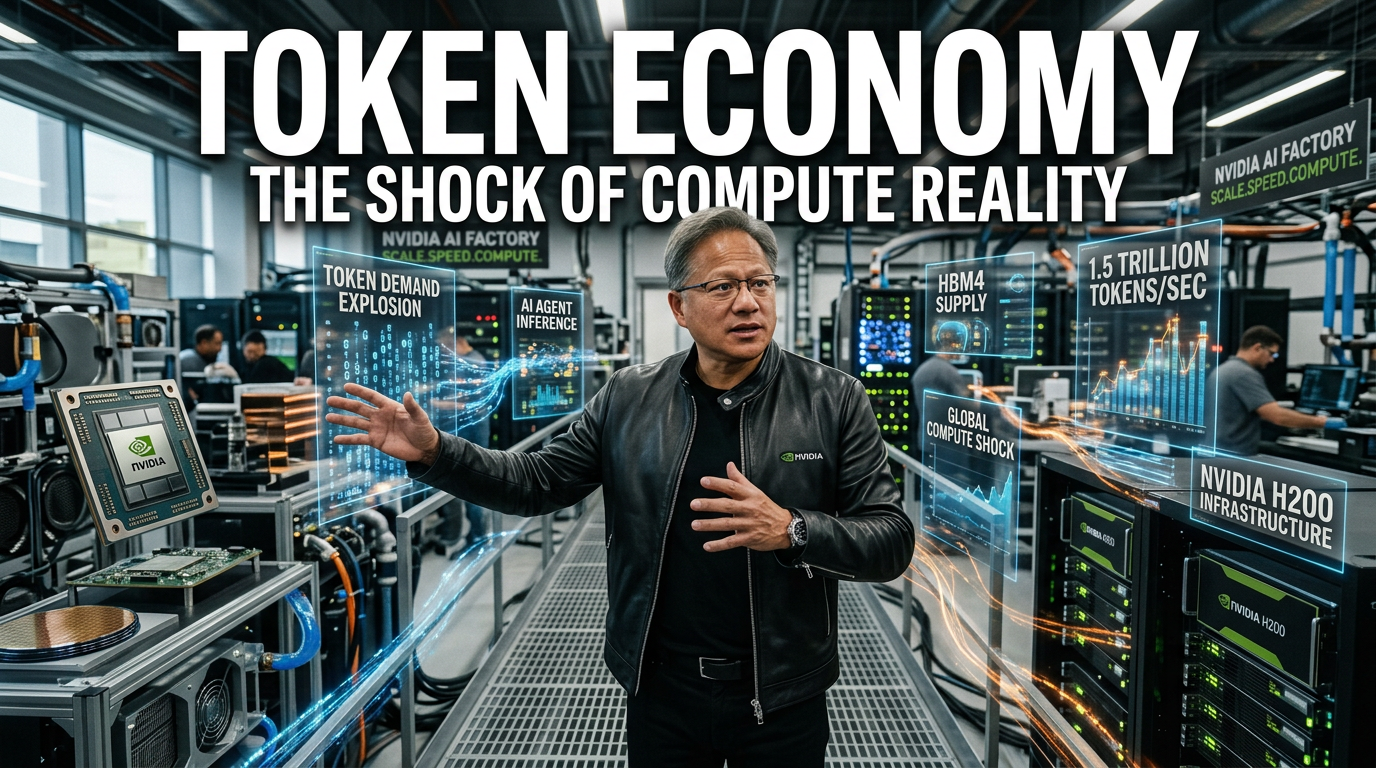
● Nvidia KV-Cache Compression Bombshell, Samsung SK-Hynix Memory Supercycle Shock Scenarios
If NVIDIA’s “8–18x KV Cache Compression” Is Real? Three Scenarios That Could Reshape the Memory Supercycle for Samsung Electronics and SK Hynix
In today’s post, I’ll nail down exactly three things.
First, the recent surge in DRAM and NAND prices isn’t “just the AI boom,” but structural demand created by the KV cache bottleneck.
Second, why NVIDIA’s disclosed DMS (Dynamic Memory Sparsification) makes claims like “saving memory by 8x (up to 18x)” possible.
Third, when this technology is applied in the real world, I’ll summarize its impact on Samsung Electronics and SK Hynix’s earnings/stock prices into “bullish/neutral/bearish” so investors can judge immediately.
1) News Briefing: The “Real Reason” the Memory Market Is Overheating Right Now
1-1. The Price Surge: Spreading Beyond DRAM to NAND as Well
Recently, as memory prices have surged centered on servers, talk about a “return of the memory supercycle” has grown louder again.
The core point is that it’s not only HBM, but commodity DRAM, and even NAND (SSDs), that have entered the sphere of AI demand.
In other words, AI is moving from being an industry that “only consumes GPUs” to an industry that is expanding “into memory.”
1-2. The Essence of the Demand Explosion: As AI Models Grow, “Memory per Server” Structurally Changes
As the original article said, more important than server price increases is that the amount of memory installed per server is structurally increasing.
As models grow, during inference it’s not just “computation” that increases, but the “intermediate values that must be remembered” explode.
This is acting as the core driver pulling up DRAM/NAND demand.
1-3. The Point the Market Misunderstands: If You Only See “AI=HBM,” You Miss Half the Story
HBM is certainly the center of AI infrastructure.
But from an operational perspective, even if GPUs compute quickly, if bottlenecks occur in DRAM (especially KV cache) and storage (NAND), total costs spike.
That’s why Big Tech isn’t just stacking GPUs, but buying up DRAM/NAND “together,” and this interpretation—that it pushed prices up—is more persuasive.
2) The KV Cache Bottleneck: Why AI Suddenly Consumes So Much Memory
2-1. KV Cache in One Sentence
KV cache is a working notepad stored in memory so that an LLM can “quickly reference earlier tokens (context)” while generating an answer.
2-2. Why a Bottleneck Happens: The Longer the Conversation and the Deeper the Reasoning, the More It Explodes
As long prompts, long documents, long conversations, and multi-step reasoning (Chain-of-Thought) increase, the KV cache grows.
As a result, the problems that occur can be summarized into three things.
① The required memory capacity itself grows (DRAM/NAND demand increases)
② Latency increases (service quality degrades)
③ GPUs can sit idle (utilization of expensive GPUs drops → total cost rises)
3) NVIDIA DMS: Compressing by “Not Throwing Away Immediately, but Throwing Away Later”
3-1. Why Traditional Compression Failed: It Deletes Important Tokens Too
The idea of KV cache compression itself has been widespread in the industry.
But most approaches used “remove immediately if it looks unnecessary,” so they also deleted information that later became necessary, causing performance (accuracy) to collapse.
3-2. The Key Mechanism of DMS: Delayed Eviction + Sliding Window (Segment Management)
DMS, in one sentence, is “even if it seems unimportant, don’t throw it away right away; set a grace period and discard it only when it’s truly unnecessary.”
Why this matters is that, for LLMs, it’s often hard to judge immediately what information “may become important later.”
In other words, DMS is not simple compression, but an operational method that accounts for “uncertainty during the inference process.”
3-3. It Becomes Favorable Across the Three-Metric Set
In the field, people usually look at the three items below together.
① How much memory is saved (total DRAM/NAND usage)
② How much throughput is increased (handle more requests with the same hardware)
③ Whether peak memory is reduced (prevent OOM even in worst cases, improve stability)
Interpreting the original article’s Pareto frontier point, DMS being superior means it found a better point in the dilemma of “memory savings vs performance degradation.”
3-4. Especially Strong in Long Contexts: Optimization Fit for the AI Agent Era
AI agents are not short Q&A, but a structure that “continues work” across dozens to hundreds of steps.
Then context length grows and KV cache burden explodes, and DMS may have large room to alleviate both memory usage and latency in this region.
In summary, DMS may have greater ripple effects in “agents/workflow automation” than in “chatbots.”
4) Impact on Samsung Electronics and SK Hynix: Organized into Three Scenarios
4-1. Scenario A (Neutral to Bullish): “Total AI Usage Growth” Is Larger Than “Memory Demand Decline”
Even if DMS reduces memory usage per request, if service unit prices fall, AI usage can explode.
In that case, memory usage may decrease “per request,” but increase in “total.”
Ultimately, as AI infrastructure investment grows, the memory upcycle could last longer than expected.
4-2. Scenario B (Bearish): As the “Structural Bottleneck Is Resolved,” Price Elasticity for Commodity DRAM/NAND Weakens
If DMS spreads quickly as an industry standard, the “forced expansion” driven by the KV cache bottleneck that created the current surge could decrease.
In this case, the hit is more likely to come first to commodity DRAM and NAND rather than HBM.
Because HBM is still about “bandwidth/speed,” so even if compression happens, performance competition continues.
4-3. Scenario C (Bullish): In the End, It Returns to a “Bandwidth” Fight → HBM Premium Is Maintained/Strengthened
As the original conclusion suggests, if “capacity” is addressed through compression, the remaining bottleneck shifts to “speed (bandwidth).”
Then, to allow GPUs to read and write data faster, the importance of high-bandwidth memory like HBM could grow even more.
In other words, even if commodity DRAM/NAND enter the impact zone of compression, HBM’s premium may be maintained due to a different axis (bandwidth).
5) Variables to Watch in Today’s Market: Supply Factors as Important as Technology
5-1. Possibility of China-Driven Supply Expansion: It Could Become the “Real Variable” That Breaks the Cycle
Supply is scarier than technology change.
If low-price offensives by Chinese memory makers fully ramp up, even if demand holds, ASP (average selling price) can be suppressed.
This acts as a variable that makes it harder for both Samsung Electronics and SK Hynix to determine “where the cycle peak is.”
5-2. Interest Rates, FX, Capex: Memory Is Highly Influenced by Macro
The memory sector has traditionally been highly cyclical and sensitive to the economy.
So the interest-rate environment, exchange rates, and the direction of Big Tech capital expenditures move intertwined.
Even with a technology like DMS, earnings ultimately can’t help but be determined by the “demand × price × CAPEX cycle.”
6) The “Most Important Point” That Other News/YouTube Talk About Less
6-1. DMS’s True Disruptive Power May Be “GPU Utilization Improvement,” Not “Memory Savings”
In the market, there’s a lot of simplistic debate like “if memory drops 8x, are memory stocks done?” but there’s something more important.
Decision-makers on the ground prioritize not “we’ll buy less memory,” but “we’ll make sure expensive GPUs don’t sit idle.”
So if DMS spreads, rather than memory demand dropping immediately, AI service expansion may accelerate as throughput per GPU rises.
6-2. “Inference Cost Decline” May Not Be Bearish for the Memory Cycle, but Bullish by Shifting the Demand Curve
AI has a strong tendency for use cases to explode when costs go down.
If DMS is commercialized and inference unit costs fall, companies can expand into “areas where they had been postponing AI adoption.”
What’s needed then is ultimately more AI infrastructure investment, and memory goes into that infrastructure again.
6-3. Investment Key Takeaway Checklist: You Must Watch the Time Lag of “Paper → Framework → Production Deployment”
A paper coming out doesn’t mean memory demand will bend down immediately.
The real impact usually comes as
paper release → open-source/framework optimization → hyperscaler adoption → enterprise expansion
in this order, and there is a time lag here.
So when viewing the memory cycle, you need to separate “the possibility of the technology” from “the speed of adoption” to avoid excessive pessimism or excessive optimism.
< Summary >
The surge in memory prices is not just the AI boom, but largely the result of the KV cache bottleneck structurally increasing DRAM/NAND usage per server.
NVIDIA DMS has the potential to compress KV cache through “delayed eviction,” simultaneously reducing memory and latency in long-context/AI-agent scenarios.
The impact on Samsung Electronics and SK Hynix can unfold along three paths: (1) neutral-to-bullish as total AI usage increases, (2) bearish as commodity DRAM/NAND price elasticity weakens, and (3) bullish as bandwidth competition intensifies and the HBM premium strengthens.
The real variables are not the technology itself, but China-driven supply expansion and the flow of interest rates, FX, and Big Tech capex, and you must check the time lag from papers to commercialization.
[Related Posts…]
- Reorganization of the HBM Supply Chain and Key AI Server Investment Takeaways
- The DRAM Price Cycle: Variables Easy to Miss in the 2026–2027 Outlook
*Source: [ 월텍남 – 월스트리트 테크남 ]
– 😱삼전, 하이닉스 괜찮을까?