● Tesla Autopilot Scam Crackdown Looms, Lawsuits Surge, March 9 Data Bombshell
Tesla Declares War on the “Autonomy Fraud” Narrative: The Real Reason Behind the $400 Breakdown, and Why March 9 Is a Pivot Point
This report focuses on four core items:
1) The nature of the “legal uncertainty,” rather than “earnings,” that has driven Tesla’s stock
2) Why the Florida KRW 350 billion damages ruling converges on the “Autopilot/FSD naming” issue
3) Why Tesla’s countersuit against the California DMV is a “class-action shield,” not a matter of pride
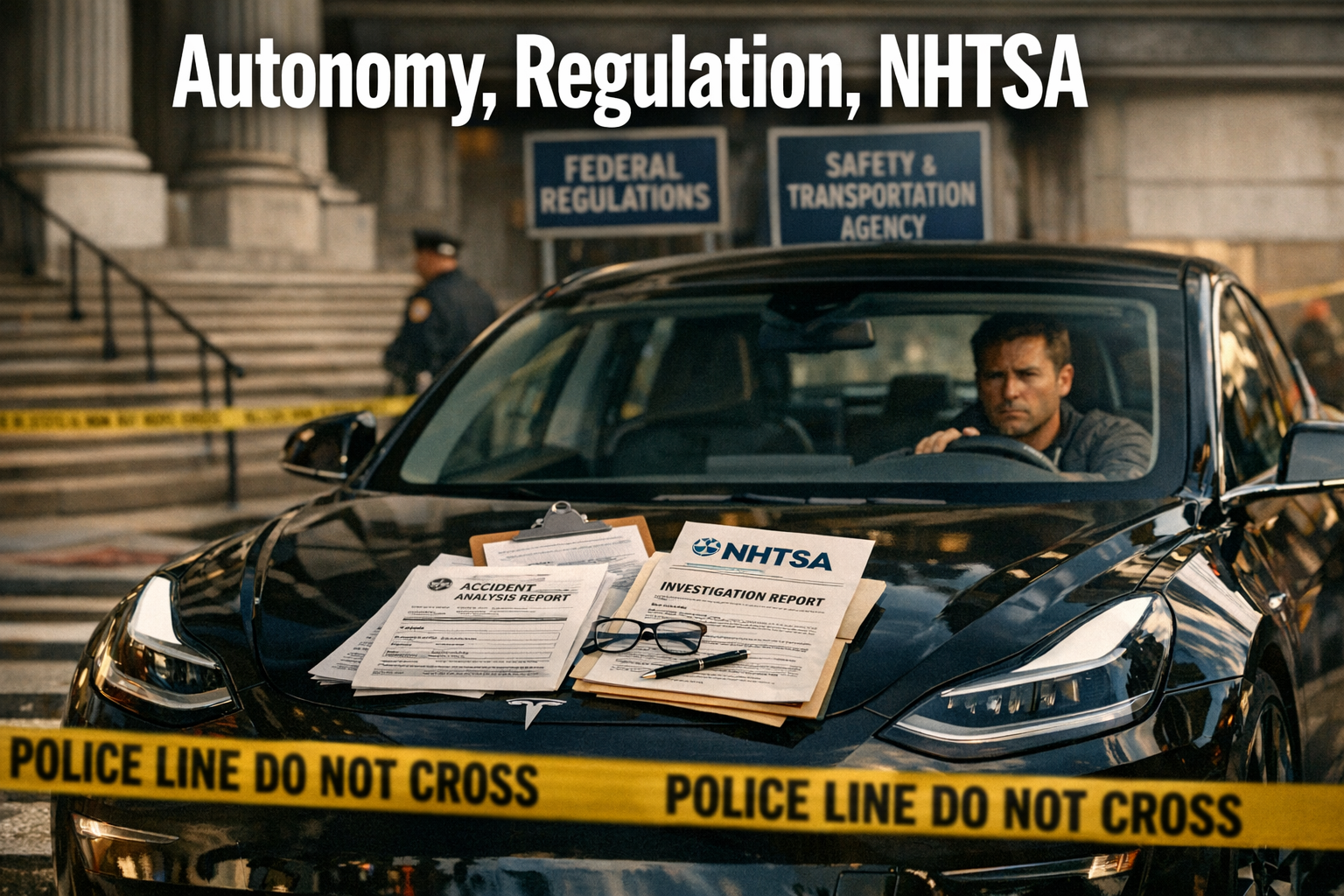
4) The mechanism by which the March 9 NHTSA data submission (8,313 cases) can become a valuation inflection point
1) Market context: The stock decline reflects pricing of regulatory and litigation risk, not fundamentals
Tesla’s intraday break below the psychologically important $400 level appears driven less by concerns about demand or margins and more by the market assigning a higher probability and cost to legal and regulatory outcomes.
Autopilot and FSD are central to Tesla’s medium- to long-term narrative (robotaxi, subscriptions, software monetization). If regulators characterize related claims as misleading or overstated, the impact extends beyond near-term cash costs to Tesla’s valuation framework.
2) Florida ruling: The damages are material, but the liability logic is more consequential
Key development
A 2019 accident resulted in a damages award of approximately $243 million (approximately KRW 350 billion), with roughly 80% classified as punitive damages.
Market implication
The court’s reasoning emphasized not only technical performance but also whether the “Autopilot” naming could induce driver misunderstanding, assigning Tesla 33% responsibility.
If this reasoning becomes portable, it offers plaintiffs a repeatable, low-friction theory of liability in future incidents. The precedent value may therefore be more significant than the headline amount.
3) California DMV countersuit: A strategic attempt to prevent a “misleading advertising” label from hardening
Key development
After the California DMV challenged Autopilot/FSD naming and marketing, Tesla filed a countersuit seeking to overturn the administrative action.
Strategic purpose: litigation risk containment
Tesla’s key risk is an official determination that its marketing is “misleading,” which could become a de facto factual anchor in ongoing FSD purchaser class actions seeking refunds or damages based on alleged non-delivery of promised autonomous capability.
Allowing that label to stand could increase settlement and refund exposure by strengthening plaintiffs’ evidentiary position.
Two primary defenses cited
1) The DMV allegedly did not present objective evidence that consumers were misled by the “Autopilot” name.
2) The purchase/activation flow requires acknowledgement of warnings indicating the system is not autonomous before proceeding, via the user interface design.
4) Technology progress: The significance of “non-verbal intent recognition” demonstrated in Europe (Netherlands)
Key development
Tesla released footage of FSD (Supervised) operating in narrow Dutch streets, interpreting a pedestrian’s hand signal indicating “go ahead,” and proceeding based on inferred intent rather than simple avoidance.
Why it matters
The hardest autonomy problems are not rule-based lane following, but context: negotiation, courtesy, and implicit human coordination. Performance in dense European environments can support claims of scalability for a data-driven system.
Regulatory gate: UN ECE exemption provision 39
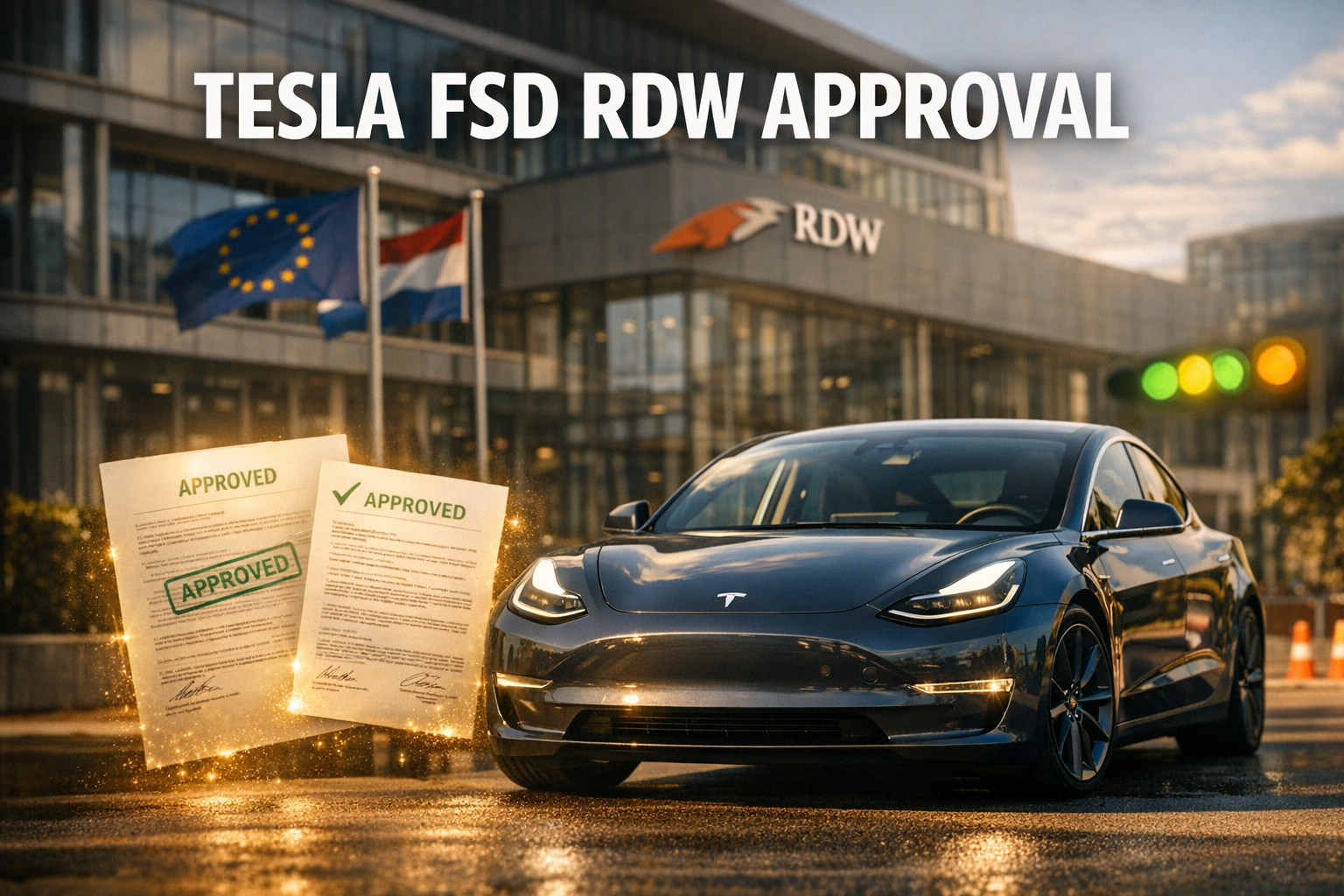
The Dutch RDW is referenced as reviewing UN ECE exemption provision 39, which may enable conditional regulatory flexibility permitting system control without direct driver intervention under defined conditions. Approval could increase the probability of broader European legalization timelines, including into 2026.
5) Potential catalyst: Voice-command FSD and an xAI (Grok) integration scenario
Key development
Elon Musk indicated that voice-command capability may be added to FSD.
Operational impact
Today, many user corrections require taking control via steering input, effectively interrupting the system. Voice commands could enable continuous, fine-grained guidance (e.g., “turn right at the next alley,” “pull over before that traffic light”) without disengaging.
From a regulatory framing perspective, this may support a shift from “hands-off autonomy” to “human-system collaborative control,” potentially strengthening a safety narrative if implemented with robust guardrails.
Investment relevance (AI trend)
This is not only a convenience feature; it moves the vehicle toward a conversational agent model at the edge. It aligns automotive autonomy with broader AI infrastructure themes where compute, data, and energy costs determine competitive positioning.
6) Why March 9 matters: Valuation sensitivity to the NHTSA request covering 8,313 cases
Key development
The NHTSA extended the deadline for Tesla’s FSD-related data submission, with March 9 referenced as a key date. Tesla indicated it required time to review 8,313 incident records. The agency is requesting original video, internal vehicle communications, and pre-/post-incident logs.
Why this can reprice valuation
The dataset can support two broad outcomes:
1) If it substantiates Tesla’s claim of superior safety versus human driving, it may support faster regulatory acceptance and commercialization pathways.
2) If it reinforces a “not-ready” narrative, it can increase expected cash outflows (litigation, compliance) while compressing the multiple by slowing the autonomy growth thesis.
Broader implication
This may function as a reference case for how AI-era liability and data disclosure standards are set, with potential spillover into risk premia across technology equities where accountability and regulatory exposure are increasingly quantifiable.
7) External context: Altman vs. Musk and the data center power constraint
Sam Altman dismissed near-term feasibility of “space data centers,” arguing that expanding terrestrial power supply (including nuclear and fusion) is more cost-effective. Musk’s view, enabled by SpaceX, suggests circumventing terrestrial grid, cooling, and permitting bottlenecks by relocating constraints off-planet.
The key point is not which approach prevails, but that AI competitiveness is converging on electricity and compute unit economics. In this framing, autonomy becomes a function of compute, data, and regulatory clearance costs rather than purely “software sales.”
8) Manufacturing and demand signals: Model YL and supply-chain implications
Key development
Model YL, previously perceived as China-domestic, was reported as registered in Australia’s vehicle approval system, cited as a first official approval outside China.
Economic significance
1) It signals Shanghai capacity to support both left-hand and right-hand drive configurations.
2) Based on typical post-approval delivery patterns (approximately 3–6 months), markets may begin discounting a potential launch within the year, including “2026 model-year” labeling dynamics.
3) It may address a gap between Model X pricing and Model Y interior space, enabling a mid-premium SUV positioning.
9) Underemphasized points
Point A: The DMV countersuit is aimed at removing a regulatory label that can become core evidence in class actions.
This is less about confrontation and more about controlling refund and settlement exposure.
Point B: The Florida case may matter more for the principle that naming can create liability than for the damages amount.
If “marketing terminology as liability” becomes a durable trend, sector-wide risk premia could rise.
Point C: The March 9 NHTSA submission is a potential template for AI-era accountability and data standards.
Requests for original video and internal communications suggest future comparables may face similar disclosure expectations.
Point D: Voice-command FSD is a potential reframing tool from “standalone autonomy” to “collaborative autonomy.”
If executed credibly, it may support alternative compliance pathways emphasizing controllable, supervised autonomy.
10) Investor checklist: near-term items to monitor
1) California DMV case timeline and whether “misleading advertising” language becomes part of a durable official record
2) NHTSA follow-up requests and public commentary around the March 9 submission
3) European regulatory progress (Netherlands RDW, UN ECE exemption 39)
4) Concrete timing and real-world UX of voice-command FSD (ability to guide without disengagement)
5) Model YL Australia delivery timeline and changes in Shanghai export mix
< Summary >
Tesla’s recent stock weakness appears driven more by repricing of autonomy-related regulatory and litigation risk than by core operating metrics.
The Florida ruling is notable less for the damages amount than for reinforcing a liability theory tied to “Autopilot” naming and consumer misunderstanding.
Tesla’s California DMV countersuit is primarily a defensive measure to limit class-action refund and settlement exposure.
The March 9 NHTSA submission covering 8,313 cases can either strengthen or undermine the autonomy thesis, with direct implications for valuation.
European regulatory pathways (UN ECE exemption 39) and voice-command FSD may influence legalization and commercialization framing.
[Related…]
Autonomy regulation shifts and the next battlefield in the robotaxi market
https://NextGenInsight.net?s=autonomous-driving
Data center power competition: nuclear, grid buildout, and AI infrastructure investment themes
https://NextGenInsight.net?s=data-center
*Source: [ 오늘의 테슬라 뉴스 ]
– 자율주행 사기’ 낙인 찍으려는 정부에 선전포고! “우리는 거짓말하지 않았다”‘ 맞소송 뒤에 숨겨진 이유는?
● Tariff Turmoil, Anthropic Shockwave, Legacy Meltdown, Crypto Clarity Crunch
Signal: Anthropic (Claude) Expands Into IT Services, Security, and Legacy Modernization; Tariffs and Crypto Regulation Add Concurrent Market Pressure (Key Points Only)
This note consolidates: (1) why tariff uncertainty again capped risk assets, (2) why Anthropic’s focus on COBOL modernization pressured IBM and IT services, (3) why Nassim Taleb’s “early leaders may fail” framework resonated, (4) why some Wall Street research views the selloff as overstated, and (5) why Bitcoin and Ethereum remain tethered to the Clarity bill.
1) US Equities: All Major Indexes Lower; Headline Drivers Were Tariffs + AI-Led Value-Chain Disruption Risk
1-1. Why the tariff issue weighed on markets despite being a familiar overhang
Tariffs are no longer a new shock, but uncertainty increased because the final framework remains unresolved.
The European Parliament’s decision to delay approval of an EU–US trade agreement extended the period in which end-state tariff rules remain unclear.
This prolongs corporate difficulty in finalizing pricing, supply chains, and investment plans, and is reflected as a higher risk premium (discount rate) in valuations.
1-2. Markets are more sensitive to unstable rules than to tariff levels
Whether tariffs are high or low, firms can adapt once rules are fixed via pass-through or supply-chain changes.
When rules keep shifting, decision-making and capex are delayed, reducing earnings visibility.
This dynamic can depress broad risk appetite, impacting both growth and non-growth equities.
2) Primary Catalyst: Concerns About AI Disrupting the Software/Services Stack Gained a Concrete Trigger
2-1. IBM selloff trigger: Claude Code and the prospect of automated COBOL modernization
A direct catalyst was Anthropic indicating that Claude Code can automate and modernize COBOL-based systems.
COBOL remains prevalent in stability-critical sectors (financial services, aviation, government) and is tightly coupled to the IBM mainframe ecosystem.
2-2. Why IT services was read as facing revenue-model compression
IT services firms such as IBM, Accenture, and Cognizant monetize legacy maintenance and migration programs.
A core feature is a labor-input (billable-hours) model.
If agentic coding tools automate legacy analysis, code conversion, testing, and documentation, clients may demand lower project pricing or shift work in-house.
2-3. Why security software was pressured on similar logic
The market thesis is that security includes repeatable work (policy configuration, log analysis, rule tuning, incident-response documentation), portions of which may be automated.
If a specific AI ecosystem becomes a de facto standard, incumbents’ pricing power for security packages could weaken.
3) Why Taleb’s framing resonated: Early leaders frequently do not become final winners
3-1. Core message
Historical precedent in autos, aviation, and PCs suggests that early, prominent companies often did not remain the ultimate winners.
Applied to AI, the implication is that current leaders should not be assumed to be long-term beneficiaries with high certainty.
3-2. Market translation: segments perceived as outside the winner set are repriced first
As competition intensifies, areas viewed as distant from eventual winners (legacy maintenance, labor-intensive consulting, selected packaged software) face sharper valuation resets.
This helps explain the recurring pattern of “AI-adjacent beneficiaries” selling off amid disruption concerns.
4) Counterview (Wall Street research): “IT services collapse” is overstated; dislocations may be entry points
4-1. “Coding is only one part of delivery”
Research argues that engineering effort extends beyond code generation to documentation, deployment, integration, and process governance.
AI-generated code often requires modification and debugging, limiting near-term labor displacement.
4-2. “Not a dot-com analog”
Unlike the late-1990s, many core AI-exposed firms exhibit stronger cash-flow profiles than speculative, pre-revenue peers from that period.
Under this framework, fear-driven drawdowns can create selective opportunities.
5) Financials also weakened: renewed focus on commercial real estate + IT overinvestment exposure
5-1. Mechanism linking private markets to public financials
A key point was that private equity has substantial software exposure.
If AI compresses both software pricing (subscriptions) and labor-based service pricing, portfolio valuations could come under pressure.
With leverage, this can transmit into broader financial-system risk perceptions, weighing on financial stocks.
6) Crypto: Bitcoin below $65k; Ethereum below $2k; regulatory clarity remains the gating factor
6-1. Key variable: volatility in the probability of passing the Clarity bill
Prediction-market pricing showed a sharp one-day move, with implied odds falling into the 50% range.
This signals potential delays in establishing rules that facilitate institutional participation, reducing near-term upside momentum.
6-2. White House compromise details: prohibit “deposit-like” stablecoin interest; allow activity-based rewards
The proposed structure would restrict interest paid merely for holding stablecoins (to reduce bank disintermediation and systemic risk concerns).
At the same time, it would permit rewards tied to usage or network participation.
If finalized, it could partially reduce the regulatory-uncertainty premium in the near term.
7) Underweighted but material points
7-1. The core of the Anthropic issue is not “COBOL conversion,” but a reset of the legacy-migration price curve
COBOL modernization has historically been expensive and time-intensive, supporting IT services economics.
If AI changes project estimation and pricing frameworks (not just headcount), margin structure could deteriorate before top-line impact is visible.
7-2. The next volatility center may be services/maintenance revenue credibility rather than SaaS headline revenue
Large software vendors retain lock-in via enterprise contracts.
However, recurring services revenue (operations, testing, migration) is more susceptible to automation.
The next drawdown impulse may emerge earlier in IT services/operations (BPO-adjacent) than in pure SaaS.
7-3. The durable moat may sit in workflow control, not model performance
Model performance may converge rapidly.
Defensibility is more likely in enterprise workflow control: proprietary data access, permissioning, audit logs, deployment pipelines, and compliance controls.
The critical question may be who embeds most deeply into enterprise systems, rather than who has the strongest model at the margin.
8) Near-term checklist (investor-focused)
- Tariffs: timing for resuming EU–US trade agreement approval; durability of policy based on changes to legal authority.
- AI: whether agentic tools such as Claude Code demonstrate measurable ROI in legacy migration and operations.
- IT services: whether large clients shift contracts from labor-input to outcome-based or automation-based structures.
- Financials: whether private-market/commercial real estate exposure and software-valuation pressure emerge concurrently.
- Crypto: final text and passage trajectory for the Clarity bill; specifics of the stablecoin interest restriction compromise.
< Summary >
Tariff uncertainty remains a persistent risk factor, increasing the market discount rate.
Anthropic’s COBOL modernization message directly challenged legacy maintenance economics, pressuring IBM and IT services.
Taleb’s view that early AI leaders may not be long-term winners reinforced preemptive selling in segments perceived as outside the eventual winner set.
Some Wall Street research argues displacement concerns are exaggerated given ongoing needs in debugging, deployment, and integration, framing oversold moves as potential opportunities.
Bitcoin and Ethereum may remain range-bound until clearer outcomes on the Clarity bill and stablecoin interest restrictions emerge.
[Related]
- US tariff uncertainty and implications for global supply chains and equities: https://NextGenInsight.net?s=tariffs
- Anthropic Claude enterprise strategy and scenarios for reshaping IT services and security markets: https://NextGenInsight.net?s=anthropic
*Source: [ Maeil Business Newspaper ]
– [홍장원의 불앤베어] 앤트로픽이 IT 주가를 다 무너뜨리고 있다. 이 레이스의 끝에는 뭐가 있을까