● 2026 IPO Liquidity Black Hole, PPI Shock, AI Defense Arms Race, KOSPI Overheat
2026 Equity Market “Core Risk” May Be an IPO Liquidity Black Hole, Not an AI Bubble (PPI, Defense Contracts, and KOSPI Overheating in One Note)
This report consolidates four items:1) Re-ranks the primary drivers behind the recent U.S. equity drawdown (PPI, geopolitics, AI risk).2) Explains why a potential 2026 “mega-IPO capital absorption” event (SpaceX, OpenAI, Anthropic) could be structurally destabilizing.3) Interprets the OpenAI vs. Anthropic “defense contracting” competition: AI is increasingly treated as a national security asset.4) Evaluates the KOSPI overheating debate (foreign selling, ETF rebalancing, political catalysts) using a data-driven framing.
1) Broad-Based Selloff: Key Points to Monitor
■ One-line summary
The move was not Nasdaq-specific; it was a broad risk-off session where only defensive sectors showed relative resilience.
■ Intraday pattern
- Nasdaq weakness.
- Dow, S&P 500, and Russell also declined.
- Heatmap: most sectors fell except healthcare/defensives.
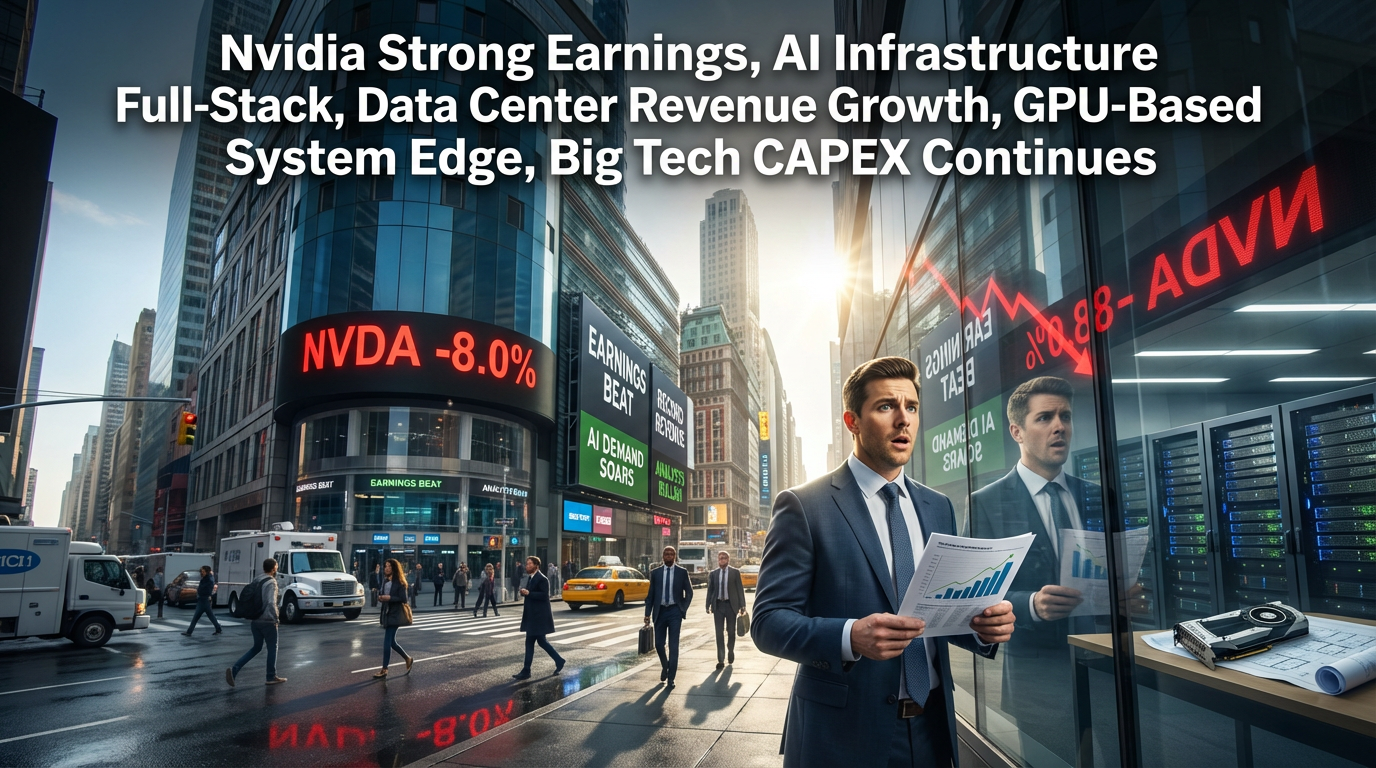
- Nvidia declined, extending pressure on AI bellwethers.
■ Netflix (+10% range): “walk-away premium” from an M&A process
- Netflix rose after exiting a Warner Bros. acquisition process, interpreted as avoidance of value-dilutive overpayment.
- Paramount faces higher leverage/integration risk if it proceeds aggressively.
- Longer-term, Netflix may retain a stronger strategic position by avoiding a high-risk transaction.
2) Three Drivers Re-ranked: PPI > Geopolitics (U.S.–Iran) > AI Risk
■ (1) PPI surprise: renewed inflation pressure signal
- PPI m/m: consensus 0.3% → actual 0.5%.
- PPI y/y: consensus 2.6% → actual 2.9%.
- Core PPI (ex food and energy) also exceeded expectations.
Why markets reacted
- PPI reflects upstream cost inflation that can pass through to CPI over time.
- This increases the probability of a “higher-for-longer” policy path and reduces the perceived room for rate cuts.
- Higher discount rates pressure long-duration growth valuations, particularly technology.
■ (2) U.S.–Iran tensions: headline risk, not necessarily the core equity driver
- Can raise short-term volatility.
- Market impact depends on duration, escalation probability, and whether it drives sustained oil-price increases.
- Could be treated as a secondary narrative rather than the primary catalyst.
■ (3) AI risk: bubble concerns exist, but real-world utility is reinforcing the counterview
- Users of agentic AI tools increasingly view the productivity step-change as tangible rather than speculative.
- Commentary from traditional investors has shifted toward labor substitution and structural adoption, reducing the credibility of purely “hype-cycle” interpretations.
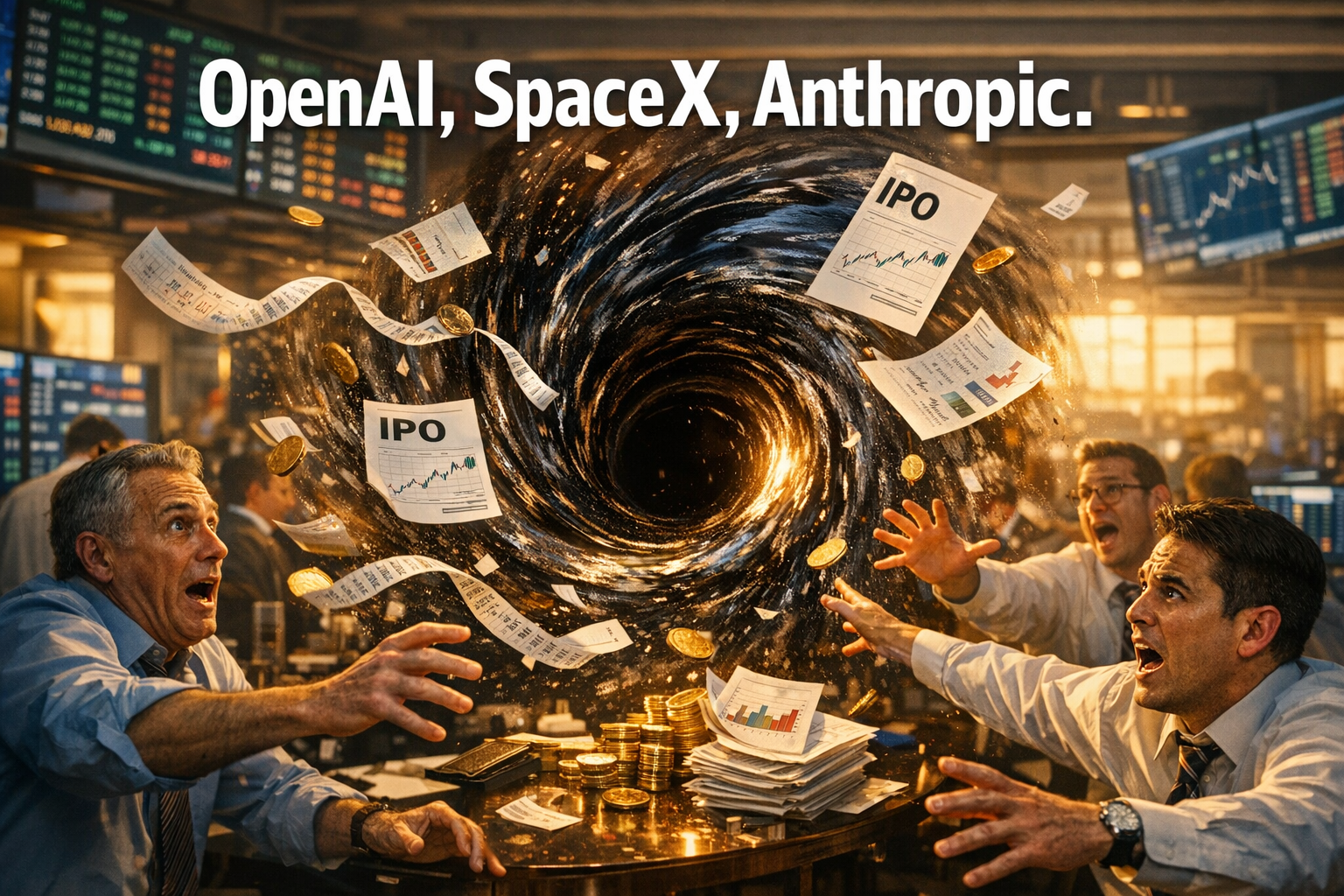
3) 2026 “Maximum Risk” Scenario: SpaceX + OpenAI + Anthropic IPOs as a Liquidity Shock
■ Core claim
The key risk is less about AI fundamentals and more about market liquidity and positioning.
■ Why this is structurally concerning
- IPOs are direct cash-demand events for the secondary market.
- Reference magnitude:
- Total capital absorbed by U.S. IPOs over the last ~10 years (since 2016): ~USD 469B.
- Estimated capital absorption if SpaceX, OpenAI, and Anthropic were to list in the same year: ~USD 430B.
- If comparable in scale, three listings could approach a decade’s worth of IPO cash demand within a single year, increasing the probability of a growth-equity liquidity drawdown.
■ Transmission mechanism (structural)1) Institutions and large funds raise cash by selling existing holdings to fund IPO allocations.2) Mega-cap technology can become a “funding source,” increasing sell pressure on core Nasdaq constituents.3) Post-IPO index inclusion and portfolio rebalancing can add volatility.4) If inflation and rates remain restrictive, valuation compression and liquidity absorption can coincide.
■ OpenAI funding and valuation references
- Large-scale financing referenced at ~USD 110B.
- Valuation discussed around ~USD 730B.
- Participants referenced include Amazon, Nvidia, and SoftBank.
Investor implications
- Reinforces AI as a capital-attracting sector while signaling potential future public-market liquidity demands.
- Risk sensitivity increases if IPO timing coincides with adverse rate, inflation, or recession dynamics.
4) OpenAI vs. Anthropic: AI Shifts from Industrial Competition to Defense/National Security
■ Event summary
- Anthropic has been characterized as cautious regarding defense use cases (e.g., surveillance and autonomous weapons).
- Reports indicate OpenAI may pursue Pentagon-related opportunities.
■ Surface issue: contract displacement
- Potential tension between Anthropic and defense stakeholders.
- OpenAI could capture opportunities if counterparties prioritize capability and deployment.
■ Core issue: AI as a strategic national asset changes the “bubble” framing
- Defense and government procurement budgets are typically less cyclical than commercial IT spend.
- If state actors treat AI capability as non-optional, demand for AI infrastructure (data centers, semiconductors, networks, power) can become structurally persistent.
- Valuation frameworks may increasingly incorporate long-duration public-sector demand and infrastructure capex, not only consumer or enterprise subscription revenue.
■ Competitive context
- Anthropic leadership includes former OpenAI personnel.
- Rivalry narratives may influence market perception, but procurement and deployment realities are the key drivers.
5) Nvidia Risk Monitoring: AI Demand May Persist While Winners Diversify
■ Key negative theme referenced
- Meta may expand use of Google TPU (in-house accelerators).
What this implies
- Growing AI infrastructure demand does not guarantee Nvidia’s share or pricing power remains unchanged.
- A multi-vendor strategy (GPU + TPU + in-house silicon) can reduce concentration premiums applied to a single supplier.
6) Korea Equity Market (KOSPI) Surge: Avoid Over-interpreting Foreign Net Selling
■ Global capital stance is evolving
- Strong inflows into Korea-related ETFs (e.g., EWY) have been referenced.
- Early-year inflow intensity has been notable.
■ Interpreting foreign net selling: use market-cap ratios, not absolute headlines
- “Record selling” headlines can be overstated when not normalized by market capitalization.
■ Concentrated selling in Samsung Electronics and SK Hynix: potential ETF/fund rebalancing
- Mechanical selling can occur due to position limits or index/fund constraints.
- This may reflect position sizing after rapid appreciation rather than a broad “country exit.”
■ Near-term caution: overheating indicators
- Large deviations from long-term moving averages (e.g., 2011-day) raise the probability of a corrective phase.
- In strong uptrends, sharp drawdowns can be triggered by political, tariff, or summit-related event risk.
■ Medium-to-longer-term framing
- Maintain awareness of near-term volatility while recognizing that the AI infrastructure cycle (semiconductors, power, equipment/materials, data center value chain) can support the broader investment case.
7) Key Takeaways Often Underemphasized
① 2026 risk may emerge from liquidity before recession
- Concurrent mega-IPOs (SpaceX, OpenAI, Anthropic) represent a structural liquidity absorption event.
- If inflation persists and policy easing is limited, the market’s capacity to absorb the shock is reduced.
② The next stage of the AI debate is government contracting, not consumer adoption
- Defense and public procurement can alter durability assumptions for AI investment.
- Valuation frameworks may expand from subscription revenue toward long-duration budget-driven demand and infrastructure capex.
③ Nvidia’s primary variable may be customer diversification, not AI demand collapse
- AI growth can continue while concentration declines, reducing valuation premia.
④ For KOSPI, distinguish passive outflows from rebalancing
- Treating all foreign selling as macro “Korea risk” can lead to suboptimal timing decisions.
8) Practical Investor Checklist
- Monitor whether PPI pressures translate into CPI persistence.
- If the Federal Reserve signals weaker rate-cut conviction, volatility in growth equities (notably Nasdaq) may rise.
- If 2026 mega-IPOs become likely, assume IPO windows could increase cash-raising sales pressure during the preceding 3–6 months.
- Even with sustained AI growth, beneficiaries may broaden beyond Nvidia to data centers, cloud, power infrastructure, and networking.
- For KOSPI, track overheating indicators (moving-average divergence) and event risks (summits, tariffs, geopolitics) as potential correction catalysts.
< Summary >
- The primary driver of the U.S. equity decline was PPI-driven inflation concern; geopolitics and AI risk were secondary.
- AI appears less consistent with a simple bubble narrative as agentic utility and defense contracting extend the duration of demand.
- A major risk is a potential 2026 liquidity absorption shock from concurrent IPOs of SpaceX, OpenAI, and Anthropic.
- For KOSPI, acknowledge short-term overheating and event risk, but interpret foreign selling through the lens of ETF/fund rebalancing and normalized metrics.
[Related Links…]
- https://NextGenInsight.net?s=IPO
- https://NextGenInsight.net?s=PPI
*Source: [ 내일은 투자왕 – 김단테 ]
– 2026년 증시의 가장 큰 위험은?