
● Oil Shock, Iran Threat, Credit Crunch
A simultaneous shock: oil spike, Iran risk, and private credit illiquidity — key points to monitor in global and Korean equities
Today’s market action reflected more than a routine pullback, with three risk factors converging:
- Middle East geopolitical risk
- A sharp rise in crude oil prices
- Liquidity stress in private credit
This is not merely an “oil is up” story. The implications extend from Nasdaq and the S&P 500 to inflation expectations, the interest-rate path, global growth, and potential spillovers into the KOSPI/KOSDAQ and semiconductors.
Key topics covered:
- Why WTI surged and why markets reacted sharply to statements related to Iran
- The economic shock transmission mechanism of a potential Strait of Hormuz disruption
- Why Trump-related remarks were interpreted as uncertainty rather than stabilization
- The core nature of the private credit liquidity risk now being monitored on Wall Street
- How these issues may transmit into U.S. equities, Korean equities, semiconductors, and growth stocks
- The primary risk-contagion channel that is often under-emphasized in mainstream coverage
1. Market snapshot: why equities sold off simultaneously
Three drivers:
- Renewed Middle East tension following hawkish statements from Iran
- A sharp rise in crude oil prices
- Private credit redemption limits raising broader concerns about financial-market liquidity
Markets effectively repriced “energy shock + liquidity stress + policy uncertainty” at the same time.
With WTI approaching the mid-90s, synchronized declines across the Nasdaq, Dow, S&P 500, and Russell suggested more than a technical correction and pointed to a reassessment of macro variables.
Korea was not insulated:
- Weakness in KOSPI overnight futures
- Relative underperformance in KOSDAQ
- Increased burden on semiconductors
This underscores Korea’s sensitivity to the combination of oil, U.S. tech, and the USD.
2. Risk factor #1: why markets reacted strongly to Iran’s hawkish message
Core message
Markets focused on a stronger implied willingness to disrupt the Strait of Hormuz.
The Strait of Hormuz is a critical chokepoint for global crude oil and LNG flows. Any perceived instability elevates supply-risk premia.
The latest signaling was interpreted not as a generic warning but as a credible escalation of pressure on energy transit, forcing markets to reprice supply-chain shock risk.
Why it was negative for risk assets
- Higher probability of oil supply disruption
- Potential escalation into broader Gulf-region risk
- Expanded uncertainty, including references to energy infrastructure and asset targeting
- Risk that a short-term event becomes a persistent conflict premium
Markets emphasized not whether a blockade had occurred, but that blockade risk re-entered price formation.
Key interpretation
Iran’s approach appears oriented toward imposing costs on the global economy via energy and logistics rather than seeking rapid military resolution. This makes the episode relevant as a cost-push shock with global macro implications.
3. Why the Strait of Hormuz matters: impact extends beyond oil prices
What a disruption implies
A disruption would increase:
- Crude prices
- Freight rates and marine insurance
- Refining margins and costs
- LNG procurement costs
This would lift global production costs and consumer prices.
First-order market impact
- Oil spike
- Weakness in net energy-importer equity markets
- Pressure on airlines, transport, chemicals, and consumer sectors
- Valuation pressure on growth equities
Second-order market impact
- Reacceleration risk in inflation expectations
- Reduced confidence in near-term rate cuts
- Corporate margin compression
- Lower real household purchasing power
- Higher stagflation concerns (slower growth with persistent inflation)
The key issue is not sector rotation within equities, but the risk that higher oil re-anchors inflation expectations, shifts the policy rate path higher for longer, and raises the discount rate applied to risk assets, particularly tech.
4. Oil outlook via scenario framing: one-month vs. three-month outcomes differ materially
Short disruption scenario
If the Strait-related risk fades within roughly one month, oil could retreat after a spike. Markets may frame it as a transitory event, allowing risk appetite to recover after volatility.
Prolonged disruption scenario
If conditions persist for three months or longer, scenario analysis includes potential for Brent to test materially higher levels (including extreme-tail estimates). A larger concern than the peak is a prolonged regime of elevated oil prices.
Sustained oil near or above ~100 would represent a structural macro headwind rather than a short-lived shock, with a larger burden on energy-import-dependent economies.
Implications for Korea
- Deterioration risk in the trade balance
- Higher input costs across industries
- Potential consumption slowdown
- Broader downward pressure on earnings estimates outside semiconductors
- Increased KRW depreciation pressure
Korean equities may become more sensitive due to the interaction of oil and FX, not only U.S. equity direction.
5. Risk factor #2: why Trump-related headlines were not interpreted as calming
Market interpretation
Key messaging themes:
- The U.S. is a major oil producer, reducing sensitivity to higher oil prices
- Priority placed on preventing Iranian nuclear capabilities
- Political framing around ending or “winning” the conflict
Markets treated these as political signaling rather than a credible de-escalation plan, increasing uncertainty.
Why it added risk premium
- Lack of a concrete path toward de-escalation
- Perceived underweighting of oil price risks
- Political incentives increase policy unpredictability
- Domestic political pressure from gasoline prices can amplify policy volatility
Markets prioritize implementable de-escalation mechanisms over rhetorical strength.
6. Risk factor #3: what is happening in private credit
Definition
Private credit refers to direct lending to corporates by non-bank institutions and funds. The market expanded rapidly in recent years amid changes in bank lending and the rate environment.
The key vulnerability is illiquidity: these assets are not readily tradable at transparent market prices.
Current issue
Reports indicated certain managers imposed redemption limits to manage investor outflows.
Markets view this as more than an operational detail because it signals potential constraints on cash access.
Why it matters
- Illiquid portfolios are structurally challenged by rapid redemptions
- Growing scrutiny of collateral quality and recovery assumptions
- Concentrations (including software-linked exposures) are being questioned
- More conservative valuation practices can accelerate loss recognition
What redemption limits signal
Redemption gating often indicates structural fragility rather than an immediate systemic event. In stress, managers may sell higher-quality liquid assets first to raise cash, leaving remaining investors with lower-quality residual portfolios—an adverse liquidity spiral.
7. How private credit stress can spill into equities
Core mechanism
“If you cannot sell what you want, you sell what you can.”
As redemption pressure rises, liquidity needs can drive sales of liquid instruments, affecting assets unrelated to the original stress.
Contagion pathway
- Rising redemption pressure in private credit
- Liquidation of liquid assets to raise cash
- Broader asset price declines
- Risk-off sentiment intensifies
- Credit spreads widen; financial conditions tighten
This is not a direct analog to 2008, but the liquidity-driven price-discovery problem can generate similar market tension.
Why it is more challenging now
Oil-driven inflation pressure combined with liquidity stress produces an unfavorable mix:
- Rate-cut expectations weaken
- Risk appetite declines
- Corporate funding costs rise
8. What to monitor next: U.S. equities vs. Korean equities
U.S. equity checkpoints
- Further moves in WTI and Brent
- Evidence of escalation in physical conflict or supply disruption
- U.S. long-end yields and breakeven inflation dynamics
- Additional private credit gating or liquidity headlines
- Magnitude of valuation compression in mega-cap tech
Nasdaq sensitivity remains high because higher inflation expectations can lift discount rates even when earnings are solid.
Korea equity checkpoints
- KOSPI overnight futures and foreign flow
- USD/KRW direction
- Relative strength of semiconductors
- Higher rate sensitivity in KOSDAQ growth stocks
- Earnings estimate revisions in oil-sensitive sectors
Korea’s export-heavy structure, high energy import dependence, and FX sensitivity can increase realized volatility, with KOSDAQ typically more exposed to liquidity and rate shocks.
9. Why this matters for the AI and next-cycle theme
AI is not insulated from macro
AI remains a structural theme, but timing and valuation are rate- and cost-sensitive.
AI infrastructure, semiconductors, cloud, and data-center beneficiaries may face near-term multiple pressure if oil-driven inflation risk lifts rates or delays easing.
Indirect impacts on AI-linked industries
- Higher data-center power costs
- Reduced capex risk appetite
- Higher discount rates under a higher-for-longer regime
- Potential moderation in extreme concentration toward mega-cap tech
- Increased dispersion: preference for visibility of cash flows within AI beneficiaries
Key selection factors may shift toward:
- Cash-flow strength
- Ability to fund capex through stress
- Resilience of margins under higher power and infrastructure costs
10. News-style recap: key developments
Global market recap
- Hawkish Iran-related statements increased Strait of Hormuz disruption risk
- Oil surged, raising inflation reacceleration concerns
- Major U.S. indices declined, led by tech weakness
- Trump-related messaging was interpreted as higher policy uncertainty, not de-escalation
- Private credit redemption limits renewed liquidity concerns
- Korean equities face broader pressure across KOSPI/KOSDAQ and semiconductors
Investor-relevant conclusion
The risk is not a single shock but the interaction of:
- Supply shock (geopolitics/oil)
- Financial liquidity risk (private credit)
- Uncertainty premium (politics)
The overlap can prolong instability.
11. Under-emphasized but critical points
Key point 1: the core issue is the interest-rate path, not oil alone
The primary market risk is not a specific oil level but the possibility that higher energy prices re-anchor inflation expectations and delay easing, resulting in “higher-for-longer” discount rates.
Key point 2: private credit headlines can be small initially but large in transmission
If the issue broadens, selling pressure may emerge first in liquid “healthy” assets due to cash-raising needs, amplifying cross-asset volatility.
Key point 3: Korea faces a dual shock via oil and FX
The U.S. is a producer; Korea is an importer. Oil increases input costs, and KRW weakness can raise imported inflation further, pressuring domestic and growth segments more directly.
Key point 4: AI leadership may depend on power and funding resilience
AI beneficiaries may increasingly be evaluated on power costs, infrastructure constraints, cash flow, and financing capacity, not only narrative momentum.
12. Practical positioning framework
Near-term
- Avoid overreacting to headline volatility
- Monitor oil, yields, and FX jointly
- Track liquidity signals: gating, widening credit spreads, funding stress
- Assume higher volatility for high-multiple KOSDAQ growth equities
Medium-term
- Duration of elevated oil is the key variable
- Confirm whether rate-cut expectations are being repriced
- Separate long-term AI/semiconductor direction from near-term multiple adjustment
- Do not assume semiconductor strength alone can stabilize the entire Korean market
Risk assessment requires reading the linkage:oil -> inflation -> rates -> liquidity.
< Summary >
Hawkish Iran-related signaling reintroduced Strait of Hormuz risk, driving a sharp rise in crude prices and increasing pressure on both U.S. and Korean equities.
With private credit redemption limits also in focus, this is not solely a geopolitical event; it combines inflation risk, uncertainty around the rate path, and potential liquidity tightening.
The critical risk is that the shock does not remain a short-lived oil spike, but evolves into prolonged high energy prices and broader financial-market transmission.
Even structural AI and semiconductor themes may require closer attention to power costs, financing conditions, and valuation sensitivity.
In this market, the primary framework is the transmission chain:oil -> inflation -> rates -> liquidity.
[Related articles…]
- International oil price surge: comprehensive implications for Korean equities (https://NextGenInsight.net?s=oil)
- AI semiconductors and data-center investment: key points for the next cycle (https://NextGenInsight.net?s=AI)
*Source: [ 내일은 투자왕 – 김단테 ]
– 증시의 쌍끌이 악재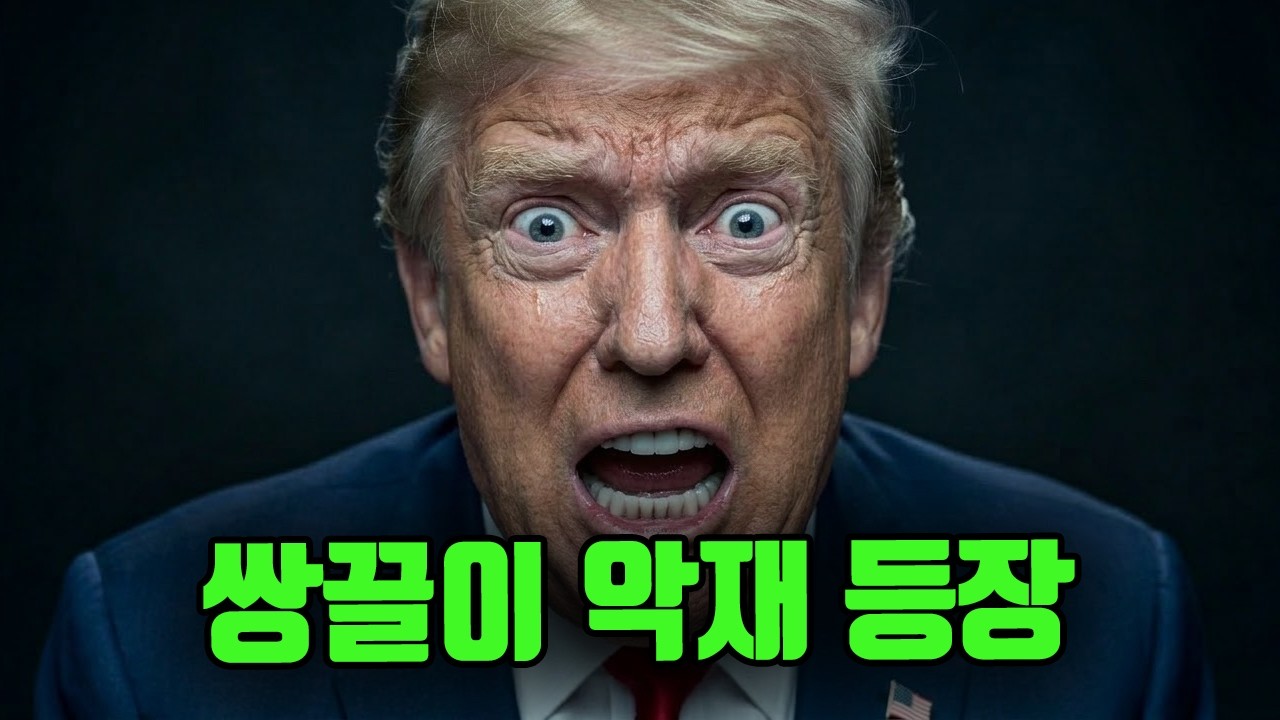
● Oil Shock, AI Power Grab
Is the “$200 Oil” Fear Overstated or Realistic? A Consolidated Investor Brief, Including Why the Nvidia–Palantir “AI Operating System” Shift Matters
The market is currently driven by two primary forces:
- Renewed oil and inflation pressure stemming from Middle East geopolitical risk
- A new competitive phase in AI infrastructure signaled by Nvidia and Palantir
This report focuses on (i) why US equities are weakening, (ii) why Federal Reserve rate-cut expectations are being repriced, (iii) why the latest AI collaboration implies a broader industrial re-rating beyond semiconductors, and (iv) what Korea-based investors should monitor.
Key under-covered issues include: why strategic petroleum reserve releases have not stabilized sentiment; why “AI operating system” competition is expanding from software into defense, manufacturing, and national infrastructure; and how these themes transmit into FX, inflation, and growth-stock valuation.
1. Market in one line: War risk is reintroducing inflation and rate uncertainty
US equities broadly declined.
- Dow, Nasdaq, S&P 500, and Russell 2000 all fell.
- The primary driver was a sharp rise in crude prices amid heightened Middle East uncertainty.
WTI moved into the mid-$90s; Brent approached levels consistent with a test of $100.
This is not confined to the energy sector. Higher oil prices affect aggregate growth, inflation, and equity valuation through input costs and consumer prices, potentially delaying monetary easing.
2. US Energy Secretary: “$200 oil is unlikely”—why markets discounted the message
The US Energy Secretary stated that a $200/barrel scenario is unlikely, intended as a stabilizing signal.
Market response remained cautious:
- Oil stayed firm
- VIX rose
Markets are prioritizing the probability and persistence of supply disruption over verbal guidance, with a particular focus on the risk of disruption around the Strait of Hormuz. In oil markets, physical risk and supply-path uncertainty can dominate policy signaling, especially as geopolitical timelines extend.
3. Why the release of 400 million barrels of strategic reserves did not reassure markets
A 400 million barrel release appears large, including coordinated actions among major consuming nations.
However, markets are treating it as a temporary buffer rather than a structural solution.
3-1. Scale in context: limited duration of coverage
Global oil consumption is approximately 100 million barrels per day.
- 400 million barrels equals roughly 4 days of global demand.
It can damp near-term shocks, but it is insufficient if geopolitical risk persists.
3-2. The core risk is the shipping corridor, not inventory levels
The issue is not solely total availability, but:
- origin
- transport route
- reliability of delivery
The Strait of Hormuz is a critical artery for global energy flows. Disruption affects freight and insurance costs, loading schedules, and refinery procurement behavior. Strategic reserves address aggregate volume; markets are reacting primarily to route and logistics risk.
4. Why higher oil prices matter: inflation re-acceleration and a shift in the rate path
Investors are less focused on the peak price than on duration.
A short spike is manageable; prolonged pricing above ~$90 is the key risk.
4-1. US gasoline prices transmit directly into consumption
The US is highly vehicle-dependent. Rising gasoline prices quickly raise perceived inflation and pressure household budgets, first impacting low- and middle-income consumers. This can translate into weaker domestic demand indicators.
4-2. Rate-cut expectations are structurally pressured
Energy-driven inflation increases the probability of firmer CPI prints and higher inflation expectations. This reduces the Fed’s flexibility to cut rates quickly. Repricing of policy easing typically weighs most on high-duration assets (growth and high-multiple equities), consistent with observed market weakness.
4-3. Tail risk: stagflation dynamics
The adverse combination is:
- rising prices
- slowing growth
- constrained monetary easing
This configuration compresses margins, weakens demand, and limits policy support—an unfavorable backdrop for equities.
5. Why Korea is more sensitive: FX, import prices, and manufacturing margins
Korea’s high energy import dependence increases macro sensitivity to oil shocks.
5-1. USDKRW upside risk and imported inflation
Geopolitical risk tends to strengthen the USD via safe-haven flows, lifting USDKRW. Since energy imports are USD-denominated, Korea faces a double impact:
- higher oil prices
- weaker KRW
5-2. Potential pressure on manufacturing profitability
With a high manufacturing share, Korea is exposed to energy and logistics cost increases. Chemicals, steel, transportation, airlines, and downstream industrials can see margin pressure. While refiners may show short-term relative strength, the economy-wide effect is higher input costs.
6. US market behavior: “war tape” often equals index weakness with selective leadership
Despite broad index declines, performance dispersion increased.
Theme-driven names tied to AI infrastructure and enterprise software narratives (e.g., Oracle, Palantir) showed relative strength, while financials and some semiconductors lagged due to combined effects of growth concerns and reduced risk appetite.
7. Nvidia–Palantir “AI operating system” collaboration: why it matters
The strategic implication is a transition from “model competition” to “operating system competition” in AI.
7-1. An “AI operating system” as a deployment and control platform
This is not incremental chatbot product news. It refers to an integrated environment to run AI across real-world systems in enterprises and government—defense, manufacturing, logistics, and energy.
Key requirements include:
- data connectivity
- security
- simulation
- decision support
- execution and command integration
In this framing:
- Nvidia provides accelerated compute and infrastructure
- Palantir provides data integration and the decision layer
7-2. The objective is platform standard-setting, not a single application
If an operating layer becomes embedded, it can host an expanding stack of applications, analytics, security modules, and vertical automation. This creates meaningful lock-in and ecosystem economics comparable to major platform models (e.g., OS and hyperscaler dynamics). The collaboration therefore signals a potential shift in profit pools within the AI infrastructure value chain.
7-3. Why Palantir is being repriced
Palantir’s historical strength in defense and public sector aligns with growing demand for operational AI: converting complex data into actionable decisions and execution workflows. In simplified terms, Nvidia supplies the compute substrate; Palantir connects it into institutional operations.
8. Why Nvidia GTC matters more: the market is shifting from raw performance to power and deployment capacity
Attention is increasingly on the real bottlenecks:
- power availability
- cooling
- networking
- data center build speed
- enterprise adoption and implementation capacity
8-1. The center of gravity in AI capex is changing
GPU availability remains important, but the decisive factor is now installation at scale:
- power architecture
- network equipment integration
- deployment timelines
As a result, the AI theme is expanding to data centers, power equipment, cooling, optical networking, and potentially power generation (including nuclear and gas turbines).
8-2. The core message: AI is a physical infrastructure buildout
The investment implication is that AI is not purely digital. It requires electricians, mechanical systems, construction capacity, cooling, and grid integration. This broadens relevant exposure beyond single-chip narratives.
9. Beyond semiconductors: AI is becoming a national competitiveness stack
This development is not purely a technology headline. As AI integrates into defense, energy management, supply chains, government operations, and industrial automation, it becomes part of national capability. This supports the “sovereign AI” trend: building AI on domestic data and infrastructure rather than relying exclusively on external platforms.
10. Why Alibaba re-enters the China AI narrative
In the US, focus is on Nvidia and Palantir; in China, Alibaba is being revisited due to a perceived full-stack profile spanning:
- chips
- cloud
- models
- applications
Across both markets, the strategic direction is converging: AI competition is shifting toward control of the full stack rather than isolated model benchmarks.
11. Bitcoin rebound: why caution persists
Bitcoin recovered toward $70,000, but some research views the move as technical rather than fundamentally driven.
Key constraints:
- rate-cut expectations are being pushed out due to oil-driven inflation risk
- risk appetite is unstable amid geopolitical uncertainty
A short-term rebound does not, by itself, confirm a durable trend reversal.
12. Key points (condensed)
12-1. Oil and conflict
If Middle East risk persists, oil retains upside pressure. Markets are reacting more to supply-disruption probability than to official reassurance.
12-2. The Fed and rates
Higher oil risks re-accelerating inflation and delaying easing, a headwind for growth and high-multiple equities.
12-3. US equities
Indices weakened, while AI infrastructure and “operating layer” exposures showed selective strength. Market attention is shifting from semiconductors alone to the AI buildout ecosystem.
12-4. Nvidia–Palantir
The collaboration should be read as an enterprise/government AI operating-layer land grab with potential platform economics.
12-5. Korea macro sensitivity
Korea faces simultaneous exposure to higher oil, a stronger USD, and higher imported inflation.
13. Under-covered but decision-relevant points
13-1. The oil risk is duration, not the headline number
Markets focus on $100 vs. $200, but the more damaging scenario is oil holding near elevated levels for an extended period, pressuring inflation, rates, consumption, and margins.
13-2. Strategic reserve releases do not fix structural market frictions
Reserves can add volume but do not resolve route instability, shipping constraints, insurance cost spikes, or supply-chain reconfiguration.
13-3. “AI operating system” competition should be monitored alongside industrial and defense policy
The relevant catalysts may increasingly be government budgets, sovereign cloud initiatives, smart manufacturing programs, energy management deployments, and supply-chain modernization—not only earnings releases.
13-4. The AI profit pool is shifting toward power, deployment, and operational integration
Monetization is increasingly tied to power infrastructure, data center capacity, industrial operating layers, security, and automation execution—not only model intelligence.
14. Investor checklist
14-1. Near-term
Monitor:
- WTI and Brent stabilization in the $90–$100 range
- escalation headlines regarding the Strait of Hormuz
- acceleration in US retail gasoline prices
14-2. Medium-term
Track:
- changes in Federal Reserve tone
- repricing of rate-cut expectations
- signs of US consumption slowdown
- downward revisions to corporate earnings expectations
14-3. AI sector
Focus on:
- GTC messaging on power, cooling, optics, and data center deployment
- evidence that “operating layer” companies translate partnerships into contracts and revenue
15. Conclusion
The market is at an intersection of macro tightening risk and structural AI investment momentum.
- Oil is reintroducing inflation and rate uncertainty.
- AI remains a long-duration growth driver, but leadership may shift toward firms that control operational platforms and infrastructure deployment.
For Korea-based investors, the key is mapping transmission channels across oil, inflation, rates, USDKRW, US equity valuation, and the evolving AI infrastructure stack.
< Summary >
Middle East risk lifted crude prices, increasing inflation risk and pushing out rate-cut expectations. Strategic reserve releases may reduce short-term stress but do not resolve route and logistics risk. Korea is more exposed due to the combined effects of higher oil and a stronger USD. Nvidia–Palantir signals a shift from model competition to enterprise/government AI operating systems, with monetization increasingly tied to power, data centers, operational integration, and field deployment. Key market variables: crude oil, inflation, rates, US equities, and AI infrastructure.
[Related Posts…]
- https://NextGenInsight.net?s=oil
- https://NextGenInsight.net?s=AI
*Source: [ Maeil Business Newspaper ]
– 美에너지부 장관 “유가 200달러 가능성 낮아”ㅣ엔비디아·팔란티어 합작 ‘AI 운영체제’ 발표ㅣ홍키자의 매일뉴욕