● Sticky Inflation, Delayed Cuts, Shadow Credit Crack, Oil Shock, AI Debt Trap
Key issues more material than the PCE deceleration: diminished expectations for Fed rate cuts, why private credit risks are not yet a “financial crisis,” and how Middle East risk, crude oil, and AI capex connect in one macro chain.
This report consolidates: (i) interpretation of US PCE and core inflation, (ii) the shifting expected policy-rate path, (iii) private credit market structure and issues related to Blue Owl and BDCs, (iv) the impact of Middle East conflict and crude oil on inflation and asset prices, and (v) AI data-center investment and capital flows linked to the next industrial cycle.
The objective is to explain why markets have been relatively indifferent to the PCE print while becoming more sensitive to private credit risk.
1. US PCE: headline was benign, but the signal was not
The headline data did not materially surprise markets.
Headline PCE inflation printed at 2.8% versus 2.9% expected.
However, the key market focus remains core PCE.
Core PCE was around 3.1%, indicating persistent underlying inflation pressures even excluding volatile food and energy components.
This matters because the Federal Reserve typically requires clearer evidence of sustained disinflation before initiating rate cuts. Current data suggest conditions are “less negative,” not “sufficiently improved.”
2. Three takeaways markets drew from this PCE release
First, core stickiness mattered more than headline deceleration.
Headline inflation moderated slightly, but core inflation remained firm, consistent with continued pressures from services, wages, housing, and structural price dynamics.
Second, the data largely precede a fuller pass-through from Middle East-driven oil increases.
PCE is backward-looking with lags. With crude oil rising again due to geopolitical developments, upcoming inflation prints may reflect greater energy-related pressure.
Third, rate-cut expectations weakened further.
From the Fed’s perspective, the incentive to pivot quickly toward easing diminished. Markets have pushed expected cuts further out, and longer-term Treasury yields have reflected that reassessment.
3. Federal Reserve and policy rates: the question is shifting from “when” to “whether”
The key change is that rate cuts are no longer treated as a base-case inevitability.
Previously, markets debated the number of cuts; now, the focus is whether meaningful easing is feasible this year.
If crude oil remains elevated, the Fed is likely to remain cautious. Higher oil can raise not only gasoline prices but also transportation costs, production costs, and inflation expectations.
Under that setup, policy bias shifts toward “higher for longer,” and in tail scenarios, markets may discuss the possibility of renewed tightening risk, even if hikes are not the central expectation.
4. Middle East conflict and crude oil: the dominant variable is oil, not the latest PCE print
The principal macro swing factor is how long geopolitical risk keeps crude oil supported.
Markets are repricing daily based on perceived escalation versus de-escalation, contributing to higher cross-asset volatility.
- Higher war-risk premium → higher crude → higher inflation risk → reduced rate-cut expectations → pressure on growth equities and risk assets
- Lower war-risk premium → softer crude → improved liquidity expectations → reversion toward soft-landing narratives
In this regime, macro outcomes are increasingly driven by the interaction of geopolitics, inflation, and monetary policy rather than economic data alone.
5. Why private credit has become a core risk factor
The more material risk focus is private credit rather than the PCE release.
Private credit refers to non-bank lending to corporates, often targeting private companies, startups, middle-market firms, and sectors such as healthcare and software.
These loans typically carry higher yields and higher risk than traditional bank lending.
In recent years, demand tied to AI, data centers, healthcare, and technology supported rapid expansion of private credit. Large managers such as Blue Owl, Blackstone, KKR, and BlackRock increased their footprint.
6. Private credit market structure: two primary channels
Private credit capital is generally deployed via two structures:
1) Private credit funds
Managers raise committed capital and originate direct loans, earning higher interest income.
2) BDC structure
BDCs (Business Development Companies) are publicly traded vehicles that raise capital and provide loans and/or investments to middle-market and private companies.
A key concern is that banks have become indirectly exposed. Rather than lending directly to higher-risk private borrowers, banks may provide funding to private credit managers or related entities, creating potential transmission channels if losses rise.
7. What is occurring in private credit now
The question is not whether the market has collapsed, but whether stress is accumulating quietly.
A frequently cited concept is “shadow default”: loans appear current through extensions or amendments, while underlying repayment capacity deteriorates.
A prominent indicator is rising PIK (Payment in Kind) usage. This typically signals that borrowers cannot service obligations in cash and are capitalizing interest or paying via additional claims, implying weakening operating cash flow.
Another signal is increased redemption pressure. Rising redemption requests can force liquidity management actions that may amplify price declines and tighten credit conditions.
8. Why private credit stress has increased: the leverage embedded in AI capex
AI and the broader industrial investment cycle are typically framed around data-center buildouts and infrastructure growth. From a capital-markets perspective, the associated leverage is also relevant.
As funding flows into AI infrastructure, upfront capex and debt burdens can increase, particularly for private firms without stabilized earnings. These entities may rely on higher-cost private credit.
This structure can appear sustainable during growth upcycles. However, higher rates, macro uncertainty, and oil-driven cost pressure can raise both financing costs and operating expenses, turning portions of the “growth” complex into a credit-risk complex.
AI-linked investment therefore requires differentiation between structurally advantaged beneficiaries and leveraged peripheral firms that are more sensitive to tight financial conditions.
9. Is this a financial crisis? Current assessment: credit deterioration, not systemic collapse
Private credit deterioration appears to be increasing, reflected in volatility in manager equities, weaker BDC pricing, and heightened liquidity concerns.
However, equating this immediately to a 2008-style global financial crisis is premature for three reasons:
First, while bank exposure exists, the structure is not clearly positioned for an abrupt, system-wide failure.
Second, realized impairment may be less broad-based than implied by market anxiety.
Third, the Fed and regulators are aware of the risk and are monitoring it.
The balanced interpretation is that private credit risk warrants attention, but current evidence is not sufficient to conclude a systemic crisis.
10. Under-discussed points with high relevance
1) The next inflation prints matter more than this PCE.
This release likely precedes fuller oil pass-through. Upcoming CPI, PCE, and inflation expectations will be more informative.
2) Private credit is an AI-era financing-structure issue, not a standalone niche risk.
Investors should track who is borrowing, at what cost, and with what cash-flow profile behind AI, healthcare, and technology capex.
3) Geopolitics are being priced faster than macro data.
Markets can move more on conflict headlines than on scheduled releases, requiring an integrated framework beyond monetary policy.
4) Credit deterioration and financial crisis are distinct.
Conflating the two can lead to overly pessimistic positioning.
11. Practical checklist for investors
US macro outlook
Rate-cut expectations have weakened. Portfolios should consider “higher for longer” scenarios alongside easing narratives.
Inflation and commodities
Sustained crude strength can revive inflation concerns, creating headwinds for bonds and long-duration growth equities.
Credit markets
Monitor non-bank stress areas such as private credit, commercial real estate, and regional financial institutions. The current phase resembles the gradual emergence of weak links rather than immediate systemic failure.
AI trend exposure
The AI growth thesis remains intact, but differentiation is required: AI infrastructure beneficiaries versus leveraged AI-adjacent firms reliant on high-cost funding.
12. One-line conclusion
The latest US PCE primarily reinforced existing concerns that rate cuts may be delayed, while private credit represents a less visible but potentially more consequential volatility driver. These dynamics connect through Middle East-driven crude oil, monetary policy constraints, non-bank credit conditions, and AI-related funding structures.
< Summary >
Headline PCE softened, but core inflation remained persistent. Fed rate-cut expectations weakened, and Middle East-related crude oil strength may reintroduce inflation pressure in upcoming data. Private credit expanded alongside AI, healthcare, and technology financing needs, but higher rates and uncertainty are increasing signs of stress. The current environment appears closer to credit deterioration than systemic crisis. The critical framework is the combined interaction of crude oil, monetary policy, private credit, and AI financing channels.
[Related…]
- US PCE and Federal Reserve policy-rate outlook: key points (https://NextGenInsight.net?s=PCE)
- AI data-center investment and shifts in the global macro outlook (https://NextGenInsight.net?s=AI)
*Source: [ 경제 읽어주는 남자(김광석TV) ]
– [LIVE] (1)미국 PCE 심층분석 (2) 사모대출 위험 분석 [즉시분석]
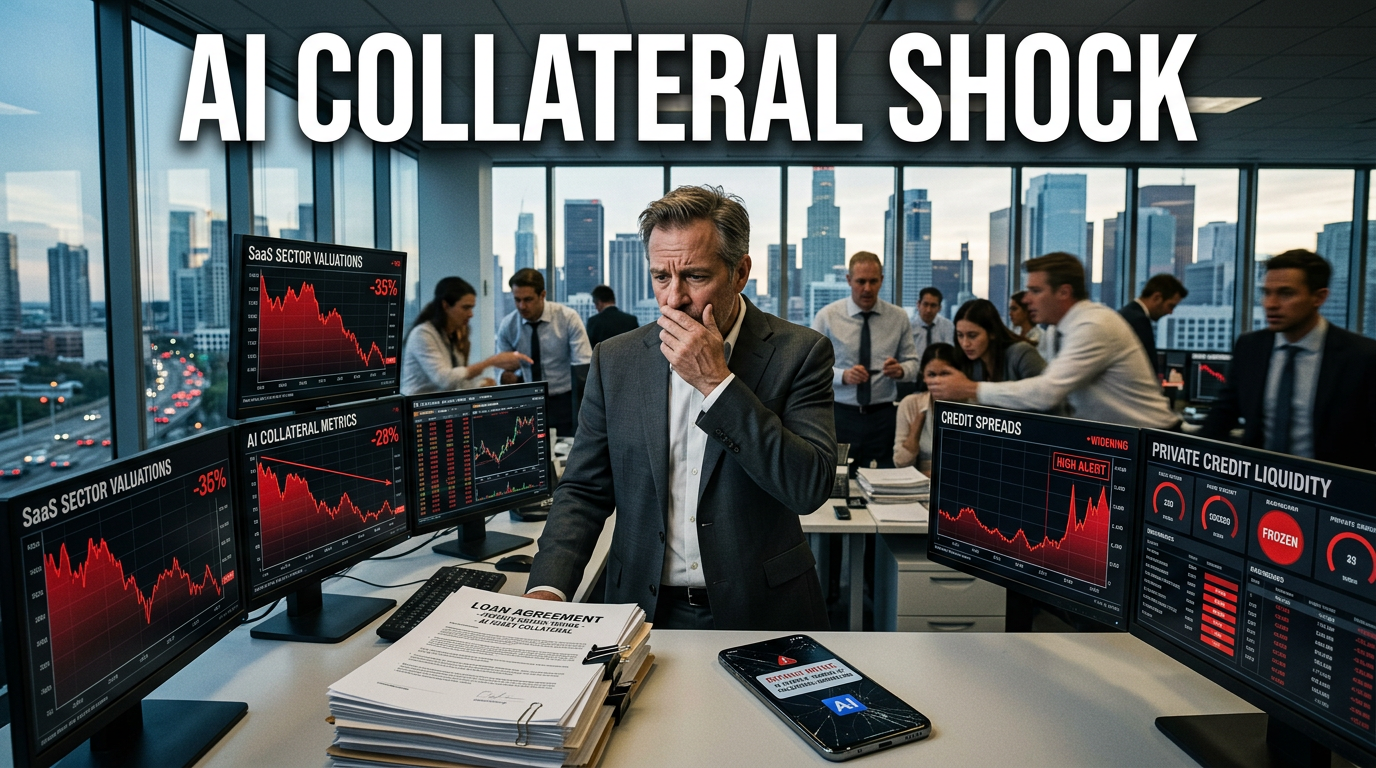
● Private Credit Meltdown, AI Collateral Shock, 2008 Echo
Potential 2008-Style Deja Vu? A Consolidated Brief on Private Credit Redemption Suspensions Involving Blackstone, BlackRock, and Morgan Stanley
The market focus can be summarized in three points:
1) A sequence of redemption gates and suspensions in private credit is undermining confidence across broader financial markets.
2) The core exposure is not limited to real estate; it includes software-company lending, recurring-revenue-based collateral, and valuation frameworks being challenged by AI adoption.
3) While the headlines center on individual funds, the underlying drivers are structural: global liquidity, interest rates, bank balance-sheet conditions, and AI-related shifts are interacting.
This report summarizes the developments spanning Blue Owl, Blackstone, BlackRock, Morgan Stanley, JPMorgan, and Deutsche Bank, assesses similarities and differences versus 2008, distinguishes exaggerated narratives from material risks, and highlights a key under-discussed issue: AI-driven disruption may be weakening collateral values in parts of private credit.
1. What is happening now: key timeline and market signals
Recent Wall Street attention has focused on large private credit and alternative-asset managers facing difficulty meeting redemption requests in full.
Private funds are inherently illiquid, but the distinction between “low liquidity” and “inability to return capital on demand” is material. Investor sentiment deteriorated rapidly because multiple large institutions showed similar patterns concurrently.
- Blue Owl Capital: redemption suspension concerns acted as an initial catalyst for market risk aversion
- Blackstone: redemption requests exceeded internal thresholds, highlighting the need for defensive liquidity management
- BlackRock: redemption limitations in certain vehicles reinforced the view that scale does not guarantee liquidity resilience
- Morgan Stanley: partial payments on redemptions drew scrutiny as an adverse liquidity signal
- JPMorgan: more conservative collateral valuation for software-related exposures tightened system-wide liquidity conditions
- Deutsche Bank: classification of private credit as a key risk amplified concerns across European financial institutions
The primary risk is not isolated negative news but a broader reassessment of “who may be next,” which can impair market functioning via confidence effects.
2. Private credit and redemption gates: simplified mechanics
Private funds typically serve a limited investor base (institutions and UHNW individuals) with lighter disclosure requirements than public vehicles. In risk-off regimes, these features can magnify information asymmetry and liquidity stress.
A redemption is an investor request to withdraw capital. Private credit portfolios often hold assets that cannot be liquidated quickly without price concessions, including:
- private loans to non-public companies
- software-company private lending
- real-estate-backed credit instruments
When redemptions surge, managers tend to sell the most liquid or highest-quality assets first. The remaining pool can become increasingly illiquid and lower quality, potentially weakening the vehicle’s capacity to meet subsequent redemptions.
3. Why private credit is destabilizing now
The current stress reflects a combination of three factors:
3-1. Prolonged high interest rates are weakening leveraged structures
Private credit depends on leverage and confidence in future cash flows. Higher policy rates sustained over time raise borrowing costs and can render previously acceptable capital structures fragile. This dynamic is linked to broader global liquidity withdrawal.
3-2. Reported valuations appear stable, while executable market values may be lower
A defining feature of private markets is the absence of continuous price discovery. Unlike public equities, valuation marks can adjust slowly. This increases the probability that realized sale prices during stress differ materially from carrying values, elevating investor uncertainty.
3-3. AI adoption is challenging collateral assumptions for software lending
A critical exposure is lending against SaaS-style recurring revenue, historically treated as stable and predictable. Rapid diffusion of generative and agentic AI increases substitution risk for certain software services, potentially shortening the durability of subscription revenue. If the perceived quality of recurring revenue deteriorates, collateral values, loan performance, and fund-level liquidity dynamics can be adversely affected.
4. Institution-by-institution: what each case signaled
4-1. Blue Owl: an early confidence shock
Redemption suspension concerns increased investor skepticism regarding cash buffers and liquidity planning. The market reaction reflected perceived confidence impairment rather than a narrow earnings issue.
4-2. Blackstone: scale does not eliminate liquidity constraints
Elevated redemption pressure at a flagship alternative manager signaled a broader reassessment of liquidity across asset classes. Where SaaS-related exposures exist, AI-driven uncertainty around long-duration cash flows becomes a direct valuation and liquidity variable.
Manager support actions (e.g., internal capital commitments) can stabilize sentiment near term, but they also indicate heightened sensitivity of the funding profile.
4-3. BlackRock: system-risk narrative amplification
Given BlackRock’s scale, redemption limitations in any segment can carry outsized signaling impact. The market focus tends to shift from loss magnitude to underwriting discipline and risk-control effectiveness, particularly if diligence or fraud allegations arise in specific investments.
4-4. Morgan Stanley: partial redemption payments as a negative signal
Partial payments are often interpreted as tighter liquidity management capacity. Such signals can accelerate self-reinforcing redemption behavior, even if underlying asset quality is not yet fully impaired.
5. JPMorgan’s core warning: collateral revaluation and refinancing risk
A key transmission mechanism is not the redemption headline itself but the moment large lenders reassess collateral more conservatively.
Illustratively, if recurring-revenue collateral previously supported an 80 loan against a 100 valuation, a shift to a 50 valuation can impede refinancing, increase maturity-wall stress, and propagate pressure to funds holding the exposure. The risk is a liquidity contraction initiated by refinancing constraints rather than immediate realized losses.
6. Why the concern extended to Germany and Deutsche Bank
The issue is global because private credit exposures can be connected—directly or indirectly—to bank balance sheets. Deutsche Bank identifying private credit as a core risk suggests European institutions are treating the asset class as system-relevant rather than peripheral.
This raises a structural question: if the same underlying risks sit across private funds and regulated banks, analyzing only one side may understate aggregate vulnerability, increasing volatility through uncertainty about where exposures reside.
7. Similarities to 2008 and key differences
7-1. Similarities
- rising doubt about the true value of underlying collateral
- illiquid assets may appear stable under mark-based accounting until forced sales occur
- under redemption or funding stress, higher-quality assets are sold first
- localized events can evolve into system-level confidence shocks
- linkages between banks and non-bank institutions can surface late in the cycle
7-2. Differences
- the central risk is not residential mortgage credit but private credit with software-related lending components
- AI-driven industry disruption is a contributing catalyst to valuation and collateral reassessment
- regulators and major banks may react faster due to post-2008 frameworks and experience
- a targeted dislocation in specific asset segments and managers appears more plausible than an immediate, broad-based crisis
A direct repeat of 2008 is not a base case; however, a partial re-emergence of confidence-driven stress mechanisms within selected asset classes is a material risk.
8. Under-discussed drivers
8-1. The core issue is not redemptions alone; it is AI altering collateral durability
Much coverage concentrates on redemption suspensions and 2008 comparisons. A more central question is why software-linked private lending is under pressure now. AI is compressing barriers to entry and pricing power in parts of software, reducing confidence in long-duration subscription cash flows and forcing a re-rating of enterprise value and collateral.
8-2. Hidden software exposure may be larger than classifications indicate
Portfolios categorized as consumer, services, industrials, or chemicals can still embed software-driven business models. In stress regimes, ambiguity about where exposures sit and how large they are can be more destabilizing than disclosed losses.
8-3. Early failure mode: refinancing, not immediate loss recognition
Dislocations often begin with refinancing failures, conservative collateral marks, and maturity-driven cash gaps, rather than with large, immediately realized losses. Small reported losses can coincide with severe liquidity effects once funding access tightens.
9. Investor considerations
9-1. For financials, prioritize balance-sheet composition over headline multiples
For banks and asset managers, evaluate:
- private credit exposure concentration
- software-lending share and collateral structure
- open-end vs closed-end redemption design
- explicit liquidity backstops and gating provisions
9-2. Favor clarity of cash flows over thematic narratives
Increased uncertainty typically rewards durable cash generation and lower leverage. Within AI-related equities, separate companies with demonstrated profitability and cash flow from those driven primarily by valuation narratives.
9-3. Energy and commodities as macro hedges (with execution discipline)
In regimes combining geopolitical risk and growth concerns, selective energy/commodity exposure can function as a hedge. Avoid momentum-driven entry following sharp short-term moves; prioritize diversification and risk budgeting.
10. Key indicators to monitor
- quarterly changes in redemption rates across private credit vehicles
- whether large managers incorporate material valuation markdowns
- delinquency trends in software-linked lending books
- US macro data and the policy-rate path
- degree of risk-management tightening among European banks, including Deutsche Bank
- measurable AI impact on SaaS margins and net revenue retention
- likelihood of indirect liquidity support via government or central-bank channels
11. Conclusion
The current environment does not justify a definitive 2008-scale crisis call; however, it is revealing vulnerabilities in private credit liquidity management and in collateral frameworks tied to software recurring revenue. The intersection of rates, liquidity, confidence, and AI-driven business-model disruption warrants close monitoring.
< Summary >
- A sequence of redemption gates and suspensions in private credit is increasing market stress.
- Developments involving Blue Owl, Blackstone, BlackRock, and Morgan Stanley are better viewed as liquidity-and-confidence signals than isolated idiosyncratic events.
- The core exposure extends beyond real estate to software-related private lending and AI-driven collateral revaluation.
- Similarities to 2008 exist in the confidence and liquidity transmission mechanism, but the structure differs; targeted dislocations are more plausible than an immediate systemic crisis.
- Investors should reassess portfolio sensitivity to liquidity tightening and valuation resets, emphasizing cash-flow quality, liquidity terms, and exposure mapping.
[Related Articles…]
- https://NextGenInsight.net?s=AI
- https://NextGenInsight.net?s=interest-rates
*Source: [ 월텍남 – 월스트리트 테크남 ]
– 2008년과 놀랍도록 닮았다…역사는 반복되는가?