● Trump Hint, Oil Shock, Fed Panic, AI Credit Bomb
A Strong Trump Signal: Can It Stabilize a U.S. Equity Market at the Brink? Key Themes This Week Across Oil, the Strait of Hormuz, the FOMC, and AI-Driven Financial Risk
This week’s market cannot be understood through a single “Middle East conflict” headline. Four variables matter most:
1) Where crude oil prices peak and reverse
2) Whether U.S. equities hold or break near long-term trend support
3) The likelihood of stronger equity-stabilization signaling from Trump
4) Under-discussed but potentially larger risk: private credit and financial-sector stress
These factors intersect with the FOMC, NVIDIA GTC, Micron earnings, U.S.-China engagement, USD strength, and AI-related credit fragility.
1. Weekly Market Summary: “Oil matters more than war headlines”
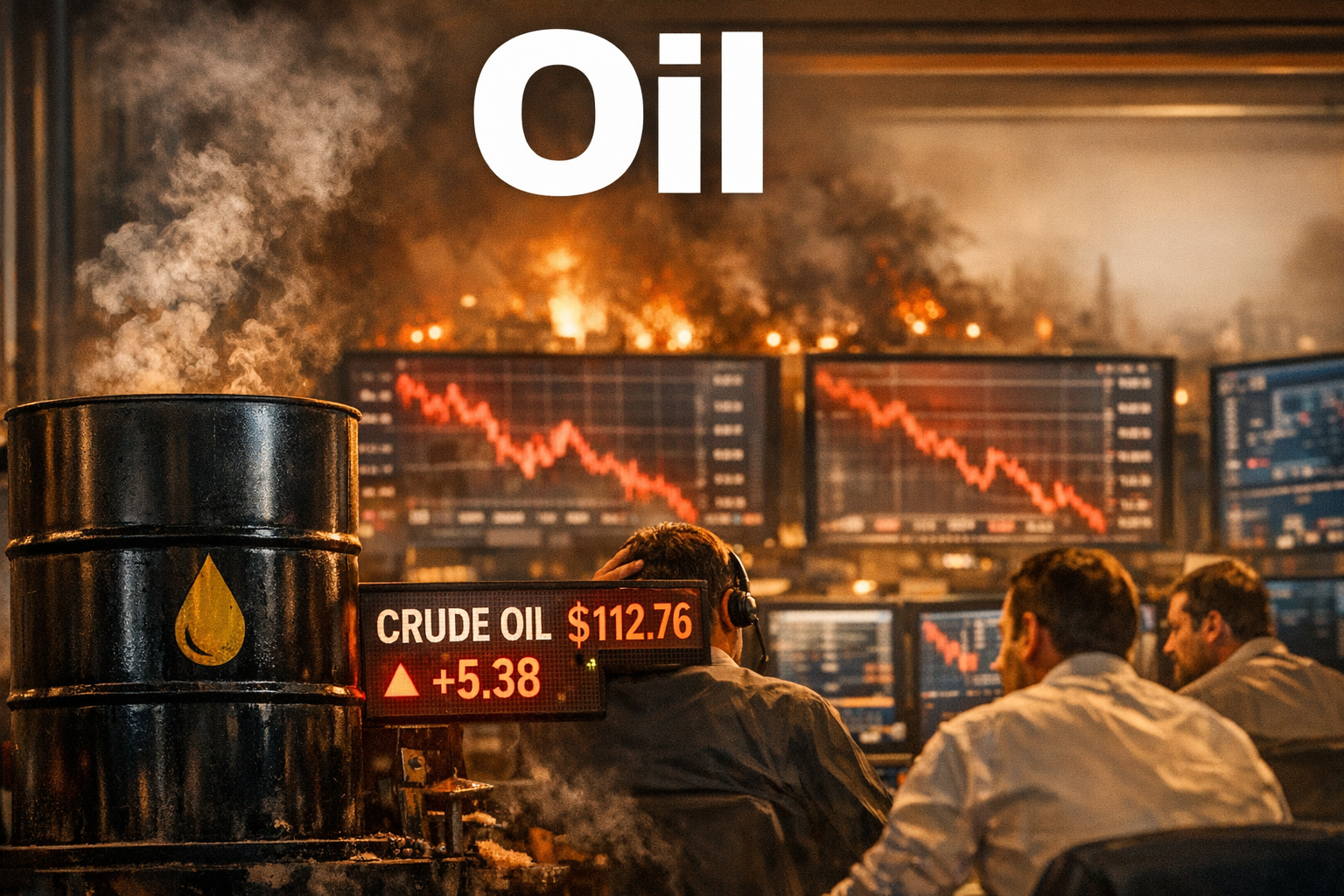
The most important price for near-term risk is WTI crude, not the Nasdaq or the S&P 500.
Markets ultimately assess whether geopolitical headlines translate into a real supply shock, and they do so via oil prices.
- Negative headlines with easing oil are interpreted as limited supply impact.
- Positive headlines with rising oil indicate persistent underlying risk.
Near-term U.S. equity lows are therefore highly sensitive to oil. Historically, in geopolitical shocks, oil often peaks first, then equities form a low.
2. Why higher oil pressures U.S. equities
Oil strength affects equities through three channels:
2-1. Corporate margin pressure
Higher fuel and transport costs lift input costs across logistics, manufacturing, airlines, and industrials, compressing margins and lowering earnings expectations.
2-2. Inflation re-acceleration
Energy price increases can re-tighten inflation conditions, reducing the probability and timing of Federal Reserve easing.
2-3. Risk-off rotation
Oil spikes typically coincide with geopolitical risk, supply disruptions, and growth concerns. Capital rotates away from high-beta growth toward energy, cash, defensives, and USD exposure. This aligns with recent relative weakness in growth and strength in energy-linked assets.
3. Middle East focus: Kharg Island may matter more than the Strait of Hormuz
While coverage emphasizes potential disruption in the Strait of Hormuz, the more direct supply risk may be Kharg Island, a critical hub for Iranian crude processing and exports.
Kharg Island functions as the central export node: pipeline flows from onshore fields consolidate there for loading into global markets. The Strait is a chokepoint; Kharg is an export system core.
3-1. Trump’s messaging appears more hawkish than it seems
The U.S. signaled that strikes targeted military facilities while avoiding direct hits to oil infrastructure. This can be read as conditional escalation capacity:
- “Oil infrastructure has not been targeted yet.”
- “Further disruption could change the next set of options.”
For markets, this increases uncertainty and supports a scenario where oil becomes a leverage point in a prolonged tension cycle.
3-2. Iran’s approach: selective control rather than full blockade
Recent signals suggest a preference for selective restrictions over indiscriminate closure, potentially allowing favored routes or counterparties. Selective constraints can sustain uncertainty longer than a binary blockade decision, increasing volatility risk.
4. Why Trump urged key importers to “send ships”
Trump singled out major energy importers (including South Korea, Japan, the U.K., France, and China) to increase participation in securing shipping routes.
Beyond alliance framing, this implies limits to unilateral U.S. burden-sharing in maritime security.
4-1. The market signal
Requesting broader convoy participation while asserting control suggests the U.S. does not assume rapid de-escalation. Oil volatility may therefore persist.
For South Korea, elevated Middle East risk can transmit via FX, import prices, refiners and chemicals, and broader logistics costs.
5. Why the U.S. can benefit during conflict-driven oil shocks
The U.S. is a leading energy producer. Trump’s messaging highlights that higher oil prices can support U.S. energy industry profitability.
Structural chain:
- Middle East instability increases supply-chain uncertainty.
- Crude prices rise.
- U.S. crude, LNG, and refining firms capture windfall effects.
- Energy sector performance in U.S. capital markets improves.
This is not a macro-neutral outcome, but it can produce strong relative gains within specific sectors.
6. Observable beneficiaries: U.S. energy equities and ETFs
Energy leadership has been visible, including major integrated producers and sector ETFs. Berkshire Hathaway-aligned exposures such as Occidental and Chevron have drawn renewed attention amid the oil-driven regime.
6-1. Why Buffett-style positioning is being re-rated
Accumulation of energy exposure before the current shock functions as a portfolio hedge when growth factors weaken. The key is portfolio construction: energy and defensives can reduce drawdown during growth-led corrections.
7. Tail-risk sequence: food may follow energy
In prolonged supply shocks, commodity transmission often progresses:
1) Gold / safe havens
2) Energy
3) Industrial commodities
4) Food and agriculture
Early movement in fertilizers, grains, seeds, and agriculture ETFs can reflect forward-looking inflation risk.
7-1. Why food inflation amplifies recession risk
Food inflation is highly visible to consumers and can quickly compress real demand. If margin pressure and demand deterioration coincide, markets begin to price recession probability more directly.
8. Technical inflection: why the 200-day moving average matters
The 200-day moving average is a widely used proxy for long-term trend.
- Holding above it supports “pullback within an uptrend.”
- Breaking below it increases probability of a regime shift toward a downtrend.
8-1. Why this week is pivotal
Geopolitical shocks often see lows and stabilization attempts within roughly 2–3 weeks. As the current episode approaches that window, failure to see oil stabilization and equity support near long-term trend lines could extend the correction.
9. Fear gauges: elevated but not necessarily capitulation
Risk sentiment is high, but historical major lows often require broader capitulation. Current conditions may still include residual optimism tied to policy expectations, the FOMC, and AI themes.
9-1. Common features of durable lows
- Buying becomes socially and institutionally discouraged
- Positive news fails to lift prices
- Downside is treated as inevitable
- Post-panic liquidity and activity contract
10. Trump-related signal: “Do not panic” as a potential floor cue
One notable point is an official message aligned with “do not panic.” This has precedent as a stabilizing cue during sharp drawdowns.
10-1. Prior pattern
During stress episodes, similar messaging has historically coincided with proximity to important lows in some instances.
10-2. Current interpretation
This instance is attributed to an official channel rather than a direct personal statement, reducing signal strength. However, if a further drawdown occurs and messaging becomes more explicit, it could act as a short-term rally catalyst. “Trump put” expectations may not be fully extinguished.
11. This week’s calendar: why volatility is structurally higher
Key events cluster:
- FOMC decision and Powell press conference
- Dot plot revisions
- NVIDIA GTC
- Micron earnings
- High-level U.S.-China engagement
- AI infrastructure-related developments
- Options expiration and short positioning dynamics
Markets are therefore balancing geopolitics with rates, earnings, AI sentiment, diplomacy, and oil.
11-1. Why the FOMC is central
With oil rising, a hawkish Fed increases the combined burden: energy-driven inflation plus delayed easing. A more downside-aware stance could support a temporary relief rally.
12. USD strength and implications for South Korea-based investors
If oil and conflict risk persist, USD strength can reassert:
- KRW depreciation risk rises
- Import price pressure increases
- EM outflow risk intensifies
- USD asset returns may benefit from FX translation
Performance should be assessed on a total-return basis including FX.
13. Underappreciated risk: AI-linked stress in private credit and financials
While attention centers on geopolitics, stress signals have appeared in private credit and fund liquidity dynamics. Reports of rising redemption requests and partial redemption limits highlight fragility in less transparent markets.
13-1. Mechanism
A key driver is rapid AI diffusion, accelerating reassessment of legacy software business durability and cash-flow stability. If business-model disruption arrives faster than credit underwriting assumed, private credit exposures can deteriorate.
13-2. Why this may be more dangerous than geopolitical headlines
Geopolitical risk is broadly observed and quickly priced. Private credit is opaque; when issues surface publicly, impairment can be advanced. Persistent financial-sector weakness could raise the market’s overall risk premium.
14. Why financials warrant caution
Weakness across major asset managers, private-market platforms, and banks may reflect more than valuation compression. If redemption limits, illiquid asset markdowns, and credit losses broaden, financials can amplify equity downside, particularly when oil, rates, and growth concerns intersect.
15. Investment priority framework
15-1. Priority 1: crude oil
Monitor whether oil reverses, stabilizes near the 100 level, or accelerates higher.
15-2. Priority 2: 200-day support
If U.S. equities hold long-term trend support, rebound conditions improve; if not, a more defensive stance is warranted.
15-3. Priority 3: additional Trump signaling
Track whether messaging becomes more direct on market stabilization or de-escalation.
15-4. Priority 4: financials and credit
Monitor whether financials continue to break down and whether private credit concerns broaden.
16. Key points underemphasized in mainstream coverage
16-1. Credit-market fractures may be the primary hidden tail risk
Wars are widely monitored; illiquidity and private-credit risk can emerge late and transmit more broadly.
16-2. Trump faces conflicting incentives on oil
Political costs of high gasoline prices coexist with benefits to domestic energy producers; policy direction may not be unambiguously disinflationary.
16-3. Kharg Island risk is more direct than chokepoint narratives
Threats to export infrastructure can represent a more fundamental supply shock than route disruption alone.
16-4. AI is both an equity growth catalyst and a credit stress trigger
Faster disruption of incumbents can weaken cash flows and elevate default risk in leveraged and privately financed segments.
17. Weekly checklist
- Does WTI stabilize near 100 or continue higher?
- Do tensions around Hormuz intensify or ease?
- Do U.S. indices hold near the 200-day moving average?
- Is there stronger market-stabilization messaging from Trump?
- How does the Fed frame energy-driven inflation risk?
- Do NVIDIA GTC and Micron results improve AI risk appetite?
- Do financials remain under pressure; does private-credit stress broaden?
- Does USD strength shift EM capital flows and FX conditions?
18. Conclusion
The critical variable is not the conflict headline itself, but how it transmits into oil, inflation, U.S. equity trend integrity, credit risk, and commodity pricing.
- If oil peaks and rolls over, equity stabilization becomes more plausible.
- If oil does not reverse, rebounds may be constrained.
- If credit and financial stress escalate, the risk profile becomes materially more complex than geopolitics alone.
< Summary >
This week’s market hinges on oil rather than headline flow. Risks tied to the Strait of Hormuz and Kharg Island can lift crude and extend equity pressure. A “do not panic” message resembles prior stabilization cues but is not definitive. AI-related private-credit fragility and financial-sector weakness represent a core under-discussed risk. Monitor oil, financials/credit, the FOMC, and policy signaling concurrently.
[Related Articles…]
- https://NextGenInsight.net?s=Trump
- https://NextGenInsight.net?s=AI
*Source: [ 소수몽키 ]
– 트럼프의 강력 힌트, 벼랑 끝에 선 미 증시 살려낼까