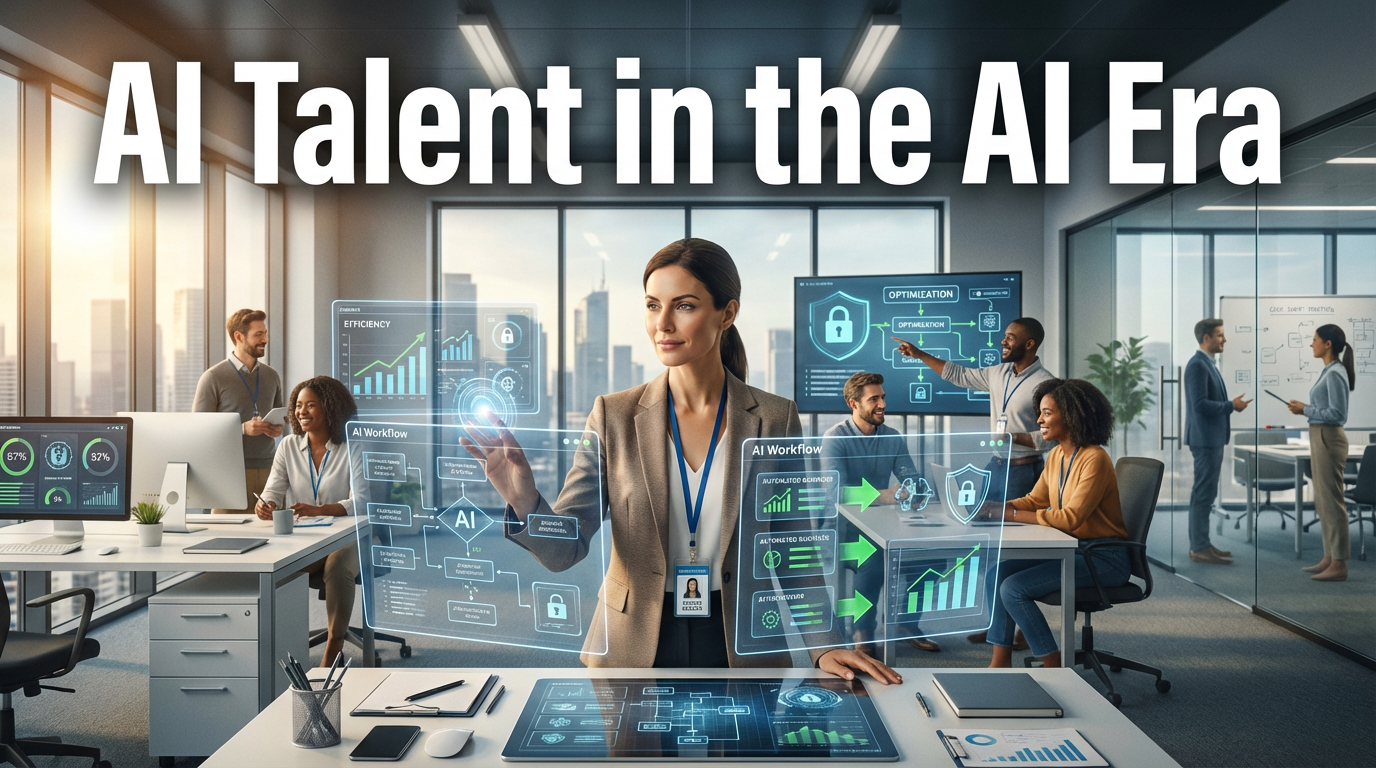
● AI Survival, Purpose Beats Coding
Survival Strategy for the AI Era: The Key is Not ‘Coding’ but ‘Purpose Definition’
This content goes beyond the simple “how to use AI well” and includes important points.
Why does productivity vary among employees using the same AI tools?
Why do digital transformations in companies often fail, leaving automation unsuccessful in practice?
And how future evaluations, organizational operations, and working methods must evolve—all these are connected here.
This article, in particular, is based on an interview with Nam Dong-Deuk, the Chief People Officer at Market Kurly, focusing on:
Practical methods for non-developers to collaborate with AI,
The increased importance of communication skills in the AI era,
The true purpose of automating repetitive tasks,
Criteria for safely and efficiently implementing AI within an organization,
And addressing the “confusion in evaluation criteria” that is often overlooked in other news or YouTube content.
1. Core Point of the Interview: AI is Not a Vending Machine, It’s an ‘Amplifier of Thought’
Nam Dong-Deuk’s message was quite clear.
AI is not a vending machine delivering perfect answers at the push of a button;
it is a partner that helps create results through questioning, evaluating, revising, and repeating.
This is essential because
many employees currently expect AI to be a tool that delivers results in one go.
However, in real work scenarios, things rarely conclude in a single step.
AI can swiftly draft an outline, but
tailoring that draft to fit the practical context,
adapting it to the company’s situation, and
mitigating risks ultimately require human judgment.
Thus, productivity in the AI era hinges more on the “iterative process of deriving better results” than on the tool itself.
2. Key Points from Nam Dong-Deuk’s Message: Five Core Takeaways
2-1. Define ‘What and Why’ Before Technology
Purpose was the most emphasized point.
The approach of immediately asking whether to learn Python or R for data analysis is incorrect.
The first question should be “What data do I want to see and how?”
This perspective applies equally to AI usage.
Instead of focusing on which tool to use,
first determine what outcome you want,
why you need that outcome, and
what form the output should take.
This is not just a simple work tip.
In a global economy marked by low growth, high interest rates, and cost pressures,
precisely applying the right technology for the right purpose becomes far more critical than blindly adopting the latest technology.
Consequently, AI implementation will likely be reoriented around ROI in the broader economic context.
2-2. The Best Practice for AI Collaboration is Iteration, Not ‘Immediate Answers’
Nam emphasized the method proposed by Google:
Define the work purpose,
context,
references and desired outcome,
evaluation, and
repeated revisions.
Simply put, it goes like this:
- Clearly define what needs to be done
- Provide ample context and conditions
- Specify the desired format of the outcome
- Evaluate the result
- Retain the good parts and revise the lacking ones
This approach is crucial because it marks the difference between those proficient with AI and those who are not.
Proficient users do not view AI’s initial answers as final.
Instead, they see them as drafts to be honed continually.
People who boost productivity in real-world scenarios often have long and intricate “feedback loops.”
2-3. The Purpose of Automation is ‘Predictability’, Not Just ‘Reducing Work’
This point is particularly striking.
Automation is often seen as a means to reduce tedious tasks,
but deeper reasons lie in predictability and flawlessness, according to Nam.
In startup environments, staff changes and
inconsistent work methods are frequent,
leading to omissions and human errors.
Thus, automating repetitive tasks ensures consistent quality regardless of who performs them,
minimizes mistakes,
and stabilizes organizational operations.
This realistically explains why digital transformation is necessary for companies.
Automation is not just about cost reduction;
it boosts the reliability of organizational operations.
In times of great economic volatility, such reliability equates to competitiveness.
2-4. Repetitive Tasks for Machines, ‘Human-Only Tasks’ for People
Nam believes machines and code excel at pattern-based and repetitive tasks.
If humans persist in such tasks, it diminishes competitiveness.
Where then should human focus lie?
- Engaging with and understanding people
- Interpreting situations and reading context
- Designing systems and structures
- Discussing for improved decision-making
- Redefining problems innovatively
These align with the often-discussed “human exclusive competencies” in the fourth industrial revolution and AI trends.
The future value of workers will likely hinge more on their ability to define problems well,
collaborate with others effectively, and
design significant outcomes through technology, rather than on mere execution volume.
2-5. The Key Competency in the AI Era is Communication
If there’s one practical takeaway from this interview, it’s this part.
Whether dealing with people or AI,
effectively conveying what you want,
exchanging feedback, and
repeatedly refining through communication is key.
Thus, the essence of prompt skills is actually communication, not technology.
Crafting elegant sentences is less important than
clearly explaining the purpose,
discerning good results from bad ones, and
making specific requests for improvements.
3. Practical Examples of Work Automation in Layman’s Terms
The automation examples from the interview were very practical.
These examples can be more beneficial on the field than complex AI theories.
3-1. Date-Based Notification Automation
There are numerous tasks based on dates, like onboarding, departures, birthdays, and evaluation schedules.
Such tasks can be automatically calculated based on the current date and
automatically notified via Slack or email, provided the data is organized.
The advantages of this approach are simple:
- Reduces omissions
- Tasks don’t rely on human memory
- The same processes are maintained even if roles change
3-2. Information Provision Based on Access Rights
In work environments like Google Workspace, user account information is already available.
Using this, it can be structured to display only necessary information without additional login.
This approach effectively balances security and convenience.
For companies, optimizing existing work infrastructure within cost control is more favorable than recklessly increasing external SaaS.
3-3. Internal Chatbot-Based Search System
Connecting company wikis and internal documents to
fetch related information upon query and
provide summaries and links through AI was also mentioned.
This format is likely to be adopted by many organizations in the future.
Organizations with abundant but hard-to-find information benefit significantly from in-house knowledge search and summary automation.
Besides productivity enhancement,
it also aids in accelerating organizational learning.
4. For Non-Developers, ‘Process Decomposition Skill’ is More Important than Coding
Many might think, “Isn’t this only possible for developer backgrounds?”
However, the interview indicates that the true core point lies more in the mindset of breaking down processes than coding prowess.
Nam describes the starting point for automation as follows:
- Where is the data?
- What is the purpose of this work?
- What is the desired outcome?
- What stages are necessary?
- Where is human intervention required?
- Is it a one-time task, or is connection needed?
Indeed, this is not exclusive to developers.
It is a thought framework immediately applicable by planners, HR, marketers, and sales representatives.
In the AI era, this structuring ability is likely to become increasingly important as a competitive workforce trait.
5. How Will Performance Evaluations and KPIs Change?
Particularly intriguing in this interview was the contemplation of evaluation methods in the AI era.
Simply evaluating people based on workload will increasingly hit limitations.
Because those who excel in leveraging AI can produce greater results in less time.
Therefore,
“How long did they work?” will become less important than
“How significant an impact did they create?”
However, there is a practical dilemma:
How to measure effective AI utilization?
5-1. Why Measuring AI Usage as a KPI is Risky
The interview mentioned cases where companies awarded or deducted points based on AI token usage.
This may seem like a way to encourage AI use.
But it can lead to significant side effects.
- High usage does not equate to proficient use
- Unnecessary usage might increase
- Costs may rise while results remain ambiguous
- Difficult to reflect job-specific differences
This is a very real issue facing many companies today.
While AI adoption is increasing,
the frameworks for measuring success are not yet precisely established.
This issue is likely to become pivotal in companies’ strategies for productivity enhancement and HR system reform.
5-2. Evaluation Criteria That Will Become More Important
Practically, the following criteria may gain precedence:
- Did they achieve more significant results in the same amount of time?
- Did they improve the work process?
- Did they reduce repetitive work and boost overall organizational productivity?
- Did the quality of problem definition and decision-making improve?
- Did they enhance collaboration quality using AI?
This transcends mere individual performance,
connecting to productivity enhancements across the entire organization.
Particularly as economic slowdown and cost efficiency become crucial,
these criteria can directly link to corporate value.
6. Why Companies Should Look at ‘Official Ecosystems’ Before Personal Tools When Introducing AI
This part of the interview stood out as being far more realistic than other content.
For individuals, experimenting with tools like Claude, ChatGPT, various agents, and external web applications is beneficial for learning.
But the perspective changes for organizations.
Security,
account management,
data control,
operational stability,
and cost efficiency all need consideration.
Nam stressed optimizing within an ecosystem if a company is based on Google.
This is not merely a conservative approach,
but a very logical strategy from a corporate operation standpoint.
6-1. Why This Perspective Matters
- External tools carry data leakage risks
- Require separate sign-ups and access management
- If operations rely heavily on individuals, sustainability decreases
- Costs can soar if spread company-wide
Thus, in AI implementation, rather than impressive demos,
“Is it safe and sustainable within our organization?” is more important.
This point will become universally crucial across industries as AI trends evolve.
7. Learning Methods Also Change: Run, Unlearn, Relearn Cycle
Nam mentioned the learning, forgetting, and relearning cycle as the most crucial attitude in rapidly changing technological times.
This point is very important.
In the past, learned technology could be used for a long time,
but now tools change too quickly.
Thus, clinging to the “ways I used to do things” might actually reduce productivity.
Coding is a prime example.
Even if you can code manually,
if AI can rapidly configure and refactor screens faster, there’s no need to stick to old methods.
This applies not just to developers but all professions.
If you hesitate to let go because of the time you invested in the old ways,
you may miss out on the next opportunity.
8. Efforts Aren’t Gone, Their Form Has Changed
Many believe that trial and error will decrease in the AI era.
That’s partly true, but
not completely accurate.
As the interview suggests, errors remain important.
In the past, it was about how to code,
but now it’s about how to plan,
build structures, and
define requirements.
In other words, even though AI reduces parts of the process,
it doesn’t eliminate the trial and error involved in defining good problems.
Thus, those who are strong today are the ones who
try more,
compare more, and
revise more frequently.
9. What Employees Need to Prepare for Immediately
9-1. Practice Articulating the Purpose First
“I want to try this feature” should be replaced with
“I want to solve this problem this way.”
9-2. Practice Breaking Down Tasks Step-by-Step
Identify which parts of your tasks are repetitive,
which require judgment, and
where human intervention is crucial.
9-3. Start with Small Automation Projects
Rather than implementing grand systems, small successes like setting up schedule alerts, summarizing documents, or drafting regular reports are important.
9-4. Develop the Ability to Provide Feedback to AI
Distinguishing strengths from weaknesses to make correction requests enhances AI collaboration skills.
9-5. Optimize Within Official Company Tools First
Personal experimentation is good,
but practical application must consider security and costs.
Especially at the organizational level, solutions that integrate with existing work systems are more sustainable.
10. The Most Important Points Often Missed by Other YouTube or News Sources
Here are five key points that are truly important but easy to miss in this interview.
10-1. The Essence of AI Utilization is ‘Purpose Definition Ability,’ Not Prompt Skills
Being able to explain why you are doing the work is far more important than memorizing a few good question phrases.
10-2. The True Value of Automation is Elevating ‘Organizational Trust,’ Not Just Reducing Labor Costs
Automating repetitive tasks reduces omissions, enhances predictability, and stabilizes organizations.
This is a greater competitive advantage than cost savings.
10-3. There is No Correct Answer Yet for AI Era KPIs; Misdesign Can Cause Backlash
Measuring AI capabilities using metrics like token usage can lead to distortions.
Frequent usage does not equate to proficient use.
10-4. Personal Optimization is Different from Organizational Optimization
While individuals can quickly achieve results using external tools,
security, operations, and cost issues function entirely differently when extended across the organization.
10-5. Competitiveness in the AI Era Still Derives from ‘Thought Structuring Abilities’
Breaking down problems, designing workflows, and evaluating results are becoming more important than coding skills.
11. Insights from a Blog Perspective: Why This Message is More Critical Now
AI trends are rapidly changing,
and businesses are demanded by productivity improvements amid economic slowdowns.
What matters in such environments is not memorizing the latest model names.
Those who can connect technology with purpose,
transform work processes, and
safely proliferate within organizations are likely to be evaluated highly in practice.
Ultimately, future talents will resemble “people who design outcomes with AI” rather than just “AI users.”
This is a significant shift for labor market changes,
business productivity restructuring,
and long-term investment strategies.
Because ultimately, the profitability of industries hinges less on technology itself,
and more on how well that technology integrates into operational systems.
12. Conclusion
Nam Dong-Deuk’s message is simple.
The AI era offers opportunities to those who prepare.
However, said preparation isn’t about blindly studying coding but
defining the purpose of your work clearly,
spotting repetitive patterns,
trying small automations, and
continually refining results through dialogue with AI.
In short,
future competitiveness depends more on the ability to define technology according to work, than on the technology itself.
And this ability is not exclusive to developers but is a competency all workers reading this can adequately train.
< Summary >
The core point of this interview is that AI is not a vending machine, but a partner.
More important than coding skills are the definition of work purposes, communication, and iterative feedback abilities.
Automation is a tool not simply for convenience but to increase predictability and organizational trust.
While machines handle repetitive tasks, people should focus more on problem definition, decision-making, and collaboration.
In the AI era, performance evaluations and KPIs lack definitive answers, and simple usage-based evaluations might distort.
Companies should prioritize optimization within the official work ecosystem considering security, cost, and operational stability over the overuse of external tools.
Ultimately, a worker’s competitiveness stems more from purpose-driven thinking, process decomposition, and iterative learning than learning the latest technology.
[Related Articles…]
- AI Productivity Revolution: How Is the Way Employees Work Changing?
- The Key Points Determining Corporate Competitiveness in the Era of Work Automation
*Source: [ 티타임즈TV ]
– 개발자 출신 인사팀장이 일하는 법 (남동득 번개장터 피플실장)