● Hormuz Relief, Oil Crash, Stocks Surge, AI Frenzy
Week 3 of the Iran War: Why Markets Moved First — Signals of “Not a Full Closure” in the Strait of Hormuz, Oil Sell-Off, Global Equity Rebound, and Renewed AI Momentum
This move cannot be reduced to “oil fell, so equities rose.” Three drivers explain the cross-asset reaction.
First, confirmation that Iran has not imposed a full closure of the Strait of Hormuz rapidly reduced the global market risk premium.
Second, subtle signals of permitted passage among the U.S., Iran, and neutral countries triggered a synchronized macro regime across crude oil, the dollar, rates, equities, and crypto.
Third, as geopolitical risk eased, attention rotated back to NVIDIA GTC and the agentic AI theme, increasing the likelihood that markets re-center on the AI investment cycle.
1. One-line market summary: Perception shifted from “full-scale crisis” to a “partial control” regime
- WTI fell roughly 5% intraday.
- Nasdaq rose more than 1%; the Dow, S&P 500, and Russell 2000 also gained over 1%, signaling a rapid recovery in risk appetite.
- Korea-linked instruments (KOSPI and KOSDAQ overnight futures) reacted strongly, consistent with easing fears of an energy supply shock.
Markets began pricing a higher probability that Iran may avoid actions that would severely disrupt global oil supply.
2. Why markets rallied: Some tankers actually transited the Strait of Hormuz
The key development was that some tankers transited even as the strait had been perceived as near-paralyzed.
This reduced the probability of the market’s worst-case scenario: a full closure leading to a sharp oil spike, renewed inflation pressure, delayed rate cuts, slower global growth, and equity drawdowns.
The passage events were interpreted as Iran choosing “selective control” rather than indiscriminate, full shutdown.
3. Which vessels transited: Passage appeared concentrated in non-U.S.-aligned shipping
Reported transit cases were associated with:
- Greek shipping
- India-linked operators
- Turkey, Pakistan, and other countries with relatively less adversarial ties to Iran
This pattern supports an interpretation that transit permission may be filtered by diplomatic and political criteria.
For markets, a scenario of 100% disruption versus partial frictions (e.g., 30–40%) implies materially different outcomes for energy prices and downstream inflation.
4. The Greek vessel case: A signal of controlled escalation
Greek vessels reportedly sailed with AIS transponders turned off. AIS deactivation does not eliminate radar detection, implying that interdiction could still have been feasible.
The absence of an attack was interpreted as evidence of deliberate restraint. In geopolitical pricing, intent and willingness to escalate can matter as much as capability.
5. Why India-linked shipping transited: Naval escort plus active diplomacy
India-linked transits were accompanied by:
- Indian naval escort
- Reported direct communication channels between India and Iran
This suggests the strait is not operating in a purely anarchic state; rather, a degree of negotiated order may be present. Markets typically price “negotiable crisis” more positively than “unbounded conflict.”
6. Trump remarks: Burden-sharing, rate-cut pressure, and responsibility dispersion
Key messages:1) Pressure on high-dependence allies (Korea, Japan, Europe) to contribute more to securing passage
2) Renewed calls for immediate Fed rate cuts
3) Emphasis that passage depends on shipowners’ willingness to sail, framing the issue as not solely a U.S. responsibility
Taken together, these signals indicate an attempt to distribute military burden while maintaining market stability and increasing political pressure for easier monetary policy.
7. Why this matters for Korea: Energy-import dependence and KOSPI sensitivity
Korea is highly exposed to Hormuz-related energy risk. Higher crude prices transmit quickly to:
- Trade balance
- Corporate input costs
- CPI and real consumption
- FX levels
- Domestic rate expectations
Therefore, a pullback in oil is broadly supportive for Korean equities, particularly sectors sensitive to energy and logistics costs (semiconductors, batteries, chemicals, shipping, airlines, autos).
8. Interpreting the move across assets
8-1. Crude oil
WTI’s ~5% decline indicates the market reduced the implied probability of severe supply disruption, with part of the “full closure” premium unwinding.
8-2. Equities
Broad gains across Nasdaq, S&P 500, and Russell 2000 suggest improving risk appetite beyond mega-cap tech alone.
8-3. Rates / bonds
Bond strength implies inflation risk expectations eased, while residual demand for safety persists—consistent with reduced panic but ongoing uncertainty.
8-4. U.S. dollar
Dollar weakness reflects reduced safe-haven demand and marginally improved expectations for U.S. rate cuts.
8-5. Bitcoin and Ethereum
Bitcoin gains—alongside relative Ethereum strength—fit a risk-on liquidity narrative, with crypto increasingly trading as a hybrid of liquidity expectations and technology-driven positioning.
9. What markets are actually pricing: The intensity of disruption, not the existence of war
Market focus centers on:
- Full closure vs partial openness vs selective passage
- The trajectory of insurance premiums and freight rates
- The degree of pass-through from logistics friction into energy prices and CPI
The current read-through is that the expected real-economy shock intensity has declined.
10. Five key indicators to monitor
10-1. Whether transits are episodic or persistent
Directionality for crude depends heavily on whether current transits become a durable pattern.
10-2. Marine insurance premiums and freight rates
Even with passage, sharply higher insurance and freight costs can sustain inflation pressure through supply-chain costs.
10-3. Strait security cooperation by Korea, Japan, and Europe
Greater allied involvement may support stabilization but increases diplomatic and security complexity.
10-4. Changes in Fed rate expectations
If oil stabilizes, CPI pressure expectations may ease, potentially improving the outlook for rate cuts—typically supportive for duration-sensitive growth equities, including AI-linked large caps.
10-5. Whether Iran’s negotiation signals evolve into actionable talks
If informal channels are active, markets may reprice geopolitical discount rates more quickly.
11. Why attention is rotating back to AI: The next narrative after geopolitical risk de-escalation
As Middle East risk temporarily recedes, markets tend to re-anchor on structural growth themes. The current center of gravity remains:
- AI
- Semiconductors
- Agentic AI
- Automation software
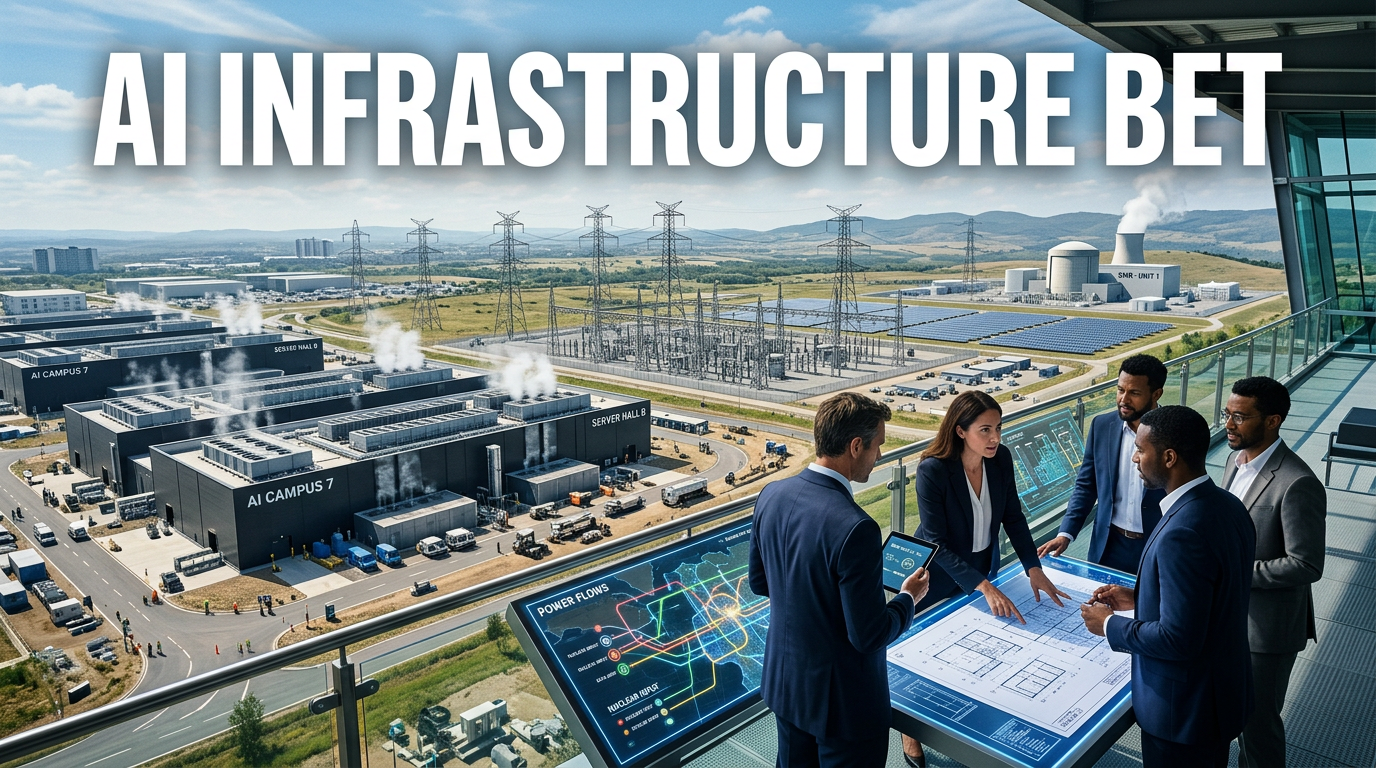
- AI infrastructure
NVIDIA GTC functions as a barometer for the breadth of the AI capex cycle, spanning data centers, inference chips, robotics, industrial automation, autonomous systems, and software-agent ecosystems.
12. Why agentic AI matters: From “answering” to “executing”
Agentic AI is increasingly framed as systems that:
- Understand objectives
- Decompose tasks
- Call tools and services
- Write code
- Validate outputs and iterate
This shifts the value proposition from content generation toward workflow execution, strengthening the linkage between AI adoption and enterprise profit pools.
13. The macro linkage: AI as a productivity variable
AI increasingly functions as a macro-relevant factor because productivity gains can reshape:
- Corporate margins
- National competitiveness
- Labor constraints
- Development speed and operating costs
In an environment where rates and inflation remain salient, productivity improvements become central to valuation support.
14. Key point often under-emphasized: Why Iran has not executed a full closure
The critical issue is the strategic rationale behind restraint. A full closure would pressure not only the U.S., but also countries Iran may seek to keep workable relations with (e.g., China, India, Turkey, Pakistan).
Accordingly, the strait may be used more effectively as a “selective control lever” than a binary shutdown button. Markets interpreted this as a higher likelihood of managed tension rather than maximum escalation.
If energy shock risk remains limited, downstream implications extend to:
- The U.S. policy rate path
- Dollar dynamics
- EM capital flows
- Korean equity valuation
- The premium applied to AI growth assets
15. Practical investor framing
This is better characterized as an early phase of risk-premium normalization rather than an “end of crisis” regime.
Two variables are likely to dominate:1) Oil stability
2) The strength of the renewed AI/semiconductor growth narrative
If strait conditions stabilize, rate-cut expectations improve, and AI-related events (including NVIDIA GTC) are interpreted positively, the backdrop may become more constructive for global tech and Korea’s semiconductor complex. If transits reverse or escalation intensifies, oil and inflation concerns could reassert pressure on risk assets.
16. Conclusion: Markets are responding to “controllable crisis” probabilities
The rebound reflects not an expectation that the conflict has ended, but that:
- The strait is not fully closed
- Selective passage remains possible
- Negotiation channels may not be entirely broken
These factors support oil stabilization expectations, which feed into softer inflation concerns, reduced policy-rate burden, a weaker dollar, and improved risk appetite. If AI and semiconductors re-emerge as the dominant structural theme, the current move may represent a bridge to the next narrative rather than a purely technical rebound.
- Partial tanker transits through the Strait of Hormuz reduced fears of a full closure, driving a sharp oil decline and a global equity rebound.
- Current signals suggest selective control rather than complete shutdown, which has been the most market-supportive interpretation.
- Trump increased pressure on allies to contribute to strait security and reiterated calls for rate cuts.
- Korea, as a major energy importer, is a likely beneficiary of oil price declines at the index level.
- Market attention is rotating back to NVIDIA GTC and agentic AI, with AI/semiconductors positioned as the next potential driver if geopolitical risk continues to ease.
[Related Posts…]
- https://NextGenInsight.net?s=Hormuz
- https://NextGenInsight.net?s=agentic
*Source: [ 내일은 투자왕 – 김단테 ]
– 이란 전쟁. 한줄기 빛이 보이기 시작했습니다.
● China AI Frenzy, OpenClaw Shockwave, Big Tech Power Grab
China’s Next AI Craze: Why OpenClaw Is Gaining Rapid Traction
The surge of interest in OpenClaw in China extends beyond a consumer AI-app trend. It sits at the intersection of macro slowdown responses, employment pressure, big-tech platform competition, local-government entrepreneurship incentives, and escalating data-security risk management.
This report summarizes (i) why OpenClaw is scaling in China, (ii) why both government and major platforms are engaging simultaneously, (iii) implications for equity-market narratives and the broader AI value chain, and (iv) priority considerations for Korea. It also highlights a key under-discussed point: how AI agents relate to China’s labor-market structure and digital-economy strategy.
1. Why OpenClaw Is a Major Topic in China Now
OpenClaw is positioned as an AI agent that executes tasks, not only a conversational chatbot.
- Core differentiation: automation of routine workflows (e.g., schedule management, information structuring, airline check-in).
- Social virality: the lobster logo has become a mass-market meme, signaling adoption beyond developer communities.
- Distribution advantage: accessible symbolism and user experience accelerated diffusion into mainstream user segments.
2. News-Style Briefing: Key Points Behind the OpenClaw Boom in China
OpenClaw emerges as a mass-market AI agent in China’s AI landscape
Following prior AI waves, OpenClaw is becoming a new focal point as an open-source-based AI agent developed by an Austrian developer, gaining attention for workflow automation rather than dialogue alone.
Local governments promote AI adoption as a “solo business” enablement lever
Some local governments are offering aggressive support packages—up to CNY 10 million in funding, free compute resources, and office space—framed as support for one-person companies and micro-startups. This is interpreted as a productivity and employment-response policy tool amid slowing growth.
Tencent and ByteDance compete to absorb the OpenClaw ecosystem into their platforms
Major platforms are moving to integrate the OpenClaw momentum into their own messaging, cloud, and model ecosystems. Tencent’s shares rose 7.3% following announcements of compatible products, indicating that AI-agent positioning can affect valuation narratives tied to monetization expectations.
Government agencies and some SOEs adopt a cautionary stance
Certain government bodies and state-owned enterprises reportedly advised staff to avoid installing OpenClaw. The rationale is heightened risk: AI agents typically require broad access to files, accounts, and external services, increasing exposure to data leakage and operational errors versus standard chatbots. The result is a split dynamic: productivity enthusiasm in the private sector versus security prioritization in the public sector.
3. Why AI Agents Are Scaling in China at This Time
1) Productivity pressure amid macro slowdown
China faces growth headwinds including property-sector weakness, delayed consumption recovery, and youth employment challenges. In such environments, businesses prioritize cost control and productivity. AI agents are increasingly perceived as tools to expand output per worker rather than direct full labor replacement, aligning with constrained hiring conditions.
2) Practical demand from solo founders and ultra-small teams
Local-government emphasis on one-person businesses reflects demand for tools that reduce operating costs. AI agents can automate portions of research, scheduling, document handling, customer response, and reservations, improving survivability for small operators and supporting digital-economy activation efforts.
3) Big-tech platform lock-in strategies
As AI agents become mainstream, users adopt integrated workflows spanning messaging, cloud, documents, payments, and enterprise tools. Competitive focus shifts from model quality alone toward end-to-end workflow ownership and ecosystem integration, moving the battleground from model performance to service orchestration.
4. Implications for Equity Markets and the Industrial Ecosystem
AI narratives shift toward real-world usage and monetization
AI-linked equity volatility remains elevated, but investor focus is increasingly on revenue conversion. AI agents provide visible workflow automation use cases, strengthening monetization narratives. Tencent’s price reaction suggests AI-agent exposure can be interpreted as a potential driver of earnings expectations.
Potential spillover across cloud, SaaS, semiconductors, and security
Broad AI-agent adoption can lift demand beyond software providers, including cloud infrastructure, data centers, AI semiconductors, security solutions, and enterprise collaboration tools. The theme should be evaluated as ecosystem-level demand expansion rather than a single-app cycle.
A comparative framing is emerging:
- The United States emphasizes frontier models and high-end semiconductors.
- China emphasizes rapid deployment of applied AI tied to on-the-ground productivity.
5. Core Risk: Why China Both Embraces and Warns
1) AI agents require broad permissions
Unlike chatbots, AI agents typically need access to email, files, calendars, browsers, and external-platform accounts. Misconfiguration or weak controls can increase the probability of data exfiltration or unintended actions.
2) Public-sector environments prioritize security
Government and SOE workflows face higher sensitivity to errors, including exposure of personal data, administrative documents, and internal reporting systems. AI agents may exchange data with external services in ways that are difficult to monitor, leading to more conservative adoption.
3) Operational error risk remains underweighted
AI agents still have limited exception-handling reliability. Failures in booking, scheduling, or file operations can translate from inconvenience (consumer) to customer-impacting incidents and financial loss (enterprise).
6. Under-Discussed Strategic Takeaways
Key Point 1. The substance of the boom is labor-structure redesign, not “AI popularization”
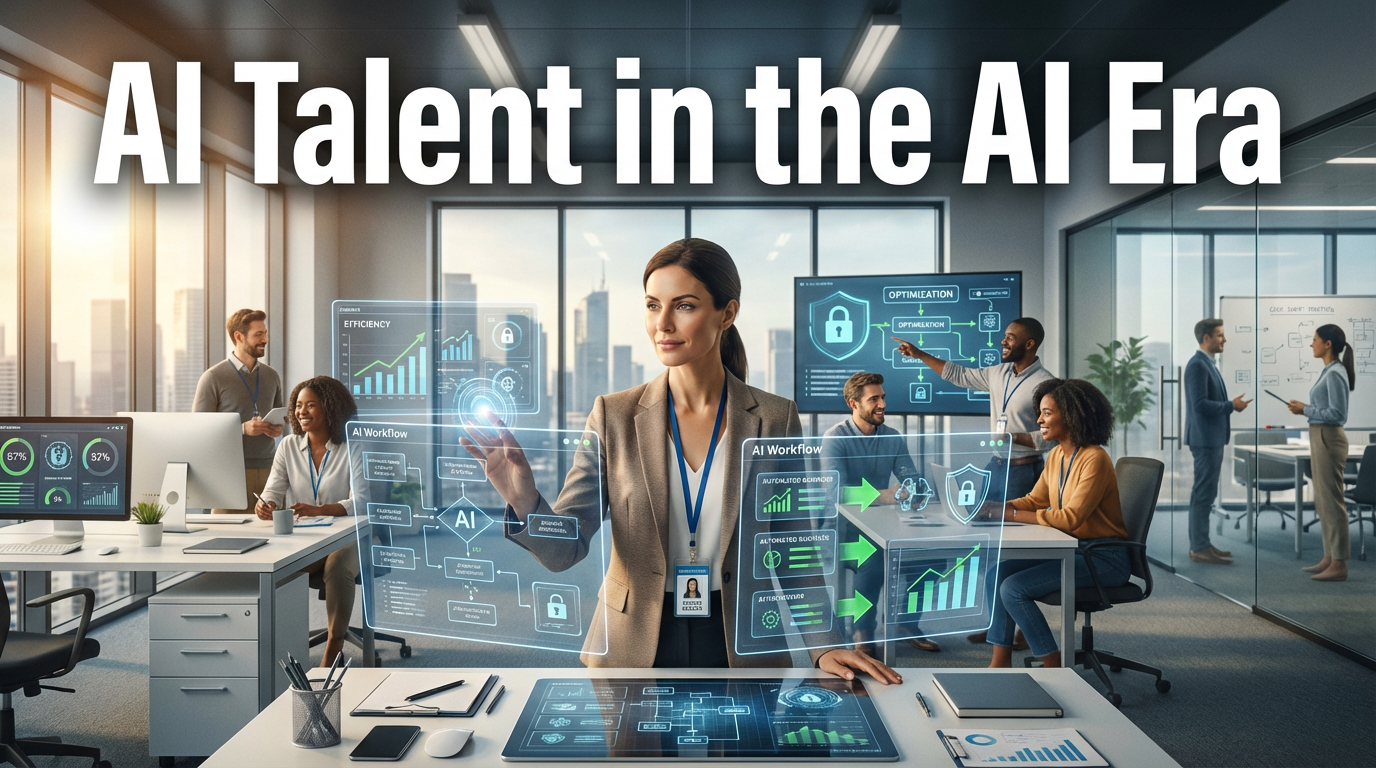
The more material issue is expansion of the scope of tasks one worker can manage. AI agents enable leaner staffing structures and higher output per small team, with potential long-term effects on employment composition, entrepreneurship, and SME operating models.
Key Point 2. China is prioritizing distribution speed over model supremacy
Rather than focusing solely on building the strongest model, China is emphasizing attachment of AI to daily workflows at scale. This can accelerate accumulation of usage data and real-world operational learning, potentially strengthening industrial competitiveness over time.
Key Point 3. Public-sector warnings may precede tighter rules
Current guidance is reportedly advisory, but future policy could tighten around permission boundaries, data-residency requirements, external API access, and public-sector usage limits. Market competition may increasingly include compliance, security architecture, and policy execution capability.
7. Korea: Potential Next Market, With Different Frictions
Adoption potential is high
Korea has strong interest in generative AI and accelerating demand for workflow automation, particularly among SMEs, solo operators, freelancers, and startups. Under constrained hiring, productivity tools can diffuse rapidly.
Security and liability may become stronger gating factors
Korean finance, public-sector, and large-enterprise processes tend to require strict security and approval workflows. Even with consumer uptake, enterprise deployment is likely to center on data control, privacy compliance, and accountability in the event of incidents. As agents handle email, bookings, payments, and document edits, clear boundaries for automation will be required.
What Korean enterprises should monitor
1) AI agents are likely to become a core interface layer for business software.2) Competition in cloud and enterprise AI will intensify.3) Growth may extend to security providers alongside semiconductors and data centers.4) Over time, productivity gains may be reflected more directly in corporate competitiveness and equity valuation.
8. Practical Checklist for Investors and Operators
Investor perspective
- Prioritize evidence of enterprise adoption and revenue linkage over thematic exposure.
- Watch correlated beneficiaries: cloud, collaboration tools, enterprise software, security, and AI semiconductors.
- In cross-market comparison, differentiate firms where AI distribution translates into measurable financial outcomes.
Operator perspective
- Pre-deployment controls: permission scoping, data-access boundaries, logging/audit trails, and rollback/recovery procedures.
- Evaluate not only productivity upside but also controllability under error conditions.
- Highest-risk integration points: file access, messaging integration, and external service connections.
9. One-Sentence Summary
China’s OpenClaw boom reflects the collision of productivity-focused policy responses to slowing growth, big-tech platform competition, and tightening data-security considerations—and may extend beyond China into broader Asian AI adoption, digital-economy strategy, and labor-market adjustments.
< Summary >
- In China, OpenClaw is scaling as an AI agent that automates real work rather than acting solely as a chatbot.
- Local governments are expanding incentives to support solo businesses and productivity improvements.
- Big tech firms such as Tencent and ByteDance are moving to integrate the trend into their platform ecosystems.
- Some government agencies and SOEs are issuing cautions due to data-leakage and operational-error risks.
- The core framing is that China is treating AI as a productivity, entrepreneurship, and industrial-competitiveness tool.
- Korea may follow a similar adoption path, with security controls and liability likely to be more binding constraints.
[Related Articles…]
- AI agent adoption and a new variable in enterprise productivity transformation: https://NextGenInsight.net?s=AI
- China big-tech competition and the restructuring of the digital economy: https://NextGenInsight.net?s=China
*Source: [ Maeil Business Newspaper ]
– 지금 중국은 OpenClaw 열풍 #shorts