● Oil Shock, Rate-Cut Nightmare, Asia Under Siege
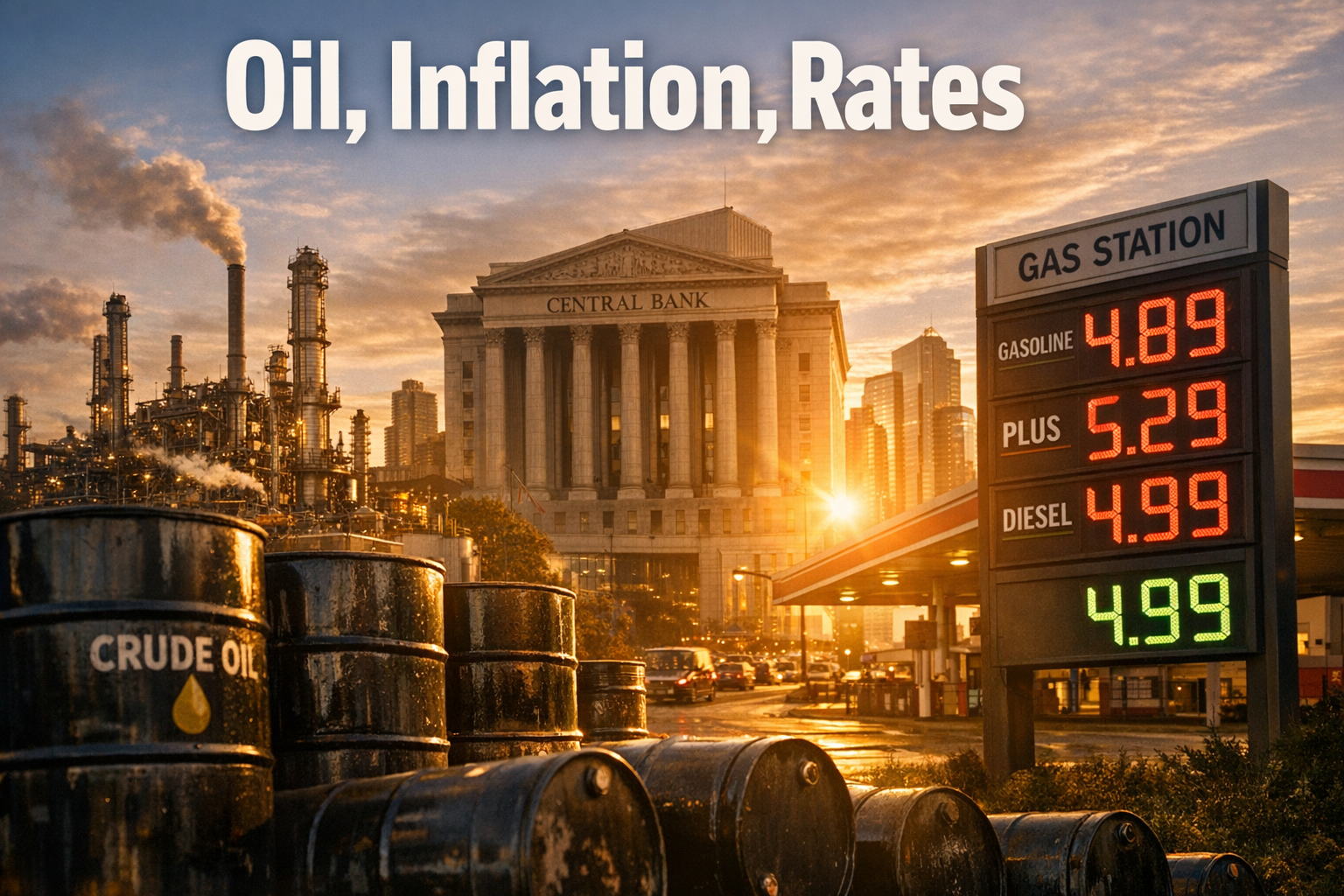
A More Material Risk Than the Middle East War: Why Crude Oil Is the Real Constraint on Rate Cuts
Market attention is concentrated on Middle East conflict headlines. The more material variable is the path of international crude oil prices and how sustained energy risk reprices inflation expectations, delays rate cuts, and tightens financial conditions. This report summarizes the transmission from geopolitics to oil, inflation, policy rates, FX, risk assets, and AI-related valuations, with emphasis on duration risk rather than the initial shock.
1. Key Mispricing: Not the War, but Oil; not Oil, but the Policy-Rate Path
Media focus tends to center on escalation risk and end dates. For markets, the dominant driver is whether the conflict sustains elevated energy risk premia and disrupts supply chains.
Core sequence:
- Middle East risk intensifies
- International crude oil rises
- Inflation pressures re-accelerate
- Federal Reserve and Bank of Korea delay rate cuts
- Liquidity-driven rally weakens
- Volatility rises across equities and other risk assets
War is the catalyst; oil, inflation, and the policy-rate trajectory drive asset pricing.
2. Why International Crude Oil Is the Highest-Impact Variable
The Middle East is a key node in global oil supply. The Strait of Hormuz is a structural chokepoint; even without physical disruption, higher tension can embed a risk premium into prices.
2-1. Higher Oil Prices Transmit Beyond Fuel Costs
Oil affects economy-wide cost structures:
- Higher transportation costs
- Higher manufacturing input costs
- Margin pressure in energy-intensive sectors (chemicals, steel, refining, airlines)
- Higher import prices
- Broad-based cost-of-living pressure
This shifts central bank reaction functions toward inflation control even amid growth softness.
2-2. Central Banks Prioritize Avoiding an Inflation Re-Acceleration
For both the Fed and the Bank of Korea, price stability dominates. If oil rebounds while inflation is still converging toward target, policy easing becomes harder to justify. A premature cut that coincides with renewed oil-driven inflation can raise medium-term credibility and policy-reversal risks.
3. What Is Similar to 2022, and What Differs Now
Assessing the current setup requires comparison with the 2022 Russia-Ukraine shock.
3-1. 2022 Lesson: Energy Shocks Can Lift Inflation More Than Expected
Europe’s higher dependence on Russian energy amplified the impact. US CPI reached 9.1% in June 2022, while Europe experienced roughly 11% on average. Korea and Japan were lower but still faced significant inflation pressure. The key variable was regional energy dependence.
3-2. Asia Is More Sensitive in the Current Configuration
This time, the most oil-dependent Asian importers are more exposed. Korea, Japan, Thailand, and Vietnam face higher sensitivity to Middle East-linked crude benchmarks. China may have partial buffers via domestic production and access to alternative supply (including Russia), while many Asian emerging markets have weaker shock absorbers.
4. Why Asian Emerging Markets Face Higher Risk: Oil + FX Depreciation
For oil importers, the risk is not only oil prices but also currency weakness.
4-1. Dollar Strength Amplifies Import Inflation
Oil is priced in USD. When the USD strengthens, local-currency oil costs increase even if oil is unchanged; when both rise, the shock compounds:
- Oil price increases
- USD appreciation drives FX depreciation
- Local-currency import costs surge
This pressures inflation, corporate margins, and trade balances simultaneously.
4-2. Manufacturing-Heavy Economies Are Disproportionately Affected
Many Asian emerging markets are export-manufacturing centered. Energy cost increases transmit quickly into production costs:
- Reduced export price competitiveness
- Margin compression
- Delayed capex
- Slower hiring
- Downward pressure on growth
Vietnam and Thailand are notable for faster pass-through from energy costs to the real economy.
5. Why Rate-Cut Expectations Are Vulnerable
Markets have maintained easing expectations on growth concerns. A renewed oil uptrend changes the policy calculus.
5-1. Central Banks Require Clear Disinflation to Ease
Rate cuts generally require a sustained and credible disinflation path. Oil-driven inflation slows disinflation or reverses it, increasing the probability of delayed easing.
5-2. The More Likely Risk Is “Delayed Cuts,” Not Immediate Hikes
A repeat of 2022-style rapid tightening is not the base case. The more realistic risk is:
- Later-than-expected rate cuts
- Higher-for-longer policy rates
- Re-acceleration in long-term sovereign yields
- Increased valuation pressure on risk assets
This is typically adverse for long-duration assets such as high-multiple growth and technology.
6. Why a Liquidity-Led Rally Can Weaken
The key market variable is the liquidity regime.
6-1. Reduced Rate-Cut Probability Raises Discount Rates
Equity pricing reflects discounted future cash flows. Higher-for-longer rates raise discount rates, reducing the present value of distant earnings. This increases sensitivity for growth stocks and AI-linked assets whose valuations rely more heavily on long-term expectations.
6-2. The Market Focus Is Inflation Re-Entrenchment Risk
Inflation is not fully resolved. If oil re-accelerates inflation, market expectations may shift rapidly:
- Fed easing expectations priced out
- Bond yields rise
- Equity volatility increases
- USD strengthens
- Emerging-market outflow risk increases
Oil functions as a macro-financial variable that reshapes broader financial conditions.
7. Implications for the Korean Economy
Korea is highly exposed.
7-1. High Energy Import Dependence
Low energy self-sufficiency implies oil price increases feed directly into import prices. A weaker KRW compounds the burden.
7-2. Risk to Domestic Demand Recovery
Higher energy-driven inflation reduces real purchasing power and can restrain consumption. Sectors sensitive to household cost-of-living—food services, transportation, administered prices, and consumer services—may face faster deterioration in sentiment.
7-3. Constraints on a Dovish Pivot by the Bank of Korea
Even with weak growth, a rise in inflation risk limits the scope for easing. The probability of a delayed first cut increases under sustained oil strength.
8. Why This Matters for AI and the Broader Technology Cycle
Oil and AI are linked through rates, liquidity, and capex incentives.
8-1. AI Valuations Are Sensitive to Rates and Liquidity
AI has been supported by long-duration growth expectations, typically underpinned by:
- Expectations of lower rates or easing
- Ample liquidity
If oil-driven inflation delays easing, AI-related assets may face near-term valuation compression.
8-2. Longer-Term, AI Adoption Can Strengthen Under Cost Pressure
Rising energy costs, labor costs, and supply-chain uncertainty can increase incentives for productivity and efficiency gains. This can support AI, automation, robotics, and data-driven optimization as cost-reduction and resilience investments, even if near-term multiples re-rate.
9. Investor Checklist: What to Monitor
9-1. Primary Market Variables
- International crude oil trajectory
- Strait of Hormuz risk indicators
- Persistence of the oil risk premium
9-2. Monetary Policy Variables
- Repricing of Fed rate-cut expectations
- Delay risk in Bank of Korea easing
- Upward pressure on long-term sovereign yields
9-3. Country-Level Exposure
- Higher sensitivity in Asia than Europe in this shock
- Increased pressure on major Asian oil importers (Korea, Japan, Vietnam, Thailand)
- USD strength as an amplifier for emerging markets
9-4. Cross-Asset Implications
- Weaker liquidity-driven market dynamics
- Higher volatility in growth and high-multiple assets
- Relative strength potential in commodities, energy, and defensives
10. Under-Discussed Core Points
Most coverage focuses on escalation, price targets, and battlefield dynamics. Market-relevant focus areas are:
10-1. Duration Risk Matters More Than the Initial Shock
The primary risk is sustained tension that changes oil expectations over weeks to months.
10-2. Asia Could Be the Primary Impact Zone
Compared with 2022 (Europe-centric), the current exposure is higher for Asia given Middle East crude dependence.
10-3. For Emerging Markets, FX Can Be More Damaging Than Oil
The most acute pressure often occurs when oil rises alongside USD strength, lifting import inflation and financial fragility simultaneously.
10-4. The Terminal Risk Is Delayed Rate Cuts
The critical market outcome is not the oil move itself, but its effect on inflation and the timing of policy easing.
11. Forward Monitoring Checklist
- Trend persistence in Brent and Dubai crude
- Changes in transit risk through the Strait of Hormuz
- Re-acceleration signals in US CPI and PCE
- Shifts in Fed communications
- USD index and USD/KRW dynamics
- Rebound risk in Korea import prices and PPI
- Renewed rise in long-term sovereign yields
- Relative performance shifts between energy-sensitive sectors and growth
12. One-Line Conclusion
The conflict is the headline; crude oil is the transmission channel; inflation persistence and delayed rate cuts are the primary market risks.
< Summary >
The principal risk from Middle East tensions is sustained crude oil strength rather than the conflict headline itself. Higher oil can re-ignite inflation, delaying Fed and Bank of Korea rate cuts. Asian oil importers and emerging markets with currency weakness face amplified effects through import inflation and financial conditions. The key variable is the oil-inflation-rate path, with near-term pressure on liquidity-sensitive growth assets and a longer-term case for AI adoption as an efficiency and cost-reduction lever.
[Related Articles…]
- https://NextGenInsight.net?s=international%20crude%20oil
- https://NextGenInsight.net?s=AI
*Source: [ 경제 읽어주는 남자(김광석TV) ]
– 중동 전쟁보다 더 무서운 변수, 국제유가가 금리 인하를 막는다 | 경읽남과 토론합시다 | 오건영 단장_2편