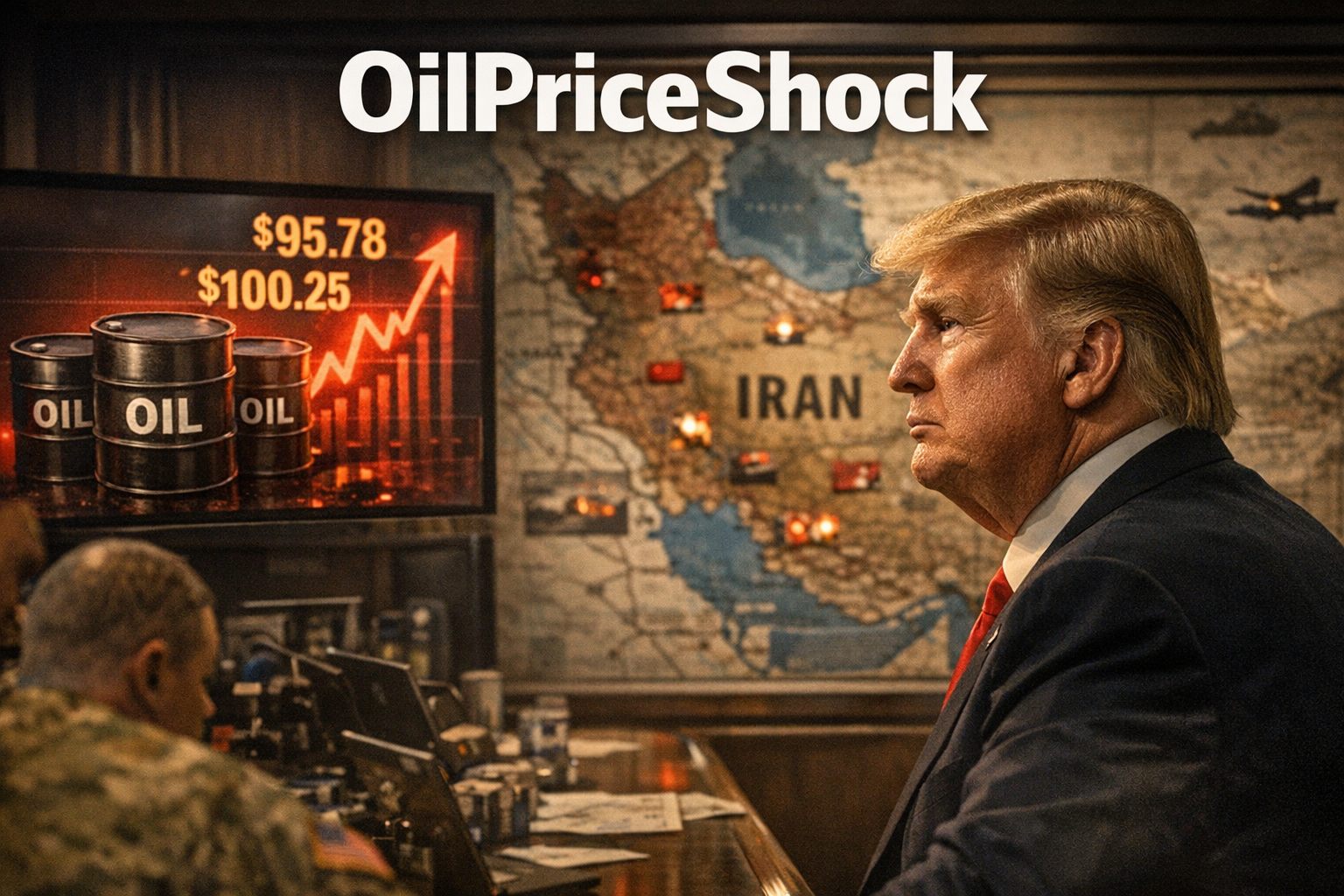
● Trump-s-Iran-Gamble, Oil-Shock, Missile-Crunch
Why the Phrase “A War Even Trump Would Regret” Sounds More Plausible Now
This issue extends beyond a conventional Middle East conflict. Three points are central:
1) Why a Trump-style “decapitation strike” is unlikely to work against Iran’s regime structure.
2) Why neither the United States nor Iran is structurally positioned to sustain a prolonged war.
3) How the conflict transmits into crude oil, inflation, global financial markets, and Korea’s foreign policy, security posture, and defense industry.
A key under-discussed constraint is not political will but logistics and industrial capacity. Wars can start with intent, but duration is determined by funding, munitions, and manufacturing supply chains.
This report consolidates the U.S. constraints in missile-defense production, Iran’s regime mechanics, Trump’s political incentives, and second-order effects on the global economy and AI/Industry 4.0 themes.
1. Headline Summary: One-Sentence Situation Assessment
This Middle East war is one in which neither the United States nor Iran has sufficient capacity for a sustained long-duration campaign. The principal risk is escalation driven by leader miscalculation and “face-saving” politics rather than by rational cost-benefit optimization.
2. Why the “A War Even Trump Would Regret” Interpretation Emerges
2-1. The Underlying Assumptions Behind Trump-Style Strategy Are Over-Simplified
The likely premise: a large, decisive strike would destabilize Iranian leadership, trigger rapid internal fractures, and force negotiations or regime change.
Iran’s system does not operate as a single-node dictatorship. It functions as an interlocked power network involving clerical authorities, the Islamic Revolutionary Guard Corps (IRGC), the Basij militia apparatus, and entrenched economic interests. Removing a single figure is unlikely to disable the system; multiple power centers can adapt and respond.
2-2. Iran’s Regime Is Not Comparable to a Venezuela-Style Collapse Scenario
Some assume authoritarian systems can unravel quickly after leadership removal. Iran differs: since 1979, religious authority, security institutions, and economic control have been structurally integrated.
The Supreme Leader is both a political authority and a religious symbol. Leadership replacement and systemic regime transformation are materially different objectives. Achieving the latter would likely require occupation-scale commitments, which are operationally and politically improbable.
2-3. The Conflict Appears to Have Started Ahead of a Credible End-State Plan
Tactical strikes may be feasible, but an integrated strategy—regime outcomes, negotiation pathways, escalation control, alliance management, oil-price stabilization, and domestic political containment—appears insufficiently defined. The operational question of “how it ends” remains unclear.
3. Why the United States Also Faces Binding Constraints in a Prolonged Conflict
3-1. War Sustainability Is Determined by Supply, Not Declarations
Sustained operations require weapons, interceptors, budgets, and manufacturing throughput. The acute U.S. challenge is defense rather than offense.
Iran’s asymmetric toolkit relies heavily on ballistic missiles and drones. Defeating these requires interceptor systems such as Patriot and THAAD, where scale and replenishment are constrained.
3-2. U.S. Missile-Defense Production Capacity Is More Limited Than Commonly Assumed
THAAD interceptor output is constrained, and Patriot-family production is not infinitely scalable. Interceptors require high-precision sensors, software, semiconductors, and guidance systems, and are subject to strict domestic production preferences due to technology-security considerations.
Post-pandemic manufacturing frictions—supply chains, labor constraints, and capacity rigidity—reduce surge flexibility. The result is a tangible production bottleneck.
3-3. The United States May Shift Burdens Toward Allies
Signals of allied burden-sharing and redeployment reflect these constraints. Concurrent demands—Europe (Ukraine), the Middle East, and Indo-Pacific deterrence—tighten inventories and production schedules. This is less a statement about U.S. military strength than a recognition that advanced defensive assets cannot be supplied without limit.
3-4. Fiscal Constraints Are Material
War expenditures scale rapidly. The United States already operates under elevated deficits, debt-service costs, and a higher-rate environment. If Congress resists incremental funding, operational intensity can be constrained irrespective of strategic intent.
4. Why Iran Also Struggles to Sustain a Prolonged Conflict
4-1. Iran Entered the Conflict With a Weak Economic Baseline
Long-standing sanctions, low growth, reduced investment, and currency depreciation limit resilience. War pressure typically accelerates currency instability and inflation.
4-2. War Dynamics Amplify Inflation and Currency Stress
Conflict increases demand for hard currency and safe stores of value. For a sanctions-constrained economy with limited external financing, depreciation transmits into import-price inflation and broader instability. High inflation undermines household welfare, industrial continuity, and social tolerance.
4-3. Disruption to Oil Exports Threatens Iran’s Core Funding Channel
Oil is among Iran’s primary sources of external revenue. Threats to export infrastructure or maritime transport increase financing risk. Higher prices do not guarantee higher realized revenue if volumes, logistics, or settlement routes are impaired. The binding variable is the ability to sell and collect payments.
5. Why the War May Not End Quickly Despite Weak Fundamentals for Long Duration
5-1. Rational Incentives Favor De-Escalation, But Conflicts Are Not Always Rational
Even if both sides face sustainability constraints, escalation can persist due to retaliation cycles, domestic consolidation needs, leader survival incentives, misinformation, and miscalculation.
5-2. Leader Risk-Taking Is the Dominant Variable
Trump’s leadership style, Iran’s regime-survival logic, and the fear that “backing down is terminal” can generate higher-risk moves. The most critical risk is not long-run endurance but short-horizon escalation driven by political psychology.
6. Global Macro Transmission: Why Investors Outside the Region Should Monitor Closely
6-1. Higher Crude Prices Re-Accelerate Inflation Pressure
Middle East tension elevates supply-disruption risk, raising crude prices and feeding through to logistics costs, industrial inputs, and household energy bills. Central banks remain sensitive to renewed inflation acceleration.
6-2. For Trump, Rising Oil Is Politically and Economically Ambiguous
The United States benefits as a major producer, but retail gasoline sensitivity can dominate electorally. Higher oil complicates rate cuts by lifting CPI expectations, potentially undermining growth-support and asset-price objectives.
6-3. Markets May Shift Toward USD Strength and Safe-Haven Positioning
Conflict typically boosts demand for USD, U.S. Treasuries, and gold while pressuring risk assets and EM FX. For Korea, higher oil and weaker KRW can jointly raise import prices and compress margins, increasing equity volatility.
7. Korea-Specific Implications: Diplomacy, Security, Defense, and Supply Chains
7-1. Energy and Shipping Exposure Is Direct
Korea’s dependence on Middle East energy imports creates sensitivity to Hormuz-related risk. Even without full disruption, higher insurance, freight, and security costs can transmit into domestic inflation and industrial cost structures.
7-2. Defense Industry: Opportunity and Execution Risk
If U.S. air-defense systems become scarce, interest may increase in field-proven alternative architectures. Korean air-defense and interception capabilities could see higher demand based on delivery timelines and cost competitiveness.
Risks include supply capacity, technology-transfer constraints, and diplomatic balancing requirements.
7-3. Korea’s Diplomacy Requires Higher-Precision Balancing
Automatic alignment may increase burdens; excessive caution may strain alliance credibility. Priorities include energy security, citizen protection, maritime safety, defense-export positioning, and pragmatic engagement with regional stakeholders.
8. Industry 4.0 and AI Lens: The Structural Theme Investors Should Track
8-1. This Is an Industrial War of Drones, Missiles, and Air Defense
Modern conflict is increasingly determined by sensors, software, semiconductors, drone swarms, satellite intelligence, data fusion, and interception algorithms—more than troop counts. Military outcomes are increasingly coupled to advanced manufacturing and digital infrastructure.
8-2. AI Compresses Decision Cycles
AI is expanding from consumer applications into defense decision systems: target detection, threat classification, drone-route prediction, interceptor prioritization, logistics optimization, and battlefield intelligence integration. This raises operational tempo and can increase escalation speed.
8-3. Key Industrial Segments to Monitor
- Air-defense systems and radar
- High-performance semiconductors and defense-grade electronics
- Drone detection and jamming/counter-UAS systems
- Satellite communications and ISR data analytics
- Energy storage and resilient backup power grids
- Cybersecurity and AI-based threat intelligence platforms
9. The Most Material Under-Covered Points
9-1. The Core Error Is Misreading Regime Structure, Not Simply Targeting “Regime Change”
Over-simplifying Iran as a single-leader dictatorship weakens any “decapitation” concept and destabilizes exit planning. Iran functions as a networked power system.
9-2. The Binding U.S. Constraint Is Industrial Capacity, Not Military Intent
Even with superior force, rapid scaling of advanced defensive munitions is constrained by supply chains and production lines. This also has implications for broader great-power competition dynamics.
9-3. The Primary Risk Is Not Long Duration but Short-Horizon Escalation
Limited endurance can increase incentives to attempt abrupt reversals through higher-risk actions. The critical question is not “how long it lasts,” but “who overreaches first.”
10. Forward Indicators to Monitor
10-1. Hormuz Strait Risk
Even without full closure, rising tension can move crude, shipping, and insurance costs.
10-2. U.S. Patriot/THAAD Inventory and Redeployment Signals
Asset movement is a practical indicator of both commitment and supply pressure.
10-3. Iran’s Oil Export Nodes and Payment Channels
Revenue continuity is central to war-financing capacity.
10-4. U.S. Inflation Prints and Rate-Cut Expectations
Oil-driven CPI effects can shift the domestic policy and political calculus.
10-5. Korea’s Defense Exports and Middle East Diplomatic Balance
Greater opportunity can coincide with higher geopolitical and compliance risk.
11. One-Line Conclusion
This conflict is less about relative strength and more about who finds an exit first in a war neither side can sustainably fund and supply over time. The “Trump would regret it” framing reflects regime-structure misread, U.S. missile-defense production constraints, and macro-political blowback through oil and inflation. For Korea, the issue links directly to energy prices, market volatility, defense exports, and AI-enabled security technology competition.
< Summary >
Trump-style hardline strategy faces structural limitations due to an over-simplified view of Iran’s regime mechanics. The United States is constrained in sustaining defense-munitions supply (THAAD/Patriot) amid fiscal pressure, while Iran faces high inflation, currency weakness, sanctions, and oil-export disruption risk. Long-duration fundamentals are weak on both sides, but leader miscalculation and face-saving politics remain key escalation risks. The conflict can transmit into crude prices, inflation, rates, USD strength, Korea’s defense sector, diplomatic posture, and AI-driven defense technology competition.
[Related Posts…]
- International crude oil spikes: summary of transmission risks to the Korean economy (NextGenInsight.net?s=international-crude-oil)
- AI hegemonic competition and defense industry restructuring: key trends to monitor (NextGenInsight.net?s=AI)
*Source: [ 경제 읽어주는 남자(김광석TV) ]
– 트럼프도 후회할 전쟁이었다. 미국도 이란도 버티기 힘든 이유, 중동전쟁의 출구전략 | 경읽남과 토론합시다 | 백승훈 교수_3편
● Debt Bomb, Housing Crackdown, Leverage Trap
From a Comprehensive Review of Business Loans to a Credit Roadmap: The Core Issue in the Current Real Estate Market Lies Elsewhere
This issue should not be viewed narrowly as “cracking down on those who bought homes using business loans.”
The signal is broader: the government is shifting real estate policy toward tighter credit management, regulation of non-owner-occupied high-end housing, a reconfiguration of holding taxes, and restructuring of the jeonse (lease-deposit) loan framework.
Because these areas are directly linked to housing prices, household debt, interest rates, domestic demand, and consumption, the implications extend beyond real estate to the broader macro-financial structure of the Korean economy.
This report explains:
- why the President’s remarks on a comprehensive review of business-loan usage function as a market warning,
- why mid- and lower-priced areas may react more sensitively than prime districts,
- the most likely direction of holding-tax reform, and
- the most material risk that is often underemphasized in mainstream coverage.
The key point: this is not a one-off enforcement action; it is a test of how far the government is willing to redesign the leverage-based structure supporting the housing market.
1. Nature of the Announcement: A Comprehensive Business-Loan Review Is a Forward Warning, Not a Simple Crackdown
The President’s statement that cases involving purchases of high-end housing (e.g., in prime districts) using business loans will be comprehensively reviewed—and could be subject to criminal penalties—should be interpreted as a policy signal.
It indicates:
- reduced tolerance for circumvention of mortgage regulation via business credit, and
- a higher probability that financial regulation and tax reform will move in tandem.
While the initial scope may appear limited to selected cases, it may serve to establish justification for a broader credit-regulation roadmap.
Market participants typically anticipate escalation in the following sequence:1) irregular/abusive loan practices,2) non-owner-occupied high-end housing,3) holding- and transaction-tax reform,4) restructuring of jeonse-loan mechanisms.
2. Why the Government Is Acting Now: Household Debt and Domestic-Demand Weakness Are the Primary Constraints
Although the stated objective is price stability, policy focus is more likely centered on household debt dynamics and consumption weakness.
The structural issue is that excessive leverage supporting housing ultimately suppresses consumption and weakens domestic demand.
Conditions have shifted versus prior upcycles:
- interest rates are higher than in the past,
- interest-only periods have ended, increasing principal-and-interest repayment burdens,
- housing prices are diverging by region, with some already in adjustment,
- debt-service burdens are rising faster than income in many cases.
Under this structure, consumption tends to deteriorate before housing prices materially adjust. Policy intervention in real estate credit therefore appears aligned with broader financial-stability and growth-risk management.
3. Market Developments: What Is Actually Changing
3-1. Prime Districts Are Constrained; Why Mid-/Lower-Priced Areas Can Move More
Credit constraints have been strengthened for ultra-high-priced homes (e.g., KRW 2.0–3.0 billion range), sharply reducing borrowing capacity.
However, mid-priced homes (e.g., KRW 1.0–1.5 billion range) may still retain meaningful loan capacity (e.g., roughly KRW 600 million), which can provide price support in mid-/lower-priced regions.
This creates potential “balloon effect” dynamics: liquidity constrained in top-tier segments may shift toward areas where financing remains accessible, including parts of the capital region with newer or semi-new inventory.
Key monitoring variables: transaction volume and effective borrowing capacity in mid-priced segments, rather than headline reports of prime-district record prices.
3-2. Record-High Headlines Do Not Represent Broad Market Strength
Reports of record-high transactions can be driven by a small number of trades, particularly in new or scarce assets.
More informative indicators include:
- overall transaction volume,
- lending conditions,
- inventory trends.
Some prime areas show softening in weekly measures, and weakness may be spreading to adjacent districts, while gains elsewhere often remain modest.
3-3. Rising Official Assessed Values May Foreshadow Holding-Tax Tightening
Large increases in official assessed values in prime districts mechanically raise holding-tax burdens.
The larger issue is the likely direction of tax-system design:
- stronger holding-tax pressure on high-end, especially non-owner-occupied housing,
- discussion of gradually increasing effective tax rates toward international benchmarks,
- renewed debate on restructuring property and comprehensive holding-tax components.
Due to political sensitivity, detailed implementation may be deferred, with near-term emphasis on signaling direction rather than final parameters.
4. Policy Scenarios with Higher Probability
4-1. Higher Holding Taxes on Non-Owner-Occupied High-End Housing
A key implied direction is a more aggressive tax stance on high-end homes held without owner occupancy, including units held with tenants.
This approach differs from blanket multi-homeowner restrictions by distinguishing:
- “housing for residence” vs.
- “housing as an investment asset.”
This framing is comparatively more defensible in public-policy terms.
4-2. Recalibration of Jeonse Loans and Mid-Priced Mortgage Credit
The core driver of housing prices is often the level of credit availability rather than sentiment alone:
- more credit supports price resilience,
- less credit increases the likelihood of price adjustment.
Accordingly, policy may shift toward tightening or restructuring jeonse loans and mid-priced mortgage lending to slow household-debt growth and reduce credit-driven price support.
Expanding credit under the rationale of supporting young or first-time buyers can raise near-term affordability but may also increase purchasing power and reinforce prices.
4-3. Package Approach: Higher Holding Taxes, Adjusted Transaction and Capital-Gains Taxes
Single-axis tax changes tend to create distortions:
- holding-tax hikes alone can appear punitive,
- transaction-tax increases can freeze liquidity,
- excessive capital-gains taxes can lock supply.
A more coherent roadmap would combine gradual holding-tax normalization with selective adjustments to transaction or capital-gains taxes to maintain market function. The absence of a clear, unified roadmap remains a credibility constraint.
5. Key Risk: Leverage Structure Is More Systemically Material Than Price Levels
The central risk is not only that housing is expensive, but that prices are sustained by high leverage.
In a leveraged system, external shocks can amplify adjustment speed and magnitude. Key shock channels include:
- US growth slowdown,
- heightened interest-rate volatility,
- labor-market weakening,
- deeper domestic-demand slowdown,
- expanding small-business distress.
The relevant investor question is whether current prices are supported by sustainable repayment capacity rather than by incremental borrowing.
6. Domestic Demand and Consumption Data: Primary Early Warning Signals
Real estate should be assessed as a macro-consumption constraint, not only an asset-price issue.
When disposable income deteriorates—especially among younger households—essential and discretionary consumption typically weakens first. Rising household-debt-to-GDP levels strengthen the linkage between debt accumulation and consumption compression, potentially lowering trend growth.
7. Why Changes in Rates and Loan Amortization Can Be More Disruptive
Structural shifts from interest-only to amortizing repayment increase effective household cash-flow pressure.
When this transition coincides with elevated interest rates and reduced expected housing returns:
- debt-service burdens rise,
- principal repayment accelerates,
- expected capital gains diminish.
Even without large nominal price declines, consumption can weaken. If prices also adjust in certain regions, asset-value declines and cash-flow stress can occur simultaneously, increasing financial-stability risk.
8. Action Points for End-Users and First-Time Buyers
8-1. Treat “High Borrowing Capacity Means Buy Now” as a Risk Signal
High loan availability can appear supportive for individual buyers but also contributes to market-level price support. Priority should be placed on affordability under conservative repayment assumptions, not on maximum available leverage.
8-2. Mid-Priced Segments May Be More Sensitive Than High-End Segments
While attention concentrates on ultra-high-end areas, policy transmission may be stronger in mid-priced markets due to higher loan dependence and higher end-user share.
8-3. Focus on Policy Roadmaps, Not Short-Term Price Moves
The market impact will depend on how authorities package:
- mortgage and credit rules,
- jeonse finance,
- holding taxes,
- transaction taxes,
- capital-gains taxes.
In the absence of a clear roadmap, volatility between temporary rebounds and corrections may persist.
9. Implications Through an AI and Fourth Industrial Revolution Lens
Real estate analysis is likely to move further toward data-driven decision-making rather than narrative-driven interpretation.
Global practice increasingly integrates:
- loan structures,
- regional transaction volumes,
- interest-rate sensitivity,
- consumption indicators,
- household-debt trajectories.
AI can combine these layers to identify:
- regions most exposed to policy shocks,
- price bands with the highest leverage risk,
- leading indicators such as early transaction-volume inflections.
This supports a broader shift in asset management from momentum-driven buying to macro- and policy-signal interpretation based on structured data.
10. Underemphasized Points in Mainstream Coverage
- The business-loan review is an initial step; the main event is the broader credit roadmap and tax reform.
- The more material support for prices may be the continued availability of credit in mid-priced segments.
- Holding-tax tightening is linked to long-term fiscal capacity and stable revenue needs, not only housing-market control.
- The core linkage is household debt to consumption and domestic demand, not price levels alone.
- Credit expansion framed as support for first-time buyers can ultimately reinforce prices and leverage.
- Policy effectiveness may be determined more in capital-region mid-priced markets than in the ultra-prime segment.
In summary, housing prices may be increasingly determined less by “location quality” and more by which credit structures policy allows.
11. How to Frame the Current Market
This is a monitoring phase: confirm how far policy signals translate into implementable measures.
A key implication is that policymakers recognize that sustaining housing via expanding leverage imposes broader macroeconomic costs.
Primary watchpoints:
- how financial authorities and fiscal agencies integrate credit rules and tax changes,
- whether a detailed roadmap is released after major political milestones,
- household cash-flow resilience as the main near-term risk-control variable.
< Summary >
A comprehensive review of business-loan usage is best interpreted as a forward warning of tighter financial regulation and potential tax reform, not merely a one-time enforcement action.
The principal policy objective appears to be management of household debt and domestic-demand weakness rather than housing prices alone.
More consequential than constraints on ultra-high-end markets is that mid-priced mortgage availability continues to support price levels.
Key potential policy directions include stronger holding taxes on non-owner-occupied high-end housing, recalibration of jeonse and mortgage credit, and a packaged tax approach balancing holding taxes with transaction and capital-gains adjustments.
The dominant structural risk is leverage dependence; end-users should prioritize repayment stability and policy-roadmap clarity over maximum borrowing capacity.
[Related Articles…]
-
2026 Real Estate Market Outlook and Key Variables for Seoul Apartment Prices
https://NextGenInsight.net?s=real%20estate -
Rate-Cut Expectations and Household-Debt Risk: Korea’s Next-Quarter Macro Checkpoints
https://NextGenInsight.net?s=interest%20rates
*Source: [ Jun’s economy lab ]
– 사업자대출로 집 산 사람 전수조사, 이제 집 파셔야 합니다(ft.한문도 교수 1부)