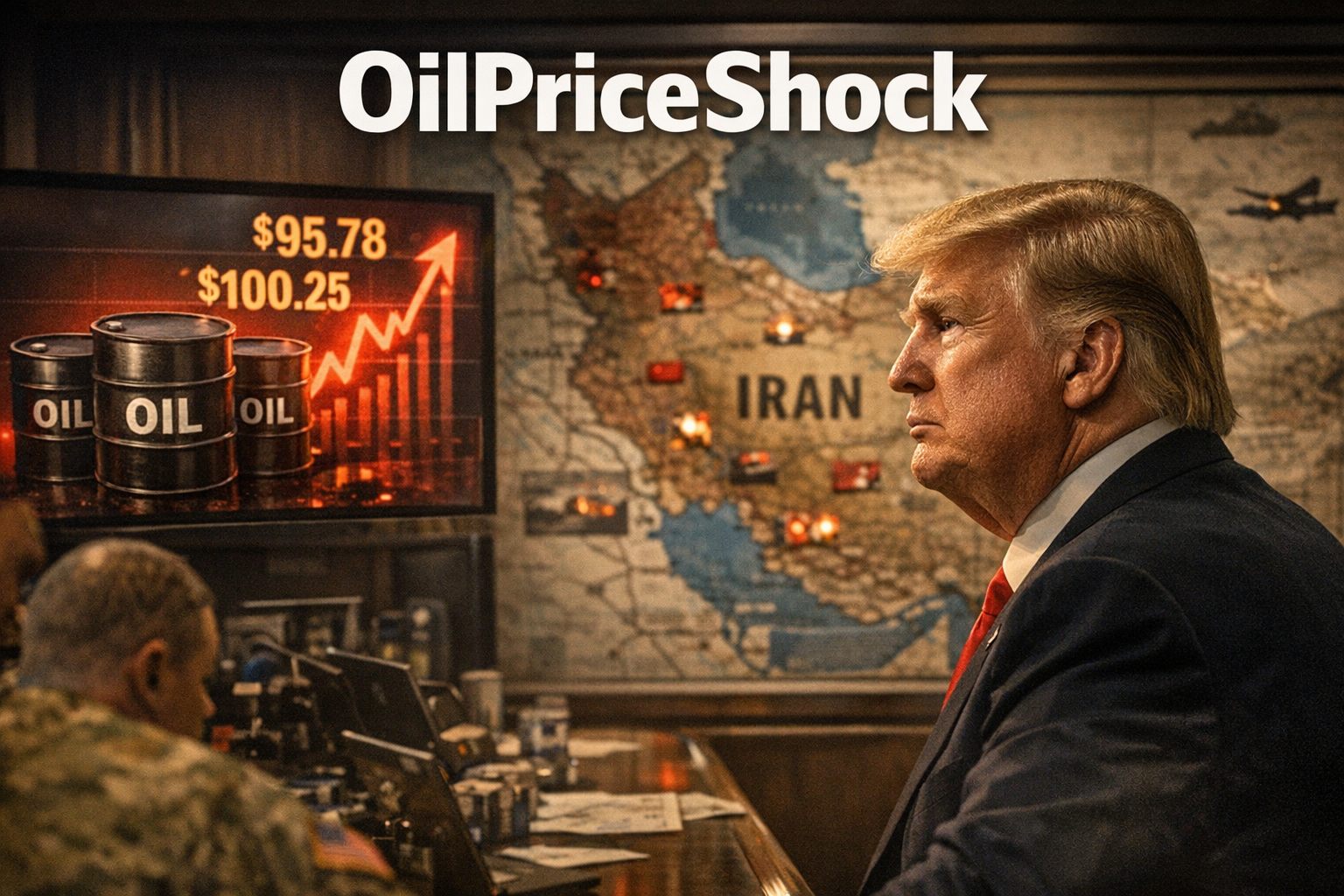
● Oil Shock, Nasdaq Slump, Middle East Escalation
Escalating Conflict Drives Oil Higher, Deepens Nasdaq Decline: Key Market Takeaways
This development extends beyond higher oil prices and a Nasdaq sell-off. Markets are repricing the linkage across inflation, rates, US equities, and global growth, with emphasis on discount-rate risk rather than headlines.
Key topics:
- What rising WTI and Brent signal for risk assets
- Why Nasdaq, KOSPI night futures, and KOSDAQ night futures sold off simultaneously
- Why additional US Marine deployments matter for market pricing
- How the Kharg Island issue affects global energy security
- The transmission mechanism reviving Fed tightening risk
- Why parts of Wall Street remain constructive
- The most under-discussed core driver
1. Market Snapshot
Risk-off tone strengthened across asset classes.
- WTI crude: up more than 2%
- Brent crude: up more than 1%
- Nasdaq: down around 1%+
- Russell index: down more than 1%
- Dow: comparatively defensive
- KOSPI night futures: down more than 3%
- KOSDAQ night futures: down more than 2%
This mix is consistent with energy-led inflation concerns, pressure on growth equities, and amplified downside in externally sensitive markets.
2. Primary Negative Catalyst: Additional US Deployments to the Middle East
The core driver of the risk-off move was reporting that the US is deploying up to 2,500 Marines and three naval vessels to the region.
Market relevance is less about the deployment itself and more about signaling higher probability of escalation and a longer-duration conflict path. A second major reinforcement within a week further weakened sentiment, implying broader military option sets are being actively considered.
3. Why the Reaction Was More Acute: Messaging Inconsistency and Policy Uncertainty
A key sensitivity was perceived inconsistency between prior statements indicating no ground-force plan and the subsequent deployment decision within a day.
For markets, the dominant risk is reduced predictability. In geopolitics, divergence between messaging and action increases perceived tail risk and accelerates repricing.
4. Why Kharg Island Matters
The strategically significant focus is Kharg Island. Reporting suggests the US may be evaluating a potential seizure scenario, even if no final decision has been made.
Kharg Island is a critical node for Iran’s crude exports. Any disruption would materially impair export capacity and elevate global supply-risk premia. If the area becomes central to military activity, the likely transmission channels include:
- Expanded concerns over supply disruption
- Higher maritime transit risk
- Rising insurance and logistics costs
- Renewed energy-driven inflation pressure
- Increased global growth downside risk
5. Why Rising Oil Is Systemically Risky (Not Merely an Energy Story)
Markets treat oil spikes as a broad macro variable, not a sector-specific event. Higher oil prices can transmit through:
- Higher transportation costs
- Higher manufacturing input costs
- Higher airline and logistics expenses
- Increased consumer inflation pressure
- Greater risk of margin compression
Given equity valuations have been supported by expectations of disinflation and easier policy, a renewed oil impulse challenges those assumptions.
6. Why Nasdaq Underperformed
Technology and growth equities are structurally more sensitive to discount rates. Geopolitical risk can lift oil, raise inflation concerns, and reduce the probability of near-term easing (or increase the perceived probability of tightening). In that setup, Nasdaq typically reprices first.
The market focus is therefore on the potential shift in the Fed policy path rather than the conflict headline itself.
7. Why Fed Hike Risk Re-Entered the Core Narrative
A critical point is that markets are pricing roughly a 50% probability of a rate increase by October.
This matters because once probabilities become meaningfully priced, they influence positioning and valuation frameworks. Key implications:
- Treasury yields may re-accelerate higher
- Valuation pressure on high-duration equities increases
- Higher risk of capital outflows from emerging markets
- Increased probability of USD strength
- Higher volatility across Asian equities, including Korea
The conflict is increasingly being treated as a rates-and-repricing event, not only a geopolitical event.
8. International Energy Agency Comments: Duration Risk
Comments that restoration of Gulf oil and gas supply could take around six months if disrupted reinforce two market signals:
- Potential shocks may last longer than expected
- Energy impact may not be a short-lived event
Strong language around elevated global energy security risk can raise the perceived ceiling for crude, increasing the likelihood of a higher-for-longer pricing regime.
9. Residual Constructive Views: Why Wall Street Has Not Fully Turned Bearish
Some institutions (e.g., UBS) view the episode as potentially transitory, expecting energy markets to stabilize and equities to recover over time. Common reasons:
- Full supply disruption is not yet confirmed
- Diplomatic off-ramps remain possible
- Historical precedent: markets often rebound after initial geopolitical overreactions
However, even if the medium-term direction stabilizes, near-term volatility may remain significant.
10. Implications for Korean Equities: Why Night Futures Fell More
The outsized decline in KOSPI and KOSDAQ night futures reflects structural sensitivity:
- High dependence on energy imports
- Export-led macro exposure to global shocks
- Risk-off phases often pressure foreign flows first
- KOSDAQ’s higher growth composition increases linkage to Nasdaq drawdowns
A combination of higher commodities, stronger USD risk, and tighter global financial conditions tends to compress Korean risk assets disproportionately.
11. News-Style Summary
1) Oil spike
WTI and Brent rose as markets began pricing higher probability of supply disruption.
2) Additional US deployments
Reports of up to 2,500 Marines and three naval vessels deployed increased escalation concerns.
3) Kharg Island risk
Attention to Iran’s key export hub amplified global energy security uncertainty.
4) Risk-asset weakness led by Nasdaq
Rate-sensitive technology and growth equities sold off; Nasdaq and Russell underperformed.
5) Repricing of Fed policy path
Markets priced approximately a 50% probability of a rate hike by October.
6) Increased pressure on Korean equities
KOSPI and KOSDAQ night futures declined sharply, signaling broader regional risk aversion.
12. The Most Important, Under-Discussed Point
The central issue is the reset of the market discount rate. Recent equity strength has been supported by assumptions of stabilizing inflation and eventual Fed easing. If geopolitical risk sustains higher oil prices, those assumptions weaken.
The impact is not confined to energy or travel. It can extend to valuation logic across AI, semiconductors, software, and broader growth premia. This is effectively a challenge to the justification for elevated AI-led growth multiples.
13. AI Trend: What to Monitor
AI leadership in equity sentiment is increasingly tied to large-scale capex cycles:
- Data center buildouts
- Semiconductor capex
- Power infrastructure investment
- Cloud capacity expansion
- Enterprise digital transformation budgets
If oil and rates rise, discount rates increase and expected returns on long-duration AI infrastructure spending can compress. Potential near-term market effects:
- Lower present value of AI infrastructure investment narratives
- Higher volatility in high-multiple growth equities
- Increased short-term pressure on semiconductors and mega-cap tech
- Relative strength potential in energy, defense, and other real-economy sectors
AI-driven markets remain highly sensitive to inflation and rates in the current regime.
14. Practical Investor Checklist
In this environment, monitoring cross-asset confirmation is more relevant than headline-driven positioning:
- Does oil mean-revert after the spike, or establish an uptrend?
- Do US Treasury yields break above prior highs?
- Does Nasdaq hold key technical support levels?
- Does USD strength translate into emerging-market equity pressure?
- Do Middle East headlines shift toward negotiations or toward military action?
Prioritize the joint behavior of oil, rates, USD, and equities over single-event interpretation.
15. Conclusion: Markets Are Pricing the Second-Order Effects
The move reflects forward pricing of a chain reaction:
Higher oil → inflation pressure → tighter Fed risk → growth-valuation compression
This explains relative weakness in Nasdaq, larger downside in Korean night futures, and the re-emergence of energy security as a central macro variable.
Near-term outcomes remain bifurcated:
- De-escalation and oil stabilization could support a risk-asset rebound
- Escalation and realized supply disruption could drive further repricing
The key is not the conflict headline, but its potential impact on global inflation, rates, US equities, and the valuation framework for AI-led growth premia.
< Summary >
Escalation risk in the Middle East lifted oil prices and pressured Nasdaq. Additional US deployments and attention to potential Kharg Island disruption increased market uncertainty. The core transmission channel is oil-driven inflation risk altering the Fed policy path, raising volatility in rate-sensitive growth assets, including AI-related high-multiple equities. Investors should monitor the oil trend, Treasury yields, USD direction, and the balance between diplomatic and military developments.
[Related Articles…]
-
https://NextGenInsight.net?s=oil
Investment factors to monitor when global equities weaken after a crude oil spike -
https://NextGenInsight.net?s=nasdaq
Reassessing AI growth equity strategy during elevated Nasdaq volatility
*Source: [ 내일은 투자왕 – 김단테 ]
– 전쟁 격화로 유가 상승, 나스닥 침몰