
● Tesla FSD Delay Shock, Europe Greenlight Could Ignite Korea EV-AI Boom
Tesla Europe FSD Approval Date Moved to April 10: The Core Issue Is Not “Delay,” but Structural Change Spreading to Korea and Global Mobility Markets
This development should not be treated as a simple headline about Tesla’s European FSD approval slipping by 21 days.
This report consolidates: the underlying meaning of the Netherlands RDW schedule change; why Europe’s regulatory architecture connects directly to Korea’s autonomous-driving policy; why the Tesla Semi and the transition to V4 Supercharging matter for fundamentals and valuation; and what material changes could emerge in the EV market and AI-based autonomy after April.
Key under-covered angles include: the potential timetable for Korea adoption; distinguishing regulatory delay from technical failure; and Tesla’s transition from an automotive manufacturer to an AI mobility platform.
1. Issue Snapshot: April 10 May Represent a Final Regulatory Gate, Not a Simple Deferral
The Dutch approval authority RDW moved Tesla’s FSD-related decision date from March 20 to April 10.
The market reaction was immediate, interpreting it as another postponement, and Tesla’s share price faced short-term downside pressure.
However, structurally, the more plausible interpretation is that the schedule change reflects additional regulatory review and administrative processing, rather than an indication that the technology is incomplete.
This distinction is material: delays driven by technical deficiencies undermine commercialization credibility; delays driven by administrative processes can be consistent with late-stage approval dynamics.
2. Confirmed Key Facts to Date
1) Tesla has conducted approximately 18 months of FSD-related testing in Europe.
2) Cumulative test mileage is reported at approximately 1.6 million km.
3) More than 13,000 customer-supervised test instances were conducted.
4) More than 4,500 track scenario tests were completed.
5) Tesla submitted several thousand pages of technical documentation covering 400+ regulatory items.
6) Final vehicle testing with RDW is interpreted as completed, and submission procedures aligned with UNR 171 are interpreted as finalized.
7) Only the decision date was moved to April 10.
Based on this sequence, the apparent bottleneck is the approval process rather than vehicle development.
3. Why the Market Overreacted to the RDW Schedule Change
From an equity market perspective, any schedule slip increases uncertainty.
Sensitivity is elevated amid macro and market cross-currents (rates, geopolitical risk, EV demand concerns, and large-cap valuation pressure). Tesla also carries high embedded expectations, amplifying sentiment volatility.
The fact pattern indicates “decision timing adjusted” rather than “approval failed.” Short-term price action and long-term structural implications should be assessed separately.
4. The Critical Point: This Is Not Only a European Issue
While framed as a Europe FSD approval story, the broader impact can extend to UN regulation-aligned jurisdictions, including Korea.
Korea’s autonomous-driving framework discussions (including DCAS, i.e., driver support system standards) are directionally linked to the same international regulatory axis as UNR 171.
Accordingly, Tesla’s European submissions (safety evidence, data packages, and regulatory reasoning) may become reference inputs for Korea’s Ministry of Land, Infrastructure and Transport in future reviews and rulemaking.
This matters for valuation: Tesla’s investment thesis may be increasingly evaluated through AI autonomy software scalability rather than EV unit sales alone.
5. Regulatory Framework: UNR 171 and EU Article 39
Understanding the approval context requires clarifying the regulatory structure.
5-1. What UNR 171 Covers
UNR 171 functions as an international safety standard governing capabilities such as lane-keeping assistance, cruise control, and driver assistance systems.
A core constraint is that highly advanced autonomy-like functions (e.g., Tesla FSD) are difficult to fully capture within legacy language, indicating a regulatory lag relative to technology progress.
5-2. Why EU Article 39 Matters
EU Article 39 provides a pathway for approving new technologies that do not perfectly fit existing rules if safety can be demonstrated.
Tesla is interpreted as using this structure: comply with UNR 171 where applicable and address advanced functions via Article 39 exemptions or exceptional approvals.
5-3. Why the Netherlands RDW Is the First Gate
RDW is widely viewed as comparatively technology-forward within Europe.
Securing an initial precedent in the Netherlands is strategically advantageous, as it can become a reference point for other European jurisdictions. The Netherlands functions as an early “benchmark market.”
6. Implications for Korea: Timing and Mechanism
A common investor question is whether European approval would immediately translate to Korea.
The answer is no, but it could accelerate the pathway.
6-1. Not an Automatic Approval
RDW approval does not automatically trigger Korean approval.
Korea requires separate legislative and administrative steps (public consultation, legal amendments, regulatory notice periods, technical review, and pilot validation). Conservative estimates often place broad commercialization around 2027.
6-2. Why It Matters Now
The present significance is that it can represent the start of formal institutionalization.
As European approvals broaden and safety data accumulates, sustaining a “not yet validated” position becomes more difficult for regulators. Domestic rules may increasingly converge.
6-3. Tesla Korea Signals
Hiring for specialized operators to collect real-world driving data on Korean public roads is a notable operational indicator.
This is interpreted as preparatory work for eventual market enablement, suggesting Korea is a target market contingent on regulatory opening.
7. Why the Korea Market Impact Could Be Large: Model Y and Model 3 Concentration
In Korea, Tesla sales are heavily concentrated in Model Y and Model 3, with a significant portion sourced from China production.
Whether FSD becomes available on these volume models would materially affect consumer perception, reported performance, and brand premium.
The impact extends beyond feature addition: post-sale software monetization, residual values, subscription economics, and customer lock-in dynamics may shift. This is a platform-business issue, not only a vehicle-spec issue.
8. Tesla Semi: Why It Should Be Reassessed Now
A second under-emphasized point is the Tesla Semi.
Improving real-world operator feedback in the U.S. can partially offset passenger-vehicle demand concerns.
8-1. Field Feedback as a Leading Indicator
Positive assessments from experienced diesel truck drivers—reduced fatigue and improved drivability—are operationally meaningful in commercial transport, where total cost of ownership, uptime, and driver satisfaction dominate.
8-2. Range and Economics as Competitive Advantages
Reported range advantages (up to roughly double versus some competing electric trucks) and improved price competitiveness support adoption potential.
Evidence of real deployment cases (e.g., logistics operators) indicates potential for share capture in commercial freight.
8-3. Investment Implications
The market often frames Tesla primarily through passenger-vehicle demand. Semi strengthens the case for revenue diversification and long-run linkage to energy storage, charging infrastructure, and autonomous logistics, complicating traditional auto-only valuation frameworks.
9. Gigafactory New York Transition to V4 Superchargers: A Larger Signal
Gigafactory New York reportedly ended V3 Supercharger cabinet production and is shifting toward a V4-centered system.
9-1. Quantitative Context
V3 is generally 250 kW-class; V4 is commonly interpreted as 500 kW-class.
This is not only a higher number; it can materially shift the charging experience from “waiting” toward “short stop,” depending on vehicle architecture and site constraints.
9-2. Charging Speed as a Final Mass-Adoption Barrier
Consumer sensitivity remains high around charging access and time.
If 5–10 minutes of charging can deliver meaningful usable range, perceived disadvantages versus internal combustion decline. This connects to EV market expansion, battery competition, infrastructure investment allocation, and demand psychology.
9-3. Potential Shift in Vehicle Design Targets
Ending V3 production implies de-emphasizing legacy specifications and preparing for next-generation vehicles optimized for higher-rate charging.
In combination with platforms such as Cybertruck and future vehicle programs, Tesla is upgrading vehicles and the charging network in parallel—an integration advantage that remains difficult for many competitors to replicate.
10. Why April Matters: Convergence of FSD, Robotaxi, Charging, and Software
April is not a single-event trade; multiple vectors may converge.
10-1. Europe FSD Decision Timing
The most direct catalyst is RDW’s April 10 decision, potentially a first symbolic European gate. The scope and conditions (partial vs conditional approval vs further review) will drive market interpretation.
10-2. Robotaxi (Cybercab) Production Preparation
While skepticism remains, observed line transitions and production preparation signals indicate Tesla has not abandoned its robotaxi strategy, which anchors the AI + mobility services model.
10-3. Expectation for Broader FSD v14.3 Distribution
Reported feature evolution (e.g., destination arrival behaviors including automated parking search) supports the view that FSD is progressing from driver assistance toward more usable autonomy-like experiences.
Software iteration is structurally higher-margin than vehicle sales and can influence long-term cash flow narratives.
11. The Core Economic Lens
This is not only a company event; it is a case study in industrial transition.
11-1. EV Competition Is Shifting
Competition increasingly spans charging speed, autonomy data, regulatory execution capability, software monetization, and commercial-vehicle scalability—not only pricing.
Survivors may be those that build platform ecosystems, not only hardware.
11-2. AI Becomes a Central Profit Model in Automotive
FSD is a representative AI commercialization pathway.
If regulatory clearance and cross-border diffusion accelerate, the industry may shift from manufacturing-centric economics toward software and subscription-driven models.
11-3. Relevance to Global Equities
Tesla remains influential for Nasdaq growth sentiment.
FSD approvals can affect long-duration cash flow expectations tied to the broader AI beneficiary narrative. Further delays can pressure growth premia.
12. Most Material Under-Covered Conclusions
12-1. The Delay May Signal Imminent Institutionalization More Than a Negative Technology Readout
Testing and documentation appear largely complete. Extended administrative review is often observed near final thresholds.
12-2. Korea Is More Directly Linked Than Commonly Assumed
Because Korea aligns with the same international regulatory axis, April 10 is a European event with potential relevance to Korea’s autonomy roadmap.
12-3. Tesla Is Transitioning Toward an AI Infrastructure Company
Semi, V4 Supercharging, FSD, and robotaxi initiatives are more coherent when viewed as a single strategic direction: linking AI software, energy/charging infrastructure, commercial logistics, and autonomy services.
13. Key Dates and Monitoring Checklist
First, the April 10 RDW outcome, with focus on scope and conditions.
Second, cross-country dynamics within Europe, including the pace of mutual recognition and policy response in jurisdictions such as Belgium, Germany, and Nordic markets.
Third, domestic signals in Korea: guidance, pilot programs, and formal consultation processes from the Ministry of Land, Infrastructure and Transport.
Fourth, operational indicators from Tesla Korea: hiring and expansion of local data collection.
Fifth, V4 rollout speed and whether next-generation vehicles transition toward 800V architectures, which could directly affect adoption via charging performance.
14. Conclusion: April 10 May Be a Starting Point That Reshapes 2025–2027 Market Structure
The European FSD decision-date shift may appear negative on the surface, but it more plausibly reflects regulatory processing.
The broader significance is the linkage of autonomy institutionalization, European precedent formation, potential Korea adoption acceleration, charging infrastructure evolution, and AI-based mobility expansion.
Post–April 10, the largest change may be the market’s framework for evaluating Tesla—from an EV manufacturer toward an AI mobility platform with infrastructure leverage. The spillover could extend from Europe into Korea’s EV market, autonomous-driving policy, and the broader AI industrial ecosystem.
< Summary >
Tesla’s European FSD decision date moved to April 10; the evidence indicates regulatory review timing rather than a technology failure.
An RDW approval could increase the probability of broader European diffusion and serve as a reference case for Korea, which shares an international regulatory alignment.
Combined with Semi traction, V4 Supercharger transition, robotaxi preparation, and continued FSD software iteration, Tesla’s positioning increasingly reflects an AI mobility platform trajectory.
Accordingly, April 10 functions less as a one-day headline and more as a potential inflection reference for Korea’s EV market, global equities sentiment, EV industry structure, and AI-based autonomy commercialization.
[Related Articles…]
Tesla Autonomous Driving and EV Market Restructuring: Key Investor Takeaways
https://NextGenInsight.net?s=tesla
Mobility Industry Shifts After the AI Revolution: Implications for the Korean Economy
https://NextGenInsight.net?s=AI
*Source: [ 오늘의 테슬라 뉴스 ]
– 테슬라 유럽 FSD 연기, 단순 지연이 아니다? 4월 10일 이후 한국에 불어올 ‘거대한 변화’ 는 ?
● Tesla Shockwave – Europe FSD Breakout, Cybercab Power Play, AI Empire Rising
Tesla Key Developments (Latest): EU FSD Entry, FSD v14.3 Timing, Cybercab Strategic Rationale, and Why Terafab + Orbital Data Centers Matter
This update extends beyond vehicle launches or incremental autonomy releases. It indicates: (i) formal regulatory movement for FSD in Europe, (ii) a near-term FSD software step that markets interpret as closer to unsupervised operation, (iii) a clearer product logic behind Cybercab as purpose-built autonomy hardware, and (iv) a broader repositioning narrative toward AI infrastructure via chips, energy, data centers, and potentially space-based compute.
This report consolidates the market backdrop, technical differentiation in Tesla autonomy, Cybercab commercialization logic, semiconductor and energy strategy implications, and the potential economics of orbital data centers, in a structured news-style format.
1. Market context: why Tesla moved more sharply
Recent risk-off conditions were driven by overlapping factors (Middle East conflict, higher oil prices, and interest-rate sensitivity). In such environments, long-duration growth equities typically reprice more aggressively; Tesla followed this pattern.
Near-term, this is a headwind. For longer-horizon investors, dislocations can create entry points where valuation compresses faster than long-term optionality. The core question remains whether future enterprise value and share capture can expand.
In this context, the current news flow is notable because it links autonomy, AI chips, energy, data centers, and space infrastructure in a single strategic arc.
2. Europe FSD: formal entry begins
A key development is formal FSD availability in Europe. Via Tesla’s official communication, FSD use in the Netherlands was confirmed from April 10, based on approval under an exception framework (Article 39). While timing slipped versus earlier expectations, the material point is regulatory entry into a high-barrier region.
2-1. Why the Netherlands approval matters
This is more than a single-country authorization. It can serve as a reference case for subsequent approvals across other European jurisdictions. Tesla appears positioned to use this as a bridgehead for broader European expansion over the summer.
The near-term revenue impact may be limited; the signaling value is high. It indicates FSD is beginning to enter European regulatory pathways, which can later support robotaxi deployment, insurance offerings, vehicle demand, and software subscription revenue.
2-2. Economic significance of Europe expansion
Europe is a large auto market with stringent safety and regulatory requirements. Approval implies not only technical capability but regulatory adaptability.
Strategically, it may accelerate the competitive shift from manufacturing-centric differentiation toward AI software competitiveness, particularly in a region dominated by incumbent OEMs. This is relevant to industry leadership dynamics rather than a single product cycle.
3. Tesla autonomy differentiation: real-time AI architecture
A central technical point is the autonomy architecture described by Tesla leadership: in real-world autonomy, “planning” and “control” are difficult to separate cleanly due to strict latency and safety constraints.
3-1. General-purpose AI vs. real-world AI
Many AI systems can tolerate latency and iterative correction. Autonomous driving cannot: steering, braking, and obstacle response must occur in near real time. “Recompute after error” translates directly into physical risk.
3-2. Why Tesla may have an advantage
Tesla is moving toward an end-to-end approach from vision input through lower-level control, emphasizing integrated information flow and latency reduction rather than modular separation.
Lower latency generally improves on-road responsiveness, especially in long-tail edge cases (rare but high-risk scenarios) where time-to-action is critical.
In simplified terms: general AI optimizes for correctness after deliberation; autonomy optimizes for correct action under strict time constraints. Tesla’s design choices appear aligned with the latter.
3-3. Link to Optimus and robotics
The same low-latency, integrated perception-to-action paradigm is relevant to humanoid robotics, which also operates in dynamic real-world environments. As a result, autonomy stack progress can be viewed as a platform capability, not only a vehicle feature.
4. Why Cybercab matters: a vehicle designed for AI, not human driving
Cybercab appears optimized for a non-human-driver operational model rather than as a conventional vehicle with removed controls. Structural decisions suggest prioritization of robustness and autonomous operation.
4-1. A-pillar and windshield design implications
Conventional vehicles prioritize human sightlines. If human driving is not the operating assumption, design trade-offs can shift toward structural rigidity and safety architecture.
A thicker A-pillar or reduced human-forward visibility is less problematic in a robotaxi-centric design, enabling stronger crash structures and packaging choices.
4-2. Why it can improve safety and liability clarity
Removing steering wheel and pedals reduces human intervention error risk and clarifies responsibility in incident attribution. Mixed-control systems can create ambiguity when human takeover occurs near an event; a dedicated autonomous platform reduces that ambiguity, with direct implications for insurance and legal frameworks.
4-3. Cybercab as purpose-built unsupervised autonomy hardware
The key interpretation is that Cybercab may be designed from inception for unsupervised autonomy deployment. This contrasts with hybrid architectures where human driving remains a primary use case. Strategically, this aligns more with a mobility platform model than a traditional OEM product model.
5. FSD v14.3: deployment timing and market sensitivity
Elon Musk indicated FSD v14.3 could see broad deployment within weeks. Markets are sensitive to this because v14.3 is widely interpreted as a step toward unsupervised capability rather than a routine iteration.
5-1. Why frequent minor releases preceded the jump
The recent cadence of small updates can be interpreted as stabilization ahead of a major release—incremental tuning of safety and performance before a larger version transition.
5-2. “More context-aware” driving expectations
Expectations center on more natural, context-sensitive behavior rather than simple lane-following improvements. While such framing can be overstated, meaningful improvements in user-perceived reliability would affect commercialization timelines and unit economics across software revenue, mobility services, and data flywheel scale.
5-3. Implications of Cybercab testing activity
Reports of Cybercab testing with validation equipment are noteworthy; similar patterns have historically preceded new-city expansion, robotaxi scaling, or pre-release validation. This may indicate preparation for a broader commercialization phase tied to v14.3 performance.
6. Terafab: semiconductor supply-chain control
Tesla’s careers site reportedly shows semiconductor-related roles and Terafab-associated positions across California and Texas, aligning with prior timeline commentary. If executed, Terafab would be a structural shift, not an incremental initiative.
6-1. Core focus: AI inference chips
AI monetization is increasingly expected to concentrate in inference, where production workloads run continuously at scale. Tesla has experience with in-vehicle AI compute. If Terafab supports custom inference chip production, Tesla would gain tighter control over a key bottleneck: reliable access to performant, power-efficient inference silicon.
6-2. Potential talent dynamics and the ASML linkage
If ASML workforce reductions materialize, high-end process and EUV-adjacent talent may enter the market. Given ASML’s strategic position in advanced lithography, this labor pool is scarce. A Terafab push during such a period could improve Tesla’s ability to acquire critical manufacturing know-how, where people and process expertise are as important as equipment.
7. Solar equipment scale-up: energy strategy as AI strategy
Reports suggest Tesla is negotiating large-scale solar equipment procurement from Chinese suppliers. This should be analyzed as AI infrastructure enablement, not only as an energy segment update.
7-1. Why solar relevance increases now
With oil-price volatility and geopolitical risk, electricity supply stability gains value. Solar can be deployed in distributed configurations and may be less exposed to specific chokepoints than certain fuel supply chains.
For charging networks, factories, data centers, and AI compute growth, energy autonomy becomes a strategic asset rather than a pure cost variable.
7-2. Why energy becomes more central for Tesla
Tesla spans vehicles, batteries, storage, and solar. If data center compute, robotics, and robotaxi operations scale, electricity demand rises materially. Long-term competitiveness may increasingly favor firms that integrate model capability with power, chips, data, and deployment platforms. Under that framing, Tesla Energy is potentially a core strategic lever.
8. Orbital data centers: emerging from concept toward business consideration
SpaceX disclosures and competitive pushback suggest orbital data centers are being treated as a credible business domain. Industry sensitivity to licensing and permissions indicates perceived economic stakes.
8-1. Why orbital data centers attract attention
Proposed benefits include high-efficiency power availability, thermal management possibilities, direct integration with communications networks, and partial avoidance of terrestrial regulatory constraints. The central driver is potential global AI inference demand growth that could exceed practical terrestrial build-out constraints in certain scenarios.
8-2. Why some payback claims draw attention
Some analyses claim that combining satellite manufacturing and launch costs with AI inference service economics could produce sub-one-year payback in aggressive cases. While assumptions may be optimistic, the key point is that high-margin inference workloads could change the economics of data center location and form factor.
8-3. Why Terafab reconnects here
Orbital compute economics depend heavily on chips: low weight, high power efficiency, strong inference performance, and stable supply at scale. This creates a direct strategic linkage between chip vertical integration (Terafab) and non-terrestrial compute deployments.
9. Under-discussed core linkage across the headlines
The individual headlines—EU FSD approvals, Cybercab, v14.3, Terafab, orbital data centers—are best interpreted as components of one integrated strategy.
9-1. Tesla is moving beyond the “automaker” frame
The visible direction implies an ecosystem spanning vehicles, models, inference chips, energy, robotics, data centers, and potentially space-linked networks. Competitor sets expand accordingly to include semiconductor, cloud, robotics, energy, and telecom players, increasing both competitive complexity and addressable opportunity.
9-2. Key advantages: latency reduction and vertical integration
The central operational advantage is lower latency in real-world AI, enabled by vertical integration across model architecture, chip design, vehicle hardware, data collection, and deployment. As more of the stack is internalized, the gap versus assemblers relying on external components can widen over time.
9-3. In drawdowns, focus on trajectory of industry control
In volatile periods, near-term performance dominates sentiment. For longer-term positioning, the more material variable is whether a firm is accumulating durable control points that define the next cycle’s industry structure. The current set of developments is more indicative of strategic trajectory than quarter-to-quarter catalysts.
10. Near-term watch items for investors and industry observers
1) Pace of additional European FSD approvals and the practical easing of regulatory friction.
2) Measured user experience improvement from FSD v14.3 and its impact on perceived reliability.
3) Scope, geography, and scaling of Cybercab validation activity as a proxy for robotaxi commercialization.
4) Any formal Terafab announcements and hiring acceleration, indicating manufacturing intent and timelines.
5) Evidence that solar and energy scaling is being aligned with data center and autonomy expansion.
6) Licensing milestones and competitive responses related to orbital data centers, indicating whether early infrastructure positioning is underway.
11. Synthesis: signal consistent with “Tesla 2.0”
The combined signal set supports an interpretation that Tesla is evolving from an EV manufacturer toward a real-world AI, energy, semiconductor, and mobility-infrastructure company.
- Europe FSD entry: initial regulatory breakthrough and platform expansion.
- FSD v14.3: a potential step toward unsupervised operation, subject to validated performance.
- Cybercab: a dedicated hardware platform optimized for autonomous service deployment.
- Terafab + orbital compute: efforts that, if executed, extend Tesla’s reach into foundational AI infrastructure.
The primary takeaway is structural positioning rather than a near-term trading catalyst.
< Summary >
- Tesla FSD has formally entered Europe, starting with the Netherlands.
- FSD v14.3 is viewed as a key step toward unsupervised autonomy, pending real-world validation.
- Tesla’s autonomy advantage is linked to an integrated real-time architecture that reduces latency across planning and control.
- Cybercab appears designed as a dedicated autonomous vehicle platform rather than a conventional human-driven car.
- Terafab is strategically relevant to AI inference chip production and supply-chain internalization.
- Solar and energy initiatives support the power requirements of AI data centers and autonomy scaling.
- Orbital data centers may become a high-margin AI infrastructure segment if inference economics and deployment constraints converge.
- The overarching theme is Tesla’s expansion beyond EVs into AI, semiconductors, energy, and potentially space-linked infrastructure.
[Related Links…]
- Tesla autonomy and robotaxi expansion: latest developments
https://NextGenInsight.net?s=Tesla - AI semiconductors and data center investment analysis
https://NextGenInsight.net?s=AI
*Source: [ 허니잼의 테슬라와 일론 ]
– [테슬라 주요 뉴스] 드디어 시작되는 유럽 FSD와 지각 있는 버전의 자율주행 14.3! 사이버캡이 특별한 이유 / 본격적으로 시작되는 테라팹과 궤도 데이터 센터 시대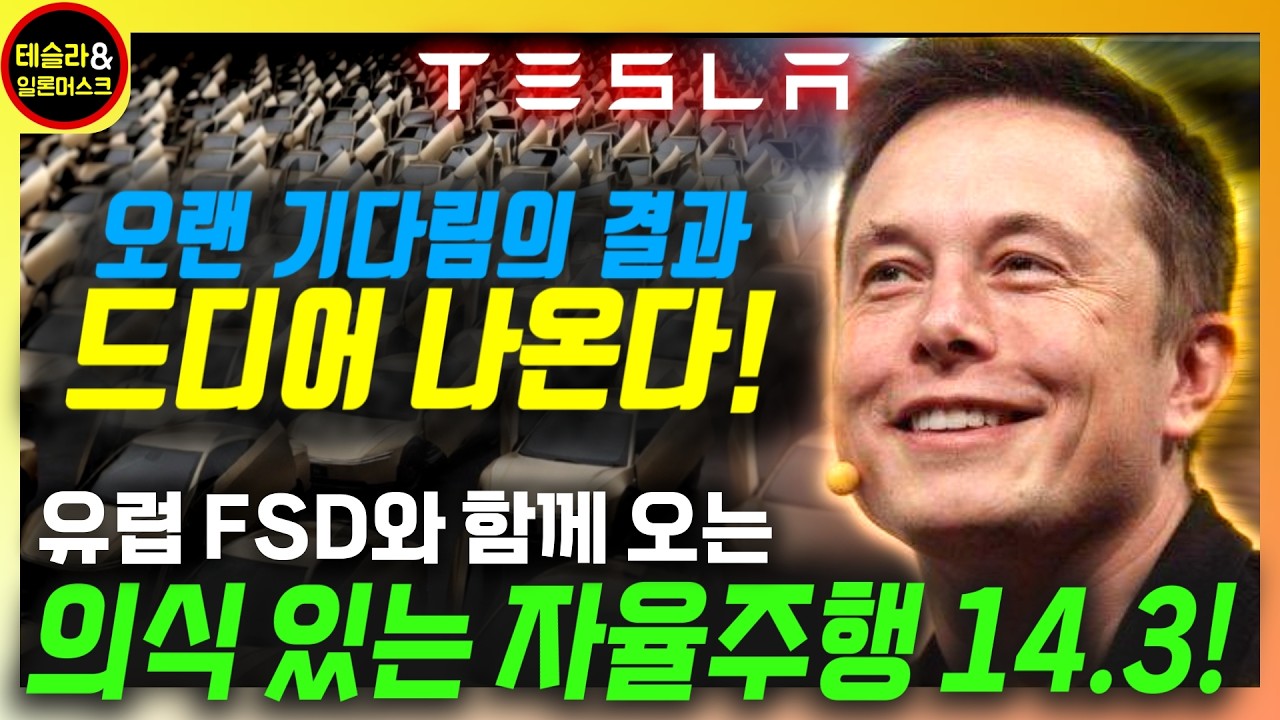
● AI Power War, Nuclear Winners Surge
The Power Race Accelerates in the AI Era: The Primary Beneficiaries Beyond Semiconductors
The market’s central question is straightforward: where will the next wave of AI-driven cash flows accrue?The current cycle is expanding beyond semiconductors, GPUs, and data centers toward power infrastructure, nuclear generation, and, over time, companies with long-duration power supply contracts.
This report goes beyond a generic “utilities are attractive” narrative. It outlines how AI is reshaping the economics of the power sector, why Constellation Energy has emerged as a focal name in U.S. markets, and which variables and risks investors should monitor.
It also addresses under-discussed drivers: power quality, the value of baseload power, and the linkage between AI infrastructure build-out velocity and power pricing dynamics.
1. Key Takeaway: Power Has Returned to the Center of the Market in the AI Era
Rapid AI adoption is driving a sharp increase in data center electricity demand. While semiconductors and large technology platforms were the initial beneficiaries, attention is shifting toward the power system required to operate AI compute fleets continuously.
Market focus is increasingly on baseload power: stable, uninterrupted supply rather than headline generation volume. This has renewed investor interest in nuclear generation.
Constellation Energy, one of the largest nuclear operators in the U.S., has drawn increasing attention as AI power demand expectations rise. In U.S. equities, power-related stocks, power ETFs, and grid infrastructure companies are being re-rated as AI beneficiaries.
2. Why Power, Not Chips, Is Emerging as the Binding Constraint
2-1. AI Models Consume Substantially More Electricity Than Commonly Assumed
Training and operating large-scale AI models requires thousands of GPUs running concurrently, typically on a 24/7 basis.
GPU capacity can be scaled faster than electricity supply. Adding generation requires time, capital, permitting, and transmission build-out. As a result, power infrastructure may fail to keep pace with AI expansion.
2-2. Data Centers Prioritize “Uninterrupted Power” Over “More Power”
AI data centers are highly sensitive to outages and voltage instability. Even short disruptions can halt training workloads and increase operating and recovery costs.
For hyperscalers and data center operators, securing large volumes of electricity is insufficient; long-term access to reliable supply is increasingly critical. This dynamic underpins renewed interest in nuclear and grid infrastructure.
3. Why Nuclear Is Back in Focus
3-1. Low-Carbon Output With 24/7 Reliability
Nuclear power is a low-carbon generation source. As the U.S. and Europe pursue decarbonization alongside energy security, nuclear assets are increasingly treated as strategic components of clean power portfolios.
Solar and wind are low-carbon but intermittent. Nuclear output is less sensitive to weather and seasonality and can provide large-scale, continuous generation.
Large AI data centers favor this profile. In the AI era, “clean” alone is insufficient; the market is placing higher value on clean power that is also stable and scalable.
3-2. The Revaluation of Existing Nuclear Assets
New nuclear construction faces high barriers. Existing operating fleets, however, can produce stable output over long periods. As AI-driven demand increases, the strategic value of incumbent nuclear assets may rise.
Markets are increasingly focused on who can supply large-scale power immediately, not only on future technology optionality.
4. Why Constellation Energy Is Frequently Highlighted
4-1. Corporate Background: A Generation-Focused Spin From Exelon
Constellation Energy originated from Exelon’s separation of its regulated utility business and its generation business in 2022.
Regulated utilities typically provide stable earnings with limited growth, while merchant generation is more sensitive to market pricing and can exhibit greater operating leverage. Constellation is the independent generation platform and has become one of the largest producers of carbon-free electricity in the U.S.
4-2. Large U.S. Nuclear Portfolio
The company operates more than 10 nuclear plants across multiple states, including Illinois, Pennsylvania, New York, and Maryland, representing a meaningful share of U.S. nuclear output.
This supports the view that it is a system-relevant operator rather than a thematic proxy. As AI power demand materializes, the value of such installed generation capacity may increase.
4-3. Investment Relevance: Direct Exposure to Near-Term AI Power Demand
Constellation’s differentiator is operational capacity and contracting capability today, not solely long-term optionality.
As AI infrastructure spending and data center expansion continue and large customers seek long-duration procurement, the company is positioned for more direct demand capture.
5. Sector Structure: Why Generation Is Being Re-Rated
5-1. Power Generation and Power Delivery Are Distinct
Power markets often separate generation, transmission and distribution, and retail supply.
Generators benefit more directly from higher power prices, while regulated utilities may face constraints on rate adjustments. In the current AI demand narrative, investors are often prioritizing owners of generation assets over regulated delivery-only utilities.
5-2. Earnings Drivers: Power Prices and Long-Term Contracts
When demand rises and supply is constrained, power prices face upward pressure. Long-term contracts with large customers can improve revenue stability and earnings visibility.
AI data center customers are more likely to prefer multi-year procurement arrangements rather than spot exposure, supporting potential re-rating dynamics for generators with contracting capacity.
6. Market Evidence: Power and Nuclear Equities Have Already Reacted
AI-driven power demand expectations have begun to be reflected in equity performance. Constellation Energy has appreciated significantly over the past year, reinforcing its position as a representative AI power beneficiary.
Other generators, such as Vistra, have shown similar moves. This is consistent with an emerging market view that power supply is a critical constraint for AI scaling.
U.S. equity market focus is broadening from “who sells AI chips” to “who supplies electricity to operate AI at scale.”
7. Constellation Energy: Strategy and Investment Considerations
7-1. Clean Energy Policy Tailwinds
Federal and state policies continue to pursue emissions reduction and energy transition objectives. Nuclear is increasingly framed as a firm, clean resource that mitigates renewable intermittency.
If nuclear is more explicitly recognized and supported within clean energy frameworks, investment attractiveness for operators such as Constellation may improve.
7-2. Expansion of Long-Term Contracts With Hyperscalers and Industrial Customers
In the AI era, competitive advantage extends beyond server capacity to include secured power supply. Large technology companies are evaluating multi-year to multi-decade procurement structures to support data center expansion.
Constellation may expand long-term supply agreements with these customers, improving forward earnings visibility.
7-3. Meeting AI Demand Through Existing Nuclear Fleet Utilization
The ability to address incremental demand without building new plants is a key advantage. In supply-constrained environments, the market may revalue existing operating assets more quickly than greenfield projects.
8. Core Variables Investors Should Monitor
8-1. Sustainability of Power Price Strength
If demand growth persists amid supply limitations, power pricing may remain structurally firm. Generator earnings are directly exposed to power price trends.
8-2. U.S. Nuclear Policy Developments
Nuclear is heavily regulated. Expanded support could be a positive catalyst, while tighter regulation or permitting delays could be adverse.
8-3. Pace of AI Data Center Capex
The thesis depends on continued AI infrastructure investment. Investors should track whether major platforms such as Microsoft, Amazon, Google, and Meta sustain data center capex and whether procurement agreements increase in frequency and duration.
8-4. Transmission Constraints and Grid Build-Out
Generation capacity alone is insufficient if transmission is constrained. The AI power theme can extend beyond generators to transmission, transformers, electrical equipment, and grid infrastructure suppliers.
9. Key Risks: Power Exposure Is Not Risk-Free
9-1. Policy and Political Risk
Nuclear assets are exposed to political cycles, regulatory shifts, and local opposition. Elevated expectations can translate into higher volatility if policy direction changes.
9-2. Maintenance and Operational Risk
Nuclear fleets involve significant maintenance and compliance costs. Refueling outages, safety-related expenditures, and unplanned downtime can pressure financial results.
9-3. AI Capex Normalization Risk
If hyperscaler AI spending slows versus expectations, power demand forecasts may be revised downward, creating valuation risk for power-exposed equities.
10. Under-Addressed but Material Points
10-1. The Key Is “Power Quality,” Not Only “Power Volume”
Many discussions focus on aggregate shortages. From an investment perspective, the stability and predictability of supply can matter more than headline generation volume.
Data centers are sensitive to outages, instability, and grid congestion. Markets may assign a premium to baseload resources and grid reliability exposure.
10-2. AI Spillover: Semiconductors First, Infrastructure Second, Power Prices Third
AI investment tends to propagate through stages: GPUs and semiconductors, then data centers and cooling, then generation and grid infrastructure, and potentially broader economy-wide impacts through electricity pricing.
Rising power costs can affect inflation dynamics and corporate margins across manufacturing and services.
10-3. AI as a Physical Infrastructure Cycle
AI is often framed as a software-driven transformation, but it requires substantial physical inputs: power, transmission, cooling, land, construction, and large-scale capex.
This increases the probability that durable value accrues to physical infrastructure segments rather than purely digital layers.
11. Areas to Watch: Relevant Equity Groups
11-1. Nuclear Generators
Operators with large installed nuclear fleets, such as Constellation Energy, are direct candidates for AI-driven power demand exposure.
11-2. Diversified Power Producers
Companies with broader generation portfolios, such as Vistra, may benefit from higher power prices and demand growth.
11-3. Grid and Power Infrastructure
Transmission equipment, transformers, and related electrical infrastructure are increasingly critical as AI load expands. Market attention may broaden from generators to grid supply chains.
11-4. Data Center and Utility Adjacencies
Data center REITs, efficiency solutions, cooling systems, and tailored energy supply platforms warrant monitoring as AI benefits spread across a wider value chain.
12. Investment Summary
The market is increasingly treating AI as more than a semiconductor-driven theme. Scaling AI increases electricity demand, and the value of reliable supply is rising accordingly.
In U.S. equities, nuclear, generation, grid infrastructure, and data center-adjacent segments are being grouped as the next layer of AI beneficiaries.
Constellation is often cited due to four concurrent attributes: installed nuclear assets, clean energy positioning, the ability to secure long-term contracts with large customers, and direct linkage to AI data center power demand.
The structural theme may be durable, but investors should continuously evaluate policy risk, operational risk, and potential normalization in AI infrastructure spending.
13. Conclusion: Power Is the Operating Core of the AI Era
If GPUs are the computational engine of AI, electricity is the operating constraint. The key question is who can supply stable power at scale and over long durations.
Market focus may continue to rotate from semiconductors toward power generation, nuclear, grid infrastructure, and ultimately economy-wide energy cost structures.
Tracking the power sector in this cycle is less about thematic momentum and more about identifying the physical foundations required to scale AI-driven growth.
< Summary >
As AI scales, electricity becomes as critical as semiconductors. Data centers require 24/7 baseload supply, supporting renewed focus on nuclear generation and grid infrastructure.
Constellation Energy is a leading U.S. nuclear generator. Its installed fleet, clean energy positioning, and capacity for long-term power contracts support its positioning as a key AI power beneficiary.
Key monitoring items include power pricing, U.S. nuclear policy, the pace of AI data center capex, and transmission build-out. The broader implication is that AI expansion increasingly resembles a physical infrastructure cycle.
[Related Articles…]
- How Expanded AI Data Center Investment Is Affecting U.S. Equity Markets
- Power Infrastructure Beneficiaries and Nuclear Sector Re-Rating Drivers
*Source: [ Maeil Business Newspaper ]
– [어바웃 뉴욕] “전력 전쟁 시작됐다” AI 시대, 진짜 돈은 여기서 나온다 | 길금희 특파원