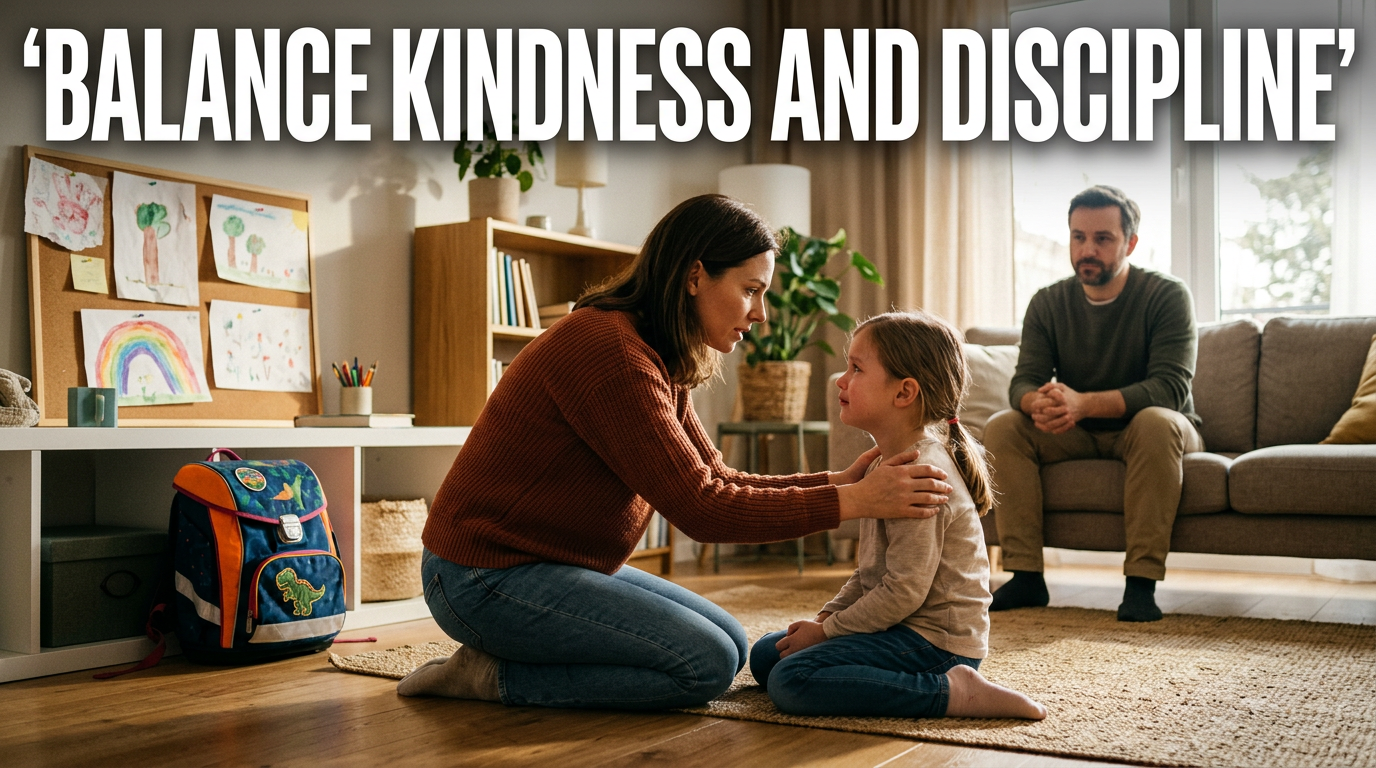
● Parental Discipline Fails
Catchphrases that turn a child into an “not-this-not-that” child: Two home-discipline principles and conversation techniques you can use right away in the classroom
The core point you must remember today (highlight first)
- 1) If kindness and firmness aren’t mixed, the child will fall apart in front of rules.
- 2) The moment you twist friendships using the “because of you (because the other person is bad)” frame, the relationship gets even worse.
- 3) Conversations are more effective with ‘questioning’ than with giving answers.
- 4) Before the child starts school, if you let them “live together” with the school through the textbook, school becomes fun.
- 5) If parents take a side (a formation) to eat, eventually the child will study on their own.
News-style summary: The “parent mistakes pattern” from today’s video
1) When problematic behavior breaks out in the classroom, the cause might be “home habits”
- When reacting in the classroom like “Why do you write the line on the back?” it’s not just stubbornness—the way the child learns to accept rules may have been taught at home.
- It was also mentioned that when the child makes a friend upset, the parent may immediately blame them or can’t tolerate it, causing the relationship to deteriorate rapidly.
- The core point is this: The child takes the attitudes learned at home straight into the school’s group environment, and as soon as they get put on the spot for a test at school, it all erupts.
2) The parent’s “two catchphrases / discipline habits” that ruin the child
(1) A way of speaking that has only kindness and no firmness: soothing with only “emotion,” not rules
- The expressions compared in the video sound like “I’ll be considerate even if you don’t say it the right way,” but in reality they blur the rules.
- Example: If the child keeps being given concessions when they don’t want to, or when the moment comes when they must follow the rules and the parent slips into “It’s okay, okay,” the child becomes unable to endure it at school.
- On the other hand, the standard the teacher mentioned is this: cherish the child’s feelings (kindness), but keep promises/rules to the end (firmness).
(2) A way of speaking that ‘relabels friendships as you see fit’: when the parent tries to solve the relationship
- When a child’s argument/relationship problem happens, if the parent emotionally devalues the other person or frames it as “that friend is bad,” it actually breaks the relationship.
- As in the case from the video, if a parent keeps repeating “Don’t play with them,” the child could become isolated without keeping even one best friend.
- In the end, the child learns from the beginning whether “relationships save me” or whether “someone punishes me.”
3) A “parent who doesn’t ruin the child” speaks like this in situations of restlessness/conflict
(1) Don’t disguise the desire to get special treatment as “respect”
- If it comes out of the child’s mouth “Why do I have to write it on the back?” you shouldn’t just soothe their emotions—you should connect the reason for the rules to the child’s level of understanding.
- Sample frame (the point in the video): “You’re important, too, so other friends are important as well. The rules are for everyone.”
(2) Homework/work issues: shift from punishment to ‘teaching’
- The video emphasizes that discipline isn’t about scolding—it’s a teaching process.
- Even adults, in situations like “the stink of bean sprout soup,” get stuck and can’t resolve things; giving a child an emotional bomb won’t solve it either.
- So the suggested approach was to connect simple behavior directly, like “Write it now (to solve it).”
(3) Instead of giving answers, draw out responses through ‘questions’
- Ways to avoid: Questions that suddenly dump adult decision-making, like “Should I call the teacher?” “What are you going to do?”
- A more effective way: Ask questions the child can build an answer to, like “What do you think you should do?”
- It’s okay if the answer doesn’t come right away, and the key is to carry that time over as “let’s think more.”
4) Involvement in friendships: not “absolutely don’t,” but “just follow the principles”
- The principle is: parents have limits in “making” friendships for the child.
- But if the problematic issues continue or become serious, they say it’s best to cooperate with the teacher (homeroom teacher / class teacher).
- Here’s a truly important checkpoint: You should check for yourself whether your intervention is for the child’s growth or just to vent your anger/upset.
5) “A child who likes classes” starts with the household’s attitude
(1) If parents “read the textbook,” the child finds school more fun
- Thoughts parents commonly have after admission: “It’s okay if they can’t study, as long as they make friends well…”
- But the teacher emphasizes this: Because school goes into ‘class format’, what matters is how the child comes to feel “fun” at school.
- So the proposed method: Read the textbooks in advance after admission → When parents understand the flow of the child’s life, the home experience connects to school lessons.
(2) Connection points by grade (based on the intent of the video)
- 1st grade: learning about the neighborhood / around our house → Conversations naturally come out like “What did you learn today?”
- 2nd grade: our town → School becomes “our story” as the child’s “I know too!” kicks in.
- 4th grade: our city (local area) → If you discuss cultural facilities/places, “things we already learned” make it fun.
- Even time/life units (e.g., concepts like 7 o’clock) become easier to get into learning when connected through home conversations.
6) The parent attitude that changes a child’s life: “be curious” rather than “worry,” and take a side (eat together)
- The one decisive thing the teacher pointed out is this: Don’t fight with your child over studying—go with an “mom-child side” mindset.
- From the child’s perspective, they often interpret that “I’m afraid because Mom might get angry.”
- So if you switch from “worry” to “curiosity,” answers appear. You need an ongoing attitude of watching where your child’s perspective goes / where their heart is / where their feet are headed.
7) A closing line you can use immediately: don’t end with “You won’t do it again, right?”
- The point emphasized in the video: If you threaten the end with “What if you do it again next time?” the child may remember fear rather than learning.
- Example of a better message (the point of the video): Don’t end with “Have a good time with others today and come back,” but end with “I’m worried, but I’ll help you / If a problem happens, tell me.”
- What you want is to make it so that to the child, mom is not the person who “solves relationship problems,” but someone who helps from beside them.
One more thing: 5 principles for “parent conversation sentences” that help you carry it out
- Mix kindness (emotion) + firmness (rules).
- Don’t stamp “bad” on the other kid in a friendship.
- Don’t try to give answers—instead ask with “What do you think you should do?”
- Design discipline as a teaching process, not punishment.
- End the final line with a “promise to help,” not fear/threat.
The “most important thing” that other YouTube/news rarely pick out (separate summary)
- If a parent gets involved in classroom/friend issues to resolve their own “upsetting emotions,” the child may learn to avoid or become isolated rather than learn relationships.
- So when teacher involvement is needed, it’s fine—but the standard should be “does my anger get relieved?” not—and the core point of this video is that it should be “does it help the child grow?”
- One more thing: “Having the child read the textbook” isn’t a simple study method—it’s a strategy that creates a home experience → connection link to school lessons. When this connection happens, the child accepts school not as a “strange evaluation place,” but as a “life space where I’m the main character.”
A one-line link from the economics/AI trend perspective (why it’s even more important these days)
- Even in education these days, “learning competency in the AI era” ultimately depends on relationships (belonging) + self-regulation (rules/emotions) + learning motivation.
- The discipline/conversation principles in this video are ultimately about building the foundation so the child can keep learning even alone (emotional stability and a sense of rules)—so they connect to the competencies needed in the present era.
Lastly (checklist to change your actions today)
- When speaking to your child at home today, check whether you only used “kindness” and then stopped.
- If you catch yourself about to say something that stamps “that kid is…” in a friend issue, stop and switch to asking questions.
- End conversations not with “You won’t do that again next time?” but with “If it’s hard, I’ll help you.”
- If it’s around admission / early in the semester, read the textbook once even once, and try to create a question that lets you “experience classes together” with your child.
< Summary >
- A child’s problematic behavior in the classroom can be connected to rules and conversation habits learned at home.
- The core of what ruins the child is ① a way of speaking that has only kindness and no firmness ② the habit of parents intervening by judging friendships.
- Effective conversation isn’t about giving answers—it builds the child’s problem-solving ability through the question method (“What do you think you should do?”).
- If problems continue, cooperate with the teacher, but the standard should be “the child’s growth,” not “my anger relief.”
- After admission, reading the textbook and connecting the home experience to lessons makes the child accept school as fun.
- The decisive attitude is not fighting with the child under the excuse of studying, but taking a side (staying on the same team), and being curious rather than worrying.
[Related posts…]
- Discipline strategies that change when parents change
- How to help a child adapt to school with textbooks before admission
*Source: [ 지식인사이드 ]
– “이도저도 아닌 아이가 돼요” 아이를 망치는 부모의 ‘2가지’ 말버릇ㅣ대외비 EP.9