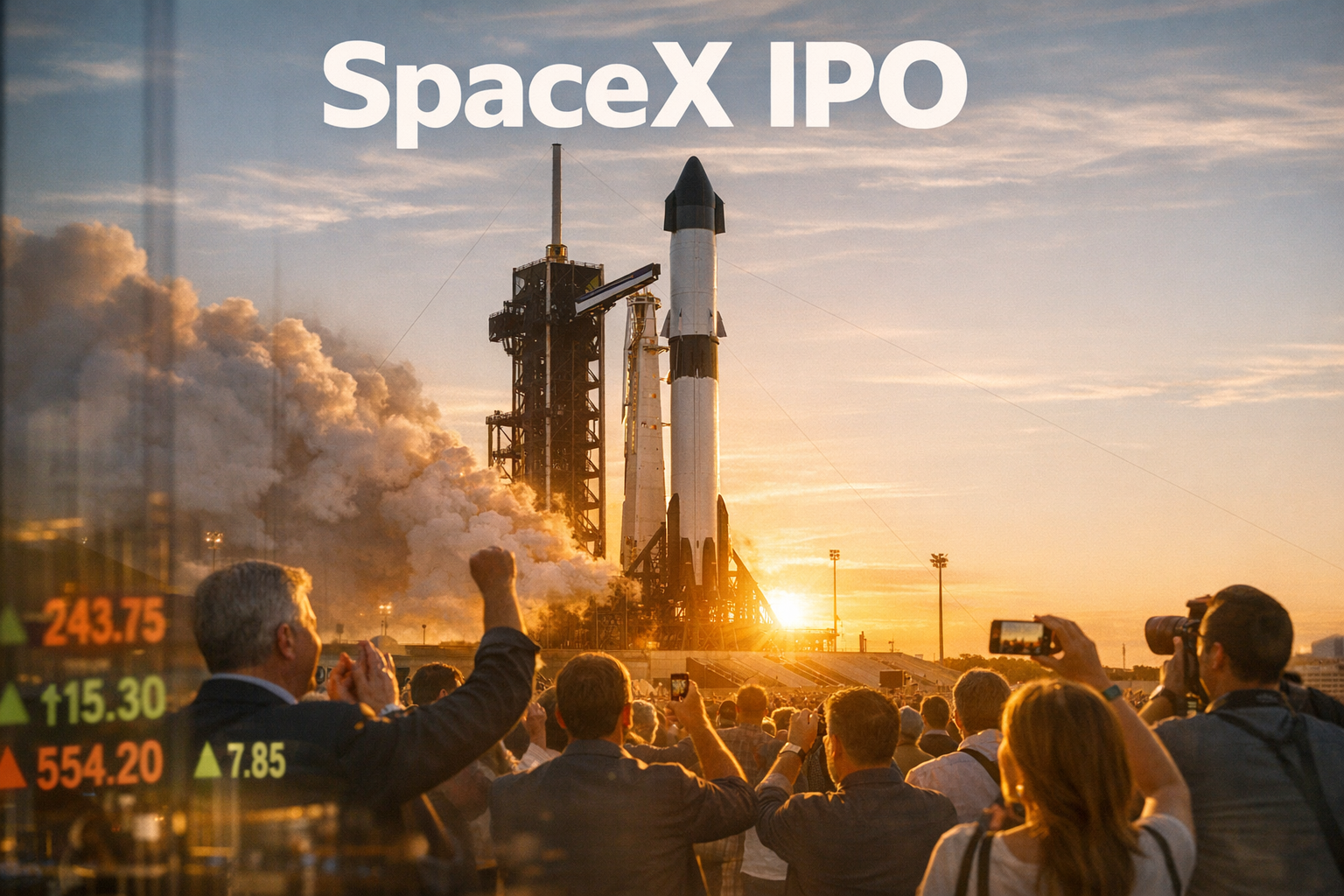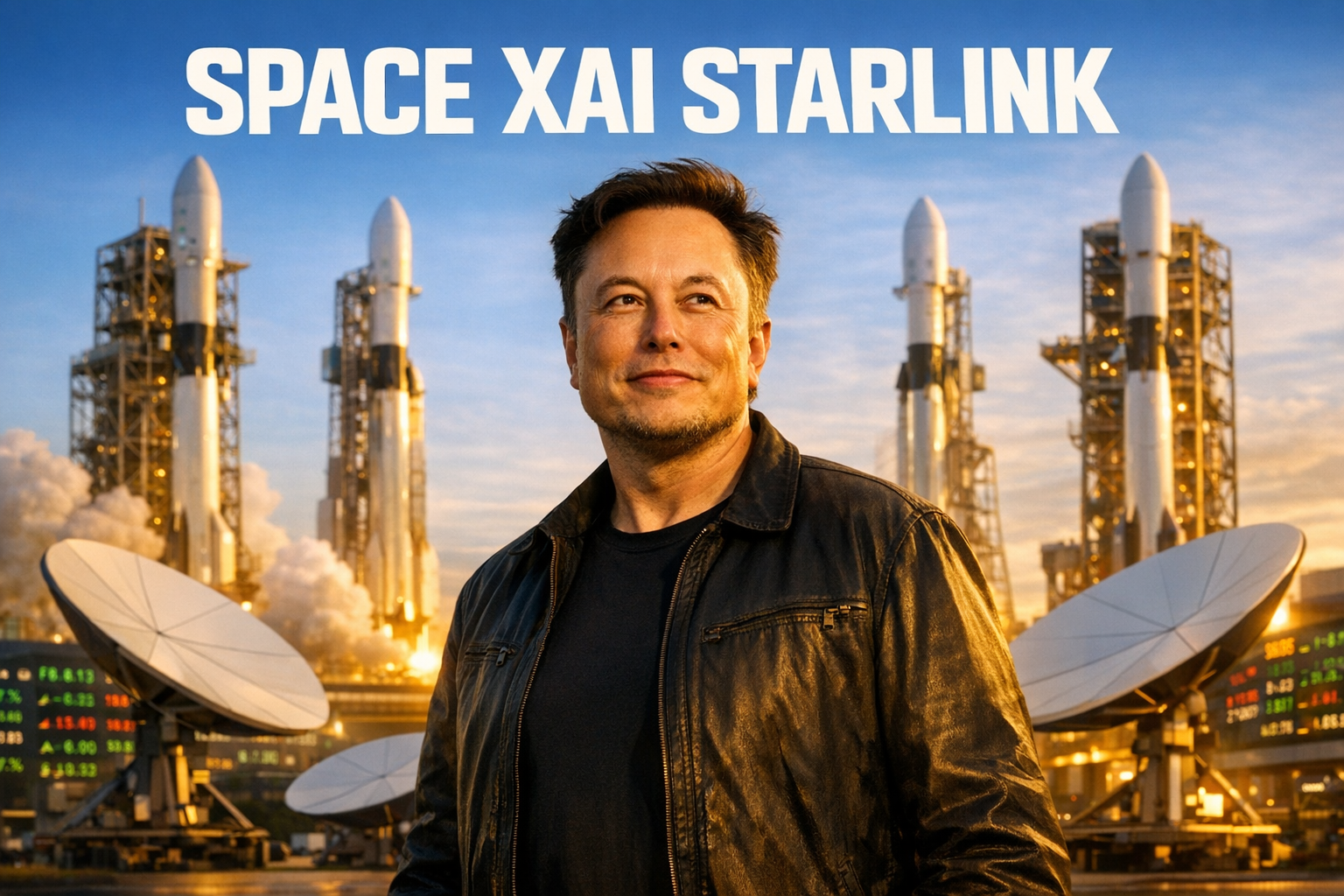
● SpaceX IPO Shock, Musk Empire Power Grab, Retail Frenzy
Reuters Breaking News Interpretation: Reports of a SpaceX IPO Filing This Week, the True Significance of a 20% Retail Allocation, and Musk’s Broader Strategic Framework
This development should not be treated as a routine SpaceX IPO rumor.
Key questions include: why the timeline appears to have accelerated from June 2026 to this week or next; why an unusually high 20% allocation to retail investors is being discussed; and how these moves may connect to the U.S. equity market, AI infrastructure, the space sector, Tesla’s share price, and potential restructuring across the broader Musk ecosystem.
This report consolidates:1) IPO speculation around OpenAI and competition to absorb capital-market demand first
2) Valuation re-rating potential from a SpaceX–xAI integration narrative
3) Starlink as a recurring, subscription-like cash flow platform rather than a pure satellite business
4) Whether a 20% retail allocation could also function as positioning for future strategic linkage with Tesla
5) Implications for global capital flows and technology-primacy competition
The core issue is not simply “whether SpaceX will list,” but whether Musk is packaging space, AI, communications, robotics, and autos into a unified investable narrative.
1. Key Points Cited in the Reuters Report
Market consensus had generally placed a SpaceX listing after June 2026. The report indicates SpaceX may submit preliminary IPO documents to the U.S. Securities and Exchange Commission (SEC) this week or, at the latest, next week.
- Implied offering size: at least USD 75 billion
- Referenced market capitalization: up to USD 1.75 trillion
More material than the headline figures is the implied structure: a “multi-platform” listing that may combine Starlink’s cash-generation profile, xAI’s AI optionality, and longer-horizon space infrastructure ambitions.
2. Why Accelerate the Timing: Three Practical Drivers
2-1. Absorbing Institutional Demand Ahead of OpenAI IPO Speculation
Global growth capital for AI and infrastructure is finite. If OpenAI were to reach public markets first, large asset managers could allocate risk budgets there, potentially compressing the premium available to later, conceptually similar offerings. The reported acceleration can be interpreted as an attempt to secure capital-market attention and allocation priority.
2-2. Listing During Peak “Integration Narrative” Momentum With xAI
A key interpretive anchor is the reported completion of SpaceX’s acquisition of xAI. Under this framing, the listing entity would be positioned less as a launch-services company and more as an integrated space infrastructure + AI computing platform.
Referenced valuations:
- SpaceX: USD 1.0 trillion
- xAI: USD 250 billion
- Combined narrative scale: approximately USD 1.25 trillion
Public listings price future narratives as well as near-term results. Current market multiples have been most supportive for AI infrastructure, data centers, high-performance computing, and network control.
2-3. Acting Before Rates and Liquidity Conditions Deteriorate
Macro conditions remain uncertain across growth, inflation, and policy. While AI-linked equities have attracted capital, the durability of that risk appetite is not assured. For large IPOs, sentiment and liquidity timing can materially affect pricing outcomes.
3. What the Listing Would Represent: Not a Rocket Company, but a Space + AI + Communications Platform
3-1. Starlink as a Cash-Generating, Subscription-Like Business
Starlink should be evaluated as a recurring-revenue platform rather than a one-off industrial project. If subscriber growth and operating margin trends persist, the business may be valued more like a network/software platform than a traditional aerospace manufacturer. Markets typically assign higher multiples to stable, recurring cash flow than to cyclical launch revenue.
3-2. xAI Inclusion Enables Vertical Integration Across Data, Connectivity, Compute, and Services
The strategic implication is not additive diversification but potential end-to-end control:
- data acquisition (space-based and otherwise)
- transmission via a proprietary network
- training/inference via in-house AI
- deployment into autos, robotics, satellite services, defense, and industrial automation
This model is difficult to map to a single legacy sector classification and may be marketed as a new category.
3-3. Orbital Data Center Concepts as a High-Impact Narrative
The concept involves leveraging solar energy, vacuum-assisted thermal management, and space-based compute execution for AI workloads. Technical and economic viability remains unproven. However, capital markets often reward credible claims to future infrastructure control, particularly where bottlenecks include power, cooling, and data transport.
4. The 20% Retail Allocation Report: Why It Is Unusual
4-1. Materially Above Typical Large-IPO Norms
In many large IPOs, retail participation is often in the 5–10% range. A 20%+ allocation would be structurally aggressive and would meaningfully shape the shareholder base from inception.
4-2. Potential Migration of Tesla’s Retail Base Into SpaceX
Tesla’s investor base includes a large, highly engaged retail cohort. A substantial retail tranche in a SpaceX IPO could replicate that support structure and create a shareholder mix more tolerant of long-duration investment cycles than an institutionally dominated register.
4-3. Possible “Shareholder Politics” Positioning for Future Strategic Actions
If future transactions involved tighter strategic linkage with Tesla, partial asset consolidation, or governance restructuring, institutional shareholders could resist due to dilution or conflict-of-interest concerns. A larger overlapping retail shareholder base across Tesla and SpaceX could increase the probability of approval for long-horizon CAPEX programs, temporary losses, or complex restructuring proposals. Under this interpretation, the retail allocation functions as governance positioning, not marketing.
5. Potential Implications for Tesla’s Share Price
5-1. Near-Term Funding Rotation Risk
Retail investors seeking SpaceX IPO exposure may sell existing holdings to fund participation. Given shareholder overlap, Tesla could be a primary source of liquidity, creating short-term supply pressure.
5-2. Medium-Term “Ecosystem Premium” Re-Rating Potential
A successful listing and strong market pricing for Starlink and xAI optionality could prompt broader re-rating across Musk-affiliated assets. In that context, Tesla could be priced less as a pure EV manufacturer and more as an AI/robotics/energy autonomy platform.
5-3. Public-Market Volatility Becomes a Core Constraint for SpaceX
Post-listing, quarterly results, launch outcomes, regulatory exposure, defense contracting dynamics, satellite-network reliability, and CAPEX intensity would transmit directly into equity volatility. Operational incidents and schedule slippage would likely have immediate market impact.
6. Macro and Global Capital-Market Significance
6-1. AI Competition Is Shifting From Software to Infrastructure
The strategic contest increasingly centers on power availability, data throughput, compute scale, and network control. A SpaceX listing that explicitly integrates space infrastructure with AI reinforces this shift.
6-2. U.S. Markets May Apply a Strategic-Asset Premium
Satellite communications, launch capability, AI compute, defense alignment, and global networks carry national-strategy relevance. This can support higher valuation premiums than those justified by near-term financials alone, and may influence how technology leadership is priced in public markets.
6-3. Potential to Reopen the Large-Cap IPO Pipeline
A high-profile, large-scale offering could revive IPO issuance and reset valuations across adjacent themes including AI, semiconductors, robotics, space, and defense.
7. Related Tesla Developments to Monitor in Parallel
7-1. Optimus “Generation 3” Signals a Shift Toward Manufacturable Design
Emphasis has moved from demonstration toward production-critical components (hands, inverters, gearboxes, wiring-harness substitution, compact high-power architecture). In humanoid robotics, cost, supply chain control, and manufacturability may determine leadership more than peak prototype performance.
7-2. Figure AI’s White House Appearance Highlights Policy and Branding Competition
Public-sector visibility can shape perception and policy networks. Competitive positioning may involve not only engineering capability but also messaging, legitimacy, and regulatory engagement.
7-3. Next-Generation Tesla Vehicle Rumors Should Be Viewed as Ecosystem Expansion
The key variable is whether new vehicle formats expand the autonomous-service network and increase platform node density, rather than product-line diversification alone. Vehicles may function both as sold products and as nodes in an autonomy network.
8. Delaware Judge Recusal Motion: Why It Matters
A reported recusal motion targeting Judge Kathaleen McCormick should be evaluated as a governance and legal-risk management issue. If accepted, the litigation landscape surrounding Tesla-related matters could shift. Investors should track whether the development increases or reduces valuation discounting tied to legal uncertainty.
9. The Most Material Underappreciated Points
9-1. The IPO’s Core Function May Be Category Redefinition, Not Financing
Valuation depends on classification:
- launch business: cyclical industrial/aerospace
- Starlink-led: network platform
- xAI-led: high-growth AI infrastructure
- defense/space network-led: strategic asset
Winning this classification contest can materially change the valuation framework.
9-2. A 20% Retail Allocation May Be Governance Engineering
A larger pro-vision retail base can increase strategic flexibility for restructuring, mergers, heavy CAPEX, or long-duration loss tolerance. The allocation ratio can be interpreted as shareholder-base design.
9-3. Acceleration May Also Mark the Starting Point of “Musk-Ecosystem Bundling”
Viewed together—Tesla, xAI, SpaceX, Starlink, Optimus, autonomy, and X—the listing could be positioned as the central anchor for a unified capital-markets narrative.
10. Key Variables Investors Should Track
10-1. Confirmation of SEC Filing
Document submission is the primary catalyst separating speculation from event risk.
10-2. Detailed Structure of xAI Consolidation
Key items include subsidiary status, equity ownership, and revenue recognition.
10-3. Official Retail Allocation Percentage
A confirmed 20% figure would be highly consequential for supply/demand dynamics, initial volatility, and shareholder composition.
10-4. Sustainability of Starlink Subscriber Growth and Profitability
Investors should test recurring-revenue durability against CAPEX burden and unit economics.
10-5. Capital Rotation Between Tesla and SpaceX
The market impact depends on whether near-term funding rotation dominates or whether an ecosystem premium emerges.
11. Consolidated Conclusion (News-Style)
The Reuters report should be treated as more than an IPO headline. If timing is genuinely accelerated, plausible drivers include capital-market sequencing against OpenAI speculation, maximizing the valuation impact of the xAI integration narrative, and capturing supportive liquidity conditions.
The reported 20% retail allocation should not be assumed to be purely promotional; it may be designed to shape future governance dynamics across the Musk ecosystem. The central issue is whether SpaceX will be priced not as a launch contractor but as a next-generation platform combining Starlink, AI, and longer-horizon space infrastructure concepts.
< Summary >
- Reports of a SpaceX IPO filing should be evaluated as an AI-infrastructure and space-industry convergence event, not a standalone listing rumor.
- Acceleration can be interpreted as a bid to capture capital allocation ahead of potential OpenAI market entry and to monetize peak narrative momentum around xAI integration.
- A 20% retail allocation, if confirmed, may function as shareholder-base engineering relevant to future governance or strategic linkage with Tesla.
- Near-term Tesla pressure could arise from retail funding rotation; medium-term re-rating is possible if the broader ecosystem receives premium pricing.
- The valuation thesis depends on classifying SpaceX as a platform integrating Starlink recurring cash flows, AI optionality, and infrastructure-scale ambitions.
[Related articles…]
- https://NextGenInsight.net?s=SpaceX
- https://NextGenInsight.net?s=Optimus
*Source: [ 오늘의 테슬라 뉴스 ]
– 로이터 긴급 보도! 스페이스X 이번 주 상장 신청? 개인 물량 20% 배정 뒤에 숨겨진 머스크의 설계는 ?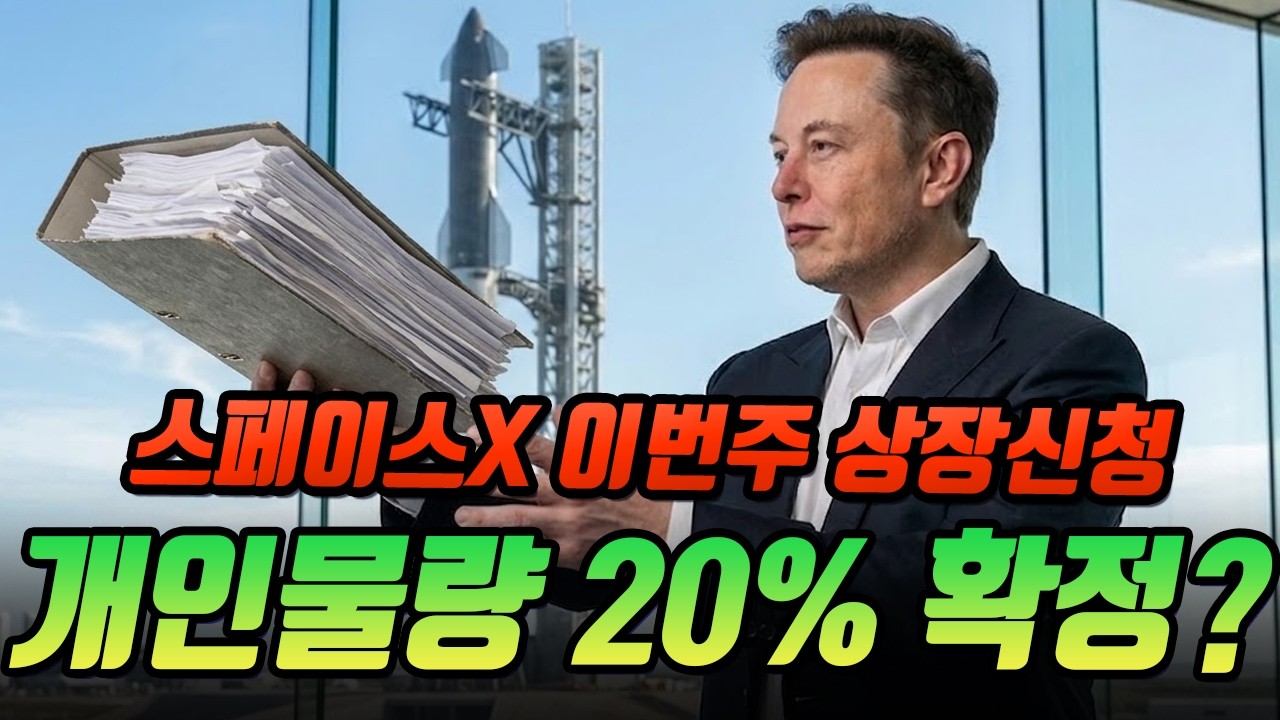
● Google Shock, Memory Stocks Panic, Samsung-SK Hynix on Edge
A “Second DeepSeek” Controversy: Is the Memory Trade Over? Key Takeaways for Samsung Electronics and SK Hynix Investors
This issue extends beyond the headline that “Google introduced an AI technique that sharply reduces memory usage.” Key questions are: why memory semiconductor equities reacted immediately, why markets again overreacted to a headline, and why the more material point may be a reshaping of AI demand rather than an outright decline in memory demand. This report summarizes macro drivers (oil, geopolitical risk, US equity momentum), the implications of Google Research’s TurboQuant-related release for memory semiconductors and Korean equities, near-term shocks versus medium-term outlook for Samsung Electronics and SK Hynix, and a set of under-discussed interpretations relevant to investors.
1. Market snapshot: US equities rose, so why did Korean memory stocks look more fragile?
As of the morning of March 26 (Korea time):
- Nasdaq: +0.77%
- KOSPI night futures: -1.2%
- KOSDAQ night futures: weaker tone
US technology stocks held up on broad AI optimism, while Korean equities were more vulnerable due to the outsized index weight of memory names such as Samsung Electronics and SK Hynix. As a result, even modest negative signals on memory demand tend to transmit more forcefully into Korean market pricing.
2. Macro check: why oil and Middle East risk still matter
Oil eased marginally:
- WTI: USD 91
- Brent: USD 103
With mixed Middle East headlines, markets leaned toward a “not worst-case” interpretation, though uncertainty remained elevated.
2-1. How negotiation headlines affected risk sentiment
Reports indicated indirect talks or conditional exchanges between the US and Iran. While this introduced a potential de-escalation narrative, the stated conditions on both sides appeared difficult to reconcile. The base case implied ongoing dialogue without near-term resolution.
2-2. Why this matters for semiconductors and AI equities
Middle East risk feeds directly into:
- Oil prices
- Inflation expectations
- Rate-cut expectations
- Valuation multiples for growth assets
Semiconductor and AI-related equities remain sensitive to rates and liquidity. A renewed oil spike could reinforce inflation pressure and weaken expectations for policy easing, creating valuation headwinds for growth-oriented sectors.
3. The core catalyst: Google Research’s TurboQuant-related technique
The central claim was an efficiency method that:
- materially reduces memory usage during AI model execution,
- improves speed,
- preserves accuracy with minimal loss.
The market narrative quickly evolved into:
- lower AI memory requirements,
- potential cooling of HBM and DRAM demand,
- risk of an earlier downshift in the memory cycle.
This interpretation pressured memory-linked equities in both the US and Korea, including Samsung Electronics and SK Hynix.
4. Does this immediately translate into lower memory demand? The evidence is not sufficient
A research announcement does not translate mechanically into industry-level demand changes. Practical adoption involves time lags, workload constraints, and hardware-software integration.
4-1. Key limitation: validation on non-frontier models
Reported testing emphasized smaller models such as Llama 3.1-class or Mistral 7B-class systems. This is relevant because the largest infrastructure budgets are concentrated in frontier-scale models (e.g., GPT- and Claude-class). Optimization results on smaller models may not scale linearly to frontier workloads, where bottlenecks (memory, compute, hardware topology) can differ materially.
4-2. Benchmark risk: results may be strongest under favorable conditions
Academic results often highlight environments where improvements are most visible. If the benchmarks emphasized long-context scenarios, the measured gains may not generalize across:
- short-context inference,
- real-time response workloads,
- multimodal processing,
- large-scale production inference services.
4-3. Software optimization alone may not drive hardware demand changes
Even if the method is sound, its commercial impact depends on compatibility with:
- data center architectures,
- GPU systems,
- HBM configurations,
- server memory design.
Interpreting “software efficiency” as “memory demand contraction” is an oversimplification unless accompanied by broader architectural changes and widespread deployment.
5. Critical point: AI efficiency can expand total usage
Efficiency improvements typically produce two outcomes:1) the same workload uses fewer resources, or
2) costs decline and total usage expands.
AI markets have historically skewed toward the second outcome: faster and cheaper inference tends to increase adoption and call volume. Similar dynamics have been observed in cloud consumption, mobile data usage, streaming, and search/advertising. If this pattern persists, efficiency gains could increase aggregate AI usage and support continued data center investment, potentially sustaining semiconductor demand.
6. Variables that matter most for memory investors
Memory outlook is not determined solely by “memory per inference.” Key variables include:
6-1. Whether HBM demand structurally weakens
HBM remains a central investment thesis for Samsung Electronics and SK Hynix as AI servers and GPU shipments expand. A single efficiency technique is unlikely to reverse the Nvidia-led AI infrastructure buildout in the near term. If inference volume grows, per-system HBM requirements may remain stable or rise depending on deployment patterns.
6-2. Whether DRAM and NAND ASPs remain supported
Equity performance ultimately tracks fundamentals. For memory, the dominant drivers are:
- shipments,
- inventories,
- pricing,
- customer capex plans.
Therefore, forward pricing and server-memory demand indicators are more decisive than headline-driven sentiment.
6-3. Whether commercialization accelerates
Efficiency techniques can lower total cost of ownership and accelerate enterprise adoption of generative AI, which could expand cloud usage and data center capex, supporting broader semiconductor demand.
6-4. Whether the Nvidia ecosystem and server capex cycle remain intact
Near-term price direction for memory is more tightly linked to:
- Nvidia GPU shipments,
- hyperscaler capex,
- AI server deployment plans,
- power and infrastructure buildout pace.
The primary driver remains the AI infrastructure investment cycle.
6-5. Structural sensitivity of Korean equities
Given the large index weight of memory names, Korean equities often exhibit amplified reactions to global headlines about memory demand—frequently ahead of confirmed fundamental changes.
7. Why it is framed as a “Second DeepSeek,” and why it may not be the same
Markets have repeatedly reacted to “high-efficiency / low-cost AI” announcements by extrapolating to reduced demand for GPUs and memory. Historically, many such episodes were followed by rising AI usage, intensified model competition, and increased infrastructure investment. A similar re-rating could occur here; short-term volatility may be driven more by sentiment and positioning than by immediate fundamental deterioration.
8. Under-discussed considerations
8-1. The industry may have been aware of the work earlier
If the research was submitted roughly a year earlier, major AI developers may have reviewed or tested comparable ideas already. If it were immediately deployable at scale and materially disruptive, some impact might already have been observable in infrastructure behavior. Continued strength in AI capex and memory demand to date suggests limited near-term displacement risk.
8-2. Markets often react more to repackaging than to novelty
The price reaction may reflect viral dissemination via official channels and simplified headlines, rather than new information content. Such events tend to drive short-term flow and positioning effects.
8-3. The key variable is total AI throughput, not memory per unit
Investors often focus on memory per inference, but the industry-level drivers are:
- AI call volume,
- agent proliferation,
- multimodal expansion,
- enterprise adoption rates,
- total data center buildout.
Even with lower memory intensity per task, a large increase in total tasks can raise aggregate memory demand.
9. What Samsung Electronics and SK Hynix investors should monitor
9-1. Near-term: higher volatility risk
The headline is a near-term overhang, particularly in Korea where sensitivity to external narratives is high. Investors should allow for:
- increased volatility,
- gap moves,
- instability in foreign flows.
9-2. Medium-term: adoption is the determining factor
For medium-term positioning, the key is whether the technique is widely adopted in production for large models and major cloud/data center deployments. Announcements and publications are insufficient; standardization and broad operational use are the relevant signals.
9-3. Fundamentals: results and customer commitments dominate headlines
Price formation ultimately reflects:
- HBM supply agreements,
- customer qualification progress,
- shipment growth,
- memory price trends,
- operating profit trajectory.
If the technique represents a genuine demand risk, it should appear in guidance and capex plans before it becomes visible in financial results.
10. One-sentence summary
Google’s AI memory-efficiency research is meaningful, but current evidence is insufficient to interpret it as a definitive end-of-cycle signal for memory semiconductors, including Samsung Electronics and SK Hynix.
11. Investor checklist
- The sell-off may have been driven more by headline dynamics than by immediate fundamentals.
- Results on smaller models may not directly translate to frontier-scale deployments.
- Converting software efficiency into reduced hardware demand typically requires time and architectural change.
- AI efficiency often increases total usage rather than reducing it.
- The primary determinants remain HBM execution, pricing, capex cycles, and earnings delivery.
12. News-style key points
- Nasdaq rose, while Korean equities underperformed amid memory-demand concerns.
- Middle East negotiations provided limited relief, but oil and geopolitical risk remain key variables.
- Google Research’s AI memory-efficiency method amplified fears of reduced memory demand.
- Model scope, benchmark conditions, and hardware applicability limit immediate conclusions.
- Efficiency can expand AI usage; longer-term semiconductor demand may remain supported.
- Samsung Electronics and SK Hynix face near-term volatility, while adoption and earnings are the core medium-term drivers.
13. Conclusion: is the memory trade over?
It is premature to conclude that it is “over.” Near-term volatility is plausible given headline sensitivity. Medium-term direction should be evaluated through total AI demand, data center capex, HBM competitiveness, and realized memory fundamentals. The development warrants monitoring, but it does not by itself confirm a structural reversal in memory demand.
< Summary >
Google’s AI memory-efficiency release pressured memory semiconductor equities, but it is too early to equate this with a collapse in memory demand. The evidence base is constrained by small-model testing, benchmark dependency, and uncertain hardware deployment at scale. Given AI’s tendency for usage expansion as efficiency improves, longer-term semiconductor demand could remain resilient. The core variables for Samsung Electronics and SK Hynix remain HBM execution, earnings trajectory, and the durability of data center investment.
[Related Articles…]
- Semiconductor cycle recovery signals: key indicators to monitor now
- Expanded AI infrastructure investment: upcoming shifts in data centers and the memory market (NextGenInsight.net?s=AI)
*Source: [ 내일은 투자왕 – 김단테 ]
– 제2의 딥시크? 메모리 주식 이제 끝인가?● Iran-US Showdown, Oil Shock, Wall Street on Edge
Iran–U.S. Hardline Confrontation Could Disrupt Crude Oil, U.S. Equities, and Rates: Key Market Watchpoints
This is not a routine Middle East headline. Markets are linking Iran’s hardline stance, U.S. military pressure, the rescheduled U.S.–China leaders’ meeting, crude oil volatility, U.S. 10-year yields, and broad risk sentiment into a single framework.
This report focuses on (i) why geopolitical risk may not remain a short-lived catalyst, (ii) how oil prices transmit to inflation and rates with a lag, (iii) why U.S. equities have been relatively resilient, and (iv) the structural variables that matter more than headlines.
1. Situation Snapshot: Iran Resists, the U.S. Pressures, Markets Initially Stabilize
Iran has formally received a U.S.-proposed ceasefire framework but has effectively signaled rejection, citing excessive conditions.
Core message:
- Iran: “Ceasefire terms and timing will be set by us”; rejects U.S.-led negotiation optics.
- U.S.: Negotiations remain ongoing, while warning that further strikes remain possible if Iran does not accept battlefield realities.
This is consistent with a high-pressure negotiation phase in which coercive signals and diplomatic messaging occur simultaneously.
2. Interpreting the U.S. Message: “Negotiations Remain Open, Time Favors Us”
Key points emphasized in White House briefings:
- Negotiations are still active.
- Military operations are close to achieving stated objectives.
The U.S. assesses that Iran’s maritime threat capabilities have been materially degraded and that key strike assets have been partially neutralized.
This functions as a market signal: the U.S. is shaping expectations toward a contained timeline and a potential endgame under perceived negotiating leverage. Escalatory rhetoric is best read as bargaining pressure rather than a commitment to prolonged conflict.
3. Why Markets Reacted More to the Reconfirmed U.S.–China Leaders’ Meeting
The rescheduling of the U.S.–China leaders’ meeting, previously delayed amid the Iran situation, is a material macro signal.
From a market perspective, publicizing a new schedule implies a U.S. assessment that Middle East risks are likely to remain manageable. It also suggests an incentive to seek a near-term inflection rather than open-ended escalation.
This contributes to simultaneous stabilization across equities, rates, and commodities.
4. Why Crude Oil Did Not Fully Spike
Despite heightened tension, oil did not move into a sustained panic regime because markets are assigning higher probability to limited confrontation and negotiated containment than to prolonged, severe supply disruption.
Volatility remains elevated and prices can re-rate quickly, but a full Hormuz closure is not currently treated as the base case.
In practice:
- A “risk premium” is priced in.
- A “prolonged supply shock” is not fully priced in.
5. Why U.S. Equities Rose: Markets Prioritize U.S. Containment Intent
The equity rebound and the decline in the VIX indicate that markets are weighting U.S. intent and capacity to control duration more heavily than Iran’s public statements.
Pricing appears more sensitive to the implied U.S. timeline for de-escalation than to headline-level rhetoric.
6. The Core Second-Order Risk: Oil Strength Can Re-Accelerate Inflation and Delay Rate Relief
Oil price increases may transmit beyond short-term market moves. Federal Reserve research has previously noted that energy price shocks can affect inflation over a multi-quarter horizon (up to ~8 quarters).
Implications:
- Oil strength can lift inflation expectations with a lag.
- Higher inflation expectations can keep U.S. 10-year yields elevated.
- Persistently high long-end yields can tighten valuation constraints on risk assets.
Transmission chain:
- Higher oil prices
- Renewed inflation pressure
- Slower decline in long-term yields
- Increased valuation headwinds
- Higher probability of equity drawdowns
For markets, the principal risk is not the conflict itself, but the potential change in the long-rate path.
7. Deutsche Bank’s Highlight: Post-Oil-Shock Equities Often Remained Volatile Longer Than Expected
Historical episodes (1973, 1979, 1990, 2022) show that oil spikes can produce longer-lasting equity underperformance, as the shock feeds into corporate costs, consumption, rate expectations, and recession risk.
Even if near-term relief rallies occur, interpreting them as definitive resolution may be premature, particularly in a regime where inflation and rates regain sensitivity.
High-duration segments (Nasdaq, high-valuation growth) can be disproportionately exposed via discount-rate effects.
8. Counterview: Why Some Expect a Rebound After Late March/Early April
Some institutional commentary attributes recent weakness more to technical positioning than deteriorating fundamentals, including:
- Options-related flows
- CTA/systematic selling
- ETF short exposure
- Thin liquidity
Under this view, as quarter-end factors fade and mechanical selling eases, U.S. equities could rebound more strongly than expected.
Key elements:
- Sentiment skewed overly bearish
- Positioning crowded to the downside
- Technical selling pressure may diminish
- Passive flows and rebalancing could support upside
- Thin liquidity can amplify index gains on modest buying
This scenario implies that if geopolitical stress stabilizes, large-cap technology and the Nasdaq could lead rebounds.
9. Critical شرط: Escalation in the Middle East Can Overwhelm Technical-Rebound Narratives
The rebound framework relies on risk not worsening. If Hormuz closure risk becomes more credible, shipping disruptions persist, or direct U.S.–Iran confrontation expands, macro shocks can dominate positioning dynamics.
In that case, markets may rotate toward:
- Oil
- U.S. dollar
- Gold
- Long-end yields dynamics
- Defense and energy equities
10. The Russia Variable: Low-Profile but Material for Duration Risk
Russia is assessed by Western intelligence to be providing staged support to Iran, including drones, medical supplies, food, and intelligence.
Drone-related technical support is particularly sensitive given Russia’s accumulated operational experience and iteration cycles from the Ukraine war, potentially enabling Iran to restore asymmetric capabilities faster than expected.
Russia appears cautious about crossing escalation thresholds (e.g., advanced air-defense systems), but “staying power” support can extend the conflict timeline.
11. Underemphasized but Market-Critical Points
11-1. The Key Variable Is the Long-Rate Path, Not Battlefield Outcomes
Asset-market sensitivity is concentrated in U.S. 10-year yields. If oil lifts inflation expectations, rate-cut pricing can be pushed out and equity valuations face renewed pressure.
The market core is the rates trajectory.
11-2. U.S. Signaling May Be Shifting Toward Timeline Management
The rescheduled U.S.–China leaders’ meeting can be read as a signal that the U.S. is attempting to fit the Iran issue into a controllable timetable. This supports near-term risk stabilization.
11-3. Hormuz: Fear of Closure Can Move Markets Even Without Full Closure
Even without a complete blockade, elevated perceived risk can raise insurance costs, freight rates, precautionary inventories, and energy price expectations.
Expectation-driven inflation pressure can precede real-economy disruption.
11-4. Limited Russian Support Raises the Probability of Prolongation
Even without overt “full-scale” backing, incremental drone and intelligence support can alter operational effectiveness and extend duration risk.
11-5. Indirect Spillovers to AI and Fourth Industrial Revolution Themes
Energy prices influence data-center operating costs, semiconductor supply-chain costs, cloud infrastructure capex sentiment, and the discount-rate applied to large-cap technology.
As generative AI infrastructure scales, it remains tightly linked to power, semiconductors, networking, and cooling; oil and rates therefore remain relevant inputs for AI-related equities.
12. Key Linkages for Macro and AI Themes
Relevant structure:
- Rising Middle East risk -> higher crude oil risk
- Higher crude -> potential inflation re-acceleration
- Inflation re-acceleration -> delayed decline in U.S. 10-year yields
- Sustained rate pressure -> higher volatility for high-valuation growth and AI equities
- Relative strength potential in energy, defense, and materials
- Technology can rebound on flow improvements, but remains more rate-sensitive
AI’s long-term trajectory may remain intact, but near-term performance can be governed by macro variables, particularly oil and rates.
13. Investor Checklist
- Evidence of a concrete U.S.–Iran negotiation timetable
- Signs of actual shipping disruption tied to Hormuz
- Whether crude is a transient spike or a trend shift
- Resumption of a downtrend in U.S. 10-year yields
- Potential changes in the Fed’s inflation assessment
- Signals from the U.S.–China meeting on trade/technology restrictions
- Escalation in Russia’s level of support to Iran
- Whether any equity rebound is flow-driven or reflects improving fundamentals
14. Bottom Line: Markets Are Trading “Post-Conflict Oil and Rates,” Not the Headlines
This episode presents as a hardline U.S.–Iran confrontation, but market pricing is focused on:
- escalation probability
- U.S. containment/termination intent
- the ceiling for crude oil
- the direction of U.S. 10-year yields
- valuation pressure on U.S. equities
Near-term rebounds are plausible on negotiation expectations and technical flow relief. Medium-term risk remains that oil-driven inflation expectations keep long-end yields higher, tightening financial conditions.
The key question is not whether fear has peaked, but where crude and long rates ultimately stabilize.
< Summary >
Iran is resisting the U.S. ceasefire framework to preserve negotiating control, while the U.S. is combining military pressure with continued diplomatic signaling.
The rescheduled U.S.–China leaders’ meeting is being read as a sign that the U.S. aims to keep the Middle East situation within a bounded timeline, supporting a near-term risk-on response in U.S. equities.
The principal market risk is that higher crude oil prices may later re-accelerate inflation and keep U.S. 10-year yields elevated, creating headwinds for the Nasdaq and AI-related growth equities.
A tactical rebound remains possible, but a renewed escalation tied to Hormuz risk and/or increased Russian support could materially raise duration and volatility across markets.
[Related…]
- https://NextGenInsight.net?s=crude%20oil
- https://NextGenInsight.net?s=AI
*Source: [ Maeil Business Newspaper ]
– [홍장원의 불앤베어] 이란 “협상 주도권 우리에게 있다” vs 미국 “그러다가는 지옥을 맛본다”