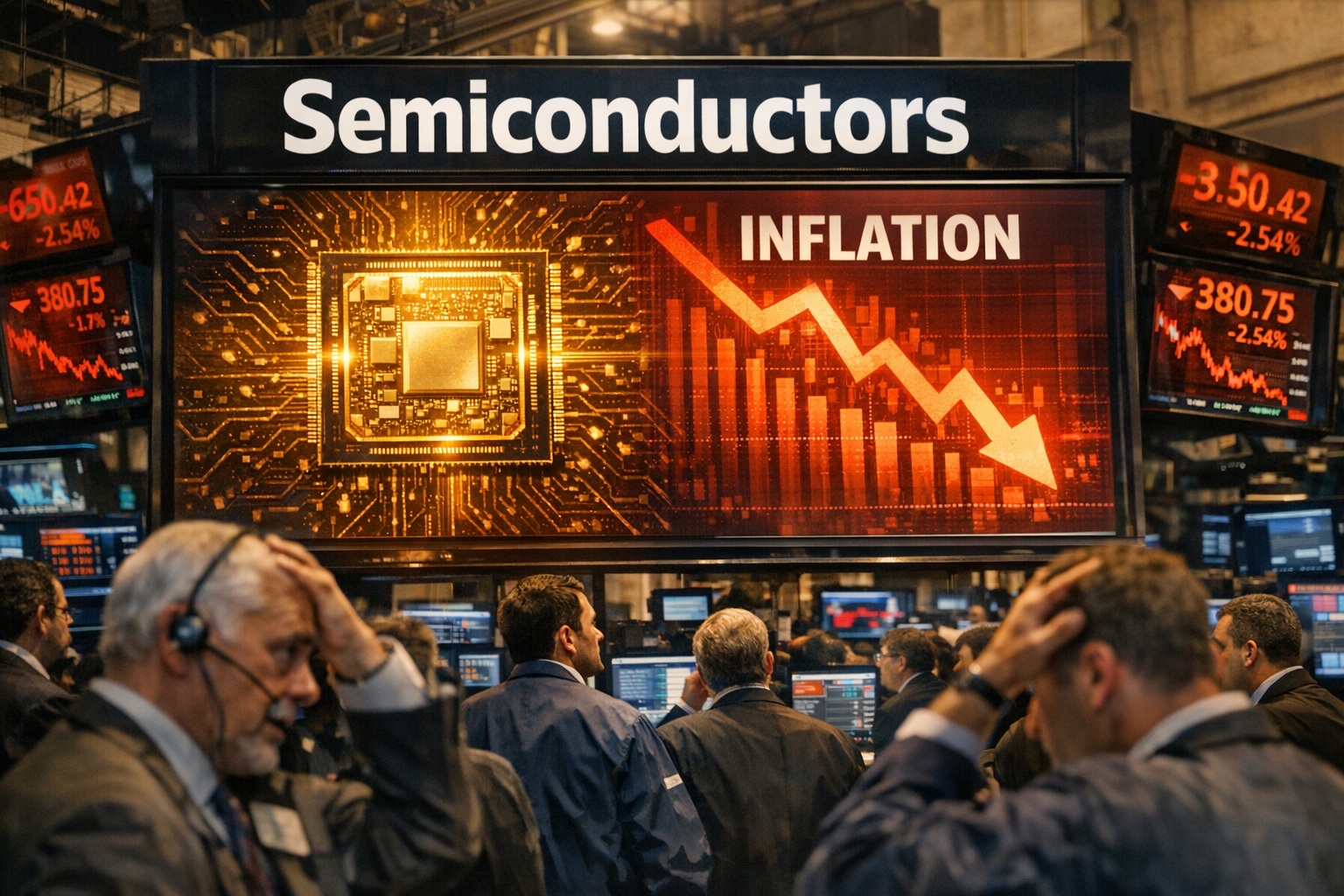
● Wall Street Meltdown, Trump Risk, Oil Shock, Google AI Bombshell
U.S. Equities Sell Off: Consolidated View of the Decline, Trump-Related Political Risk, and Google TurboQuant Shock
This move should not be interpreted as a routine one-day pullback. Multiple shocks affected rates, inflation expectations, growth outlook, and technology valuations simultaneously.
This report consolidates: the proximate drivers of the U.S. equity correction; political risk signals tied to Trump approval and opposition protests; the inflationary impact of Middle East conflict and rising crude prices; the implications of Google’s TurboQuant for semiconductors and the AI value chain; and the combined effects of USD strength, U.S. Treasury inflows, and KRW/USD pressure.
While many headlines focused on “memory semiconductor headwinds,” a key consideration is that AI efficiency gains can expand AI adoption and potentially increase aggregate infrastructure demand.
The discussion is structured in a news-report format across U.S. and global macro, AI and semiconductor outlooks, and practical monitoring points for investors.
1. Market Snapshot: Why U.S. Equities Weakened
U.S. equities traded broadly lower.
S&P 500 fell ~0.82%, Nasdaq declined by more than 1%, and the Dow and Russell 2000 also moved lower.
Beyond a standard correction, the session reflected three overlapping shocks:
- Escalation of Trump-related political risk
- Prolonged Middle East conflict and a renewed surge in crude oil prices
- Repricing across semiconductors and the AI value chain following Google’s TurboQuant disclosure
For investors, the outcome was a simultaneous challenge to interest-rate assumptions, inflation expectations, growth, and technology-sector valuation.
2. Big Tech and Semiconductors: Surface Drivers vs. Underlying Drivers
Based on sector heat maps, large-cap technology and semiconductor names were broadly weaker.
- NVIDIA down
- Alphabet (Google) down
- Meta down
- Micron down
- Broadcom, Intel, Lam Research, Applied Materials weaker
- Palantir also corrected
The central catalyst was the Google-related development.
Following Google’s publication on a new AI memory-efficiency approach (“TurboQuant”), market reaction largely extrapolated:
- Lower memory usage for AI models
- Reduced demand for memory semiconductors
This interpretation drove selling pressure across memory-linked equities, including Samsung Electronics, SK hynix, Micron, SanDisk, and Western Digital.
3. What Is Google TurboQuant?
TurboQuant is a technique that optimizes memory usage during inference for transformer-based models, addressing a key bottleneck in how inference-time data is stored and accessed.
In practical terms, it aims to handle inference-state data more compactly and efficiently.
Key implications:
- More context can be processed with the same memory footprint
- Lower inference cost
- Lower service unit economics, potentially expanding AI use cases
The immediate market framing, however, translated this into “less memory required.”
4. Core Issue: Potential Demand Expansion via Efficiency Gains
A critical consideration is the Jevons paradox: efficiency improvements can reduce unit cost yet increase total consumption.
For AI, lower inference cost is more likely to enable:
- More capable models within the same budget
- Expansion to longer-context and higher-complexity workloads (including video)
- Broader user-level AI feature deployment
Accordingly, near-term price action can reflect a memory headwind narrative, while the medium-term effect could be increased AI adoption and sustained or higher infrastructure investment.
5. Semiconductor Outlook: Structural Break vs. Mechanical Selling
Investors should avoid extrapolating a single research release into a full-cycle downturn.
AI infrastructure demand is not easily described by conventional price elasticity, given its strategic importance to hyperscalers.
For Alphabet, Microsoft, Meta, and Amazon, improved memory efficiency does not necessarily imply lower server budgets. Reinvestment into larger models, faster service, longer inference horizons, and higher accuracy remains a plausible path.
The drawdown may therefore reflect systematic or algorithmic selling and near-term over-interpretation rather than a confirmed structural collapse.
6. Middle East Risk: The Dominant Macro Variable
From a macro perspective, Middle East risk is a larger driver than a technology-led correction.
Rising tensions involving the U.S. and Iran, Israel’s posture, stalled ceasefire efforts, Strait of Hormuz concerns, and discussion of military options around export hubs have increased the market’s probability weighting of a prolonged conflict.
Trump’s repeated hawkish statements were interpreted as a signal of limited negotiating traction.
For markets, the primary transmission channel is crude oil pricing.
7. Crude Oil Surge: Why Both WTI and Brent Matter
Crude prices rebounded materially:
- WTI ~USD 93
- Brent ~USD 106
WTI is more directly linked to U.S. domestic inflation and consumer sentiment, while Brent is the global benchmark. For Korea, Dubai crude should also be monitored given structural dependence on Middle East supply.
- U.S. inflation sensitivity: WTI
- Global energy shock: Brent
- Korea/Asia real-economy burden: Dubai
The surge raises the risk of renewed global inflation pressure, not solely a U.S. issue.
8. OECD Signal: Slower Growth and Higher Inflation Risk
OECD revisions highlighted that prolonged conflict and higher oil could weaken global growth while pushing inflation higher.
Discussion of U.S. inflation around 4.2% is notable, as it implies a potential reemergence of stagflation concerns (slower growth with higher inflation).
Key market implications:
- Reduced confidence in near-term Fed rate cuts
- Greater pressure on corporate earnings
- Higher equity valuation constraints
- Potential slowing in consumption and capex
The market is increasingly forced to reprice against macro constraints rather than liquidity-driven assumptions.
9. U.S. Economy: Employment Holding, Sentiment Deteriorating
Weekly initial jobless claims were broadly in line with expectations, suggesting the labor market is not in acute deterioration.
However, household-level stress signals appear to be rising, particularly in housing and cost-of-carry dynamics.
Search trend increases for terms associated with mortgage assistance and inability to sell homes are consistent with affordability pressure and constrained liquidity.
A key structural issue is “lock-in”: households with low-rate mortgages face limited incentives to move as prevailing rates approach the high-6% range, contributing to:
- Listing shortages
- Transaction declines
- Lower housing mobility
- Weaker related consumption
In addition to rates, rising home insurance costs, property taxes, and maintenance expenses are adding a second layer of pressure.
10. USD Strength and U.S. Treasury Inflows: Why Capital Concentrates in the U.S. During Stress
Despite U.S. fiscal deficits, risk-off episodes continue to support USD strength and flows into U.S. Treasuries.
Primary drivers:
- The USD’s role as the global settlement currency
- Deep liquidity capacity of the U.S. Treasury market
- Yield advantage versus non-yielding safe havens
- Preference for cash-like assets in stress regimes
This structural setup helps sustain demand for Treasuries and reinforces the USD during geopolitical uncertainty.
11. KRW/USD Around the 1,500 Level: Why It Is More Acute for Korea
A move toward the 1,500 KRW/USD area is not a marginal FX headline for Korean investors. It typically implies:
- Higher import-price burden
- Renewed domestic inflation pressure
- Higher costs for overseas investment and foreign-currency funding
Given Korea’s high energy import dependence, the combination of higher oil and KRW weakness can amplify real-economy stress and increase spillover from U.S. market volatility.
12. Trump Approval and Opposition Protests: Markets Price Uncertainty
Polling indicating that 59% of registered voters do not support Trump (Fox News) and the prospect of widespread anti-Trump protests are relevant primarily as uncertainty inputs rather than partisan signals.
With concurrent pressures from war risk, domestic protest dynamics, election-related constraints, and higher oil, policy communication may skew more hawkish, increasing the probability of volatility premia being embedded in asset prices.
13. Key Monitoring Checklist for Investors
This environment favors disciplined monitoring over binary “buy the dip” or “risk-off” reactions.
13-1. Macro Indicators
- Further upside risk in crude oil
- Headline flow on the Strait of Hormuz
- U.S. CPI and inflation-expectations response
- Shifts in Fed rate-cut pricing
13-2. U.S. Equity Indicators
- Whether the Nasdaq pullback is a valuation reset or a trend break
- Downward revisions to Big Tech earnings outlooks
- Whether drawdowns deepen in semiconductor equipment and memory
- Persistence of VIX uptrend
13-3. AI Industry Indicators
- Follow-on publications and commercialization velocity after TurboQuant
- Whether lower inference cost expands service deployment
- Hyperscaler capex and data-center investment continuity
- Structural shifts in HBM, memory, and GPU demand
14. Key Point Often Underweighted in Coverage
Event-driven explanations miss the unifying question:
“Do AI cost innovations translate primarily into near-term margin expansion, or do they recycle into a larger investment race?”
A plausible interpretation is that TurboQuant signals a shift from “larger models” toward “cheaper, more widely deployed models.” As demand emphasis moves from training toward inference, aggregate infrastructure requirements may remain robust.
Therefore, the same development interpreted as a memory headwind could also be a catalyst for faster AI diffusion.
15. Consolidated View: Start of Risk-Off or a Reframing Phase
The current setup reflects three stacked layers:
- Short term: volatility driven by war risk and higher oil
- Medium term: higher inflation risk and uncertainty around the rate path
- Long term: AI efficiency that may expand total AI demand
Near-term headlines are negative, while longer-term structural demand for AI infrastructure is not yet clearly impaired. However, cross-linked moves in U.S. equities, semiconductors, crude oil, inflation expectations, and USD strength can elevate volatility, including in high-quality names.
The key is not a single event, but how each catalyst transmits into rates, earnings expectations, and the AI capex cycle.
< Summary >
U.S. equities weakened amid overlapping pressures from Trump-related political risk, Middle East war dynamics, a renewed rise in crude oil, and repricing across the AI/semiconductor complex following Google TurboQuant.
While markets initially treated the AI memory-efficiency advance as a memory semiconductor negative, lower inference costs can broaden AI deployment and potentially raise total infrastructure investment over time.
Simultaneously, higher oil increases inflation risk and weighs on global growth, with OECD revisions reviving stagflation concerns.
USD strength and U.S. Treasury inflows remain resilient, while a higher KRW/USD level increases Korea’s inflation and funding burden.
The dominant task for investors is to evaluate joint shifts in macro conditions and the AI investment cycle rather than relying on single-day price narratives.
[Related Articles…]
- Latest analysis on Trump political risk and U.S. equity volatility
- Reassessing semiconductor outlook and AI infrastructure investment demand
*Source: [ Maeil Business Newspaper ]
– FOX뉴스, 등록유권자 59% “트럼프 지지 안해”ㅣ번스타인, 퀄컴 목표가 145달러로 하향ㅣ홍키자의 매일뉴욕