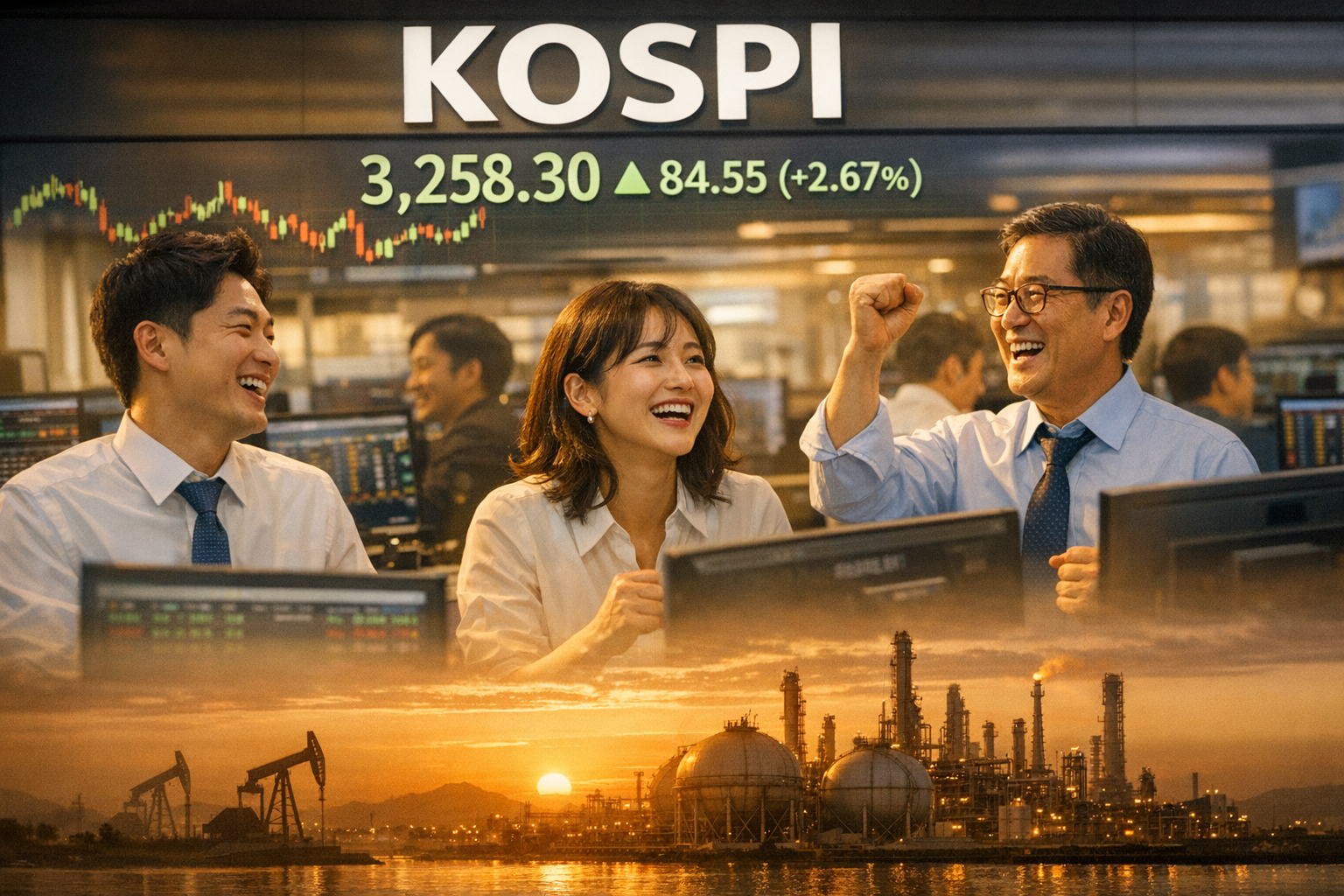
● Middle East War Shock, Korea Stocks Rebound or Crash, 3 Critical Market Triggers
Will the Korean Equity Market Rebound Sharply After the Middle East War Ends? Three Structural Variables That Differ From 2022
This issue is not primarily about whether the Middle East conflict ends or not.
The key transmission channels to Korean equities are crude oil prices, inflation, and interest rates, and how they interact.
This report focuses on (i) why the current market structure differs from the Russia-Ukraine shock in 2022, (ii) why markets typically react after observable data changes rather than “predicting” events, and (iii) how conflict resolution could affect semiconductors, low-PBR segments, and passive strategies.
1. Key Market Headline: Drivers Beyond the Conflict Itself
Recent volatility in Korean equities has been triggered by concerns over escalation in the Middle East.
The KOSPI declined sharply over a short period, with larger drawdowns in energy-import-dependent manufacturing economies such as Korea and Japan.
The market reaction has largely reflected expectations of:
- higher crude prices
- supply-chain disruption
- renewed inflation pressure
- potential shifts in central-bank policy
The core issue is not geopolitical news per se, but the implied impact on Korea’s cost structure and corporate profitability.
2. Markets Do Not “Predict” Wars: Why Reactions Are Often Lagged
Financial markets typically interpret current events through historical analogs and realized data, rather than acting as forward-looking “prophets.”
This matters because many investors assume markets move on superior foresight; in practice, markets often reprice once key inputs (oil, inflation prints, yields) shift.
2-1. Why Past Middle East Conflicts Did Not Create Prolonged Downside for Korea
Korean equities have often recovered relatively quickly during prior Middle East conflict episodes.
This should not be interpreted as “wars do not affect equities.” A more accurate interpretation is:
- Many past conflicts ended relatively quickly, limiting the duration of cost shocks.
2-2. The Core Variable: Duration, Not Occurrence
If the conflict ends quickly, markets can reduce risk premia rapidly.
If the conflict extends into subsequent months and crude remains elevated, Korean equities could face renewed pressure through earnings and valuation channels.
3. Why Korea and Japan Reacted More Strongly
3-1. Manufacturing-Heavy Economic Structure
Manufacturing is highly sensitive to oil, gas, transport, and raw-material inputs.
Higher oil prices raise production costs; higher logistics costs impair export economics.
3-2. High Dependence on Energy Imports
As a net energy importer, higher crude prices transmit directly to corporate costs and the trade balance.
3-3. High Exposure to Middle East-Sourced Supply
Middle East risk feeds directly into supply security. Disruptions around critical maritime routes such as the Strait of Hormuz can impact procurement stability.
4. The Three Variables That Matter Most
4-1. Variable 1: Crude Oil Prices
Oil is not merely a commodity price; it influences inflation, corporate margins, consumer sentiment, and rate expectations.
If oil remains elevated:
- corporate input costs rise
- consumer inflation pressures increase
- central banks may delay rate cuts
4-2. Variable 2: Risk of Inflation Re-acceleration
A “high price level” is different from “re-accelerating inflation.”
Markets are more sensitive to whether inflation trends move from the 2% range back toward 3%–4% than to the absolute level alone, because asset prices respond strongly to directional change.
4-3. Variable 3: Central Banks and Market Rates
Rates are the third key variable, with the U.S. 10-year Treasury yield serving as a real-time proxy for market interpretation.
Oil up → inflation risk up → tighter policy expectations → higher long yields.
A key reason equity stress has not mirrored 2022 is that the U.S. 10-year yield has not surged to comparable extremes.
5. What Is Different vs. 2022
This is the most material point. While the headlines resemble 2022 (“war + higher oil + inflation concerns”), the macro setup differs.
5-1. In 2022, Inflation Was Already Rising Materially
Before the Russia-Ukraine war, global inflation pressures were already elevated due to:
- post-pandemic liquidity expansion
- reopening-driven demand normalization
- supply-chain bottlenecks
The war amplified an existing inflation upswing.
5-2. The Current Regime Is Disinflation
Inflation has generally been trending down from peak levels.
While price levels remain high, the setup is structurally different from an environment moving toward 9% inflation. Even if the conflict persists, a rapid return to 2022-style inflation extremes appears less likely.
5-3. Central-Bank Policy Error Risk Appears Lower
In 2022, the Federal Reserve initially treated inflation as transitory, then pivoted to aggressive tightening.
Currently, policymakers are operating with recent lessons, reducing the likelihood of an abrupt, highly aggressive policy reversal, even if supply-driven inflation emerges.
6. Why Complacency Remains Risky: Supply-Chain Costs Are a Practical Constraint
6-1. Korea Faces a Potential Triple Headwind: Inputs, FX, Freight
If the conflict persists, Korea could face simultaneous pressure from:
- higher raw-material prices
- currency weakness
- higher ocean freight rates
These can jointly compress margins, particularly in import-intensive sectors.
6-2. Supply Chains Do Not Need to “Break” to Damage Economics
A complete shutdown is not required. More common outcomes include structurally higher costs:
- higher inventory buffers
- supplier and route diversification
- longer transport times
- higher insurance and logistics expenses
This implies a gradual shift toward a higher-cost, less efficient global system.
6-3. Semiconductors and Industrial Inputs Are Not Fully Insulated
Korea’s exposure includes semiconductors, autos, and petrochemicals.
Even partial disruptions in specialty gases, materials, or logistics can increase procurement costs and inventory burdens, pressuring margins over time.
7. Key Indicators Investors Should Monitor
7-1. Crude Oil Prices
Assess whether the move is a short-lived spike followed by stabilization, or a sustained high-price regime.
7-2. U.S. CPI
A lagging but high-impact indicator for confirming whether cost shocks are feeding into inflation data and policy expectations.
7-3. U.S. 10-Year Treasury Yield
A practical real-time checkpoint reflecting markets’ aggregation of oil, inflation, and policy assumptions.
If yields do not rise sharply, equity downside may remain more contained.
8. Scenario Framework: What Happens if the Conflict Ends Quickly?
8-1. Scenario A: Rapid Resolution
Korean equities could see a meaningful rebound due to:
- rapid reduction in geopolitical risk premium
- easing concerns around sustained oil price upside
- renewed focus on the semiconductor cycle
Semiconductors remain a primary market driver. Strength in global memory peers can support sentiment toward Korean semiconductor leaders.
If government value-up measures and low-PBR re-rating themes re-emerge as uncertainty declines, index-level valuation support could improve.
8-2. Scenario B: Prolonged Conflict
A rebound may be limited, with higher volatility and range-bound trading.
The key question is the degree of pass-through from oil into inflation and interest rates.
If oil normalizes quickly, the shock may remain manageable. If oil stays high and freight and FX pressures rise concurrently, earnings risk for Korean corporates may increase.
9. Sector Implications: Investment Discipline Over Single-Name Selection
9-1. Semiconductors Remain the Core Axis
If geopolitical risk fades, semiconductors are likely to reassert leadership given ongoing expectations around memory cycle improvement and AI infrastructure investment.
9-2. Low-PBR and Value-Up Beneficiaries
Government-led initiatives targeting the “Korea discount” and corporate value enhancement remain relevant.
If uncertainty declines, re-rating dynamics in asset-value-discounted segments may resume.
9-3. Passive Exposure Is Practical for Less-Experienced Investors
Even in strong market years, many individual stocks underperform the index.
If the thesis is broad market upside, diversified index exposure may be a rational approach versus concentrated single-name bets.
10. Why Policy Matters: Potential for Structural Market Change
10-1. Capital-Market Policy Has Become Politically Salient
With a larger retail investor base, equity-market policy and shareholder value considerations are harder to ignore.
10-2. Commercial Law and Governance Reform Momentum
Public listing implies financing from dispersed shareholders, reinforcing demands for:
- shareholder-focused capital allocation
- dividend and buyback policies
- governance improvements
These shifts typically develop over multi-year horizons.
10-3. Long-Term Relevance of Korea Discount Compression
If the structural discount versus global peers narrows, Korean equities could see gradual valuation uplift independent of short-term volatility.
11. Underemphasized Point: A Transition to a Higher-Cost Global System
11-1. The Key Issue Is Not the Conflict, but Persistent Cost Inflation in Supply Chains
Beyond oil levels and military developments, the more durable risk is higher structural operating costs:
- larger inventories
- distributed sourcing
- higher logistics and insurance costs
11-2. Korea’s Primary Risk Is Manufacturing Cost Pressure
Indirect effects dominate: higher oil, freight, FX, raw materials, and inventory costs can compress margins across manufacturing-heavy industries.
11-3. A 2022-Style Aggressive Central-Bank Pivot Is Less Likely
Even if inflation rises, a supply-driven impulse typically induces more cautious central-bank behavior than demand-driven overheating.
This reduces the probability of a repeat of 2022’s tightening shock, but increases the risk of a longer period of growth headwinds with elevated costs.
12. Investor Positioning: Practical Takeaways
- Prioritize crude oil and the U.S. 10-year yield over conflict headlines.
- If the conflict ends quickly, Korean equities may rebound, led by semiconductors and low-PBR re-rating themes.
- If the conflict persists, monitor supply-chain cost pressures and earnings sensitivity.
- For less-experienced investors, index-based diversification remains a credible strategy.
- Track the multi-year trajectory of governance and value-up reforms as a potential structural support.
< Summary >
The impact of the Middle East conflict on Korean equities should be assessed primarily through crude oil, inflation, and interest rates, not the conflict itself.
Unlike 2022, the current regime is broadly disinflationary, making a rapid return to extreme inflation less probable.
However, prolonged conflict could intensify supply-chain frictions and raise input, FX, and freight costs, increasing pressure on Korea’s manufacturing sector and equity earnings.
If the conflict is resolved quickly, semiconductors and low-PBR re-rating themes may regain prominence, supporting a rebound.
Investors should focus on crude, the U.S. 10-year yield, and inflation trends rather than headlines.
[Related Articles…]
- https://NextGenInsight.net?s=semiconductors
- https://NextGenInsight.net?s=inflation
*Source: [ 경제 읽어주는 남자(김광석TV) ]
– [풀버전] 중동전쟁 끝나면 한국증시 급반등하나… 2022년과 다른 지금, 시장을 흔드는 진짜 변수 3가지 | 경읽남과 토론합시다 | 김학균 센터장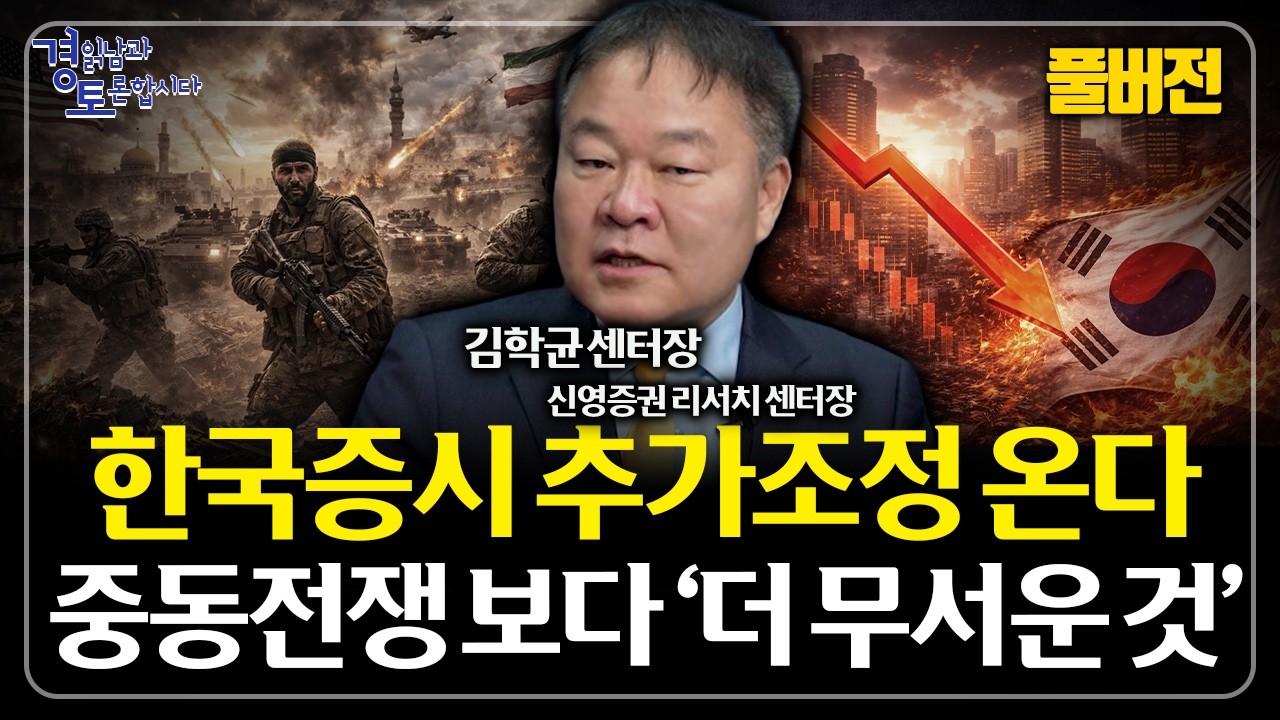
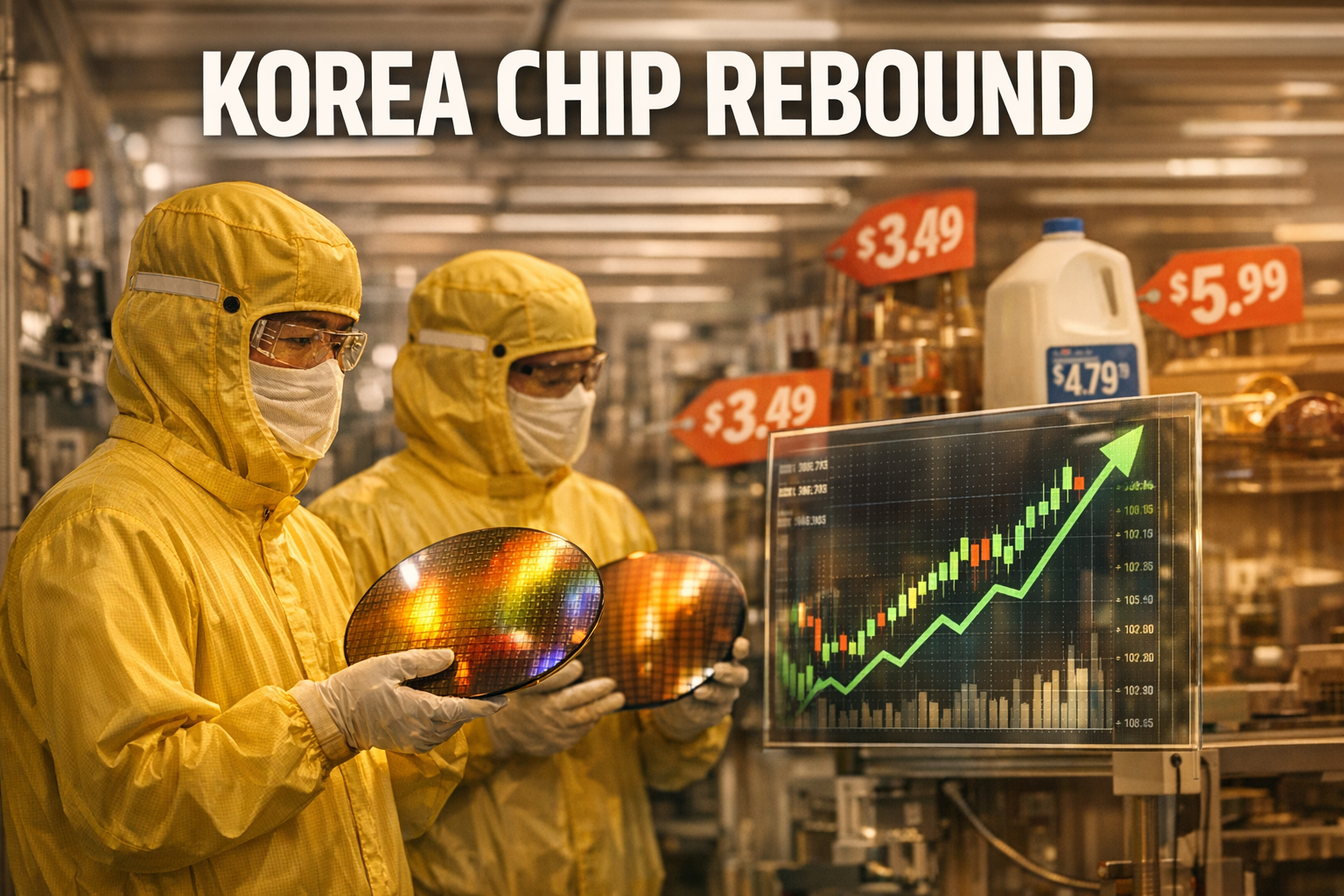
● China Chip Surge, Korea on Red Alert
China’s Semiconductor Catch-Up: Korea’s Preparedness and the Key Issues Between Samsung, SK Hynix, the U.S., and China
This is no longer a single-industry issue. It is directly linked to Korea’s exports, strategic national assets, AI-era leadership, and the country’s growth drivers over the next decade.
This report consolidates the key points often omitted in general media coverage, including HBM, advanced packaging, fabless, foundry strategy, subsidy competition, U.S.–China tech rivalry, and China localization strategy. The competitive landscape is increasingly shaped as a state-backed contest rather than a pure price-driven market.
1. Why “China could catch up in semiconductors” is being discussed now
This reflects structural risk rather than headline-driven fear.
A central point is that semiconductors represent one of Korea’s last remaining areas of meaningful technology advantage. Legacy export pillars (e.g., TVs, chemicals, steel) face slower growth and restructuring pressure.
With semiconductors accounting for roughly 20% of Korea’s exports, a deterioration in competitiveness would transmit beyond individual firms to national macro indicators (growth, employment, FX, and equity markets). Semiconductors should therefore be assessed as an economic security asset.
The operating environment has shifted from firm-level competition to government-led industrial strategy across the U.S., China, Japan, and Europe. Corporate execution alone is insufficient without aligned national policy support.
2. China’s threat is not limited to low-price competition
2-1. China is advancing in technology and equipment, not only cost
China’s semiconductor capability is increasingly ecosystem-based: design, equipment, materials, process integration, packaging, customers, supply chains, and talent.
If China achieves meaningful equipment self-reliance, it can reduce vulnerability to external controls and accelerate development of a parallel ecosystem, shifting from “catch-up” to “independent system formation.”
2-2. State support enables endurance beyond market economics
A key differentiator is China’s ability to sustain firms through subsidies, financing, domestic demand, and policy prioritization. This extends corporate survival through downcycles and enables capacity build-out regardless of near-term profitability.
The U.S. (CHIPS-related measures) and Japan (strategic industrial policy) also use direct support packages. Korea is often viewed as more tax-credit-centric, with comparatively lower on-the-ground impact. Competitive outcomes are increasingly influenced by national support frameworks rather than market forces alone.
3. Why Korea must defend semiconductor competitiveness
3-1. Semiconductors function as a core stabilizer for Korea’s economy
Semiconductors remain Korea’s primary source of technology rent and export leverage. If this anchor weakens alongside other pressured manufacturing sectors, the industrial base risks broader erosion.
3-2. AI increases the strategic value of semiconductors
AI adoption (data centers, on-device AI, autonomous systems, robotics, defense, and adjacent industries) expands semiconductor demand and elevates the sector to infrastructure status. AI trends should be monitored through semiconductor supply-chain and capacity signals.
4. Korea’s strategic response: two directions
- (1) Maintain or widen the technology gap
- (2) Raise barriers to entry in segments where Korea is strong
Both are difficult: the first requires sustained R&D and manufacturing execution; the second is entangled with trade, diplomacy, and security considerations.
Effective “technology leadership” increasingly depends on a package strategy across policy, talent, subsidies, permitting, infrastructure, and diplomacy.
5. Is Korea’s current policy support sufficient?
5-1. Tax incentives alone may be inadequate versus rivals’ direct packages
Peer jurisdictions increasingly combine direct subsidies with infrastructure support, regulatory streamlining, and utilities/land provisioning. A tax-credit-heavy approach may be less competitive in capital-intensive, time-sensitive investment cycles.
5-2. Policy design should match corporate operational constraints
Practical constraints include permitting speed, power supply, water, industrial park readiness, advanced talent pipelines, immigration/attraction of global experts, materials/equipment resilience, and packaging ecosystem depth. These cannot be solved by tax measures alone.
6. Geopolitical posture: align with the U.S., manage exposure to China
6-1. Semiconductor competitiveness requires U.S. alignment
The U.S. retains structural leverage through:
- Foundational semiconductor technologies
- Dominance in EDA software
- Concentration of critical equipment suppliers (e.g., Applied Materials, Lam Research, KLA)
- Leadership in AI semiconductor ecosystems
Restricted access to U.S.-linked tools and technologies can materially impair participation in leading-edge competition.
6-2. Full disengagement from China creates separate risks
China remains a large end market and manufacturing hub in electronics supply chains. Over-concentration on one side can trigger commercial and operational disruptions.
A realistic approach is: U.S.-centric technology alignment + disciplined China risk management + calibrated balance. Operational details (tool placement, technology transfer boundaries, customer selection, localization scope) can have direct P&L impact.
7. Where Korea should concentrate its semiconductor advantage
7-1. Memory leadership remains the cash-flow base
DRAM and NAND remain the primary cash engines for Samsung Electronics and SK Hynix. This base funds future investment and must be defended.
7-2. The AI-era battleground: HBM and advanced packaging
Competitive advantage is shifting from pure node scaling to integration: stacking, interconnect, thermals, power, substrate quality, and packaging yield.
HBM is structurally tied to AI accelerators, GPUs, and data centers. As the market moves toward HBM4 and beyond, complexity and execution demands are likely to rise. Sustained leadership positions Korea not merely as a memory supplier but as a strategic AI infrastructure partner.
7-3. Under-covered “detail technologies” matter: PIM, HBF, FCBGA
Beyond headline HBM metrics, performance and customer qualification depend on:
- PIM (processing-in-memory) concepts for efficiency
- HBF-type flash stacking/packaging evolution
- FCBGA advanced substrates for high-end integration
These influence yield, reliability, thermals, power efficiency, and customer trust.
8. Korea’s weakest link: fabless competitiveness
Korea’s global fabless presence is often cited around ~1%. In an AI-driven market, value capture increasingly shifts toward customized compute and edge/on-device AI chips across smartphones, autos, robots, wearables, and industrial devices.
Without a stronger domestic design ecosystem, Korea risks missing higher-margin growth pockets even with memory strength. Fabless scale also supports foundry utilization and ecosystem depth.
9. Foundry strategy: competing with TSMC is not the only framing
TSMC’s lead in leading-edge foundry remains substantial; Samsung is #2 with a gap. The strategic question is where Samsung and Korea can establish defensible differentiation rather than pursuing a single narrative of full parity.
Beyond leading-edge, expansion opportunities include power semiconductors, analog, automotive, and mature-node specialization. A stronger fabless base increases domestic demand pull.
“Public foundry” discussions should be treated as enabling infrastructure (prototyping to volume bridge) for startups and SMEs, not as simple state expansion.
10. Samsung Electronics strategy: is a foundry spin-off the solution?
10-1. The integrated model provides structural synergies
Samsung spans memory, system semiconductors, foundry, mobile, displays, consumer electronics, and manufacturing technology, enabling internal coordination and cross-domain optimization.
10-2. Foundry faces a customer conflict-of-interest perception
Foundry customers (e.g., major mobile and AI chip designers) may hesitate to rely on a manufacturer that also competes in end devices and system chips. This perception supports recurring spin-off debate.
However, separation does not inherently solve capital intensity or competitiveness. The central issue is restoring and sustaining customer trust and execution credibility.
11. Semiconductors as a base, not the endpoint
Defending semiconductors is necessary but not sufficient. Future growth must expand into AI-era industries:
- Robotics
- Autonomous driving
- Bio-related computing applications
- On-device AI
- Next-generation smart devices
Semiconductors should be treated as enabling infrastructure for broader industrial transition. Talent development is the limiting factor for execution.
12. China market strategy: the core principle often missed
12-1. China is not a simple destination for “Korea-designed variants”
A sustainable approach requires China-specific products and operating systems built with meaningful local autonomy, not only headquarters-led adaptation.
12-2. Successful execution requires localization of decision-making and talent
Sales localization is insufficient. R&D, product planning, HR, and key leadership roles must be locally anchored. Short-term expatriate management models are structurally weak in a high-competition environment.
12-3. A reference model: autonomy-first localization
Long-duration success in China has been associated with:
- High local business autonomy
- Local talent-led operations
- Product strategies tailored to Chinese consumers
13. Key points often missing in general coverage
13-1. “Technology leadership” is an outcome of national systems
Talent, power, equipment access, regulation, tax, diplomacy, supply chain, and customer trust jointly determine the feasible frontier.
13-2. Competitive advantage may shift from lithography to packaging
Node headlines matter, but AI workloads increasingly reward integration capability: HBM, high-bandwidth interconnect, stacking, thermals, substrate quality, and packaging yield.
13-3. Memory strength does not offset a weak fabless base
Design capability is required to capture AI-era device diversification and value pools.
13-4. China’s core risk factor is state-enabled endurance
The critical factor is not only capability, but the ability to sustain loss-making phases under state backing.
13-5. Korea must defend semiconductors while building next-industry talent
Without parallel ecosystem-building in adjacent industries, the growth narrative weakens even if semiconductors are defended.
14. Practical implications for investors and industry professionals
14-1. Samsung Electronics and SK Hynix should not be assessed only on near-term earnings
Key monitoring items include:
- HBM yield and customer qualification
- Packaging competitiveness
- Changes in U.S. export controls and China rules
- Subsidy/tax policy direction
- Foundry customer trust and design wins
- Expansion of the fabless ecosystem
- AI infrastructure investment and data-center capex cycles
14-2. Semiconductors remain a macro transmission channel
Rates, USD dynamics, geopolitics, export controls, supply-chain reconfiguration, and AI capex cycles frequently translate into Korea’s trade performance and equity-market sensitivity via semiconductors.
15. Conclusion: Korea’s semiconductor strategy is now a national resilience issue
Korea must defend semiconductor competitiveness, but the required approach differs from prior cycles. Corporate investment must be reinforced by coordinated policy, diplomacy, packaging leadership, fabless ecosystem development, talent strategy, China risk management, and U.S. technology alignment.
The objective is not only to preserve current advantages, but to use semiconductors as the platform for scaling AI-era industries and human capital.
< Summary >
China’s semiconductor advance is a state-backed competition, not a simple low-cost challenge.
Korea must defend semiconductors due to their central role in exports and strategic competitiveness.
The next battleground is not only memory, but HBM, advanced packaging, fabless scale, and differentiated foundry strategy.
Semiconductor diplomacy should strengthen U.S. technology alignment while managing China market exposure.
Medium-term outcomes for Samsung Electronics and SK Hynix are likely to depend more on AI-ecosystem execution than on short-term earnings prints.
Korea’s core task is to defend semiconductors while simultaneously building the next wave of AI-era industries and talent.
[Related Articles…]
- https://NextGenInsight.net?s=semiconductors 2026 Semiconductor Supply-Chain Reconfiguration and Korea Export Outlook: Key Takeaways
- https://NextGenInsight.net?s=AI AI Semiconductor Era: Samsung Electronics and SK Hynix Investment Checklist
*Source: [ Jun’s economy lab ]
– 이러다가 중국에 반도체 따라잡힙니다(ft.이병철 교수 2부)
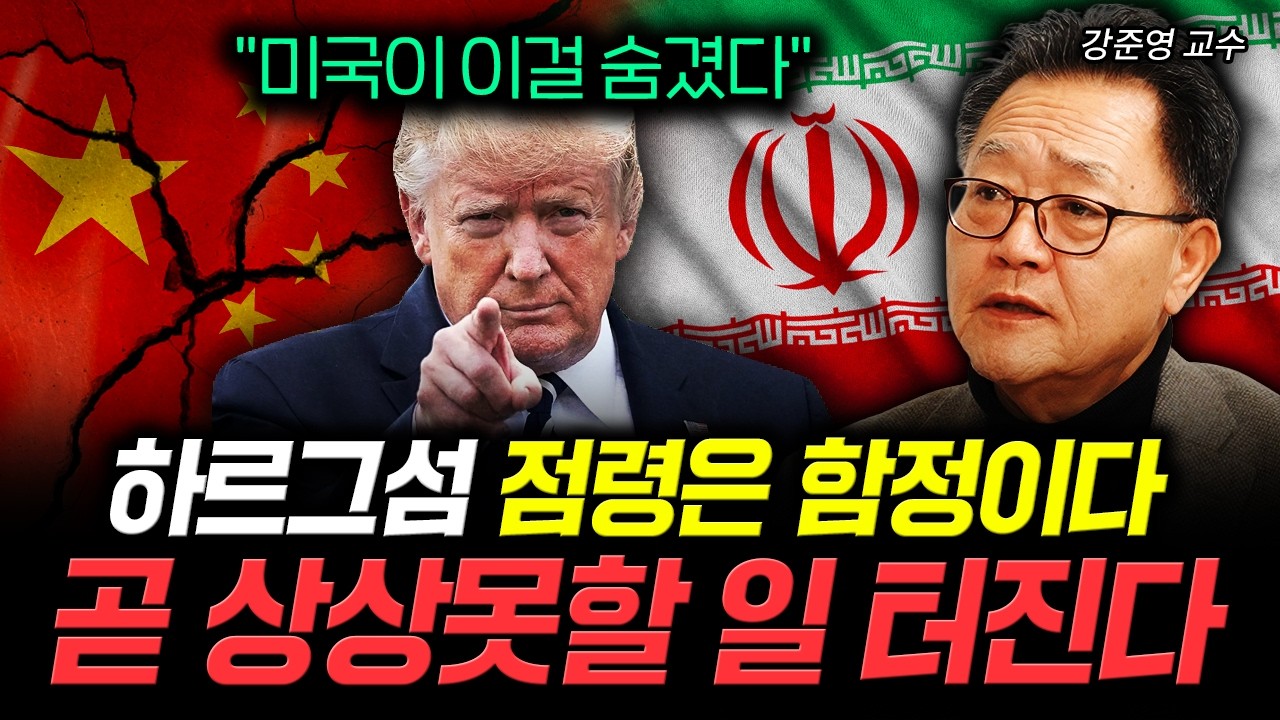
● US Strikes Iran, China Purge Shock, Export Crisis, Xi Risk
Was the US Strike on Iran Really About a Middle East War? Why Investors Must Assess China’s Purges, Export Risk, and Xi Jinping’s Political Exposure Together
This development should not be treated as a standalone military headline. The more accurate framing is a convergence of Middle East geopolitics, US strategic competition with China, signals of internal stress within China’s elite, China’s export deceleration risk, and accelerating global supply-chain realignment.
Reports of abrupt purges involving three Chinese scientists, China’s limited public disclosure, potential disruption to China’s Middle East influence strategy, and renewed pressure on an export-dependent growth model are material signals for investors.
The core issue is less “war” and more who sets the rules of the global order, and whether structural fragilities are emerging in China’s economy and governance model.
1. One-line summary
The US strike on Iran may appear regional, but it can be interpreted as constraining geopolitical space used by China and Russia, while indirectly amplifying China’s internal vulnerabilities. The surface theater is the Middle East; the strategic layer is US–China competition.
These dynamics intersect with China’s elite disciplinary actions across military/science/politics, slowing export momentum, and employment pressure, expanding the impact from foreign policy into global growth and supply-chain risk.
2. Key points in a news-report format
2-1. US strike on Iran: stated rationale may differ from strategic effect
Publicly, the strike aligns with deterrence and regional security objectives. Strategically, Washington may be targeting not only Iran, but also the broader anti-US network and its external enabling structures.
Iran is not operating in isolation; its interests partially overlap with China and Russia. As a result, US action can narrow the room for China to expand energy, diplomacy, and settlement networks. In effect, the US can manage Middle East instability while simultaneously constraining China’s channels of influence.
2-2. China’s Middle East strategy is more material than commonly assumed
China has sought to position itself beyond being a crude importer, expanding roles as mediator, investor, and security partner. The region is central for:
1) Energy security
China’s manufacturing and export base depends on stable energy supply. Regional volatility raises energy-price variability, increasing cost pressure across industry.
2) RMB internationalization
China has pursued settlement diversification with oil producers to reduce dependence on dollar-based systems. Influence in the Middle East is also a financial strategy.
3) Belt-and-Road connectivity
The Middle East is a strategic corridor linking Europe, Africa, and Asia. Weakening China’s position affects shipping routes, investment continuity, and infrastructure expansion.
Current events highlight that the ultimate security architecture remains US-led, potentially limiting China’s ability to translate diplomatic positioning into durable influence.
2-3. Purge reports involving three Chinese scientists: why this matters
Unconfirmed reports of sudden purges involving three scientists are not immaterial, particularly given limited official disclosure. The significance is threefold:
1) Target set: strategic technology personnel
China is competing with the US in semiconductors, aerospace, missiles, AI, and advanced manufacturing. Disruption within high-end talent pools becomes a national competitiveness risk.
2) Overlap with military, industrial, and information security
If driven by leaks, program failures, loyalty checks, or factional conflict, it signals leadership concern over regime stability and control of strategic projects.
3) Consistency with Xi-era governance incentives
As external pressure rises and growth slows, governance may prioritize loyalty and control over performance. This can suppress innovation capacity and weaken long-term technology upgrading.
2-4. Why export instability is a high-impact risk for China
A key risk is that if exports weaken materially, China’s economy could lose one of its few remaining growth stabilizers.
China faces simultaneous constraints: property-sector weakness, soft domestic demand, local-government fiscal strain, and elevated youth unemployment. Exports have been a partial offset, led by EVs, batteries, solar, machinery, and electronics.
If exports slow:
- lower factory utilization
- weaker employment
- softer consumption
- deteriorating corporate earnings and investment
This feedback loop is a core downside scenario, especially if the US and Europe tighten tariffs, subsidy-linked constraints, security screening, and enforcement against transshipment.
2-5. The 12 million jobs target: why execution risk is elevated
A target of 12 million new jobs implies heightened policy sensitivity to labor-market stability.
Structural headwinds include:
- property downturn reducing construction and linked employment (interiors, appliances, materials)
- lingering effects from platform-sector regulation, limiting private-sector hiring momentum
- automation reducing manufacturing labor absorption
- mismatch between graduate expectations and available roles; weaker conditions in smaller cities
If exports weaken concurrently, achieving the employment target may become harder in both numerical and sentiment terms. Employment stability is a primary social-stability variable, often more politically salient than headline GDP.
3. Why US messaging remains restrained
Limited public signaling can reflect operational priorities beyond rhetoric:
1) Minimizing market shock
Escalation risks oil spikes, inflation re-acceleration, and higher financial volatility.
2) Alliance coordination
Messaging alignment with Europe, regional partners, and Asian allies reduces policy friction.
3) Observing China’s response
China’s diplomatic posture, energy procurement adjustments, and communications with Russia and Iran provide actionable intelligence.
4. Central implication: external shocks can magnify China’s internal risks
The key impact is not the strike itself, but how it can amplify China’s internal vulnerabilities.
Key fragilities include:
- prolonged property weakness
- high local-government debt burdens
- subdued private-sector confidence
- sustained youth unemployment and labor-market stress
- external pressure from technology restrictions, trade measures, and supply-chain decoupling
Additional Middle East instability can create simultaneous pressure across energy costs, exports, diplomacy, and finance. This constrains China’s strategic room without direct confrontation, representing a relatively low-cost pressure mechanism.
5. Military capability exposure: why the signaling effect matters
Claims that missile or military capability has been “fully exposed” require careful fact-checking; however, the market-relevant implication is that China’s modernization may face scrutiny regarding readiness and operational execution.
Military capability depends on command systems, information security, corruption control, operational training, industrial resilience, and talent retention. If purge dynamics extend into defense-linked ecosystems, external actors may reassess China’s capabilities beyond headline inventories, affecting diplomacy, investment risk pricing, and regional security planning.
6. Global macro and market transmission channels
6-1. Oil and inflation
Middle East tension typically transmits first through energy prices. Higher oil raises costs across the US, Europe, and Asia. Inflation re-acceleration can delay rate cuts, impacting equities, bonds, FX, and consumer sentiment.
6-2. Accelerating supply-chain realignment
Firms are likely to price geopolitical risk more aggressively: lower China concentration, expanded capacity in Mexico, Vietnam, India, and Southeast Asia, and higher strategic inventories. Supply-chain restructuring may accelerate.
6-3. Spillovers to Korea
Korea is tightly linked to China via trade and intermediate goods in chemicals, steel, electronics, and components. Weak Chinese exports and soft domestic demand can pressure Korean corporate earnings. Conversely, supply-chain reallocation and strategic investment can support opportunities in semiconductors, defense, batteries, and AI infrastructure.
7. AI and the “Fourth Industrial Revolution” lens
7-1. Purges in science and technology translate into competitiveness risk
In advanced technology competition, talent is a primary asset. In semiconductors, aerospace, missiles, quantum, and AI, the loss or disruption of a small number of key personnel can delay programs. Heightened control and purge dynamics may stabilize governance in the short term but weaken innovation ecosystems over time.
7-2. Faster convergence of AI and defense technology
Competition is no longer limited to manufacturing. AI-enabled intelligence, satellite data processing, autonomous systems, cybersecurity, chip design, and cloud infrastructure are increasingly security-critical. This strengthens technology bloc formation and raises the importance of platform and standards alignment for firms.
7-3. For investors: AI infrastructure and energy security must be assessed jointly
AI investment exposure is not limited to GPUs and data centers. It includes power grids, cooling, energy procurement, critical minerals, subsea cables, and communications security. Middle East instability and US–China rivalry can affect the cost base and resilience of AI scaling.
8. Underpriced implications often missed in mainstream coverage
8-1. US objective may be strategic-radius reduction, not escalation
Even if the visible action targets Iran, the strategic effect can be to compress China’s diplomatic, energy, and financial operating space, with high leverage relative to cost.
8-2. China’s primary vulnerability may be internal trust erosion
Purge signals, limited disclosure, and repeated elite “rectification” may indicate systemic insecurity rather than strength. Centralization can coexist with elevated internal distrust.
8-3. Export weakness threatens a key stabilizer
With property and consumption constrained, exports have provided resilience. Middle East energy risk, Western restrictions, and supply-chain shifts could undermine that buffer, pressuring employment and domestic stability.
8-4. Xi’s key test is employment stability, not military posture
Regime durability is closely tied to household-level stability. The 12 million jobs target is a policy signal of this priority.
9. Forward indicators to monitor
- Whether China provides further disclosure on scientist and defense-linked personnel cases
- Whether China’s messaging toward Iran and Russia turns more assertive or remains restrained
- Export and youth employment data: further deterioration vs stabilization
- Whether oil prices shift into a sustained uptrend
- Additional US/EU restrictions on Chinese strategic products
- Corporate pace of production relocation and supply-chain restructuring
A clustering of these indicators would imply not only short-term volatility, but a transition toward a medium-term structural adjustment regime.
10. Conclusion
This event should not be framed solely as a Middle East conflict. It intersects with US strategic competition with China, constraints on China’s Middle East positioning, potential internal elite instability signaled by purge reports, export downside risk, and employment pressure.
China’s near-term risk profile increasingly depends on internal economic and governance resilience. If exports, employment, and strategic talent management weaken simultaneously, spillovers could extend across Asia and global markets. For Korea and other regional economies, the environment presents both risk and selective opportunity through supply-chain realignment and strategic-industry investment.
In practical terms, the key battlegrounds are technology, exports, employment, energy, and trust.
< Summary >
- The US strike on Iran should be assessed as part of a broader US–China strategic contest, not only as a regional security event.
- China aimed to expand influence in the Middle East across energy, diplomacy, and finance; current dynamics may narrow that strategic space.
- Reports of purges involving three Chinese scientists and limited disclosure can signal internal political stress and technology competitiveness risk.
- With property and domestic demand weak, export disruption would intensify downside risks for growth and employment.
- The 12 million jobs target highlights labor-market stability as a core social and political priority.
- The central issue is how external shocks can amplify China’s internal fragilities.
- Investors should assess spillovers across oil, inflation, supply-chain realignment, and AI-security technology competition.
[Related Links…]
- https://NextGenInsight.net?s=China
- https://NextGenInsight.net?s=AI
*Source: [ 달란트투자 ]
– “중동 전쟁은 페이크다” 미국이 이란 때린 진짜 이유|강준영 교수 1부