● Inflation Shock, Oil Spike, Supply Chaos, Won Slump, Market Panic
April Inflation Domino Risk: Key Briefing Across Oil, FX, Supply Chains, and Equities
This is not limited to higher crude prices. The core risk is a synchronized shock across Hormuz Strait logistics disruption, Red Sea risk, commodity price inflation, FX volatility, and inflation re-acceleration.
East Asia (notably South Korea, China, and Japan) is structurally exposed due to high energy import dependence and a manufacturing-heavy economic mix. This report summarizes plausible transmission paths from April onward, why real-economy pricing may move before equity markets, and what investors should monitor. A final section highlights under-discussed risk factors.
1. Why markets are tense: not “higher oil,” but a “lagged supply disruption” risk
Key warnings from global energy markets focus on timing: if crude and LNG cargo flows are delayed or reduced, inventory drawdowns may become visible within weeks.
Energy shocks often materialize with a lag due to shipping lead times and inventory depletion, then reprice abruptly when physical tightness emerges.
2. Why East Asia is especially vulnerable: South Korea, China, and Japan may be hit first
Common structural vulnerabilities:
- High dependence on imported energy
- Large manufacturing base with significant indirect energy demand
- High exposure in energy-intensive sectors (refining, petrochemicals, logistics, semiconductors, steel)
- Export-led models where logistics disruption quickly affects earnings and trade flows
For South Korea, the key risk is the combined effect of higher import costs + weaker currency + higher refining feedstock costs + higher logistics costs, compressing both consumer purchasing power and corporate margins.
3. Why South Korea is highly sensitive: refining, petrochemicals, and export linkages
South Korea is not only a consumer of energy; it imports crude, refines it, converts it into petrochemical products, and exports downstream outputs. Consequently, supply instability impacts more than retail fuel.
Transmission pathway:
- Crude supply disruption
- Higher refining costs
- Sharp increases in feedstocks (e.g., naphtha)
- Higher costs for plastics, coatings, films, rubber, packaging materials, textiles
- Broad manufacturing cost inflation
- Pass-through to final consumer prices
Key point: energy-driven inflation can spread more deeply through industrial intermediates than through retail fuel alone, affecting the full manufacturing cost structure.
4. What may change from April: from input tightness to consumer inflation
Market concerns generally follow a three-stage sequence.
4-1. Stage 1: Industrial input tightness
The first impact is typically in industrial procurement rather than households. If crude, naphtha, LPG, and LNG procurement tightens, refiners and chemical-linked supply chains react first.
Consumer conditions may initially appear stable even as B2B prices begin to reprice.
4-2. Stage 2: Higher freight, airfares, and delivery costs
Fuel cost increases tend to lift parcel delivery fees, trucking rates, ocean freight, and airline fuel surcharges. This is among the earliest household-visible channels.
- Higher airfares
- Higher parcel/delivery charges
- Increased corporate logistics costs
- Higher retail prices for imported goods
Early adjustments in airline surcharges and route optimization indicate the scenario is operationally relevant, not purely theoretical.
4-3. Stage 3: Consumer price shock
Once food, daily necessities, dining-out, transport, travel, and manufactured goods reprice in tandem, consumer sentiment can deteriorate quickly.
Resulting risks include inflation re-acceleration, lower real purchasing power, weaker domestic demand, and higher macro-policy constraints.
5. Why FX may be the larger risk: for South Korea, KRW weakness can be more damaging than oil
For South Korea, FX is a critical amplifier. Even if global crude is unchanged, a higher USD/KRW increases local-currency import costs.
Pass-through chain:
- Higher input costs for refiners
- Higher import prices
- Higher producer prices
- Pass-through to CPI
Therefore, crude benchmarks should be monitored alongside USD/KRW. External shocks typically increase KRW depreciation pressure.
6. Why the United States may be relatively less exposed
The US has higher energy self-sufficiency and a large domestic production base, reducing direct supply vulnerability relative to high-import economies.
However, sustained high oil can re-tighten CPI/PCE conditions and complicate the market’s expected rate-cut path. For the US, the principal risk is inflation persistence and interest-rate path uncertainty, rather than immediate physical shortage.
7. Is Europe insulated? Red Sea risk reduces comfort
Some views suggest Europe is less exposed than East Asia, but this assumes Red Sea disruption remains contained.
If Red Sea disruptions intensify, Europe faces broader supply-chain shock risk across autos, consumer goods, apparel, footwear, electronics, and general manufactured imports. The key exposure may be logistics-linked inflation more than crude itself.
8. Why governments are already responding
This should not be overstated, but it is not negligible. Multiple governments appear to be incorporating supply disruption scenarios into planning.
Typical response measures:
- Fuel price caps or controls
- Export restrictions on refined products and energy-related goods
- Limits on public-sector vehicle usage
- Energy-saving campaigns
- Expanded public-sector remote work
- Adjustments to airline and logistics operations
These actions imply policy focus on supply, inventories, inflation expectations, and social stability.
9. Why sentiment can be more destabilizing than fundamentals: panic buying can lead
In crises, sentiment often overshoots fundamentals. Perceived scarcity can trigger hoarding and front-loading before actual shortages occur, accelerating inventory drawdowns and price spikes.
With faster information diffusion via social media and short-form platforms, the propagation speed of fear can exceed policy response speed.
10. Sectors likely to move first if the shock hits the real economy
10-1. Higher-burden sectors
- Airlines
- Shipping segments with high fuel sensitivity
- Petrochemicals
- Plastics and packaging
- Auto parts
- Consumer goods distribution/retail
- Energy-intensive manufacturing
These sectors face concurrent pressure from fuel, logistics, and intermediate input inflation.
10-2. Potentially more defensive areas
- Energy production and development
- Selected commodity-linked assets
- Higher preference for cash-like instruments
- Staples with strong pricing power
Primary approach should emphasize hedging and risk control rather than momentum chasing.
11. Equity-market lens: why oil and the US 10-year yield matter most
Equities are driven by discount rates and earnings expectations. Higher oil can lift inflation expectations, reduce rate-cut expectations, and increase valuation pressure—especially on growth segments.
Key variables:
- Global crude prices
- US 10-year Treasury yield
If oil remains elevated and the 10-year yield rises, valuation headwinds for technology and growth may increase. If oil stabilizes and yields ease, risk assets can reprice positively.
12. Why food prices matter: secondary effects can be the core risk
Prolonged energy stress can lift food inflation through:
- Energy inputs into fertilizer production
- Fuel costs for machinery and transportation
- Shipping disruptions slowing grain flows
- Broad commodity inflation influencing expectations and pricing behavior
Moves in soybeans, corn, sugar, and related assets may signal wider CPI pressure rather than isolated trading dynamics.
13. Practical investor checklist
13-1. Daily indicators
- WTI and Brent crude
- US 10-year Treasury yield
- USD/KRW
- Airline fuel surcharge trends
- Fear-and-greed indicators
13-2. Interpretation framework
- Distinguish headline-driven spikes vs. supply-disruption repricing
- Assess whether FX weakness is linked to foreign outflows
- Monitor whether commodity strength broadens into food and industrial inputs
- Separate valuation compression from recession pricing
13-3. Retail investor risk principles
- Maintain a baseline cash allocation
- Audit FX sensitivity across the portfolio
- Avoid chasing energy/commodity exposure at extended levels
- Use phased entries for oversold growth exposure
- Consider opportunities primarily when risk sentiment is extreme, conditional on oil/yield stabilization
14. One-page news-style summary
First. Middle East supply risk is increasingly a lagged physical and logistics issue, not only a headline catalyst.
Second. East Asia, particularly South Korea, can see faster transmission due to energy-import and manufacturing intensity.
Third. Early stress may surface in industrial inputs and logistics costs before retail fuel becomes the primary signal.
Fourth. If FX weakens, South Korea’s local inflation impulse can intensify materially.
Fifth. If Red Sea risk escalates, the issue can expand from energy into broad global supply chains.
Sixth. For equities, oil and yields remain the primary variables; volatility control should take priority until they stabilize.
15. Under-discussed core points
15-1. The principal risk is not retail gasoline, but intermediate input inflation
Naphtha, petrochemical feedstocks, packaging materials, plastics, and industrial inputs can reprice sharply, destabilizing corporate cost structures and accelerating pass-through into CPI.
15-2. When FX joins the move, the local impact can compound
Oil alone can be absorbed to a degree; oil plus KRW depreciation raises import prices broadly. The key risk factor is the oil + FX combination.
15-3. Supply-chain crises can be driven more by expectation dynamics than by immediate scarcity
Digital information channels can trigger early hoarding behavior, amplifying volatility before measurable shortages occur.
15-4. South Korea’s real economy may feel stress before US equities reprice materially
The US has domestic energy production and scale advantages; South Korea’s import/manufacturing/export structure can transmit the shock faster into operating costs and household inflation.
15-5. AI-linked equities cannot fully decouple from oil and rates
The long-term AI and semiconductor theme may remain intact, but near-term performance remains sensitive to inflation-driven yields and discount-rate dynamics. Separate structural growth from cyclical macro pressure.
16. Three scenarios to monitor
16-1. Bull case
Middle East tensions do not escalate materially; Hormuz and Red Sea risks remain managed; oil stabilizes quickly. Risk assets may retrace fear premiums.
16-2. Base case
Risks persist, but strategic inventories and policy measures prevent acute shortages. Oil remains elevated and FX/inflation pressure lasts several months.
16-3. Bear case
Hormuz risk intensifies and Red Sea disruption expands; oil holds above USD 90 for an extended period; FX and CPI rise together. Real-economy stress, demand weakness, equity drawdowns, and policy uncertainty increase.
17. Conclusion: prioritize transmission-path analysis over headline consumption
This is not a single-variable oil story. Investors should map the transmission from energy disruption to commodities, FX, logistics, CPI, rates, and equities.
For South Korea, key variables are:
- Duration and level of elevated oil prices
- Magnitude and persistence of USD/KRW volatility
- Realization of additional supply-chain disruptions (including the Red Sea)
< Summary >
Rising Hormuz Strait and Red Sea risks are increasing the probability of energy supply disruptions from April onward. South Korea is structurally sensitive due to high energy import dependence and a manufacturing-heavy economy. The central risk is a chain reaction from input tightness to higher logistics costs, FX instability, and CPI pass-through. For investors, the primary indicators are global crude prices, the US 10-year yield, and USD/KRW. The long-term AI growth theme may remain valid, but short-term volatility linked to macro conditions is likely to persist.
[Related…]
https://NextGenInsight.net?s=FX
https://NextGenInsight.net?s=AI
*Source: [ 소수몽키 ]
– 4월 물가 폭등 도미노 쇼크 임박? 월가의 충격 경고 현실될까● Korea-Repricing-Explosion,AI-Supercycle,Middle-East-War-Over,Cospi-Breakout
Post–Middle East Conflict Re-Rating Scenario for Korean Equities: Why KOSPI and the AI Industry Should Be Assessed Together Now
The key market question is: if the Middle East conflict ends, where will capital reallocate, and why could Korean equities be re-rated?
This report focuses on liquidity pathways and post-conflict capital rotation, structural changes in the Korean equity market, the KOSPI re-rating thesis, the linkage between AI and a semiconductor upcycle, the practical implications of the government’s value-up agenda, the stablecoin variable under a Trump-era policy mix, and the potential modernization of KOSDAQ.
1. Key Headlines at a Glance
If the Middle East conflict ends earlier than expected, current market dislocation could shift rapidly toward a risk-on regime.
In that case, Korean equities may move beyond a tactical rebound and enter a re-rating phase as multiple factors potentially converge:
- AI-linked industrial competitiveness
- A semiconductor upcycle
- Potential post-war reconstruction demand
- Domestic value-up policy and shareholder return initiatives
If the conflict is prolonged, higher oil prices and renewed inflation pressure could alter the expected path of U.S. rate cuts and increase the probability of a broader global equity drawdown.
Core assumptions for a constructive Korea view:
- No prolonged conflict
- No material derailment of the rate-cut trajectory
2. Why a Re-Rating of Korean Equities Is Plausible
2-1. Pillar 1: AI Industry Expansion and the Semiconductor Upcycle
The AI cycle is increasingly transitioning from model-centric generative AI toward physical/industrial AI. This phase emphasizes:
- Operational know-how
- Production data
- Manufacturing capability
- Energy infrastructure
- Automation technologies
Areas where Korean corporates are positioned to benefit:
- Semiconductor manufacturing capability
- Batteries and energy systems
- Automation and process data from large-scale manufacturing
- Defense and infrastructure execution capacity
- Operating experience from industrial-scale facilities
Implication: AI exposure in Korea should be evaluated across the industrial stack, not limited to software. Relevant segments include semiconductors, power equipment, batteries, nuclear, automation hardware, and industrial infrastructure.
2-2. Pillar 2: Potential Post-Conflict Reconstruction Demand
An early end to hostilities typically raises the probability of reconstruction-related capex, including:
- Roads and logistics networks
- Power grids
- Industrial facilities
- Refining and energy infrastructure
- Construction equipment
- Telecommunications network restoration
Korean sectors with historical strengths:
- Construction and EPC/plant engineering
- Power facilities and grid equipment
- Energy infrastructure
- Industrial equipment
- Defense and security systems
Implication: conflict resolution can shift from risk removal to a new order-cycle catalyst for select industries.
2-3. Pillar 3: Government Value-Up Policy and Shareholder Returns
A major structural shift is the policy-driven push for:
- Treasury share cancellation
- Higher dividends
- Governance reforms
- Efforts to address low PBR/valuation discounts
Korea’s long-standing valuation discount has been linked to weak shareholder alignment and low capital efficiency. If these initiatives translate into durable changes, foreign investor willingness to re-engage may improve, potentially lifting market multiples.
3. What “KOSPI Re-Rating” Means in Practice
A re-rating is not merely an index rebound. If the KOSPI stabilizes at higher levels, the market may shift from being framed as a discounted emerging-market exposure toward being compared more directly with major developed-market indices.
As perceived market “tier” changes, capital allocation behavior can shift:
- Larger and more persistent institutional inflows
- Higher liquidity and improved pricing power
- Broader participation beyond a narrow set of large-cap names
Re-rating is therefore primarily a perception and classification shift, not only a numeric move.
4. Why Conflict Resolution Is Not Automatically Bullish: Key Preconditions
4-1. Early Resolution: Volatility Shock Without Deep Real-Economy Damage
If the conflict ends quickly, the episode may remain largely a financial-market volatility event. Recent drawdowns would then be interpreted more as de-risking rather than fundamental impairment, enabling a faster risk-on reversal.
4-2. Prolonged Conflict: Risk of Real-Economy Spillover
If hostilities persist—particularly with sustained stress around the Strait of Hormuz—oil prices could remain elevated, reigniting inflation and complicating U.S. monetary easing. This would pressure global equity valuations and tighten liquidity conditions.
5. Why Korea Could Outperform the U.S. on a Relative Basis
U.S. equities face ongoing valuation sensitivity, which can compress upside and amplify profit-taking on adverse catalysts.
Korean equities are positioned as comparatively lower-valuation assets with multiple potential drivers:
- AI and semiconductor cycle leverage
- Reconstruction-linked order cycles
- Value-up policy implementation
This is a relative-return framework rather than a call for U.S. market weakness.
6. A Trump-Era Variable: Why Stablecoins Matter
A key non-consensus point is that traditional stimulus levers may be constrained:
- Tariffs carry legal and political limitations
- Rate cuts may be constrained by inflation and geopolitical risks
- Immediate QE may be difficult to deploy
In this context, stablecoins and digital-asset rule-setting are increasingly discussed as potential tools with macro-financial implications:
- Stablecoin adoption could extend dollar influence into digital payments
- Expanded private stablecoin issuance may link to incremental U.S. Treasury demand
- Policy design could aim to reinforce Treasury-market demand
- Trade and financial arrangements may increasingly incorporate payment-rail requirements rather than tariff-only mechanisms
Implication for investors: this is not solely a crypto market topic; it can affect FX, Treasury demand dynamics, global liquidity transmission, and payment ecosystems.
7. KOSDAQ Modernization as a Condition for a Higher-Multiple Korea Market
A structural weakness of Korea is index concentration in a small set of mega-cap names, increasing sensitivity to specific sectors and firms. A developed-market profile typically requires a functioning growth-equity ecosystem.
KOSDAQ modernization priorities:
- Increased capital inflows to quality SMID-cap names
- Greater use of active ETFs to support selective allocation
- Reduced reliance on theme-driven trading
- Healthier IPO and exit markets
- Stronger listing ecosystem for startups and innovation-led firms
Sustained KOSPI re-rating is more credible if KOSDAQ develops into a stable growth-capital venue.
8. Sectors to Monitor
8-1. Semiconductors
AI expansion keeps semiconductors central, particularly:
- Memory and HBM
- Advanced packaging
- AI server supply chains
8-2. Energy and Power Infrastructure
A key AI bottleneck is power availability. As data centers, industrial automation, and electrification scale, focus areas include:
- Power equipment
- Transformers
- Cables
- Generation assets
- Nuclear-related supply chains
These are core AI infrastructure enablers, not secondary beneficiaries.
8-3. Batteries and Automation
As physical AI and robotics scale, demand rises for:
- Batteries
- Sensors
- Motors
- Control systems
- Industrial automation equipment
Korea’s manufacturing base provides leverage to this trend.
8-4. Defense and Reconstruction Infrastructure
Reconstruction and elevated geopolitical risk can support:
- Defense procurement
- Security systems
- Infrastructure-related orders
Korea’s competitiveness is supported by delivery timelines, cost positioning, and improving capabilities.
9. Under-Discussed Points
9-1. The Investment Core Is Rates and Liquidity Transmission, Not Battlefield Headlines
Markets are primarily driven by whether the conflict disrupts rate-cut expectations. Short conflicts tend to be volatility events; prolonged conflicts risk real-economy impacts.
9-2. Korea’s Differentiation May Be Stronger in Physical/Industrial AI Than in Pure Software
The next AI phase increasingly centers on factories, grids, robotics, and infrastructure—areas where Korea has industrial depth.
9-3. Stablecoins May Function as a U.S. Treasury-Demand and Dollar-Influence Mechanism
Stablecoin scaling can intersect with Treasury demand, FX dynamics, and global payment rails.
9-4. Without KOSDAQ Modernization, Sustained KOSPI “Tier Upgrade” May Be Limited
A mega-cap-led market without a credible growth segment can face structural constraints on multiple expansion.
10. Scenario Framework for Investors
10-1. Early Conflict Resolution
- Higher probability of risk-on rotation
- KOSPI rebound and re-rating narrative may strengthen
- Focus: semiconductors, power infrastructure, reconstruction-linked sectors
- Value-up beneficiaries may reprice
- Monitor KRW strength and foreign inflow signals
10-2. Prolonged Conflict
- Risk of oil-driven inflation resurgence
- Potential delay or repricing of U.S. easing expectations
- Higher volatility for growth and high-multiple assets
- Relative strength: defense, energy, other defensive sectors
- Emphasize risk management and liquidity discipline
10-3. Medium-to-Long Term
- Validate Korea’s competitiveness in physical/industrial AI
- Track durability of the semiconductor upcycle
- Assess implementation quality of value-up measures
- Monitor KOSDAQ modernization and listing ecosystem health
- Track U.S. stablecoin policy direction and liquidity implications
11. Conclusion
A post-conflict re-rating of Korean equities is contingent on a limited duration of hostilities, contained oil/inflation spillovers, and an intact U.S. rate-cut path.
Upside re-rating drivers include AI-linked industrial competitiveness, a semiconductor upcycle, potential reconstruction demand, and value-up reforms that may reduce the structural valuation discount.
More broadly, the key question is whether Korea can shift toward a developed-market-style equity profile, with stronger shareholder returns and a healthier growth-market ecosystem alongside large-cap leadership.
< Summary >
If the Middle East conflict ends early, Korean equities may be re-rated as risk aversion fades.
Key drivers include AI competitiveness, a semiconductor upcycle, reconstruction-linked demand, and the domestic value-up agenda.
If the conflict is prolonged, oil and inflation risks could delay rate cuts and increase volatility.
Over the medium term, Korea’s positioning in physical/industrial AI and KOSDAQ modernization are important for a sustained market “tier upgrade.”
U.S. stablecoin strategy is a relevant variable for global liquidity, FX dynamics, and Treasury-demand conditions.
[Related Posts…]
KOSPI re-rating and Korea equity rebound scenario overview
https://NextGenInsight.net?s=KOSPI
AI industry expansion and Korea semiconductor upcycle outlook
https://NextGenInsight.net?s=AI
*Source: [ 경제 읽어주는 남자(김광석TV) ]
– 중동전쟁 끝나면 돈 몰린다. 한국 증시가 다시 평가받는 이유 | 경읽남과 토론합시다 | 나탈리허 변호사_3편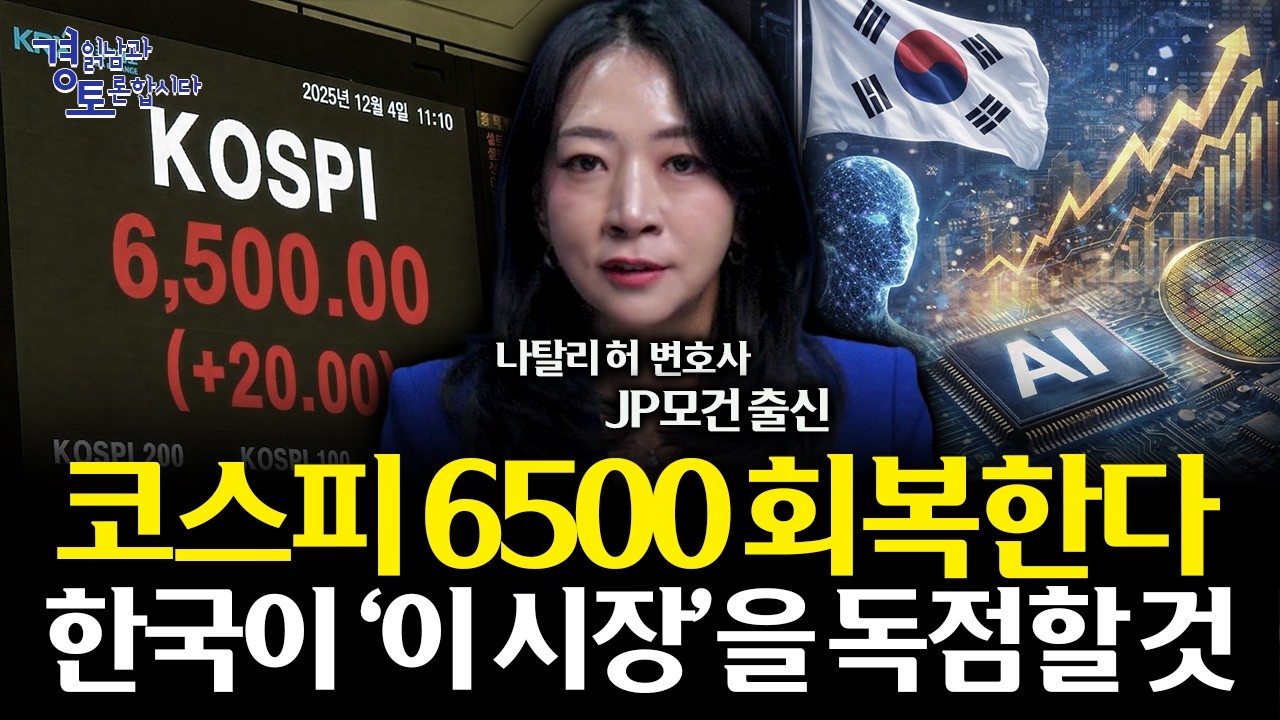
● Rout, Panic, Contagion, Shock, Crash, Selloff
KRW 1,530/USD and a Sharp KOSPI Sell-Off: The Critical Issues to Monitor
This move is difficult to interpret as a simple USD upswing or a temporary correction.
This report consolidates the drivers behind: the disproportionate KRW depreciation, the scale and rationale of foreign outflows, the linkage between memory semiconductors and AI software sentiment, the potential for Middle East conflict risk to re-accelerate inflation and alter rate expectations, and the transmission path into the KOSPI and broader Korean equities.
1. One-line market summary: Risk management takes priority over rebound expectations
A technical rebound is plausible after a sharp decline. However, the underlying drivers of the drawdown have not been sufficiently resolved.
The combination of KRW weakness near 1,530/USD and a KOSPI sell-off led by foreign investors reflects more than deteriorating sentiment. Multiple factors are interacting: Korea-specific risks, semiconductor cycle concerns, valuation pressure in AI-linked assets, geopolitical risk in the Middle East, and renewed inflation risk.
The key question is not the speed of any rebound, but which risk factors remain active.
2. KRW 1,530/USD: Why the KRW weakened this sharply
2-1. KRW weakness not explained by USD strength alone
The KRW depreciation has exceeded what would be implied by broad USD strength. The KRW also underperformed regional peers such as the JPY, indicating Korea-specific internal pressures.
This move reflects both global drivers and domestic/Korea-specific factors.
2-2. Korea-specific driver (1): Large foreign capital outflows
Sustained foreign selling over the past month is a direct contributor to the FX move. Heavy sales in large-cap names such as Samsung Electronics, SK Hynix, and Hyundai Motor typically translate into KRW selling and USD conversion, mechanically lifting USD/KRW.
USD/KRW near 1,530 is therefore not only an FX-market datapoint but also a footprint of equity-driven capital outflow.
2-3. Korea-specific driver (2): Market structure with high semiconductor dependence
Korean equities are heavily dominated by semiconductors. As a result, global allocators often treat Korea exposure as a proxy for the semiconductor cycle.
Concerns around memory pricing, adverse signals from China-related channels, and fading AI momentum can impose broad pressure on Korean risk assets.
KRW weakness should be viewed as linked to a valuation reset in Korea’s core export sector rather than a standalone FX issue.
3. Center of the sell-off: Why foreigners sold Samsung Electronics and SK Hynix aggressively
3-1. Profit-taking typically targets liquid outperformers first
Foreign risk reduction often starts with the most liquid, best-performing, and easiest-to-monetize positions. Samsung Electronics and SK Hynix fit these criteria.
Given their prior re-rating as AI beneficiaries, they are natural first candidates for de-risking. This reflects portfolio-level risk control more than a sudden fundamental impairment.
3-2. Memory pricing concerns weakened sentiment
A key sensitivity has been downside concern in memory prices (including DDR5). Even if declines are not uniform across products and certain pricing remains resilient, equities discount ahead of confirmed earnings.
The emergence of “cycle peak” doubt can trigger pre-emptive selling, and multi-session heavy foreign selling signals elevated caution rather than a brief technical adjustment.
3-3. Semiconductor weakness transmits into a broader Korea valuation discount
Due to index concentration, weakness in Samsung Electronics and SK Hynix compresses the overall index valuation. The KOSPI decline can therefore reflect a broader discount on Korea’s growth and export expectations.
Semiconductors link the KOSPI, FX, foreign flows, and macro expectations in a single feedback loop.
4. The meaning of an AI rally pause: Not merely a thematic pullback
4-1. Why AI weakness can elevate broad market risk
AI-related consolidation is often framed as routine after strong gains. However, AI has also served as a foundation for broader risk-taking, capital deployment into software/data centers/cloud, and associated leverage.
AI has evolved from a theme into a component of financial-market credit expansion.
4-2. Why private credit exposure is a risk signal
Private credit has provided funding for borrowers facing tighter bank lending conditions, typically at higher rates. In stable markets this is marketed as yield enhancement, but risk can rise quickly when collateral values deteriorate.
If AI/software equities weaken persistently, collateral values can fall, leverage structures can destabilize, and margin pressure can increase. The surface narrative of “AI sector correction” can therefore morph into a liquidity and credit-risk issue.
4-3. Underappreciated point: Credit-market linkage may matter more than “AI bubble” debate
The more material issue is not whether AI valuations are excessive, but the credit structures built around these assets.
Moderate price declines are common; leveraged declines can drive collateral revaluation, forced deleveraging, and redemption pressure. Markets can reprice rapidly when credit channels tighten, often before earnings confirm deterioration.
5. Middle East conflict risk and political remarks: Why equities are less responsive
5-1. Declining effectiveness of verbal intervention
Repeated ceasefire-related remarks have not produced sustained rebounds, suggesting markets require evidence rather than statements.
Without tangible progress (negotiations, supply normalization, reduced Hormuz risk, de-escalation), rhetoric alone is unlikely to restore risk appetite.
5-2. If the conflict is structural (religious/geopolitical) rather than a short negotiation cycle
If the conflict is interpreted as a deeper regional power struggle rather than a narrow nuclear-related negotiation, the timeline may be extended and the shock may persist as a lasting risk premium.
Markets may be discounting the probability of prolonged disruption leading to sticky energy-driven inflation.
6. The more consequential risk: Inflation data, not oil headlines
6-1. Cost pass-through risk can materialize from April onward
Inflation risk is not only a function of crude prices but also realized cost increases faced by firms and households: freight, inputs, power and gas, logistics, and supplier price resets.
If these pressures feed into producer prices and then consumer prices, inflation can re-accelerate with a lag.
6-2. Upside surprises in PPI/CPI could destabilize markets again
If PPI and CPI print above expectations, the anticipated monetary easing path may be repriced.
Markets would then face a negative combination: slowing growth alongside re-emerging inflation pressure, limiting the central bank’s ability to cut rates.
7. The Fed and rate expectations: Market pricing may be misaligned
7-1. Why rate-cut expectations can weaken
Markets have leaned on the assumption that growth slowdown leads to cuts. A renewed inflation impulse changes the reaction function.
With war- and energy-linked inflation risk, premature easing can be viewed as higher risk, reducing the likelihood of near-term cuts.
7-2. A neglected scenario: Not only “higher for longer,” but a more hawkish reinterpretation
The focus is often on the timing of cuts. Even a delay can tighten financial conditions.
If the Fed’s language reopens upside risks to rates, growth equities, high-duration assets, and high-valuation segments can face renewed pressure. This is a key channel through which AI and semiconductors could weaken simultaneously.
8. Why caution is warranted even if a rebound occurs
8-1. A technical rebound is not a trend reversal
Sharp sell-offs often produce short rebounds driven by short covering, oversold signals, political remarks, temporary oil stabilization, or brief FX relief.
For a durable reversal, the causal factors must improve: foreign flows, memory pricing concerns, AI-linked credit risk, geopolitical risk, and inflation expectations.
These conditions are not yet clearly satisfied.
8-2. Rebounds can be opportunities to reassess risk
A rebound may be better used to reduce portfolio risk than to increase exposure.
Positions accumulated at highs, theme-concentrated holdings, and assets driven more by expectations than by cash flows may warrant rebalancing. Capital preservation and flexibility are typically prioritized until conditions stabilize.
9. Portfolio actions for individual investors
9-1. Cash allocation is a strategy
In drawdowns, cash provides optionality. If capital is fully deployed, investors may be unable to act when quality assets reprice.
Maintaining cash is an active positioning choice for future opportunities.
9-2. Reassess the role of dividends, defensives, and cash-flow assets
As volatility rises, assets with durable cash flows tend to gain relative importance: dividend equities, defensive sectors, low-volatility quality names, and cash-flow-resilient industries.
These holdings can create rebalancing capacity during drawdowns in leadership sectors.
9-3. Even high-quality names require valuation discipline
A strong business does not guarantee strong equity returns if valuation already discounts aggressive future outcomes.
Chasing assets after multi-fold appreciation increases downside sensitivity. Entry price and valuation matter more than thematic narratives in this regime.
10. Key takeaways (news-style)
- USD/KRW near 1,530 reflects not only USD strength but also Korea-specific capital outflow pressure.
- Foreign investors have sold large-cap bellwethers, including Samsung Electronics, SK Hynix, and Hyundai Motor.
- Memory semiconductor pricing concerns are acting as a broad valuation discount for Korean equities.
- AI-related weakness is linked to credit-market risk via private credit and leverage structures, not merely a theme rotation.
- A prolonged Middle East conflict could lift inflation via cost pressures, affecting both PPI and CPI.
- If inflation re-accelerates, the Fed may maintain a more hawkish stance, delaying easing.
- A short-term rebound is possible, but the conditions for a confirmed trend reversal are not yet in place.
- Portfolio defense and liquidity management warrant higher priority than return maximization.
11. Most critical point underemphasized in mainstream coverage
The core issue is not the equity decline itself, but the fact that FX, semiconductors, AI-linked credit conditions, war-driven inflation risk, and the Fed’s rate path are interacting as one system.
Common transmission paths:
- Foreign selling of semiconductors -> KRW depreciation -> USD/KRW rise -> imported-cost pressure -> higher risk premium.
- AI/software weakness -> leveraged credit structures tighten -> global risk-off -> accelerated outflows from high-beta markets such as Korea.
- Prolonged conflict -> higher energy/cost structure -> inflation re-acceleration -> reduced rate-cut capacity -> pressure on growth assets and the KOSPI.
Portfolio resilience should be evaluated against these linked risks.
12. Conclusion: Prioritize resilience over prediction
Rebounds can occur, but do not eliminate structural instability.
In the current regime, diversification, cash-flow exposure, valuation discipline, reduced high-valuation concentration, and maintaining liquidity for future repricing events are likely to be more relevant than aggressive risk-taking.
< Summary >
USD/KRW near 1,530 and the KOSPI decline reflect a convergence of foreign selling, semiconductor-cycle concerns, AI-linked credit-market risk, Middle East geopolitical risk, and renewed inflation pressure.
Given Korea’s high semiconductor concentration, selling in Samsung Electronics and SK Hynix transmits directly into both the index and the KRW.
AI weakness should be monitored for spillover into private credit and leveraged structures.
Going forward, PPI/CPI releases and the Fed’s policy stance may be more market-relevant than oil price headlines.
A short-term rebound is possible, but a durable reversal remains uncertain; investors may prioritize cash allocation and defensive portfolio structure.
[Related Articles…]
https://NextGenInsight.net?s=exchange-rate
https://NextGenInsight.net?s=AI
*Source: [ Jun’s economy lab ]
– 반등이 나올때가 됐는데…환율1530원과 코스피 폭락에 대한 넋두리