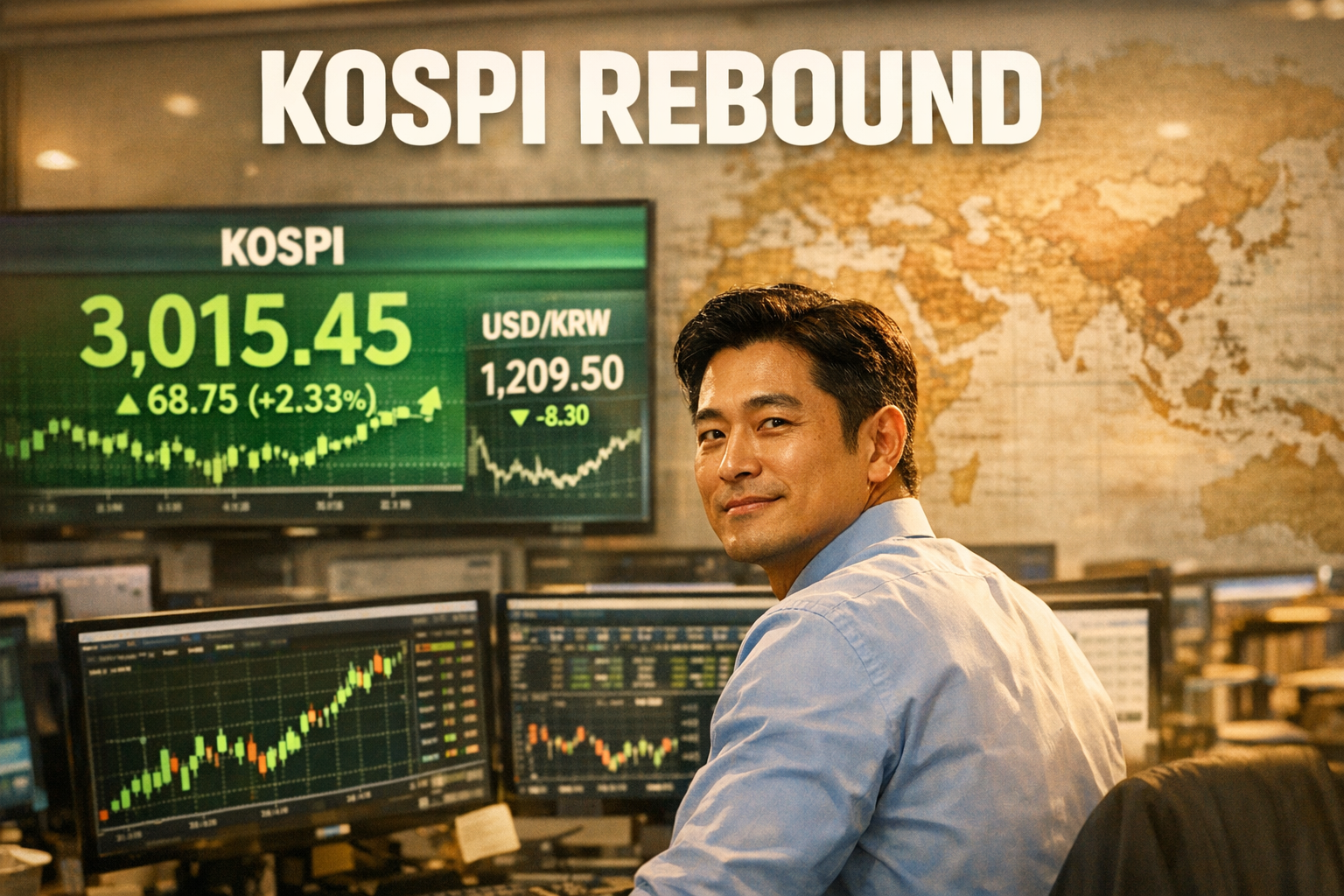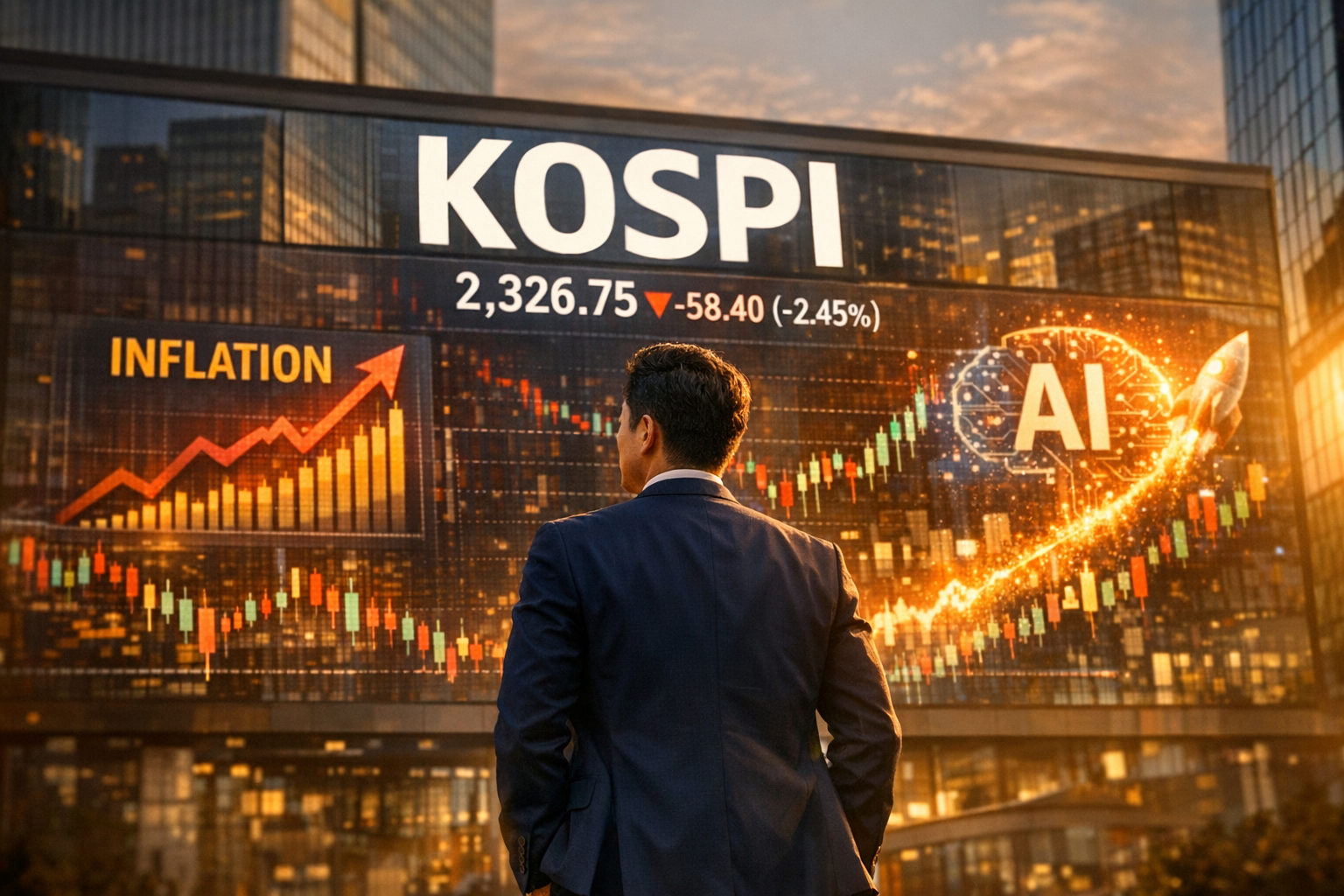
● Inflation Shock, Oil Surge, Korea Hit Hard
Inflation Reacceleration, Renewed Rate Upside Risk, and a 2026 Repricing of Korean Assets: Key Takeaways
This is not solely an escalation in Middle East risk. The current shift links higher crude prices, FX volatility, a changed policy-rate path, supply-chain shock risk, and polarization within the Korean housing market into a single macro structure.
This report focuses on five questions:
- Why the expected 2026 trajectory for Korea is shifting
- Why Asia, and Korea in particular, may face larger direct spillovers
- Why rate-cut expectations weaken, with higher odds of extended holds or renewed hikes
- Why housing may bifurcate more sharply than equities
- Why future-growth sectors (AI, humanoids) can be highly rate-sensitive
1. Starting point: why “inflation is returning” is back on the agenda
The catalyst is Middle East geopolitical risk, with the key transmission channel being potential disruption around the Strait of Hormuz and energy supply insecurity.
The shock center differs from the Russia–Ukraine episode. Then, Europe’s high reliance on Russian energy amplified the impact. In the current setup, Asia’s dependence on Middle East crude and LNG increases the likelihood of a more direct regional hit.
Asia is not only a consumption hub but also a core of global manufacturing. If Asia’s energy procurement is disrupted, production costs rise across supply chains, reinforcing global inflation pressure.
Key points
- This energy shock may be more direct for Asia than for Europe.
- Asia’s manufacturing role increases the probability of cost-push inflation spilling over globally.
- The shock should be assessed as a potential macro-path variable, not a headline-only event.
2. Why “cuts” are being replaced by “extended holds, and potentially hikes”
Central banks remain anchored to inflation stability. Markets had debated the pace and number of cuts into 2026. That path becomes less credible if crude and commodities rise alongside higher transport costs and FX pass-through.
In that case, policy easing becomes harder even if growth softens. Public remarks by major central bank leadership that rate hikes could be considered even if oil shocks are “temporary” are notable as signaling: policy reaction functions may re-center on inflation protection.
Implications of a changed rate path
- Prior baseline: gradual rate cuts
- Revised risk: prolonged policy holds
- Adverse case: renewed hikes in certain jurisdictions or time windows
This affects equities, rates/credit, FX, and real estate. Long-duration assets—growth stocks, large-cap tech, AI, humanoids—are highly sensitive to rates because distant cash flows are discounted more heavily as rates rise.
3. Why Korea is more vulnerable: energy dependence and structure
Korea warrants separate treatment due to the combination of:
- Low energy self-sufficiency
- High dependence on Middle East energy imports
- High energy intensity relative to economic size
This configuration raises sensitivity of both inflation and growth to energy shocks. While China and India are also net importers, Korea’s import-dependent manufacturing structure often accelerates pass-through from energy prices into production costs, logistics costs, and consumer prices.
Practical shock formula for KoreaKorea’s imported input shock is not driven by crude alone. The effective burden reflects a multiplicative structure:
- Spot prices for crude/commodities
- KRW/USD exchange rate
- Ocean freight and insurance costs
Import prices = spot price × FX × freight
Risk increases when all three variables face upward pressure simultaneously.
4. The core is not “inflation” alone; it is a supply shock
A supply shock goes beyond higher prices. It includes delayed or disrupted delivery of inputs, production and shipping schedule slippage, and firms postponing investment and output plans.
The primary macro risk is a stagflationary mix: higher inflation pressure alongside weaker growth.
Categories likely to be affected
- Petrochemical-based materials
- Plastic windows/interior materials
- Paints and coatings
- Tires
- Fuel costs for construction equipment
- Transport fuel costs
- Rebar, cement, and other base construction materials
Construction, manufacturing, logistics, and distribution can be hit concurrently. Operational “availability” may matter as much as CPI prints.
5. Bank of Korea policy: why the possibility of hikes cannot be excluded
The Bank of Korea must monitor both inflation and FX conditions. If the Federal Reserve delays cuts and the USD remains strong while Korea cuts first, KRW depreciation pressure can intensify.
KRW weakness raises import prices and can re-ignite domestic inflation, tightening the policy trade-off:
- Growth argues for easing.
- Inflation and FX argue against easing.
- If conditions deteriorate further, tightening may become necessary.
Korea’s rate path is therefore unlikely to be determined by growth alone; energy, FX, import prices, and capital flows must be assessed jointly.
6. Equity-market impact: why AI and humanoids can re-rate lower under higher rates
Structural AI adoption can remain intact while market pricing is constrained by rates. Sectors with valuation tied more to future expectations than near-term earnings are typically more rate-sensitive.
Examples:
- Non-big-tech AI solution providers
- Humanoid robotics
- Capital-intensive next-generation automation
- R&D-heavy growth sectors with limited near-term monetization
Practical constraints for AI-related investing
- Higher discount rates compress growth valuations.
- Corporate capex funding costs rise.
- Financing conditions tighten.
- Pre-profit or low-profit companies face higher volatility.
By 2026, AI as a technology trend may remain strong, while asset-price outcomes become more selective.
7. Real estate: the key is bifurcation, not a uniform decline
Korean real estate is likely to diverge by product and location rather than move as a single market.
7-1. Why older stock (existing units) may weaken
Higher rates increase mortgage burdens; weaker growth reduces effective demand. Existing units with weaker location attributes, lower product quality, or substitutable supply may face more downside risk.
7-2. Why new-build units may remain resilient
Energy and supply-chain shocks raise construction costs and increase execution risk:
- Higher material costs
- Higher labor costs
- Higher fuel costs for equipment
- Longer construction timelines
- Disruptions to presales and groundbreaking schedules
This can reduce or delay new supply. In Korea, preference for new-build units remains strong in key areas. Demand resilience combined with tighter supply can support prices in select submarkets.
8. Reconstruction/redevelopment: supply expansion policies may under-deliver
Even with policy intent to expand supply, the pipeline is slow (permits, starts, presales, completions). Cost inflation and supply disruption can further weaken project economics.
For reconstruction/redevelopment cooperatives, higher construction costs can increase additional member contributions, raising incentives to delay or renegotiate projects.
Potential outcomes
- Delays in reconstruction/redevelopment schedules
- Postponed starts or re-evaluation of feasibility
- Reduced availability of new-build completions
- Wider price dispersion between older stock and prime new builds
This can reshape urban housing structure over multiple years.
9. Korea 2026 macro outlook: a pragmatic base case
Aggregating the above, the 2026 outlook may be more complex than a straightforward normalization.
Higher-probability base case
- Growth faces downward pressure.
- Inflation faces renewed upside risk.
- Policy rates stay higher for longer than previously priced.
- Under adverse conditions, hikes remain possible.
- Equity performance becomes more sector-differentiated.
- Housing polarization intensifies by product and location.
The dominant regime resembles “selective shocks under sustained high rates” rather than “smooth normalization.”
10. Core briefing (news-style)
1) Inflation
Middle East risk and Strait of Hormuz tension lift crude and commodities, increasing global inflation reacceleration risk.
2) Rates
Major central banks shift from cuts toward extended holds, with renewed hike risk under adverse conditions.
3) Korea
Korea’s low energy self-sufficiency and high Middle East dependence increase sensitivity within Asia.
4) FX
Sustained USD strength raises import-price pressure and narrows the Bank of Korea’s policy room.
5) Equities
AI, humanoids, and other long-duration growth assets are more exposed to renewed rate-upside risk.
6) Real estate
Existing units may weaken under slower growth and higher debt service, while new builds can be supported by supply tightness and higher replacement costs.
7) Supply chain
The core risk is supply shock, which can simultaneously raise costs and disrupt timelines across construction, manufacturing, and logistics.
11. Under-discussed but critical points
1) Spot prices may matter more than futures prices
For Korea’s import costs and corporate input burdens, spot pricing can be more directly relevant than futures curves.
2) The shock is not limited to crude
When FX, freight, and insurance rise together, Korea experiences a “triple pressure” via the multiplicative import-price channel.
3) Supply delays can be more damaging than rates
Operational delays disrupt earnings, construction schedules, and investment plans beyond what policy-rate changes alone imply.
4) Real estate can split into two markets
Existing vs new, non-core vs core locations, mass-market demand vs high-net-worth demand can diverge materially; simple up/down narratives become less reliable.
5) Distinguish AI adoption from AI investment returns
Industry growth can persist while tighter rates and funding conditions increase volatility and dispersion in AI-related asset returns.
12. Key questions for investors and end-demand buyers
- How long will crude remain elevated?
- Is KRW/USD likely to weaken further?
- How persistent will freight and insurance costs be?
- Is the Bank of Korea delaying cuts, or also preparing for hike risk?
- In real estate, is the target asset existing or new-build, non-core or prime?
- In AI and growth exposure, is the thesis earnings-driven or expectation-driven?
< Summary >
Middle East risk is a potential regime-shifting variable for Korea’s 2026 asset-market path. Asia-centered energy exposure can raise crude, FX, and freight costs simultaneously, increasing Korea’s import-price and inflation pressure.
As a result, rate-cut expectations weaken; extended holds and, in adverse conditions, renewed hikes remain plausible. Equity markets may see higher volatility in long-duration growth sectors such as AI and humanoids.
Real estate is more likely to polarize—existing units under pressure while new builds in select prime areas remain supported by constrained supply and higher replacement costs.
The dominant risk is a supply shock rather than inflation alone; the macro mix to monitor is slower growth, higher inflation pressure, and rates staying higher for longer.
[Related Articles…]
- https://NextGenInsight.net?s=inflation
- https://NextGenInsight.net?s=AI
*Source: [ 경제 읽어주는 남자(김광석TV) ]
– 인플레 다시 온다, 금리도 다시 오른다. 2026년 한국 자산시장 경로가 바뀌었다 | 경읽남과 토론합시다 | 박정호 교수_2편
● Trump Shock, KOSPI Crash, Oil Surge, Dollar War
Trump’s “Stone Age” Remark and the KOSPI Sell-Off: Why the Market Is Pricing a Prolonged Middle East Conflict, Oil, and Dollar-System Risk
This development extends beyond a single provocative remark.
This report connects the immediate drivers of the KOSPI decline, the risk of a prolonged Middle East conflict, the oil and inflation transmission channel, USD dominance and FX variables, and implications for the Korean equity market and positioning.
It also explains why markets interpreted the message as “pressure toward capitulation” rather than “ceasefire progress,” and why the Strait of Hormuz is not only a geopolitical headline risk but a structural issue for global financial plumbing.
1. What happened in today’s market: the visible trigger for the KOSPI decline
Following Trump’s remarks, risk assets sold off rapidly.
Markets initially stabilized on ceasefire expectations, but reversed as the content circulated.
- Message implying the war could continue for “2–3 more weeks”
- Pressure on Iran, signaling stronger strikes if negotiations do not proceed
- Use of the phrase “send them back to the Stone Age”
- Renewed focus on the Strait of Hormuz and crude supply risk
Markets interpreted the remarks less as a negotiation signal and more as a signal of escalation or extended duration.
As a result, the prior day’s gains reversed and the KOSPI decline followed the broader risk-off move.
2. Why equities rose first and then sold off
The early rebound was not driven by confirmed ceasefire progress.
Price action reflected “ceasefire hope” without concrete actions or agreements.
When expectations lead, subsequent confirmation shocks can amplify volatility.
This episode followed that pattern.
- Rebound driven primarily by expectations
- Subsequent remarks confirmed a hardline stance
- Prolonged-conflict risk repriced
- Risk appetite deteriorated rapidly
This dynamic was visible across US equities and Korean equities.
News-driven trading typically increases volatility relative to fundamentals-driven moves such as earnings or rate expectations.
3. The market meaning of the “Stone Age” remark
The phrasing functioned as more than rhetoric.
It signaled reduced tolerance and a willingness to escalate pressure.
From a market perspective, risk increased because the remarks contained limited economic “buffer” messaging typically used to reassure markets.
- Limited emphasis on oil price stabilization
- No clear inflation-mitigation framing
- No detail on managing war-related economic costs
- Priority appeared weighted toward military objectives
This can be priced as an indication that economic costs may be tolerated in the near term to pursue strategic aims.
4. The core issue: “ceasefire” means different things to each side
While both sides may use similar terms (ceasefire, negotiation, mediation), the underlying conditions can diverge materially.
- Iran’s preference: halt fighting, gain time, preserve regime stability
- Trump’s preference: acceptance of conditions close to capitulation
Large gaps in conditions reduce the probability of a near-term settlement.
Markets should focus on terms and enforceability, not terminology.
5. Why the probability of a prolonged conflict increased
Some observers compare the setup to early-stage Russia–Ukraine dynamics: initial expectations of a short duration followed by entrenchment as incentives diverged.
- Nuclear issues are difficult for Iran to concede
- The US and Israel are unlikely to accept continued nuclear advancement
- Energy security risks via the Strait of Hormuz compound the conflict
- Russia and China may obtain indirect strategic benefits
Under these constraints, rapid resolution becomes less likely, and markets can reprice duration risk.
6. Why the Strait of Hormuz is the critical risk
Many summaries reduce this to “blockade risk,” but the issue is deeper.
It is a strategic chokepoint where crude supply security intersects with USD-based settlement.
- The geography is difficult to secure militarily at low cost
- Iran could seek “transit fee” mechanisms and push settlement diversification
If even a partial shift toward non-USD settlement (e.g., CNY or crypto) occurs, it becomes a challenge to the petrodollar framework, not only a military headline.
7. USD dominance and FX: the structural layer of the conflict
US sensitivity to Middle East stability is tied to alliance security and the global energy-USD linkage.
If segments of energy trade gradually shift toward alternative settlement rails:
- Structural USD demand could weaken at the margin over time
- Confidence channels around US Treasuries and global liquidity could be tested
- FX volatility could increase
- Global asset allocation regimes could adjust
This does not imply an imminent breakdown of USD dominance.
However, the US policy response often aims to contain early-stage fragmentation.
8. Oil and inflation: the variables markets will monitor most closely
If the conflict duration extends, markets will refocus on crude levels.
Higher oil prices can re-accelerate inflation and delay expected rate cuts.
- Margin pressure from higher input costs
- Weaker consumer sentiment
- Reduced room for monetary easing
- Higher valuation pressure via discount rates and risk premia
For energy importers, sensitivity is higher.
If FX depreciation coincides with oil spikes, imported inflation risks increase.
9. Why Korea faces higher sensitivity
Korea is export-oriented but highly dependent on energy imports, creating a dual exposure.
- Higher crude import costs
- Upward pressure on USDKRW
- Higher probability of foreign outflows
- Valuation pressure across semiconductors, secondary batteries, and growth equities
Korean equities are also prone to sentiment-driven volatility.
Geopolitical risk can dominate local fundamentals in the near term.
10. US holidays and weekend risk
Market closures can concentrate event risk.
When markets are shut, repricing may occur as a gap at the next open.
In such regimes, leverage increases the probability of forced deleveraging even if directional calls are correct.
- Ceasefire hope → rebound
- Disappointment headline → renewed sell-off
- Hope returns → short-term rebound
- Over time → stepwise drawdowns
This pattern warrants caution under high headline sensitivity.
11. What investors should monitor: 5 checkpoints
11-1. First, focus on “terms,” not headlines
The words “negotiation” or “ceasefire” are less informative than the conditions and the gap between positions.
If demands remain close to capitulation, near-term closure risk stays elevated.
11-2. Second, monitor oil and FX together
Oil alone is insufficient.
USDKRW must be tracked concurrently to assess Korea-specific tightening in financial conditions.
11-3. Third, treat sharp rallies as potentially technical
Single-session rebounds are not confirmation of trend reversal.
Improvement should be corroborated across earnings, rates, inflation, and de-escalation signals.
11-4. Fourth, use leverage conservatively
In high-volatility regimes, leverage reduces survivability via drawdowns and gaps.
Weekend event risk further increases this constraint.
11-5. Fifth, opportunities can still emerge
Relative strength can persist even during broad sell-offs.
Potentially resilient areas include defense, energy, selected commodities, defensives, and companies with durable cash flow.
Within AI, distinguish theme-driven exposure from names with earnings linkage.
12. Economic and AI-trend lens: what to track
This is not only a war headline; it can affect supply-chain restructuring and investment in enabling technologies.
- Energy security priorities may expand investment in nuclear power and grid infrastructure
- Rising demand for defense AI, satellite ISR, drones, and cybersecurity
- Acceleration of smart logistics to stabilize global supply chains
- Higher demand for analytics across commodities, shipping, and insurance data
Geopolitical risk increasingly affects AI adoption as a tool for risk forecasting and supply-chain management, not only productivity.
13. Key points often missed in mainstream coverage
- The remarks may signal prioritization of military objectives over near-term market stabilization.
- The Strait of Hormuz issue is not only supply risk; it also touches settlement systems and USD dominance.
- Ceasefire headlines can repeatedly mislead; the enforceable terms matter.
- Korean equities face a three-factor exposure: energy costs, FX, and foreign flows.
- A prolonged conflict can reshape medium-term positioning across AI, defense, power infrastructure, and supply-chain technology.
14. One-sentence market framing
Markets may experience intermittent rebounds on ceasefire speculation, but the dominant structure remains a contest between prolonged conflict risk, higher oil, renewed inflation pressure, FX instability, and defenses of the USD-centered system.
Positioning should emphasize linkage between conflict dynamics and macro variables rather than headline sentiment.
< Summary >
Trump’s “Stone Age” remark was priced as increasing the likelihood of a prolonged conflict rather than signaling de-escalation.
The KOSPI decline reflected a standard risk-off reversal after ceasefire expectations faded.
Key variables include Iran’s willingness to accept stringent terms, Strait of Hormuz risk, crude prices, inflation, FX, and the USD settlement framework.
Korea is more sensitive due to energy import dependence and foreign-flow dynamics.
Short-term rebounds should be evaluated against negotiation terms and macro-structural linkages.
[Related Articles…]
- Post-Reelection Trump: Scenario Framework for Global Financial Markets
- Investment Checkpoints for Rising KOSPI Volatility
*Source: [ Jun’s economy lab ]
– 트럼프의 석기시대발언의 진짜 의미(ft.코스피 급락)
● Fed-Rate-Cut,Inflation-Shock,AI-Rally,Market-Volatility
The Federal Reserve’s Next Move: Rate Cuts or Prolonged Hold? A Consolidated Outlook for the 2026 U.S. Economy and AI Investment Strategy
The market’s key issue is not simply whether the Federal Reserve raises or cuts rates. The core risk is that U.S. macro signals are conflicting to the extent that the Fed’s next step remains uncertain, increasing cross-asset sensitivity.
This report summarizes: the current U.S. macro backdrop, inflation dynamics and oil as a key variable, potential labor-market cooling, hawkish vs. dovish interpretations on Wall Street, and implications for equities and the AI sector. It also explains why rate-cut, extended-hold, and re-hike scenarios are simultaneously plausible, why policy-path uncertainty increases market risk, and how to frame growth and AI exposures in this regime.
1. Issue Snapshot: Pause Before a Pivot, or a Longer Hold?
The central question is whether the Fed is pausing ahead of easing, or preparing to maintain restrictive policy for longer. Unlike typical cycles where the market infers a clearer trajectory, current pricing reflects simultaneous discussion of rate cuts, extended holds, and even re-hikes. This implies positioning built on uncertain expectations, elevating volatility risk across rates, FX, growth equities, commodities, and AI-related sentiment.
2. Policy Backdrop (News-Style Summary)
2-1. Policy Rate Remains Restrictive
The policy rate remains at a restrictive level. While expectations of eventual cuts persist, the operational stance is closer to “wait and assess.”
2-2. Headline Disinflation vs. Sticky Household-Facing Inflation
Headline inflation shows moderation, but service inflation remains elevated. Key categories include rents, healthcare, insurance, and dining out. The Fed focuses on persistence (“stickiness”), not a single headline figure, implying disinflation may be slower than markets expect.
2-3. Middle East Risk and Oil Prices Re-Emerge as Key Variables
Higher oil prices can lift transportation and input costs and feed into consumer inflation. The primary concern is inflation expectations: if firms and households anticipate renewed inflation, the Fed may delay easing.
3. Hawkish View: Do Not Rush Rate Cuts
3-1. Core Logic of Fed Caution
Inflation is not conclusively defeated, and services and oil could re-accelerate. Premature cuts risk a policy error. The current rate level may be sufficient, but policy effects need more time to transmit.
3-2. Why Services Inflation Matters
Services inflation adjusts slowly. Higher wages, rents, and healthcare costs tend to be downward rigid. Persistent services inflation limits confidence that underlying inflation pressures have dissipated.
3-3. Why Oil Strength Supports the Hawkish Case
Oil can re-ignite inflation. If cuts loosen financial conditions too early, inflation could re-accelerate, potentially requiring more aggressive tightening later.
4. Dovish View: Growth Risks Are Arriving First
4-1. Core Logic for Easing
Prolonged high rates are increasingly constraining consumption, corporate investment, and hiring. A delayed response risks turning a slowdown into a recession. This camp prioritizes growth protection over further disinflation gains.
4-2. Oil as a Growth Headwind
Oil is not only an inflation input; it reduces real household purchasing power and raises corporate costs, potentially weakening activity. Under this framing, higher oil increases the case for eventual cuts rather than renewed tightening.
4-3. Market-Implied Easing Potential
Some view markets as overweighting re-hike risk. Absent an oil shock on the scale of past crises, oil alone may be insufficient to justify a major hawkish shift. If labor slack increases and wage pressures cool, the Fed could tilt back toward easing.
5. Why This Regime Is Harder: Three Scenarios Remain Live
Data are not converging into a single narrative, keeping multiple paths open.
5-1. Cut Scenario
If hiring weakens materially, consumption softens, and business activity decelerates, the Fed may consider cuts to support growth.
5-2. Prolonged Hold Scenario
If inflation declines only gradually while growth remains resilient, the base case becomes “higher for longer.” This is a particularly challenging outcome for risk assets.
5-3. Re-Hike Scenario
Lower probability but not excluded. A combination of sharp oil increases, renewed services inflation, and re-accelerating wage pressure could support a hawkish pivot.
This is therefore a probability-weighted regime, not a single-direction trade.
6. Equity Market Implications: Why Growth, Nasdaq, and AI Are Rate-Sensitive
6-1. Rates and Growth Equity Valuations
Higher-for-longer compresses the present value of long-duration cash flows, pressuring growth valuations. Nasdaq and AI-linked equities tend to be more rate-sensitive due to higher expected growth embedded in prices.
6-2. Can the AI Rally Override Rates?
AI has moved beyond a pure theme into earnings and infrastructure investment. However, dispersion is likely to rise: the market may reward companies with observable revenue conversion and cash-flow support rather than narrative exposure.
6-3. Greater Uncertainty Shifts Focus to Fundamentals
When policy direction is unclear, markets prioritize measurable outcomes. For AI-related equities, key differentiators include bookings, capex intensity and returns, productivity impact, cloud revenue expansion, and supply-chain positioning in semiconductors.
7. Why Macro and AI Must Be Analyzed Together
7-1. Monetary Policy Influences the Pace of AI Investment
AI requires large-scale spending on servers, semiconductors, data centers, and power infrastructure. Capital cost matters. High rates can strain smaller, less profitable AI firms, while cash-rich mega-cap platforms may consolidate share.
7-2. Common Traits of AI Winners in a High-Rate Environment
1) Strong cash flow
2) Capacity to fund infrastructure investment
3) Ability to translate AI into cost reduction and productivity gains
4) Verifiable enterprise demand rather than expectation-driven narratives
7-3. Key 2026 AI Focus Areas
The next phase is industry-specific deployment: finance, healthcare, defense, manufacturing, logistics, customer operations, search, and advertising automation. Even if financial conditions remain tight, AI spending can persist where productivity and cost savings are demonstrable.
8. Under-Discussed but Material Points
8-1. The Primary Risk Is Policy-Path Uncertainty, Not the Level of Rates
If the Fed itself lacks high confidence in interpretation, markets can overreact to marginal data surprises. This increases volatility and complicates positioning.
8-2. Not “Inflation vs. Growth,” but “Inflation Structure vs. Growth Quality”
Sticky services inflation may persist while large technology firms sustain productivity gains. This supports an asymmetric market environment where some sectors remain strong despite macro cooling.
8-3. Market Interpretation Can Matter More Than the Decision
A hold can be interpreted as dovish or hawkish. Investors should monitor statement language, the Chair’s tone, dot-plot shifts, inflation expectations, and Treasury yield reactions. In this phase, interpretation can move markets more than the headline action.
9. Key Indicators to Monitor
9-1. Inflation
CPI, PCE, and core measures. Emphasis on services inflation and housing-related components.
9-2. Labor Market
Nonfarm payrolls, unemployment rate, wage growth, and job openings. A sharp deterioration would strengthen cut expectations.
9-3. Oil and Geopolitics
Whether Middle East risks remain transient or evolve into supply disruption. Energy prices affect both inflation and growth.
9-4. Long-Term Yields and Financial Conditions
Even without policy changes, higher market rates can tighten conditions further. This transmits to housing, consumption, capex, and growth-equity valuation.
10. Investor Takeaways
10-1. Elevated Near-Term Volatility
With limited clarity on the policy path, data releases may trigger outsized moves. Nasdaq, semiconductors, and AI-linked equities may remain particularly reactive.
10-2. Longer-Term: A Fundamentals-Driven Market
Beyond rate direction, the market is likely to differentiate on earnings durability. If the U.S. economy avoids a sharp downturn, firms demonstrating measurable productivity gains may sustain valuation premiums.
10-3. Required Positioning Mindset
Rather than relying on near-term easing expectations, prioritize sectors and companies able to operate under prolonged tight conditions. Areas with structural demand include AI, semiconductors, cloud, power infrastructure, automation software, and cybersecurity.
11. Core Conclusion
The Fed is not indecisive; it faces a data environment that is difficult to resolve. Inflation is not fully contained, growth is gradually cooling, and oil/geopolitical risks are resurfacing. The key variable is which risk the Fed prioritizes. That choice will drive outcomes for the U.S. economy, equities, growth stocks, and AI-related segments.
The 2026 market is likely to be shaped less by a simple easing narrative and more by the interaction of data, policy interpretation, and realized earnings.
< Summary >
- The Fed’s next step is not predetermined. Markets are pricing rate cuts, prolonged holds, and a non-zero re-hike probability.
- Hawks emphasize sticky services inflation and oil-related risks; doves emphasize slowing growth and labor-market weakening.
- Uncertainty directly impacts inflation expectations, Fed policy pricing, the U.S. economy, equities, and AI-linked growth exposures.
- Policy interpretation and earnings validation are likely to matter more than headline rate forecasts.
[Related Posts…]
- Fed stance shifts and key points in global equity market reallocation: https://NextGenInsight.net?s=Federal%20Reserve
- Reassessing AI investment strategy: what differentiates resilient tech in a high-rate regime: https://NextGenInsight.net?s=AI
*Source: [ Maeil Business Newspaper ]
– [LIVE] “긴축 끝이냐, 잠시 멈춘거냐” 연준도 모르는 연준의 Next Step! | 길금희 특파원