● Market Panic Ignites
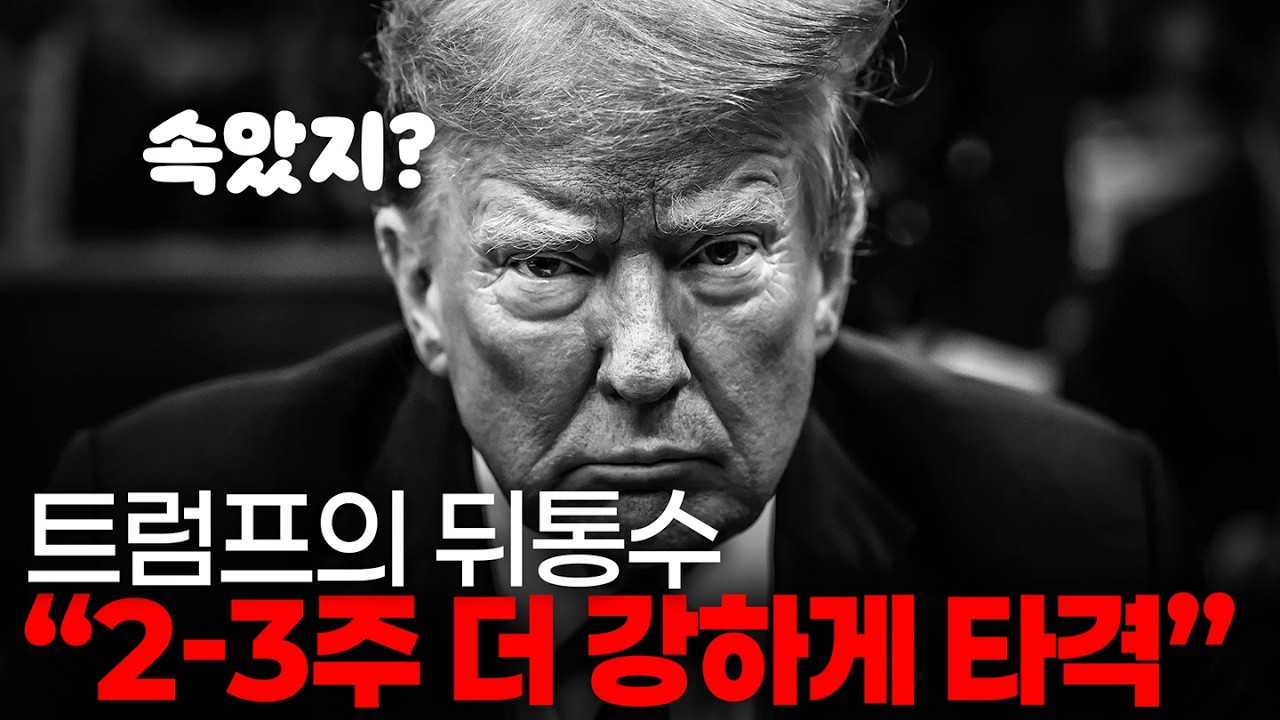
Breaking news summary: After Trump’s remarks, fears of an escalation of ground warfare grew, shaking stock markets around the world… Now, what the market truly cares about is “oil prices (crude oil)·alliance costs·ceasefire signals”
The reason the market swung so sharply just from a single Trump speech can be summarized in exactly three points.
1) Expectations of “I’m sorry” were dashed, and a strong hit/attack tone emerged
2) The nuance of shifting energy costs onto allies (including South Korea) grew stronger
3) There was a lack of “clear grounds” for ceasefire/denuclearization/reopening of the strait, but at the same time, movements of military capabilities (the possibility of deploying ground forces) were observed
In today’s post, I’ll quickly summarize the issue like news, and at the end I’ll also lay out the “core point only,” which many people can easily miss.
1) Immediately after Trump’s speech: What is the direct trigger for the “global stock market plunge”?
Based on the original text, the market interpreted the speech like this, and that directly led to risk-asset selling (the plunge).
- The tone that was expected (an apology/the end phase of the war) was not what came through—instead, the nuance of coercive, forceful strikes against Iran was strong
- There was an expectation of “the operation is over, so retreat,” but the speech included remarks that increased alliance burdens in a “whatever” manner
- Above all, uncertainty for the market rose as “conditions under which a ceasefire would be possible” were presented unclearly
So, from an investor’s perspective, this wasn’t just one line of news,
‘the war could last longer’ + ‘energy costs could rise’ + ‘the possibility that allied countries may end up bearing it’
—all three were reflected in pricing at the same time.
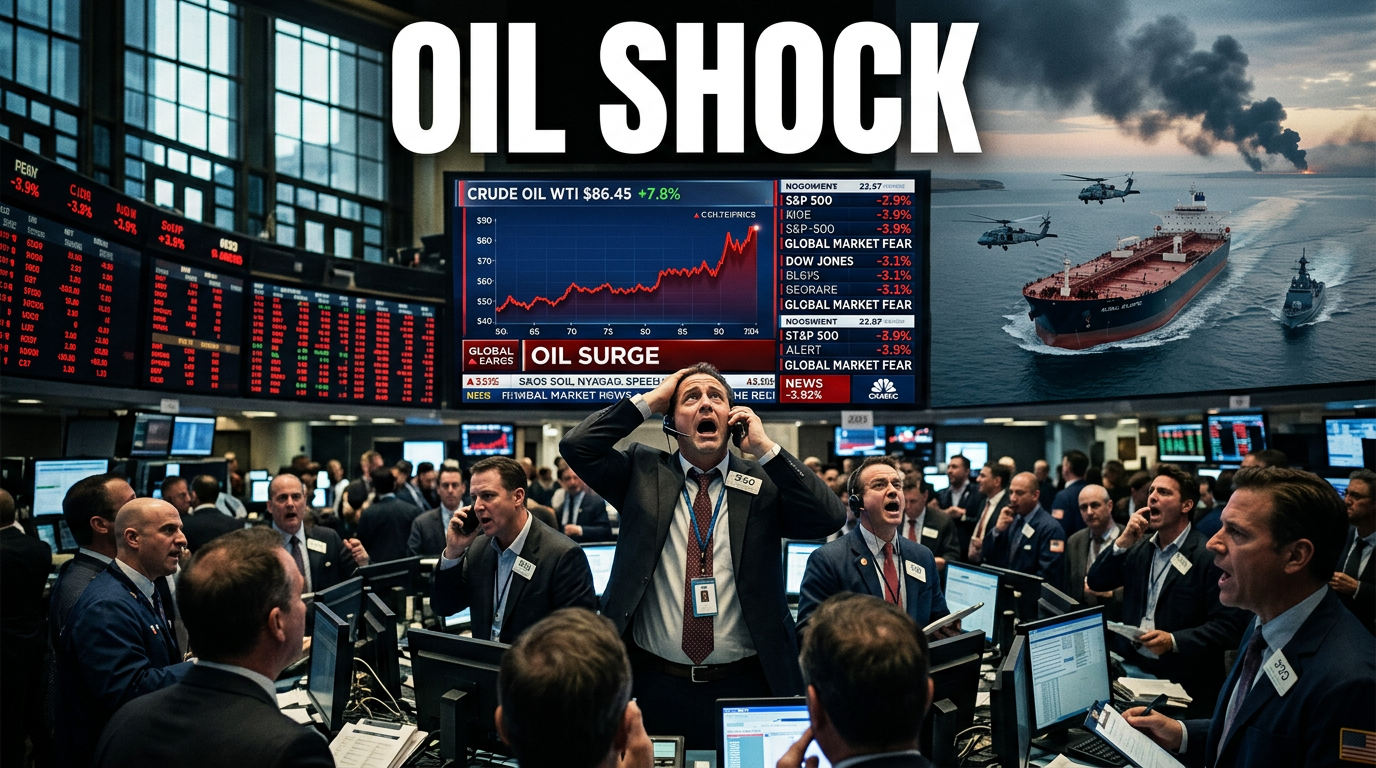
2) Oil prices surged again: The fuel for the crash was energy (commodity) risk
According to the original text, after the speech, crude oil faced strong upward pressure.
- Crude oil +5% or so mentioned around the $105 range (WTI futures around $105)
- Meanwhile, other indicators (e.g., Nasdaq futures, etc.) followed a decline of about -1.5%
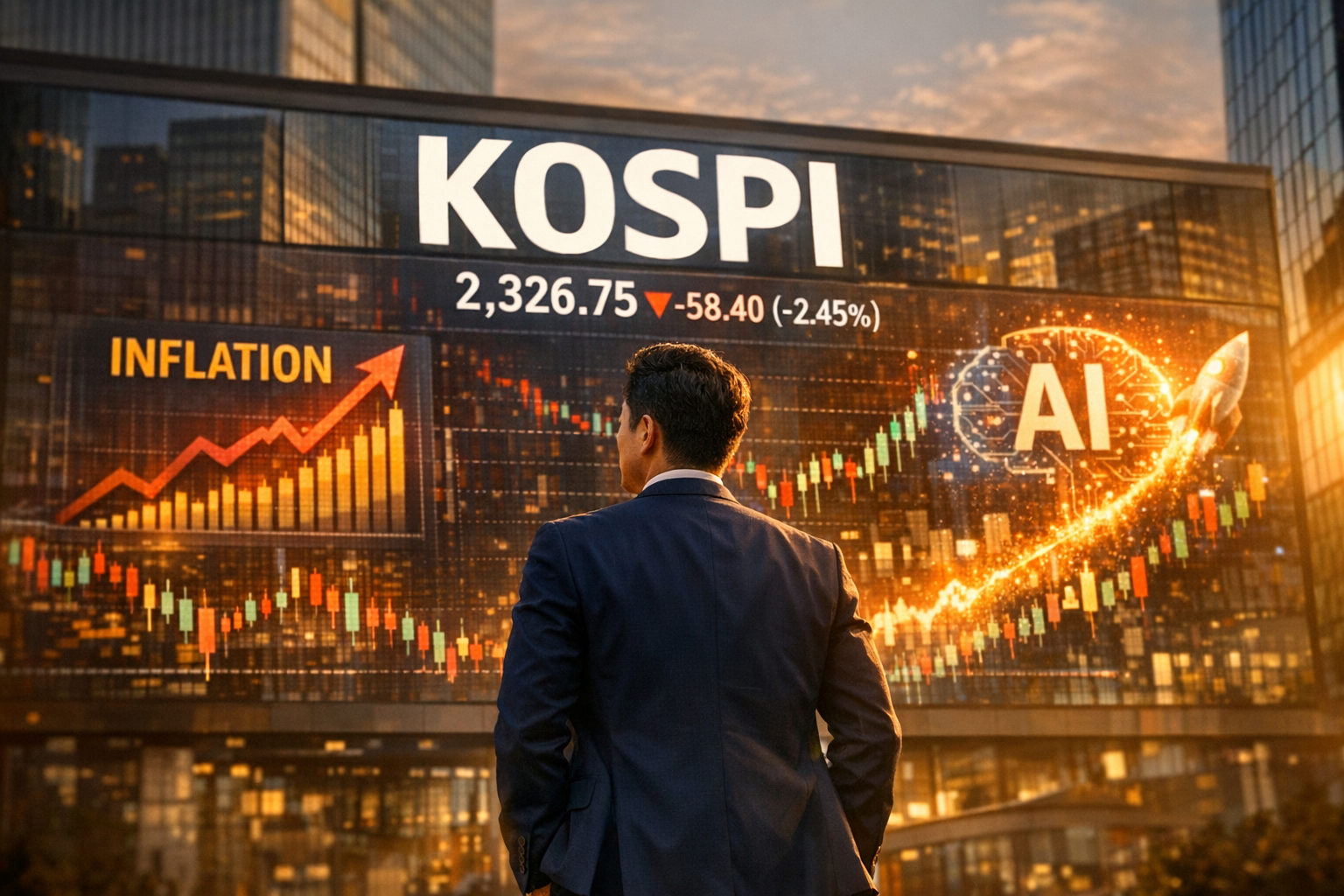
- KOSPI reversed more sharply due to the surge from the previous day (including profit-taking via selling driven by chase-selling unwinds)
To sum up,
‘Geopolitical risk → instability in sea routes/Middle East → higher oil prices → changes in corporate costs/inflation/interest-rate expectations → pressure on stock valuation’
—that chain ran.
The particularly important keyword here is “geopolitical premium.”
Right now, the market is more sensitive to the ‘duration and intensity’ of the war than to its ‘end.’
3) Trump’s message: Stronger than “ceasefire/reopening of the strait” is the nuance of “shifting alliance costs”
The part emphasized in the original text is here.
In essence, Trump’s speech was,
- The U.S. will no longer take full responsibility
- Allied countries need to move (mentioning NATO, especially South Korea)
- Presenting a logic that the need for Hormuz (the Hormuz Strait) has decreased
- Passing on cost burdens based on the advantage of oil-producing countries (changes in energy dependence)
The market reaction was not simply “the U.S. is weaker,”
but rather ‘this issue isn’t just a tug-of-war between the U.S. and Iran—it could expand into the economic burden and policy changes of the alliance’
—that’s how it was read.
4) Confidence in the ceasefire signal dropped: Iran and the U.S. keep contradicting each other
In the flow of the original text, claims between the U.S. and Iran are also mixed before and after the speech.
- U.S. side claim: Iran’s newly elected president requested a ceasefire
- Market skepticism: The new government/figure/identity isn’t clear (in the context that the existing leadership was devastated)
- Iran’s rebuttal: “False/no basis”
- Trump’s conditions: A ceasefire could be considered if the Hormuz Strait is opened and safety is secured
In other words, there is no “clear roadmap” to get to a ceasefire,
as conditions–claims–the other side’s credibility wavered, so the market can’t help but act more conservatively.
5) Why the possibility of a “ground war escalation” was also discussed: JP Morgan’s interpretation (power consolidation + air/special forces)
This is one of the most important points of today.
The original text uses the expression “Is ground troop deployment imminent?” and, as background,
- In the Middle East region, Marine landing operation teams and special forces personnel continue to be consolidated
- Attaching A-10 Warthog fighter squadrons (support for ground forces)
- Sending additional aircraft carrier task forces, with mention of about two weeks until arrival
And JP Morgan’s view is summarized like this.
“If the plan is for the war to end within three weeks, there’s less reason to move the carrier task force from the Asia-Pacific to the Middle East.”
So an interpretation came out that sees a higher escalation (ground war) possibility.
Of course, the original text also adds a comment that casualties are so large that the probability of a ground war happening right away is not very high.
But market sentiment is reflected in pricing even if it’s only a ‘possibility’.
6) Why the “three-day weekend” makes the market even more uneasy: Market closure (Fri–Sun) = event risk accumulation
The original text highlights that after the market closes on Friday, there are three days left.
During those three days, from an investor’s perspective,
- News could keep breaking (escalation/negotiations/military events)
- But the market is closed, so it’s hard for risks to be ‘priced in’ in advance
- So sentiment grows stronger toward saying let’s sell first rather than just “holding on”
In this kind of mindset, volatility especially tends to increase,
and the chain reaction of geopolitics → oil prices → financial markets can hit harder.
7) One-line investment strategy: “No chasing buys + look farther ahead + keep a higher cash allocation” is more persuasive right now
The original text’s conclusion (from a personal viewpoint) is framed conservatively.
- When there’s a sudden rebound, don’t do chase buying unnecessarily
- Before it’s confirmed whether the situation has ended or will escalate, look farther ahead
- Since political (ego) variables are hard to predict, portfolio defense comes first
- Message to keep a higher cash allocation for safety
One more thing to add here:
This phase isn’t just about whether “war happens or not,”
it’s about whether energy prices and the growth/inflation path can be changed
—that’s the key.
8) Big picture (long term): Even so, AI changes the playing field across the entire industry
In the original text, long-term AI investment expectations are connected.
- AI will restructure the entire industry
- The U.S. economy has a possibility of being relatively strong
- Expectations for a productivity revolution (productivity improvements) could lead to continued AI-related investment
- Long term (with timing mentioned as late 2026), the Nasdaq may be able to break back above its previous peak
And even if these long-term expectations are shaken by “short-term geopolitical fear,”
the argument is that the actual market has a pattern of returning to the growth/productivity story.
That said, the tone also suggests that short-term volatility can be sufficiently large, so “defense comes first” right now.
🔎 Only the “most important core point” that other news often doesn’t cover—summarized separately
Core point 1) This sharp selloff wasn’t because ‘expectations of the end of the war’ were broken; it’s because ‘uncertainty about ceasefire conditions + signals of shifting alliance costs’ were priced in at the same time.
Core point 2) More important than whether a ground war happens is that ‘a scenario where a ground war is possible (power consolidation/military support posture)’ has started to be reflected in prices.
Core point 3) The three-day weekend market closure period is a structure where risks accumulate while trading is halted, so the chance of volatility expanding right before opening (or after opening) is likely to increase.
Core point 4) Long-term AI remains intact, but in the short term, oil prices/inflation/interest-rate expectations could put pressure on AI/Nasdaq via a discount rate (valuation).
Today’s viewing points summarized with “forecast keywords (SEO)”
Summarized in one sentence, today’s flow is:
Geopolitical risk is boosting oil price volatility, which is hurting global investors’ risk appetite, and we’re in a phase to confirm whether, in the long term, the AI investment cycle will regain the lead.
< Summary >
Right after Trump’s speech, the market’s “expectation of an end to the war” was shattered; ceasefire signals from Iran and the U.S. conflicted; and the nuance of shifting alliance costs overlapped—making volatility in stock markets worldwide increase.
As oil prices rebounded back to around the $105 range (+5% mentioned), stock burdens expanded; and as, per JP Morgan’s interpretation, power consolidation toward the Middle East (A-10, marines/special forces, aircraft carrier task force detachments, etc.) was observed and even the possibility of escalation (ground war) was discussed, fear grew.
After the Friday closure, the remaining three days are a period when event risks accumulate, so a “sell first” sentiment could strengthen.
The conclusion was that defense (cash allocation) is more convincing than chasing buys, and it also mentioned the possibility that, in the long term, the AI productivity revolution and investment cycle could again support the market.
[Related articles…]
- How a surge in oil prices affects stocks and the next checkpoints
- Conditions under which the AI investment cycle can create the next rally
*Source: [ 월텍남 – 월스트리트 테크남 ]
– 속보) 트럼프발 전세계 증시 폭락..심지어 지상군 투입 초읽기?