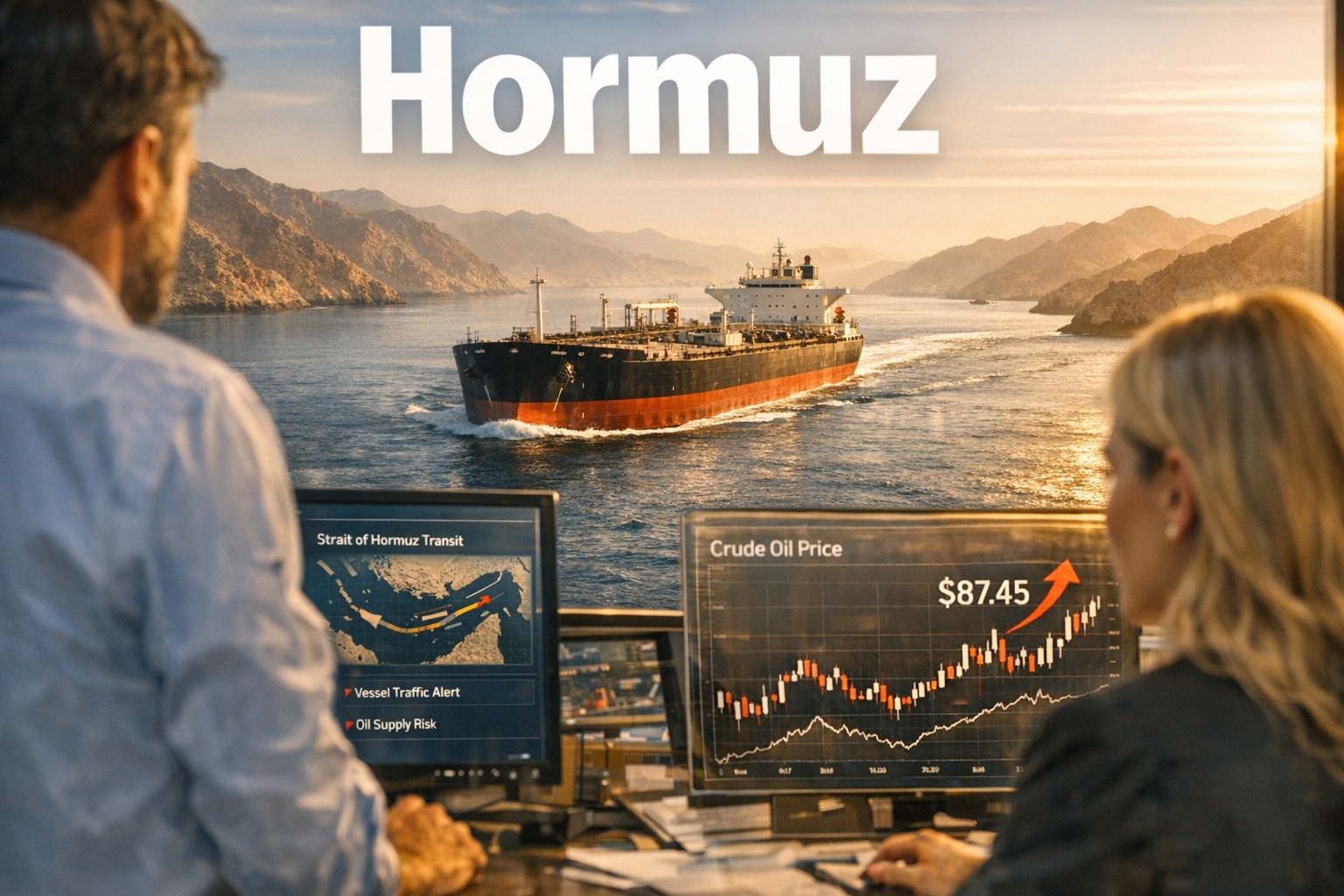
● Hormuz Shock, Oil Surge, Korea Hit
The On-the-Ground Warning from the Strait of Hormuz: Why It May Be More Damaging to Korean Equities and Oil Prices
This issue is not adequately captured by a binary framing such as “war vs. no war” or “closed vs. open.” The key risk is a shift toward selective control rather than a full blockade.
This report consolidates: Iran’s practical operating strategy, tanker movements not fully reflected in official statistics, mechanisms of passage management, structural impacts on oil markets and global supply chains, and why some views extend to an aggressive “sell Korea” interpretation.
Key points that are often underemphasized:
- “Selective passage approvals rather than a full closure”
- “Unfreezing assets as a more important lever than cash or crypto”
- “Vessel scarcity as a larger risk than insurance premiums”
- “Signals of transition from a US-centered order to a more fragmented multipolar system”
1. One-line takeaway: Hormuz is operating through a more complex mechanism than “full closure”
The central message is straightforward:
- The Strait of Hormuz is neither fully blocked nor fully normal.
- A “selective control” model may be operating: vessels aligned with Iran’s interests pass, others face intimidation or pressure.
This can affect: global oil prices, energy security, shipping costs, Asian importers’ negotiating leverage, and the relative attractiveness of Korean equities.
2. How the fieldwork was conducted: Dubai–Oman–Hormuz-adjacent network checks
The source is a paid report from an independent research firm, Citrini Research.
According to the report, the analyst traveled via Dubai to Oman and collected information through local networks near the Strait of Hormuz.
Contacts included:
- Gulf-region personal networks
- Local business and social networks
- Individuals involved in Iran–Oman smuggling routes
- Fishermen operating near Hormuz
- Shipping-industry participants and vessel captains
The report emphasizes field-based signals not typically visible in public market data.
3. Five field-derived points
3-1. Higher probability of a longer-duration conflict than markets expect
Local signals indicate greater likelihood of a prolonged period of tension rather than a short disruption followed by rapid normalization.
3-2. US force movements and Iranian drone activity may be faster and more frequent than official reporting implies
The report suggests on-the-ground perception of more rapid US deployments and more frequent Iranian actions than headline coverage indicates, increasing the risk of underestimation by markets relying only on public reporting.
3-3. Smuggling flows have not materially declined, implying selective passage
Iran-linked smuggling networks in Oman reported limited deterioration in flows after the escalation. If Iran intended a full closure, informal channels would likely contract more sharply. This supports a thesis of selective pressure combined with selective permissioning.
3-4. The number of tankers transiting with AIS disabled may be meaningfully higher than official counts
Fishermen reported 4–5 tankers per day transiting with AIS fully disabled, potentially exceeding tracked datasets. Reliance on AIS-based statistics may therefore understate traffic and mischaracterize conditions.
3-5. Some drone threats to civilian vessels and fishing boats may be underreported
The report notes incidents affecting non-military vessels, implying risk premia may extend beyond naval conflict into commercial shipping, insurance, logistics delays, and refining supply stability.
4. Core structural thesis: Iran may be building a “toll-like” passage regime rather than pursuing full blockade
A key interpretation is that Iran’s objective may be to establish a managed transit order rather than closing the strait outright.
Illustrative mechanism:
- Shipowners or importing states contact intermediaries
- Intermediaries engage with IRGC-adjacent channels for screening
- Links to the US and political risk are assessed
- Compensation and/or diplomatic conditions are arranged
- An explicit or tacit clearance signal is provided for transit
If sustained, Hormuz shifts from an international passageway to a venue where Iran monetizes geopolitical leverage. This could make the geopolitical risk premium more structural rather than episodic.
5. Underemphasized lever: unfreezing assets may matter more than cash or crypto
Market narratives often focus on payments via cash or crypto. The report highlights a potentially more consequential bargaining chip: the release of frozen Iranian assets.
Implications:
- Higher strategic value to Iran than immediate cash flows
- Potential practical erosion of sanctions effectiveness
- Wider dispersion in energy procurement costs by country based on negotiating capacity
- Differentiated outcomes across Korea, Japan, and parts of Europe depending on policy constraints
For Korea, high Middle East energy dependence and strong alignment with US security architecture may reduce the scope for independent bargaining.
6. Why Korea is viewed as disadvantaged: import structure and diplomatic flexibility
The “sell Korea” framing is extreme, but it reflects concerns tied to structural sensitivities.
6-1. High dependence on imported energy
Greater Hormuz risk can raise:
- Crude prices
- Freight and shipping costs
- Refining margin volatility
- Imported inflation pressure
These channels can tighten financial conditions via higher inflation and corporate cost burdens.
6-2. A manufacturing-heavy economy is more sensitive to energy and logistics costs
Sectors such as semiconductors, petrochemicals, steel, shipping, autos, and refining are exposed to sustained energy-price elevation and transport instability, potentially weighing on margins and market multiples.
6-3. Potentially narrower room for independent diplomatic negotiation
The report argues that even among Asian importers, outcomes may diverge between countries able to negotiate directly with Iran and those constrained by alliance and sanctions frameworks. Korea may be assessed as having less flexibility than peers, which could affect FX, equity risk premia, and sovereign perception at the margin.
7. Operational risk highlighted by captains: losing the vessel may be worse than higher insurance
Field feedback suggests vessel scarcity is a larger risk than higher insurance premiums. Replacing a lost tanker is difficult, and the operational disruption can exceed insured financial compensation through:
- Long-term capacity shortfalls
- Contractual failures
- Persistent revenue loss
This increases the probability that freight and energy-logistics disruptions persist longer than markets anticipate.
8. Oil-market framing: why “spike then normalize” may be incorrect
A common assumption is that geopolitical shocks produce a temporary oil spike followed by reversion. The report challenges this: if a managed “toll/clearance” regime becomes durable, the risk premium may become embedded across the curve, not only in the front end.
This can propagate into:
- Oil futures term structure
- Refiners
- Airlines
- Shipping
- Petrochemicals
9. Three plausible scenarios
9-1. Scenario 1: US escalates decisively; worst case for Iran
A stronger US intervention that degrades Iran’s ability to control transit could create large near-term volatility but improve medium-term normalization expectations. Feasibility is constrained by escalation risk and political cost.
9-2. Scenario 2: best case for Iran; prolonged conflict followed by negotiated settlement
After extended tension, negotiations conclude with Iran retaining some recognized influence over transit. Global supply chains avoid collapse, but a structural premium in oil and freight remains likely.
9-3. Scenario 3: prolonged “middle state”
Neither full-scale war nor full normalization; an extended period of ambiguous tension. This can sustain persistent pricing distortions and volatility.
10. Broader macro signal: weakening of unipolar enforcement and acceleration of multipolar fragmentation
Beyond Middle East conflict, the episode can be read as evidence that countries increasingly pursue direct risk management for energy security and maritime transit rather than relying on a single hegemonic guarantor. This can drive repricing across supply chains, energy security, FX volatility, oil premia, and equities.
11. Implications for the Fourth Industrial Revolution and AI trends
11-1. AIS blackouts increase demand for AI-based maritime intelligence
AIS-disabled transit reduces visibility in traditional datasets, raising the value of:
- Satellite imagery analytics
- Unstructured data fusion
- AI anomaly detection
Future advantage may shift toward systems combining satellite, port dwell time, speed patterns, insurance data, and trade-finance signals.
11-2. Energy geopolitics increases industrial AI demand
Refiners, shippers, logistics firms, and manufacturers may require supply-chain redesign under uncertainty, supporting demand for:
- Forecasting AI
- Route optimization
- Inventory optimization
- Risk simulation platforms
11-3. Defense and security AI may expand structurally
Drones, surveillance, maritime route analytics, and risk prediction are AI-intensive, potentially supporting medium-term growth in security and dual-use AI markets.
12. Investor checklist
- Whether unofficial transit volumes matter more than official traffic metrics
- Whether Iran’s selective approval regime becomes institutionalized
- Whether oil reprices structurally rather than mean-reverting after a spike
- Whether Korea and Japan’s energy procurement risks meaningfully diverge
- Sector transmission to refining, shipping, airlines, petrochemicals, and energy-intensive manufacturing
- Whether supply-chain reconfiguration supports beneficiaries in AI-driven logistics and security analytics
13. Highest-signal points often missed in mainstream coverage
- The central mechanism may be selective approval and managed transit rather than full closure.
- Oil may embed a structural geopolitical premium rather than reflecting only episodic fear.
- The key “payment” may be unfreezing assets and diplomatic concessions, not cash.
- Vessel replaceability may be a greater operational risk than insurance pricing.
- Korea’s vulnerability is not only energy dependence, but also constrained negotiation flexibility and high energy sensitivity of its industrial mix.
- The episode may signal multipolarization, supply-chain reconfiguration, and expansion in AI-enabled maritime/security analytics.
14. Reframing: markets may be pricing an emerging “ruleset shift,” not just blockade probability
The primary question is not simply whether the strait is blocked, but who sets the operating rules for energy transit and whether those rules apply asymmetrically by country.
If Iran retains even partial de facto authority over transit approvals, the event becomes a cost-structure change to global trade rather than a temporary shock. Korea’s trade dependence and manufacturing exposure increase sensitivity to such shifts. Extreme conclusions should be treated cautiously, but relative vulnerability warrants monitoring.
15. Conclusion: not a collapse scenario, but a potentially durable, inefficient equilibrium
The report implies a prolonged “in-between” state: neither full blockade nor full normalization. In that environment, oil, inflation, freight costs, energy security, and FX volatility can remain unstable. Market impact may be driven less by headlines and more by which actors secure passage, which countries gain negotiation leverage, and how rapidly supply chains adapt.
< Summary >
The Strait of Hormuz may be operating under a selective transit management regime rather than a full blockade.
Official statistics may undercount tanker movements due to AIS-disabled transits, and the key bargaining lever may be the unfreezing of assets rather than cash payments.
If institutionalized, this structure can embed a structural risk premium into oil and inflation.
Korea may face relatively higher sensitivity due to energy import dependence, an energy-intensive industrial structure, and constrained diplomatic flexibility versus peers such as Japan.
The broader significance extends to multipolarization, supply-chain reconfiguration, and growing demand for AI-enabled maritime, security, and logistics analytics.
[Related Articles…]
- https://NextGenInsight.net?s=Hormuz
- https://NextGenInsight.net?s=AI
*Source: [ 내일은 투자왕 – 김단테 ]
– 호르무즈 현장 취재 결과는 한국을 팔아라?? (시트리니)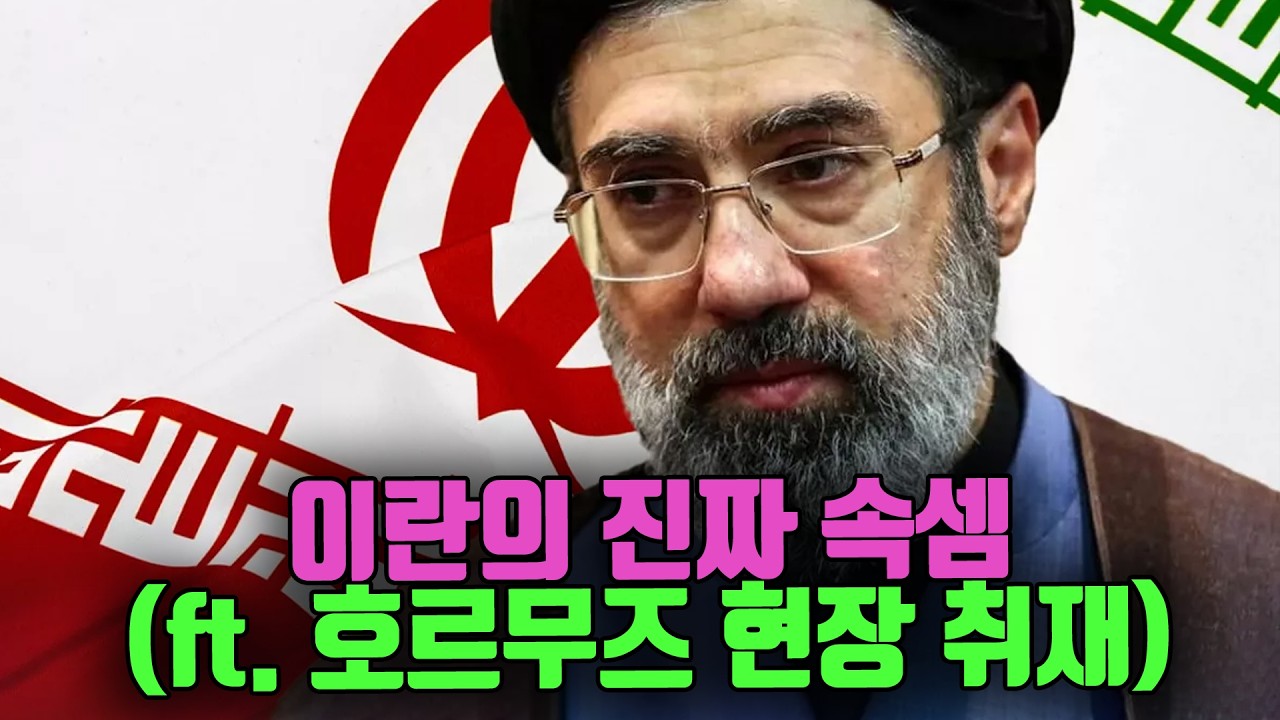
● AI-Driven Surge, War Shock, Intel Soars, Netflix Rebound
KeyBanc Raises Intel Price Target; Goldman Sachs Upgrades Netflix to Buy; AI Semiconductor Supercycle Amid Geopolitical Risk
U.S. equities appeared broadly range-bound, but underlying positioning was more selective. Market focus has shifted from index-level moves to security- and sector-specific catalysts.
This report highlights five key themes:First, the rationale behind KeyBanc raising Intel’s price target to $70.Second, why Goldman Sachs upgraded Netflix to Buy.Third, why U.S. equities have remained resilient despite elevated Iran-related risk and a sharp rise in oil prices.Fourth, Morgan Stanley’s framework for a potential market bottoming process.Fifth, structural changes in AI semiconductors and memory pricing that may be obscured by geopolitical headlines.
The current setup should not be viewed as a generic “tech rebound.” U.S. equities, the Nasdaq, semiconductors, AI infrastructure, and interest-rate expectations are increasingly interconnected, with actionable signals concentrated in sector fundamentals rather than headline-driven index moves.
1. U.S. Market Snapshot: Flat Indices, Rotation Beneath the Surface
On April 6, U.S. equities showed limited directional conviction: the Nasdaq edged higher, the S&P 500 was modestly positive, and the Dow traded mixed near flat.
Despite muted index performance, investors appeared positioned for near-term political and geopolitical catalysts, including potential comments from former President Trump and developments related to Iran.
Key takeaway: indices paused, while capital rotated toward specific names. Sector research and broker notes were more informative than index-level signals.
2. Key Market Catalyst (1): KeyBanc Raises Intel Price Target to $70
KeyBanc increased Intel’s price target to $70 from $65, citing tighter-than-expected supply in server CPUs.
AI adoption is increasingly driving broad server infrastructure demand. As AI agent workloads expand, compute intensity and traffic requirements rise, increasing demand not only for GPUs but also for CPUs, memory, and storage.
KeyBanc expects Intel could raise server CPU pricing by 10–15% in 2Q, implying demand is outpacing supply and that pricing power is improving across parts of the semiconductor value chain.
Intel’s move reflected more than a target revision; it signaled market recognition that CPU capacity constraints may be emerging alongside GPU constraints.
3. Key Market Catalyst (2): Goldman Sachs Upgrades Netflix to Buy
Goldman Sachs upgraded Netflix to Buy, reflecting improving monetization and profitability dynamics.
Key drivers cited include expansion of the ad-supported tier, higher revenue per user, and durable cash generation as a global content platform.
In large-cap growth, Netflix is being repositioned less as a traditional media company and more as a platform with comparatively resilient fundamentals in a slower-growth environment.
The upgrade also indicates renewed investor willingness to assign valuation premium to growth businesses with pricing power and strong free-cash-flow profiles, not solely to AI-linked equities.
4. Semiconductors Re-Enter Focus: Micron, Samsung, and Memory Price Increases
Strength in semiconductors extended beyond Intel. Micron advanced as expectations for memory-cycle improvement gained traction.
The market is increasingly focused on memory pricing, with tightening conditions across DRAM, server memory, and high-performance storage.
References to Samsung were notable: commentary indicating memory product pricing has risen roughly 100% over the past year, with potential for further increases, reinforces the view that the memory market may be transitioning from inventory digestion to an early-stage upcycle.
The distinction is material for earnings: a shift from defensive pricing to price increases suggests improving supplier leverage and margin expansion potential.
AI data center growth expands demand for memory and storage alongside accelerators, supporting a broader AI infrastructure spend thesis beyond a single vendor.
5. Storage Also Participates: SanDisk, Western Digital, Seagate
Storage-related equities strengthened, including SanDisk, Western Digital, and Seagate, with Seagate posting a notable gain.
AI infrastructure build-outs increase storage requirements in parallel with compute. AI agent workloads expand data generation, training and inference datasets, logging, backup, and long-term retention needs, supporting both HDD and SSD demand.
This is consistent with expanding data center capex: CPUs, GPUs, memory, and storage are components of an integrated infrastructure cycle.
6. Morgan Stanley View: Conditions Consistent With a Potential Bottoming Process
Morgan Stanley strategist Michael Wilson indicated the market may be forming a bottom, a notable shift given his historically cautious stance.
The framework: the S&P 500 has retraced meaningfully from its highs, compressing valuations to levels more consistent with recessionary or renewed tightening scenarios.
However, while recession concerns persist, current macro data have not yet deteriorated to those implied stress levels: employment remains relatively stable, consumption is holding, and the Federal Reserve is not signaling imminent incremental tightening.
This supports an interpretation that a significant portion of negative news may already be discounted, while realized economic outcomes remain less adverse than pricing suggests.
7. Portfolio Positioning: Morgan Stanley’s Barbell Approach
Morgan Stanley favors a barbell approach: combine cyclicals with large-cap technology positioned to benefit from AI infrastructure investment.
Cyclicals include sectors such as financials, consumer, and industrials that respond to real-economy stabilization. Large-cap technology benefits more directly from AI-related capex, cloud expansion, and data center build-out.
The rationale reflects a two-track market: growth concerns persist, while structural AI investment remains robust. Balancing both exposures may be more effective than a single-factor allocation.
Morgan Stanley also notes that valuation pressure in parts of the mega-cap cohort has eased relative to forward earnings growth, narrowing the gap versus traditional defensives.
8. Geopolitical Risk and Oil: Why U.S. Equities Have Not Broken Down
The primary near-term overhang remains Middle East risk, including Iran-related escalation and potential disruptions around the Strait of Hormuz, which can pressure inflation expectations and global risk assets.
WTI has reached approximately $112 and Brent approximately $109, levels that typically tighten financial conditions.
Equity resilience is partly explained by structural changes in the U.S. energy position since the shale expansion. While higher oil remains a headwind, the U.S. economy is less exposed than during prior oil shock regimes.
In addition, longer-term inflation expectations remain comparatively anchored, suggesting markets do not yet view the oil move as a durable break in the inflation-control regime.
9. Key Near-Term Catalysts: Fed Minutes, PCE, CPI, and Political Headlines
The coming week features multiple market-moving events:
- FOMC minutes
- PCE inflation
- CPI release
- Political headlines, including public remarks from former President Trump and Iran-related developments
These matter because rates, inflation, oil, geopolitics, and technology valuations are tightly linked. A firmer-than-expected CPI, combined with elevated oil, could revive concerns that rate cuts may be delayed. Conversely, softer inflation prints could support the recent improvement in growth and technology sentiment.
Given the overlap of macro and political catalysts, day-to-day volatility may rise.
10. Mega-Cap Technology: Differentiated Drivers
Mega-cap technology traded relatively steady, with Apple, Amazon, Meta, and Tesla showing stability; Nvidia was more volatile intraday but remained central to the AI complex.
Mega-cap exposure should not be treated as a uniform basket:
Nvidia is a primary beneficiary of AI infrastructure capex. Amazon and Microsoft are leveraged to cloud and AI service scaling. Meta is applying AI to advertising efficiency and platform productivity. Apple remains comparatively less exposed to the near-term AI narrative but retains strong ecosystem economics and cash generation. Tesla’s profile reflects a mix of EV dynamics and optionality in autonomy and robotics.
Going forward, positioning may increasingly depend on demonstrated AI monetization, capex sensitivity, and relative valuation rather than broad “mega-cap” allocation.
11. Bitcoin and MSTR as Risk Appetite Indicators
Bitcoin moved toward the $70,000 area, alongside reports of additional Bitcoin purchases by MSTR (Strategy).
This is relevant as a proxy for risk appetite: despite higher oil and geopolitical risk, select risk assets have remained supported, indicating the market has not shifted fully into a risk-off posture. This remains sensitive to policy expectations and political developments.
12. News-Style Summary
Market Overview
Index performance was subdued, but flows concentrated in semiconductors and selected growth names, reflecting a stock-picker environment.
Semiconductors
KeyBanc raised Intel’s price target to $70 on server CPU tightness. Micron and broader memory-linked equities strengthened on AI data center demand and improving memory pricing.
Media and Platforms
Goldman Sachs upgraded Netflix to Buy, emphasizing ad-tier expansion and improving profitability.
Macro
Despite oil above $110, markets are not pricing a repeat of past oil-shock dynamics, reflecting a changed U.S. energy posture and relatively anchored long-term inflation expectations.
Outlook
With FOMC minutes, PCE, CPI, and geopolitical headlines clustered, short-term direction may remain sensitive to incoming data and policy expectations.
13. Under-Discussed Core Development
- AI-driven demand is broadening from GPUs to CPUs, memory, and storage.
- Memory price increases suggest a shift from recovery to improving supplier leverage.
- Equity resilience amid oil strength partly reflects structural changes in the U.S. energy backdrop.
- Mega-cap technology valuations have compressed versus prior peaks.
- Sector fundamentals and broker research are more actionable than index moves in the current tape.
Bottom line: geopolitical headlines are driving surface-level volatility, while the dominant underlying theme may be an expanding AI infrastructure cycle.
This framework connects Intel’s move, Micron’s strength, commentary on Samsung’s memory pricing, storage outperformance, Netflix’s re-rating, and Morgan Stanley’s bottoming thesis as elements of a single cross-sector narrative.
14. Investor Checklist
- Monitor headline-driven volatility linked to political remarks and Iran-related developments.
- Reassess rate-cut expectations following CPI and PCE outcomes.
- Evaluate semiconductors beyond GPUs, including CPUs, memory, and storage.
- Track re-rating potential in cash-generative growth platforms such as Netflix.
- Prioritize sector earnings momentum and company-specific fundamentals over index tracking.
< Summary >
U.S. equities were broadly quiet at the index level, while semiconductors and selected growth stocks led a more active rotation beneath the surface.
KeyBanc raised Intel’s price target to $70 on server CPU supply constraints, and Goldman Sachs upgraded Netflix to Buy.
Despite elevated geopolitical risk and oil strength, equity drawdowns have been limited, supported by a changed U.S. energy backdrop and anchored long-term inflation expectations.
The primary structural theme is the broadening of AI-driven demand from GPUs into CPUs, memory, and storage, consistent with an AI infrastructure expansion cycle.
[Related Posts…]
Intel price target upgrade and server semiconductor cycle update
Netflix upgrade rationale and large-cap growth re-rating dynamics
*Source: [ Maeil Business Newspaper ]
– 키뱅크, 인텔 목표가 70달러로 올려ㅣ골드만삭스, 넷플릭스 투자의견 ‘매수’ 상향ㅣ홍키자의 매일뉴욕