● Iran Ceasefire Jitters, Market Surge, AI Shock
Signs the Iran Ceasefire Is Already Fraying: The Hidden Risks Behind the Global Equity Surge and New Variables in the AI Market
Markets are broadly risk-on: a sharp rally in Korean equities, strength in the Nasdaq, a steadier KRW/USD, and a decline in crude oil have collectively improved sentiment. However, the move should not be attributed solely to de-escalation in the Middle East. Key variables include post-ceasefire negotiation terms, potential cost changes around the Strait of Hormuz, the Israel–Lebanon escalation risk, Meta’s new AI model strategy, and ongoing Nvidia supply-chain constraints.
1. Market reaction: a textbook risk-on move
Why equities, FX, and oil moved together
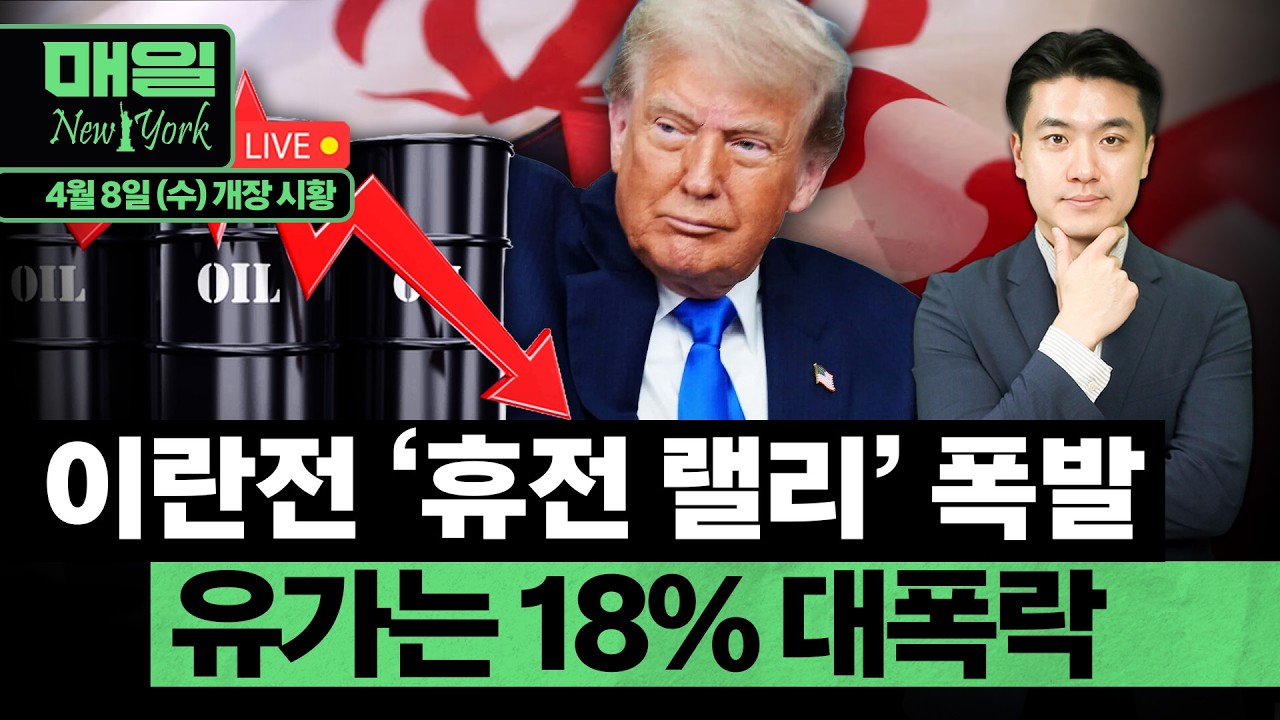
Following the announcement of a ceasefire between Iran and the United States, global risk assets rallied. Korean equities rose sharply; US indices (Nasdaq, Dow, S&P 500) advanced in tandem. The KRW/USD, which had previously approached the 1,500 area, retraced toward the mid-1,400s. Crude oil declined materially, reflecting reduced near-term tail-risk pricing.
This is consistent with a standard “risk-off unwind” pattern: easing Middle East risk typically transmits first through oil, FX, and growth/technology equities.
Why the market response was highly sensitive
The transmission mechanism is straightforward:
- A broader Middle East conflict raises the probability of an energy price shock.
- Higher energy prices increase inflation risk.
- Inflation risk delays or reduces expected Fed rate cuts.
Conversely, ceasefire headlines tend to support:
- Improved expectations for oil price stability
- Lower perceived global inflation pressure
- Reduced constraints on US monetary easing expectations
- A more supportive backdrop for growth and AI-linked equities
- Improved risk appetite toward emerging-market assets, including Korea
The rally reflects a re-linking of geopolitics to rate-cut expectations and global asset-allocation decisions, not merely a single headline.
2. Sentiment shifted within a day
Why the Strait of Hormuz “transit fee” issue matters
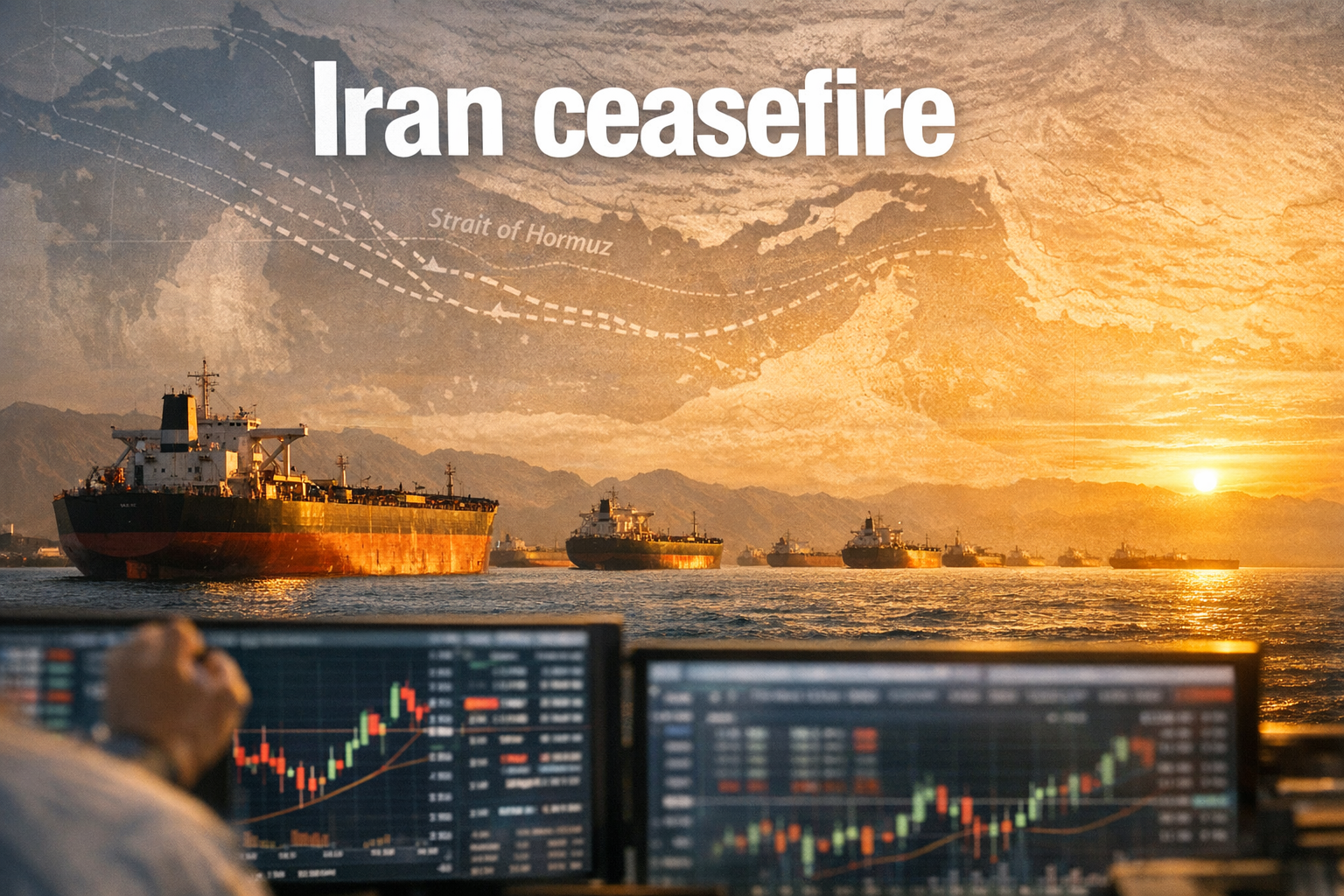
A key source of renewed market discomfort is discussion of potential transit fees in the Strait of Hormuz. Comments suggested the possibility of a US–Iran framework to impose fees, with market chatter extending to crypto-based settlement, per-barrel charges, and per-vessel fees.
For markets, the central question is not only whether hostilities pause, but whether energy transport costs normalize. The Strait of Hormuz is a critical artery for global crude flows. Any new fee regime, administrative friction, or uncertainty can reintroduce oil volatility independent of battlefield developments.
Even if kinetic conflict pauses, higher logistics costs (insurance, security premiums, rerouting) can push energy prices higher.
Markets price “cost-structure changes” more persistently than “war headlines”
Market impact often persists when supply-chain cost structures shift, including:
- Strait transit fees
- Higher tanker insurance
- Increased rerouting
- Higher procurement costs for importing countries
- Upward pressure on refining margins and freight costs
The core question is whether crude supply chains return to operational normalcy, not merely whether attacks stop.
3. The main negotiation axis: nuclear constraints vs sanctions relief
Uranium enrichment remains the key condition
Statements reiterated a hardline US position: Iran should not enrich uranium and must remove nuclear-related capabilities. A ceasefire is not a peace agreement; negotiations now focus on limits, verification, sequencing, and enforcement.
Iran is likely to prioritize regime security and sanctions relief; the US may prioritize verified nuclear rollbacks first. If the sequencing gap remains wide, the ceasefire risks becoming a temporary holding arrangement.
Constructive signal: sanctions relief discussion
References to potential tariff or sanctions relief are directionally supportive for markets because they imply:
- Higher probability of incremental Iranian crude supply
- Downward pressure on crude risk premia
- Positive spillovers to emerging-market risk sentiment
Execution risk remains high; implementation requires political alignment, coordination with allies, and credible Iranian concessions. The sequencing of commitments will be decisive.
4. The largest uncertainty shifted to Israel
Why Israeli strikes in Lebanon disrupted the ceasefire narrative
A major adverse development was Israeli airstrikes in Lebanon shortly after the ceasefire announcement. The scale and tempo raised questions about the durability and scope of de-escalation.
Given Lebanon’s alignment with Iran-linked networks, strikes can be interpreted as pressure on Iran’s regional relationships, increasing the risk of secondary escalation.
The key issue: whether Lebanon is within the ceasefire scope
Conflicting interpretations emerged: some statements suggested Lebanon was covered, while Israeli leadership indicated it was not. US commentary also treated Lebanon as a separate theater.
This ambiguity is material. Durable ceasefires require shared understanding of geographic and operational boundaries. Ambiguity creates legal and political justification channels for further action.
Why Israel may be acting independently
Reports indicated Israel received late notice of the ceasefire framework, potentially increasing frustration over process and perceived loss of influence. Public messaging signaled that military objectives remain active, implying elevated probability of renewed operations.
The dominant uncertainty is increasingly whether Israel pursues unilateral actions beyond the US–Iran framework.
5. News-style summary: key Middle East points
Middle East headline points
- The US–Iran ceasefire announcement triggered a broad global equity rally.
- KOSPI, Nasdaq, and S&P 500 strengthened as risk appetite improved.
- KRW/USD stabilized from around 1,500 toward the mid-1,400s.
- Crude oil declined, reducing near-term inflation concerns.
- Discussion of Strait of Hormuz transit fees introduced a new supply-chain cost risk.
- Nuclear talks refocused on uranium enrichment limits versus sanctions relief trade-offs.
- Israeli strikes in Lebanon revived disputes over ceasefire scope.
- Hawkish Israeli messaging increased re-escalation risk.
Market interpretation points
- The ceasefire is supportive, but structural oil supply stability remains uncertain.
- A renewed rise in energy prices could weaken Fed easing expectations.
- For Korea and other emerging markets, FX and foreign flows may react simultaneously to Middle East risk.
- The rally appears more consistent with temporary uncertainty compression than a confirmed regime shift to stability.
6. AI: Meta reasserted presence with a new model
Why Meta’s release matters
Meta’s new AI model drew a strong market response. The strategic signal extends beyond a single model: Meta aims to demonstrate competitiveness in closed-model capabilities while retaining a broader platform strategy.
This indicates AI competition is shifting from “open vs closed” narratives to service quality and monetization capacity. Meta emphasized substantial investment in talent, capital, and a dedicated superintelligence organization.
Markets are increasingly rewarding firms that can sustain multi-year compute and talent commitments.
Why benchmark scores are insufficient
Benchmark results were mixed across categories, and competitors remain strong in key domains. In practice, model adoption is driven more by user experience and reliability than by headline scores.
Key decision factors include usability, stability, coding performance, long-context handling, and enterprise workflow fit.
7. Why Anthropic appears strong in real-world usage
Growing presence of Claude
Anthropic’s Claude series continues to receive strong real-world feedback, particularly in document understanding, long-context processing, coding support, and enterprise utility. Market commentary suggests that reputation is translating into revenue traction, with some claims that annualized revenue may exceed OpenAI’s.
This aligns with a broader industry transition from visibility to monetization.
AI investment lens: what to measure
- Model capability and reliability in production settings
- Enterprise workflow penetration
- API stability and ecosystem execution
- Unit economics: compute cost versus monetized usage
These metrics are likely to become central to AI-related equity evaluation.
8. Nvidia remains dominant, but supply constraints persist
Implications of potential Rubin delays
Industry discussion suggests Nvidia’s next-generation Rubin platform could face launch timing risk due to supply-chain and geopolitical constraints. This is not only a product-schedule issue; it can affect AI infrastructure buildout pace, hyperscaler capex planning, and competitive dynamics.
If supply is delayed:
- Near-term Nvidia share expansion may moderate
- Demand pressure on existing GPU generations may persist longer
Short-term revenue impact is not mechanically negative, but supply bottlenecks can constrain the overall pace of AI deployment.
Legacy GPUs are also difficult to source
Cloud markets continue to report tight availability not only for the newest GPUs but also for older generations. This supports the view that AI demand is structural rather than transient.
Scarcity of GPUs introduced years ago indicates broad-based competition for compute across enterprises, research institutions, startups, and hyperscalers. The constraint should be viewed as a digital-infrastructure bottleneck with implications for productivity and national-level competitiveness.
9. Under-discussed but decision-relevant points
1) More important than the ceasefire: “cost” and “scope”
Markets will focus on whether Lebanon is included, whether Strait transit costs rise, and whether sanctions relief is implemented, rather than the ceasefire headline alone.
2) Middle East risk reconnects inflation and rates
The investable channel is oil-to-inflation-to-rates. A renewed oil spike can shift Fed expectations and pressure growth-equity valuations.
3) AI is moving from demos to monetization
The key question is which platforms retain users and convert enterprise adoption into recurring revenue, not which model wins a single benchmark cycle.
4) The AI semiconductor bottleneck is unresolved
Potential next-gen delays and persistent GPU scarcity indicate demand continues to exceed supply, sustaining investment relevance across semiconductors, data centers, power infrastructure, and cloud platforms.
10. Practical investor checklist
Near-term checkpoints
- Additional statements on nuclear constraints and sanctions relief sequencing
- Further Israeli military actions
- Emergence of concrete Strait of Hormuz fee proposals
- Re-acceleration in crude oil prices
- KRW/USD moves and foreign-flow sensitivity
Medium-term checkpoints
- Whether Fed rate-cut expectations re-strengthen
- Sustainability of big-tech AI capex expansion
- Real-world adoption and enterprise uptake of Meta’s model
- Monetization dynamics among Anthropic, OpenAI, and Meta
- Normalization trajectory of Nvidia and broader AI semiconductor supply chains
11. One-sentence synthesis
Markets rallied on ceasefire expectations, but Lebanon-related escalation risk and potential Strait of Hormuz cost changes keep downside risks active; in parallel, AI positioning is shifting as Meta signals renewed competition, Anthropic gains enterprise traction, and Nvidia’s supply constraints remain a binding variable.
< Summary >
The US–Iran ceasefire announcement supported KOSPI, the Nasdaq, KRW stabilization, and lower crude oil. However, potential Strait of Hormuz transit fees and Israeli strikes in Lebanon raised doubts about durability and scope. Key negotiation variables include nuclear constraints, sanctions relief sequencing, and ceasefire coverage boundaries.
In AI, Meta’s model release signaled renewed competitive intent, while Anthropic’s Claude retains strong real-world enterprise perception. Nvidia’s potential next-generation timing risk and persistent GPU scarcity indicate ongoing infrastructure tightness. Investors should track oil, FX, rates, and AI semiconductor supply-chain conditions jointly.
[Related Links…]
- AI investment strategy and updated competitive landscape among big tech: https://NextGenInsight.net?s=AI
- Middle East risk, crude oil trends, and implications for Korean equities: https://NextGenInsight.net?s=%EC%A4%91%EB%8F%99
*Source: [ 내일은 투자왕 – 김단테 ]
– 이란 휴전 하루만에 없던 일 되나?
● Ceasefire Shock, Oil Crash, AI Surge
Ceasefire Rally, Sharp Oil Decline, and the Converging Themes of AI, VR, and Quantum Computing: Key Market Signals in Focus
This move reflects more than a one-day rebound. Easing Middle East risk drove a sharp decline in crude oil prices, catalyzing a synchronized shift toward risk-on positioning across US and global equities. Concurrently, expanded VR collaboration between Meta and Unity, Rigetti’s next-generation quantum system announcement, and renewed optimism around AI semiconductors indicate a rapid reallocation of market attention.
This report summarizes:
- Why de-escalation translated into an oil-driven sell-off in the energy complex
- Why megacaps and growth equities rebounded sharply
- Why the Unity–Meta and Rigetti developments matter within broader technology-cycle positioning
- Under-discussed investment implications most relevant to current asset allocation
1. Market Snapshot: A Classic Risk-On Tape Triggered by Ceasefire Headlines
Following reports of a ceasefire agreement, markets rapidly repriced the probability of escalation.
- Nasdaq: sharp gains
- S&P 500: strong performance
- Dow: higher
- VIX: lower
- Bitcoin: stronger
- Energy sector: sharp decline
This configuration is consistent with falling uncertainty: risk assets attract inflows while assets and sectors supported by a geopolitical risk premium (notably crude oil and energy equities) face fast profit-taking.
2. Why the Energy Sector Sold Off: Understanding the Structure of the Oil Decline
The largest move was in crude oil. The sharp decline in WTI and Brent reflected a reduction in perceived supply-disruption risk rather than sentiment alone.
2-1. Core Driver: Reduced Strait of Hormuz Disruption Risk
Middle East geopolitics primarily transmits into markets through energy logistics. The Strait of Hormuz is systemically important due to both symbolic and physical throughput.
The market’s key tail risk was an Iran-linked escalation scenario resulting in blockade risk or severe shipping bottlenecks. Ceasefire headlines materially lowered the implied probability of that outcome.
2-2. Why Energy Equities Fell More Than Oil
Oil prices respond quickly to changes in geopolitical risk premia, and the reversal is often equally rapid.
Large integrated energy names such as Exxon Mobil and Chevron had already priced in a substantial portion of the prior oil-strength benefit. A ceasefire-driven oil repricing therefore translated into immediate valuation and earnings-expectation pressure.
- Oil down -> energy earnings expectations down -> equity repricing
2-3. Macro Impact May Be Net Positive
While negative for energy equities, lower oil can be constructive for the broader macro backdrop.
- Lower inflation pressure
- Improved disinflation expectations
- Reduced constraints on potential policy easing
- Lower corporate input-cost pressure
- Improved consumer purchasing power
This supports risk assets, particularly growth and technology, which were among the strongest rebound areas.
3. Why US Equities Reacted Strongly: Rates and Liquidity Matter More Than the Ceasefire Narrative
The market reaction should be read primarily through the interest-rate channel. A Middle East-driven oil spike is a key variable the Federal Reserve seeks to avoid because higher energy prices can re-accelerate headline CPI.
If crude declines on de-escalation, the market typically reprices:
- Lower prospective inflation impulse
- Reduced need for restrictive policy
- A higher probability of cuts or a more accommodative policy path
This is especially important for Nasdaq and AI-linked growth equities, where valuations are more sensitive to discount-rate changes.
4. Why Megacaps Are Leading Again: Flows Return to AI Semiconductors and Platform Winners
Strength in Nvidia, Meta, Microsoft, Amazon, and Google is not solely beta exposure. Markets are rotating back toward companies with clearer earnings delivery potential.
4-1. AI Demand Has More Duration Than Geopolitical Headlines
Geopolitical shocks are typically transient. AI infrastructure investment, data-center buildouts, and memory demand linked to AI workloads are longer-cycle drivers.
Recent price action reaffirmed that, after risk-off episodes, flows often revert toward the AI ecosystem.
4-2. Signals From Semiconductor Supply-Chain Markets
A rapid rebound in markets with high semiconductor exposure (e.g., Korea and Taiwan) indicates capital continues to treat AI semiconductors and data-center demand as dominant fundamentals.
As geopolitical risk fades, flows tend to return to critical supply-chain geographies and core technology franchises.
5. Unity and Meta Expand VR Collaboration: Less “Metaverse Revival,” More Practical Adoption
The Unity–Meta collaboration warrants attention. The implication is less about a thematic replay and more about ecosystem maturation and usability.
5-1. Why Unity Matters
Unity should be viewed not only as a game engine provider, but as a real-time 3D rendering and interactive development platform.
Its addressable domains include:
- VR
- AR
- Digital twins
- Industrial simulation
- Immersive education content
5-2. Strategic Meaning of Expanded Collaboration
Meta contributes hardware and platform reach; Unity contributes creator tooling and a developer ecosystem. Expansion signals potential ecosystem scaling rather than a one-off partnership headline.
VR adoption is likely to hinge less on device sales and more on:
- Ease of creation
- Distribution
- Monetization
A stronger Unity role improves feasibility of Meta’s XR roadmap.
5-3. Key Investment Takeaways
- VR is primarily a platform/ecosystem contest, not a hardware-only theme
- Potential re-rating of content-creation tool providers
- Higher probability of convergence between Meta’s AI and XR initiatives
- Continued focus on enterprise/industrial expansion beyond gaming
6. Rigetti’s Next-Generation Quantum System: Early Industry, But Markets Are Mapping the Supply Chain
Rigetti’s announcement is not only a short-term trading catalyst. Quantum computing remains early-stage, but it is increasingly treated as a potential pillar of next-generation computing.
6-1. Why Markets React to Quantum Headlines
Quantum computing targets computational structures distinct from classical scaling. In certain workloads it could materially outperform classical supercomputers, with potential applications in:
- Finance
- Drug discovery
- Materials science
- Defense
- Cryptography
- Logistics optimization
6-2. The Core Signal From Rigetti
The key point is not near-term monetization. It is that markets are again assigning optionality premium to future computing-architecture platforms.
Post-AI, investors are increasingly searching for the “next leg” beyond:
- GPUs
- HBM
- Power infrastructure
- Optical networking
Quantum computing is one candidate.
6-3. Constraints and Risk
- Early-stage industry structure
- Commercialization timelines may be longer than expected
- Large gap between technical milestones and revenue realization
- High volatility and elevated risk profile
Quantum exposure is therefore better framed as a positioning theme for post-AI compute architecture rather than a near-term earnings story.
7. The Core Market Point: Capital Rotation Matters More Than Certainty Around Peace
The primary issue is allocation, not headlines. Current flows reflect a barbell structure:
- Partial retention of defensive exposure
- Rebuilding positions in growth assets, particularly AI and technology
This indicates markets are not pricing a fully benign macro outcome, but are re-engaging with growth engines while maintaining some hedging posture.
8. Most Under-Discussed Investment Implications
Beneath the ceasefire/oil/tech narrative, market focus is consolidating around three themes.
8-1. Lower Oil Is Not Only a Macro Tailwind; It Improves the AI Capex Backdrop
AI expansion requires large electricity consumption and sustained data-center, chip, and cooling investment. Energy-price stability supports the feasibility and cost profile of this capex cycle.
8-2. VR and Quantum Are Part of the Same Contest: Post-AI Platform Control
Meta’s XR push and quantum announcements point to a broader competition for control of:
- Computing environments
- Interfaces
- Infrastructure
- Platforms
If AI is the core engine, VR represents interface expansion and quantum represents future compute-architecture expansion.
8-3. Semiconductors Are No Longer Explained by Process Nodes Alone
The sector is increasingly defined by integrated ecosystems across:
- Advanced packaging
- Power delivery
- Memory
- Supply chain resilience
- Geopolitics
- Government support
Process leadership remains relevant but is insufficient as a standalone framework.
9. Key Considerations for Korea-Based Investors
9-1. Potential Implications for Domestic Equities
Lower Middle East risk and falling oil prices are generally constructive for Korea, given high energy import dependence.
- Improved semiconductor sentiment
- Potential KRW strength
- Higher probability of foreign inflows
- Potential benefit to airlines and transportation
- Near-term pressure on refiners and energy-linked names
9-2. Sector Differentiation
Even in broad risk-on conditions, sector impacts diverge.
- Potential beneficiaries: semiconductors, IT, internet, airlines, consumer
- Neutral: financials, industrials
- Near-term headwinds: refining, select defense, commodity-linked equities
10. Variables to Monitor
Sustainability of the rebound depends on:
- Whether the ceasefire holds
- Ongoing stability in the Strait of Hormuz
- Persistence of the oil-price decline
- Fed minutes and shifts in rate-path pricing
- Maintenance of earnings expectations for US AI megacaps
- Whether XR and quantum headlines translate into follow-on investment and commercialization signals
This rally reflects both de-escalation and technology growth expectations; deterioration in either channel would likely increase volatility.
11. Conclusion: Markets Are Positioning for the Next Growth Axis
In summary, de-escalation drove oil sharply lower, easing inflation concerns and improving the rate backdrop. Energy equities sold off, while US equities, megacaps, and AI-linked assets rebounded.
Unity–Meta collaboration and Rigetti’s quantum announcement are better interpreted as signals of competition for post-AI platform control, spanning interfaces and computing architectures.
The key observable is capital allocation:
- Near term: oil stability and risk-on conditions
- Medium term: AI semiconductors and US growth leadership
- Long term: XR and quantum as candidates in next-platform competition
< Summary >
A ceasefire reduced Middle East risk, driving a sharp decline in crude oil and a significant drawdown in the energy sector. Lower inflation pressure improved rate expectations, supporting a strong rebound in US equities, megacaps, and AI-linked assets.
Expanded Unity–Meta VR collaboration signals practical scaling of the XR ecosystem rather than a thematic re-run. Rigetti’s next-generation quantum system highlights growing investor attention to post-AI computing paradigms.
The central point is not the ceasefire headline itself, but renewed capital rotation toward AI semiconductors, platform ecosystems, and future computing architectures.
[Related Articles…]
- AI semiconductor strategy and the global supply-chain reshoring cycle (NextGenInsight.net?s=AI)
- US rate-cut expectations and global equity implications (NextGenInsight.net?s=Rates)
*Source: [ Maeil Business Newspaper ]
– 휴전 합의에 에너지 섹터 급락ㅣ유니티, 메타와 VR 협력 확대 발표리게티, 차세대 양자 컴퓨터 공개ㅣ홍키자의 매일뉴욕