
● OpenAI Agent Wars, Corporate AI Shock
OpenAI DevDay 2026: The AI agent competition is shifting from personal assistants to virtual workplace colleagues
The most important takeaway from OpenAI DevDay 2026 is not simply the launch of a new model.
The key point is that OpenAI is positioning AI agents not as consumer chatbots for personal assistance, but as virtual workplace colleagues that can handle corporate tasks.
This is a materially different strategy from Meta’s approach, which focuses on free AI agents for individual consumers.
In practical terms, Meta is building AI that helps consumers reduce expenses, while OpenAI is building enterprise AI that helps companies reduce labor costs and time spent on work.
The announcement also contained several important signals for economics and investment, including OpenAI’s agent strategy, ChatGPT Spaces, GPT-6.1 Sol, premium pricing tiers, fundraising, IPO market sentiment, Meta’s stock reaction, and Anthropic-related risk.
1. OpenAI’s new agent strategy: from answering questions to executing tasks
The central theme of OpenAI’s DevDay presentation was AI agents.
Where ChatGPT previously functioned primarily as a question-answering tool, the new agent is closer to a capable assistant that can execute tasks based on user objectives.
The original presentation described the agent as a Jarvis-like system.
Examples included not only simple requests such as finding airline tickets, but more task-oriented prompts such as coordinating a birthday trip, scheduling dinner, reviewing spending, or planning investment activity.
The main emphasis, however, was on work-related use cases rather than personal tasks.
- Managing development backlogs
- Analyzing bug lists
- Removing deprecated API code
- Planning code changes
- Running tests
- Generating pull requests
- Integrating with workplace collaboration tools
This matters because AI agents are evolving from generative AI interfaces into operational infrastructure for work automation.
2. The Dots agent: goal-driven execution rather than micro-instructions
The OpenAI agent referenced in the presentation was introduced under the name Dots.
Its core feature is that users do not need to provide highly granular instructions.
Traditional coding tools often require detailed commands such as modifying a specific line in a specific file.
The new agent instead accepts higher-level objectives such as removing deprecated APIs across a codebase.
The agent then identifies the relevant code, makes changes, runs tests, and generates a pull request.
This is a significant change for developers.
AI is moving beyond code suggestions toward ownership of discrete work units.
For companies, that can translate into higher productivity, lower costs, and faster execution.
As a result, the announcement is relevant not only to AI trends but also to broader economic outlooks.
3. OpenAI versus Meta: enterprise paid AI versus consumer free AI
The clearest strategic difference in the presentation was between OpenAI and Meta.
Meta is emphasizing consumer-facing B2C AI agents.
Examples include tools that identify unnecessary subscriptions and help users reduce spending.
In other words, Meta’s agent strategy is centered on free or low-cost services embedded in everyday consumer life.
OpenAI, by contrast, is targeting enterprise AI and professional users.
Its agents are positioned less as personal assistants and more as virtual colleagues inside companies.
They can be called into Slack, work in shared documents, and take on specialized roles across business functions.
| Category | OpenAI | Meta |
|---|---|---|
| Primary target | Enterprise customers, power users | Individual consumers |
| Pricing strategy | Premium paid tiers | Free distribution |
| Agent role | Virtual workplace colleague | Personal assistant |
| Main use cases | Work automation, development, finance, legal, marketing | Spending management, scheduling, lifestyle support |
| Business model | Subscriptions, enterprise contracts, API usage | User growth and advertising ecosystem expansion |
This is not only a product distinction.
OpenAI needs to monetize paying users quickly, while Meta can afford a free distribution strategy because of its large cash flow base.
AI agent competition is therefore both a technology contest and a capital-intensity contest.
4. Slack and app integration: AI agents become members of the company workflow
OpenAI’s agents are designed to integrate with workplace applications rather than operate in isolation.
One important example is Slack, where an agent can join as if it were another team member.
Previously, employees asked colleagues for work in Slack.
Going forward, they may ask an agent to organize materials, review code, or summarize meetings.
This could materially affect enterprise workflows.
The agent is no longer an external tool; it becomes part of the internal operating process.
That has direct implications for enterprise SaaS, workflow automation, and cloud computing demand.
5. Safety controls: setting rules such as “do not spend more than $500”
Because agents can execute real tasks, OpenAI emphasized safety controls.
For example, users can set a rule such as “do not spend more than $500 at a time.”
This is important when an AI agent is allowed to make purchases, bookings, or other operational decisions.
For enterprises, this is a critical issue.
Unauthorized spending, data mishandling, or actions taken without approval could create material risk.
As enterprise AI adoption expands, permission management, audit logs, security, and compliance are likely to become as important as model quality.
6. ChatGPT Spaces: collaborative workspaces with embedded agents
OpenAI also introduced ChatGPT Spaces.
Spaces is essentially a collaborative workspace.
It is similar in concept to Notion, where multiple users can work together on documents or projects.
The difference is that AI agents can be invoked directly inside the workspace.
For example, a user can ask an agent to convert a chart into a pie chart within the document itself.
The agent then completes the task directly in the shared environment.
This is not just document editing; it is an AI system operating inside the collaboration layer as if it were another employee.
Over time, this could create competition or overlap with Notion, Microsoft Teams, Google Workspace, Slack, and Asana.
For Microsoft in particular, the relationship is complex because it is both a partner to OpenAI and a competitor in enterprise productivity software through Copilot and Office.
7. Specialized agents: virtual colleagues across finance, marketing, and legal work
OpenAI does not appear to view agents as a single general-purpose product.
The presentation referenced agents specialized in finance and accounting, email marketing, and legal work.
This is closer to deploying multiple virtual specialists inside a company.
- Finance and accounting agents: expense review, reconciliation, budget analysis
- Email marketing agents: campaign copy, performance analysis, segmentation suggestions
- Legal agents: contract review, risk clause identification, regulatory comparison
- Development agents: code changes, testing, pull requests, backlog management
- Operations agents: scheduling, documentation, reporting
If this trend continues, companies may begin to deploy AI in the same way they assign staff by function.
That would increase the impact of AI agents on labor markets and enterprise productivity.
8. Pricing strategy: premium tiers and a $500 Pro plan
Another notable point was pricing.
The agent features were presented as part of higher-priced paid tiers rather than as broadly free consumer functionality.
OpenAI referenced plans such as ChatGPT Pro, Business Premium, and ChatGPT Enterprise, with access concentrated in tiers starting at roughly $100 or more.
A $500 Pro tier was also introduced.
That suggests a continued move toward higher-end subscriptions with expanded capabilities and usage allowances.
Market participants may interpret this as evidence that OpenAI is increasingly focused on premium monetization.
The presentation also referenced a reduction in usage limits for the $200 Pro tier.
That is significant because lower usage allowances may indicate demand pressure, compute constraints, or rising infrastructure costs.
9. Why OpenAI is focusing on high-priced plans: compute capacity and cash flow
OpenAI’s decision not to distribute agents broadly at low or zero cost may reflect more than strategy alone.
AI agents consume far more compute than standard chatbots.
They require web browsing, application control, code analysis, testing, and document editing, all of which increase inference costs.
Providing those capabilities to all users would require substantial GPU and cloud infrastructure.
Because OpenAI continues to rely on large-scale funding while expanding, prioritizing paying users and enterprise customers may be the most practical approach.
Meta, by contrast, has strong cash flow from advertising.
That gives Meta room to distribute consumer AI features freely and expand its user base quickly.
Ultimately, AI agent competition is likely to depend not only on model quality but also on capital structure, cash flow, and infrastructure scale.
10. GPT-6.1 Sol: the focus is efficiency rather than maximum performance
OpenAI also introduced GPT-6.1 Sol.
Its main characteristic appears to be efficiency.
It is described as offering performance comparable to the higher-end GPT-6 series while reducing cost materially.
This is highly relevant for enterprises.
One of the main barriers to AI deployment is cost.
Even strong models are difficult to scale if API usage is too expensive.
GPT-6.1 Sol appears designed to improve the balance between capability and cost.
As the AI market matures, the most important model may not be the most powerful one.
Cost, speed, and stability are likely to matter more.
In that context, GPT-6.1 Sol can be viewed as a practical model for enterprise adoption.
11. Ultra Fast mode: speed competition is intensifying
OpenAI also announced an Ultra Fast mode, faster than the prior Fast mode.
Speed is critical for AI agents.
Unlike a conversational chatbot, an agent must complete multiple steps quickly in order to be useful in a work setting.
If an agent takes too long to analyze code, make changes, run tests, and report results, adoption will be limited.
Ultra Fast mode is intended to reduce that bottleneck.
Going forward, AI competition is likely to center on performance, price, speed, and reliability at the same time.
12. Why GPT-6.1 Astra did not appear: safety concerns
The presentation reportedly had expected a GPT-6.1 Astra release, but only GPT-6.1 Sol was shown.
The explanation given was that Astra, while more capable, was delayed because of safety concerns.
As AI agents gain access to browsers, applications, code, and payment systems, safety risks become more complex.
There is increasing concern about models taking unintended actions or interacting with websites in unexpected ways.
OpenAI may therefore have chosen to delay the more advanced model until safety issues are better addressed.
This is an important signal for the AI industry.
Future competition may depend not only on benchmark performance but also on controllability and safe execution.
13. OpenAI fundraising: a $1.4 trillion valuation and $30 billion fundraising round
The presentation referenced OpenAI raising capital at a valuation of roughly $1.4 trillion, with a fundraising round of about $30 billion.
Whether this figure is final or not requires separate confirmation, but the broader message is clear: OpenAI continues to require massive capital.
AI development and operations involve significant costs.
GPU procurement, data center construction, electricity, research staff, training costs, and inference costs are all rising.
Even with rapid revenue growth, OpenAI may continue to depend on major funding rounds.
From a macro perspective, this supports the view that AI infrastructure spending will remain strong.
Semiconductors, cloud services, data centers, power infrastructure, cooling systems, and networking equipment may all benefit from the AI investment cycle.
14. ARR trends: OpenAI growth versus Anthropic slowdown concerns
The presentation also referred to OpenAI’s ARR, or annualized recurring revenue, rising rapidly.
One estimate suggested growth of more than 70% since early Q3, indicating strong momentum.
By contrast, Anthropic’s ARR was described as relatively flat.
ARR is an important metric for subscription software and AI service companies.
For AI firms in particular, investors often focus on revenue growth, user expansion, and usage intensity before profitability becomes visible.
If OpenAI is overtaking Anthropic in ARR growth, investor attention may continue to shift toward OpenAI.
However, higher ARR does not automatically mean stronger profitability.
As AI services scale, inference costs can rise alongside revenue.
Revenue growth, gross margin, compute costs, and customer-level economics should all be evaluated together.
15. Possible delay in Anthropic’s IPO: timing may be slipping
The presentation also suggested that Anthropic’s IPO timeline may be moving back.
While an October listing had previously been discussed, the market now appears to be looking at a later window after the November midterm elections.
A delay can have several explanations.
Market conditions may be less favorable, internal metrics may need improvement, or the company may be seeking to improve valuation with another model launch.
For the AI sector, an IPO is not just a corporate milestone; it can serve as a benchmark for the entire industry’s valuation environment.
If Anthropic files publicly, investors would likely gain access to revenue, losses, cloud spending, major customer concentration, and growth data.
That would provide a clearer view of the economics behind AI scaling.
16. Why Meta’s stock rose: OpenAI did not directly challenge consumer AI
An interesting market reaction was the rise in Meta’s stock after OpenAI DevDay.
Investors may have feared that a consumer-focused OpenAI agent launch would trigger direct competition with Meta.
However, the actual presentation focused on enterprise customers and premium paid users.
That reduced the likelihood of an immediate head-to-head conflict in consumer AI agents.
As a result, investors may have viewed Meta’s position more favorably in the near term.
That said, competition is still evolving.
Anthropic remains in the market, and Google could emerge with a strong agent offering.
With Search, Gmail, Calendar, Drive, Android, Chrome, and Workspace, Google has significant potential in both consumer and enterprise AI agents.
17. The most important but least discussed point: OpenAI is starting to sell AI as a labor unit
Many observers focused on model names or pricing, but a more important shift is that OpenAI is beginning to package AI as a labor substitute rather than just software.
The Dots agent is not simply a feature; it is a virtual worker that can be assigned tasks.
It operates in Slack, collaborates in Spaces, and handles code changes and testing.
This could reshape the SaaS pricing model.
Historically, companies paid per seat for software.
Going forward, they may pay by agent, by task volume, or by output delivered.
In that sense, OpenAI is not just raising subscription prices; it is building a market where AI can replace discrete units of work.
If that trend expands, AI becomes core infrastructure for digital labor.
18. Price increases may reflect compute scarcity rather than simple monetization
OpenAI’s premium pricing and usage restrictions should not be viewed only as aggressive monetization.
AI agents require substantially more compute than standard chatbot interactions.
OpenAI may therefore be allocating limited GPU resources to the highest-value customers first.
This is similar to an airline pricing seats by class.
When compute is constrained, prioritizing enterprise customers over free users is rational.
The main bottleneck in AI may ultimately be not model quality, but power, semiconductors, data centers, and cloud capacity.
From this perspective, the real question for investors is not simply which chatbot is smartest.
It is who can secure the most compute and monetize it most effectively.
19. Key points for companies and investors
- For companies:
AI agent adoption is not just automation; it requires workflow redesign.
Permission management, security, cost limits, logging, and accountability should be defined in advance.
- For developers:
Coding tools are increasingly moving toward task-oriented agents.
Developers may shift from writing code to defining problems, reviewing outputs, and designing systems.
- For investors:
Revenue growth should be assessed together with inference cost, data center spending, GPU access, and enterprise conversion rates.
Public market reactions may differ depending on each company’s agent strategy.
- For SaaS companies:
OpenAI Spaces and agent integration could pressure existing collaboration software markets.
Notion, Slack, Asana, Microsoft, and Google are all likely to face stronger embedded-agent competition.
- For the AI sector overall:
Competition is shifting from chatbot quality toward task execution, pricing, speed, safety, and workflow integration.
20. Outlook: the real agent battle is just beginning
OpenAI is moving to secure the enterprise AI agent market first.
Meta is pursuing rapid adoption among individual users.
Anthropic faces an important inflection point through its IPO timing and next model cycle.
Google remains a major potential competitor because of its control over search, browsers, email, documents, and mobile operating systems.
Microsoft continues to maintain a complex position as both partner and competitor in enterprise AI workflows.
The eventual winner of the AI agent race is unlikely to be determined only by model quality.
The more important factor may be which company integrates most naturally into daily life and corporate workflows.
That outcome could reshape generative AI, cloud computing, data center investment, enterprise software, and labor markets at the same time.
< Summary >
The core message of OpenAI DevDay 2026 is that AI agents are being positioned as enterprise virtual colleagues rather than personal assistants.
The Dots agent can take a goal and execute work such as code changes, testing, and pull request generation.
ChatGPT Spaces is a collaborative workspace where agents can operate directly inside shared documents and projects.
OpenAI is moving toward premium pricing and enterprise customers, while Meta is pursuing free consumer distribution.
GPT-6.1 Sol appears focused on cost efficiency rather than maximum performance.
GPT-6.1 Astra was not released, likely due to safety concerns.
OpenAI’s higher-priced plans and usage limits may reflect compute scarcity as well as monetization pressure.
Meta’s stock strength may indicate that investors do not expect an immediate direct conflict in consumer AI agents.
The AI agent race is likely to remain a central competitive theme across OpenAI, Meta, Google, Anthropic, and Microsoft.
[Related Articles…]
*Source: [ 내일은 투자왕 – 김단테 ]
– OpenAI발 에이전트 전쟁이 시작됐다. (2026 DevDay)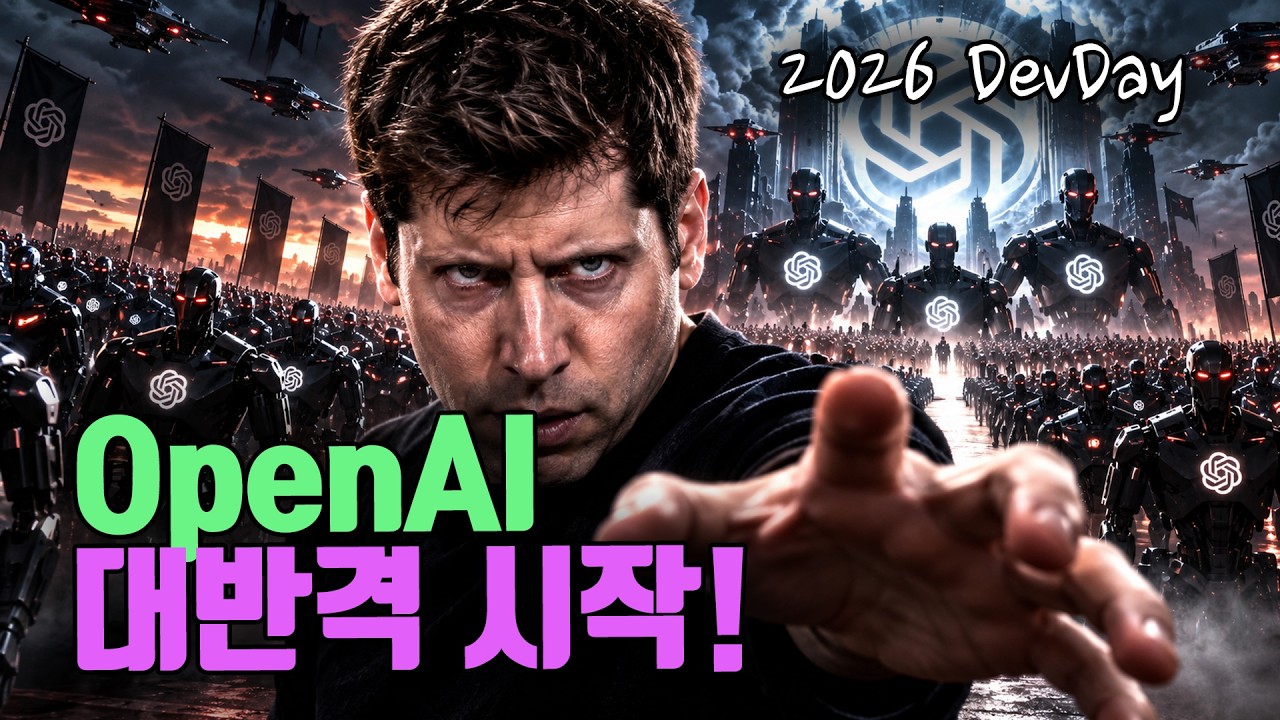
● AI,Shakes,Wall,Street
AI Agents and the Search for “Idle Money”: Equity and Industry Structure Implications
The core issue is not simply that AI cancels subscriptions.
When AI agents can find money, file insurance claims, compare prices, and execute payments on behalf of consumers, business models built on consumer inertia and convenience may come under pressure.
In US equity markets, this could affect brokers, insurers, banks, telecom operators, subscription businesses, e-commerce platforms, and ad-driven megacap technology firms.
At the same time, AI infrastructure, AI payment systems, stablecoins, cryptocurrencies, and automation platforms may benefit from new demand.
The shift extends beyond consumer savings and into macroeconomic outlooks and sector valuation frameworks.
1. Wall Street’s Key Terms: Lazy Cash and Lazy Tax
Two terms are drawing attention on Wall Street: Lazy Cash and Lazy Tax.
Lazy Cash refers to money left idle in bank accounts, brokerage accounts, reward points, dividends, or refunds.
Lazy Tax refers to recurring costs that continue because consumers do not actively manage them, such as duplicate subscriptions, high insurance premiums, unused add-ons, and unclaimed reimbursements.
-
Lazy Cash includes forgotten balances in bank accounts, brokerage accounts, points, dividends, and refunds.
-
Lazy Tax includes duplicate subscriptions, high insurance premiums, unused add-ons, and unclaimed insurance reimbursements.
Examples include small balances left in old bank accounts, uninvested cash in brokerage accounts, and duplicated household subscriptions.
Another example is an insurance claim that is not filed because the process is inconvenient.
The key point is that many companies have historically monetized this consumer inertia.
If AI agents begin identifying and reallocating this money automatically, those recurring revenue streams may weaken.
2. Why Meta’s AI Agent Muse Became a Catalyst
The debate intensified with expectations around Meta’s consumer AI assistant, Muse.
Muse is presented not as a chatbot, but as an AI agent that analyzes email, payment history, subscription records, and shopping patterns, then takes action on behalf of the user.
Its core functions include:
-
Scanning recurring bills through email access.
-
Identifying duplicate subscriptions and recommending cancellation.
-
Checking insurance claims eligibility and guiding the filing process.
-
Tracking the lowest price for items a user wants to buy.
-
Handling ticket purchases, restaurant reservations, and shopping payments.
For consumers, the proposition is clear: tasks that are often delayed or ignored can be handled continuously by software.
For companies, the implications are different.
Revenue streams tied to subscriptions, insurance frictions, fees, deposits, and ad exposure may decline if consumers no longer rely on inertia.
3. Consumers Gain, While Margins Move Elsewhere
AI agents helping consumers save money imply a corresponding reduction in revenue for other firms.
If a user cancels a $15 monthly duplicate subscription, the consumer saves $180 annually, while the provider loses recurring revenue.
If a customer files an insurance claim that would otherwise have been abandoned, the insurer faces a higher payout burden.
If idle cash in a brokerage account is moved into a higher-yield product, the customer earns more, but the brokerage or bank may lose low-cost funding.
This is why Wall Street is paying attention.
AI agents are not only productivity tools; they may directly target hidden profit pools in financial and consumer businesses.
4. Early Pressure Point: Brokers and Asset Managers
Charles Schwab is cited as a representative risk case among US brokerage and wealth platforms.
Such firms earn returns on idle cash, cash sweep balances, and other low-cost client assets.
The issue is that AI agents can identify these balances and move them into higher-yield alternatives.
-
They can identify idle dividend cash and reallocate it to higher-yield products.
-
They can aggregate cash balances across accounts.
-
They can compare high-fee advisory services with lower-cost alternatives.
-
They can optimize inefficient fund, ETF, and cash positions.
This improves consumer outcomes, but it may reduce the stable revenue that brokers have historically derived from inattentive client balances.
For investors, the question is whether this trend changes the long-term growth profile of brokerage and wealth-management stocks.
5. Insurance Is Also Exposed
Insurance is another sector with a strong Lazy Tax component.
Consumers often fail to file claims because the process is complex or the amount appears too small to justify the effort.
AI agents can target this friction directly.
-
They can analyze hospital receipts and treatment records.
-
They can identify claimable items under policy terms.
-
They can organize supporting documents.
-
They can prepare submission language and procedures.
-
They can assess whether appeals are possible after a denial.
Humans may stop when the process becomes inconvenient; AI systems generally do not.
That difference can affect insurer loss ratios and administrative costs.
6. Banks Are Not Immune
Banks rely on deposits and cash balances to generate revenue.
Many customers leave money in low-yield accounts simply because transferring it is inconvenient.
AI agents can automate that decision.
-
They can compare deposit rates across banks.
-
They can move idle cash into higher-yield accounts.
-
They can identify high-fee accounts.
-
They can recommend refinancing or switching card products with lower costs.
Large banks such as JPMorgan and Bank of America are not exempt from this shift.
If customer balances are no longer passively retained, deposit spreads and fee income may face pressure.
7. Telecoms and Subscription Services: Small Recurring Charges Come Under Review
Telecom operators are also exposed to Lazy Tax dynamics.
Unused add-ons, outdated plans, extra data packages, and small recurring charges often continue automatically.
AI agents are well suited to identifying these costs.
-
They can analyze monthly telecom bills.
-
They can identify unused add-on services.
-
They can compare lower-cost plans.
-
They can optimize plans using household usage patterns and mobile virtual network options.
The same applies to Netflix, Disney+, Spotify, cloud storage, and software subscriptions.
Any service that continues charging despite limited use may be vulnerable to automated cancellation.
8. E-Commerce’s Deeper Risk: The Ad Model, Not Just Price Comparison
Amazon is one of the most exposed companies in this discussion.
It is not only an online retailer but also a major advertising platform.
Search placement, recommended products, sponsored listings, ratings, and ranking algorithms support a large ad business.
Amazon’s advertising revenue has been cited at roughly $68 billion.
The risk is that AI agents do not browse the platform like consumers do.
They extract only the price, inventory, delivery, and rating data needed to make an optimized choice.
As a result, the UI and ad-driven structure designed for human attention may lose relevance.
9. Amazon versus Meta Muse: Platform Conflict Around AI Access
Amazon is reportedly trying to restrict access by Meta’s AI agent.
For Amazon, AI agents that retrieve product data and execute purchases without viewing the platform directly create a strategic problem.
The traditional flow of customer attention through Amazon’s interface would weaken.
Amazon has cited security concerns as justification for limiting automated access.
However, the market interpretation is that the core issue is protection of the advertising business.
If AI agents retrieve the required data without exposing users to Amazon’s ad inventory, the value of that ad inventory may fall.
This issue extends beyond Amazon to other e-commerce platforms, including Coupang, Naver Shopping, AliExpress, Temu, Walmart, and Target.
10. Legal Issue: If AI Executes the Purchase, Who Is the Buyer?
AI-driven shopping raises legal questions.
If an AI agent enters a website, selects products, and completes payment on behalf of a user, should that be treated as the user’s own action?
Some legal interpretations suggest that AI agents may be viewed as extensions of the user’s intent and action.
If that view gains traction, platforms may find it harder to reject such activity simply by labeling it as bot traffic.
At the same time, platforms are likely to strengthen restrictions based on automated access, data harvesting, ad avoidance, and payment risk.
Data access rights, anti-bot policies, payment liability, and consumer protection rules are likely to become more important.
11. BlackRock’s Machine-Native Economy
BlackRock has used the term Machine-Native Economy to describe a system in which AI becomes an active economic participant.
Until now, the digital economy has been built around human users.
People search, click, compare, and pay.
That means websites, apps, advertising, and payment systems were designed for human eyes and hands.
AI agents change this structure.
-
AI can purchase data directly.
-
AI can rent cloud compute resources.
-
AI can book services.
-
AI can negotiate prices.
-
AI can execute payments.
This creates a market in which large numbers of AI agents interact, transact, and settle value outside the human interface.
That is the core of the AI infrastructure theme.
12. Why AI Infrastructure and Crypto Are Mentioned Together
As AI agent activity expands, existing payment rails may become less efficient for certain use cases.
Card networks are optimized for consumer commerce, not necessarily for machine-to-machine microtransactions, real-time settlement, or cross-border automated payments.
This is why stablecoins and crypto infrastructure are drawing renewed attention.
AI agents may need to pay for data, API calls, or compute in very small increments and at high frequency.
Traditional card systems may be less competitive on speed and cost.
That is why BlackRock has taken a more constructive view on AI infrastructure and crypto-related assets.
This does not imply that all digital assets will benefit equally.
It does suggest that payment rails, data markets, compute infrastructure, and authentication systems may become important investment themes.
13. Are Visa and Mastercard at Risk?
Visa and Mastercard are sometimes presented as long-term risk candidates in this framework.
The argument is straightforward.
These networks were built for human consumers and merchants.
If AI agents become the payment initiators and stablecoin adoption expands, some of the card network’s role could diminish.
That said, this may be too pessimistic a reading.
Visa and Mastercard are already investing in digital payments, tokenization, blockchain-related settlement, and AI-based security systems.
A rapid collapse of the card network is unlikely.
Still, investors should monitor whether fee structures and network advantages face long-term pressure.
14. Corporate Responses Are Splitting in Two
Companies are responding in two broad ways.
① Firms that cooperate with AI
Some companies are moving quickly to integrate with AI agent ecosystems such as Meta Muse.
Meta reportedly built partnerships with around 1,500 companies in a short period.
These firms see AI agents as a new distribution channel that can bring customers to them.
They may accept lower short-term margins in exchange for longer-term positioning within the AI ecosystem.
② Firms that restrict AI access
Others, such as Amazon, are trying to limit access by AI agents.
They argue that AI systems that retrieve data and bypass ad exposure weaken existing revenue models.
The risk is that excessive restrictions may harm customer experience.
If AI can deliver cheaper and more convenient outcomes, platforms that block it may appear less competitive to users.
15. The Core Point That Is Often Missed
The main issue is not merely that AI finds lower prices.
The key change is that the economic gateway is moving from human-facing screens to AI agents.
Companies have historically competed for human attention through search rankings, app placement, recommendation engines, and advertising.
In an AI agent environment, the user may no longer need to view the screen.
AI can compare, select, and pay automatically.
That could weaken the value of advertising, search, recommendation systems, brand loyalty, and app design.
The new competition will be for placement within the AI agent’s decision logic.
In that sense, being the default recommendation for an AI may matter more than being highly ranked in search results.
This shift could affect search advertising, sponsored commerce, payment networks, insurance comparison platforms, travel booking services, and more.
16. AI Has No Brand Loyalty
Consumers often buy familiar brands even when cheaper alternatives exist.
AI behaves differently.
-
It does not have emotional preference.
-
It does not feel inconvenience.
-
It does not stop working.
-
It continues comparing options.
-
It evaluates price, quality, delivery, and return terms objectively.
This may reduce the pricing power of brands that have relied on habit and loyalty.
Not all brand value will disappear, but consumer inertia may become less important in price formation.
17. Intermediaries Face Pressure Across Multiple Sectors
AI agents may also pressure intermediary platforms.
Travel booking, real estate brokerage, insurance comparison, shopping comparison, and financial product comparison platforms are all exposed.
These businesses aggregate information, present choices, and earn fees or advertising income through that process.
If AI agents can collect the information directly and optimize choices themselves, the intermediary role weakens.
A US real estate example was cited in which AI analysis helped achieve a better sale price than the one initially proposed by a broker.
If such cases become more common, brokerage fee structures may come under pressure, especially in markets with high transaction costs.
18. High-Income Professional Work Is Also Exposed
The later part of the original discussion highlighted risks to high-income professional employment.
Legal, accounting, financial, consulting, research, content creation, and software development work are all within the scope of AI automation.
In the United States, high-income households account for a significant share of consumption.
If employment stability among professionals weakens, it may affect consumption trends and recession risk.
Not every job will disappear, but the gap between workers who use AI effectively and those displaced by it may widen quickly.
19. Inequality in the AI Era: Time Becomes the Scarce Resource
The original text referenced the film In Time to describe AI-era inequality.
In that story, time functions as currency.
Wealthier individuals can buy more time, while poorer individuals face survival pressure.
A similar pattern could emerge in the AI era.
People and firms with access to advanced AI will be able to process information faster, automate work, and optimize investment and consumption decisions.
Those without access will still need to search, compare, and manage processes manually.
Over time, AI may create a stronger link between capital, access, and time savings.
20. Investor Checkpoints by Sector
① Sectors facing higher risk
-
Brokers and wealth managers: Idle cash and high-fee product revenue may decline.
-
Insurers: Unclaimed reimbursements may fall while payout requests rise.
-
Banks: Low-yield deposits and idle balances may face pressure.
-
Telecom operators: Unnecessary add-ons and expensive plans may be removed.
-
Subscription services: Automated cancellation may raise churn.
-
Ad-driven e-commerce: Ad exposure may be bypassed by AI agents.
-
Intermediary platforms: Comparison services in travel, real estate, and finance may lose relevance.
② Sectors with potential upside
-
AI infrastructure: Demand for data centers, GPUs, networks, and power infrastructure may continue to grow.
-
Cloud computing: The execution layer for AI agents becomes more important.
-
Cybersecurity: Access control, authentication, and privacy management become critical.
-
Stablecoins and digital payments: Automated payments and microtransactions may increase demand.
-
AI agent platforms: Platforms that become default choices for consumers may gain negotiating power.
21. This Is a Stage for Distinguishing Hype from Reality
This shift is important, but it does not mean that all legacy companies will collapse immediately.
Amazon, Visa, Mastercard, JPMorgan, and large insurers have scale, capital, customer bases, and regulatory capabilities.
They are likely to respond by integrating AI rather than simply resisting it.
Investors should therefore avoid the simplistic view that AI will destroy all existing businesses.
The more relevant questions are:
-
Which companies can become the default choice for AI agents?
-
Which companies depend excessively on consumer inertia?
-
Which companies can open data access without destroying their own economics?
-
Which companies can shift from human-facing UI to AI-facing APIs?
The answers may influence long-term valuations across megacap technology, fintech, financials, consumer names, and AI infrastructure companies.
< Summary >
AI agents are moving toward identifying idle consumer cash and recurring costs that are not actively managed.
Consumers may save money, while brokers, insurers, banks, telecom operators, subscription businesses, and e-commerce platforms may face margin pressure.
Amazon is especially exposed because AI agents may bypass its ad-driven shopping interface and extract only the data needed to optimize purchases.
BlackRock’s Machine-Native Economy refers to a system in which AI directly handles data, services, compute resources, and payments.
This shift may benefit AI infrastructure, cloud computing, cybersecurity, stablecoins, and digital payments.
Companies that depend on consumer habits and friction may need to redesign their business models.
Investors should assess not only AI beneficiaries, but also the businesses whose revenue structures AI agents may erode.
[Related Articles…]
*Source: [ 소수몽키 ]
– AI에이전트가 노는 돈 다 찾아내서 옮긴다? 우려가 현실이 된 위기의 주식들