● Tesla SEC Shock, Auto-Vote Power, 352 Holders Watch
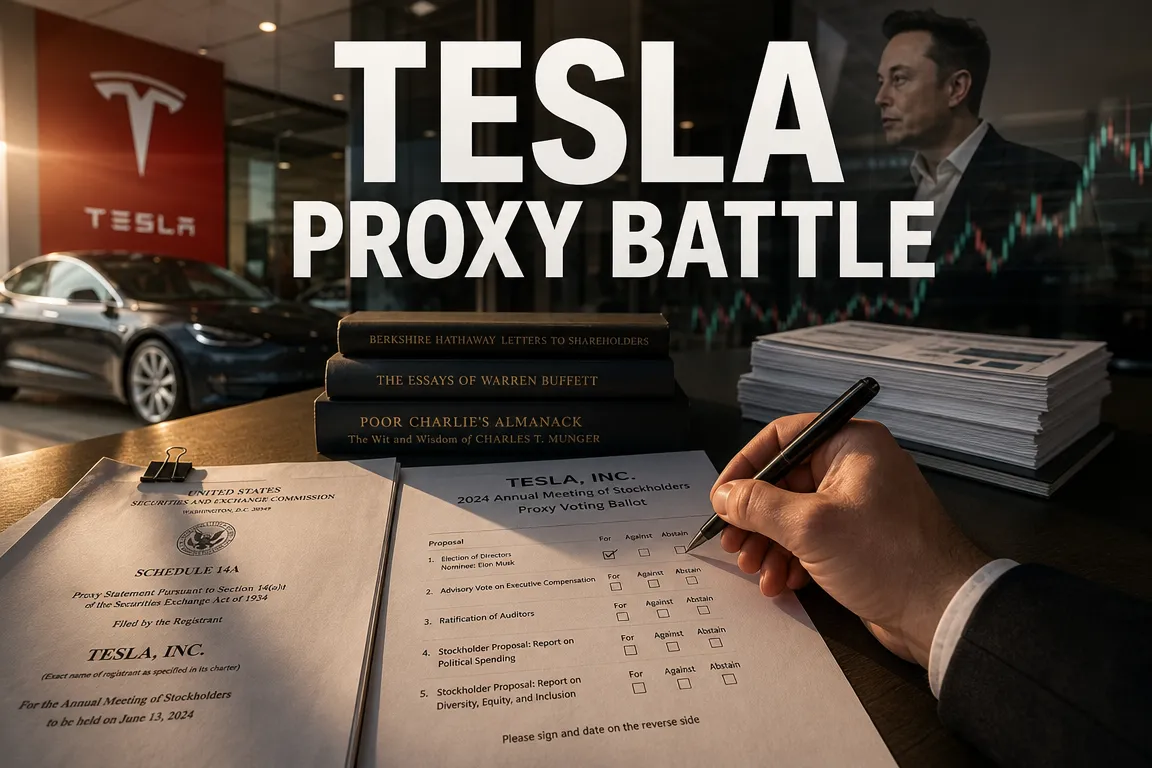
Tesla SEC Automatic Voting Approval: Key Takeaways, What Happens to My Vote in a Merger, and What 352- Dollar Shareholders Should Watch
The core issue here is not simply that the SEC’s M&A division replied to Tesla.
The more material point is that Tesla is building a structure that makes it easier to aggregate the voting power of individual shareholders.
This comes alongside a $30 billion credit facility, elevated U.S. interest rates, third-quarter delivery results, expanded FSD approvals in Europe, and the OpenAI–Elon Musk domain incident.
For Tesla shareholders, the key question is whether a vote can be cast automatically in line with board recommendations without an explicit action by the holder.
For shareholders holding Tesla around $352, the focus should be on the number of shares owned, the record date, and whether the broker supports voting instructions.
1. Market backdrop: U.S. interest rates matter more than Tesla’s share price
In the source material, Tesla shares closed down 1.29% at $352.84.
SpaceX-related transaction pricing was cited at $149.24, up 2.59%.
U.S. equities were broadly lower, with the S&P 500, Nasdaq, and Dow Jones all posting modest declines.
The most sensitive global macro variable remains U.S. interest rates.
When long-term Treasury yields remain elevated, borrowing costs rise for auto loans, mortgages, and corporate financing.
This is particularly relevant for an EV company such as Tesla.
EV demand is driven not only by sticker price, but also by monthly payments, lease terms, insurance, and charging costs.
Higher rates increase the monthly burden even for the same Model Y.
By contrast, higher oil prices improve the relative appeal of EVs versus internal combustion vehicles.
In the current environment, where both U.S. rates and crude prices remain elevated, consumers are forced to re-evaluate whether to buy a car and which drivetrain to choose.
That backdrop affects Tesla shares, the EV market, and sentiment toward overseas equities.
2. The real meaning of the SEC response: approval of the voting mechanism, not a merger signal
The market reaction centered on the SEC division name shown in the response.
The reply came from the Division of Corporation Finance’s M&A office, which led some investors to interpret it as a merger-related signal.
That interpretation is likely overstated.
The division also handles proxy matters, shareholder voting rules, and related governance procedures.
Exxon Mobil previously received a similar response for a comparable arrangement from the same office.
Accordingly, the SEC reply should not be read as evidence of a Tesla merger.
Its importance lies elsewhere.
Tesla is moving to a system that could allow board-recommended votes to be cast automatically unless shareholders opt out or choose otherwise.
3. Tesla’s automatic voting program: a proxy equivalent of recurring payment
The new mechanism is easiest to understand as a recurring authorization for shareholder voting.
Once set, future proxy votes may be cast in line with the board’s recommendation.
Shareholders would not need to open emails, review broker notices, and submit votes manually for each meeting.
The SEC indicated it would not object, provided Tesla follows the terms and conditions described.
Although both Tesla’s request and the SEC response were dated September 29 in the source material, Tesla said it had been in pre-filing discussions with the SEC for several months.
In other words, this was not an overnight approval, but a long-running process.
4. What happens to my vote in a merger?
The central question is whether automatic voting would also apply to mergers, acquisitions, or similar major transactions.
According to the source material, Tesla outlined two broad options.
-
The first is full adoption of the board’s recommendation across all matters.
-
The second applies the board’s recommendation to most items, but excludes contested director elections and major transactions such as mergers, acquisitions, or material asset sales.
Under the first option, if the board recommends approval, the shareholder’s vote may be cast automatically in favor, including on merger items.
Under the second option, major transactions would require direct shareholder action.
The key issue is therefore not the automatic voting program itself, but which option the shareholder selects.
Tesla shareholders should not ignore the wording in future broker notices or proxy materials.
Mergers, acquisitions, and large asset sales carry materially different implications from ordinary proposals.
5. What should a $352 shareholder focus on?
For shareholders holding Tesla around $352, the first question is not their cost basis.
The relevant factor in proxy voting is the number of shares held on the record date.
One share equals one vote, and 100 shares equal 100 votes.
Actual voting access, however, depends on the brokerage platform and whether it supports proxy participation for overseas securities.
For Korean investors holding Tesla through local brokers, it is not yet clear from the source material whether the automatic voting program will apply directly.
They should therefore confirm the proxy process, the record date, the broker’s voting support, and whether automatic voting is available.
The purchase price, whether $352, $250, or $450, does not determine voting power.
Voting power is determined by share count, not entry price.
6. Why Tesla wants automatic voting from retail shareholders
Tesla has a very high retail shareholder base.
Retail participation in voting is significantly lower than institutional participation.
In the prior annual meeting, institutional voting participation was about 76.6%, while retail participation was roughly 28%, according to the source material.
In practical terms, three out of four retail shareholders did not vote.
For Tesla, even important board-backed proposals can be vulnerable if retail votes are not collected.
The company reportedly spent about $2 million on proxy solicitation efforts across the last two annual meetings.
Automatic voting is therefore more efficient than repeatedly asking shareholders to vote by email or phone.
The intent is clear: Tesla wants to stabilize retail voting in a board-friendly direction.
7. Criticism of the program: there is no “vote against the board” button
The program has also drawn criticism.
The main concern is that the automatic voting feature is designed to follow board recommendations.
An EV-focused publication criticized the structure by noting that there is no equivalent option to automatically vote against the board.
In other words, shareholders cannot pre-set a standing instruction to oppose all board recommendations.
There is also no indication that the system automatically follows proxy advisory firms.
The program improves convenience, but it also strengthens board influence.
That said, shareholders can override the default by voting directly on individual proposals.
The program can also be withdrawn at no cost, and shareholders must be notified of their enrollment at least once a year.
8. The core point missed in many headlines: Tesla is building voting infrastructure, not just discussing a merger
The key takeaway is not the merger rumor itself.
The more important point is that Tesla is creating an infrastructure that may make it easier to secure retail voting support for future major proposals.
Many reports focused on the headline that the SEC’s M&A office responded.
From an investor perspective, the more relevant question is how votes will be counted, when they may be cast automatically, and which matters still require direct action.
Tesla has previously seen abstentions function effectively like negative votes in some cases.
In the source material, a shareholder proposal tied to xAI investment reportedly received more votes in favor than against, but the proposal failed because abstentions were treated as opposition.
That likely reinforced the company’s focus on improving participation.
Automatic voting reduces the risk that non-participation shapes the outcome.
Whether or not a merger is involved, Tesla is building a system that can convert shareholder inaction into board-aligned votes.
9. Tesla’s $30 billion credit facility: liquidity planning rather than immediate borrowing
Tesla also filed a separate disclosure with the SEC covering a $30 billion credit arrangement.
The structure includes a $20 billion three-year credit facility and a $10 billion revolving line.
An existing $5 billion facility is being replaced by the new, larger package.
Importantly, Tesla said it does not plan to draw on the facility this year.
The point is to secure liquidity in advance rather than borrow because of an immediate cash shortfall.
Tesla has indicated that capital expenditures could exceed $25 billion this year.
It had already spent about $8.3 billion in the first half of the year, with substantial spending expected in the second half.
The company remains in an aggressive investment cycle across robotaxi, autonomy, AI infrastructure, batteries, and manufacturing capacity.
In a high-rate environment, securing financing capacity early is a practical treasury decision.
When macro conditions are uncertain, companies must manage both cash and credit capacity.
10. Q3 delivery results: why there are few cars on U.S. lots
One of the week’s main catalysts is Tesla’s third-quarter delivery report.
The source material points to a release around Friday, October 2, U.S. time.
The comparison base is 497,099 deliveries in last year’s third quarter.
Reports from multiple U.S. Tesla stores suggest inventories are thin, with even demo vehicles sold.
At one Pennsylvania location, incoming vehicles reportedly already had customer names assigned.
This can be interpreted in two ways.
-
First, demand may be strong enough to clear available inventory.
-
Second, the company may be pushing all available units, including display vehicles, to maximize quarterly deliveries.
The delivery print should help distinguish between those explanations.
For Tesla’s share price, deliveries, average selling prices, and margin outlook will likely matter together.
Volume alone is not sufficient; investors must also assess discounting and profitability.
11. FSD expansion in Europe: Croatia approval is progress, but Germany remains pivotal
According to Tesla’s European account, Croatia became the eighth country to approve FSD usage.
Approvals have expanded from the Netherlands, but broader EU-scale adoption remains incomplete.
The source material says EU-wide approval may require support from at least 15 countries.
That leaves the process slightly above halfway.
Germany is the more important variable.
Germany is central to the European auto industry and a key regulatory voice.
The German transport ministry is described as open to the technology, but concerned about a function that could allow speeds up to 50% above the posted limit.
For example, if a 100 km/h road can be driven at 150 km/h under the setting, regulators are unlikely to accept it easily.
Sweden and France have also reportedly raised similar concerns.
European autonomy expansion will therefore depend not only on technology, but also on Tesla’s willingness to adjust speed settings and safety parameters to local rules.
12. AI sector developments: OpenAI is tightening execution while expanding financing
The AI market remains highly active.
The source material cites reports that OpenAI paused training on a new model, and that a latest model failed internal safety requirements and was not released.
At the same time, Bloomberg reported that OpenAI is pursuing $30 billion in new financing.
The message is straightforward: product launch discipline is tightening, while capital formation remains aggressive.
AI is no longer driven only by model quality.
Data centers, GPUs, power, cloud contracts, safety reviews, and regulation all require capital.
Anthropic is also being discussed in connection with a possible IPO and a high valuation outlook.
The AI cycle remains strong, but scrutiny around losses and monetization speed is likely to intensify.
13. The OpenAI and Elon Musk domain incident
OpenAI reportedly launched a new AI assistant service.
However, entering a similar domain reportedly redirected users to a Grok Bot download page tied to Elon Musk’s AI service.
While the episode may appear minor, it highlights how important branding, domains, and user entry points are in AI competition.
In the AI agent market, traffic can shift quickly when users confuse app names, domains, or commands.
Competition in AI is likely to extend beyond model performance to distribution, default placement, search visibility, and domain control.
14. Roadster event delay and the fan patent: is a “flying car” actually coming?
The Roadster unveiling event was reportedly moved from October 1 to October 15 due to weather.
Because the event is outdoors, weather conditions matter materially.
Tesla also disclosed a patent for a fan-based system that pulls air from beneath the car to press it closer to the road surface.
The concept is related to downforce in racing vehicles.
Greater road adhesion at speed can improve cornering and acceleration stability.
There is no confirmation that the technology will be used in the Roadster, but the timing has increased investor interest.
If Tesla demonstrates not only performance but also aerodynamics, fan systems, or specialized driving features, the event could carry significance beyond a standard supercar reveal.
15. Key checks for Korean investors
Korean Tesla investors should not treat this as a purely U.S. shareholder issue.
What matters is whether proxy participation and automatic voting are available through their broker.
The items to verify are as follows.
-
Confirm whether the broker supports Tesla proxy voting.
-
Confirm whether the automatic voting program applies to Korean investors.
-
Confirm whether the program covers all items or excludes major transactions such as mergers and acquisitions.
-
Confirm that shares were held on the record date.
-
Confirm whether automatic votes can be overridden by direct voting on specific proposals.
If Tesla is subject to Texas law timing requirements for annual meetings, the next shareholder meeting schedule will be important.
The source material notes that the last annual meeting was held on November 6 and refers to a 13-month deadline.
That could make a December timeline material.
16. Investment conclusion: Tesla is operating as a car company, an AI company, and a voting-platform company
Tesla is not simply a vehicle manufacturer.
It is using deliveries to support near-term results, FSD and autonomy to support long-term growth, and AI and robotics to support future valuation.
At the same time, it is adding financial flexibility through a large credit facility and reshaping shareholder voting through automatic proxy infrastructure.
This suggests the company is preparing for larger strategic decisions.
Whether those decisions involve a merger, AI investment, compensation matters, or major robotaxi and FSD-related capital deployment remains uncertain.
What is clear is that Tesla is reducing voting risk, expanding financing optionality, and managing global regulatory issues in parallel.
For investors, the focus should move beyond the stock chart to SEC filings, shareholder meeting items, voting structure, U.S. rates, and AI capital trends.
< Summary >
The SEC response is better understood as approval of Tesla’s automatic voting mechanism than as a merger signal.
If automatic voting is enabled, votes may be cast in line with the board’s recommendation, and certain settings may include mergers and acquisitions.
For a $352 shareholder, the key factors are share count on the record date and broker support for proxy voting, not purchase price.
Tesla has opened a $30 billion credit facility to preserve liquidity and support capital investment in a high-rate environment.
The Q3 delivery report will be watched against last year’s 497,099-unit base.
FSD is expanding in Europe, but German regulatory concerns about speed settings remain a key variable.
OpenAI and other AI companies are balancing safety issues with large-scale financing needs.
The main takeaway is that Tesla is building a structure that can more reliably collect retail voting power in a board-aligned direction.
[Related Articles…]
- Tesla Proxy Voting and Shareholder Governance Shifts
- AI Investment Cycle and Global Rate Risk Analysis
*Source: [ 오늘의 테슬라 뉴스 ]
– SEC에 투표 방식부터 허락받은 테슬라 — 합병 투표 때 내 표는 어떻게 되나, $352 주주는?
● Buffett-Munger-Investing-Secret,Concentration-Over-Diversification
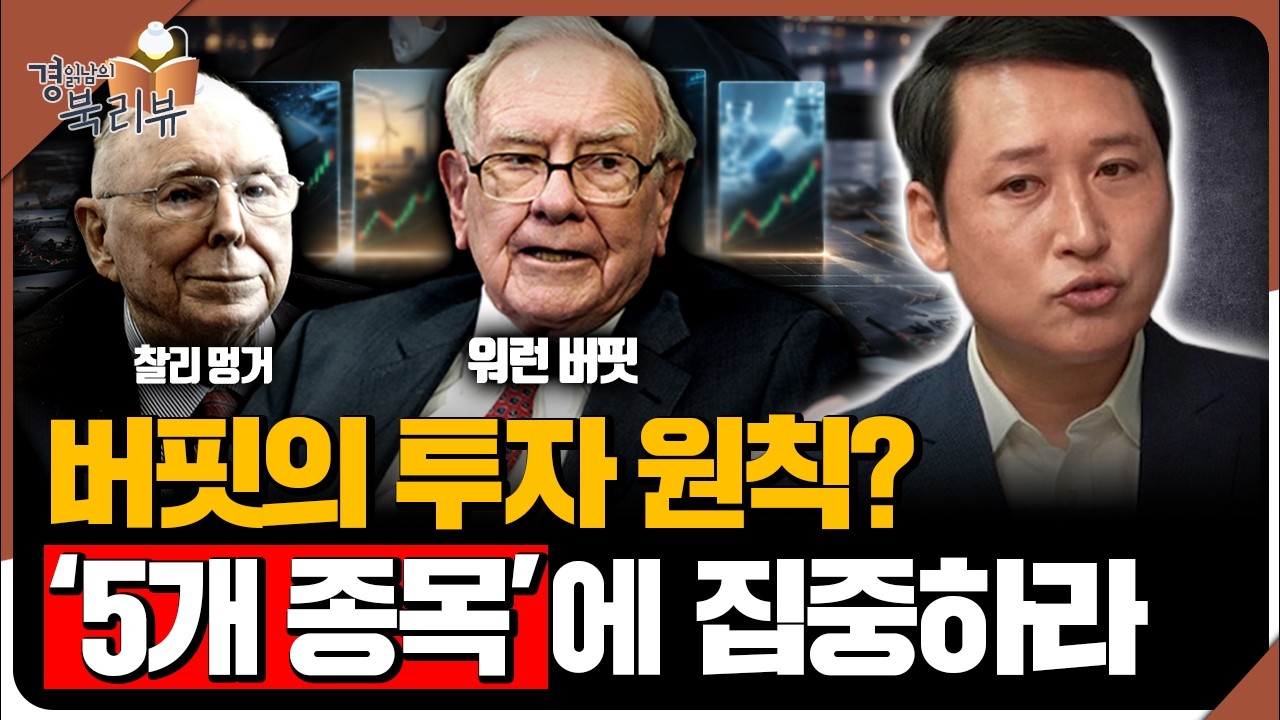
Concentration Investing Is Not Always Wrong: What Buffett and Munger Really Meant by a 5-Stock Portfolio
The core message is straightforward.
“Diversification reduces risk” is not always correct, and for investors with real conviction and analytical capability, it can also lower returns.
This report summarizes why Warren Buffett and Charlie Munger concentrated capital in four or five core businesses rather than holding dozens of positions, and whether individual investors should follow the same approach.
The discussion covers the distinction between concentration and diversification, Berkshire Hathaway’s portfolio structure, the Apple investment case, FOMO and JOMO in investor psychology, the buy-the-dip strategy, and the criteria for evaluating corporate competitiveness in the AI era.
1. Key Point: Charlie Munger Described Berkshire Hathaway’s Approach as Concentrated Investing
Charlie Munger described Berkshire Hathaway’s investment approach as “Focus Investment,” or concentrated investing.
The premise is that high-quality opportunities are rare, so capital should be concentrated in a small number of businesses where conviction is strongest.
This does not mean buying any stock aggressively.
It means concentrating only after analyzing the business model, management, financial structure, competitive advantage, and long-term growth profile in sufficient depth.
Munger and Buffett viewed broad diversification as an ineffective path to exceptional returns.
In other words, reducing risk and pursuing higher returns are not always aligned objectives in equity investing.
2. Diversification May Suit Beginners, but It Can Be Inefficient for Skilled Investors
The central message is this:
Investors who do not understand the market should diversify, but excessive diversification can be a poor choice for investors who do understand it.
Diversification is fundamentally a risk-control strategy.
If one position declines sharply, gains in other positions can partially offset the loss.
The issue is that excessive diversification can dilute the return contribution of the best ideas.
If an investor has strong conviction in a top-tier business, the question becomes whether lower-quality ideas should still be included in the portfolio.
From Buffett’s perspective, if the best opportunity is available, it is rational to allocate more capital to it.
Ultimately, portfolio construction should reflect the investor’s skill level and conviction.
For beginners, diversification is a defensive tool. For investors with strong business analysis skills, concentration can improve returns.
3. Berkshire Hathaway Case: The Top Four Holdings Account for More Than 60% of the Portfolio
The report highlights Berkshire Hathaway’s portfolio as an example.
The key point is that Berkshire has not allocated capital evenly across dozens of names. Instead, it has assigned very large weights to a small number of holdings.
Representative names include Apple, American Express, Bank of America, and Coca-Cola.
According to the source material, Apple at one point represented a very large portion of Berkshire’s equity portfolio, approaching half of total holdings.
Buffett’s rationale for Apple was not limited to iPhone sales.
He valued Apple’s brand loyalty, ecosystem, cash generation, management execution, and long-term competitive position.
This is a core value-investing principle.
Value investing is not simply buying cheap stocks. It is more accurately defined as buying excellent businesses at reasonable prices and holding them for the long term.
4. Why 4 to 5 Stocks: The Balance Between Concentration and Risk Control
The report identifies an important benchmark: at least four positions, with five often cited as a practical target.
Allocating everything to one stock creates excessive single-company risk.
Unexpected accounting issues, management failures, regulatory actions, technological disruption, or consumer backlash can cause losses that are difficult to recover from.
For example, a 30% decline requires a gain of roughly 43% to return to breakeven.
In compounding, limiting losses is as important as generating returns.
Buffett and Munger’s version of concentration is therefore not “all-in on one stock,” but “high conviction in a small number of well-researched businesses.”
It is neither broad diversification across 20 to 30 holdings nor an undisciplined bet on a single name.
5. Who Can and Cannot Use Concentrated Investing
Concentrated investing is not suitable for everyone.
For investors who do not analyze businesses and instead follow trends, concentration can increase risk.
Conviction may be based on emotion rather than analysis.
Investors suited to concentration should meet the following conditions:
-
They can explain the business model in one clear sentence.
-
They understand why the competitive advantage can persist.
-
They can assess management quality and capital allocation discipline.
-
They can determine whether a short-term decline has actually damaged the investment thesis.
-
They can focus on business value rather than short-term price action.
Without these capabilities, broader diversification or an ETF-based approach may be more appropriate.
The key is not whether one strategy is universally superior, but whether it matches the investor’s skill and temperament.
6. Buffett’s 75% Comment and the Risk of Leverage
The report cites Buffett as having said that if conviction is strong, allocating up to 75% of net worth to a single stock may be acceptable.
It also notes that he has at times invested more than 100% of available capital in a single idea.
However, this must be distinguished from retail investors borrowing to buy one stock.
Buffett’s concentrated approach is built on analytical depth, strong conviction, and long-duration capital.
It is fundamentally different from leveraged speculation.
Leverage can magnify returns, but it can also amplify losses sharply.
In volatile equity markets, borrowed capital often leads to poor decision-making.
Concentration may be viable, but leveraged concentration is a separate and substantially riskier proposition.
7. Buy-the-Dip Opportunities: How to Evaluate Stocks Hit by Scandals
The report also notes that investment opportunities can emerge when a company’s share price falls sharply after a scandal.
Boycotts, reputational damage, and management controversies can create short-term pressure on sales and valuation.
However, not every scandal permanently damages intrinsic value.
Consumers may move on over time, and companies can recover through brand repair or governance improvements.
The key question is whether the issue is temporary or structural.
If the problem is temporary, it may create a buy-the-dip opportunity.
If the issue involves accounting fraud, business model deterioration, or a lasting regulatory threat, price weakness alone is not a sufficient reason to invest.
A lower price does not by itself constitute an investment thesis.
The critical skill is distinguishing temporary damage from permanent impairment.
8. Why MTS Investors Often Underperform: Too Much Trading
The report also refers to research showing that investors using mobile trading systems, or MTS, underperform those using HTS platforms.
The reason is relatively clear.
Mobile access makes it easier to buy and sell at any time, which increases the likelihood of unnecessary trading.
More trading means higher transaction costs and more emotionally driven decisions.
One of Munger’s key principles is to resist the impulse to act.
In investing, doing nothing can be a valid decision.
If an investor has bought a good business at a fair price, holding and waiting may be more important than frequent trading.
Long-term investing is not only about holding for a long period. It is also about reducing unnecessary activity.
9. When FOMO Appears, Consider Selling Rather Than Buying
The report places significant emphasis on FOMO and JOMO.
FOMO, or Fear Of Missing Out, describes the anxiety of believing others are capturing opportunities that one is missing.
It tends to intensify when the market is rising and others appear to be making money.
At that point, even investors who have never participated in markets may rush in.
In many cases, however, extreme FOMO coincides with overextended market conditions.
JOMO, or Joy Of Missing Out, is the opposite sentiment.
It appears when markets fall and people feel relieved not to be exposed.
When investors ridicule equities and say “I told you so,” markets may be close to a bottom.
As Buffett has said, investors should be fearful when others are greedy and greedy when others are fearful.
This is not merely a slogan. It is a countercyclical framework for using investor psychology to one’s advantage.
10. In the AI Era, the Definition of Corporate Productive Inputs Is Changing
The report identifies AI as a new productive input.
Traditionally, productive inputs have been described as labor, land, and capital.
Management quality and strategic execution later became recognized as important drivers of corporate productivity.
In the AI era, that framework is changing again.
Historically, manufacturing depended on land, factories, equipment, and raw materials.
Today, AI companies rely on data, algorithms, models, computing power, talent, and platform networks.
When assessing the economy, investors should therefore look beyond interest rates and liquidity to evaluate how AI may affect productivity and profit margins.
Berkshire’s concept of an economic moat is also expanding beyond brand strength and distribution to include AI model capability, data access, and automation capacity.
In future value investing frameworks, the ability to use AI to reduce costs and improve profitability is likely to become a key analytical criterion.
11. Political Events and Liquidity Cycles: Why Investors Must Track Policy Trends
The report also suggests that periods leading up to elections may increase the likelihood of large-scale liquidity support.
Before major political events, governments, central banks, and policy authorities may become more sensitive to growth and market sentiment.
Rising liquidity can create a favorable short-term environment for asset markets.
However, price gains driven by liquidity do not necessarily reflect an improvement in intrinsic value.
Investors should distinguish between markets rising on liquidity and markets rising on earnings improvement.
Interest rates, exchange rates, policy expectations, the business cycle, and earnings outlook should all be assessed together.
For longer-term views such as a 2027 outlook, investors should connect liquidity, AI-driven productivity, global supply chain realignment, consumer weakness, and the corporate earnings cycle.
12. Key Points Often Missed in Other Coverage
Most commentary stops at the statement that Buffett favored concentration.
The more important issue is the set of conditions required for concentration to work.
-
First, concentration is not about reducing the number of holdings. It is about eliminating investments without conviction.
-
Second, investing in five stocks does not mean selecting only five names. It means reviewing many companies and holding only the strongest candidates.
-
Third, the core of concentrated investing is holding period discipline, not just entry timing.
-
Fourth, stocks that fall sharply after scandals should not be bought simply because they look cheap. Investors must assess whether reputational damage is recoverable.
-
Fifth, in the AI era, economic moats increasingly come from data, models, automation, and platform power.
In the end, Buffett and Munger’s philosophy is not simply to buy good stocks and hold them.
It is to build the ability to identify strong businesses, act decisively when opportunities arise, and avoid unnecessary activity afterward.
13. A 5-Stock Concentration Checklist for Individual Investors
Individual investors seeking to apply the Buffett-Munger approach should be able to answer the following questions:
-
Can I explain how this company makes money in one sentence?
-
Is this company likely to remain relevant five years from now?
-
Does it have a moat that competitors cannot easily replicate?
-
Is management disciplined and shareholder-oriented?
-
Can the balance sheet withstand stress?
-
Is the current valuation reasonable relative to future earnings?
-
Could I hold the position if the stock fell 30% without breaking the thesis?
-
Do I have enough conviction to make this a top portfolio holding?
If these questions cannot be answered, concentrated investing is premature.
In that case, diversification, ETFs, cash allocation, or systematic accumulation may be more appropriate.
14. Conclusion: The Real Question Is Not Diversification Versus Concentration, but Whether You Invest in What You Understand
Diversification is not a flawed strategy.
Concentration is not automatically superior.
The key issue is whether the investor understands what is being bought and what is not.
For beginners, the priority is to remain in the market through diversification.
For investors with business-analysis capability, who can distinguish fear from greed and maintain a long-term discipline, a 4-to-5 stock concentrated portfolio can be highly effective.
The message from Buffett and Munger is ultimately simple.
Opportunities are rare, so stay prepared, wait for the right one, and act decisively when it arrives.
< Summary >
Buffett and Munger favored concentration in a small number of high-conviction businesses over excessive diversification.
Concentrated investing is effective only when supported by business analysis and the ability to hold for the long term.
For individual investors, a practical concentrated portfolio is not a single-stock bet, but a 4-to-5 stock structure built around core holdings.
When FOMO is elevated, investors should be cautious about overheating. When JOMO dominates, it may be time to evaluate contrarian opportunities.
In the AI era, corporate moats extend beyond brand and capital to data, models, and automation capabilities.
Ultimately, effective investing is not about frequent trading. It is about buying businesses you understand at reasonable prices and waiting patiently.
[Related Articles…]
*Source: [ 경제 읽어주는 남자(김광석TV) ]
– “분산투자가 정답”이라는 착각… 버핏·멍거가 5개 종목에 집중한 이유 | 김광석의 북리뷰 | 찰리 멍거 바이블 완결판 [2편]