● Bond-Yield Shock, Sticky High Rates, 2027 Risk
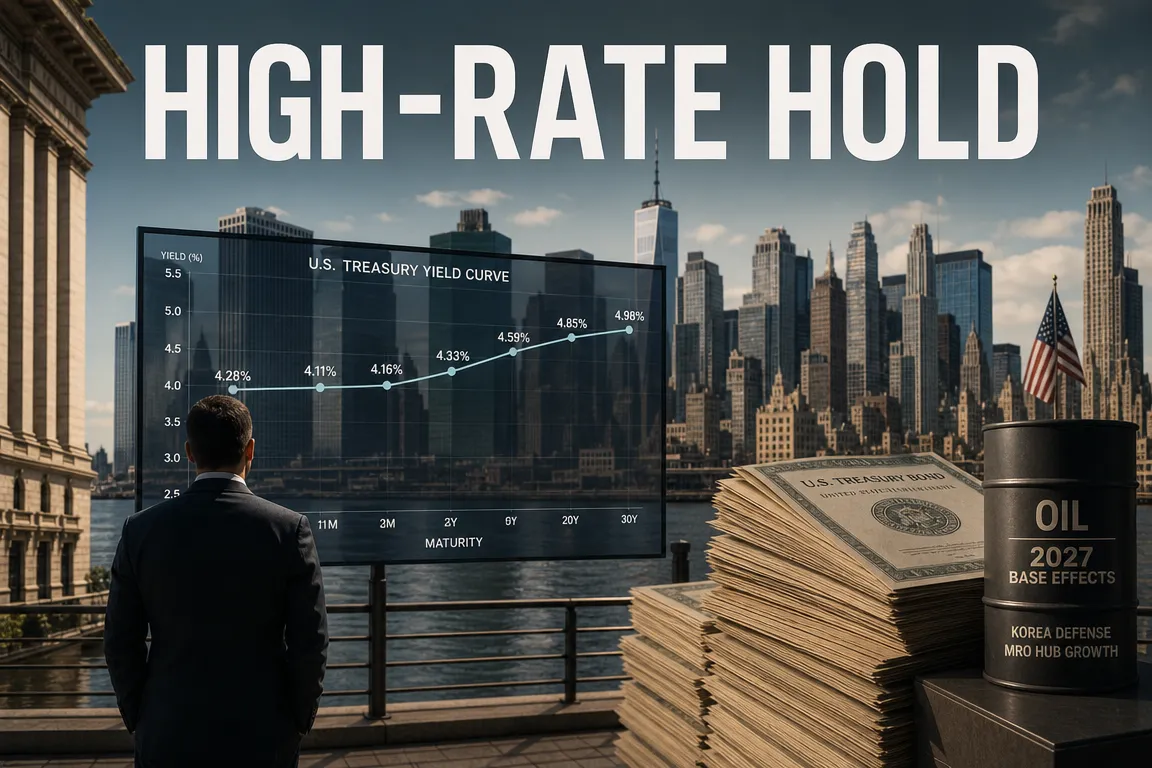
Treasury Yield Peak and the 2027 Interest Rate Outlook: Why the High-Rate Environment May Persist
Treasury yields may decline after reaching a peak, but a return to the previous low-rate environment appears unlikely.
The central issue is not simply whether interest rates will rise or fall.
The factors driving U.S. Treasury yields should be divided into structural and cyclical components, while the impact of oil-price base effects on 2027 inflation and policy rates must also be assessed.
In Korea, the AI semiconductor cycle may overstate the economy’s underlying strength, while industries outside semiconductors face conditions resembling perceived stagflation.
Even if long-term yields decline, their structural floor may remain elevated.
This would affect household debt, corporate investment, real estate, exchange rates, equity markets, and wealth inequality.
1. Key View: Treasury Yields May Decline, but the High-Rate Structure Will Remain
The central conclusion is that Treasury yields may decline after peaking, while structurally elevated interest rates could persist through 2027.
This apparent contradiction can be resolved by separating long-term structural changes from temporary shocks.
| Category | Factors Raising Treasury Yields | Outlook |
|---|---|---|
| Structural factors | Higher-cost economy, fiscal expansion, increased government bond issuance, and changes in the investor base | Unlikely to reverse quickly |
| Cyclical factors | Geopolitical risk, oil-price spikes, renewed inflation, and expectations of additional rate increases | Could weaken during 2027 |
If cyclical pressures ease while structural factors remain, Treasury yields may decline from their peaks.
However, the decline could be more limited than in previous easing cycles.
Rates may move lower while remaining above their historical average.
2. First Structural Driver of Higher Rates: The Emergence of a Higher-Cost Economy
The global economy is increasingly prioritizing security over efficiency.
Previously, companies and governments generally sourced energy and raw materials from the lowest-cost suppliers.
Following geopolitical conflicts and supply-chain disruptions, procurement is increasingly being diversified across multiple countries despite higher costs.
Korea may further reduce its dependence on Middle Eastern crude oil by increasing oil and LNG imports from the United States and other regions.
The source discussion indicates that U.S. energy already accounts for more than 15% of Korea’s imports in this category. The actual share may vary by reporting period and by whether crude oil and LNG are measured separately.
Diversification improves supply security but may increase average procurement costs.
Renewable energy, nuclear power, power grids, and energy-storage systems require substantial initial capital expenditure.
These costs may be passed through to electricity rates, transportation costs, manufacturing expenses, and service prices.
Energy security and supply-chain restructuring may therefore keep inflation and long-term interest rates above their previous levels.
3. Second Structural Driver: Fiscal Expansion and Increased Government Bond Supply
Major economies are likely to increase fiscal spending in 2026 and 2027 to fund defense, energy, AI infrastructure, semiconductors, social programs, and aging-related expenditures.
When government spending exceeds tax revenue, the funding gap is generally financed through additional bond issuance.
If government bond supply grows faster than investor demand, higher yields may be required to absorb the issuance.
Because bond prices and yields move inversely, supply-driven price declines translate into higher government bond yields.
As a result, long-term rates may remain elevated even if central banks hold or reduce policy rates.
Policy-rate analysis should therefore include government deficits and debt-issuance plans, not only central bank guidance.
4. Third Structural Driver: A Changing Investor Base for U.S. Treasuries
A major change in the U.S. Treasury market is the shift in demand from central banks and foreign public institutions toward private investors.
The Federal Reserve and foreign central banks may purchase Treasuries for monetary-policy implementation or reserve management.
Private asset managers, pension funds, hedge funds, and insurers place greater emphasis on returns and risk compensation.
Private investors generally require higher yields to compensate for fiscal deficits, inflation, currency risk, and long-duration exposure.
The term premium may also rise because longer maturities involve greater uncertainty.
A more privately driven investor base could therefore keep long-term U.S. yields structurally elevated.
This shift is unlikely to be reversed by one or two policy-rate cuts.
5. Cyclical Driver of Lower Treasury Yields: Oil-Price Base Effects
Oil prices are the most important variable supporting the view that Treasury yields could pass their peak.
The absolute price of oil must be distinguished from its contribution to the inflation rate.
If oil reaches $120 per barrel in March and remains at $120 the following March, the price remains high, but the year-over-year increase is 0%.
Consumer price inflation is influenced by year-over-year changes rather than only by absolute price levels.
Consequently, if oil prices stabilize at elevated levels, their incremental contribution to inflation may diminish.
The underlying scenario suggests that this effect could become more visible after March 2027.
When March 2027 inflation data are released in April, markets will assess whether the energy contribution has declined.
Slower inflation would reduce the need for additional policy-rate increases and could place downward pressure on Treasury yields.
This outlook assumes that the Middle East conflict does not escalate and oil prices do not surge again.
6. The Inflation Paradox Observed in 2022 and 2023
A similar pattern emerged in 2022 and 2023.
Oil-price increases contributed to global inflation in 2022. In 2023, oil remained expensive relative to historical averages, but its year-over-year change turned negative.
A decline from $120 to $80 per barrel still leaves oil at a relatively high price, but it reduces measured energy inflation.
This explains why official inflation and household perceptions of living costs may diverge.
Headline inflation may slow while households continue to face elevated food, transportation, and utility costs.
7. When Could the Rate-Increase Cycle End? The First Quarter of 2027 as an Inflection Point
The base-case scenario assumes that additional rate increases in major economies could end between late 2026 and the first quarter of 2027.
After March 2027, weaker year-over-year oil-price growth may reduce the justification for further tightening.
Markets typically react to confidence that the tightening cycle has ended before actual rate cuts begin.
Long-term government bond yields may therefore decline ahead of policy rates.
However, the end of rate increases would not imply a return to the previous low-rate regime.
Fiscal deficits, government bond supply, energy-transition costs, and elevated term premiums would remain structural constraints.
The likely path is a gradual decline from elevated levels rather than a sharp reduction.
8. Interpreting an October FOMC Hold
The source interprets an October FOMC hold through the transmission lag of monetary policy rather than political considerations.
Under the assumed sequence, a rate increase in September would require a subsequent observation period in October.
The Federal Reserve must balance price stability with labor-market stability.
Policymakers need time to determine whether higher rates are reducing inflation without causing an excessive rise in unemployment.
Rate increases affect the economy gradually through lending rates, consumption, investment, and employment.
Pausing after an increase to evaluate incoming data is therefore consistent with standard monetary-policy practice.
9. What It Means for Treasury Yields to Perform the Federal Reserve’s Work
The central argument attributed to New York Federal Reserve President John Williams is that market rates can independently create monetary restraint.
Higher policy rates generally raise Treasury yields and borrowing costs for households and businesses.
This weakens housing demand, consumption, and capital expenditure, reducing aggregate demand.
However, if fiscal deficits and increased Treasury issuance have already pushed long-term yields sharply higher, additional policy-rate increases may not be necessary to generate further tightening.
Elevated mortgage, corporate bond, auto loan, and consumer credit rates already impose substantial pressure on the real economy.
The Federal Reserve is therefore likely to assess Treasury yields, oil prices, employment, and inflation before deciding on additional increases.
10. Bank of Korea Policy: Rate-Increase and Hold Scenarios
The source interprets the Bank of Korea’s higher inflation and growth assessments, together with its commitment to restrictive policy, as a hawkish signal.
This leaves open the possibility of another increase during the remaining 2026 policy meetings or in early 2027.
Three scenarios should be considered:
- Scenario 1: One additional increase in 2026, followed by an extended hold.
- Scenario 2: No further action in 2026, followed by a final increase in early 2027.
- Scenario 3: No additional increase, with restrictive policy maintained because higher market rates and weaker growth already provide sufficient restraint.
The Bank of Korea must consider consumer inflation, the won-dollar exchange rate, household debt, property prices, domestic demand, and U.S. monetary policy.
If Korea cuts rates substantially while U.S. rates remain high, won depreciation and imported inflation could intensify.
Further tightening, however, would increase pressure on self-employed borrowers, financially vulnerable households, construction companies, and domestic-demand businesses.
11. Is the Korean Economy Recovering or Experiencing Perceived Stagflation?
The current Korean economy is better described as experiencing perceived stagflation rather than formal economy-wide stagflation.
Stagflation generally refers to weak or contracting growth combined with high inflation.
If semiconductor and AI-related exports sustain aggregate growth, the economy may not meet the conventional definition.
However, domestic demand, construction, retail, hospitality, restaurants, and small and medium-sized manufacturers may simultaneously face weak activity and elevated prices.
This divergence explains why improving national indicators may not translate into stronger conditions for employees and small-business owners.
Aggregate growth can remain positive while its benefits are concentrated in a limited number of industries and companies.
12. How AI Semiconductors Can Obscure Korea’s Underlying Economic Conditions
AI semiconductors are a major driver of Korean exports and capital expenditure.
Growing demand for high-bandwidth memory and advanced memory products can rapidly increase semiconductor revenue, exports, and investment.
However, the industry is capital-intensive and accounts for a limited share of direct employment.
Strong semiconductor exports do not generate an equivalent improvement for the entire workforce of nearly 28 million people.
The source states that semiconductors accounted for approximately 41.8% of cumulative exports through the third quarter.
This figure should be verified against official trade statistics because the result may vary by classification, but the broader issue of rising semiconductor dependence remains relevant.
As the semiconductor share increases, the sector has a greater influence on total exports, economic growth, and capital expenditure.
Weakness in non-semiconductor industries may consequently be obscured by aggregate indicators.
13. Why the Government Should Publish Indicators Including and Excluding Semiconductors
Effective economic policy requires an accurate diagnosis.
If policymakers focus only on aggregate indicators that include semiconductors, they may conclude that the economy is recovering steadily.
This could delay measures addressing weak domestic demand and pressure on small and medium-sized businesses.
Conversely, focusing only on data excluding semiconductors could understate Korea’s industrial competitiveness and export recovery.
The most effective approach is to disclose both sets of indicators:
- Total export growth and export growth excluding semiconductors.
- Total capital expenditure and capital expenditure excluding semiconductors.
- Aggregate employment and the direct and indirect employment effects of semiconductor and AI industries.
- Overall GDP growth and sector-level contributions to growth.
This would support a more realistic assessment of Korea’s economy and more targeted sector-level policies.
14. Key Issues That Receive Relatively Limited Attention
First, long-term government bond yields may have a greater economic impact than policy rates.
Borrowing costs faced by companies and households are often linked more directly to long-term government bond and bank bond yields than to policy rates.
Even if central banks hold rates steady, elevated long-term yields can keep financial conditions restrictive.
Second, high oil prices and oil-driven inflation are not equivalent.
If oil remains at the same elevated level as a year earlier, its contribution to measured inflation may decline substantially.
This base effect could become an important driver of monetary policy in 2027.
Third, the end of rate increases and the beginning of rate cuts are separate events.
Central banks may maintain high policy rates for an extended period after the tightening cycle ends.
Borrowing costs may therefore decline only gradually.
Fourth, the AI semiconductor cycle could support Korean growth while widening sectoral inequality.
Semiconductor companies and related equipment and materials suppliers may expand, while domestic service providers and conventional manufacturers continue to face high financing and operating costs.
Fifth, elevated interest rates may deepen wealth inequality.
Investors holding cash and high-quality bonds can earn higher interest income, while highly leveraged households and small businesses face rising debt-service costs.
The impact of higher rates differs substantially according to asset holdings and leverage.
15. Variables for Households, Companies, and Investors to Monitor
Households should focus on actual lending-rate declines rather than the timing of policy-rate cuts.
Mortgage and consumer lending rates may fall slowly if bank bond yields and lending spreads remain elevated.
Companies should avoid assuming that high rates are temporary when preparing investment plans.
Cash flow and debt maturity profiles should be tested against a prolonged high-rate environment.
Bond investors should assess both the potential for lower yields and the pressure from increased government bond supply.
Lower long-term yields would support existing long-duration bond prices, but wider fiscal deficits and additional issuance may limit the decline.
Equity investors should focus on sector differentiation rather than broad index performance.
AI semiconductors and power infrastructure may benefit from structural demand, while highly leveraged and domestically focused companies remain exposed to higher financing costs.
For real estate, long-term lending rates and household income conditions are more important than policy rates alone.
Even if Treasury yields decline, tighter lending regulations and household debt controls may constrain transaction volumes.
16. Three Scenarios for the 2027 Economic Outlook
Base case: Slower oil-price inflation and an end to additional rate increases.
If geopolitical conflict does not escalate and oil stabilizes at an elevated level, inflation may slow because of base effects.
Under this scenario, the probability of additional rate increases would decline after the first quarter of 2027, and government bond yields could fall gradually.
Risk case: Escalating geopolitical conflict and renewed oil-price increases.
An expansion of the Middle East conflict or damage to major energy infrastructure could raise oil prices and transportation costs.
This would undermine the disinflation outlook and increase the probability of additional tightening or a longer period of elevated rates.
Recession case: Faster-than-expected deterioration in employment and consumption.
If the cumulative impact of high rates causes unemployment to rise and business investment to contract sharply, central banks may prioritize growth and employment over inflation.
Government bond yields could decline more rapidly, but equities and real estate would face the separate risk of recession.
17. Conditions Underlying the Outlook
This analysis presents a conditional economic scenario rather than a definitive forecast.
Assumptions regarding oil prices of $100-$120 in 2026, slower inflation after March 2027, and additional rate increases by major central banks are scenario inputs rather than confirmed outcomes.
The conclusions would change if geopolitical risks, oil-production policies, U.S. fiscal policy, employment conditions, or exchange rates deviate materially from these assumptions.
Investors should monitor year-over-year oil-price changes, core inflation, inflation expectations, unemployment, U.S. Treasury issuance, and term premiums rather than relying on a single FOMC decision.
< Summary >
U.S. Treasury yields may decline after reaching a cyclical peak.
However, a higher-cost economy, fiscal expansion, increased government bond supply, and a more privately driven investor base suggest that the high-rate environment may persist.
The key variable for 2027 is the year-over-year change in oil prices rather than their absolute level.
If oil-price base effects reduce inflation, the probability of additional rate increases may decline after the first quarter of 2027.
Korea’s aggregate indicators may improve because of AI semiconductor exports, while non-semiconductor industries continue to experience weak growth and elevated costs.
Policymakers should publish indicators both including and excluding semiconductors, while households and companies should prepare for interest rates to remain structurally high even if their near-term direction turns downward.
[Related Articles…]
*Source: [ 경제 읽어주는 남자(김광석TV) ]
– 국채금리 정점 찍고 내려간다…하지만 ‘고금리 시대’는 끝나지 않는다 | 경읽남 콜라보 | 조세일보 인터뷰 [2편]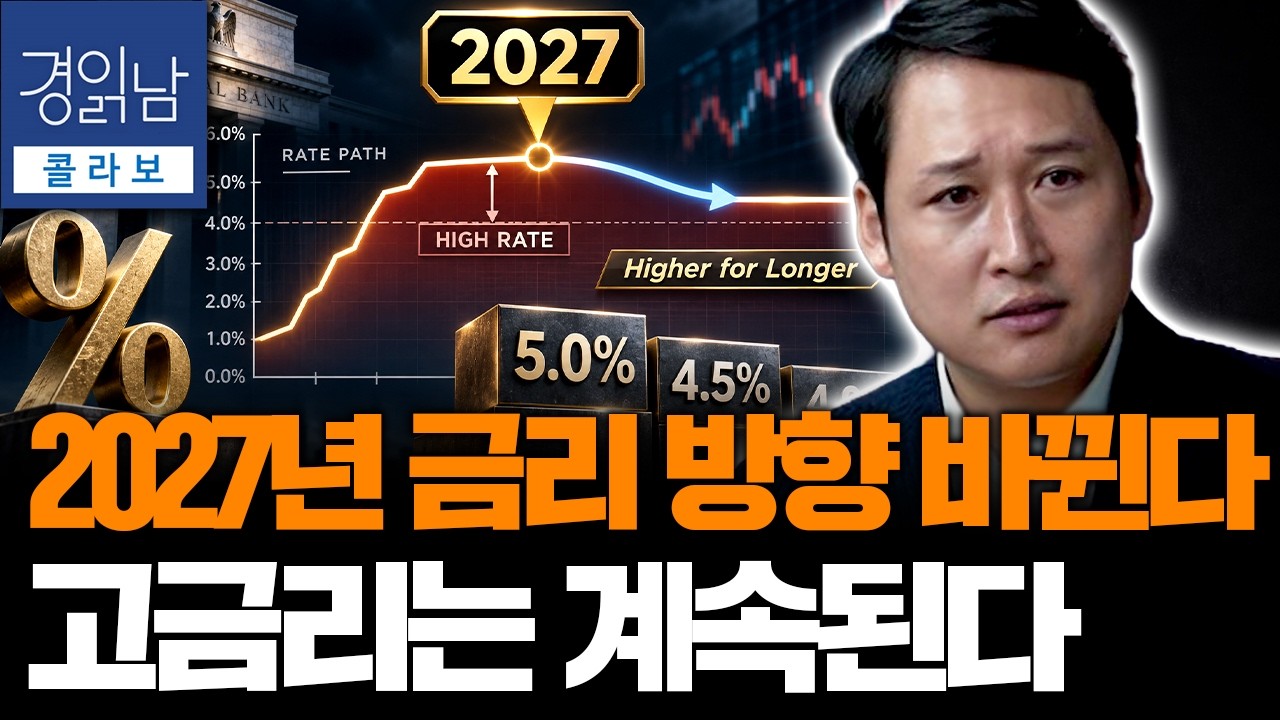
● Tensions, Kim, K-Defense
Is the Korean Peninsula Preparing for War? Key Analysis of U.S. Forces Korea, Kim Jong Un Succession Risk, and K-Defense Investment
The source video does not provide sufficient evidence to conclude that war on the Korean Peninsula is imminent.
However, the expansion of U.S. military maintenance capabilities in South Korea, the transition of wartime operational control, and leadership risks in North Korea are interconnected security variables.
The more significant development is South Korea’s potential emergence as a maintenance and sustainment hub for advanced U.S. weapons systems, rather than speculation about an imminent conflict.
This could affect the military role of the U.S.-South Korea alliance, K-defense exports, advanced manufacturing, defense AI, and the restructuring of global supply chains.
The following analysis distinguishes verifiable facts from unsupported interpretations regarding geopolitical risk on the Korean Peninsula.
1. The Video’s Timing Limitation
The source states that the video was recorded on October 27, but the year cannot be verified from the information provided.
Its claims should therefore not be treated as real-time indicators of current military conditions.
Security conditions on the Korean Peninsula can change rapidly due to North Korean missile launches, combined military exercises, U.S. rotational deployments, elections, and diplomatic summits.
Terms such as “suspicious activity” and “war preparations” may be intended to attract attention and do not constitute official military warnings.
A credible assessment would require confirmation of North Korean troop movements, ammunition and fuel accumulation, command-and-control changes, and official statements from U.S. Forces Korea and South Korea’s Joint Chiefs of Staff.
2. Assessing the Kim Jong Un Mortality Scenario
The video raises the possibility of severe illness or death based on Kim Jong Un’s age and estimated weight.
His exact birth year and medical condition cannot be confirmed because North Korea does not disclose reliable health information.
He is widely believed to have been born in 1984, although some sources cite 1982 or 1983.
His weight is often estimated at approximately 140 kg, but no official medical records are publicly available.
Obesity, smoking, family medical history, and absences from public events may indicate elevated health risks.
However, predicting an imminent death based on physical appearance or public footage is medically unreliable.
The existence of health risks is materially different from a forecast of imminent death.
3. Would North Korea Collapse Immediately After Kim Jong Un’s Death?
Even if Kim Jong Un were suddenly incapacitated, the North Korean system would not necessarily collapse immediately.
The regime is supported by multiple institutions, including the Workers’ Party of Korea, the State Affairs Commission, the military, and state security agencies.
Without a clearly designated successor, Kim Yo Jong, senior party officials, and military leaders could establish a collective leadership structure.
If one of Kim Jong Un’s children were designated as successor while still underage, relatives and senior officials could assume a regency-like role.
Conflicts among political and military institutions could also trigger purges, coup attempts, or disruption of the military command structure.
The primary concern for South Korea and the United States would be uncertainty over command and control of nuclear weapons and ballistic missiles rather than a conventional leadership transition.
Control of nuclear facilities, mobile missile launchers, and chemical or biological weapons stockpiles would become a central security issue.
4. Structural Drivers of North Korean Escalation
The video argues that reduced tensions could weaken the domestic rationale for Kim Jong Un’s rule.
This interpretation has some basis, but domestic regime survival alone does not explain all North Korean actions.
Emphasizing external threats helps justify internal controls and military-first policies.
Threatening rhetoric toward South Korea and the United States may also strengthen domestic cohesion and redirect public dissatisfaction caused by economic weakness.
At the same time, nuclear expansion supports North Korea’s efforts to secure sanctions relief, regime guarantees, and greater diplomatic leverage.
North Korea’s military cooperation with Russia, economic ties with China, and the U.S. Indo-Pacific strategy must also be considered.
Statements by Kim Yo Jong and other senior officials may represent political signaling and deterrence rather than immediate operational orders.
5. Implications of Expanded U.S. Military Maintenance in South Korea
The most significant issue is the potential expansion of maintenance and sustainment capabilities for advanced U.S. military equipment in South Korea.
Maintenance, repair, and overhaul activities are commonly referred to as MRO.
MRO supports the operational readiness of aircraft, naval vessels, armored vehicles, missile-defense systems, radar, and communications equipment.
Expanded MRO capacity in South Korea would allow equipment to be serviced locally or regionally rather than transported to the continental United States.
This is more consistent with a long-term logistics strategy designed to improve operational endurance and cost efficiency than direct evidence of war preparations.
The U.S. military is seeking to reduce the vulnerability created by concentrating logistics functions at a limited number of large bases amid expanding Chinese and North Korean missile capabilities.
South Korea has the advanced manufacturing base, shipyards, aerospace technology, semiconductors, batteries, and precision-machinery capabilities required to support a regional MRO hub.
6. South Korea’s Potential Role as an Indo-Pacific Logistics Hub
A frequently overlooked issue is that expanded U.S. military maintenance activity could develop into a broader industrial ecosystem rather than remain limited to base operations.
South Korean companies could secure recurring revenue and long-term contracts through parts production, system upgrades, software updates, and predictive maintenance services.
Naval MRO could provide domestic shipbuilders with an important entry point into the U.S. Navy maintenance market.
Potential opportunities in aerospace include engine maintenance, electronic-warfare systems, sensors, unmanned platforms, and military communications.
However, performance gaps are likely to widen between companies that meet U.S. security, export-control, procurement, and defense-quality requirements and those that do not.
Investors should assess whether a company has secured actual access to U.S. defense procurement and supply chains rather than relying on broad expectations of higher defense-sector valuations.
7. Wartime Operational Control and the Role of U.S. Forces Korea
The transition of wartime operational control is a long-term policy process, not a one-time measure indicating that conflict is imminent.
The process evaluates South Korea’s ability to lead combined defense operations and respond to North Korean nuclear and missile threats.
A transition would not automatically terminate the alliance or require the withdrawal of U.S. forces.
Changes to the command structure and decisions on troop presence are separate policy issues.
The commander of U.S. Forces Korea cannot determine the transition unilaterally.
The timing and conditions require coordination among the South Korean and U.S. governments, defense authorities, and combined command structure.
Comments suggesting that cooperation depends on changing a commander’s position should therefore be treated as an individual assessment rather than an official conclusion.
8. Indicators of Actual War Preparations
A meaningful assessment of rising conflict risk requires multiple indicators to be evaluated simultaneously.
-
Large-scale and sustained deployment of North Korean frontline units.
-
Abnormal concentration of ammunition, fuel, food, and medical supplies.
-
Transition of missile units and air bases from routine activity to launch preparation.
-
Movement of senior leaders and commanders into hardened underground facilities.
-
Evacuation measures for diplomatic families or civilians by South Korea and the United States.
-
Sustained U.S. leave restrictions, force reinforcement, and deployments of transport or aerial-refueling aircraft beyond normal exercises.
-
Simultaneous increases in cyberattacks, satellite-navigation interference, communications intrusions, and conventional military activity.
One or two isolated developments are insufficient to distinguish routine exercises from operational preparations for conflict.
9. Defense AI and Fourth Industrial Revolution Technologies
Expanded military MRO activity would involve more than additional facilities and personnel.
Future competitiveness in military logistics is likely to depend on artificial intelligence, sensor data, digital twins, and robotic maintenance systems.
AI-based predictive maintenance can identify anomalies in aircraft engines and armored-vehicle components before failures occur.
Digital twins can reproduce weapons systems in virtual environments to simulate maintenance procedures and component life cycles.
Autonomous logistics robots and unmanned transport systems could deliver ammunition and supplies in high-risk areas.
AI platforms combining satellite, drone, and radar data could improve detection of North Korean mobile missile launchers and troop movements.
However, military AI also creates risks related to misidentification, data manipulation, cyberattacks, and accountability for automated decisions.
Human control and interoperable data-security standards among allied countries will remain essential.
10. Implications for the South Korean Economy and K-Defense
Higher tensions on the Korean Peninsula could weaken the won, accelerate foreign capital outflows, and increase equity-market volatility.
As a major importer of energy and raw materials, South Korea would face higher production costs and inflation if exchange rates and global oil prices rose simultaneously.
Conversely, increased defense budgets and allied weapons-replenishment programs could generate medium- to long-term orders for K-defense companies.
If the United States and Europe cannot meet weapons and ammunition demand through domestic production, South Korean suppliers could gain market share based on shorter delivery schedules.
Rapid delivery and localization strategies demonstrated in Poland and other European markets remain important competitive advantages.
However, higher geopolitical risk does not improve the earnings outlook for every defense company.
Investors should evaluate contract effectiveness, financing arrangements, export approvals, production capacity, cost inflation, and currency terms.
11. Investment Factors in the Global Economic Outlook
Security risk on the Korean Peninsula is not solely a regional issue.
South Korea is a major producer of semiconductors, batteries, automobiles, and ships, making military tensions relevant to global manufacturing supply chains.
Investors should prioritize changes in order backlogs and operating cash flow over short-term defense-sector share-price movements.
U.S. military MRO projects may require substantial initial investment and certification expenses, meaning revenue growth may not immediately translate into higher earnings.
Companies entering U.S. defense procurement networks may secure stable long-term revenue but will also assume technology-transfer, cybersecurity, and compliance obligations.
Semiconductors, AI servers, and military communications equipment are dual-use industries exposed to changes in export controls.
Defense investment analysis should focus on government budgets, signed export contracts, production capacity, and supply-chain resilience rather than predictions of war.
12. Facts and Interpretations That Must Be Distinguished
| Key Issue | Assessment | Required Confirmation |
|---|---|---|
| Kim Jong Un faces significant health risks | Possible, but reliable medical information is unavailable | Public appearances, travel activity, succession arrangements, and intelligence assessments |
| Kim Jong Un may die soon | Insufficient evidence | Physical appearance and estimated weight cannot establish a mortality timeline |
| U.S. Forces Korea is expanding maintenance capacity | Consistent with a long-term logistics strategy | Official contracts, facility investment, and participation by South Korean companies |
| War preparations are underway on the Korean Peninsula | Cannot be concluded from the source video | Troop, ammunition, and fuel movements, along with official government warnings |
| Wartime operational control transition will cause a U.S. troop withdrawal | These are separate policy issues | Official bilateral agreements and changes to the combined command structure |
13. Key Issues Often Overlooked
First, expanded U.S. military MRO activity is more likely to indicate a restructuring of Indo-Pacific logistics networks than preparation for an imminent war.
Second, if South Korea becomes an advanced weapons maintenance hub, K-defense could expand from finished-system exports into recurring maintenance, upgrade, and software services.
Third, the principal risk following Kim Jong Un’s incapacitation would be uncertainty over nuclear command and control rather than immediate regime collapse.
Fourth, the transition of wartime operational control and the withdrawal of U.S. forces are separate issues and cannot be determined by the position of an individual commander.
Fifth, defense investment decisions should prioritize signed contracts, production capacity, profitability, and access to U.S. procurement networks over speculative conflict narratives.
< Summary >
The source video does not provide sufficient evidence that war on the Korean Peninsula is imminent.
Kim Jong Un’s health is a relevant risk factor, but his mortality timeline cannot be inferred from estimated weight or physical appearance.
In a succession crisis, uncertainty surrounding nuclear command and control would be the primary security concern.
Expanded U.S. military MRO capacity is more consistent with Indo-Pacific logistics restructuring and operational resilience than immediate war preparations.
South Korea could become a major U.S. defense MRO and supply-chain hub based on its strengths in shipbuilding, aerospace, semiconductors, and AI.
K-defense investors should assess signed orders, margins, production capacity, export controls, and long-term maintenance contracts rather than geopolitical headlines alone.
[Related Articles…]
*Source: [ 달란트투자 ]
– “남북전쟁 준비중?” 한반도 수상한 움직임 포착. 주한미군 분위기 심상치 않다|김민석 28차 5부