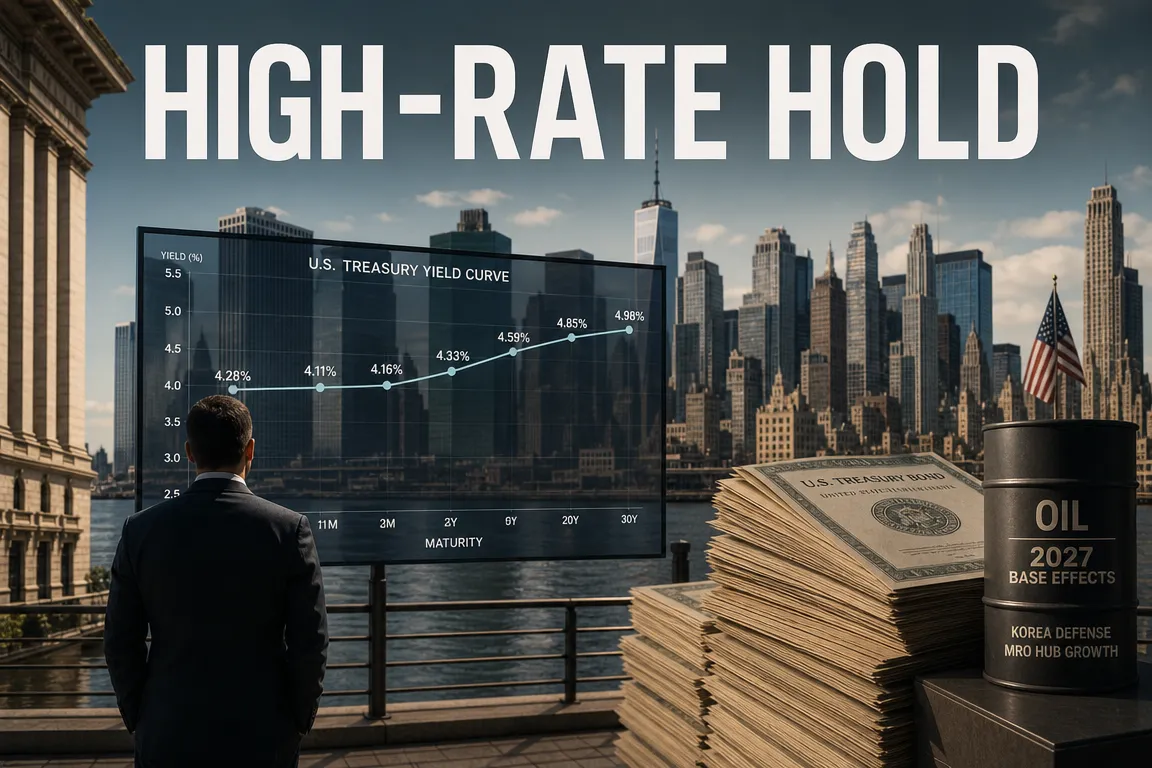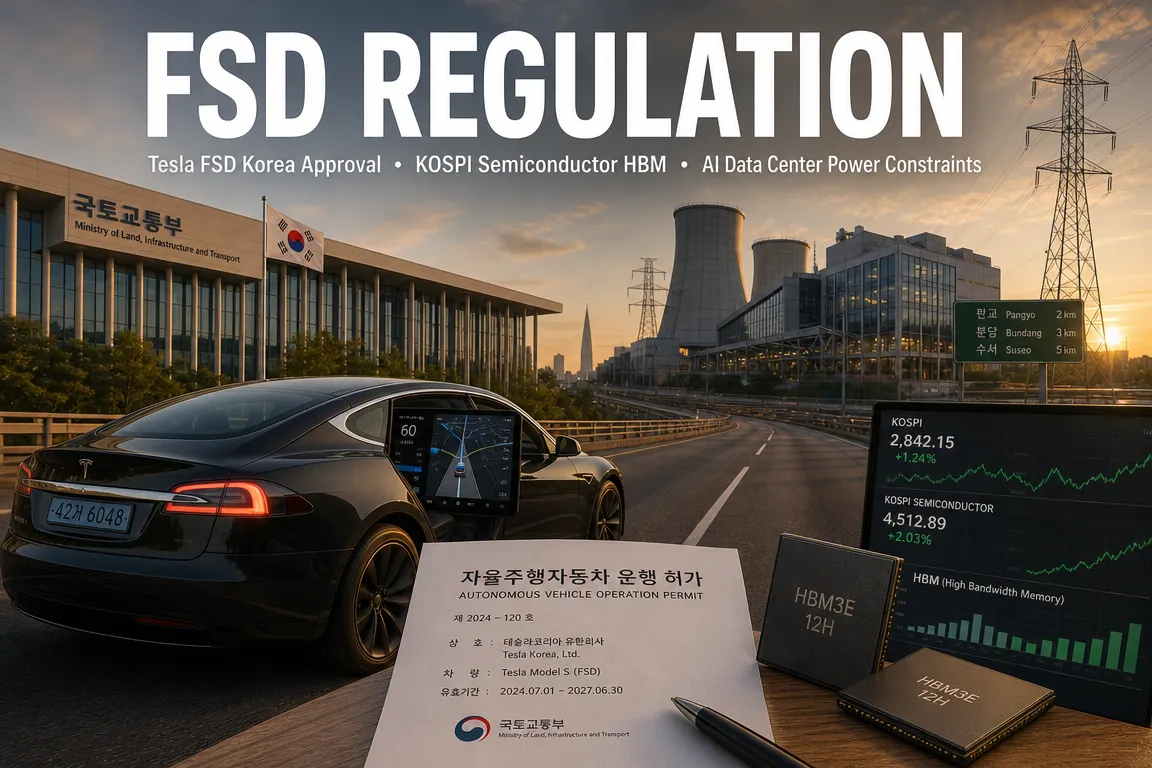
● Texas Power Bottleneck Triggers Semiconductor Selloff
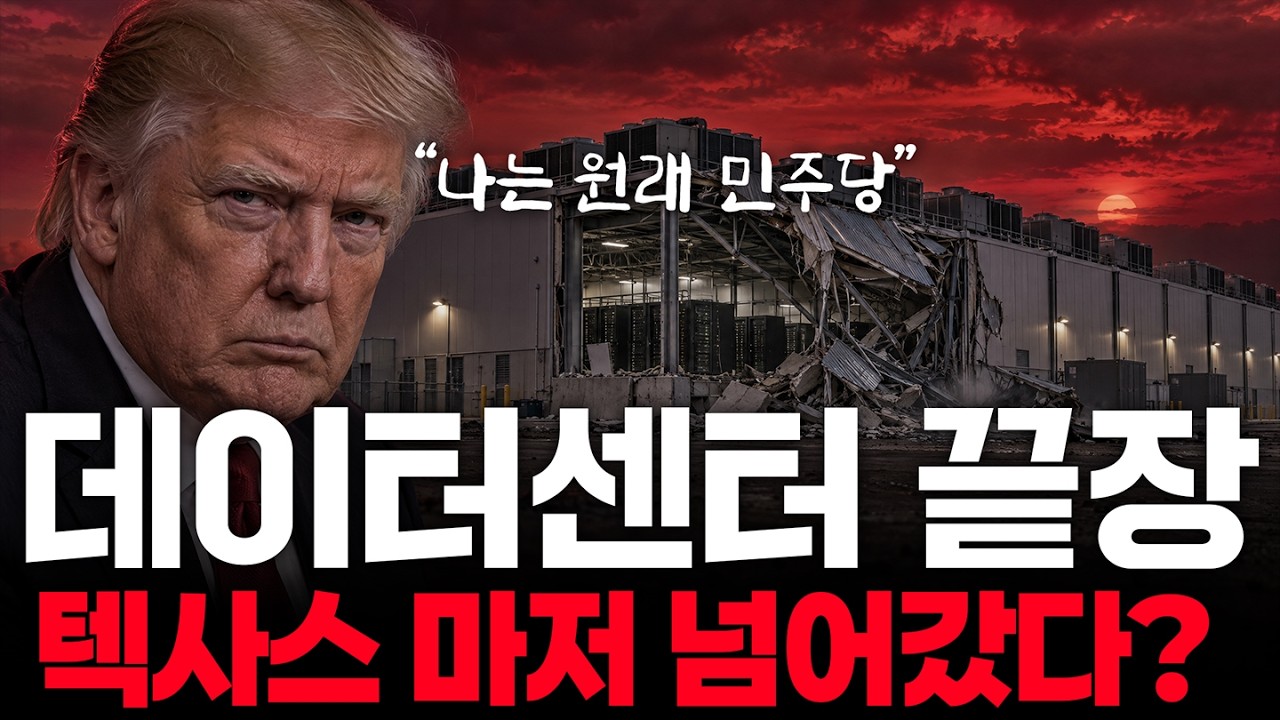
Will Semiconductors Fall Further? The core point is not a ‘Texas data center shutdown’ but a power infrastructure premium
The real core point of this issue is not the Democratic victory itself.
What surprised the market was not the result of the U.S. midterm election, but the possibility of a Texas governor change and the AI data center permitting risk.
In particular, Texas is a key region for expanding U.S. AI data centers, so if grid connections and new permits are blocked, demand for semiconductor equipment, memory, power infrastructure, and cloud computing could all be shaken at once.
However, if you dissect the original text, there is also a clear part where the market overreacted.
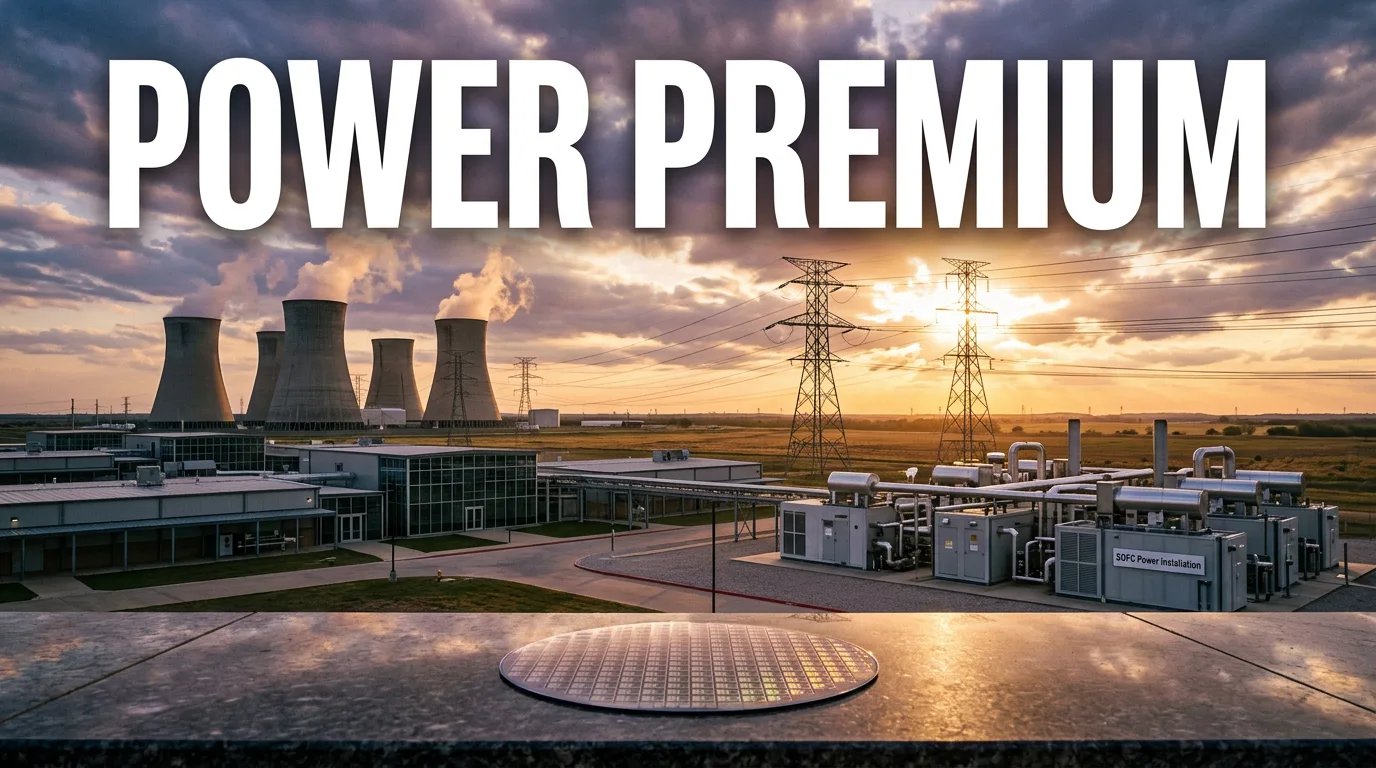
Rather, data centers that have already secured power connections and power solution companies are likely to receive a larger premium.
1. The surface reason for the sharp market drop: a Democratic landslide and the Texas variable
According to the original text, the U.S. midterm election appears to have ended in a Democratic landslide, the so-called ‘blue wave.’
The Senate was interpreted as shifting to Democratic control with 52 seats, and the House also moving toward Democratic control with 224 seats.
The problem is Texas, not Congress.
That is because the possibility of the first Democratic governor in Texas since 1995 came into focus.
In Korean terms, it is described as a political shock comparable to a conservative candidate winning in Gwangju.
- The possibility of a Democratic Senate victory had already been partially priced in by the market.
- The Democratic landslide in the House was also reflected with a high probability in prediction markets.
- The real surprise was the possibility of a Texas governor change.
When this news broke, Nasdaq 100 futures fell about 2.2%, and some Japanese semiconductor equipment stocks plunged nearly 10%.
The market assumed that if Texas AI data center projects were halted, orders for semiconductor equipment and memory demand could decline.
2. Why Texas matters: the heart of U.S. AI data centers
Texas is one of the most important regions in U.S. data center expansion plans.
According to the original text, the planned data center capacity in Texas is about 63GW.
A significant portion of that is still in the early stage before construction has begun.
If a moratorium is imposed that halts new permits, projects totaling about 40GW in the early stage could be affected.
Here, a moratorium is not a permanent ban.
It is closer to a temporary pause on new permits or approvals for new projects.
But the stock market reacts sensitively even to a single word.
In particular, because AI data centers are a massive investment cycle connecting Nvidia GPUs, HBM memory, semiconductor equipment, servers, and power facilities, permit-delay news alone can shock the broader U.S. market.
3. The core point the market missed: Texas grid connections were already being blocked
Here is the most important point.
Texas grid connections for data centers were not blocked for the first time because a Democratic governor might be elected.
According to the original text, Governor Abbott, the existing Republican governor, had already issued an executive order on August 3 to suspend new grid connections and order an audit.
The reason is simple.
The scale of grid connection applications was too large.
The requested power demand submitted in Texas is mentioned as about 474GW.
That is more than five times the historical demand.
In other words, Texas power infrastructure was already overloaded.
Therefore, the sudden selloff in semiconductor and AI-related stocks solely because a Democratic governor promised a data center moratorium may have been somewhat exaggerated.
4. Why anti-data-center sentiment is growing
AI data centers are no longer just an investor story.
They are becoming an important political issue for local residents and voters as well.
According to the original text, 62% said AI and data center issues were important when choosing a lawmaker.
Among Democratic supporters, anti-data-center sentiment is explained as relatively strong.
The main arguments against them are as follows.
- Concern that AI will take away jobs.
- The claim that data centers raise electricity bills.
- Worries about noise and environmental damage.
- The burden that large facilities place on local communities.
An interesting point is that some analysis says certain online sentiment was also linked to activities by Chinese state-backed groups.
Of course, not all opposition sentiment can be seen as foreign propaganda.
However, considering that the AI supremacy race is a competition between the U.S. and China in strategic industries, anti-data-center sentiment may carry significance beyond simple local complaints.
5. Do data centers really cause electricity bills and water usage to explode?
The original text also points out that some criticism of data centers may be exaggerated.
In terms of water usage, it also mentions reports that corn or almond farms use 10 to 20 times more water than data centers.
Electricity bills are also controversial.
It is true that data centers increase power demand in the short term.
But in the long term, they can expand power infrastructure investment and encourage investment in transmission networks, generation facilities, and storage systems.
In the end, there are studies suggesting that if the local grid expands, it can help stabilize electricity bills in the long run.
The core point is that data centers are not inherently bad; it depends on who bears the cost and what benefits are returned to the local community.
6. The new Democratic governor’s pledge is closer to ‘conditional approval’ than a ‘ban’
The most important interpretive point in the original text is the pledge of the new Democratic governor candidate.
Outwardly, a data center moratorium is emphasized, but if you look at the actual pledge, it is closer to conditional approval than a total ban.
- They must provide jobs for Americans.
- Texas residents must be included in negotiations.
- The cost structure must be disclosed transparently.
- Data center operators must bear their own costs, including power expenses.
- They must provide tangible benefits to local residents.
This is similar to the structure in South Korea where public contributions are required in redevelopment and reconstruction projects.
Just as large apartment complexes are required to shoulder burdens such as school sites, roads, parks, and donated land contributions, data centers are also being asked to share costs with the local community.
Therefore, the interpretation that “AI data centers will be completely halted in Texas” is excessive.
The more accurate interpretation is that “only data centers that benefit the local community are more likely to be allowed.”
7. Past examples: Singapore and Ireland eventually resumed on a conditional basis
This is not the first data center moratorium.
Singapore suspended new data center permits in 2019.
Dublin, Ireland, also restricted new permits in 2021.
The result was not a permanent ban.
Singapore resumed data center permits in 2022 with power efficiency conditions attached.
Ireland also moved toward allowing them if they secured power through their own generation or batteries.
An important concept here is BTM, or Behind-The-Meter generation.
It is a way for data centers to solve power needs on their own using generators, batteries, fuel cells, and similar resources without burdening the existing grid.
8. Who benefits from BTM generation: why SOFC is gaining attention over gas turbines
The most common option in BTM generation is a gas turbine.
The second is a reciprocating engine system.
But both methods have major carbon emissions and noise problems.
So local opposition can continue to arise.
At this point, the original text highlights the SOFC fuel cell solution.
SOFC stands for solid oxide fuel cell, a method with low noise and relatively lower carbon emissions.
Bloom Energy is mentioned in the original text as a representative company in this field.
In particular, it is emphasized that while other power solutions may take about 3 years to build, SOFC can be deployed in about 6 months.
If the era comes when Democrats demand stronger environmental and community cost standards, SOFC could emerge as the strongest alternative among data center power solutions.
9. The decline in semiconductors may be excessive: valuations have already come down a lot
The original text acknowledges the possibility of further downside in the semiconductor sector, but sees current share prices as having already become quite cheap.
The S&P semiconductor sector’s 12-month forward price-to-earnings ratio is cited at 14.7 times.
That is lower than the S&P 500 average of 18.9 times.
Compared with 33 times a year ago, it has fallen to less than half.
In other words, the semiconductor sector is already under valuation pressure close to the levels seen in the 2022 downturn.
Of course, in the short term, concerns over delays in AI data center permits, weaker memory orders, and slower semiconductor equipment orders can shake stock prices.
But from a valuation perspective, it can at least be interpreted as having entered the ankle or knee area.
10. Post-midterm U.S. market trends: historically, the easing of uncertainty mattered more
The original text also emphasizes stock market trends after past U.S. midterm elections.
It mentions a statistic that the U.S. stock market rose in all 19 out of 19 cases during the six months after a midterm election.
The S&P 500 rose by an average of about 15%.
Whether the party was Democratic or Republican, the outcome was not significantly different.
In years with midterm elections, the market often wobbles in August, September, and October.
But after the election, in November and December, a rebound tended to occur on average.
The core point is uncertainty resolution, not the election result itself.
In 2021, Nasdaq futures fell about 2% over blue-wave fears, but five weeks later Nasdaq rose about 10%.
At that time too, there were major concerns that Democrats would strongly regulate Big Tech.
But in reality, Big Tech stocks surged again.
11. The U.S. prioritizes national interest over who is in power: why AI industry is hard to block
The original text explains the direction of U.S. policy by citing the Biden administration.
When President Biden took office, the market expected a more conciliatory policy toward China.
However, in reality, tariffs from the Trump era were maintained, and in October 2022 export controls on advanced semiconductors to China were strengthened.
As a result, Chinese semiconductor firms such as CXMT and YMTC were constrained in advanced technology development, and exports of AI chips to Huawei were blocked.
At the same time, the U.S. prepared a $52.7 billion semiconductor support package through the CHIPS Act.
The message from this example is clear.
The U.S. prioritizes national interest over party politics.
AI is not just an industry; it is a national strategic industry competing with China.
Therefore, even if a Democratic Congress comes in, the likelihood of fully blocking AI data centers and the semiconductor industry is low.
Rather, it is also worth noting that many Big Tech executives lean Democratic, and California-based tech companies have substantial political influence within the Democratic Party.
It is more likely to move toward conditional support, community contribution, and stronger burden-sharing of power costs than toward harsh regulation.
12. Trump’s veto factor: it could become a brake that prevents extreme policies
The original text explains that Trump congratulated Democrats on their midterm victory but also responded in a way suggesting he would veto every bill if they did not cooperate.
Under this structure, even if Democrats control Congress, extreme policies are not easy to pass.
A divided government structure can create short-term political friction.
But from the market’s perspective, it can also act as a brake that limits radical policies.
In particular, in strategic national sectors such as AI, the semiconductor supply chain, and power infrastructure, both parties are likely to share the broad goal of strengthening U.S. competitiveness rather than total opposition.
13. The real core point not well explained in other news: limiting new supply raises the value of existing data centers
The most important but most overlooked part of this issue is who loses and who benefits.
If new data center permits are delayed in Texas, not every company is hurt equally.
Data centers that have already secured grid connections become more valuable.
When new supply is restricted, the value of existing supply rises.
Computing power that has already secured electricity can receive a higher premium.
As cloud, AI training, and inference demand continue to grow, if new data center supply is delayed, existing data center rental fees and usage charges could rise.
In other words, while the market is simplistically interpreting this as “data center shutdown = slowing AI demand = semiconductor collapse,” the actual structure is more complex.
- Projects that have not yet received permits face greater risk.
- Data centers that have already secured grid connections can receive a premium.
- Power solution companies can gain new demand.
- SOFC, batteries, self-generation, and transmission network investment companies may benefit.
- Semiconductor equipment stocks may face high short-term volatility, but valuation appeal has increased.
14. Checkpoints to watch from an investment perspective
When looking at this correction, you should not just focus on the Nasdaq decline rate; you need to break it down by industry.
- Semiconductors: In the short term, concerns over AI data center delays are a burden, but valuations have already fallen a lot.
- Memory: HBM and server memory demand are still in a structurally growing trend.
- Semiconductor equipment: It may react most sensitively to news of delayed new fabs and data center investment.
- Data center REITs: Companies that already have power secured and good locations may actually benefit.
- Power infrastructure: Transmission networks, transformers, generators, fuel cells, and battery companies could see structurally greater demand.
- AI software: Separate from physical data center regulation, long-term demand is likely to remain intact.
In the end, the core point is not whether AI demand has weakened.
The core point is who has secured the power infrastructure needed to handle AI demand.
15. Conclusion: semiconductors may fall further, but this could be a zone where fear turns into opportunity
This decline is, in the short term, a sufficiently uncomfortable correction.
That is because Texas political risk, the data center moratorium, grid bottlenecks, and Democratic regulatory concerns were all priced in at once.
But based on the original text, the market may have overreacted to the Texas variable more than to the already-known blue wave.
Above all, the suspension of Texas grid connections had already been underway since the previous governor’s term.
Also, the data center moratorium is likely to lead not to a permanent ban but to a conditional resumption.
The Singapore and Ireland cases show this as well.
Going forward, the market is likely to stop viewing AI data centers as a simple growth-stock theme.
Now, the focus is on power, permitting, local community costs, and self-generation capability as well.
The next upswing in the semiconductor cycle is likely to be led not only by GPUs and memory, but also by companies that secure power infrastructure together.
< Summary >
The core point of this Nasdaq and semiconductor correction is the Texas AI data center permitting risk rather than the Democratic landslide.
However, because Texas grid connections had already been suspended since the previous governor’s term, the market reaction may be excessive.
The data center moratorium is likely to move toward conditional approval rather than a permanent ban.
Singapore and Ireland also halted new permits in the past, then resumed them with power conditions attached.
If new supply is restricted, the value of data centers and computing power that have already secured electricity may actually rise.
The semiconductor sector may face high short-term volatility, but valuations have already fallen significantly.
The most important keywords for AI investment going forward are not only semiconductors, but also power infrastructure, self-generation, SOFC, and data center location.
[Related Articles…]
- Semiconductor cycle and AI investment strategy analysis
- AI data centers and power infrastructure outlook
*Source: [ 월텍남 – 월스트리트 테크남 ]
– 반도체 더 하락?… 오히려 더 오를지도