*Source: KBS시사
머니 리셋, 스테이블 코인 [풀영상] | 창 521회 (KBS 25.10.21.)
● Stablecoin Battlefield Dollar Dominance, AI Revolution, Risks Ahead
Money Reset: The Current State of the Stablecoin War — International Remittance, Dollar Hegemony, AI Agents, and Korea’s Choices
This article includes
- Real cases and numbers showing the impact of stablecoins on international remittance and financial inclusion,
- Hidden mechanisms by which dollar-based stablecoins impact U.S. financial and bond markets,
- Analysis on why the AI agent era necessitates stablecoins,
- Regulatory responses from various countries (U.S., EU, Japan, China, Hong Kong) and Korea’s policy options,
- Key risks and strategic responses not commonly covered in other news (monopolization, erosion of monetary sovereignty, platform seigniorage)
Through reading, you’ll know immediately what companies, policymakers, and remittance users should pay attention to right now.
Key Summary (Lead)
Stablecoins are ‘programmable money’ issued on the blockchain but linked to real assets such as dollars or Treasury securities.
They are rapidly spreading in cases like Philippine remittances and as a dollar alternative in Argentina, serving as borderless payment and remittance means.
Concurrently, the U.S., big tech, and issuers (like Tether and Circle) have the potential to expand treasury demand, payment ecosystems, and data power through stablecoins.
When AI agents become the primary subjects of payments, the demand for stablecoins as ‘money understood by AI’ is expected to surge.
Facts and Data — Field Cases and Numbers
Philippines, Remittances, and Financial Inclusion
Overseas remittances to the Philippines amount to approximately $40 billion in 2023, and with a low bank account rate (about 30% in 2017), mobile-based payments and stablecoins are spreading rapidly in practical use.
Stablecoins are transmitted instantly over blockchain networks, significantly reducing remittance fees and turning remittance speed into real-time.
South America (Argentina) Case
In 2023, Argentina recorded an annual inflation rate of about 211%.
The local youth convert their salaries immediately into dollar-based stablecoins like USDT to preserve asset value and for payments.
As a result, in some countries, the use of stablecoins in micropayments has reached up to 30%.
Market Share and Issuers
USDT (Tether) and USDC (Circle) hold about 99% of the market share.
Issuers like Tether maintain liquidity by stacking reserve assets in dollars or U.S. Treasury securities with maturities under 3 months.
Connection with U.S. Finance and Bonds (Hidden Mechanism)
The U.S. federal government’s debt is approximately $37 trillion, with annual interest costs reaching about $880 billion.
When stablecoins are extensively issued, issuers must purchase U.S. bonds as reserve assets, indirectly increasing the demand for U.S. Treasuries.
This results in an expanded demand for the U.S. bond market and a complementary effect on dollar hegemony.
Payment Scale and Card Company Impact
Recent reports indicate instances where stablecoin-based payments surpass the transaction volume of Visa and Mastercard as of last year.
Mastercard and Visa are also exploring the possibility of supporting stablecoins and are engaging in cooperation.
Policy and Regulatory Trends (By Country)
United States
Congress passed a stablecoin regulatory bill (referred to as ‘Genius Act’ in the article), clarifying regulations for issuers and reserves.
The Secretary of the Treasury forecasts that the issuance scale of dollar stablecoins will increase more than tenfold within the next 3 years.
European Union (EU)
Implemented crypto-asset regulations similar to MiCA, requiring 100% reserves and transparent disclosure for euro-based stablecoins.
Japan
Restricted the issuance of yen stablecoins to existing banks and other institutions, completing a stability-focused regulation.
China and Hong Kong
China maintains strict regulations on cryptocurrency (ban on mining and trading), while Hong Kong will implement stablecoin regulation in August 2024, permitting access to the institutional framework as the first in Asia.
Hong Kong is preparing to authorize the issuance of HK dollar-based stablecoins, with traditional financial institutions like HSBC and Standard Chartered on standby for participation.
South Korea
Six bills related to won-based stablecoins have been submitted to the National Assembly.
The Bank of Korea has expressed cautious opinion on the issuance of won stablecoins.
Private sectors, such as Naver Financial and Dunamu (operator of Upbit), are hastening infrastructure preparation through equity swaps and collaboration.
Strategies and Business Models of Platforms and Big Tech
Platform Coin’s Discount and Seigniorage Strategy
If big tech companies like Amazon, Google, and Meta issue their own stablecoins, they are likely to induce consumer inflow by offering discounts on platform payments (e.g., 10% savings when paying with Amazon Coin).
This eliminates card fees and exchange costs, creating practical ‘seigniorage’ revenue for the platform.
Business Expandability
Platform coins’ strong potential for ecosystem encroachment through integration with advertising, distribution, and data means that if a specific platform currency becomes the standard for payments, the use of legal tender may be reduced.
AI Agents and Stablecoin Connection — Changes in Future Payment Subjects
Reasons for AI Becoming the Subject of Payments
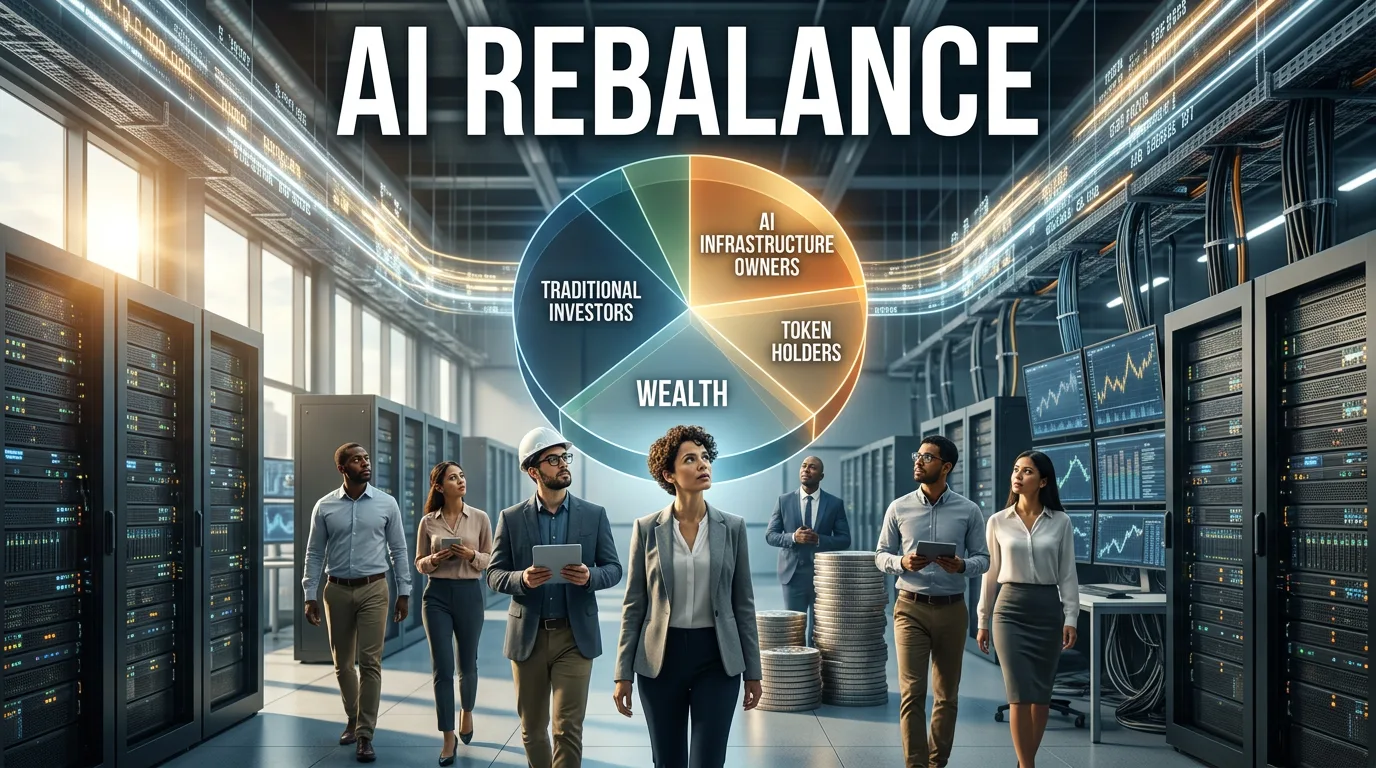
A future is foreseen where AI, like Google’s AI agent platform, performs not only purchasing decisions but also payments.
Traditional legal tender is not designed to be directly used by machines (programs) as ‘money,’ whereas stablecoins, as programmable assets (Tokens), can be directly owned, transferred, and paid by AI agents.
Effects and Impact
If AI agents participate in the market 24/7 and perform transactions per second and multiple micropayments, traditional payment infrastructure becomes a bottleneck.
Due to quick payments, low fees, and smart contract compatibility, stablecoins are likely to naturally become payment means in the AI economy.
Risks (Financial, Political, Technical) — Short and Long-term Perspectives
Erosion of Monetary Sovereignty
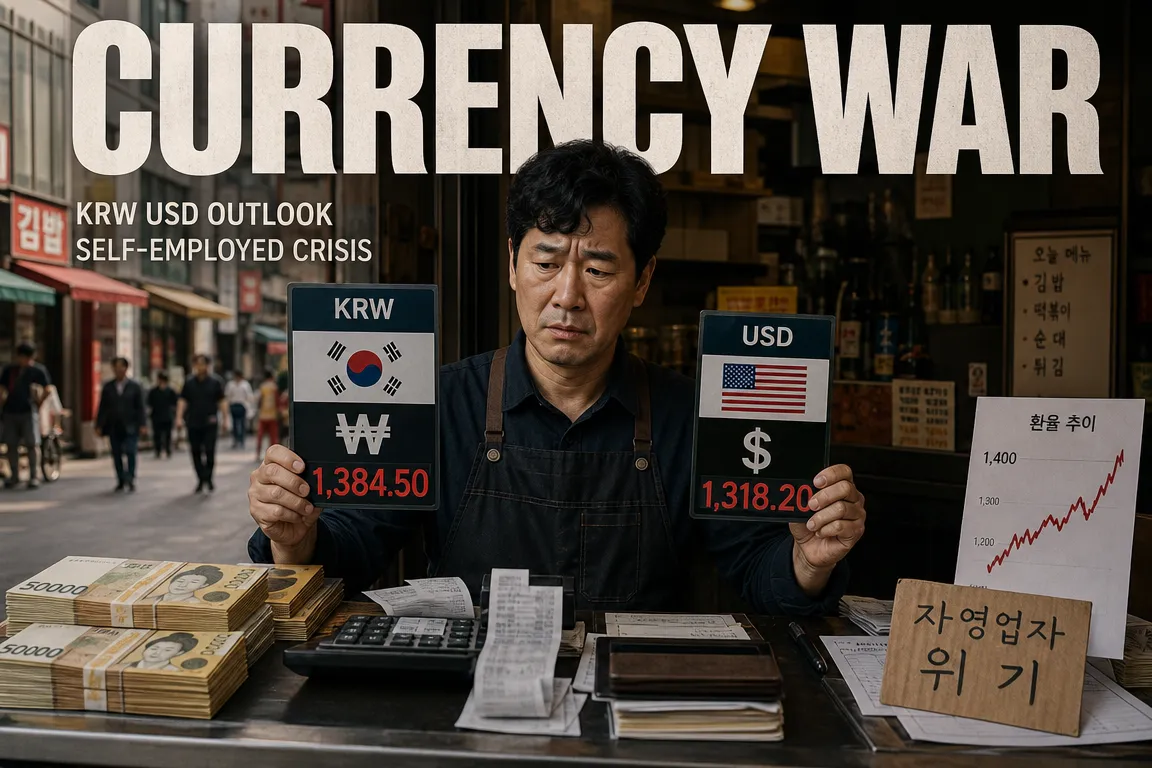
If dollar-based stablecoins spread as a means of payment and storage in various countries, the demand for local currencies weakens, reducing the effectiveness of monetary policy and increasing capital outflow pressure.
Financial Stability Issues
If there is a large-scale stablecoin redemption, issuers may face liquidity crises if they fail to promptly liquidate reserve assets.
Geopolitical and Hegemonic Competition
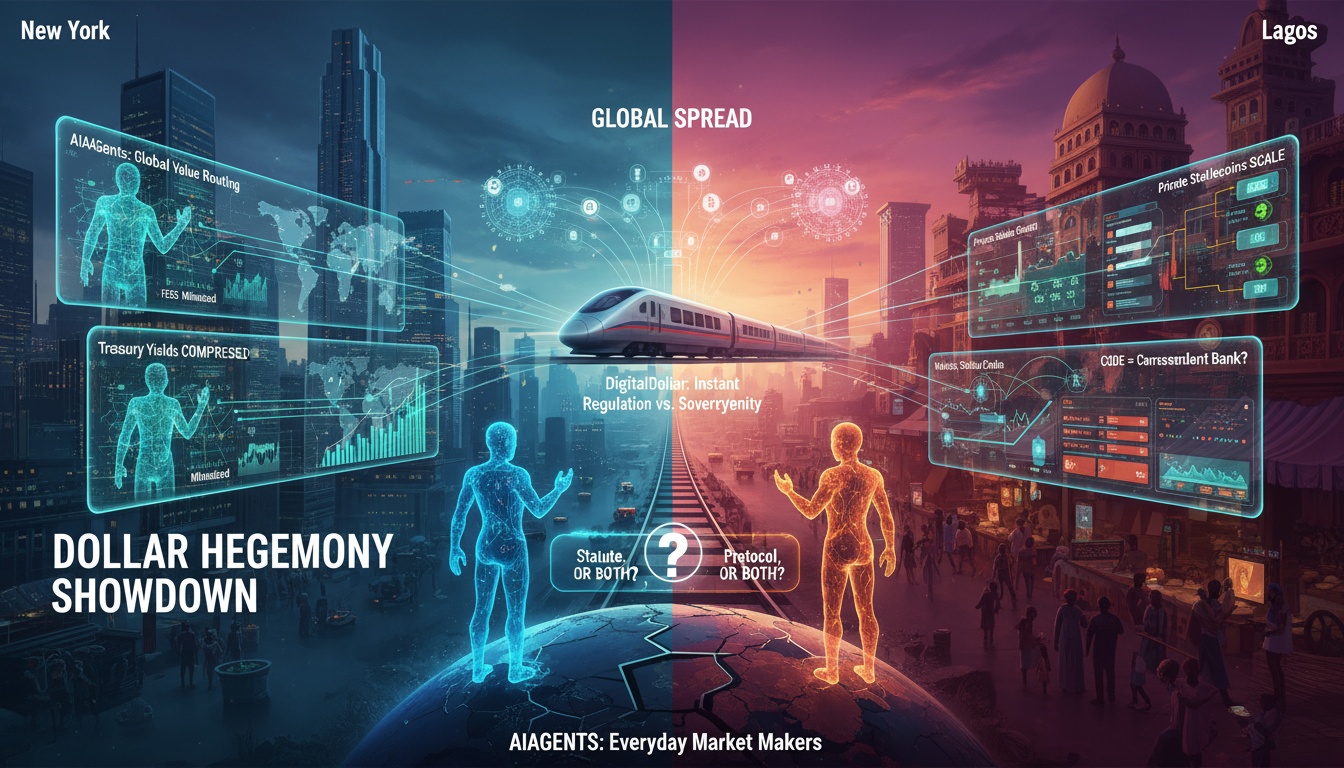
Dollar stablecoins are effectively a digital transition of dollar payments, intensifying digital currency competition among the U.S., China, and the EU.
China’s yuan-based digital payment strategy and the expansion of the U.S. digital dollar will be elements determining future financial hegemony.
Platform Monopolization and Data Dominance
If big tech payment currencies become standard, the platform’s domination of consumer payment data raises concerns about competition and privacy.
Security, Fraud, and AML Risks
User protection systems are essential due to possible wallet/key management failures, fraud (phishing), and criminal fund usage.
Strategic Recommendations for Korea (Practical Execution Plans)
1) Build Preemptive Infrastructure
Prepare for the issuance of won-based stablecoins through public-private cooperation, clearly defining reserve assets, custody, auditing, and payable systems.
Rapidly complete the ‘online-offline instant payment infrastructure’ by linking private infrastructure such as Naver and Dunamu with central bank research.
2) Design Regulatory Framework
Establish AML/KYC, transparency, reserve asset regulation (100% deposit or highly liquid government bonds), and liquidity backup provisions to reduce systemic risks.
3) International Cooperation and Response
While benchmarking regulatory models of the EU, Hong Kong, and Japan, promote harmony with international norms at the G20 and BIS levels.
4) Linkage with Industrial Policy
Create a payment ecosystem connected to K-content, e-commerce, and K-beauty, utilizing won stablecoins as a tool for demand creation.
5) AI-Stablecoin Linkage Proof
Conduct a proof project assuming a scenario where AI agents become the primary subjects of payments to resolve technical and legal issues in advance.
The Most Important Points Not Often Mentioned in Other News (Exclusive Insights)
1) Stablecoins are a ‘digital extension of the dollar’ and essentially an indirect long-term funding window for the U.S.
As issuers purchase U.S. Treasury securities as reserve assets, private (issuers) demand for government bonds increases, effectively reducing the U.S.’s financial cost burden.
This structure can reshape the foundation of the international financial order.
2) Big Tech stablecoins realize platform seigniorage in practice.
Platforms guide consumers with payments, discounts, and data, transforming ‘payment revenue’ into an alternative revenue source, eventually strengthening the economic dependency of the platform.
This is not simply a change in payment technology, but a redistribution of economic power.
3) AI agents can become not merely ‘users’ but ‘owners’ of money.
If a situation arises where AI autonomously holds, operates, and pays with assets, the traditional central bank model may weaken in terms of control over money.
Therefore, stablecoins are likely to become a ‘must-have’ in the AI economy.
4) Delayed regulation effectively generates a ‘no man’s land.’
With slow regulations, dollar-based stablecoins quickly penetrate local markets, making it much harder to restore monetary sovereignty.
5) Stability is not merely a technical resolution, but a political and governance design issue.
Transparency of reserve assets, audit systems, emergency redemption mechanisms, and backup systems against overseas shocks require more legal and policy solutions than technical ones.
12~36 Month Checklist for the Future (For Investors, Policymakers, Companies)
- Monitor the timing and scope of the release of U.S. stablecoin legislation (specific guidelines).
- Track news of big tech (Meta, Amazon, Google) stablecoin pilots and launches.
- Compare Hong Kong, EU, Japan’s stablecoin issuance permits and requirements with Korean legislative trends.
- Observe user count and transaction volume changes for major remittance and payment startups (particularly in the Philippines, South America, Africa routes).
- Monitor the status of AI payment APIs, agent commercialization examples, and related legal responsibility regulations.
They expand financial inclusion in international remittance and payments through superiority in speed and cost, while dollar-based issuance indirectly supports U.S. bond demand and dollar hegemony.
As the AI agent era dawns, the demand for stablecoins is likely to surge, and big tech coins can expand revenue and dominance through platform seigniorage.
Regulations vary by country, and regulatory vacuums directly threaten monetary sovereignty.
Korea must preemptively build a won stablecoin infrastructure and concurrently engage regulatory and industrial policies.
[Related Articles…]Strategies and Global Impact of the Digital Dollar — Who Will Hold Hegemony?Summary of Legalization Issues and Industrial Opportunities for Won Stablecoins