● Tesla Reborn as AI Goldmine, RoboTaxi Surge Sparks Valuation Boom
BOA’s Decisive Moment in Re-evaluating Tesla as an “AI Platform”: Robo-taxi 45%, Optimus 19%, Interest Rate Cycle Ignites
This article encapsulates three key elements.The direct impact of the Fed’s interest rate and liquidity shift on growth stocks and Tesla valuations.The expansion of Tesla’s robo-taxi operational zone into the Austin-Bay Area and the changes on the ground.Bank of America’s (BOA) dissection of Tesla’s value, and the essence of platform economics that the market has yet to reflect.
① Macro News Briefing: Conditions for Growth Stock Re-rating with the Interest Rate Shift and Liquidity Resumption
According to the original text, the Fed has consecutively cut the benchmark interest rate, and the policy rate has dropped to the 3.75%–4.00% range.Chairman Powell did not confirm an additional cut in December and drew a line under expectations of further cuts in 2025.At the same time, as of December 1, the announcement of the end of quantitative tightening signals a return of liquidity.With rising labor market risks and inflation warnings in the 3% range, the market showed mixed directional signals.From an investment perspective, the interest rate drop lowers the discount rate for growth stocks, triggering a multiple re-rating.The return of liquidity aids the reinvestment of funds into future industries such as AI, robotics, and electric vehicles.Although the US economy is clearly slowing down, this phase is relatively favorable for growth stocks.Stocks with strong visions and platform stories, like Tesla, may see a larger reappraisal of expectations compared to their earnings.Key keywords to check include interest rates, inflation, the US economy, economic slowdown, and growth stocks.
② On-site News: Tesla Issue Bundle Report
-
Robo-taxi Expansion
Tesla has announced that it has expanded its operating area for robo-taxi service in Austin, Texas to approximately 630 km².The expansion includes loops connecting urban areas and highways, as well as making airport connections a reality.Compared to competitors, its coverage is broad, and it is scaling rapidly based on updates.As the coverage expands, the data increases exponentially, and the learning speed accelerates accordingly. -
Cybertruck Adopted as Las Vegas Police Patrol Vehicle
The Cybertruck is integrated with non-lethal equipment, ladders, shields, and a real-time response network to be operated.Linked with an AI drone hub, it automatically dispatches in response to detected gunfire and facial recognition, transmitting on-site video in real time to the vehicle display.Its fuel and maintenance cost savings are expected to improve the public sector’s TCO.Symbolically, it demonstrates that Tesla can evolve into a public safety platform. -
Extreme Edge Case: Incident of Collision with an Object Presumed to be a Meteorite
There has been a report of an incident where the vehicle continued driving even after a collision with an object presumed to be a meteorite while in motion.According to the official investigation results, such real-world rare events can add value as edge-case data for autonomous driving learning.Rare events in the real world are essential for the advancement of FSD.
③ BOA’s Redefinition of Tesla’s Value: “Automobiles 12%, AI/Robotics 88%”
BOA has raised its target price for Tesla to US$471 by applying both an SOTP (sum-of-the-parts) and a DCF (up to 2040) approach.The result is presented as follows: automobiles 12%, robo-taxi 45%, FSD 17%, energy 6%, and Optimus 19%.The key point is the shift in perspective from viewing Tesla as a “car manufacturing company” to an “AI and robotics platform.”Robo-taxi is evaluated not as an extension of vehicle sales but as an on-demand platform with recurring revenue and high margin structure.Optimus is seen as having the potential to be exported to countries facing global labor shortages, beyond just factory automation.While automobiles remain a stable cash cow, the growth story’s heart lies in robo-taxi, FSD, and Optimus.With a neutral stance maintained, there is an indication to switch to a buying stance when the transition to an AI Tesla becomes apparent.
④ Viewing Through the Lens of Platform Economics: Look at the Structure Instead of the Numbers
-
Unit Economics of Robo-taxi
Car sales are one-time revenues, whereas robo-taxi generates cumulative revenue based on operating time, fare, and utilization rate.As the utilization increases, the revenue and margin per vehicle improve non-linearly.Fleet operating costs consist of batteries, tires, insurance, cleaning, and maintenance, and are optimized through software updates.Ultimately, the hardware serves as a means to recover fixed costs, while software and network are the core of value. -
Subscription/Cancellation Cycle for FSD
With FSD transitioning to a subscription model, ARPU and LTV estimation become possible.Price discrimination becomes feasible at each stage of safety metric improvements and regulatory approvals.A network effect based on data widens the gap over competitors. -
Pathway for B2B Adoption of Optimus
Initially, the expansion will be piloted internally at Tesla factories and logistics centers.For external customers, it is presented in a bundled lease/service format that improves TCO.There is significant potential for capturing demand in aging and labor-short industries.
⑤ “The Decisive Point That Other YouTube/News Outlets Talk About Less”
-
The Trigger is the Shift in the Valuation Framework
The re-rating speed will change when the evaluation shifts from automotive P/E to platform EV/S or subscription multiples.A reclassification of official business segments and improvements in external disclosure systems can serve as the catalyst. -
Regulation Holds the Power to Determine “Speed” More Than the Technology
Regardless of the maturity of the technology, the expansion speed is determined by the allowed range of regulations in states and cities.Public sector adoption (police and urban transport) plays a reference role in boosting regulatory confidence. -
Hidden Revenue from Insurance Margins
As autonomous driving safety metrics improve, mileage-based insurance premiums structurally decline.Tesla Insurance can capture part of this reduction as margin.There is a cumulative structure of ancillary service revenue within the platform. -
Sensitivity of Compute/Learning Costs to Interest Rates
Large-scale learning clusters and procurement of sensors/chips are capital intensive.Interest rates and liquidity serve as shadow variables affecting learning and deployment speeds.The end of quantitative tightening signals a gradual green light on this chain. -
Symbolism of the Public Procurement Cycle
The adoption of the Cybertruck by the police carries greater value in building trust and providing a reference than in its unit price.The box office of B2G/B2B must open to accelerate the expansion of the private platform.
⑥ Investment Checklist: Catalysts and Risks over 6–12 Months
-
Catalysts
Additional approval for unmanned operation zones for robo-taxi and commercialization of routes connecting to airports.Disclosure of FSD safety metrics and an increase in subscription ARPU.Public disclosure of external pilot customers for Optimus and an initial production roadmap.Expansion of energy storage systems (ESS) and improvement in free cash flow.Continued interest rate cuts by the Fed and the reintroduction of liquidity. -
Risks
Regulatory delays and accident issues that slow expansion.Bottlenecks and rising costs in compute and parts for learning.Regional market share competition with rivals (such as Waymo).Delayed demand recovery due to prolonged US economic slowdown.Supply chain volatility influenced by geopolitical and policy variables.
⑦ One-Page Numerical Summary
BOA Target Price: US$471 (based on the original text).Value Breakdown: automobiles 12%, robo-taxi 45%, FSD 17%, energy 6%, Optimus 19%.Fed Stance: Interest rate cuts implemented, end of quantitative tightening on December 1 (based on the original text), further cuts unconfirmed.Robo-taxi Coverage: Approximately 630 km² in Austin, including loops for highways and airports.Public Adoption: Launch of Cybertruck operation with Las Vegas police.
< Summary >
The Fed’s interest rate cuts and signals of ending quantitative tightening create an environment that pushes growth stock multiples higher.Tesla is maximizing the network effect of data by expanding its robo-taxi coverage to a city-scale.BOA defines Tesla not as a car manufacturer but as an AI and robotics platform, finding 88% of its value outside automobiles.The less-reflected points in the market are the shift in valuation frameworks, the rhythm of regulations, and the hidden margins in insurance and public procurement.In conclusion, Tesla 2.0 is a platform game determined more by software, networks, and regulations than by hardware.
[Related Articles…]
US Interest Rate Shift and the Conditions for a Growth Stock Rally
Robo-taxi Platform Economics: Balancing LTV and Regulations
*Source: [ 오늘의 테슬라 뉴스 ]
– BOA, 테슬라를 자동차 아닌 AI 기업으로 평가! 로보택시 45%, 옵티머스 19%, 진짜 가치는 미래다 ?
● Cybercap Hits Road, Tesla Triggers RoboTaxi Revolution
Tesla Cybercap Road Test Begins, the Moment Robo-Taxis Become a ‘Distributed Inference Data Center’
From the very first sentence, it cuts straight to the essential: the Cybercap road test has been spotted, a deliberate strategy to delay the expansion of Model Y robo-taxis, a hyper-exponential growth scenario, a 13-year accumulated gap in vertical integration, and the economic implications of robo-taxis soon turning into a distributed inference data center are all summarized at once.
The connection between the global economy and the AI investment cycle, as well as the impact of interest rates and inflation variables, can be read directly with numbers and a checklist.
News Summary: ‘Finally’ the Cybercap Hits the Road
Tesla’s autonomous driving-dedicated vehicle, the “Cybercap,” was spotted on a public road near Los Altos, California, for the first time.
Although a safety attendant was onboard in this initial phase, the key point is that a prototype has entered real-world roads.
It indicates that Elon Musk’s long-promised direction toward “driverless robo-taxis” and the early vision of hyper-exponential growth are now being implemented in phases.
Road testing is typically the precursor to mass production and commercialization.
Tesla’s advancement of autonomous driving has now reached a point where AI, data centers, electric vehicles, and OTA software developments are converging as one.
Why Didn’t They Increase the Number of Model Y Robo-Taxis: The ‘Cybercap Transformation’ Strategy
Until recently, service region expansion was mostly carried out with the Model Y, but the number of vehicles has remained limited.
The apparent reason is prioritizing safety and risk management, while the underlying strategy is to wait for the transformation of the main robo-taxi platform to the Cybercap.
In other words, the Model Y serves as a ‘bridge’ to amass statistically significant safety data, and once a threshold is reached, a full-scale expansion with the Cybercap will be attempted—a compelling interpretation.
This transition is advantageous for hardware optimization, reduced OPEX for maintenance, and an increased revenue share from autonomous driving (software) as a service.
Growth Curve: The Real Numbers Behind ‘Hyper-Exponential Growth’
When Musk mentioned hyper-exponential growth, he meant an accelerating pattern in the growth rate itself—not just doubling or quadrupling.
With the current robo-taxi fleet at the level of 20 to 30 vehicles, it is conceivable that with the commencement of Cybercap production, the growth speed could triple, quadruple, or even sextuple.
The structure that enables functional activation through OTA software updates on hundreds of millions of vehicles in waiting minimizes supply chain constraints while simultaneously boosting productivity and generating network effects.
The 13-Year Gap in Vertical Integration: The Data-Chip-Software-OTA-Feedback Loop
Tesla has vertically integrated from hardware, autonomous driving software, its own AI chips, telemetry, to OTA updates, covering all end-to-end segments.
The core lies in the speed of the continuous loop of collecting real-world driving data, model improvement, and incorporating feedback.
Legacy OEMs have long development-verification-deployment cycles, and with their OTA and data pipelines disconnected, their improvement speed is slower.
Even with an expanding partnership with NVIDIA, Tesla’s accumulated real-world driving data and feedback system, built over 13 years, is difficult to replicate in the short term.
This gap translates into complex competitive advantages in terms of autonomous driving performance, cost structure, time-to-market, and regulatory response.
Robo-Taxi = Distributed Inference Data Center: An Infrastructure that Makes Money, Not Loses It
Musk envisions that in the future, tens of millions to 100 million robo-taxis could be bundled as “distributed inference” resources, including standby power and cooling.
Even if each vehicle has an inference capability of around 1kW, a global distributed inference network of approximately 100GW could emerge.
The two key points are these: a centralized data center is a cost center with high CAPEX and OPEX, whereas robo-taxis can become inference nodes that generate revenue.
During peak hours, they serve ride services, and during off-peak hours, they can be scheduled for AI inference/lightweight training tasks to maximize utilization.
Once connectivity (5G/satellite), job orchestration, security and privacy isolation, and charging models are in place, an “edge inference marketplace” becomes possible.
Ultimately, this will reshape the capital expenditure cycles of data centers and power infrastructure demand, and alter the geographic distribution and cost structure of AI computing demand in the global economy.
Regulatory and Safety Roadmap: The Checklist for ‘Eliminating the Safety Driver’
Regulatory authorities demand four key things: large-scale real-road safety data, failure mode and effects analysis (FMEA)-based fault response design, remote control with human-in-the-loop systems, and clear responsibility and insurance in the event of an accident.
Tesla is expected to gather cumulative data from the Model Y and optimize hardware redundancy (sensors, computing, power) with the Cybercap, aiming to pass the critical threshold.
It will have to navigate ‘multilayer branches’ including municipal regulations by city, DMV/PUC requirements by state, and cybersecurity/data localization regulations by country.
If safety patches are quickly applied via OTA, a virtuous cycle that rapidly reduces risks during operations will be possible.
Economic and Market Ripple Effects: From the Perspectives of Interest Rates, Inflation, and Productivity
In a period of high interest rates, centralized data center investments with high CAPEX become burdensome, whereas revenue-generating distributed inference vehicles offer relatively higher investment efficiency.
As the commercialization of robo-taxis progresses, urban transportation costs could fall, logistics could be optimized, and increased utilization could boost productivity, potentially lowering long-term inflationary pressures.
The edge distribution of AI inference reduces competition for data center locations and smooths out power grid peak loads across time and geography, thereby improving power grid investment efficiency.
Investments in supply chains spanning components, batteries, semiconductors, and communications are likely to be stimulated, bundling electric vehicles, autonomous driving, and AI into a single demand curve, thereby forming a new growth axis in the global economy.
Revenue Model Restructuring: A Multilayered Structure of Vehicle, Software, Inference, and Fleet Operations
The basic model involves cumulative revenues from vehicle sales margins and FSD/subscription-based software.
Additionally, revenues from robo-taxi operation, off-peak inference billing, and integrations with insurance and energy (charging and demand response) are added.
If a model that involves both fleet operators and individual vehicle owners is introduced, transparent design of revenue sharing and operational policies will be crucial.
Risks and Milestones to Watch
Manufacturing ramp-up: Cybercap dedicated production line, 4680/pack design, and the downward shift of the cost curve.
Performance and safety: Public disclosure and external validation of accumulated miles per city, intervention rates, and accident rates.
Connectivity and orchestration: The economics of inference task scheduling, communication costs, latency, and security.
Regulation and insurance: The scope of approval for driverless operation, insurance premium rates, and standardization of liability.
Finance: Whether the CAPEX substitution effect of AI and data centers and the improvement in cash flow are reflected in actual performance.
Key Points That Few Others Mention
Revenue from AI inference during off-peak robo-taxi operation creates a “hidden revenue curve.” This is the onset of monetizing idle assets.
Distributed inference partially resolves data sovereignty and privacy issues at the edge. It offers flexibility at urban and national data boundaries.
From a power grid perspective, fleet charging and scheduling become demand response resources. This enables a new positioning of “mobility = energy asset.”
The 13-year feedback loop built by Tesla is not just a simple technology gap—it has translated into differences in organization, process, and regulatory response speed, making it difficult to replicate.
The distributed inference CAPEX, which substitutes data center CAPEX, is less sensitive to interest rates because it is offset by service revenues.
12–24 Month Roadmap Guide (Hypothetical Scenario)
Short term: Additional Cybercap prototypes are spotted, pilot cities are expanded, and some safety metrics are disclosed.
Medium term: Driverless operation begins in limited areas, a paid beta subscription is introduced, and off-peak inference pilot operations are launched.
Mid to long term: Full-scale production expansion, diversification across cities, commercialization of the inference marketplace, and an accelerated increase in the software and service proportion on the income statement.
Checklist for Investors and Business Operators
Frequency of updates on driverless operation approvals and safety metrics by city.
Trends in the Cybercap BOM cost and FSD ARPU.
Off-peak inference pricing (USD/kWh, USD/inference) and the TCO difference compared to data centers.
Whether fleet charging, power rates, and demand response incentives are linked.
The pace of expansion of external ecosystems (apps, insurance, payment, mapping) partnerships.
Summary: The One Sentence That Must Be Understood Right Now
The Cybercap’s entry onto public roads triggers both the “commercialization of robo-taxis” and the “distributed inference data center” S-curves simultaneously.
< Summary >
- The Cybercap road test is a precursor to commercialization, signaling a shift from Model Y to Cybercap as the main platform.
- The growth curve is expected to be hyper-exponential, with OTA accelerating the rate of expansion.
- Tesla’s 13 years of vertical integration and feedback loop create complex advantages in performance, cost structure, and regulatory response.
- Robo-taxis generate revenue during off-peak hours as a “distributed inference data center,” altering data center investment patterns and power grid demand.
- Even in an environment of high interest rates and inflation, being a revenue-generating infrastructure enhances investment appeal and may lower long-term inflationary pressures through improved urban productivity.
[Related Keyword Memo] Global economy, interest rates, inflation, data centers, productivity.
[Related Articles…]
- The Era of Distributed Data Centers Opened by Tesla Robo-Taxis
- Signals for Electric Vehicles from AI Investment Cycles and Interest Rate Peaks
*Source: [ 허니잼의 테슬라와 일론 ]
– ‘드디어’ 시작된 테슬라 사이버캡 공도 테스트. 사이버캡은 미래 분산형 추론 데이터 센터가 됩니다!
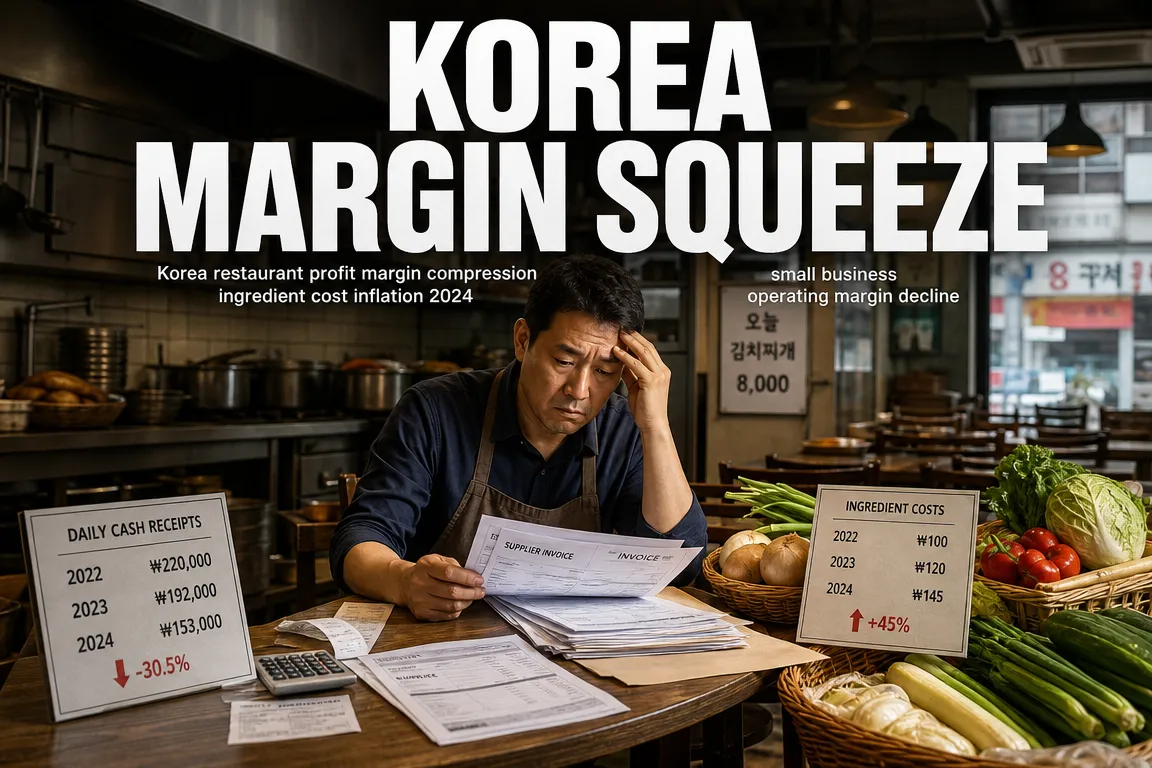
● Acquisition Frenzy, 60 percent Sellers, Lindy-proof Cashflow, AI 100-day Flip
In an Era of One Million Business Closures, Acquisition Instead of Entrepreneurship Is the Answer. Survival Strategies for 2025-2026 Interpreted Through the Lindy Effect and the ‘60% Willingness to Sell Rule’.
This article contains three key elements.A practical strategy for breaking the vicious cycle of small business struggles through “business acquisition.”How macro factors such as interest rate outlook, exchange rates, and inflation affect deal structures.An AI-driven 100-day roadmap for post-acquisition transformation, and the secrets behind lowering prices and building pipelines that other news outlets do not mention.
News Briefing: The Essentials, Quickly
Domestic demand slowdown and demographic shifts are coinciding with a cumulative wave of small business closures.As more people plunge into “entrepreneurship,” each business sees a decline in sales while failures in debt repayment intensify the downward spiral leading to closure.The solution is not “entrepreneurship” but “acquisition.”According to the Lindy Effect, industries and businesses that have survived for a long time have higher survival probabilities.In practice, contrary to the common belief that “well-performing businesses are not for sale,” about 60% are willing to sell if the conditions are right.If the interest rate outlook softens gradually and global economic stabilization follows suit, there may be room for improvement in acquisition financing conditions and valuation.When combined with AI-driven digital transformation, structural improvements in cash flow can be achieved within the first 100 days post-acquisition.
Why Acquisition Instead of Entrepreneurship
Starting a business takes a long time for product-market fit validation, customer acquisition, and stabilization of operations.In contrast, acquiring a business brings with it already validated cash flow, customers, and operating processes.From the perspective of the Lindy Effect, industries that have lasted more than ten years are likely to endure another ten years.The book “The Last Formula of Wealth” emphasizes that “owning a business is the most realistic path to economic freedom.”The key is not “what is promising” but “whether the business fits me.”Prioritize industries that align with your core skills, risk tolerance, and lifestyle.
Why and When Sellers Sell, and to Whom
In field surveys, about 60% of business owners aged 40 and above expressed willingness to sell if offered the “right price, conditions, and person.”The author refers to this as the “20 Questions Seller Phenomenon,” which can practically be interpreted as the “60% Willingness to Sell Rule.”There are seven main reasons for selling: death, divorce, health deterioration, financial difficulties, boredom, relocation, and discord.The common denominator is the lack of succession and absence of a succession plan.They are waiting for someone who will maintain the reputation, respect employees and customers, and pay a fair price.
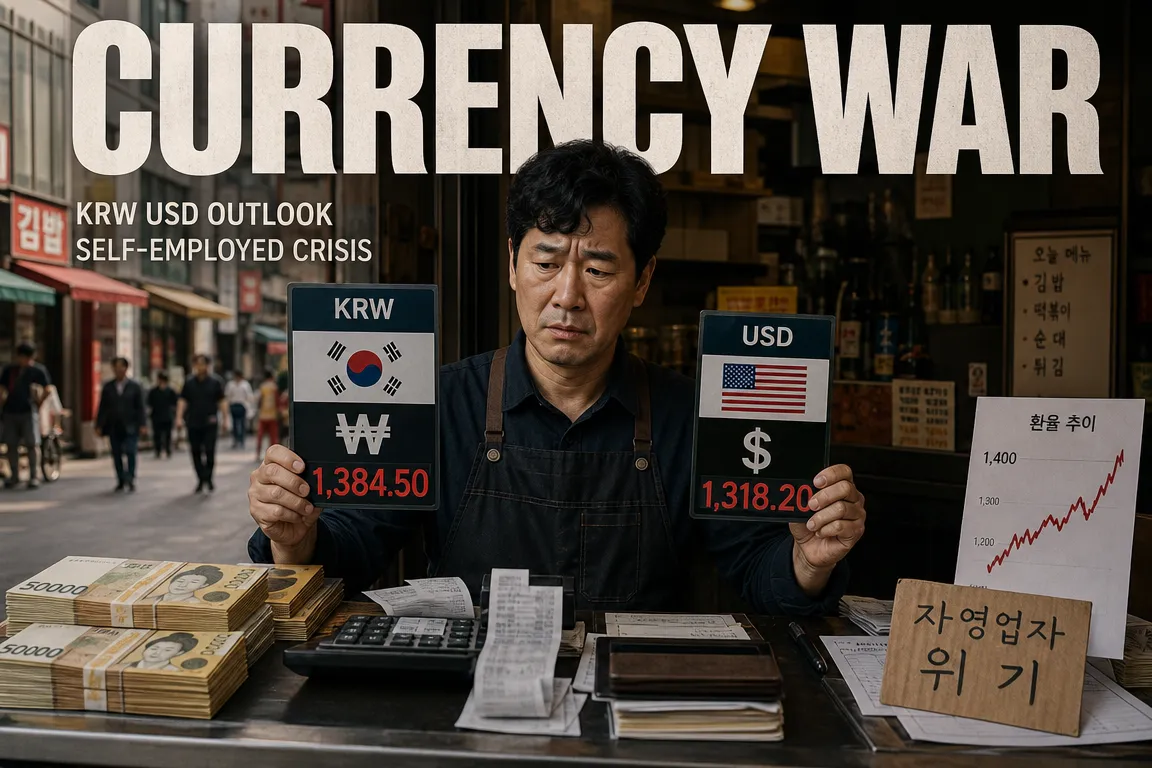
Macro Context: How Interest Rates, Exchange Rates, and Inflation Change Deals
If the interest rate outlook enters a gradual cut phase, the interest burden on acquisition financing decreases.As inflation slows down, volatility in input costs diminishes, and there is a systematic possibility to raise prices.A stable exchange rate increases the predictability of margins for industries heavily reliant on imported raw materials.When the global economy emerges from the downturn, B2B orders and store traffic may recover.In conclusion, 2025-2026 could be an ideal time to capture “good cash flow at a rational price” rather than chasing “excess valuation.”
Where and How to Find Good Deals: Building a Pipeline
Direct sourcing. Walk the district with focus, and speak with owners immediately after opening in the morning or during the afternoon break.Accountant and labor attorney networks. They are the first to know about cases of health issues or business owner fatigue.Wholesale and distribution companies. Early detection of signals such as sales decline and unpaid bills.Franchise headquarters. Identify potential candidates for “re-succession” from stores at risk of leaving.Local chambers of commerce and small business centers. They have transfer/assignment notice boards and consulting liaisons.Online deal platforms are used only to check “price benchmarks,” while actual deals are closed through offline trust.
Seven Standard Ways to Lower the Price
Subtract obsolete inventory and items nearing expiry during inventory due diligence.Reflect leasehold and goodwill risks in the price.Use potential reductions in card commission rates and POS contract costs as bases for price adjustments.After verifying the possibility of adjusting franchise royalty and advertising contribution fees, incorporate them into the earn-out.Normalize sales spikes caused by seasonality and calendar effects.Separate sales dependent on the owner to determine if they can be replaced by staffing and processes.Quantify essential Capex (e.g., HVAC, plumbing, electrical) replacement cycles with a checklist.
Funding: How to Buy with Minimal Debt
Seller financing. Pay 20–40% of the contract price in installments, with interest and repayments covered by monthly cash flow.Earn-out. Make additional payments based on meeting sales and EBITDA targets. It is effective for downside protection.Policy funds. Leverage low-interest financing from small business or mid-sized enterprise policies, and lower leverage costs with government-backed guarantees.Collateral and mezzanine financing. Secure initial operating capital with inventory-backed loans and accounts receivable factoring.Maintain cash flow coverage discipline. Aim for a DSCR of at least 1.3 and an interest coverage ratio of at least 3.
Due Diligence Checklist: Eliminating the Possibility of Failure in Advance
Financial and Tax. Audit VAT filing records, check for patterns of unreported cash sales, and investigate delays in card sales settlements.Legal. Secure leasehold certificates, provisions for goodwill succession, non-compete clauses, and clearly defined transition periods for acquisitions.Operations. Quantify dependency on a single supplier, risks of key personnel departure, and sensitivity of costs to exchange rate fluctuations.Location. Check trends in resident and transient populations, plans for competitive outlets, vacancy rates, and rental trends.IT and Data. Include in the contract the transfer of access rights for POS, CRM, social media, messenger channels, domains, and Google My Business permissions.
AI-Driven Post-Acquisition 100-Day Plan
Day 1–30. Integrate POS and CRM, define customer revisit segments, and set up retention campaigns.Day 31–60. Use AI-based predictive ordering to reduce Days Inventory Outstanding (DIO) by 15–30% and decrease spoilage rates.Day 61–100. Implement an LTV/CAC dashboard, automate advertising campaigns, and use review response agents to boost ratings.Recommended Toolkits:
- Analysis: Visualize CSV exports from POS using spreadsheets or BI tools and detect outliers.
- Marketing: Continuously conduct A/B tests through automated messaging and customer tagging.
- Operations: Automate invoice processing, cash audits, and ordering with RPA.Results. On average, improvements include enhanced turnover, a 2–5% reduction in raw material costs, and a 10–20% improvement in labor productivity.This process is the core of digital transformation and directly boosts cash flow leverage for small businesses.
Industry Candidates: Lindy-Type “Everyday Cash Cows”
Services. Laundry, cleaning, facility management, funeral services, and pet care.Retail. Local grocery stores, convenience stores, specialized food ingredient suppliers, and second-hand retailers.Automotive. Self-service car washes, minor repairs, and tire services.Logistics. Shared warehouses, last-mile delivery, and courier services.Food and Beverage. Small kitchens focused on ready-to-eat meals and business-to-business delivery specialists.The common factors include repeat demand, fast cash turnover, and high repurchase rates, with low technical complexity but great potential for AI optimization.
Risks and Hedges
Surge in interest rates. Reduce the proportion of variable rates and switch to fixed or capped options.Rising exchange rates. For imported raw materials, set a predetermined hedge ratio, and increase cost pass-through through menu engineering.Franchises. Incorporate franchise fees, advertising contributions, and forced purchasing clauses into the earn-out to offset risks.Lease agreements. In anticipation of redevelopment or unprotected goodwill areas, secure dual options (alternative locations) in advance.Labor. Include retention bonuses and training vouchers for key personnel in your budget.
Exit Roadmap: A Three-Year Plan
Year 1. Finalize standard operating procedures (SOP) and data pipelines, reducing dependency on the owner.Year 2. Achieve economies of scale through multi-location or bolt-on acquisitions.Year 3. Optimize options such as franchising, strategic divestiture, or dividend distribution.Six months before exit, generate normalized EBITDA, adjust working capital, and remove non-recurring gains to enhance valuation transparency.
The Real Core That Others Don’t Reveal
Without a data rights transfer clause, your marketing assets will be worth nothing. Be sure to include the transfer of ownership for POS logs, CRM, Kakao channels, Instagram, Google My Business, and domains in the contract.Cash-based sales practices can ruin a deal. Check the proportion of electronic records and bank transfers, and deduct any assumed unreported cash sales from the price.Clearly differentiate between goodwill and facility rights, and model essential Capex items as cash expenditures rather than depreciation in the earn-out criteria.Negotiate commissions with card companies, delivery apps, and PG providers immediately. This 0.1–0.3% can significantly alter annual EBITDA.Understand the location algorithm. Map visibility on delivery apps is determined by response speed, review credibility, and customer retention rates. Use an AI agent to maintain a 95% response rate.Policy funding is a timing game. Secure bridge financing by accounting for the lag between application and disbursement, and manage DSCR covenants on a monthly basis.
Practical Summary Connected to the Macro Environment
A softening interest rate outlook, global economic recovery, and stable exchange rates lower acquisition financing costs and volatility.Slowing inflation increases cost predictability, creating an environment in which AI-based ordering and pricing strategies can thrive.Teams that rapidly implement digital transformation post-acquisition will secure cash flow advantages.Acquisition over entrepreneurship. This is the cornerstone of the survival strategy for 2025-2026.
Recommended Action Checklist
Define three industries that fit you, and develop a candidate list of 20 within two weeks.Create an LOI template that standardizes earn-out and seller financing clauses.Develop a spreadsheet-based due diligence checklist with assigned responsibilities and deadlines.Schedule the AI-driven transformation items for the first 100 days post-acquisition in your calendar.Adopt monthly DSCR, LTV, and net working capital turnover days as key performance indicators.
< Summary >
- Acquisition over entrepreneurship. Proven cash flow and the Lindy Effect enhance survival probability.
- The 60% Willingness to Sell Rule. Even a good business can be sold if the price, conditions, and buyer are right.
- Interest rate outlook, exchange rates, and inflation shape deal structures and cash flow risk.
- An AI-driven 100-day plan boosts efficiency in inventory, marketing, and labor, thereby improving EBITDA.
- Data rights transfer, structuring earn-out, and the timing of policy funds are the decisive factors others don’t reveal.
[Related Articles…]
- Survival Strategies in Different Economic Phases Viewed Through Acquisition
- How the Interest Rate Outlook Signals M&A in the Small Business Sector
*Source: [ 경제 읽어주는 남자(김광석TV) ]
– 자영업 폐업의 현실에서 악순환을 깨는 새로운 생존 전략 ‘이것’이 핵심이다 | 클로즈업 – ‘마지막 부의 공식’ 북리뷰 3편