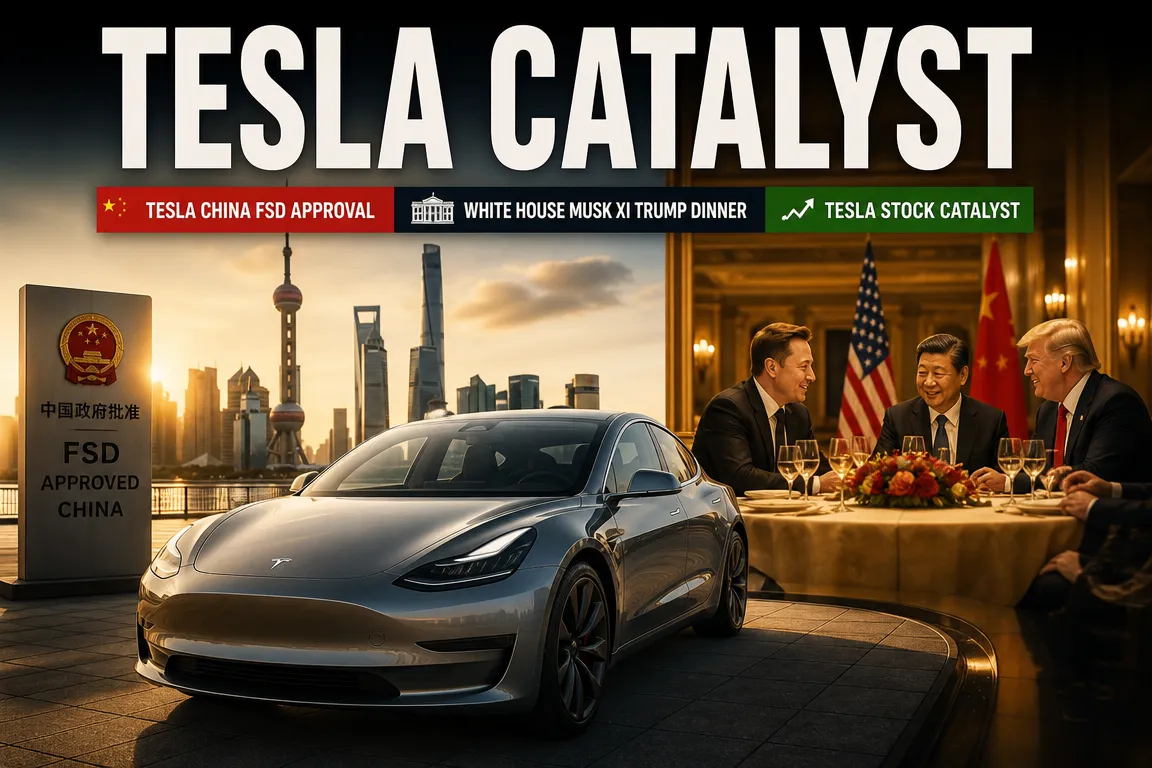
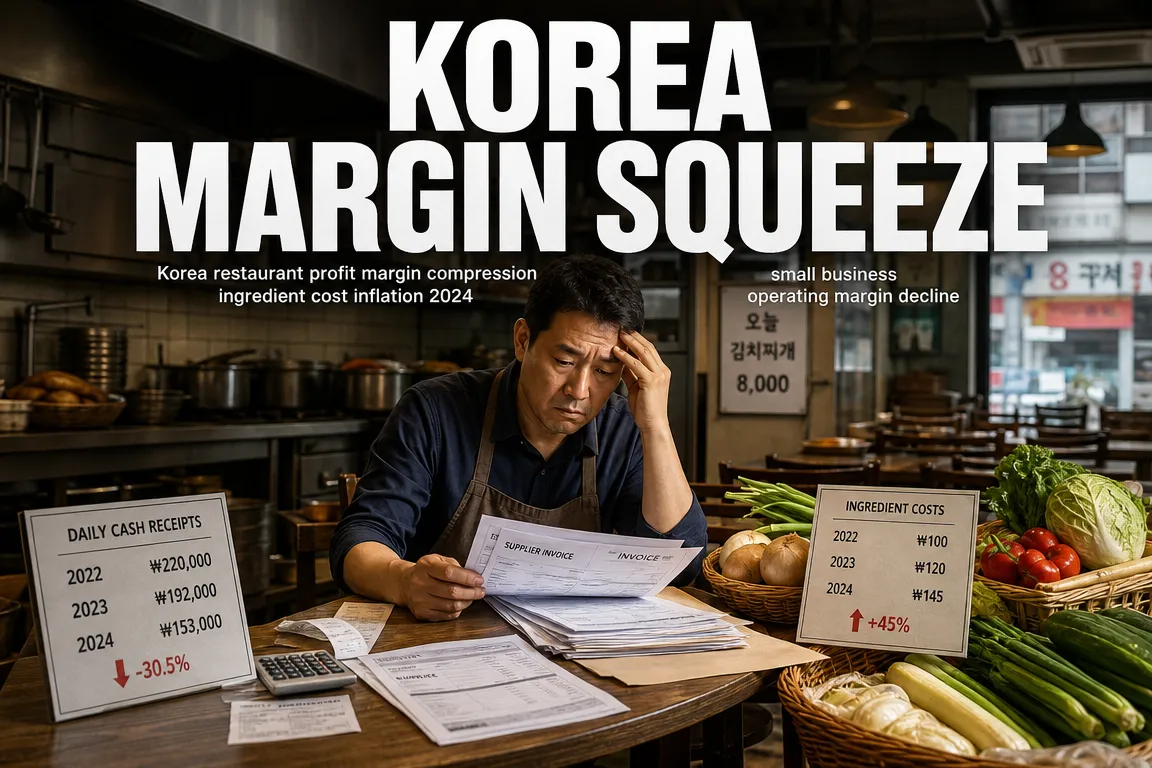
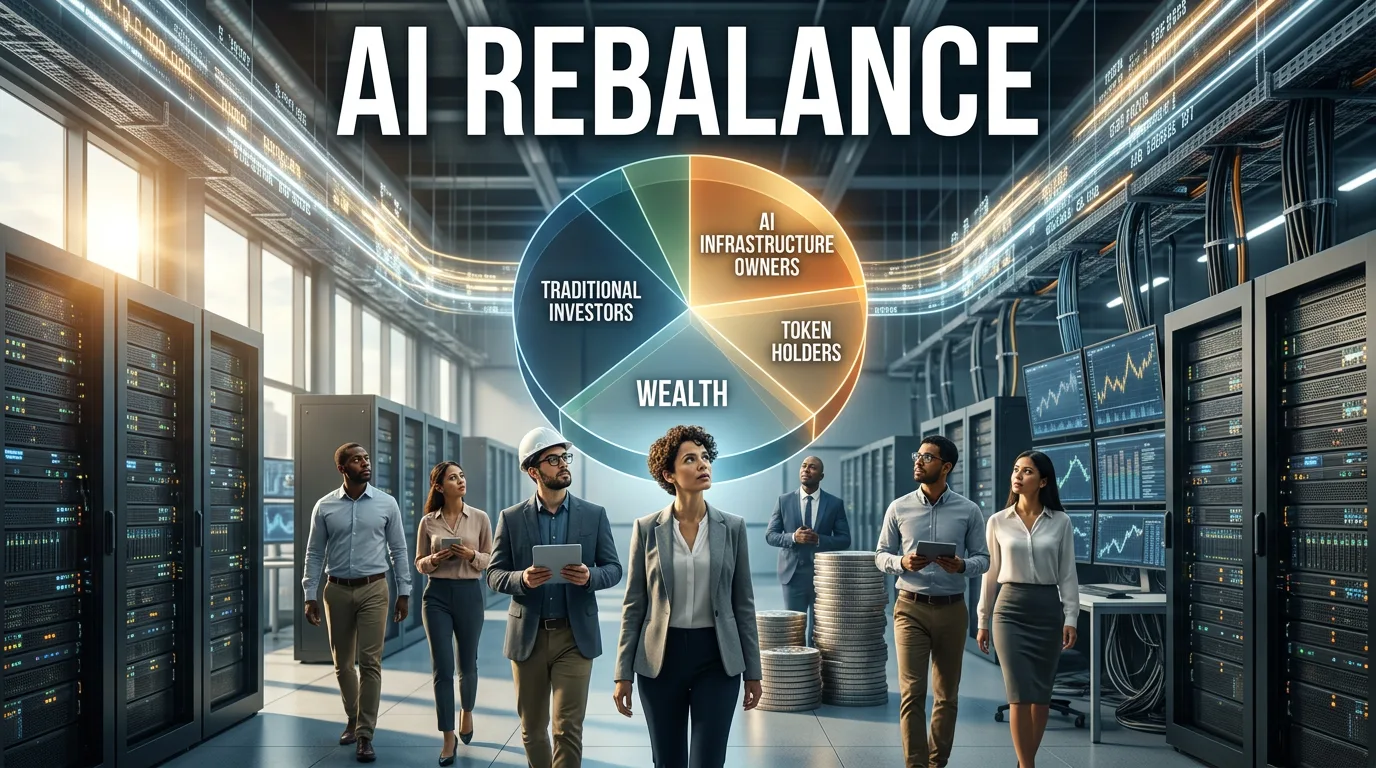
● Dollar Domination, Growth Surge, Robot Revolution
Optimal Timing Opened by December Rate Cut: Capture Dollar Assets and Growth Stocks with the 2026 Robotics Commercialization
Today’s article covers the real impact of the December rate cut variable, the reason why dollar assets remain effective even when the exchange rate is high, how geopolitical risks change under a potential Trump second term scenario, the timeline and investment points for humanoid robot commercialization in 2026, and even portfolio design methods for ’25–’26.
It also separately summarizes rarely mentioned topics such as the significance of “foreign net buying in tandem with rising exchange rates”, the notion that “robots do not steal jobs but rather fill labor shortages”, and “the fundamental differences between growth stock and momentum investing”.
Let’s grasp the global economic trends at once, including US stocks, growth stocks, exchange rates, rate cuts, and AI trends.
News Summary
Even if the won-dollar exchange rate remains in the 1,300–1,400 won range, exposure to dollar assets remains effective from a long-term perspective.
The rate-cut cycle is a phase where the liquidity premium is revalued into growth stocks, and opportunities continue in the AI and robotics sectors.
Under a potential Trump second term scenario, there is a greater likelihood of strengthening an economic-first approach rather than a full-scale conflict risk, and the defense sector is undergoing structural changes toward “unmanned and drone” technologies.
The year 2026 is highly likely to be a turning point for humanoid robot commercialization with Tesla Optimus and China’s Ubitech and Unitrie.
Robots will expand not by taking jobs but by filling labor gaps in sectors facing hiring difficulties.
Exchange Rates and Dollar Assets: It’s Not About ‘Trading’, But ‘Exposure’
Dollar assets should be approached as a strategic exposure for asset diversification rather than timing the exchange rate.
Fluctuations in evaluation gains and losses based on the won are inevitable, but the long-term performance comes from steadily building dollar-based returns in dollar assets.
Recent cases where the exchange rate rose despite foreign net buying can be interpreted as a signal that the global demand for dollars is structurally strong rather than merely domestic inflow.
If you give up on “US stocks” simply because the won-dollar exchange rate is already high, you might miss the market for a longer period when both stock prices and exchange rates surge together.
A practical tip is to gradually adjust your exchange rate exposure by using dollar cash, dollar MMF, direct purchase of US ETFs, and a mix of hedged/unhedged ETFs.
December Rate Cut Variable: Catalyst for Growth Stock Re-rating
The Federal Reserve’s decision on a rate cut in December could be a turning point for multiple expansion and valuation re-assessment.
If inflation is characterized by ‘sector-specific overheating’ rather than an overall economic overheat, a rate cut is favorable for growth stocks.
However, if a rebound in China’s economy triggers inflation, the pace of rate cuts may slow down, so it is necessary to check the data.
The base scenario is a gradual easing of inflation with a slight cut in December followed by an additional cut in the first half of 2026.
Geopolitical Risks: Simultaneous ‘Easing’ and ‘Structural Changes’
Under a potential Trump second term scenario, there is a high probability of strengthening an economic-first strategy that suppresses direct military conflicts.
That does not mean the defense sector will weaken.
Technological defense is shifting its leadership toward unmanned systems, drones, and electronic warfare.
The United States is likely to see structural benefits in next-generation defense companies like Kratos and AeroVironment.
AI Trends 2025–2026: Expanding from Models to Mobility and Robotics
AI investments have entered a cycle that is expanding from models and infrastructure to applications and robotics.
The year 2026 is a visible turning point for the commercialization of humanoid robots, with Tesla Optimus and China’s Ubitech and Unitrie potentially creating this milestone.
In particular, breakthroughs in the delicate manipulation skills of ‘hands’ and ‘grippers’ are the decisive triggers for robots to be practically deployed in production sites.
Once mass production evidence emerges, robots will be re-evaluated from being demo projects to representing a CAPEX and OPEX efficiency story.
Robotic Automation: Where Will It Explode First? Mapping Field Demand
Robots will be adopted first in industries where hiring is most challenging.
Robots for cooking, serving, and cleaning at highway rest stops can spread rapidly due to the ease of unmanned operations and standardization.
For example, there are nascent commercialization cases such as ramen/noodle robots, smart kitchens, and night-time unmanned operation solutions.
In the case of mountainous food packaging and sorting lines, cases are increasing where 200 personnel are reduced to a single-digit workforce with the help of robots and vision AI.
This change does not signify ‘job replacement’; rather, it shows technology filling in when hiring fails.
Investment Points Map by Sector
AI Core and Applications
- Edge AI, agents, and generative AI-based office automation solutions will create the first wave of commercialization.
- Semiconductors, memory, and HBM may experience cyclical volatility, but structural CAPEX continues.
Robotics Value Chain - Actuators, gearboxes, motors, high-resolution vision systems, grippers, and lightweight materials are key component keywords.
- The opportunity is broader and more sustainable in the ‘components-modules-software’ stack than in the humanoid body itself.
Unmanned Defense - Drone swarms, counter-drone defense, and fields such as electronic warfare and intelligent sensors form the growth core.
Exchange Rate and Interest Rate Sensitive Sectors - While REITs and quality growth stocks could see their multiples recover due to rate cuts, it is advisable to concurrently adopt hedge strategies against volatile exchange rates.
Portfolio Strategy: Build Core-Satellite and Gradually Increase Exchange Rate Exposure
The core should consist of US quality growth stocks and index ETFs, while the satellite comprises ultra-growth themes such as AI, robotics, and unmanned defense.
Increase dollar asset exposure step-by-step within the 20–40% range, and absorb exchange rate fluctuations through systematic averaging and regular rebalancing.
Mitigate exchange rate risks by concurrently using both hedged and unhedged ETFs.
The 4–8 week period before and after the December rate cut is an event window for growth stock re-rating, making gradual weight increase effective.
Checklist and Schedule
Check the CPI and PCE disinflation trends before the December FOMC.
Monitor the bottoming out and subsequent re-expansion signals of the US ISM manufacturing and services indices.
Watch for a secondary impact from China’s economic stimulus that could re-ignite raw material, freight, and food prices.
Track the announcements of mass production and delivery from Tesla Optimus and China’s Unitrie/Ubitech.
Assess whether unmanned defense orders are shifting from a “small–low-cost–mass production” model.
Risks and Countermeasures
A rebound in China’s economy triggering inflation could delay the pace of rate cuts.
Debate over an AI bubble could increase valuation volatility, so structure your core with companies that have clear earnings visibility and improved cash flows.
If exchange rates surge, temporarily increase your hedged allocation and use dollar cash as rebalancing funds.
Key Points Rarely Mentioned Elsewhere
Foreign net buying combined with rising exchange rates is not just a temporary supply-demand distortion, but may be a signal of structural dollar demand.
The commercialization trigger for humanoid robots is overcoming the ‘delicate manipulation of hands’, and once this is achieved, the components and modules ecosystem will be the first to re-rate.
Growth stock investing is not about chasing momentum; it is a strategy of holding companies whose revenue, operating income, and cash flows actually grow at a reasonable price.
Under a Trump second term scenario, the risk lies not in “full-scale conflict” but in “redefining trade and technology rules”, resulting in benefits for unmanned defense and supply chain restructuring.
< Summary >
The potential rate cut in December is a trigger for re-assessing growth stocks, and long-term exposure to dollar assets remains valid even when exchange rates are high.
Under a potential Trump second term, geopolitical tensions will ease, and the defense sector will grow centered on unmanned systems.
The commercialization of humanoid robots in 2026 will open opportunities across the entire value chain alongside breakthroughs in “hand technology”.
Prepare for ’25–’26 with a core-satellite strategy, concurrent hedging, and systematic averaging and rebalancing.
[Related Articles…]
How to Respond to US Stocks in a Strong Dollar Environment
How Humanoid Robot Commercialization Will Change the Labor Market
*Source: [ 경제 읽어주는 남자(김광석TV) ]
– “12월 금리 인하 변수에 주목해라” 다가올 26년, 달러 자산과 성장주 투자 타이밍이 온다 | 경읽남과 토론합시다 | 김기훈 대표 3편
● Experience Luxury Replaces Goods, VIP Data Monetizes Travel, AI Slashes Entry Hiring
Principles of Money Flow 2025-2026 Key Outlook: Money Shifts with Experiential Luxury, VIP Data Fuels Travel, AI Reshapes Recruitment Landscape
Experiential consumption is replacing luxury goods, and the direction of money is changing.
The VIP data held by department stores is being monetized through high-priced travel and cultural packages.
The introduction of AI is reducing entry-level recruitment while boosting the value of skilled technical workers.
This article covers global economic trends, the impacts of interest rates, inflation, and exchange rates, changes in stock market sectors, corporate strategic roadmaps, and personal investment and career action plans.
[Breaking News Summary] In 2025, the Direction of Money Will Change
Instead of luxury handbags, ‘experiential luxury’ such as hotels, trains, and sports events is becoming the core of global consumption.
Korean department stores have seen a sharp rise in the proportion of VIP sales as they embark on premium travel businesses.
LVMH is redefining its branding by emphasizing ‘travel heritage’ with hotels, luxury trains, and oversized trunk stores.
AI automation is cutting down on entry-level hiring while expanding the demand for experienced and technical personnel.
Service inflation and a strong dollar are influencing exchange rates and interest rate trajectories, further widening the decoupling between sectors in the stock market based on ‘experience vs. goods’.
Trend Differentiation Framework: Is It a Fad or a Structural Change?
Author Kim Yong-seop suggests categorizing trends into technology, industry, and desire.
Technological trends distinguish temporary rebounds within the large streams over a 10-20 year development cycle.
Industry trends track the investment order and value chain expansion of large corporations.
Desire trends apply the rule that “if everyone can easily do it, it doesn’t last long”.
Sugar-coated candied hawthorns were inexpensive and readily accessible, leading to fleeting desire, whereas ramen and spicy rice cakes became embedded in culture and endured over time.
Foreign cuisines often fade after a single trial due to low repeat purchase rates driven by a “try-it-once” desire.
Where the Money Flows 1: Democratization of Experiential Luxury
Department store VIP data is expanding into premium travel products.
Shinsegae’s VIP proportion jumped from about 31% in 2024 to 45%, as it launched travel packages costing tens of millions per person.
Core SKUs include deep experiences such as F1 viewing packages, ultra-premium resorts, and privacy-guaranteed accommodations.
The hotel and resort industry has seen improved profitability with rising ADR and RevPAR.
In contrast, entry-level luxury items such as affordable luxury handbags are experiencing inverse growth due to global economic slowdowns and substitution effects in consumption.
The signal of social status has shifted from owning goods to experiencing real-life moments.
Where the Money Flows 2: The LVMH Hint – Travel, Trains, Heritage
LVMH has revamped its New York store by using an oversized trunk as a visual partition to emphasize its ‘travel DNA’.
The acquisition of Belmond has strengthened its portfolio of hotels, resorts, and luxury trains.
Rail experiences comparable to the Orient Express are capturing premium demand as a “luxury of slowness”.
Even digitally grown influencers are accelerating this trend by showcasing offline analog experiences.
Macro Connections: Global Economy, Interest Rates, Inflation, Exchange Rates, Stock Market
Experiential consumption drives service inflation, which may delay the pace of interest rate cuts.
During periods of a strong dollar and weak won, the perceived cost of overseas travel increases while domestic premium experiences benefit as a spillover effect.
In the stock market, sectors such as hotels, resorts, ticketing, luxury trains, and event management within the experiential value chain are showing relative strength.
Entry-level lines in luxury retail are prone to dual pressures from demand substitution and a slowdown in Chinese consumption.
Persistently high interest rates constrain leveraged consumption, shifting the consumption structure towards “one-time, high-value experiences”.
Labor Market Transition: AI Reduces Entry-Level Recruitment
With AI automation, tasks previously performed by 10 people can be handled by 5, leading to a reduction in entry-level hiring and a shift towards recruiting experienced professionals.
The premium associated with university attendance is weakening, while the market value of readily deployable skilled workers is rising.
Skilled trades such as plumbing and electrical work are hard to replace with robots or AI, offering a career longevity of 20 to 30 years.
Technical jobs also offer high autonomy in work completion, making them attractive from a quality of life perspective.
Digital natives, accustomed to machine-friendly communication, often lack offline relationship skills; however, abilities in dating, team collaboration, and conflict resolution become key differentiators.
Corporate Strategy: Monetizing VIP Data and Designing Experiential SKUs
For managing the lifetime value (LTV) of VIP customers, travel, cultural, and sports packages are linked with loyalty points.
The components of an experience—seats, rooms, movement, privacy, and accessibility—are segmented and packaged.
Revenue management is enhanced through demand forecasting, dynamic pricing, and micro-segmentation.
Partnerships with venues, airlines, railroads, art galleries, and performance organizations secure scarce inventory.
Instead of merely ‘photo verification’, ‘explainable experiences’ are accumulated as storytelling assets.
Policy and Education Insights: Vocational Training, Apprenticeships, and Transition Learning
Apprenticeship-based education through vocational high schools, Meister high schools, and polytechnics reduces the mismatch in human resources.
Universities must transition their curricula from being text-focused to blending field projects, internships, and certifications.
In anticipation of reduced entry-level hiring, reskilling and upskilling vouchers as well as career transition fellowships should be activated.
Urban and tourism policies need to adjust high-end lodging permits, cultural infrastructure, and the nighttime economy to cater to the demands of experiential luxury.
Investment Checklist: What to Watch For
Monitor the trends in VIP sales proportions at domestic department stores alongside the sales of premium travel packages.
Keep an eye on the ADR, RevPAR, and growth of loyalty memberships in hotel chain quarterly reports.
Check the trajectories of the service CPI, real interest rates, the dollar index, and the won-dollar exchange rate.
Observe the reservation rates for premium cabins on airlines and the calendar of large-scale tickets for events such as F1 races and concerts.
Track changes in the number of applicants for vocational high schools and certifications, as well as fluctuations in related job postings.
Personal Action Plan: For Investors, Employees, and Entrepreneurs
Investors should focus on the experiential value chain (accommodation, ticketing, rail, events, payments) and approach luxury retail selectively.
Given that service demand elasticity varies with interest rates, exchange rates, and inflation, consider hedging your positions.
Employees should double their productivity using AI tools and demonstrate their offline relational skills through projects.
Boost your indispensability by acquiring side skills based on technical trades and certifications.
Entrepreneurs should design partnerships that secure VIP data, loyalty, and scarce inventory while marketing “deep experiences”.
Risks and Alternative Scenarios
If the economy sharply cools, experiential consumption could also decelerate resiliently.
Oversupply issues in airlines and accommodations, safety and regulatory problems, and refund disputes could damage profitability.
As an alternative, prepare for domestic high-end local experiences, small-scale private arrangements, and membership subscription models.
Points Often Overlooked in Other YouTube Videos and News
The VIP data of department stores is a hidden lever that dramatically improves margin structures when combined with high-priced experiences.
Experiential luxury can stimulate service inflation, thereby indirectly delaying the trajectory of interest rates.
AI-induced reductions in entry-level roles reduce the demand for “entry-level luxury” and reallocate consumption towards “one-time high-value experiences”.
Rail, luxury trains, and analog experiences are likely to sustain as long-term themes.
The gap in offline relational skills may create as significant an impact on career outcomes as the gap in income.
Checklist: Must-Check Items This Month
- Domestic department store VIP sales ratios and trends in premium travel sales.
- The ADR, RevPAR, and growth in loyalty membership in hotel chain quarterly reports.
- The trajectories of the service CPI, real interest rates, dollar index, and won-dollar exchange rate.
- The premium cabin booking rates of airlines and the major ticket calendars for events such as F1 races and concerts.
- The number of applicants to vocational high schools and certification exams, and changes in related job postings.
News Format Summary: Collection of Key Headlines
[Headline] Experiential luxury is shifting the axis of global economic consumption and intensifying sector decoupling in the stock market.
[Data] VIP sales in Korean department stores are projected to rise to approximately 45% in 2024 as premium travel products take center stage.
[Corporate] LVMH is redefining ‘travel heritage’ with hotels, luxury trains, and trunk-themed branding.
[Macro] Persistently high service inflation could delay the peak of interest rate cuts while exchange rate volatility expands.
[Labor] AI implementation is curtailing entry-level hires, boosting skilled technical demand, and diminishing the premium on university degrees.
Conclusion
In 2025-2026, the flow of money will shift from “simply expensive” to “deep, meaningful experiences”.
Companies that leverage VIP data and experiential inventory will reap excess profits.
AI is reshaping recruitment and the career landscape, while rewards will increase as manual skills and offline relational capacities become rarer.
Monitor global economic variables such as interest rates, inflation, and exchange rates, and realign your positions around the experiential value chain.
< Summary >
Experiential luxury is replacing luxury goods, transforming consumption, market strategies, and corporate approaches.
Department store VIP data is being monetized through high-priced travel, while LVMH is repositioning itself with a travel heritage strategy.
Service inflation may delay interest rate adjustments, and exchange rate volatility is favoring domestic experiential consumption.
AI is reducing entry-level hires and increasing the value of skilled technical workers, making offline relational skills a crucial career asset.
Investors should focus on the experiential value chain, employees should enhance their AI and relational competencies, and entrepreneurs should secure scarce inventory.
[Related Articles…]
- Era of Persistent Interest Rates: How Service Inflation is Changing Consumption and Asset Allocation
- After the AI Hiring Crisis, a Renaissance in Technical Careers and Strategic Career Moves
*Source: [ Jun’s economy lab ]
– 돈이 흐르는 원리 내년에는 여기로 몰립니다(ft.김용섭 작가 1부)
● Nvidia Names Koreas Five Giants, Ignites AI Power and Packaging War
NVIDIA’s Jensen Huang Identifies South Korea’s Top 5 Companies, New Pillars in the AI Supply Chain, and the Global Economic Impact in 2025
Key Points of Today’s Article
Jensen Huang of NVIDIA identified South Korea as a “country of ongoing miracles,” specifically mentioning Samsung, Hyundai Motor, SK, Naver, and LG, and deconstructs the reasons from a supply chain and strategy perspective.
This explains the structural shift of the AI infrastructure bottleneck moving from GPUs to power, cooling, and optical packaging, linking it to the capabilities of South Korean companies.
The impact of AI facility investments, semiconductor cycles, and stock market styles under the 2025 global economic environment and interest rate trajectory is summarized.
Less-covered yet critical elements such as the oligopolization of the power PPA, cooling, CPO, and HBM ecosystem are separately highlighted.
A company-specific checklist and actionable plan are provided for immediate use in investment and business decision-making.
News Summary: What Happened
In Seoul, NVIDIA’s Jensen Huang met with South Korean conglomerate CEOs, and in a video dedicated to the Korean language, NVIDIA mentioned South Korea’s industrialization and K-Culture while specifically naming five companies.
The five pillars mentioned are Samsung, Hyundai Motor, SK, Naver, and LG.
The key message is “We are building the new future of the AI era together with South Korea,” which is not mere lip service but a signal of supply chain diversification and the transition to next-generation data center architecture.
Why the Top 5 South Korean Companies: NVIDIA’s Supply Chain Perspective
It is due to their competitiveness in memory and packaging.
The performance of AI accelerators is largely determined by HBM bandwidth, packaging, cooling, and power infrastructure rather than the GPU itself.
South Korea possesses world-class technology in HBM, advanced packaging, batteries/power electronics, and manufacturing automation.
From a supply chain risk management perspective, NVIDIA is looking for alternatives to mitigate bottlenecks centered on TSMC’s manufacturing and packaging, and South Korea stands at the forefront as a candidate.
Company-Specific Checkpoints: Samsung · Hyundai Motor · SK · Naver · LG
Samsung
Positioning: HBM3E/next-generation HBM, foundry, packaging (X-Cube/I-Cube), power semiconductor ecosystem.
Checkpoints: Improvement speed of HBM quality/yield, customer certification for next-generation packaging, collaboration on power solutions for data centers.
Significance: As the AI server bottleneck shifts to memory and packaging, it can secure a strategic position beyond just a “second source.”
Hyundai Motor
Positioning: Software-defined vehicles (SDV), demand for AI compute for autonomous driving/high-performance infotainment, automotive electronics, batteries, power electronics.
Checkpoints: Partnership in the automotive AI chip ecosystem, synergy with data center waste heat utilization/charging infrastructure, expansion of the OTA data operating system.
Significance: With vehicles redefined as “moving edge data centers,” their integration with NVIDIA’s automotive platform reinforces the value chain.
SK (including Hynix, T, E&S, etc.)
Positioning: HBM leadership, communication infrastructure, energy/PPA capabilities.
Checkpoints: Next-generation HBM supply capacity, collaboration on liquid cooling/high-density rack cooling, power procurement structure for AI data centers.
Significance: As the HBM oligopoly strengthens, pricing and margin defense become more robust, and a combined AI infrastructure play is possible through integration with telecommunications and energy subsidiaries.
Naver
Positioning: Korea-centric large language model represented by HyperCLOVA X, experience in operating its own cloud/data centers.
Checkpoints: Expansion based on NVIDIA’s reference architecture (MGX), application of the Sovereign AI framework, monetization indicators for AI services.
Significance: Beyond model performance, it can become a key reference for ‘national AI’ with strengths in data sovereignty and compliance.
LG (Electronics · Energy · Chemicals · AI Research Institute)
Positioning: Home appliances, robotics, automotive electronics, battery materials, thermal management and power systems, industrial AI.
Checkpoints: Data center liquid cooling/air conditioning solutions, AI compute for automotive electronics, advancement in manufacturing AI.
Significance: Hardware solutions that solve the “heat and power” problems of the AI era could become a new growth pillar.
Global Economic Context: Interest Rates · Inflation · Exchange Rates and the Stock Market
In 2025, as the global economy moves towards disinflation with easing interest rates, the timing and magnitude of rate cuts will influence the IT facility investment cycle.
If interest rates fall, the discount rate for data center CAPEX will be reduced, potentially accelerating AI infrastructure investments.
Conversely, if inflation heats up again or oil price volatility increases, power costs and equipment prices may rise, thereby suppressing the ROI of data centers and placing pressure on the valuations of growth stocks.
Exchange rates increase the sensitivity of earnings for semiconductor and automotive electronics companies with high export ratios, making hedging and pricing policies more critical.
The stock market is expected to see a rotation towards themes such as memory, packaging, power infrastructure, and thermal management.
Lesser-Known Key Points: A Quick Look
Shifting Bottlenecks: Whereas GPU supply was the bottleneck from 2023 to 2024, in 2025 the new bottlenecks will be HBM bandwidth, advanced packaging, power, and cooling.
South Korea’s Hidden Edge: Battery/power electronics, air conditioning, and heat exchange technologies in South Korea determine over 30% of a data center’s TCO, showcasing the country’s strengths in this chain.
Rise of CPO (Chip-Package-Optical Integration): Next-generation AI servers, due to the limitations of electrical interconnects, will inevitably integrate optically, making the convergence of packaging and optical module ecosystems a key battleground.
Commercialization of Sovereign AI: ‘National AI,’ optimized for the Korean language, regulations, and industrial data, reduces compliance costs and quickly absorbs public and financial sector demand.
PPA and Power Finance: Long-term power purchase agreements, K-RE100, power derivatives, and project financing for data centers will serve as the unseen engine driving AI growth.
Investment & Business Action Plan
Increase exposure to memory and packaging.
Expand the portfolio to include HBM, advanced packaging, test/inspection equipment, and material chains.
Bundle power and cooling infrastructure.
Accelerate cooperation with companies in liquid cooling, modular data centers, and power conversion (DC-DC/SiC).
Develop a Sovereign AI pipeline.
Package Korean-language specialized models, security/governance solutions, and model evaluation/MRM services for government, finance, and large manufacturing conglomerates.
Reduce costs through manufacturing AI.
Pursue only AI projects tied to KPIs for yield and lead time improvements to clearly determine the IRR.
Risks and Scenarios
Demand Cycle Risk: Slower AI investments by cloud companies could lead to increased price volatility and inventory risk in memory.
Policy and Geopolitical: Changes in export controls, alliance risks, and subsidy conditions can unsettle production and investment decisions.
Power Constraints: Delays in expanding power grids could create a bigger bottleneck than rack installations.
Technological Transition: Missing the timing for transitioning to CPO or next-generation packaging could render existing CAPEX obsolete.
Data Center · Power · Policy Checklist
Power unit prices and long-term PPA contract status, RE100 achievement pathways, power grid expansion schedules.
Liquid cooling adoption rates, roadmap for power density per rack, and business models for waste heat recovery.
Plans for HBM expansion, certification stages for packaging, and continuous improvements in test/quality data.
National AI regulatory guidelines, data security/evaluation systems, and frameworks for model accountability.
The Message for the Korean Economy
As the global economy shifts from high interest rates to gradual easing, South Korea can leverage its position at the intersection of semiconductors, power, and manufacturing.
The five pillars directly named by NVIDIA signal that the closed loop of “AI infrastructure-application-power” can be achieved domestically in South Korea.
This will also trigger a revaluation in the stock market style towards memory, packaging, power infrastructure, and Korean-style AI services.
Final One-Liner
If South Korea can resolve the bottlenecks shifting from GPUs to power, heat, and optics, the “continuation of the miracle” will be proven not by rhetoric but through CAPEX and cash flow.
Key Points at a Glance
NVIDIA’s mention of the top 5 South Korean companies signals a partnership in resolving bottlenecks centered on HBM, packaging, and power infrastructure.
If the 2025 interest rate trajectory reduces AI CAPEX discount rates, South Korea’s semiconductor, power, and cooling chains could simultaneously level up.
Sovereign AI, CPO, and PPA, though less reported, will be decisive factors in determining profitability and market share.
Reference Keywords: Global Economy, Interest Rates, Inflation, Semiconductors, Stock Market.
< Summary >
The reason NVIDIA’s Jensen Huang highlighted Samsung, Hyundai Motor, SK, Naver, and LG is that the AI infrastructure bottleneck has shifted to memory, packaging, and power.
South Korea, with its strengths in HBM, thermal management, power electronics, and manufacturing automation, can become a key partner in supply chain diversification.
If the easing of interest rates in the global economy in 2025 stimulates AI CAPEX, the market is likely to rotate towards memory, packaging, power infrastructure, and sovereign AI.
Companies that preempt the lesser-known points of CPO, PPA, and data center cooling innovations will capture excess profits.
[Related Articles…]
HBM and the Packaging War: Decoding the AI Supercycle Driven by Memory
The Hidden Battlefield of AI Data Centers: Everything About Power, Cooling, and PPAs
*Source: [ Maeil Business Newspaper ]
– [홍장원의 불앤베어] 젠슨황이 콕 집은 한국 5대 기업 어디? “한국은 기적이 계속되는 나라”