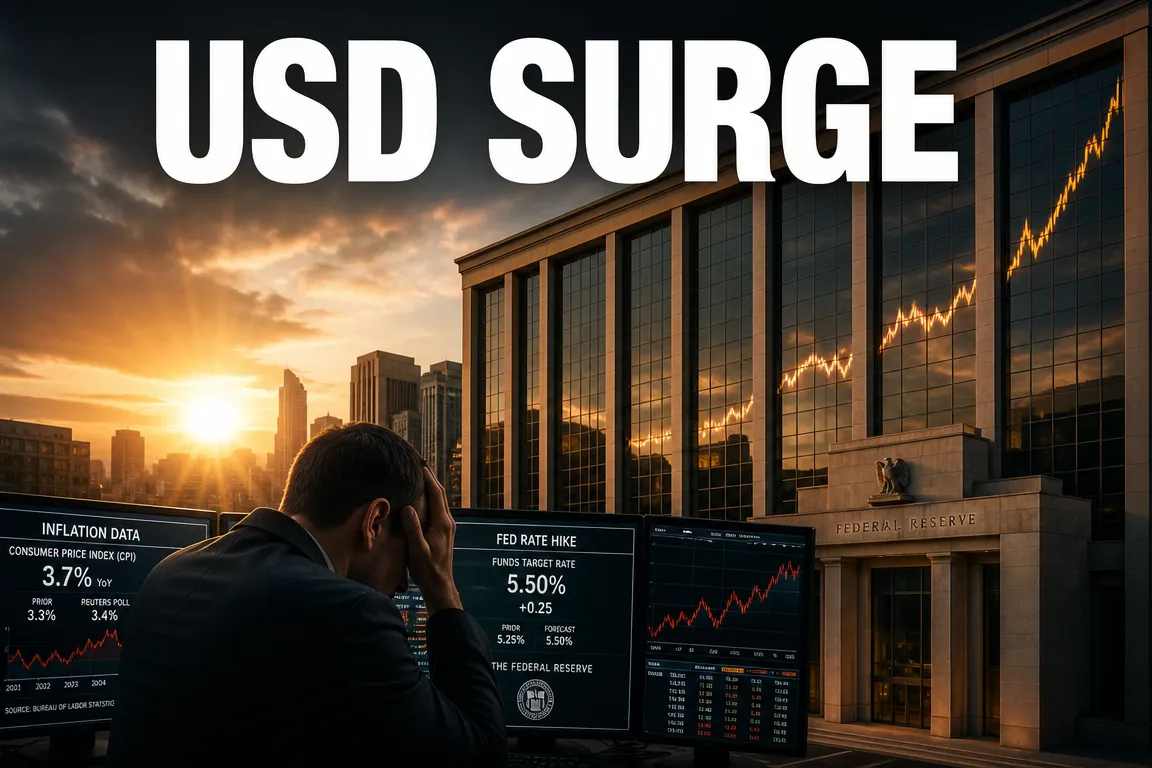
● Money-Printing Mania
2026 Scenario: “Lower the Value of Money” Debasement, Global Economic Outlook Through Interest Rates, Exchange Rates, and Liquidity
In the Trump 2nd term scenario, the core strategy is “the decline in the value of money,” how lower interest rates and a weaker dollar dovetail, and even how stablecoins become an “invisible liquidity pipe.”
It summarizes exactly when and why the liquidity boom could end, along with a quarterly roadmap for 2025–2026, a portfolio checklist for Korean investors, and investment points in AI infrastructure.
It also separately outlines the “mechanism behind policies” such as the Treasury’s issuance strategy, RRP and TGA operations, and the easing of banking regulations that are rarely covered by other YouTube videos or news outlets.
Key News Summary: The Era of the “Pivot” 2025–2026, the Liquidity Boom Generated by Debasement
The years 2020–2021 were a period of easing, 2022–2023 a period of tightening, and 2025–2026 marks the entry into a pivot period with sequential interest rate cuts.
Assuming a Trump 2nd term, the core strategy is debasement, meaning inducing a decline in the value of money to lift asset prices.
The instruments to achieve this are summarized as lower interest rates, liquidity supply, inducing a weaker dollar, and the simultaneous use of fiscal and quasi-fiscal channels (including stablecoins).
The United States is highly likely to aggressively cut interest rates among advanced economies from the second half of 2025, which will accelerate a weaker dollar and a rally in global risk assets.
With the Federal Reserve Chair’s term expiring in May 2026, personnel changes and a shift in policy tone could serve as key variables in 2026.
The key is “to distinguish between eras,” consistently applying the playbook of increasing asset exposure during liquidity cycles and increasing cash and short-term bond exposure during tightening cycles.
Debasement (Decline in the Value of Money) Mechanism: Interest Rates, Exchange Rates, and Stablecoins
When interest rate cuts are underway, the reduction in discount rates raises the present value of stocks and real estate, and risk appetite improves.
A weaker dollar reduces the real burden of global dollar-denominated debt, exerting a leverage effect on global capital flows, including in emerging markets.
The net issuance of stablecoins (dollar-pegged tokens) increases offshore dollar liquidity, supporting trading and investment demand.
Ultimately, more dollars chase the same assets, driving up prices, with asset inflation appearing before consumer inflation.
This trend provokes both an overheating of risk assets and a balancing act by policymakers in the global economic outlook.
Interest Rate and Exchange Rate Roadmap: 2025–2026 Base, Upside, and Risk Scenarios
Base Scenario: The US begins a series of interest rate cuts from the second half of 2025 and maintains gradual easing through mid-2026.
The Dollar Index dips to lower highs with reduced volatility, and structural dollar weakness leads to a strengthening of risk assets.
Upside Scenario: If energy stability and productivity improvements lead to a rapid slowdown in inflation, the pace of interest rate cuts could accelerate.
In this case, markets such as small caps, cyclical sectors, emerging markets, and export-driven markets like Korea would benefit relatively.
Risk Scenario: If geopolitical shocks or tariff hikes drive up import prices and fiscal uncertainties cause a sharp rise in term premiums on long-term rates, the risk of a strong dollar reemerging is revived.
In this scenario, interest rate cuts would be delayed, and the liquidity rally might either halt or only lead to rotation within sectors.
Signals That the Liquidity Boom Is Coming to an End: What to Watch
Prioritize checking whether the core or service inflation is accelerating again over headline inflation.
Monitor the impact of the US Treasury’s issuance focused on short-term bonds on the term structure of interest rates and bank liquidity.
Keep an eye on whether system liquidity remains adequate even after ON RRP balances are exhausted and whether a surge in TGA balances does not absorb market liquidity.
Easing measures such as bank SLR relaxations and the resumption of Treasury buybacks can have an effect comparable to “stealth QE,” but their reduction could cause significant shocks.
Surges in oil prices, refinery margins, shipping freight, and food prices are predictive signals for reignited inflation.
If the Dollar Index trends upward persistently, it is time to lighten positions and increase the proportion of volatility hedge.
Portfolio Playbook for Korean Investors: 2025–2026
Stocks: During a period of lower interest rates and a weaker dollar, small and mid-cap stocks, cyclical sectors (industrial, transportation, materials), infrastructure and power facilities, and semiconductor equipment and power semiconductors are favorable.
Big tech companies hinge on validating AI profitability and CAPEX guidance for power and data centers, and any re-rating of valuations presumes an upward revision of earnings estimates.
Bonds: A barbell strategy centered on durations of 5–7 years is effective, with credit spreads focused on top-rated and investment-grade bonds, while in periods of volatility, shifting back to short-term instruments and MMFs is advisable.
Commodities: Gold benefits from increased liquidity and lower real interest rates, while metals like copper and aluminum connected to power grids and renewable energy demand see structural gains.
Real Estate: In Korea, falling benchmark rates are likely to lead to a recovery in transactions and price resilience; therefore, check LTV/DSR capacities as well as the mix of fixed and variable rates.
Currency Hedging: Even with a generally weaker dollar, it is defensive to carry out partial hedging (using options or NDFs) to guard against event risks.
AI Trend Focus: The Cycle Between Liquidity and AI Infrastructure Investment
In an era when compute power is capital, expanding liquidity translates into increased investments in data centers, power, and networks.
Power Infrastructure: There will be simultaneous expansions in substations and HVDC transmission, distribution automation, energy storage (batteries and pumped hydro), and the life extension of gas turbines and nuclear plants.
Semiconductors: Sectors benefiting include HBM, COWOS/FO-PLP packaging, power semiconductors, and high-bandwidth memory test equipment.
Edge AI: The transition to on-device AI in PCs and smartphones will drive explosive demand for AP, NPU, and power management chips (PMIC).
Finance x Blockchain: The growth of stablecoins and real-world asset tokens (RWA, T-Bill tokens) creates a new liquidity channel for global payment and short-term funding markets.
Risk: If AI demand estimates are excessive, volatility in equipment and parts cycles may increase, so it is crucial to monitor both power expansion plans and the pace of supply chain scaling.
Key Points Not Covered Elsewhere: The Liquidity Pipe Behind Policies
The net issuance of stablecoins acts as an “invisible easing” that builds offshore dollar liquidity and loosens financial conditions.
Changes in the maturity composition of Treasury issuances affect term interest rates and repo market liquidity, and relaxations in bank SLR and Treasury buybacks finely adjust bond supply and demand.
If the “dance” between the Treasury and the Federal Reserve in absorbing and releasing liquidity through TGA balances continues, the felt liquidity impact may be greater than the superficial effect of rate cuts.
Tariff hikes could push up prices, but at the same time, policy combinations involving fiscal stimulus, subsidies, and increased energy production could suppress the CPI headline, thereby creating room for rate cuts.
Timeline Guide for 2025–2026
First Half of 2025: Confirmation of easing inflation, anticipation of rate cuts already priced in, and the start of style rotation.
Second Half of 2025: The US leads with decisive interest rate cuts, accelerated dollar weakness, and expanded beta exposure in emerging markets and Korea.
First Half of 2026: The issue of the Federal Reserve Chair’s expiring term becomes prominent, prompting subtle adjustments in policy tone and selection among sectors while maintaining liquidity.
Second Half of 2026: A scenario maintaining easing, considering the momentum from midterm elections in the base case, but necessitating close monitoring of inflation and fiscal risks.
Risk Management Checklist
Whether the 3-month average of service inflation is accelerating again.
Sustained oil prices above $90 and a surge in shipping freight rates.
A sharp rise in term premiums on long-term rates accompanied by widening corporate bond spreads.
A trending upward break in the Dollar Index and an accelerated weakness in the Korean won.
Whether financial conditions remain loose even after the depletion of RRP balances and whether a surge in TGA balances is absorbing market liquidity.
If two or three of these signals light up simultaneously, it is rational to reduce leverage, strengthen hedges, and increase the cash proportion.
Conclusion: Distinguish Between Eras to Reduce Volatility
In easing eras, increasing asset exposure, and in tightening eras, increasing cash and safe asset exposure, is the simple principle that determines success.
The years 2025–2026 mark a pivot era, with lower interest rates, expanded liquidity, and a weaker dollar creating a base phase favorable to assets.
However, the liquidity boom can always end, and its end will manifest through a backlash from inflation, fiscal issues, and the dollar.
Adjusting speed while watching these signals is the key to surviving the investment landscape in 2026.
< Summary >
In the Trump 2nd term scenario, the essence is debasement, that is, boosting assets by lowering the value of money.
Lower interest rates, expanded liquidity, a weaker dollar, and net issuance of stablecoins are the core tools.
The termination signals of the liquidity boom are a reacceleration in service inflation, a jump in term premiums, and the return of a strong dollar.
The portfolio should prioritize small and mid-caps, infrastructure and power, semiconductor equipment, gold and copper, and medium-duration bonds, while hedging against event risks.
The AI trend centers on power grid, data center, HBM, power semiconductors, and edge AI, with the quality of capital expenditure and the speed of power expansion determining success.
[Related Articles…]
Era of a Weaker Dollar: 5 Ways It Will Affect Korean Assets
Riding the Liquidity Wave: 2026 Investment Checklist and Risk Signals
*Source: [ 경제 읽어주는 남자(김광석TV) ]
– “돈의 가치를 떨어뜨려라” 트럼프의 경제 전략, 금리·환율·트럼프 전략으로 본 2026 경제 시나리오 [클로즈업 – 교보문고 강연 1편]
● Explosive US Nod for Korean Nuclear Subs, Industry Goldrush or Proliferation Crisis
US ‘Korean Nuclear Submarine’ Card: A Comprehensive Review of Its Realistic Feasibility and Economic/AI Ripple Effects
Today’s article covers the factual accuracy of Trump’s remarks, the current state of Korean nuclear submarine technology, the conditions for US approval, comparisons to the AUKUS precedent, the ripple effects on Korea’s defense, nuclear, and shipbuilding industries, the global economic outlook and geopolitical risks, as well as the latest AI trends in undersea warfare.
It specifically outlines the “invisible bottlenecks” such as the nuclear fuel cycle, manpower, and port certifications, along with the setup of an AI-underwater warfare network, which are rarely covered by other media.
This analysis is based not on political slogans but on the figures of industry, capital, and technology.
News Briefing: Key Points of the Video Claims and Currently Verifiable Facts
-
00:38 Trump’s surprising announcement “Approval for the construction of a Korean nuclear submarine”.
The video claims that the US has effectively permitted the construction of a Korean nuclear-powered submarine.
Based on currently available public information, there is no official approval document from the US government.
Trump’s remarks are likely of a political message or candidate statement character, and actual approval would require a complex set of procedures including the US-Korea nuclear agreement (123 Agreement), the NPT, and the fuel supply chain. -
17:15 “The Korean submarine is already complete”.
Korea ranks among the world’s top nations in conventional (non-nuclear) submarines, having advanced capabilities shown in the KSS-III Deployment I/II series, and also boasts high-level reactor design and nuclear power plant construction expertise.
However, “nuclear propulsion” requires additional systems such as miniaturized reactors, radiation safety measures, hull integration, fuel cycle, and crew training, so the claim of “already complete” is an exaggeration. -
24:17 “The power of the Korean submarine is such that even Germany would suffer”.
In terms of lithium batteries, sonar, and integrated guided weapons, Korea can compete with Germany and Japan.
However, nuclear propulsion differs in operational concepts from AIP and large-capacity batteries, and comparisons should be made on an equal basis. -
29:41 “The nuclear submarine is just the beginning, leading to the realization of Korean nuclear armament”.
Nuclear propulsion (powered by a reactor) and nuclear armament (possession of nuclear warheads) are completely different policy areas.
The discussion on nuclear propulsion does not directly lead to nuclear armament, and the strengthening of Korea’s extended deterrence (EDE) and discussions on tactical nuclear relocation follow separate diplomatic and military tracks.
Key Fact-Checks: What Is Feasible and Where Are the Critical Points?
-
Institutional barriers.
The US-Korea 123 Agreement strictly restricts enrichment and reprocessing.
While AUKUS allowed an “alliance exception” permitting Australia to mount HEU fuel, this precedent does not automatically set a broad expansion.
Korea would need to establish a new framework for LEU-based small reactors (or HALEU), including the fuel cycle and nuclear safety regulations. -
Fuel and the supply chain.
The global supply of HALEU is absolutely limited, and both the US and Europe are expanding capacity in response to the demand from SMRs and submarines.
Without certainty in the fuel cycle, it is difficult to make a decision to embark on the project. -
Manpower, port facilities, and production capacity.
It is essential to have trained personnel for reactor operation, a radiation safety system, and radiation and maritime environmental certifications for submarine ports.
Shipyards must upgrade to military-grade standards, incorporating digital twins, precision welding, and quality assurance systems. -
Costs and schedule.
Nuclear submarines incur significant full lifecycle costs (LCC) including procurement and dismantling expenses.
Although their strategic effects are greater compared to conventional submarines, they must be considered in balance with budget and interest rate conditions.
Why Is This Card Being Played Now: The Geopolitical and Economic Context
-
Reorganizing the Indo-Pacific deterrence structure.
With China expanding its naval capabilities, Russian-North Korean military cooperation, and risks in the Taiwan Strait, the US is seeking to assemble a dispersed deterrence force.
Korea’s contribution in anti-submarine and undersea warfare is key leverage in joint operations. -
Industrial policy and allied supply chains.
The US and its allies are linking not only semiconductors and batteries but also defense industry supply chains within the alliance bloc.
Korean shipbuilding, nuclear, sensor, and AI companies can become key partners within this structure. -
The macro environment and interest rates.
Rising geopolitical risks may lead to increases in defense budgets and national debt issuance, affecting interest rate variables.
While the defense and energy sectors are viewed as relatively defensive under the global economic outlook, the opportunity costs of budgets are also significant.
Industry and Market Ripple Effects: Who Moves What
-
Shipbuilding and maritime systems.
Even prior to the direct procurement of nuclear submarines, demand for upgraded capabilities in the KSS-III series, ASW vessels, sonar, combat systems, and quieter propulsion systems is likely to increase.
Investment points include digital twins, model-based systems engineering (MBSE), and autonomous testing and evaluation infrastructure. -
Nuclear and fuel cycle.
Bottlenecks exist in fuel processing and assembly manufacturing, as well as in nuclear fuel storage and safety regulations.
Uranium prices are likely to remain structurally tight, and simultaneous rises in demand from SMRs and the navy could extend this cycle. -
Sensors, electronic warfare, and communications.
Investment issues are emerging around low-frequency/optical hybrid sonars, debates over low-frequency active sonar (LFA), quantum sensing research, and satellite-undersea communication gateways.
The defense electronics, RF, and optical value chains are likely to see concurrent benefits. -
Manpower and service markets.
There will be a surge in demand for specialized personnel in reactor operation, radiation safety, and nuclear submarine design certifications.
Defense logistics cybersecurity (OT/ICS) and maintenance (MRO) service markets will also expand.
AI Trends: The True Game Changer in Undersea Warfare
-
Multimodal underwater perception.
Multimodal AI that integrates analysis of sonar waveforms, magnetic and gravity anomalies, and profiles of pressure, water temperature, and salinity can increase the probability of anti-submarine detection.
Onboard models that can be retrained and edge AI chips are essential. -
Autonomous Unmanned Underwater Vehicles (UUV) swarms.
Through MUM-T (manned-unmanned collaboration), distributed detection, deception, and reconnaissance tasks can be performed, while nuclear submarines serve as command and strike platforms to maximize operational efficiency.
Terrain-based navigation, distributed SLAM, and ultra-low power communication are critical. -
Generative AI and battlefield decision-making.
LLM/Agents support scenario planning, tactical courses of action (CoA) generation, log summarization, and anomaly detection.
Explainability (XAI) and rule-based safety measures are key requirements for combat system certification. -
Digital shipyards.
Generative design, automatic routing for piping/cabling layouts, optimization of welding sequences, and virtual trial runs can shorten processes and stabilize quality.
Data governance and security air-gapping must be concurrently implemented.
Policy and Strategy Scenarios: Outlook for 12–36 Months
-
Scenario A: ‘Enhanced extended deterrence + non-nuclear propulsion modernization’ is the baseline.
This involves visualizing the allied nuclear umbrella, expanding the rotation of strategic assets, with Korea focusing on conventional submarines and UUVs.
This scenario is highly feasible to execute. -
Scenario B: ‘Conditional agreement on a nuclear propulsion roadmap’.
This entails phased agreements on establishing a fuel supply system (LEU/HALEU), obtaining port and safety certifications, and cost-sharing packages.
A cooperation model akin to an AUKUS Lite could be considered. -
Scenario C: ‘High-intensity advancement or delay driven by political variables’.
Depending on the political landscape in the US, Chinese backlash, and non-proliferation regime debates, the pace could either accelerate or be postponed.
Focusing on the ‘Invisible Bottlenecks’ Not Covered Elsewhere
-
The shadow of nuclear fuel and decommissioning costs.
The fuel supply and recharging cycles, storage and transportation regulations, as well as spent nuclear fuel management and decommissioning costs, pose long-term financial burdens.
Compared to conventional systems, the “political economy of possession” is significantly heavier. -
People and places.
The training and security clearance of personnel for reactor operation and maintenance are bottlenecks, and environmental impact assessments and local acceptance of nuclear submarine ports are the true critical points of the project. -
Data and certification.
The cyber and safety certification processes for software that integrates AI, combat systems, and sensors can hold up the schedule.
DevSecOps and formal verification capabilities will determine the quality of national power. -
Underwater communication infrastructure.
Without the connectivity provided by a mix of ultra-low frequency/acoustic/laser communications and satellite relays, even a high-performance platform is only half effective.
Simultaneous investments in space assets and undersea networks are necessary to achieve synergy.
The Current State of Korean Technology: Strengths and Challenges
-
Strengths.
Korea is one of the few countries that can combine world-class shipbuilding capabilities, integrated submarine systems expertise, knowledge in nuclear power plant construction and operation, and robust AI/semiconductor infrastructure. -
Challenges.
There is a need for miniaturized and quiet reactors for nuclear propulsion, guaranteed fuel cycles, regulatory and safety as well as port certifications, along with governance that can manage multi-year budgets and interest rate environments.
Investment Perspective Checklist (Not Advice)
-
Defense industry demand.
Long-term themes include ASW platforms, sonar, electronic warfare, UUVs, combat systems, cybersecurity/cryptography, and defense MRO. -
Nuclear chain.
Monitoring momentum in fuel, processing, containment, instrumentation, and safety, as well as the sustainability of the uranium cycle, is essential. -
Integration of AI trends.
Tracking the expansion of multimodal sensor AI, edge computing, digital twins, and generative design as benchmarks is crucial. -
Policy monitoring.
Key events include discussions regarding the US-Korea 123 Agreement, port/environmental evaluations, budget deliberations, and debates within the international non-proliferation regime.
A One-Stop Conclusion
- The ‘Korean Nuclear Submarine’ issue is not simply a matter of approval versus non-approval, but rather a comprehensive project involving fuel, manpower, port facilities, AI, and budget considerations.
- Although the image of a vessel being ready by tomorrow is unrealistic, Korea’s roles and options are rapidly expanding amidst the restructuring of allied industrial bases.
- As geopolitical risks increase, the convergence of defense, nuclear, and AI trends is likely to reshape the industrial landscape over the next decade.
- Governance that simultaneously manages interest rates, budgets, and international norms will ultimately decide success or failure.
< Summary >Trump’s remarks are likely a political signal, and official approval or agreements remain unconfirmed.
The key issues for nuclear submarines involve the fuel cycle, manpower/port certifications, software/AI certifications, and full lifecycle costs.
Leveraging strengths in shipbuilding, nuclear power, and AI, Korea should first advance conventional submarines and UUVs, with a conditional roadmap for nuclear propulsion as the mid-term scenario.
As geopolitical risks grow, investment and industrial opportunities combining defense, nuclear, and AI trends will expand.
Success depends on governance that can simultaneously interpret interest rates, budgets, and international norms.
[Related Articles…]
- Reigniting Korea’s Defense Exports and the Uranium Cycle: How Geopolitics Shapes Prices
- The Present and Future of AI in Naval Power: Autonomous Unmanned Underwater Vehicles, Quantum Sensing, Digital Shipyards
*Source: [ 달란트투자 ]
– 마침내 드러난 미국의 큰 그림 핵잠수함보다 더 엄청난 게 온다 | 문근식 교수 풀버전