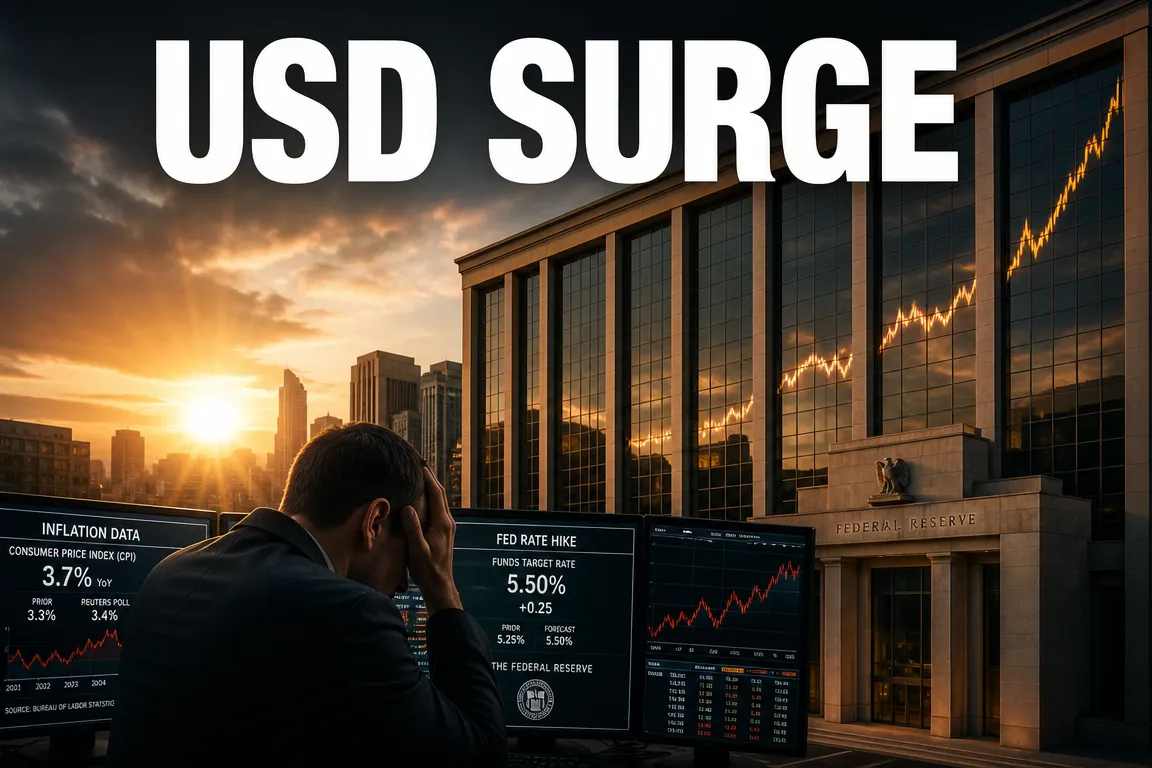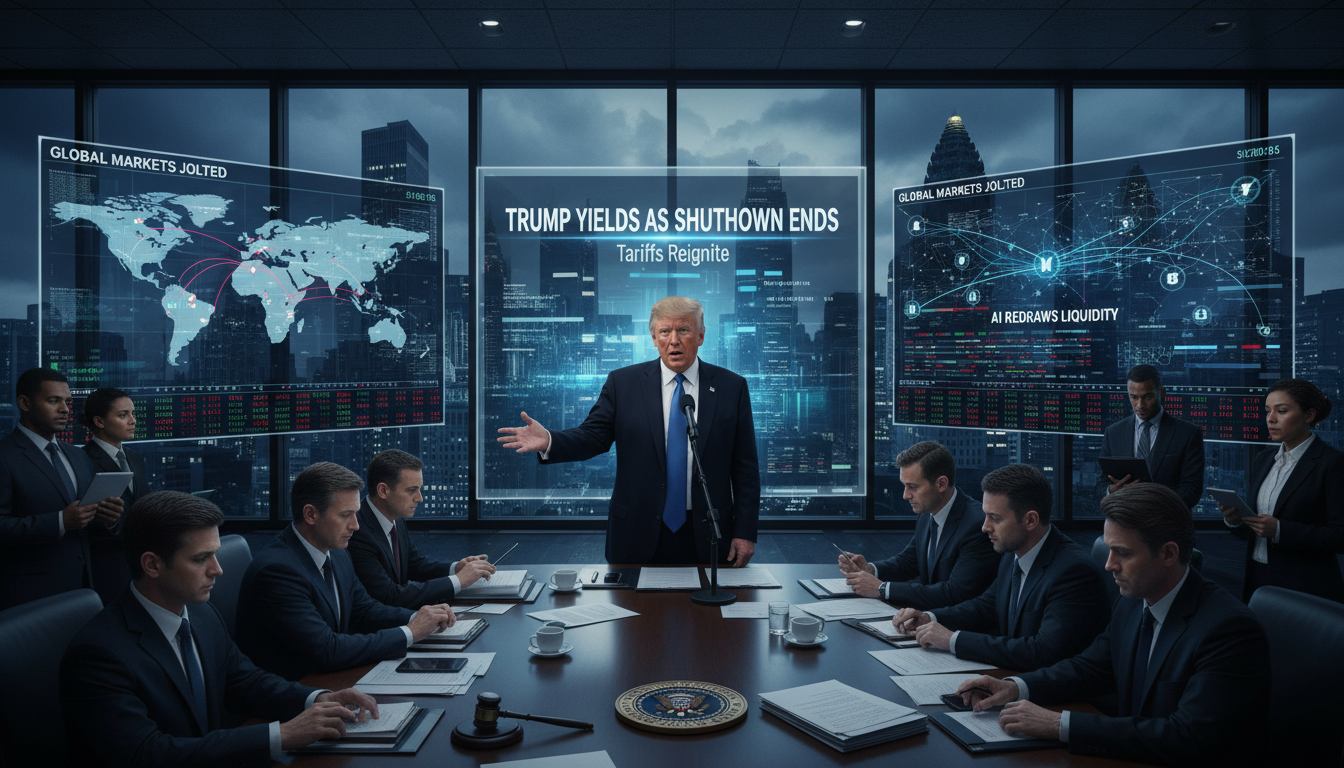
● Shutdown Meltdown, Liquidity Drain, AI Bubble Panic
Turning Point in the US Stock Market: Shutdown End Signal, Trump Policies, AI Trends, and Investment Strategies
This article summarizes two scenarios for ending the shutdown timeline and the market rebound points.
It explains in simple terms the key mechanism behind the liquidity pipeline, connecting the rising Treasury General Account (TGA) balance and the plunge in mid-to-small cap stocks.
It contains a practical checklist for verifying the Trump–Obamacare policy clash, the route of deteriorating public sentiment with airport and SNAP issues, and the AI bubble debate with Rule 40.
See the portfolio action plan you can use starting next week along with the event calendar all at once.
News at a Glance: This Week’s Global Economy and Key US Stock Market Themes
The prolonged shutdown has increased volatility in the US stock market, and the Nasdaq recorded its worst weekly performance since April.
The S&P 500 also fell by the high 2% range, rapidly cooling investor sentiment.
The two main drivers that shook the market were the shutdown and concerns over an AI bubble, with the shutdown currently acting as the stronger driver.
Deteriorating public sentiment, manifesting in reduced airport operations and disruptions to low-income food assistance (SNAP), is intensifying political pressure.
Trump is lowering the tone by continuously sending messages of “immediate agreement” via social posts.
Shutdown Status and Termination Scenarios: Best, Base, and Bottom Lines
The shutdown has entered a prolonged period, and as expectations for its end increase, the market is likely to regain its rebound momentum.
The best-case scenario suggests an agreement by mid-November, while the base and bottom-line scenario is likely an agreement before Thanksgiving (November 27).
With reduced airport and administrative operations during the Thanksgiving holiday exacerbating public discontent, pressure is mounting on both parties.
Changes in the Political Landscape: Shifting Public Sentiment and Signs of Rift Within the Republican Party
The mini-election in predominantly Democratic areas saw a Democratic victory, increasing the burden on Trump’s camp.
Analyzing consumer sentiment indicators by party reveals not only weakening sentiment among Trump supporters, but also a recent decline in the core supporter’s outlook.
Mainstream media on Wall Street and major international outlets interpret this as shaking up the “yes-man” approach within the Republican Party, hinting at potential shifts in negotiation tone.
The Essence of Policy Issues: Obamacare Subsidies vs. Fiscal Austerity
The core issue is healthcare insurance subsidies.
Trump advocates for reduced fiscal spending through cuts in subsidies to insurance companies, while Democrats oppose cuts in welfare.
Trump has bolstered his argument by presenting graphs showing a surge in insurance companies’ profit margins, emphasizing that “insurance companies have doubled their profits.”
At the same time, he is concurrently playing the cards of easing inflation in everyday life by pressuring on lower drug prices, gasoline and food prices, and reviewing 50-year mortgage rates.
Liquidity Pipeline Check: Treasury General Account (TGA) and Pressure on Mid-to-Small Caps
The rising TGA balance is connected to “government spending shutdown → withdrawal of liquidity from the market.”
Even though inflows such as taxes accumulate, payments like civil servant salaries and SNAP are halted, preventing money from circulating in the market.
This explains why liquidity-sensitive mid-to-small cap and high-beta stocks are more heavily pressured.
The end of the shutdown, in contrast, has the effect of reopening the liquidity pipeline, causing risk assets that had been suppressed to rally first.
In the context of global economic capital flows, if a signal of easing dollar liquidity emerges, US stock market volatility may reduce and valuations may normalize.
Sector Overview: Diverging Pressures on Energy, Healthcare, and Airlines
The energy sector has remained relatively weak due to pressures from stabilized oil prices.
Within healthcare, insurance companies are facing wider discounts due to policy risks.
The airline industry is beginning to experience schedule reductions and increased waiting times due to shortages in air traffic control and security personnel.
AI Trend Focus: Bubble Debate vs. Earnings Momentum
Michael Burry’s public filing of put bets against Nvidia and Palantir has triggered a “cycle peak” reaction.
The CEO of Palantir refuted this filing, questioning the “intentionality” that could affect the stock price.
This assessment is merely the CEO’s statement and has not been confirmed as fact.
The key is the fundamentals.
Rule 40 (sales growth rate + operating margin) exceeding 40 is considered healthy, above 50 is elite, and over 100 classifies as an exceptional company.
Palantir has maintained a high Rule 40 metric through guidance and margin improvements, and its earnings trend has been classically solid.
While the AI bubble debate continues, by checking through Rule 40, cash flow conversion, and customer retention, one can distinguish between genuine strength and overheating.
Market Sentiment and Technical Indicators: Interpreting Extreme Fear
The Fear & Greed Index has dropped to near extreme fear levels, reaching its lowest since April.
Historical patterns show that systematic buying during such extreme fear zones has often led to favorable mid-term returns.
However, due to the shutdown agreement news flow, short-term volatility may widen, making position sizing crucial.
Portfolio Action Plan: Tactical Moves for This Week
-
Core Assets: Gradually buy in the 5–10% pullback zone with S&P 500, Nasdaq, and Big 7 ETFs.
-
Liquidity Rebound Basket: Small cap growth stocks and quality mid-to-small cap ETFs are candidates for a rebound when the shutdown is resolved.
-
Regulatory Risk Mitigation: Reduce or hedge exposure to insurance and policy-sensitive stocks to manage volatility.
-
AI Pick Verification: Select stocks based on Rule 40, free cash flow, and customer net retention.
-
Cash and Risk Management: Lower the trading allocation to 30–50% before and after major events to prepare for gap risks.
-
Tax Optimization: Max out year-end tax-advantaged accounts, and utilize non-taxable or separate taxation strategies considering dividends, interest, and currency gains.
Next Week’s Calendar and Checklist
Shutdown Negotiation Headlines: Monitor scenarios for an agreement before mid-November.
Be cautious of increased volatility as the bottom line approaches before Thanksgiving (November 27).
13F Filing Season: Manage short-term volatility caused by large-scale trading.
Federal Reserve Speeches and QT pace commentary: Check for shifts in interest rate and liquidity tone.
Legislation on cryptocurrencies and Big Tech regulations are unlikely to pass until the shutdown concludes.
Manage exchange rate risks while monitoring the path of the dollar, interest rates, and inflation.
The Most Important Points Not Often Mentioned Elsewhere
First, rising TGA equals liquidity “locked up” in the market, which is a direct cause of the decline in mid-to-small cap stocks.
Ending the shutdown will, on the contrary, “pump” liquidity from TGA back to the private sector, potentially allowing risk assets to rebound first.
Second, disruptions in essential services like airlines and SNAP go beyond mere inconvenience; they create a surge in public opinion and exert real pressure to bring forward the political bottom line (Thanksgiving).
Third, the shutdown creates a “policy void” by halting the passage of bills.
Momentum restarts in areas such as cryptocurrencies, semiconductor support, and data regulation may all emerge simultaneously right after the shutdown, so be mindful of a potential “cluster of positive news” following the news void.
Big Tech and ETF Usage Tips
If individual stocks are challenging, it is effective to simulate the market index with Big 7 centered ETFs.
Buy in portions during downturns and gradually liquidate positions during rebounds using a box strategy, which is advantageous in volatile conditions.
For long-term core US stocks, focus on the S&P 500; for growth beta, use the Nasdaq 100; and for AI trends, diversify with semiconductor and cloud ETFs.
Risk Management Guide
Control gap risks with position sizing rather than outright stop-losses.
Adopt a principle of reducing exposure during “extreme greed” and employing phased buying during “extreme fear” periods.
Avoid exposing yourself to leveraged positions and options immediately preceding key events; it is advantageous to engage after earnings, 13F filings, and policy schedules have ended.
Case Study: How to Filter AI Names
-
Rule 40 ≥ 40, positive FCF margin, and upward revised 4Q guidance.
-
Customer net retention around 120% ±, with an increasing trend in large customers (over $1 million).
-
Maintaining pricing power in relation to GPU costs and indicators of in-house model/platform lock-in.
-
Possessing a high compliance moat in sectors such as government, defense, and regulated industries.
Conclusion: Timing and Liquidity Over Direction
While short-term direction is dictated by shutdown headlines, the essence lies in the timing of the liquidity reopening.
An extreme fear zone at the point of approaching an agreement can be interpreted as an opportunity for phased buying of core ETFs and high-quality AI stocks.
If easing of interest rates and a decline in a strong dollar occur alongside stabilized inflation, there is significant potential for valuation re-rating.
< Summary >
The shutdown locks market liquidity through the TGA, putting direct pressure on mid-to-small cap stocks.
The political bottom line likely hinges on reaching an agreement before Thanksgiving, and as agreement expectations rise, the rally momentum may be revived.
The AI bubble debate should be distinguished by fundamentals such as earnings and Rule 40 rather than by large-scale trade filings.
A portfolio centered on core ETFs, increased cash allocation ahead of events, and a phased buying strategy near the final agreement is effective.
[Related Articles…]
Trump Shutdown End Risk and US Stock Market Liquidity Map
AI Bubble Debate, Checking Palantir’s Strength with Rule 40
*Source: [ 소수몽키 ]
– 마침내 셧다운 종료? 트럼프의 다급한 항복, 증시 분위기 반전될까
● Supreme Court Blasts Trump Tariffs, Refund Tsunami, Bond Market Panic
U.S. Supreme Court Puts the Brakes on Trump’s ‘Reciprocal Tariffs’… If Invalid, Tariff Refunds, Surge in Treasury Yields, and Targeting Plan B (Section 232): What Is the Market Pricing In?
The Key Points in This Article
The key point is that the issue of “infringement of Congressional taxing authority” regarding Trump’s reciprocal tariffs has emerged in the U.S. Supreme Court hearing.
If declared invalid, the risk of refunding tariffs and large-scale issuance of U.S. Treasury bonds could lead to upward pressure on treasury yields.
The administration’s Plan B may involve a full restart of Section 232 (national security tariffs on specific items), which could cause further confusion.
The article specifically outlines, from a macroeconomic perspective, the secondary impacts on AI trends as well as the real chains in semiconductors, electric vehicles, etc.
It also connects the “refund–issuance–yields–dollar–AI valuation” chain, a point that other media rarely touch upon.
Key News Summary
- Headline: U.S. Supreme Court hears multiple critical questions regarding the legality of Trump’s reciprocal tariffs.
- Lead: Both conservative and liberal justices raise concerns that taxation and fiscal matters are within Congress’s authority. There is an increasing possibility of invalidation.
- Issue: Can the International Emergency Economic Powers Act (IEEPA) interpret the chronic trade deficit as a “state of emergency”? Is a tariff essentially a tax?
- Immediate Impact: If invalidated, tariff refunds, increased fiscal deficits, additional Treasury issuance, upward pressure on treasury yields, a stronger dollar, and adjustments to growth stock valuations could occur.
- Plan B: If reciprocal tariffs are blocked, the administration may strengthen national security tariffs on specific items such as steel, aluminum, automobiles, and semiconductors through Section 232, further disrupting supply chains.
- Politics: There is an expectation of deepening lame-duck status amid divisions within the Republican Party; conversely, a win could lead to reinforced reciprocal tariffs and a renewed trade war.
- Investment Point: Volatility management is the top priority. A “Babel strategy” is recommended, balancing duration, dollar exposure, defensive stocks, and cash flow stocks, with AI trades approached cautiously.
1) Current Status of the Lawsuit on the Invalidity of Reciprocal Tariffs
It is widely shared that in the first and second trials, the prevailing opinion was that “tariffs are essentially taxes, and taxing authority belongs to Congress.”
In the Supreme Court hearing, several questions were raised, such as “taxing authority is a core power of Congress” and “why are so many countries considered the cause of a state of emergency?”
Major media outlets like the WSJ have suggested the possibility of either narrowing the scope of tariff powers or partially invalidating them.
In other words, policy uncertainty is rising from the perspective of the global economic outlook.
2) Key Points of the Supreme Court Hearing
- Applicability of IEEPA: Can a chronic trade deficit be regarded as a “national emergency”?
- Taxing Authority: If tariffs are essentially a tax, can such a significant fiscal change with macroeconomic impacts be implemented without congressional approval?
- Proportionality: Does imposing the same reciprocal tariffs on many countries meet the principles of proportionality and rationality?
- Foreign Policy/Security vs. Economy: To what extent should the boundaries between the President’s foreign authority and Congress’s taxation power be drawn?
3) Immediate Economic Variables if the Ruling Is Invalid
- Tariff Refund Issue: Discussions may emerge over the retroactive refund of tariffs paid by importers.
- Fiscal Financing: There is a greater possibility of additional Treasury issuance to finance the refund, linking “fiscal–bond–yield” dynamics from a macroeconomic perspective.
- Upward Pressure on Treasury Yields: Expectations of large-scale issuance could increase duration risk, pushing yields higher. Rising yields can lead to valuation discounts.
- Dollar Strength: Higher yields and increased liquidity demand may boost dollar demand, potentially increasing volatility in emerging markets and commodity markets.
- Dual Role of Inflation Path: While abolishing tariffs may lower import prices (disinflation) in the short term, rising treasury yields could tighten financial conditions and dampen real demand. This may send mixed signals of short-term price declines versus tightened financial conditions.
- Stock Market: Growth and AI-themed stocks are sensitive to rising yields. There may be increased valuation adjustments despite earnings momentum.
4) Why Plan B Is More Frightening: The Reinforcement of Section 232 (Plan B)
If reciprocal tariffs are blocked, the administration can switch to high tariffs based on specific products under Section 232 through the Trade Expansion Act in the name of “security.”
Targeting strategic items such as steel, aluminum, automobiles, semiconductors, and battery materials on a tailored basis can further reduce firms’ predictability.
For companies, a “flat tariff” is more predictable than “item-specific” or “case-by-case” tariffs.
Supply chains will face exponentially increasing costs related to rerouting, country-of-origin documentation, certifications, and regulatory responses (e.g., CBP, CTPAT).
If core hardware components of AI trends, such as semiconductors, high-bandwidth memory (HBM), and AI server parts, fall under Section 232, lead times and capital expenditure plans may be disrupted, causing tech valuations to suffer a double discount from both yields and supply chain risks.
5) Observing Trump’s Lame-Duck Situation and Political Scenarios
If the tone of the Supreme Court hearing appears unfavorable, divisions between pro-Trump and anti-Trump factions within the Republican Party may be exposed.
A weakening of party unity could lead to decreased policy momentum and less consistency in macroeconomic policies (tax cuts, deregulation, trade measures).
Conversely, if the ruling is in favor, it could lead to stronger reciprocal tariffs and a rekindling of the trade war, further increasing global policy uncertainty.
In either case, volatility will persist, and if it coincides with calendar events (elections, budgets, debt ceiling, FOMC meetings), volatility may intensify.
6) Economic Ripple Effects by Scenario (Checklist for Companies and Investors)
-
Scenario A: Invalid Reciprocal Tariffs
-
Treasury Yields: Expectations of additional issuance push long-term yields upward.
-
Dollar: A widening interest rate differential and a flight to safety could strengthen the dollar.
-
Inflation: Falling import prices in the short term (disinflation), but tightened financial conditions due to rising yields could dampen growth.
-
Stocks: Growth stocks may see valuation discounts, favoring value and cash flow stocks relatively.
-
Real Economy: Complex refund procedures, price renegotiation of contracts, and the need to redesign supply chain routing.
-
Scenario B: Maintenance/Strengthening of Reciprocal Tariffs
-
Inflation: Increased tariffs may lead to higher prices being passed on, putting upward pressure on prices.
-
Trade War: There is a risk of retaliatory tariffs and expanded non-tariff barriers.
-
Reshoring/Friendshoring: Accelerated reshoring may lower potential growth due to reduced global efficiency.
-
Scenario C: Transition to Plan B (Section 232)
-
Impact by Industry: Targeting of sectors such as steel, aluminum, automobiles, semiconductors, and batteries, primarily affecting intermediate materials.
-
Points for Korean Companies: Review of ATPA/country-of-origin documentation, HS code reexamination, risks of rerouting via Mexico, and consideration of shifting production to the U.S.
-
AI Chain: Disruptions in supply and delays in lead times for HBM, CoWoS, packaging, power semiconductors, and power infrastructure (transmission switchgear) may emerge.
7) Investment and Management Strategies (Practical Approaches)
- Bonds: Consider a “step-in” approach that gradually increases duration exposure while only capturing segments prone to sharp rises in yields.
- Forex: In a strong dollar environment, hedge currency risk and maintain a mix of dollar deposits; raw material importers should strengthen futures and swap coverage.
- Stocks: Employ a Babel strategy focusing on high cash flow and dividend stocks while selectively concentrating on AI core/infrastructure, with high-valuation AI stocks being laddered ahead of events.
- Real Economy/Supply Chain: Map out the risks from Section 232 for items with high U.S. sales exposure, and revise contract clauses related to tariff and regulatory changes.
- Macroeconomic Risk Management: Simultaneously manage interest rate, dollar, and inflation variables. Prioritize businesses with strong pricing power.
8) One-Line Glossary of Terms
- IEEPA: International Emergency Economic Powers Act. Grants the President authority to restrict imports and transactions during a national emergency. The issue is the definition of “emergency” and its conflict with taxing authority.
- Trade Expansion Act Section 232: Enables high tariffs or import restrictions on items deemed to threaten national security. It is the key tool for Plan B.
9) The Most Important Point That Other Media Do Not Mention
- Invalidating the tariffs does not immediately result in “disinflation.”
- Securing funds for refunds could lead to additional Treasury issuance, which in turn may push treasury yields higher, strengthen the dollar, and tighten global financial conditions along a reverse chain reaction.
- Therefore, both growth stock valuations in the AI trend may be more sensitive to the negative effects of rising discount rates than to the positive effects of falling prices.
- In conclusion, rather than focusing on a single variable (prices), employing a strategy that continuously monitors Financial Conditions is crucial.
10) Checkpoints by Country/Industry
- Automobiles/Batteries: Potential targets under Section 232. Strengthen strategies related to North American production and alignment with the IRA.
- Steel/Aluminum: Risk of repeated impact due to historical precedents. Diversify export portfolios and redesign pricing transmission structures.
- Semiconductors/AI Infrastructure: Risks of supply disruptions in HBM, packaging, and equipment; adjustments may be needed in delivery times and penalty clauses with customers.
- Content/Services: While tariffs may have a smaller impact, a strong dollar and rising yields could compress multiples, making cash flow protection critical.
11) Timeline and Market Behavior
Before and after the Supreme Court decision, waves of “expectation and disappointment” are likely to repeat.
Event-driven volatility is natural; reducing leverage, increasing cash holdings, and using hedges (options, spreads) is a reasonable response.
After the decision, both short covering and rebalancing may occur concurrently depending on the degree of concern.
< Summary >
- The tone of the Supreme Court hearing is increasing the likelihood of a reduction or invalidation of reciprocal tariff authority.
- If deemed invalid, the chain reaction of tariff refunds → additional Treasury issuance → rising treasury yields → a stronger dollar → adjustments in growth stock valuations must be guarded against.
- Should Plan B be activated using Section 232, the resultant strengthening of product-specific national security tariffs would further disrupt supply chains and reduce corporate predictability.
- AI trends will also be exposed to dual risks from both higher yields and supply chain constraints. A Babel strategy and continuous monitoring of financial conditions are key.
- Regardless of the ruling, trade war risks will persist, and managing macroeconomic volatility will be a turning point for investment performance in 2025.
[Related Articles…]
The Real Reason Tariff Refunds Are Influencing Treasury Yields
Trade War 2.0: The Impact of Section 232 on Korean Exports
*Source: [ 경제 읽어주는 남자(김광석TV) ]
– 심상찮은 美연방대법원 분위기 “트럼프 관세, 의회 권한 침해” 트럼프 대법원 패소 판결시 ‘파괴적’ 결과 초래될 것. 플랜B가 더 무섭다 [경읽남 218화]
● Cambodia Scam Empire Explodes, Casinos Turn into Crime Labs
Cambodia’s “Online Scam Economy”: An Overview of Its Reality, the Rumors Spreading to Korea, and the Next Emerging Risk Zone
Today’s article covers: 1) the structure of the criminal ecosystem that moved to Cambodia after China’s crackdown, 2) the link between the Sinúkville Chinese transformation, illegal gambling, and online scams, 3) the mechanism behind the rapid spread of rumors targeting Korea, 4) the signals indicating where the next risk zone will shift, and 5) how AI, blockchain, and fintech are transforming this market.
The pieces of news have been rearranged using the language of economics and technology, providing a digest that can be used immediately for decision-making from the perspective of the global economy and geopolitical risk.
In particular, practical checklists have been attached, covering “leading indicators in money and data flows” and “AI-based response systems,” topics seldom addressed elsewhere.
Key News Digest: “Why Has Cambodia Become an Online Crime Hub?”
After China cracked down hard on illegal online gambling and scams, the associated organizations relocated to areas with looser regulations.
As a result, Cambodia has accelerated an “industry transformation” by layering the online scam industry on top of its already notorious criminal infrastructure known for casinos and human trafficking.
Sinúkville has rapidly become sinicized with an influx of Chinese capital, and large casinos along with surrounding service industries have shifted to serve as the hardware (land, power, accommodation, and meals) for operating online scams.
Some local observations even claim that funds from illegal gambling and scams constitute a significant portion of the domestic economy, a signal that distorts the legitimate economy and degrades the quality of foreign direct investment (FDI).
Rumors related to the kidnapping, confinement, and recruitment of Koreans have spread, sharply reducing travel and business trip sentiment, while strengthened alerts from government and platform operators have temporarily reduced new entries.
Meanwhile, recent crackdowns by local authorities have led to signs that some organizations are dispersing to areas along the Laos–Myanmar border, parts of the Philippines, and certain regions of Malaysia.
Structural Background: The ‘Combined Model’ of Offline Casinos and Online Scams
Casinos operate based on large cash flows and anonymity.
Online scams require a multinational workforce, cold-read scripts, multi-account operations, and an integrated system that handles traffic, payments, and currency exchange simultaneously.
When these two industries combine, physical boundaries (security and isolation), money laundering (chips, cash, virtual assets), and communication infrastructures (call centers, messengers, VoIP) form a closed loop in one location.
With offline betting halted due to the COVID-19 pandemic, organizations pivoted to online scams and investment fraud (crypto, stocks, FX) using the same infrastructure, leveraging scripts and databases accumulated during the pandemic as a sales tool.
Why Rumors in Korea Spread Rapidly: The ‘Recruitment-Isolation-Remittance’ Loop
High-paying IT and marketing job offers targeting foreigners, including Koreans, spread through SNS and messenger apps.
Patterns such as the retention of passports, enforced location isolation, high performance pressure, and compulsion into illegal activities have been reported after recruitment, and when escape cases combine with rumors, the perception of risk increases sharply.
When rumors paralyze the market, organizations quickly diversify their targets or move to new regions.
Ultimately, if the ‘recruitment-isolation-remittance’ loop is broken, the organization’s profitability plummets; hence, as crackdowns and platform blocks increase, the geographical movement accelerates.
Economic Impact: Bubble-like FDI, Non-Reinvested Cash Flows, and Institutional Risks
Scam-based funds are hard to capture as tax revenue and do not circulate as institutional investments.
Only certain sectors such as real estate, accommodation, power, and security become excessively oversized, creating “illusory growth” that does not lead to improvements in the productivity of the real economy.
At the time of crackdowns, vacancies, defaults, and the simultaneous collapse of small local businesses cause significant volatility in the regional economy.
This process is connected to the global economic environment.
In periods of peak interest rates, illegal funds flow rapidly as high-yield, high-risk money, favoring regions with high geopolitical risks and loose currency regulations and capital controls.
Ultimately, emerging markets that are sensitive to inflationary pressures and exchange rate volatility may experience increased financial stress as illegal funds flow in and out.
Signals of the Next Risk Zone: These ‘Indicators’ Can Provide Early Warnings
• A sudden surge in power usage coupled with abnormal increases in leased data center and call center-like spaces.
• Abrupt announcements of new casinos and resort developments and a rapid increase in land transaction volume in surrounding areas.
• Lax enforcement of real-name verification for pre-paid SIM/eSIM by telecom companies and a sudden spike in international call/SMS traffic.
• Abnormal on-chain trading patterns of Tether (USDT) and stablecoins in wallet groups of a specific city.
• A sudden explosive increase in SNS and Telegram job postings in the language of a particular region within a short period.
If these five signals occur simultaneously, it is highly likely that “this is the next target.”
AI and Technology Trends: Automation in Crime vs. Automation in Defense
Offensive parties leverage LLMs to mass-produce multi-language phishing scripts, using voice synthesis and deepfakes to gain trust.
They improve conversion rates by switching to operating with “victim management tools” similar to CRM systems, working with teams across time zones, and purchasing leaked databases from data brokers to refine targeting.
On the defensive side, AI-based voice spoofing detection, email and messenger behavior analysis, and wallet clustering are used to trace money flows.
Payment companies and exchanges are building hybrid control towers that combine on-chain risk scoring with off-chain KYC, and they collaborate with stablecoin issuers and custodians on “velocity control” in response to suspicious transactions.
While these flows are a downside of digital transformation, they also represent an area where automated and standardized responses are possible.
Checklist for Enterprises and Investors: 10 Immediately Applicable Measures
- Recruitment and Dispatch: Include a verification line for company credentials (corporate registration, tax number, local address, and representative) in overseas recruitment proposals.
- Business Trips and Security: When traveling locally, prepare alternative communication methods besides roaming numbers, establish emergency location sharing, and back up messenger plans.
- Due Diligence on Counterparties: For companies linked to casinos and resorts, verifying the ultimate beneficial owner (UBO) and confirming the source of funds is essential.
- Payment and Collection: When accepting stablecoins, allow only whitelisted wallets and reflect the on-chain risk score baseline in internal controls.
- HR and Employment: Do not approve overseas positions under the guise of “IT/Marketing” with high salaries without consulting local legal advice or confirming labor permits.
- Data Security: Completely block suggestions for purchasing leaked databases or third-party lead provisions and set rate limits on suspicious API call patterns.
- Marketing: Immediately upgrade bot/spam detection rules when there is a rapid increase in regional or language-specific patterns among new leads.
- Partner Banks: Assess local banks’ AML systems and past sanction responses, and apply automatic hold rules for routing from high-risk countries.
- Crisis Communication: Pre-establish response scripts and hotlines to counteract the spread of rumors about employee kidnappings or confinements.
- Insurance: Consider including special clauses for overseas dispatch-related missing persons/injuries, cyber phishing indemnities, and remittance fraud (Invoice Fraud).
Local Update in Cambodia: The Coexistence of Crackdowns and Dispersion
Since 2023, Cambodian authorities have intensified their crackdowns, with raids and dissolutions continuing on certain scam compounds.
Areas with strict enforcement quickly see demand fade, and a “balloon effect” emerges as organizations shift to fringe regions of neighboring countries.
While scam recruitment routes combined with overseas workforce dispatch have been reduced in exposure due to enhanced platform policies, channels have shifted to closed communities and private DMs.
For both travel and investment, approaching through channels other than “legitimate/official” ones does not justify the risks versus returns.
An Overlooked Key Point: Anticipating with ‘Money and Data’
- Money Flow: Leading signals include the inflow of stablecoin wallets by region, an expansion of premiums in P2P over-the-counter trades, and a sudden surge in cash premiums at unverified currency exchanges.
- Data Flow: When volumes of spam calls and messenger phishing in specific languages (Korean, Chinese, Thai, etc.) soar from one city, it indicates higher local call center operation.
- Institutional Gaps: When real-name SIM systems and travel rule loopholes in exchanges coexist in a region, it creates a “one-stop business environment” for organizations.
When these three factors converge, mark the location on the map.
This allows for proactive actions before mainstream news catches on.
Policy and Regulatory Recommendations: ‘Targeted Crackdown + Velocity Control of Funds’
Collaborate with platforms and telecom companies to preemptively block recruitment or investment fraud advertisements using attractive keywords, and block high-risk outgoing IDs on a subnet level.
For cross-border small-value payments, consider implementing a “velocity cap” and a “cooling off” period, providing time to recover funds in case of damage.
Work with local banks and currency exchanges to monitor suspicious cash premiums, and when there is a sudden spike, initiate public alerts and warning systems.
Construct a public dashboard that combines victim report data with on-chain data to encourage voluntary private surveillance.
From a Global Macro Perspective: Why Now?
As debates persist about the end of peak interest rates and volatility in risky assets increases, illegal organizations respond more aggressively with short-term, high-yield strategies.
Even in phases of easing inflation, regions where real wages recover slowly remain vulnerable to high-yield job offers.
As geopolitical risks widen, judicial voids emerge, allowing online scams to flourish in the gaps.
The faster digital transformation progresses, the more both offensive and defensive operations depend on technology, with data-driven prevention systems ultimately differentiating national and corporate competitiveness.
Practical Guide for Korean Individuals and Enterprises
- Individuals: Verify overseas high-salary offers with a video meeting, original local business registration documents, and Google Maps confirmation; immediately refuse requests for original passports and mobile phone documents.
- Corporations: Do not make advance payments to new partners in Cambodia or neighboring countries connected with casinos/resorts until verifying the UBO, source of funds, and transaction patterns on exchanges.
- Finance and Fintech: Combine on-chain travel rules with real-residence verification, and automatically block high-risk IPs and device fingerprints from risky regions.
< Summary >Cambodia has developed a “closed criminal ecosystem” by layering the online scam industry on top of its pre-existing casino and human trafficking infrastructure.
As the recruitment-isolation-remittance loop targeting foreigners, including Koreans, is shaken by rumors and crackdowns, organizations are dispersing to neighboring countries.
Key leading indicators include power, real estate, communications, on-chain money, and SNS recruitment traffic.
While AI, LLMs, and stablecoins fuel offensive attacks, integration of on- and off-chain analysis and velocity control enable effective defenses.
For investment, transactions, and recruitment, immediately implement the three-step set of “entity verification – money velocity control – crisis communication.”
This article provides a practical checklist from the perspectives of the global economy, geopolitical risk, inflation, interest rates, and digital transformation.
[Related Articles…]
- Structural Risks in Cambodia’s Scam Economy
- Mapping Southeast Asia’s Money Laundering with USDT 2025
*Source: [ 달란트투자 ]
– 캄보디아 전체에 싹다 퍼진 한국에 대한 무서운 소문 | 장준영 교수 풀버전