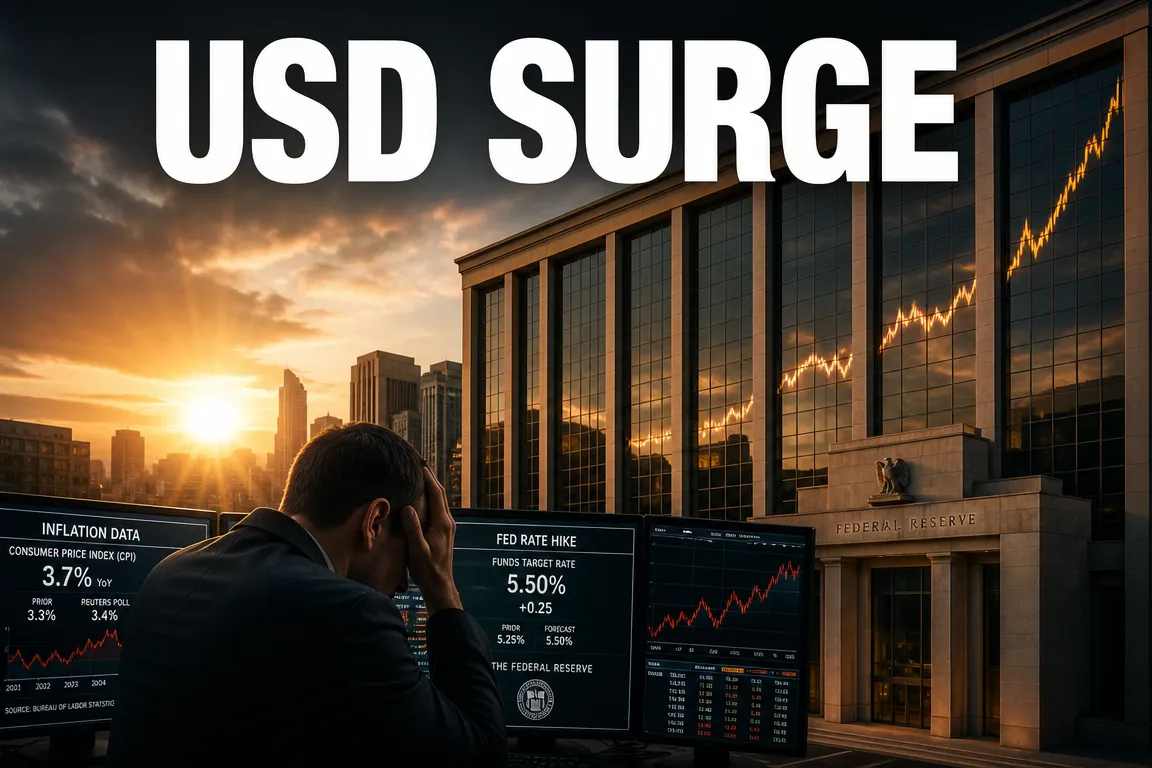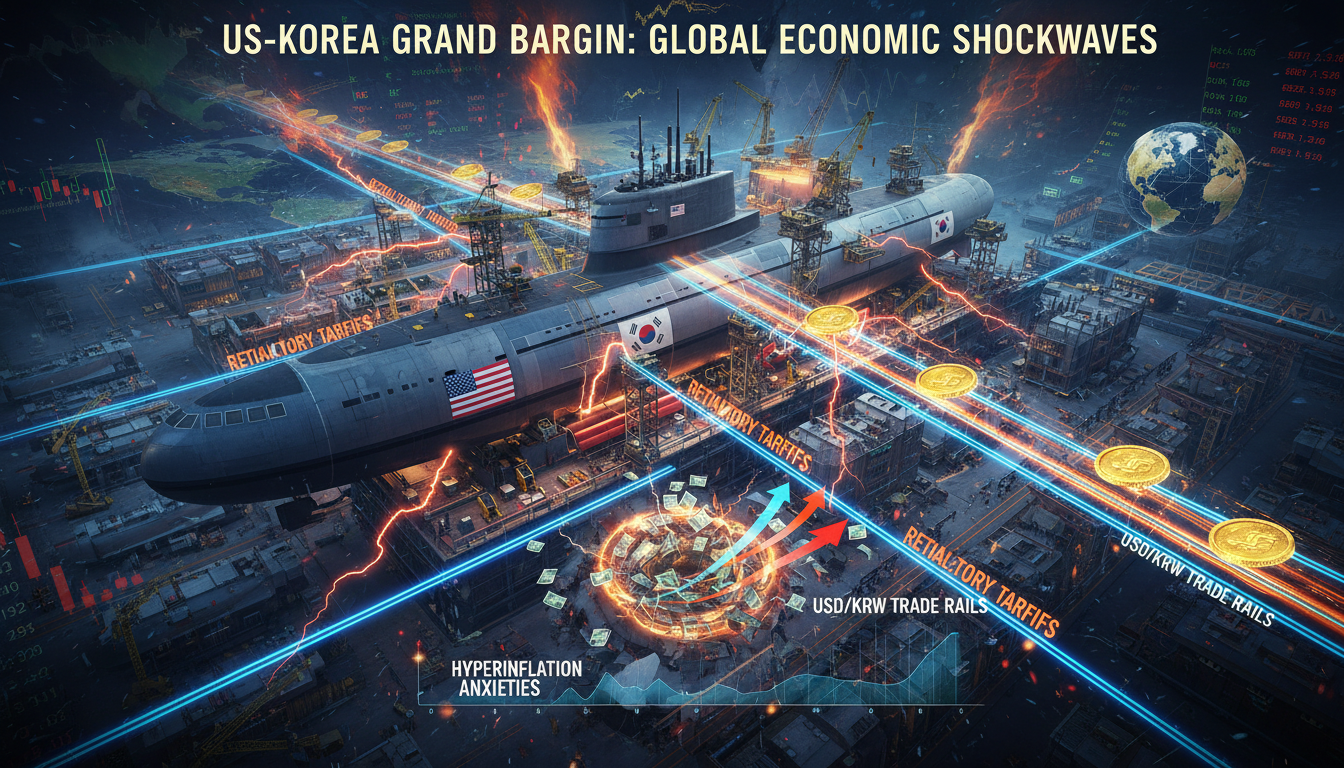
● 15 Tariff Trap, Nuclear Sub Greenlight, 20B Dollar Shield
US–Korea Joint Fact Sheet Immediate Analysis: Reciprocal Tariffs 15%, Foreign Exchange Market Stabilization Measure, Approval for Nuclear-Propelled Submarines, Comprehensive Overview of Key Changes in Shipbuilding, Semiconductors, and Agri-Livestock Products
This article summarizes the actual effects of the reciprocal 15% tariff rule, the impact on the exchange rate from the annual US$20 billion foreign exchange market stabilization measure, the industry ripple effects of the clause including “US vessel construction in Korea,” the approval for nuclear-propelled submarines and the conditions for supporting civilian uranium enrichment, as well as the easing of non-tariff barriers in agri-livestock products and the implications of the newly established US Desk—all in one go.
It is organized in a news format, clearly outlining the industry winners and losers from a global economic outlook perspective, the execution risks, and investment checkpoints that can be immediately applied.
Additional details on “pitfalls in the details” that are rarely addressed in other YouTube videos or news media are separately listed.
One-Line Briefing
Based on the US–Korea Strategic Trade and Investment Agreement fact sheet, US-approved investments total US$150 billion plus an additional memorandum of understanding (MOU) commitment of US$200 billion.
The reciprocal tariff is structured to apply the highest rate among the KORUS, MFN, or 15% rates.
To ensure the stability of the foreign exchange market, Korea has set an annual US dollar procurement obligation limit of US$20 billion, and it has included language prioritizing means other than market purchases.
In terms of shipbuilding cooperation, it specifies the possibility of “US vessel construction in Korea,” which will accelerate the restructuring of the supply chain.
The US approved Korea’s construction of nuclear-propelled submarines and agreed to consult with Korea on project requirements including fuel procurement.
It stated its support for civilian uranium enrichment and spent nuclear fuel reprocessing, subject to adherence to the 123 Agreement and US laws.
In agri-livestock products, measures include the establishment of a “US Desk” to ease non-tariff barriers, and phased measures to maintain market access for US meats and cheeses.
Overview of the Agreement in Numbers
In addition to the approved investment of US$150 billion, there is an additional MOU commitment of about US$200 billion.
The reciprocal tariff structure applies the highest rate among “KORUS FTA tariffs, MFN tariffs, or 15%.”
For automobiles, parts, and lumber, customs duties of KRW 232 trillion are set at 15%, and if the existing tariff is less than 15%, it is capped at 15% in total.
For pharmaceuticals, a cap of 15% is specified on the KRW 232 trillion tariff.
For semiconductors (including equipment), a “not less favorable” clause is attached so that the conditions applied in Korea are not less favorable than those in other countries.
Foreign Exchange Market Stability: The Meaning of the Annual US$20 Billion Cap
The US and Korea have thoroughly discussed the potential impact of implementing the MOU on the foreign exchange market and have reached a mutual understanding to prevent market instability.
Korea is not obligated to procure more than US$20 billion in US dollars in any given year.
The intention is to reduce exchange rate volatility by procuring dollars through means other than market purchases as much as possible.
If market instability is anticipated, Korea may request adjustments to the procurement scale or timing, and the US will consider this in good faith.
From an exchange rate perspective, this functions as a “buffer” against the risk of sudden KRW fluctuations and is highly likely to contribute to the stability of the foreign exchange and bond markets.
However, its effectiveness may vary depending on global US dollar liquidity, US interest rates, and geopolitical variables.
Shipbuilding and Defense: Inclusion of “US Vessel Construction in Korea”
The US welcomed Korea’s investment as contributing to the modernization and expansion of the US shipbuilding industry’s capabilities.
Cooperation will be expanded in maintenance, repair, overhaul (MRO), manpower development, shipyard modernization, and supply chain resiliency.
The key phrase is “including the possibility of US vessel construction in Korea.”
This aligns with a supply chain strategy aimed at bridging the gap between the rapidly increasing US vessel demand and the constraints of US shipbuilding infrastructure with Korea’s production capacity.
From Korea’s perspective, it opens up opportunities for both commercial vessels and engagements in technology exchange and an expanded order pipeline for warships and specialized vessels.
Domestic legal procedures and US Congressional approvals remain as variables.
Nuclear and Security: Nuclear-Propelled Submarines and Civilian Enrichment
The US explicitly stated its approval for Korea’s construction of nuclear-propelled attack submarines.
It will work closely with Korea to determine project requirements, including fuel procurement methods.
It expressed its support for civilian uranium enrichment and spent nuclear fuel reprocessing for peaceful purposes, in compliance with the US–Korea 123 Agreement and US laws.
This is expected to strategically upgrade energy security, the nuclear power ecosystem, and the overall cycle technology for high value-added nuclear fuel.
Agricultural Products and Non-Tariff Barriers: Establishment of the “US Desk”
Korea agreed to cooperate with the US to streamline the regulatory approval process related to food and agricultural biotechnology.
A dedicated “US Desk” will be established to handle requests concerning US horticultural products.
It specifies maintaining market access for US meats and cheeses, signaling a phased opening.
This is not a declaration of full market opening.
However, the easing of non-tariff barriers will make it considerably easier for US agri-livestock products to enter the Korean market.
While this is positive for stabilizing consumer prices, it is critical to accompany this with measures to protect domestic farmers.
Commercial Ties and Large-Scale Orders
The announcement of US$150 billion in direct overseas investment by Korean companies during the Trump administration was welcomed.
It mentioned Korean Air’s announcement to purchase 103 Boeing aircraft equipped with GE engines (approximately US$36 billion).
An annual exhibition campaign called “Buy America in Seoul” will be promoted to boost US companies’ exports to Korea.
This is a trend toward establishing trust between companies through policies that balance supply chains with domestic and imported goods.
Actual Effects of the Reciprocal Tariff 15% Rule
The “highest tariff among KORUS, MFN, or 15%” rule essentially sets the tariff floor at 15%.
Even items that previously benefitted from KORUS zero-tariff advantages may be subject to the reciprocal tariff framework, potentially diluting the benefits of the FTA.
However, the cap and alignment on KRW 232 trillion for certain items reduce uncertainty and increase predictability.
For semiconductors, the “not less favorable” clause reduces the risk of being disadvantaged compared to Taiwan.
Who Benefits and Who Bears the Burden
The shipbuilding and defense sectors are expected to enjoy structural benefits, including the possibility of building US vessels in Korea.
Semiconductors and related equipment have a neutral to favorable outlook due to the anti-discrimination clause.
The automobile and parts sector focuses on aligning conditions with global competitors by applying the 15% reciprocal tariff.
Pharmaceuticals benefit from the predictability provided by the 15% cap on the KRW 232 trillion tariff.
Agricultural products may face intensified import competition due to eased non-tariff barriers.
Market and Investment Checkpoints
Exchange rates may be buffered against surges by the foreign exchange market stabilization measure, but the direction will ultimately be influenced by US interest rates and the US dollar index.
The KOSPI may highlight beneficiaries such as the supply chains in shipbuilding, defense, nuclear power, aerospace, and some chains related to AI and quantum computing.
Domestic agricultural and food stocks may reflect intensified competition, making it important to review government supplementary measures.
The bond market could be impacted by non-market foreign currency procurement preferences on swap and cross-currency basis spreads.
Timeline and Risks
The mention of the amendment of Executive Order 14257 (dated April 2, 2025) and the document to be adopted by the US–Korea Joint Committee by the end of the year are crucial milestones.
Risks remain regarding Congressional approval, detailed guidelines, WTO issues, and potential changes due to presidential or policy shifts.
The specifics of nuclear fuel procurement, the scope of technology transfer, and the detailed investment plan for shipyard modernization are key issues to watch.
AI and Fourth Industrial Revolution Trend Points
The agreement document explicitly designates artificial intelligence and quantum computing as strategic sectors.
It is highly likely that supply chain linkages will be strengthened across semiconductors, cloud computing, defense AI, and smart ships (digital twins).
From a global economic outlook, the investment cycle in AI infrastructure may coincide with the capital expenditure cycles in shipbuilding, energy, and nuclear sectors, providing a buffer against an economic downturn.
Key Details Often Overlooked by Other Media
The application of the “highest tariff” in the reciprocal tariff effectively nullifies the zero-tariff benefits of the FTA, which can have a significant impact on mid- to long-term pricing strategies and consumer prices.
The annual US$20 billion cap is an “obligatory limit,” meaning that fewer dollars can be procured if necessary, which is advantageous for exchange rate stability.
The term “means other than market purchases” may include income from foreign currency asset management, long-term swaps and hedges, and public or policy-driven financing.
The clause “possibility of US vessel construction in Korea” is a cornerstone of the supply chain strategy intended to alleviate bottlenecks in US shipbuilding by leveraging Korea’s production capacity.
The “not less favorable” clause for semiconductors suggests that conditions may effectively be pegged to those in Taiwan.
The “US Desk” for agri-livestock products is a channel designed to systematically bypass and ease non-tariff barriers, reducing approval times and increasing the approval rate in practice.
Policy Challenges and Corporate To-dos
The government must concurrently implement measures to protect domestic farmers and enhance their competitiveness, along with effective communication in the foreign exchange market.
The shipbuilding and defense sectors need to proactively address US standards, cybersecurity, and supply chain transparency requirements.
For semiconductors and biotech, redefining the cost structure under various tariff scenarios and optimizing production and logistics in North America will be necessary.
Disclaimer and Sources
This summary is a news-style reconfiguration based on the user-provided “US–Korea Joint Fact Sheet” original text and its explanatory content.
Final implementation may vary according to subsequent detailed documents, legislation, and administrative guidelines.
< Summary >
The reciprocal tariff applies the highest rate among KORUS, MFN, or 15%, which may partially dilute the benefits of the FTA.
The US$20 billion annual cap on foreign exchange procurement and the preference for non-market-based procurement serve as a buffer against sudden exchange rate fluctuations.
The possibility of US vessel construction in Korea, the approval of nuclear-propelled submarines, and the support for civilian uranium enrichment provide a structural upside for the shipbuilding, nuclear power, and defense sectors.
Agricultural products may see a phased opening accelerated by the easing of non-tariff barriers and the establishment of the US Desk.
Semiconductors face low discrimination risk due to the clause ensuring conditions are “not less favorable” compared to those in other countries.
Investment highlights include supply chains in shipbuilding, defense, nuclear power, semiconductors, and AI, while risks lie in Congressional approval, detailed guidelines, and external variables.
[Related Articles…]
US–Korea Strategic Trade and Investment Agreement: A Comprehensive Overview
Foreign Exchange Market Stabilization and KRW Exchange Rate Outlook
*Source: [ 경제 읽어주는 남자(김광석TV) ]
– 한미 공동 팩트시트…핵추진 잠수함 건조 승인 및 외환시장 안정성 확보. 선… 농축산물 비관세장벽 완화 [즉시분석]
● Veteran Day, Corporate Exploitation
Why Does the U.S. Give Free Coffee to Soldiers? The Economics of Veterans Day, The Naked Truth About U.S. Vacation, and the Community-Driven Firefighting System
The key point is that it summarizes the real reasons why U.S. retailers hand out free coffee on Veterans Day, along with its impact on corporate finances.
It covers WOTC tax incentives, the ripple effects of the GI Bill and VA loans on the housing market and economic growth, and links between Treasury/bond market closures and interest rate volatility.
It also examines why paid vacation in the U.S. is in a “regulatory void”, as well as its implications for at‑will employment, inflation, the labor market, and productivity.
It explains in detail how volunteer firefighters, the “Fill the Boot” fundraising, and community financing support public services, along with the emerging trends in AI in this space.
1) Veterans Day, The Economics of Free Coffee in Retail
Every November 11th is Veterans Day, a federal holiday in the United States.
On this day, major retail and F&B chains offer free or BOGO deals to soldiers, veterans, and military families.
Large-scale promotions are repeated, with participants including Starbucks, Krispy Kreme, Applebee’s, and some airlines, hotels, and department stores.
While the U.S. stock market typically opens as usual, the bond market is closed following SIFMA guidelines, which results in lower liquidity in interest rate trading.
Why do this.
- From a retail perspective: This day is a powerful customer acquisition opportunity.
Although the cost of a free cup of coffee is only a few dozen cents, considering the customer lifetime value (LTV) and repeat visits, the customer acquisition cost (CAC) is efficient.
The military and veteran communities have strong networks of family and friends, resulting in significant word-of-mouth effects. - From a tax and employment perspective: Companies can lower their effective tax rates by employing veterans and taking advantage of the Work Opportunity Tax Credit (up to $5,600, and up to $9,600 for disabled veterans).
- From a human capital perspective: The Post‑9/11 GI Bill has helped reduce educational disparities by supporting tuition and housing costs, thereby boosting veterans’ long‑term wage trajectories and consumer spending.
- From a housing and finance perspective: VA home loans, with features such as zero down payment and PMI exemption, have expanded veterans’ homeownership and local consumption, and the loans are securitized as Ginnie Mae guaranteed MBS, linking them to interest rate structures.
- From a social capital perspective: Defense companies build brand and reputational assets through “Thanks for your service” campaigns, creating tangible value in the “S” dimension of ESG.
Summary of Economic Impact.
- Consumer spending: Captures traffic during the November shopping peak (from Veterans Day to Black Friday).
- Interest rates and bonds: Bond market closures can make Treasury bid liquidity appear thin, potentially reducing perceived interest rate volatility.
- Labor market: Veteran‑preference hiring and tax incentives help alleviate skill mismatches in certain industries.
- Macroeconomics: The GI Bill and VA loans contribute to long‑term economic growth through education and housing.
2) Points Other News Often Miss: The Numbers and Structure of Veteran Economics
- The Payback Mechanism of Free Coffee: The profitability hinges on securing customer databases, app installations, and conversion rates to loyalty programs, relative to the cost of the coffee.
If app push notifications and coupon remarketing lead to a repurchase within 30 to 60 days, the CAC drops sharply. - Treasury and MBS cycles: VA loans exhibit prepayment patterns that differ from those of conventional loans.
During periods of falling interest rates, waves of VA refinancing shorten the duration of Ginnie Mae MBS, triggering hedging demand, which in turn feeds back into interest rate volatility. - Local economic impact: Increased homeownership expands the property tax base, improves the quality of community services such as education, security, and firefighting, and this virtuous cycle leads to population inflows.
3) The U.S. Is Not a Vacation Republic: Regulatory Voids and the Labor Market
There is no federal law mandating paid vacation in the United States.
The FMLA applies only to establishments with 50 or more employees, is unpaid, and has tenure requirements, thus its coverage is limited.
Even when vacation days are allocated, actual usage tends to be low.
While Europe has lengthy statutory minimum vacations with high utilization rates, the U.S. frequently sees employees forgo using their vacation.
Structural Reasons.
- At‑will employment: Except for Montana, most states in the U.S. allow relatively free firing and quitting. This culture incentivizes employees to refrain from taking vacation in order to maintain job security.
- Compensation structure: Many companies evaluate performance, bonus, promotions, and project assignments based on visible commitment, which can make employees feel that taking vacation is a disadvantage.
- Cost recognition: Companies must account for unused PTO as a liability, which can raise cost recognition issues during layoffs or restructurings.
- Macro linkage: Low vacation usage may create an illusion of short‑term productivity, but burnout and increased turnover lead to skill loss and wage inflation. This spills over into service inflation and indirectly affects interest rate trajectories and policy decisions.
Recent Trends.
- “Unlimited PTO” appears liberating on the surface, but in many cases, the lack of clear guidelines and limits actually results in lower usage rates.
- With the shift to remote and hybrid work, the boundaries between vacation and work blur, leading to prolonged working hours.
- Big tech restructuring has led to the widespread adoption of remote notifications through email and system lockouts, further weakening job security.
4) Points Other News Often Miss: Vacation, Finance, and Policy
- PTO liabilities become a burden on earnings during periods of rising interest rates and slowing profits. This is why there is an increase in “use your vacation” emails at the year‑end.
- Teams with low vacation usage may have strong short‑term performance but tend to experience higher turnover, error rates, and longer project lead times within 6 to 12 months.
- When interpreting productivity statistics, it’s important to account for the diminishing marginal returns of working over 60 hours per week and the decline in output quality.
5) Why Do Firefighters Fundraise on the Streets? Community‑Driven Public Services
The American firefighting system consists of both professional and volunteer fire departments.
A significant portion of fire organizations across the country operate on a volunteer basis, funded through local taxes and community donations.
The “Fill the Boot” fundraising tradition, which began in 1954, supports firefighting equipment, training, and community service.
Emergency Medical Services (EMS) in many areas are also run by nonprofit volunteer organizations operating around the clock, making community donations and property taxes crucial to service quality.
Economic and Policy Points.
- Community financing: Property taxes sustain education, public safety, and firefighting services, and differences in quality can influence population movement and housing prices.
- Risk management: Counties with a high reliance on volunteers are more likely to experience coverage gaps during major disasters or wildfire seasons, making state assistance and mutual aid systems essential.
- Social trust: The “I protect my own neighborhood” culture supplements the safety net, but can also cause friction in accommodating migrants or vulnerable groups from other areas.
6) AI Trends from a 2025 Perspective: Defense, HR, and Emergency Response
- Defense AI: Target identification with computer vision, autonomous drones trained on synthetic data, and battlefield network optimization are emerging as mainstream.
RDT&E budgets are shifting towards AI and electronic warfare, leading to increased partnerships between prime contractors and small to medium‑sized companies in the cyber and sensor sectors. - Veteran healthcare AI: VA hospitals are piloting the use of AI for image reading assistance, chronic disease risk prediction, and mental health chatbots, contributing to the reduction of disparities in healthcare access.
- HR Tech: PTO recommendations, staggered scheduling, early burnout warnings, and workforce allocation optimization models are enhancing both productivity and vacation utilization rates.
- Emergency Response: The use of drones with AI for early wildfire detection, computer vision for lifesaving searches at fire scenes, and LLM‑based automated multi‑agency situation reporting are becoming widespread.
- Governance: Public and defense AI are subject to increasingly strict auditability, data sovereignty, and safety standards, and there is a growing demand for explainability (XAI) in the procurement market.
7) Investment and Business Checklist
- Consumer goods and retail: Focus on the traffic and conversion rates from Veterans Day to Thanksgiving, and manage CAC/LTV by optimizing app and loyalty sign‑up flows.
- Finance and interest rates: Monitor the prepayment sensitivity of VA MBS related to veterans, the liquidity on bond market closure days, and the interest rate trajectory together.
- HR and organization: Design PTO policies to encourage usage and implement workforce management based on burnout indicators.
- Public safety: Community partnerships and support for volunteer organizations enhance both local branding and ESG performance.
- Defense and AI: Explore dual‑use technology opportunities in the convergence of ISR, autonomy, electronic warfare, and cyber.
News Briefing Summary
- What happened: Massive gratitude promotions take place on Veterans Day, the U.S. does not mandate paid vacation at the federal level, and a significant portion of firefighting and emergency services rely on community financing.
- Why it matters: It directly affects consumer spending, labor market behavior, interest rates and bond market liquidity, as well as the quality of local economies and public safety.
- Key numbers: The WOTC offers up to $5,600 in tax credits for hiring veterans and up to $9,600 for disabled veterans. VA loans expand homeownership through zero down payment and PMI exemptions and are securitized as Ginnie Mae MBS.
- Next: The adoption of AI in defense, public services, and HR is rapidly accelerating, and the management of PTO and burnout will determine productivity and turnover rates.
Key Takeaways Often Missed by Other YouTube Channels and News Outlets
- The true economics of free coffee lie not in its cost, but in the LTV/CAC and loyalty funnel.
- Veteran‑related loans are connected to interest rate volatility through the Ginnie Mae MBS prepayment cycle.
- Unused PTO is not an accounting trick but a long‑term cost, and it drives service inflation through workforce attrition.
- The quality of community financing creates disparities in public services, which eventually accumulate into differences in housing prices, population movements, and consumer spending.
- In public and defense AI, auditability and procurement standards are more critical than the technology itself.
< Summary >
Veterans Day is not only a customer acquisition day for retail but also an economic event intertwined with tax incentives and the interest rate market.
The regulatory void in U.S. paid vacation directly relates to at‑will employment, productivity, and wage inflation.
Firefighting and EMS are supported by community financing, and regional disparities are clearly reflected in economic indicators.
AI is making deep inroads in defense, public, and HR sectors, where performance combined with governance compliance becomes the deciding factor.
[Related Articles…]
- The Economics of U.S. Veterans Day: The Correlation Between Tax Incentives and Consumer Traffic
- The Naked Truth About U.S. Paid Vacation: A Reinterpretation of At‑Will Employment and the Structure of Productivity and Wages
*Source: [ Maeil Business Newspaper ]
– 미국은 왜 군인에게 커피를 쏠까? 베테랑 데이의 경제학 | 홍성용 특파원
● Oil Curse, Hyperinflation, Crypto Dollarization, Mass Exodus
Venezuela, the Day the Oil Blessing Turned into a Curse: Hyperinflation, Refugees, Stablecoins, and the Lessons We Must Learn
This article covers how an oil-dependent economy collapsed, the mechanism behind hyperinflation, the dual-currency economy created by the spread of stablecoins, the geopolitical repercussions and impacts on neighboring countries, the direction and risks of sanctions as of 2025, an investment and policy checklist, and even an AI-driven early warning model for national risks.
In particular, it separately outlines the “resource design for post-oil transition” and the “structural changes in tax revenue and the financial system brought about by the stabilization of stablecoins,” which other media rarely address.
It is organized in a news format for a clear understanding from the perspectives of key economic indicators: inflation, interest rates, exchange rates, raw materials, and recession.
Headline Briefing
Venezuela once stood as a wealthy nation in Latin America, backed by one of the world’s largest oil reserves, but its single-resource dependence and failed nationalizations led to a collapse in productivity.
In 2014, a sharp drop in international oil prices combined with sanctions evaporated fiscal resources, and excessive money printing resulted in hyperinflation.
According to local private estimates, the annual inflation rate remains in the 200% range as of 2025 (citing data from the Venezuela Financial Observatory), eroding purchasing power.
Refugees are estimated to have reached around 7.9 million, exacerbating social and fiscal burdens, as well as political tensions in neighboring countries.
The loss of confidence in the national currency has led to the deep penetration of stablecoins (especially USDT) in daily transactions and commerce.
The interplay of strengthened authoritarianism and sanctions has further delayed recovery across the real, financial, and institutional sectors.
What Happened: A Timeline of the Collapse
During the oil price boom of the early 2010s, massive oil revenues fueled free welfare and an expansion in import consumption.
Economic diversification was delayed, and the “Dutch Disease” deepened, weakening the competitiveness of manufacturing and agriculture.
Extensive nationalization and unprofessional management harmed productivity, cementing an economy that could produce nothing beyond oil.
After 2014, with a collapse in foreign currency reserves due to falling oil prices and sanctions, the government resorted to printing money, triggering hyperinflation.
Public services and the security system collapsed, leading to a breakdown in the functions of healthcare, education, and power supply networks.
A mass exodus began, intensifying regional disorder and diplomatic conflicts.
Venezuela in Numbers
Inflation: At its peak in 2018, some estimates reached over 1,000,000%, with private estimates for 2025 in the 229% range (varying by institution).
Migration: The UN estimates that by the end of 2024, approximately 7.9 million people expatriated.
Wages and Public Services: Reports indicate that teachers’ salaries have fallen to double-digit US dollars, and many public schools operate only 2–3 days a week.
Trade: Traditional oil exports have sharply declined, and from 2024 to 2025, attempts at “post-oil” strategies emerged, such as promoting exports of seafood (jellyfish and shrimp).
Core Causes: 5 Key Factors
Single-resource dependency: The vulnerability of the structure is entrenched as oil price volatility simultaneously shakes fiscal revenues, exchange rates, and growth.
Dutch Disease: During periods of currency appreciation, non-resource sectors lost competitiveness and an industrial monoculture ensued.
Excessive nationalization and governance failures: Unprofessional management and corruption led to a decline in productivity and a vicious cycle of reduced investment.
Loss of monetary and fiscal discipline: The sharp drop in revenues and subsequent overprinting of money fixed inflation expectations and eroded trust.
The interplay of authoritarianism and sanctions: The regression of democracy attracted sanctions, which in turn deepened the economic collapse.
Stablecoins and the Dual-Currency Economy: The Shadow of Survival in Finance
With the loss of confidence in the bolívar, everyday transactions and savings have shifted to dollar-pegged stablecoins (USDT).
Advantages: They hedge against inflation, mitigate exchange rate volatility, improve transaction efficiency with faster payments and lower fees.
Disadvantages: They complicate tax collection, weaken the intermediary role of banks and payment infrastructures, and reduce financial intermediation.
Policy Implications: A model combining a “regulatory sandbox + reporting” system with mechanisms to capture tax revenue and enforce KYC/AML, while acknowledging legal usage within a set limit, is needed.
Government and public use of stablecoins face challenges of sanction evasion controversies and regulatory risks, making long-term sustainability difficult without an international cooperative framework.
Geopolitics and Regional Repercussions
Countries like Colombia, Peru, and Brazil have seen increased costs in healthcare, education, security, and employment due to the influx of refugees.
Diplomatic conflicts intensify over border management and refugee reception, deepening the polarization in regional politics.
Some reports mention increased military tensions and a rise in harsh sanctions, although individual claims and chronological details vary and require cross-verification.
Immediate Checklist for Policy and Companies
Diversify fiscal resources: Implement “prosperity discipline” that mandates CAPEX and R&D in non-resource sectors during periods of high commodity prices.
Establish a framework for exchange rates and interest rates: Strengthen the independence of the central bank and safeguards for a credible inflation-targeting monetary policy.
Industrial policy reforms: Enhance productivity through public-private partnerships (PPP) and performance-based incentives rather than nationalization.
Social safety nets: Transition cash transfers to digital vouchers to minimize leakages and corruption.
Data governance: Rebuild market confidence by disclosing high-frequency data on prices, power supply, food, and medicine.
AI Trend Insights: Early Warning and Recovery Design
Early Warning Model: A multimodal AI integrating satellite, port traffic, power consumption, and social signals to produce a “real-time GDP nowcast” and leading indicators for inflation.
Detecting Dollarization: Combining on-chain data with POS payment data to estimate the penetration of stablecoins and the consequent tax revenue losses.
Subsidy Targeting: Applying an LLM-based risk score to citizens in credit gaps to reduce fraudulent claims and enhance efficiency.
Restoring Supply Chains: Utilizing predictive maintenance models for power grids and oil refineries to minimize downtime and mitigate shocks to the real economy.
Policy Simulations: Using agent-based simulations to explore the inflation and growth trajectories under different combinations of exchange rates, interest rates, and subsidies.
Market and Investment Perspective: The Interconnection of Inflation, Interest Rates, Exchange Rates, Raw Materials, and Recession
Persistent inflation erodes real purchasing power domestically and wage levels, and without a recovery in policy credibility, interest rate cuts will have little effect.
Exchange rate instability accelerates dollarization, dulling the transmission of monetary policy.
Commodity cycles, such as oil prices, directly impact fiscal revenues and external sustainability, with the potential for price elasticity being influenced by the easing of sanctions.
Emerging market ETFs and bonds should factor in geopolitical, sanction risks, and liquidity premiums, with hedging strategies being crucial for local currency exposures.
Fintech and crypto infrastructure companies might benefit from an expanded stablecoin payment channel, but they remain sensitive to regulatory developments.
Three Future Scenarios
Gradual Normalization: Limited easing of sanctions, selective privatizations and PPPs, and a recovery in monetary discipline could gradually bring inflation down from high to moderate levels.
Continued Isolation: Strengthened sanctions combined with stagnant productivity could lead to prolonged stagflation and ongoing refugee outflow.
A Mixed Path: While sanctions persist, non-oil exports and digital payments may create niches that alleviate the cost of living without fully restoring institutional trust.
Triggers: Key factors include elections or political events, the direction of oil prices, IMF and multilateral programs, the pace of power grid restoration, and international cooperation on on-chain payment regulations.
Points Overlooked by Other Media
Resource Funding for Post-Oil Transition: A “mixed resource” approach that bundles sovereign wealth funds (SWF), carbon credits, and off-take agreements for minerals (lithium, copper) is essential.
Digitalization of Tax Collection: In a stablecoin-based economy, precise designs for wallet-based withholding and mandatory business reporting are crucial for tax collection.
Sequence for Restoring Public Services: Reinstating power, followed by water, healthcare, and education are the minimum prerequisites to stem population outflow.
Restoring Data Integrity: Transparent disclosure of price indices, foreign exchange reserves, and fiscal budgets is a prerequisite for stabilizing interest rates and exchange rates.
One-Line Conclusion
If the oil blessing is not transformed through industry, institutions, and reliable data, the vicious cycles of inflation, exchange rates, and interest rates will persist.
Diversification away from oil, re-establishing monetary and fiscal discipline, and transparency through digital and AI-based systems are the crucial keys to recovery.
Policy and Corporate Action List (Summary)
Implement fiscal rules during boom periods and mandate non-resource CAPEX.
Restore central bank independence and credibility with an inflation-targeting framework.
Encourage public-private partnerships (PPP), attract private investment, and strengthen anti-corruption data governance.
Develop a regulatory sandbox for stablecoins while building a system to capture tax revenue.
Transition to “data-driven governance” with AI-powered early warning infrastructures.
Revisiting the Context of the Original Issue
Venezuela expanded welfare and consumption during the oil boom but neglected diversification and investments in productivity.
After the drop in oil prices and the imposition of sanctions, fiscal resources collapsed, and excessive money printing triggered hyperinflation.
The collapse of public services, mass refugee outflows, and the rapid normalization of stablecoins in everyday life now define the current reality.
If political and institutional trust is not restored, structural recovery will remain limited even if external conditions improve.
Investor Cliff Notes
Monitor commodity prices and sanction-related news streams while mathematically hedging sensitivities to exchange rates and interest rates.
Keep local exposures limited to stablecoin payment infrastructures, retail payment channels, and cross-border logistical frameworks.
An acceleration in policy credibility—evidenced by data transparency, IMF programs, and debt restructuring—serves as a strong bullish signal.
Risk Disclaimer
Some figures and events may vary due to differences in institutional data collection and timing.
Reports regarding military or sanction-related issues can differ by source and require cross-verification.
Data-Driven Early Warning Indicators (For Practitioners)
Track, on a monthly basis, the non-oil export share, the sensitivity of the fiscal balance to oil prices, real-time power demand, lead times for food and medicine imports, on-chain stablecoin payment ratios, the number of school days per week, and the net outflow rate of medical personnel.
If these indicators worsen for three consecutive months, they should trigger policy intervention.
Prioritized Policy Recommendations
Phase 1: Restore power and water infrastructure, digitize basic food vouchers, and fully disclose price and exchange rate data.
Phase 2: Reinvest in refineries, ports, and telecommunications through PPPs, bolster credit for agriculture and small industries, and normalize primary and secondary education.
Phase 3: Establish a taxation and reporting framework for stablecoins, design sovereign wealth funds, and align with multilateral programs.
Finally, the Signal for Korea
Commodity cycles and exchange rate volatility can amplify policy failures at any time.
Diversification, data transparency, and AI-driven policy design are not mere slogans but are essential “crisis avoidance measures.”
< Summary >
Venezuela faces hyperinflation and a massive refugee crisis due to its overdependence on oil, failed nationalizations, loss of monetary discipline, and a vicious cycle of authoritarianism and sanctions.
The everyday economy has shifted to a dual-currency system centered on stablecoins, triggering structural changes in tax collection and financial intermediation.
The key to recovery lies in industrial diversification, restoring central bank independence and price credibility, ensuring public data transparency, and implementing AI-based early warning systems.
Both investors and policymakers need to adopt a quantitative framework that considers the interconnections of inflation, interest rates, exchange rates, raw materials, and recession.
[Related Articles…]
The Pros and Cons of Venezuela’s Dollarization and Stablecoin Economy
The Trap of a Resource-Dependent Economy: Dutch Disease and Strategies to Avoid Hyperinflation
*Source: [ 달란트투자 ]
– “대통령 잘 못 뽑은 결과” 한순간에 몰락한 베네수엘라