● GPU Frenzy, Power Wars – NeoCloud Gold Rush
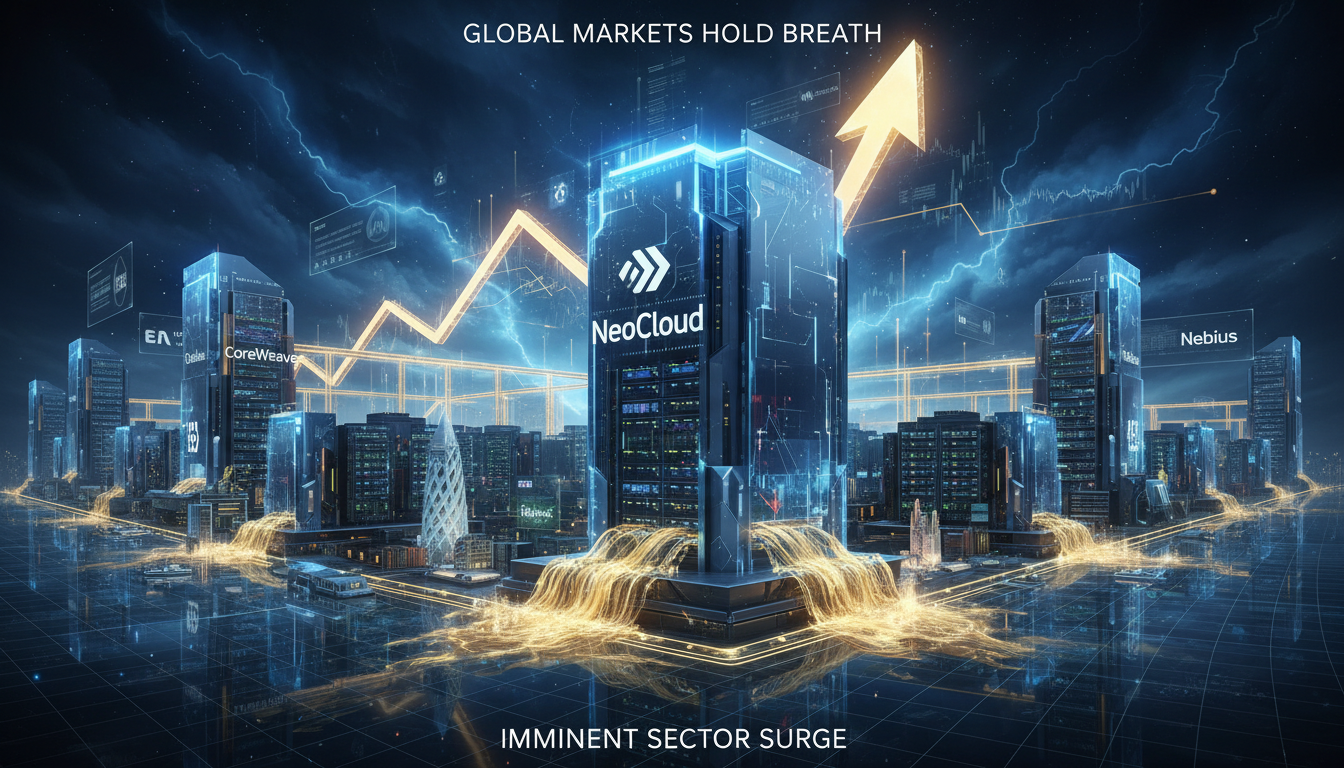
Neocloud Beneficiary Stocks Overview: After Nvidia, the True Earnings Breakthrough Occurs in the ‘GPU-Specialized Cloud’
This article includes the precise definition of Neocloud, the practical impact on stock prices of the supply chain relationship with Nvidia, the hidden bottlenecks and profit-making structures such as power, cooling, and networks, the differentiated points of leading stocks CoreWeave, Nebius, and Applied Digital, as well as an ETF checklist that can be invested in immediately.
It also separately summarizes key issues that are rarely covered by other YouTube channels or news outlets, such as ‘power cost – margin stack – prepayment – equity investment linkage’.
The article is organized in a news format that makes it easy to understand from the perspective of AI investment, focusing on keywords such as the global economy, inflation, interest rates, stock market, and the Fourth Industrial Revolution.
One-Line News Briefing
- Breaking News 1: The demand for AI computation is now more bottlenecked by ‘power, cooling, and networking’ than by GPU supply. Power pricing and the speed of obtaining grid connection approvals have become key value factors for companies.
- Breaking News 2: Neocloud (= GPU-specialized data centers and cloud services) is divided in GPU allocation priority based on its equity and prepayment relationship with Nvidia, and this gap creates a divergence between revenue recognition speed and stock prices.
- Breaking News 3: CoreWeave and Nebius have emerged as industry leaders. According to industry voices, CoreWeave is expected to secure a large-scale GPU by the first half of 2025, leading to rapid order acquisition and expansion.
- Breaking News 4: Vertiv, Arista Networks, Astera Labs, Marvell, and Supermicro are direct beneficiaries in the power, network, and accelerator systems.
- Breaking News 5: Expectations for lower interest rates will leverage a restart and expansion of data center CAPEX. If inflation pushes up power costs, companies with ‘power pass-through contracts’ will have strong defenses.
Definition of Neocloud: Why “Now”
Neocloud is not the traditional CPU-centric cloud, but rather a data center and cloud service optimized for GPUs.
As the training and inference of generative AI models skyrocket, GPU density, low-latency networking, and high-density power and cooling become essential capabilities.
As AI expands into agents and robotics (physical AI), the computational demand increases non-linearly, putting GPU-specialized infrastructure on a trajectory of structural growth.
Value Chain Structure: Where and How the Money is Made
- GPU Sourcing: Allocation speed and scale are determined by Nvidia (Hopper, Blackwell, etc.). Equity investments, prepayments, and long-term partnerships set the priority.
- Power and Cooling: PPA (Power Purchase Agreement), grid access queues, and transitions from air cooling to liquid/direct immersion cooling (CDU, manifold) determine the success of capacity expansion.
- Networking: Optimization for workloads is required among NVLink/NVSwitch, RoCE-based Ethernet, and InfiniBand. The design for scale-out determines both unit costs and performance.
- System Integration: GPU servers (e.g., SMCI), optical/switching (Arista), CXL/PCIe/SerDes (Marvell), and interconnect semiconductors (Astera) drive equipment cycles.
- Business Model: Options include leasing (in units such as H100/GB200), cluster-based AI cloud, and fully managed inference services. Power cost pass-through, utilization rates, and long-term contracts reduce margin volatility.
Checklist for the Relationship with Nvidia: ‘Who Gets More, Faster’
- Equity Relationship: Direct equity investment by Nvidia increases allocation priority.
- Prepayment/Commitment: The scale of prepayment and long-term purchase agreements serve as a supply safeguard.
- Reference Customers: Securing orders from big tech companies, unicorns, or state-level (sovereign AI) customers creates stable cluster utilization.
- Power Security: The PPA pricing/term and the stage of grid access approval (Interconnect) determine the expansion speed.
Company Focus: Leaders and Core Value Chains
- CoreWeave
- Role: Leader in GPU-specialized cloud services.
- Strengths: Securing a large-scale supply of GPUs, rapid ramp-up, diversified customer base.
- Risks: Bottlenecks in power, real estate, and cooling, and execution risks associated with rapid growth.
- Nebius
- Role: AI-specialized data center and cloud operator.
- Strengths: Emphasis on its partnership with Nvidia and financial robustness with room for expansion.
- Risks: Variability in utilization rates depending on expansion timing and customer mix.
- Applied Digital
- Role: Transition play from mining to AI data centers.
- Strengths: Converting initial GPU infrastructure and power base for use in AI.
- Risks: The need to verify profitability and contract stability during the transition process.
- Oracle
- Role: Expanding from a traditional cloud heavyweight to AI-specialized workloads.
- Strengths: Large customers and ecosystem, offering hybrid and dedicated regions.
- Risks: The pace of AI transition and trends in profitability improvements need to be monitored.
- Vertiv
- Role: Leader in power and cooling solutions.
- Strengths: High-density racks, numerous references in liquid/direct immersion cooling, and increasing order backlog.
- Risks: Supply chain, lead time, and the ability to pass on price increases.
- Arista Networks
- Role: Ethernet switching and optical interconnects.
- Strengths: Expanded adoption of AI pod networking and a robust software stack.
- Risks: Competition with InfiniBand and concentration on large customers.
- Astera Labs
- Role: Enhancing accelerator connectivity with interconnect semiconductors (PCIe/CXL).
- Strengths: Leveraging high-performance I/O demands.
- Risks: Intensifying competition and product lifecycle challenges.
- Marvell Technology
- Role: Custom ASICs, SerDes, DPU/storage networking.
- Strengths: Improved mix for AI data centers.
- Risks: Variability in customer project timing.
- Supermicro Computer (SMCI)
- Role: GPU servers and rack-scale system integration.
- Strengths: Fast product development and customer-specific configurations.
- Risks: Cyclic variability and challenges in inventory/operational management.
Bundling via ETF: Rise ‘US AI Cloud Infrastructure ETF’
This strategy bundles AI-specialized data center operators and the value chain components including power, cooling, networking, and servers in one package.
The leading stocks like CoreWeave and Nebius account for a high combined proportion (known to be about 20%), while Oracle, Vertiv, networking, and server stocks are diversified to manage volatility.
According to domestic listing notices, the listing date is mentioned as November 25, making it easily accessible for AI investment beginners.
Macroeconomic Variables and Timing: The Impact of the Global Economy, Interest Rates, and Inflation
- Interest Rates: Direct impact on CAPEX expenses through installment or lease structures. A decline in interest rates is favorable for accelerating expansion.
- Inflation: Exerts upward pressure on power rates and equipment prices. Whether a company holds power cost pass-through contracts is key to defending margins.
- Stock Market: In phases where AI-related earnings become visible, multiples could be re-rated. Conversely, news about GPU supply and regulatory issues may increase volatility.
Risk Check: 6 Things to Verify
- Power Bottlenecks: Delays in PPA, real estate, and grid connection approvals.
- Regulation: Export controls, data localization, and personal data regulations.
- Demand Slowdown: A temporary adjustment in the pipeline due to model efficiency improvements.
- Supply Transition: Short-term inventory adjustments when bottlenecks in HBM memory and server components are resolved.
- Pricing: Downward pressure on GPU leasing rates and intensifying competition.
- Interest Rate Rebound: Risks of higher discount rates and CAPEX contraction.
Practical Checklist: Questions to Identify a “Good Neocloud”
- Relationship with Nvidia: What are the scale of equity investments, prepayments, and long-term commitments?
- Power: What are the PPA pricing/term, proportion of renewable energy, and grid connection stage?
- Cooling: What is the roadmap for transitioning from air cooling to liquid/direct immersion cooling, and what is the CAPEX/power per rack?
- Networking: What is the configuration of NVLink/Ethernet/InfiniBand, and what is the scaling strategy?
- Unit Economics: What are the monthly revenues per GPU, power cost pass-through, and utilization rates?
- Order Acquisition: What is the proportion of long-term contracts, and are there sovereign AI or major corporate reference customers?
- Financials: What are the plans for managing cash flow relative to expansion CAPEX and potential dilution?
What Others Rarely Mention as the “Most Important Content”
- The Power of Power Cost Pass-Through: Contracts that pass on power costs to the customer significantly reduce margin volatility. This lowers the valuation discount during inflationary periods.
- The Triangle of Equity Investment, Prepayment, and Allocation: Prepaying and aligning equity with Nvidia boosts GPU allocation priority, thereby altering the revenue recognition pace. The contract structure is more critical than news headlines.
- Mismatch in Depreciation Periods: GPUs depreciate over 2–3 years, while PPAs, real estate, and grid connections span 10–20 years. Lease and re-leasing structures that address this mismatch determine long-term ROIC.
- A Turning Point in Networking: Large-scale inference increases the adoption of high-performance Ethernet (RoCE), while large-scale training emphasizes a mix of NVLink/scale-up solutions. The choice of network determines TCO.
- Data Localization (Sovereign AI): With growing demand for dedicated regions or on-premise solutions per country, location and regulatory compliance directly impact order competitiveness.
Strategic Proposal: Building a Portfolio
- Core: Secure the entire value chain via the Rise US AI Cloud Infrastructure ETF.
- Satellite: Adjust the weighting of leading stocks such as CoreWeave and Nebius, along with beneficiaries in power and cooling (Vertiv), networking (Arista), and systems (SMCI).
- Risk Management: Considering sensitivity to interest rates and power prices, prioritize stocks with high proportions of phased buying and long-term contracts.
Calendar Watch Points
- GPU Transition Cycle Triggered by Nvidia’s Next-Generation Platforms (Blackwell/GB200) Ramp-Up.
- Updates on the utilization rates of inference and agent workloads by major customers.
- Announcements regarding grid connection approvals, real estate expansion news, and signing of long-term power contracts.
Summary Q&A
- Q: Is Neocloud a bubble? A: AI computation is on a structural growth trajectory. The players that have preemptively secured power, networking, and GPU sourcing will reap the earnings.
- Q: Which stocks are core? A: The leaders forming the CoreWeave and Nebius axis, along with beneficiaries in power, networking, and servers (Vertiv, Arista, SMCI).
- Q: Which strategy is effective right now? A: A barbells strategy of capturing the core via ETF and adding leading and bottleneck beneficiaries as satellites is sensible.
< Summary >
- Neocloud is a GPU-specialized data center and cloud service that directly benefits from AI computation demand.
- Equity investments, prepayments, and power securing with Nvidia determine the pace of expansion and revenue recognition.
- Leaders: CoreWeave and Nebius; Beneficiaries along the value chain: Vertiv, Arista, Astera, Marvell, SMCI.
- Macroeconomic variables (interest rates and inflation) affect power costs and CAPEX. Companies with power pass-through and long-term contracts are more defensive.
- A sensible strategy is to diversify via ETF to capture stability while using satellite stocks for excess returns.
[Related Articles…]
- Neocloud Era: Investment Opportunities Created by Power and Cooling
- AI Data Center ETF Strategy Guide: Leading Stocks, Bottlenecks, and Macroeconomic Variables at a Glance
*Source: [ 소수몽키 ]
– 엔비디아 덕에 날라간다? 주목할 네오클라우드 수혜주들
● Vacancy Devours Cities, Self Storage Strikes Back
Vacancies Devour the City, The 2025 South Korean Commercial Real Estate Crisis and the Counterattack of ‘Self Storage’
This article covers the structural causes behind the surge in commercial real estate vacancies, the hidden pitfalls of maintenance fees in mixed-use shopping complexes, the supply bomb of knowledge industry centers, the real damages of the shift toward online consumption, and the opportunities created by changes in laws and regulations accelerating self storage.
Additionally, it consolidates the strategies for reducing vacancies and monetizing operations using AI trends, as well as positioning amid the global interest rate environment of 2025–2026.
It also separately examines the “mechanism by which vacancies breed more vacancies” and the “shift in landlord risk structure in variable rent models,” topics that are seldom covered in other news outlets.
News Briefing: The State and Signals of South Korean Commercial Real Estate
With an estimated one million self-employed business closures annually, the demand for commercial real estate leases is rapidly contracting.
While a government announcement cites a vacancy rate of around 13% for large shopping centers, the actual experience on the ground shows significantly higher rates in many regions.
There are clear signs of “ghost city” developments in new towns and coastal development areas, and rapid turnover rates from openings to closures are weakening the resilience of commercial districts.
On the supply side, post-approval but yet-to-be-constructed knowledge industry centers are waiting in triple-digit numbers, meaning additional supply pressure persists.
Consumption patterns are being restructured towards an online focus with the digital transformation, leaving offline retail with low recovery elasticity.
Mixed-use shopping complexes are continuously pressured by high maintenance fees that squeeze operating margins, and once a commercial district is hit, reactivation is not easily achieved.
As vacancies extend for long periods, landlords often fall into a vicious cycle of rent reductions, short-term leases, and repeated closures.
On the demand side, skyrocketing housing costs and miniaturization are expanding the “externalization of living spaces,” which in turn is increasing the demand for self storage.
Recently, changes in building-related regulations have reflected the classification of ‘shared storage (self storage)’ in secondary neighborhood facilities, making legal conversion and expansion easier.
The number of domestic self storage locations has rapidly increased from around 30 to 160, and its unmanned operational model offers high scalability.
Why Do Vacancies Breed More Vacancies: The On-Site Mechanism
Once the vacancy rate surpasses a certain threshold, the breakdown of foot traffic and tenant-attracting content causes a sharp decline in new lease inflows.
Buildings with high vacancy ratios see significant rent discounts, which in turn lower tenant quality and increase the risk of repeated closures.
Due to the fixed nature of maintenance and operating expenses, costs do not decline in proportion to revenue fluctuations, pushing the break-even point further away.
If lending rates remain high due to stagnant interest rates, financial costs remain elevated, intensifying pressure on landlords’ cash flow and reducing options apart from rent reductions.
Global Comparison: Insights from Japan and the United States
In Japan, despite prolonged low growth and an aging population, the self storage industry has grown as an alternative use for outdated urban shopping centers and basements.
In the United States, it has established itself as an independent asset class, serving as a buffer in diversified vacancy portfolios.
The common factor is that the growth of e-commerce and the downsizing of living spaces underpin the base level of demand.
Anatomy of the Self Storage Business Model
The operational model typically involves the landlord and operator sharing revenue based on a “variable rent” model.
One case study introduced a structure where approximately 80% of storage service revenue, after deducting operating expenses, is distributed as rent.
The landlord bears the initial facility costs, while the operator sets up a system providing 24-hour access, security, payment, and customer management.
Since it can be fully unmanned, it is less sensitive to labor costs and is well-suited to multi-site expansion.
The more unsuitable the location is for traditional retail—such as basements, areas with poor natural lighting, dead spaces, or inconvenient circulation—the greater the potential for ROI improvements.
In assets like mixed-use shopping complexes with high maintenance fees, revenue-linked rent models mitigate fluctuations in the landlord’s cash flow.
Policy and Regulatory Checkpoints
Recent enforcement of the Building Act’s Presidential Decree now includes the classification of shared storage facilities under secondary neighborhood facilities, improving the feasibility of conversion.
However, it is essential to check local interpretations, fire regulations, insurance, evacuation plans, and fire prevention designs.
Be sure to pre-establish standards for fire detection, CCTV, access records, insurance enrollment, regulations on prohibited items, ventilation, and condensation management.
Risks, Limitations, and Responses
If an oversaturation of locations leads to a surge in supply within the same commercial district, price competition may occur.
It will be necessary to implement dynamic pricing and a promotion calendar to counter seasonal demand fluctuations.
Insufficient freight elevators, ramps, or loading routes can diminish both customer experience and operational efficiency.
Risks such as moisture, condensation, and pest infestations must be proactively controlled through ventilation, dehumidification, and appropriate selection of finishing materials.
Clear regulations regarding the prohibition of storage for hazardous or harmful materials, along with immediate termination and disposal stipulations upon violation, are crucial.
Optimizing Finance and Operations with AI Trends
Use AI for demand forecasting by incorporating local search volumes, moving seasons, new tenant data, and weather patterns to predict unit occupancy rates.
A dynamic pricing engine can optimize rates based on unit size and duration of stay, thus boosting RevPAU (revenue per unit).
Deploy computer vision-based security event detection to reduce risks associated with unmanned operations and lower false alarms, thereby cutting operating costs.
By building a location scoring model that quantifies accessibility, residential density, parking, logistics circulation, and competitive density, the probability of site failure is reduced.
Implement AI call bots and chatbots to automate estimates, contract signings, renewals, and upsell processes, lowering CAC and increasing conversion rates.
Macro Scenario and Positioning for 2025–2026
The global economy may experience prolonged high interest rates, and even if interest rates drop, the pace will likely be slow.
The refinancing obstacles in commercial real estate are expected to continue, with concurrent pressures from vacancies and downward rental trends.
In an environment accelerating digital transformation, the rebound of offline retail is anticipated to be highly variable by industry and location.
Obsolete urban assets and non-core areas are more likely to survive if converted to functions for storage, pickup, or last-mile delivery.
30-Day Action Plan for Landlords
In the first week, scan each floor and unit for vacancies, maintenance fees, electrical capacity, circulation, and the presence of freight elevators, then classify areas suitable for conversion.
In the second week, verify local permit, fire, and insurance requirements, and roughly calculate the conversion CAPEX and expected RevPAU.
In the third week, compare proposals from 2–3 operators, checking for revenue sharing, guarantees, equipment standards, and SLAs.
In the fourth week, select a pilot zone and aim to launch construction, systems, and digital marketing within 90 days.
The Most Important Point Not Often Mentioned in Other News
The “gravitational pull of maintenance fees” in mixed-use shopping complexes is not offset by rent reductions and structurally lowers the chances of tenant survival.
Revenue-linked variable rent models are the most practical measures to transform the landlord’s fixed-cost risk into cash flow flexibility.
Self storage transforms “dead space” into “data space,” making operational data on occupancy, pricing, and duration a core asset value weapon.
Resolving vacancies is not merely an issue of tenant types, but is determined by establishing a triangular formation of operational data, AI, and policy compliance.
Operational Insights from Case Studies
The case of domestic self storage locations multiplying several times over in just two years indicates that the demand base has already been established.
The clear trend in the demand for storing seasonal items and clothing is driven by rising housing costs and miniaturization as structural supports.
Unmanned operations reduce labor cost ratios, making them key to both rapid site expansion and profitability equations.
Tangible Benefits for Tenants and Residents
It enlarges the perceived living area and enhances comfort, while providing cost savings through off-peak and moving season storage solutions.
With 24-hour access, app-based payments, insurance, and security, it delivers convenience and psychological safety simultaneously.
SEO Keyword Guide
This article is structured around key keywords such as global economy, commercial real estate, interest rates, digital transformation, and AI trends.
Enhance search optimization by combining regional names, asset types, and conversion keywords (self storage, shared storage, unmanned warehouse).
Cautions and Checklist
It is crucial to verify local interpretations, building use regulations, fire codes, parking, and load-bearing requirements in advance.
Publish equipment standards and operational guidelines to prevent complaints related to condensation, moisture, and noise.
Clearly define prohibited items, dispute clauses, and insurance coverage terms in the contract.
Conclusion: The Survival Formula in the Era of Vacancies
Vacancies are both a cost and a signal, and delaying action further deteriorates asset value.
The solution for commercial real estate lies not in finding new tenants, but in redefining usage and shifting to data-driven operations.
Self storage can emerge as the most pragmatic cash flow recovery strategy for landlords in a high interest rates, digital transformation environment.
< Summary >
Due to self-employed business closures, the shift to online consumption, and high interest rates, commercial real estate vacancies are becoming systemic.
The gravitational pull of maintenance fees in mixed-use shopping complexes and the supply bomb are accelerating the development of ghost cities.
Recent policy changes have lowered the hurdles for converting to self storage, and unmanned operations with revenue-sharing leases help stabilize landlords’ cash flow.
AI-based demand forecasting, dynamic pricing, and automated security systems enhance profitability.
Begin the pilot conversion with a 30-day action plan to establish a triangular formation of data, operations, and policy compliance.
[Related Articles…]
Recovering Cash Flow in the Era of Commercial Real Estate Vacancies with Self Storage
2025 Global Interest Rates and the CRE Refinancing Barrier: Survival Strategies for Landlords
*Source: [ 경제 읽어주는 남자(김광석TV) ]
– ‘공실이 도시를 먹어치운다’ 한국 상업용 부동산의 붕괴 신호. 상업용 부동산 ‘유령도시화’가 현실이 됐다 | 경읽남과 토론합시다 | 남성훈 대표
● Frigate Frenzy, Korea Seizes Arms Chokehold – Stealth Testbed Gamechanger
The Real Reason Thailand Reached Out to Korea: The Game-Changer Points of the Offshore Patrol Vessel Bid, the K-Defense Supply Chain Innovation, and the 6th Generation Fighter’s Stealth Test Bed.
This article includes the background and decisive factors behind the fierce competition among Korea’s three major shipbuilders in Thailand’s next offshore patrol vessel project.
It delves into the reality of the K-defense supply chain innovation where “medium-sized enterprise components” are sold before finished products.
It outlines the roadmap for achieving technological independence through a full-scale stealth test bed for Korea’s 6th generation fighter within 48 months.
It connects the real reason behind Cambodia’s concerns with the economic ripple effects of the geopolitical risks surrounding Thailand, Cambodia, and China.
Additionally, it separately summarizes crucial points such as “lifecycle support, data rights, financial and offset structures” that are rarely mentioned in other YouTube or news sources.
Breaking News Summary: Why Thailand Chooses Korea Now.
- In Thailand’s next offshore patrol vessel project, Korea’s three major shipbuilding groups are simultaneously submitting proposals, leading to an all-out battle in terms of technology, operation, and pricing.
- In defense exports, medium-sized companies and the component line have emerged as key points in resolving global supply chain bottlenecks, rather than finished products.
- Korea has presented a roadmap aiming to validate core technology within 48 months with a full-scale stealth test bed, expecting deliverables before 2030.
- The debate on whether to import or develop independently has evolved into a contest in “technological independence” and “data access rights.”
- Cambodia is on high alert at the possibility that Thailand’s upgraded naval power could enhance regional maritime surveillance systems and training cooperation.
Thailand Offshore Patrol Vessel Contest: The Decisive Factors for Korea’s Top Three Shipbuilders.
Subsection — Business Background.
- Thailand is pursuing reinforcement of its next-generation offshore patrol vessel capability to enhance maritime surveillance, curb illegal fishing, and protect coastal energy resources.
- With constraints and maintenance cost issues coming from Chinese and European platforms, attention has shifted to Korea, which offers advantages in cost-effectiveness, delivery time, and lifecycle support relative to its performance.
Subsection — Evaluation Criteria.
- The key factors include the capability for integrated combat systems, sensor and armament compatibility, reduction of operating costs for the crew, and “operational availability.”
- Korea’s strengths lie in offering an availability contract through a bundled package that includes digital twin-based design, smart yard, and predictive maintenance.
Key Points to Convey.
- It is not just about the “lowest price,” but the “total lifecycle cost (LCC)” and the guarantee of an “availability KPI” that determine the outcome.
- Korea has references across patrol vessels, corvettes, and submarines, and is able to adopt a bundling strategy that includes training, MRO, and upgrades.
- Considering factors such as export dynamics in defense and global economic variables like exchange rate and interest rate fluctuations, proposals that include financial packages and risk management for scheduling are competitively advantageous.
Why Cambodia Is on Edge: The Rebalancing of Regional Naval Power.
Subsection — Geopolitical Context.
- Surveillance and reconnaissance capabilities in the Mekong-Thai Gulf area directly relate to the protection of energy, fisheries, and sea routes.
- Enhancements in Thailand’s Maritime Domain Awareness (MDA) and Korea–Thailand naval cooperation could result in tangible changes to the regional balance of power.
Key Points to Convey.
- Cambodia is closely watching the possibility that modernization of neighboring nations’ naval forces could expand into training cooperation, information sharing, and joint maritime drills.
- As a result, regional geopolitical risks may have ripple effects on insurance, shipping costs, and raw material transportation.
- These changes could impact global supply chain stability, particularly along the Southeast Asian trade and logistics lines, affecting trade and logistics costs.
The Structural Change of K-Defense: Medium-Sized Component Suppliers Surpass Finished Products.
Subsection — Bottlenecks in Components.
- While the world is increasing its production of weapons, the actual bottlenecks lie in core components such as auxiliary engine systems, electronic warfare modules, power converters for vessels, and composite material panels.
- Korean medium-sized and small enterprises demonstrate competitiveness in on-time delivery, quality management (QMS), and ITAR-independent components, resulting in preemptive orders.
Subsection — ‘MNC Solutions’ and Supply Chain Orchestration.
- A structure that bundles ordering, inspection, certification, and import/export in one process is expanding through an integrated procurement, quality, and logistics platform based on multinational collaboration.
- In this structure, not only large companies but also second- and third-tier suppliers can establish demand forecasting and raw material hedging strategies based on data.
Key Points to Convey.
- In an era of geopolitical risks and peak interest rates, “inventory and cash flow optimization” drastically influences competitiveness.
- Korea can enhance supply chain reliability by leveraging K-export insurance, export-import bank financing, and packages linked to performance guarantees.
- Consequently, securing the component line through the stability and expansion of medium-sized enterprises is a shortcut to dominating regional production networks rather than just winning finished product orders.
6th Generation Fighter: The Significance of the Stealth Test Bed and Its 48-Month Roadmap.
Subsection — What’s Different.
- The full-scale stealth test bed integrates low-observable design, radar-absorbent material (RAM), sensor fusion, electronic warfare (EW), data links, and AI-based manned-unmanned teaming for comprehensive verification.
- By executing the prototype, flight tests, RCS measurement, and software update cycles within 48 months, core technology maturity levels (TRL) can be advanced before 2030.
Subsection — Import vs. Indigenous Development; the Answer is a ‘Data Rights-Centered Hybrid.’
- While it is advantageous to import certain modules, mission computers, sensor fusion, tactical data, and stealth coating processes rely fundamentally on data access rights and intellectual property.
- Even if imported platforms are used, without an in-house test bed for understanding performance, securing the initiative in upgrades becomes difficult.
Key Points to Convey.
- Technological independence is not a matter of the “percentage of domestically produced components,” but rather “who can lead and how quickly updates are executed.”
- AI models, digital twins, and MBSE (model-based systems engineering) drastically reduce productivity and test costs, while 4th Industrial Revolution technologies accelerate fighter development.
Application of AI Trends: Immediate Utilization Points in Shipbuilding, Aviation, and Defense Supply Chains.
Subsection — Production and Maintenance.
- AI-based predictive maintenance predicts the probability of failures and directly links KPIs to availability contracts.
- Digital twins for vessels and fighters integrate design, manufacturing, and testing, reducing development time and costs.
Subsection — Supply Chain Risk Management.
- Leveraging LLMs and knowledge graphs to explore alternative components, match certification standards, and automatically check for sanctions and export controls is being advanced.
- An optimization model for inventory and cash flow based on exchange rate and interest rate scenarios automatically recommends ordering timings and hedging strategies.
Key Points to Convey.
- Securing contracts that come with “data rights” and “API openness” is necessary to implement AI-driven automated decision-making in long-term maintenance.
Market and Investment Checkpoints: Interest Rates, Exchange Rates, Raw Materials, and Stock Triggers.
Subsection — Macroeconomic Variables.
- Prolonged peak interest rates increase financing costs for defense export transactions, but geopolitical risks keep demand steady.
- Exchange rate fluctuations directly impact profitability, so price adjustment clauses and hedging costs should be incorporated within the contract structure.
Subsection — Materials and Components.
- Diversified sourcing and recycling processes for strategic materials such as titanium, high-temperature alloys, electronic warfare components, and composite resin materials are key to cost stabilization.
Key Points to Convey.
- It is the “availability, maintenance, and upgrade revenue” rather than just order news that re-rates the multiples.
- Long-term contracts and a growing backlog for medium-sized component companies drive a premium across the industry’s value chain.
Only the Crucial Points Rarely Mentioned Elsewhere.
- Lifecycle support is the real game. The majority of profits come from “availability guarantees + MLU upgrades” rather than the initial purchase.
- Data rights are the weapon. Those with software-defined capabilities and data access rights will secure the initiative in upgrades and profits.
- A well-designed financial package is decisive. Proposals that bundle export insurance, ECA, fixed-rate options, and offset investment structures are stronger than simply offering the lowest price.
- ITAR-independent components are a strategic card. They allow avoidance of sanction risks and shortening of lead times, thereby enhancing delivery reliability.
- Without an AI supply chain control tower, large-scale production is difficult. A system that integrates demand forecasting, component substitution, certification, and logistics in real time is essential.
Policy and Industrial Proposals: An Immediately Applicable Checklist.
- Thai-Style Package: Propose a one-pack solution that bundles vessels, predictive maintenance, training, local component storage, and financing.
- Scaling-Up for Medium-Sized Enterprises: Enhance delivery reliability by sharing certification and testing equipment, and by supporting export insurance premiums.
- 6th Generation Test Bed: Modularize RCS measurement, RAM processes, and sensor fusion algorithms to simultaneously pursue exportable and domestic lines.
- Data Standards: Clarify the scope of disclosure for combat system APIs and log formats to accelerate AI adoption among partners.
Timeline and Risks.
- The stealth test bed has proposed a validation roadmap of approximately 48 months, aiming to secure core technology before 2030.
- Risks are summarized as raw material prices, sharp exchange rate fluctuations, certification and testing bottlenecks, and changes in overseas regulations, which can be mitigated through pre-hedging and multi-sourcing.
< Summary >
Thailand has ranked Korea as its top choice not based on price, but on its strengths in “availability and lifecycle support.”
K-defense is expanding its global supply chain dominance through medium-sized enterprise components rather than finished products.
The 48-month roadmap for the 6th generation fighter’s stealth test bed centers on securing “data rights” and software-defined capabilities.
Cambodia is apprehensive about potential shifts in the regional naval balance, while geopolitical risks will ripple through global trade via impacts on shipping insurance and costs.
The crux of the competition lies in the financial package, ITAR-independent components, an AI supply chain control tower, and availability guarantee contracts.
[Related Articles…]
K-Defense Exports, the Real Variable in Thailand’s Offshore Patrol Vessel Contest
6th Generation Fighter, the Korean-Style Supply Chain Innovation Driven by Its Stealth Test Bed
*Source: [ 달란트투자 ]
– 태국이 한국에 손내민 이유. 캄보디아 바짝 긴장한 상황 | 김민석 특파원 2부