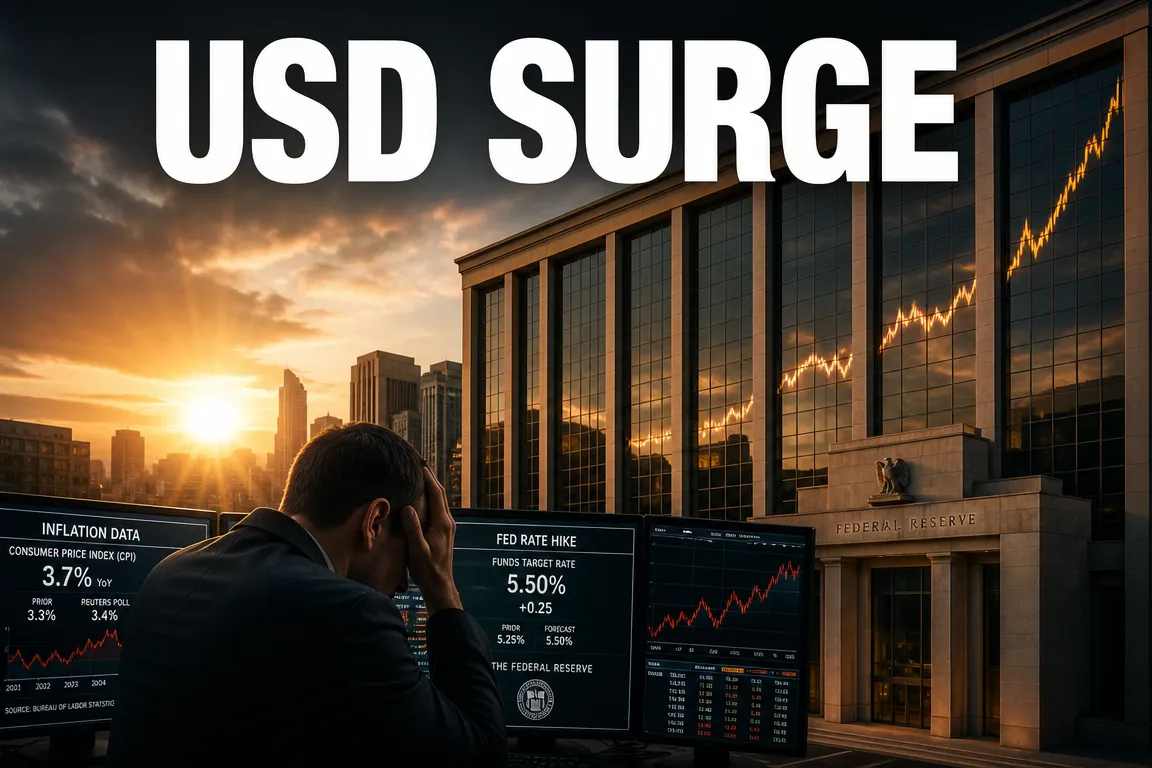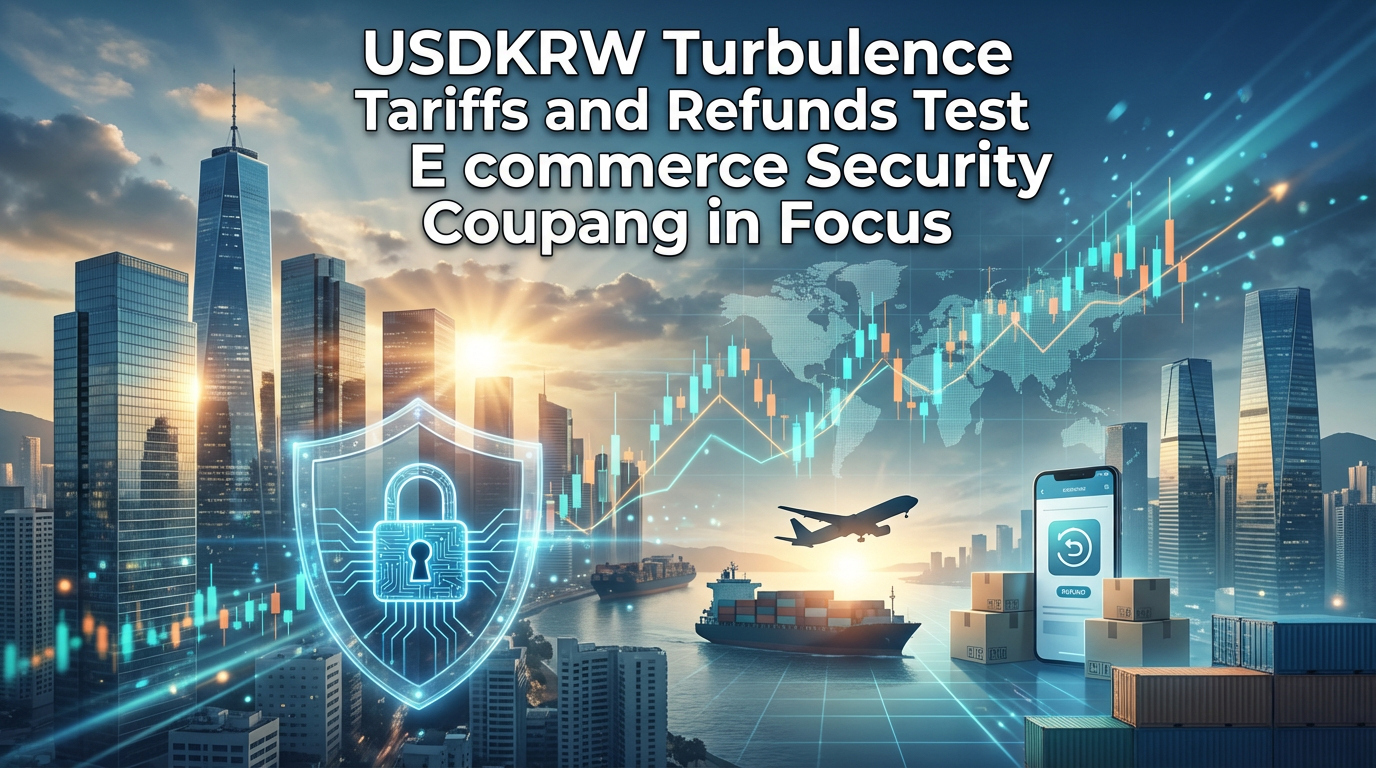
● Tariff Ruling Chaos, Bond Firestorm, Won 1600 Panic
2026 Customs and Exchange Rate War Roadmap: Supreme Court Scenario, Weak-Dollar Strategy, The Terrible Reality of the Won at 1,600
This article covers everything from the Supreme Court decision scenarios on Trump’s mutual tariffs, the strategy to manage the dollar index at 95–100, the weak-dollar/liquidity card ahead of the 2026 midterm elections, the debate over the USD/KRW exchange rate in the 1,400–1,600 range, to the choices faced by the Bank of Korea.
In particular, it neatly summarizes key issues such as the risk of US Treasury issuance and a surge in interest rates triggered by a ‘tariff refund’ in the event of an invalid ruling, the variable of renegotiating US-Korea investment commitments, and the increasing uncertainty of item-specific tariffs (232 and 301) like a news report.
It includes a practical checklist for response strategies focusing on economic outlook, exchange rates, interest rates, the dollar index, and global supply chains.
1) Three Paths of the Supreme Court Decision: Invalidation · Validation · Delay
In the invalidation scenario, the legal basis for mutual tariffs disappears, and the United States is highly likely to immediately switch to item-specific tariffs (under the Trade Expansion Act 232 and Section 301).
From a corporate standpoint, the uncertainty over ‘item-specific targeted tariffs’ is greater than the collapse of the ‘rule itself.’
The established framework, which had already been adapted to, is disrupted, leading to a reorganization of key components such as pricing, margins, and value chains in sectors like semiconductors, automobiles, and batteries.
In the validation scenario, the current tariff system is maintained.
Although legal disputes continue, the market interprets it as a ‘status quo.’
The delay scenario involves a prolonged policy uncertainty as the decision is postponed.
In this case, capital markets demand a volatility premium, and companies adopt conservative approaches to investment and inventory strategies.
2) Financial Market Impact of an Invalid Ruling: Tariff Refund → Treasury Issuance → Interest Rates
If invalidated, the logic of retroactive refund of collected tariffs comes into play.
The resulting government finance gap would be filled by additional Treasury issuance by the United States.
The term premium on long-term interest rates might spike, which in turn increases the volatility of both the dollar index and exchange rates.
Trump’s most sensitive variable is a ‘surge in interest rates.’
To implement a liquidity strategy, stable interest rates are essential; thus, the Fed may simultaneously deploy measures such as pressure on rates, inducing a weak-dollar, and attracting overseas funds.
3) Until the 2026 Midterm Elections: Possibility of a ‘Managed Weak-Dollar’
The policy intent is a ‘light weak-dollar’ aimed at managing the dollar index within the 95–100 range.
The goal is to create room for rate cuts and liquidity injections without re-igniting inflation.
However, global supply chains are so complex that even a simple T-shirt involves dozens of countries.
The final price effects of adjusting tariffs and exchange rates are offset by factors such as demand slowdown and employment adjustments, making simple measurement difficult.
In conclusion, while the policy objective is a weak dollar, the outcome will vary depending on the interaction between supply chains and policies.
4) US–China: ‘Tactical Truce’ vs. ‘Maintained Tensions’
Until the midterm elections, the US and China are highly likely to avoid a full-scale conflict due to high costs, yet maintain tensions in core technology and security areas.
If inflation control is necessary, a mixed strategy of limited easing on essential goods and raw materials while maintaining regulations on strategic items seems likely.
China, too, is expected to bolster its resistance by using measures on textiles, components, and agricultural products, leading to a recurring pattern of mutual ‘red line tests.’
5) USD/KRW Exchange Rate: A ‘New Normal’ of 1,350–1,450, with 1,600 as a Tail Risk
Fundamentally, while trade and current account balances are in surplus, prolonged US-Korea interest rate inversion and increased dollar demand from US investments and overseas M&A have pushed the levels higher.
The current ‘new normal’ range is reasonably viewed as 1,350–1,450.
An upper level of 1,550–1,600 requires additional confirmation.
For example: further expansion of US investment commitments, a sudden surge in geopolitical risks, an increase in highly-priced item-specific tariffs, or a re-evaluation of the Fed’s stance as ‘protracted tightening’ could trigger such a move.
On the downside, a faster rate cut by the Fed, the dollar index approaching 95, or concentrated inflows from export payments in the first half of the year could bring the rate to 1,300–1,350.
The key point is that the levels have been ‘gradually moving upward,’ and hedging and pricing decisions should be based on these structural levels rather than short-term volatility.
6) Choices for the Bank of Korea: Prioritizing Exchange Rate Stability → Interest Rates → Economy
In a small, open economy, stabilizing the foreign exchange market is of the utmost importance, and any rate cuts should only occur after dollar and exchange rate stabilization is confirmed.
If there is an abnormal surge in the exchange rate, preemptive rate increases can be activated.
However, rate hikes should not be a one-off move but should offer two or three distinct paths that send a clear signal to the market.
Trade-offs with inflation and the economy are inevitable, so fine-tuning in consideration of the sensitivity of Treasury bonds and household debt is necessary.
7) Checklist for Industry and Corporate Responses
Separate responses for exchange rate levels and volatility: Document rules for price and margin decision-making in ±50 won fluctuation bands based on a 1,350–1,450 level.
Stepwise setting of hedging rules: Systematize the process (e.g., 20% at 1,350, 40% at 1,400, 60% at 1,450) and differentiate between accounting hedge and economic hedge.
Tariff risk map by item: Pre-design scenarios for alternative supply chains for items potentially targeted by Sections 232 and 301 (such as semiconductors, automobiles, batteries, and solar panels).
Reallocation of US sourcing-production mix: Quantify the break-even exchange rate between increased US operational capacity versus overseas production/regionalization, and update quarterly.
Management of US Treasury duration risk: Diversify duration to prepare for potential spikes in long-term interest rates triggered by refund, fiscal, or issuance issues.
Reexamination of contract clauses: Reduce legal ambiguities by adding tariff, exchange rate pass-through, and retroactive adjustment clauses.
8) Timeline Key Points
First half of the year: Monitor the Supreme Court hearings and schedule visibility, tone checks of communications from Congress and the executive branch, and indicators of Sections 232 and 301.
Throughout the year in FOMC meetings: The pace of rate cuts by the Fed and its balance sheet policy (potential end of QT, possible resumption of QE) will directly affect the dollar index and exchange rates.
Six months before the 2026 midterm elections: Pay attention to the strength of the weak-dollar/liquidity measures, signals of a tactical truce between the US and China, and the direction of consumer prices.
Key Points Not Covered Elsewhere
If tariffs are invalidated, the ‘tariff refund’ will have a greater impact on financial markets than on actual transactions.
The need to finance large-scale refunds could lead to additional US Treasury issuance, an increase in the term premium, and a heightened risk of a rate surge.
If mutual tariffs are blocked, Korea’s ‘15% tariff plus US investment’ package, though legally weak, could reappear as a renegotiation issue.
The United States, if thwarted in mutual tariffs, may switch to using Sections 232 and 301 for ‘precise item-targeting,’ further increasing uncertainty in supply chains.
Companies prefer legal certainty over the mere existence of tariffs.
If consistent rules are maintained, hedging, pricing, and CAPEX can be optimized; however, frequent changes in the rules can lead to exponentially higher costs.
1,600 in the won is not a level but an ‘event.’
Additional pressures from further US investments, geopolitical shocks, or a hawkish turn by the Fed must converge to reach that level, while the basic trend remains in the 1,350–1,450 range.
Practical Investment and Business Actions
Export and import companies: Prepare quotation sheets for exchange rate ranges at 1,350/1,400/1,450 in advance and establish a system for immediate presentation.
Financial investment: Consider trading within the dollar index range of 95–100, diversifying the duration on the US 10-year, and using options/calendar strategies to hedge against tariff ruling events.
Sourcing and inventory: For materials at risk from item-specific tariffs, pilot early procurement and alternative sourcing in the first to second quarters.
IR and risk committees: Document the scenarios of the ruling, the Fed, and the elections at a resolution level and link them to KPIs.
News-Style Summary Headlines
Breaking News 1: If the Supreme Court invalidates the ruling, a ‘tariff refund’ could trigger expanded US Treasury issuance and a surge in interest rates.
Breaking News 2: Trump is aiming for a ‘managed weak-dollar’ with a dollar index of 95–100, targeting rate cuts and a liquidity strategy.
Breaking News 3: The USD/KRW exchange rate is expected to follow a new normal in the 1,350–1,450 range, with 1,600 presenting as an event-based tail risk.
Breaking News 4: If mutual tariffs are blocked, a shift to precise item targeting under Sections 232 and 301 could heighten global supply chain uncertainty even further.
Breaking News 5: The Bank of Korea is expected to prioritize exchange rate stability, delaying rate cuts until dollar stability is confirmed.
< Summary >
The Supreme Court decision can follow three paths: invalidation, validation, or delay, with the financial market risk of tariff refunds leading to increased Treasury issuance and a surge in interest rates being the key issue in the event of invalidation.
Trump’s intent is to secure liquidity and rate cuts by managing the dollar index within a 95–100 range, effectively engineering a weak-dollar policy.
The basic range for the USD/KRW exchange rate is 1,350–1,450, with 1,600 achievable only through a convergence of multiple adverse events.
The Bank of Korea is likely to prioritize stabilizing the exchange rate, with rate decisions made gradually to balance between the dollar, inflation, and growth.
Companies should standardize their preparations for hedging, pricing, and supply chain adjustments in anticipation of a shift to item-specific tariffs and accompanying volatility.
[Related Articles…]
Trump Tariff Era, The Pros and Cons of the 2026 Weak-Dollar Strategy
The 1,600 USD/KRW Debate, What Choice Does the Bank of Korea Make?
*Source: [ 경제 읽어주는 남자(김광석TV) ]
– [풀버전] 환율, 1,600원 가는가?…트럼프의 진짜 속내는? 관세·환율·중간선거까지 연결된 복잡한 계산법 | 경읽남과 토론합시다 | 노영우 기자
● Coupang Trust Implosion
[Key Check] Comprehensive Review of the Impact of Coupang’s Personal Information Leak: Stock Price Scenario, Regulatory Risks, Competitive Landscape, AI & Security Trends, and Investment Strategy
This article covers the three-phase timeline of stock price decline, the realistic scope of fines and litigation risks, secondary costs such as customer churn and increased CAC, concrete threats from competitor alliances, scenarios of a surge in phishing based on generative AI, and even checklists for individual and investor responses.It additionally reviews aspects that are less mentioned, such as the drastic rise in insurance renewal costs, short-term sales gaps due to massive password resets, risks of collapse in the trust of 3P seller settlements, and the exposure of U.S.-listed companies to securities litigation.It also provides an integrated analysis by connecting the global economic outlook, stock market trends, interest rate environment, digital transformation, and AI security trends.
Summary of the Incident and Key Issues: Distinguishing Facts from Speculation
Suspicion of a massive personal information leak at Coupang has been raised, primarily by domestic major media and investment communities.There are reports suggesting that the leak involves tens of millions of accounts, but the exact figures and details will be confirmed through government investigations and official company announcements.There is discussion about the possibility of exposure of basic identification information such as customers’ names, contact information, and addresses.Allegations of insider involvement or connections to individuals of specific nationalities remain speculative at this point, and it is premature to draw conclusions before confirmation.If the massive leak is confirmed, it could lead to fines, punitive damages, and collective dispute mediation under domestic law.
Timeline of Stock Price Impact: 30, 90, 180-day Checkpoints
T+30 days: With password resets, re-verification of payment methods, and issuance of customer compensation credits, a short-term decline in sales and order volume is highly likely.T+90 days: Whether or not brand trust is restored will be reflected in the net attrition rate of WOW Membership and retention figures. Keep an eye on metrics such as Google/App Store ratings and the flow of app installations versus deletions.T+180 days: Recognition of fines and litigation reserve funds, as well as any increases in cyber insurance renewal costs, will be reflected in SG&A expenses. At the same time, the strength of defense regarding advertising and marketplace commission (take rate) will be evident in the performance.
Checklist of Financial Impacts: Secondary and Tertiary Costs in Figures
Direct Costs: Expenses such as forensic and security consulting, customer compensation, call center expansion, and costs to transition to multi-factor authentication will be accounted for.Regulatory & Legal: Violations of domestic data protection laws (PIPA) could lead to administrative sanctions and compensation for damages. The specific extent will depend on factors such as the scope of the violation, intent, and gross negligence.Operating Costs: A decline in brand trust may lead to an increase in CAC and a dilution of gross margins due to increased discounts and promotions.Operational Efficiency: Massive password resets and KYC re-verifications will temporarily lower conversion rates.Insurance Costs: During cyber insurance renewals, an increase in deductibles and a steep rise in premiums may become a reality.
Regulatory & Litigation Risks: Exposure at Home and Abroad
Domestic: There is a possibility of investigations and administrative sanctions under laws such as PIPA and the Information and Communications Network Act. There is also a risk of applications for collective dispute mediation and claims for punitive damages.Overseas: U.S.-listed companies may be exposed to securities litigation if there are issues with timely disclosure of significant events (SOX/SEC) or deficiencies in risk management. Depending on data transfer and storage locations, the impact of other regulations such as GDPR needs to be assessed.
Reshaping the Competitive Landscape: ‘Economies of Scale’ vs. ‘Economies of Trust’
Domestic Platforms: Platforms such as the Naver Shopping & Pay ecosystem, SSG/GMarket, and 11st are reconfiguring their alliances through promotions and delivery partnerships.Cross-border E-commerce: Platforms like AliExpress and Temu are targeting gaps with low prices, free returns, and hyper-aggressive marketing.Quick Commerce & Dawn Delivery: While logistics automation and subscription lock-ins (WOW) serve as Coupang’s key defense lines, a hit to trust could lead to a partial exodus of demand for premium delivery services.OTT, Advertising & Finance: Although platforms are expanding into new businesses based on their existing customer base, personal information issues become a variable in meeting safe brand criteria for advertisers and regulatory scrutiny in the financial sector.
AI & Security Trend Update: The Direction of Digital Transformation Amid Crisis
Attack Perspective: Generative AI is personalizing voice phishing and smishing. The combination of leaked data and deepfakes is leading to a sharp increase in success rates, a global trend.Defense Perspective: Zero trust, SASE, multi-factor authentication, hardware keys, and transition to passkeys are essential.Dealing with Insider Risks: Continuous monitoring through UEBA (User and Entity Behavior Analytics), low-privilege default settings, and detection of abnormal data queries.Data Minimization: Through tokenization, anonymization, and differential privacy, establish a data structure that holds little value even if a leak occurs.AI Security Operations: An SOC with integrated LLMs, threat intelligence RAG, and automated incident response systems reduce average detection and response times.In the era of the Fourth Industrial Revolution, competitive strength is shifting from hyper-personalization to “privacy-preserving personalization.”
Investment Strategy Guide: Conditional Judgement Rather Than Selling or Buying
Short-Term Trading: While volatility trading may be possible in the event-driven downturn phase, it is rational to adjust positions until the magnitude of fines, reserves, and insurance premium increases becomes visible.Medium-Term (6-12 months): Monitor key indicators such as the cancellation rate of WOW Membership, monthly active users (MAU), order frequency, fulfillment cost per order, and advertising revenue growth rate before approaching.Long Term: Resilience is achievable if the platform leverage in logistics automation, advertising, and finance is maintained. However, the pace of trust recovery remains the critical variable.Pair Trade Idea: Reduce beta exposure through strategies such as long on domestic commerce indices/competitors and short on Coupang, or vice versa, for hedging.Alternative Exposure: Markets in Southeast Asia, such as SEA and Grab, also share a similar commerce-to-finance transition story.Diversify by comparing valuation and the timeline to profitability.This content does not constitute investment advice; please consult related research and disclosures in parallel.
10 ‘News Type’ Checkpoints in Figures
1) Net attrition rate for WOW Membership and the scale of refunds/compensation credits.
2) Trends in app installation and deletion orders, app rating trajectories, and any sudden surge in customer inquiries.
3) Whether there has been an announcement regarding shortened settlement cycles and enhanced guarantees for 3P sellers.
4) Completion rates of password and payment method re-registration and the speed of recovery in conversion rates.
5) The severity of slowdown in advertising revenue growth and any ROAS guarantee policies.
6) Utilization rate of logistics centers, success rate of dawn deliveries, and last-mile costs.
7) Guidance on fines and litigation reserves, and conditions for cyber insurance renewals.
8) Announcements on strengthened company-wide governance directly under the DPO (Data Protection Officer).
9) Directions for regulatory tightening at the government and legislative levels and collective industry responses.
10) Mergers and alliances among competitors, intensity of promotions, and changes in free return policies.
6 Key Points That Are Most Important Yet Less Mentioned in This Issue
- A drastic increase in the cost of repurchasing cyber insurance could continue to affect next year’s SG&A expenses.
- Massive password resets create short-term sales gaps.
- If the trust of 3P sellers is shaken, both SKU diversity and advertising revenue may suffer.
- If payment partners demand a risk premium, payment processing fees may rise.
- Due to the nature of U.S.-listed companies, issues with timely disclosure and internal controls can increase exposure to securities litigation.
- Even if the leaked data is not immediately traded on the black market, targeted scams based on generative AI could surge later.
Immediate Checklist for Consumers and Sellers
Reset the passwords for all commerce and finance apps to be unique from one another.
Enable two-factor authentication or passkeys.
For smishing and voice phishing, be cautious of approaches that pretend to know your name and address. Always verify via a callback before clicking any links.
Strengthen notifications from your card issuer and enhance spam blocking on your mobile network.
Sellers should review the settlement cycle, seller loan interest rates, and guarantee range. If you need urgent cash, compare the total costs including fees and interest rates.
Connecting to the Macro Environment: Variables of Interest Rates, Stock Markets, and Global Economic Outlook
Even in a period after passing peak interest rates, regulatory and litigation issues can trigger multiple discounts.
In a phase of global economic slowdown, reliance on promotions increases, putting pressure on margins.
Digital transformation budgets are likely to shift focus from “growth” to “security and compliance.”
Investments in artificial intelligence are shifting from offensive personalization towards defensive security automation.
Conclusion: The Criteria for a Knockout (KO) vs. a Standing Count
A knockout (KO) occurs when failures in restoring trust and repeated incidents coincide with simultaneous exits from the membership, advertising, and seller ecosystems.
A standing count is achieved when, despite short-term costs, the ecosystem’s cohesion is restored through a redesign of data governance, transparent communication, and compensation to sellers and customers.
Review and assess the above 10 checkpoints in figures before the next earnings announcement.
< Summary >The suspicion of a Coupang personal information leak will have ripple effects in short-term sales, medium-term brand perception, and long-term cost structures.
The key lies in whether indicators such as WOW attrition rate, app and order conversion rates, the integrity of advertising and settlements, and figures related to fines and insurance premiums recover.
In the AI era, redesigning security systems and transparent responses are critical to maintaining trust.
Investors should monitor the 30/90/180-day indicators to adjust positions accordingly, and if necessary, diversify risk with hedges or alternative exposures.
[Related Articles…]
- 7 Stock Checkpoints After Coupang’s Data Leak
- AI Security Trends and a One-Stop Guide to Personal Data Protection Strategies
*Source: [ Jun’s economy lab ]
– 사상최대 고객정보 유출 터진 쿠팡, 진짜 위기가 시작됐습니다